410 points · by geox · 1y ago · 223 comments
- Elk quit loitering along streams, so willow and cottonwood shot up, anchoring soil and narrowing channels.
- The new woody growth gave beavers lumber; their colonies jumped from one in 1996 to a dozen within fifteen years, raising water tables and rebuilding wetlands.
- With healthier riparian zones came deeper pools, colder water, and a surge in native trout and song-bird nests.
[1] https://phys.org/news/2025-02-predators-ecosystems-yellowsto...
Ecological baselines are inherently arbitrary—there’s no objectively “correct” state of nature to return to. The systems we call degraded are often just different, not necessarily worse. So when we talk about progress in this context, we’re really measuring against a value-laden idea of what we think nature should look like, not some neutral truth.
That doesn’t mean rewilding is bad—but I do think we should acknowledge that we’re shaping nature to fit human values, not restoring it to some pure, original state.
Perhaps without an apex predator the prey species would evolve out of the overpopulation problem eventually. However, species that evolve with a predator tend to reproduce more quickly, which helps avoid being completely wiped out by the predator - when the population constraint impose by the predator is removed, the prey population explodes, leading to particularly pronounced problems.
(Perhaps if we had to contend with some homo-vampirus, we wouldn't have global climate change...)
Overall, humans already interfered in the shape of the ecosystem by removing wolves. You're correct that there's no objective 'correct' state for an ecosystem. But it is worthwhile to help balance ecosystems, especially when they have been unbalanced by our own interventions. Without restoration work, we're headed to a world with humans, livestock, and the few species that manage to live on our margins.
As an example of this, a healthy female rabbit will produce anywhere from 20 to 50 additional rabbits in a single year. There have been many documented explosions of rabbit populations due to lack of natural predators which have caused significant ecological crisis.
They've evolved to reproduce so quickly because they are the "food" in the food chain. Without the predators above them, they will _eventually_ stop reproducing so quickly because they are only killing themselves by doing so.
It looks more and more like we're headed toward a world where we'll regenerate extinct species in labs; and grow our steaks in meat factories. If we no longer need cattle farms, it's possible we'll vote to preserve more lands.
https://www.rifters.com/blindsight/vampires.htm
The book is great “what if?” in several directions at once including human vampires.
(Perhaps if we had to contend with some homo-vampirus, we wouldn't have global climate change...)
Humans—like ants—seem to be their own primary predator ;(Human settlement has a tendency to reduce all of them. The story here isn't that reintroducing wolves established some kind of human-centric value system, it's the surprisingly complex and far-reaching effects of just one change in the ecosystem, particularly the re-introduction of a top predator.
Note also that absent extinction altogether, without humans actively killing wolves, their numbers most likely would have recovered eventually, probably with similar effects. In essence, we just accelerated a type of healing process that would naturally take place when our enormous ecological footprint is removed.
I think where I come down is trying to remove elements that threaten to take over and destroy the balance. Or restore elements that will help re-establish balance. And it doesn't have to all be "native".
And there are some natives like poison oak that I'll get rid of because they're obnoxious and will ruin people's experience of nature. And people's experience with nature matters because that's a big part of how you win people over and get them to support nature restoration work.
It's wild, because it's so easy to measure and asses: an ecological desert, dying ecosystem, rich in single overgrazing specie is unequivocally bad.
Rich, lush ecosystems sustaining great biodiversity and ecologically unique features (eg chalk streams or temperate rainforests in the UK) are good. Killing everything for the sake of one specie: Bad.
More on that if your position is honest: https://www.monbiot.com/2025/05/12/the-commoner-kings/
Deer are simply tall, disease-carrying vermin--basically rats with long legs.
They eat everything. They multiply like bloody rabbits. They host a ton of diseases--especially when overpopulated (effectively everywhere that doesn't have lots of wolves or big cats).
I really don't understand why we don't hunt them aggressively when there is no apex carnivore to keep them under control.
We could try to build what was there before the forest, but it would be extremely disruptive to all the people who live there, and what for? The Forest isn't very useful today, but it's pretty and we know it's stable, and it has some uses, we grow some trees there, we farm some pigs and ponies, tourists come to see it - there are many worse options.
† Acorns are poisonous. Don't eat acorns without proper preparation. Unless you're a pig or a squirrel or something. In which case how are you reading this note?
I agree that it'd be lovely to have a definition that is devoid of subjective (human) judgement, but I don't think "stable" is a useful direction to go for such a definition. It's way too easy to reach stability by ending up at some hellhole ecosystem that is lifeless or exceedingly uniform with nothing interesting. Which, yes, is entirely subjective. That's my point.
Alternative ways to go that seem more suitable to end up at a worthwhile definition that most ought to be happy with:
* Diversity. An ecosystem with more lifeforms is better than less, and complex lifeforms count extra. How much extra is for somebody to write down in detail at some point.
* Utility to humans. An ecological system that constantly causes issues to humans, for example by flooding out a town, spawning plagues that ruin crops, and so on is 'bad'. An ecosystem that humans like spending time in is 'good'.
We are humans and ought to be able to come together and find definitions close enough to what we want without falling into smashing each other's heads in because our definitions of 'nice to walk through' differ slightly. Part of what annoys me about 'modern' political thought is that it presupposes: Everybody hates everybody and we're all infantile morons who are utterly incapable of finding any common ground (and thus only solutions that work despite that state of affairs are worthwhile to think about). This isn't hard to determine. We don't need to eliminate human subjectivity from it.
Ecological diversity and utility to humans.
The GYE is more diverse thanks to having wolves check grazing populations. And the physical structure of the riparian environment is more stable, which means better (and cheaper) infrastructure and water management.
Some are ancient, but have adapted to thrive in some human environments, but have spread well past their original areas by colonialism, slave trade, shipping, and war. The idea that modern mosquitoes are some "natural" ecosystem element is pretty funny. Perhaps they have destroyed the habitat that once existed and driven out competing species which once fit into the niche, but they are in most places relatively modern in ways other biting flies are not. The growing effects of malaria are not only on humans, but other animals including both chimps and reptiles as well.
Anopheles/Aedes/Culex mosquitos are the grey goo of insects, driving other flies, midges, and even mosquitos (which local fish and larval predators have evolved with) to exinction. Treat them like the infection they are.
I remember someone moaning about how we had driven a species to extinction.
We're a funny lot, really. I've learned not to take us too seriously; especially the folks that take themselves very seriously.
250 million people have malaria, and 600k, mostly children die from it yearly.
And yet, I see a lot more people defending the mosquitos than the humans.
Philosophically though you're correct- humans very easily see themselves as "apart" from the environment, when really we're just another mammal doing our thing. We are nature as much as we are in it, even for all of our tools and manufacturing.
One of the hallmarks of human engineered environments is how shallow and fragile they are. Changes, like the reintroduction of wolves, are "good" because they give us deeper and more resilient environments
Me too, however I think that making an ecosystem functional, rather than dysfunctional is the goal, rather than actual restoration to a nominal "correct".
The thing is that diversity, fecundity and like measures are really important when it comes to ecology, not historical accuracy - that's for aircraft museums.
But biodiversity is a good target and as unbiased as you can get. More biodiversity means more adaptability and resilience of the system.
So, inevitably, the answer must be that people want to conserve them either because of sentimental reasons or because a given ecosystem suits human flourishing, or because it maximizes some metric like species diversity.
> we’re really measuring against a value-laden idea of what we think nature should look like, not some neutral truth.
I will remark, that “value-laden” is not opposed to “neutral truth”. All knowledge is value-laden. Value itself is part of reality. The fact-value dichotomy is a fiction.
I think you're confusing "arbitrarily meddling in wilderness" and "restoring ecosystems". The latter would be something like demolishing a Walmart and its parking lot and putting soil and trees in its place.
Basically giving back human development spaces back to nature and letting nature take care of itself. This involves things like cleaning up waterways.
Basically his take on the whole hobby is that we should stop measuring, changing water and generally stressing about keeping the system as is.
Instead you create a good substrate, add lots of plants and just watch how life will evolve. Fish and plants might die, but that's ok because it's part of the natural process.
It's not even "tricky". It's purely a subjective political football if you live anywhere that was formerly glaciated because humans were there from day 1 and so it's basically a subjective question of which time period you want to restore.
When you "destroy" an ecosystem, a new one will take its place. The remaining animals and plants will converge on a new balanced state.
The ecosystems we admire today are often that new balance after humans destroyed the natural one.
In almost all cases, when a collapsed ecosystem reaches homeostasis again, the result is a more fragile and less diverse balance than what was there previously.
Monocultures are a scary thing (I'm sure you've heard about how we had to completely switch banana varietals), and having resilient ecosystems is important. I think ATM the consensus is having an apex predator does actually help the stability of these sorts of ecosystems and leads to outcomes most would consider favorable (greater diversity, better density, closer to an equilibrium). Now, we could surely fix this problem by doing it ourselves (eg by subsidizing deer and rabbit hunting and venison), but wolves are probably cheaper.
There's no guarantee that this be a stable equilibrium.
If it doesn't stabilize, we get mass extinctions. We have had five large ones and are rapidly moving towards the sixth ones by all accounts.
Biodiversity is a good measure of ecosystem health, no? Is it really a human value?
It sure sounds like we're just choosing the species we like. It's like a big walled garden.
It's not choosing species we like as much as that there was previously an equilibrium all ecosystems trend towards, and our influence (killing the wolves) lead to significant ecosystem imbalances that hurt more than just wolves.
..we’re shaping nature to fit human values,
You’re right to question it, because the philosophy itself is based on the emotionally satisfying but ultimately unscientific “Gaia” theory of “balance” and “self-sustaining” / “self-correcting” systems.
I’m certain some have used those ideas, but that is not what the philosophy itself is based on.
Do wolves fix ecosystems? CSU study debunks claims about Yellowstone reintroduction
https://eu.coloradoan.com/story/news/2024/02/09/colorado-sta...
A good story: Media bias in trophic cascade research in Yellowstone National Park
https://academic.oup.com/book/26688/chapter-abstract/1954809...
> The average height of willows in fenced and dammed plots 20 years after the initiation of the experiment exceeded 350 cm, while the height in controls averaged less than 180 cm
> This suggests that well watered plants could tolerate relatively heavy browsing. It also shows that the absence of engineering by beavers suppressed willow growth to a similar extent as did browsing
They posit that the growth in control groups not matching the fenced areas is evidence of wolves reintroduction not having the effects they are said to have. It is a pretty unconvincing argument since there are so many other variables involved. They also prove that IF the wolves have indirectly lead to either the return of beaver dams, or reduced elk browsing, there is undoubtedly an impact in tree growth, which is a positive result regardless.
Their theory that things will never return to their original state, and instead will settle into a new alternate equilibrium is probably correct, but does not seem like the definitive blow to the wolf theory that it’s made out to be.
However, the introduction of wolves did, incontrovertibly, add a system element that had not been present before. Exactly what that element was, and how it expressed is up for interpretation :-)
It also proves the worth of just simple studies over a long period of time. Science used to do a lot of that, and it was very interesting, as many appear on hacker news, but now it seems that cut-n-done grab more popular news.
It also bears the question: what longitudinal studies are popular here besides this one, and retro computing?
Fixed!
https://eu.coloradoan.com/story/news/2024/02/09/colorado-sta... | https://archive.is/k0NqZ
https://academic.oup.com/book/26688/chapter-abstract/1954809... | https://annas-archive[.]org/md5/3d5be21998575e23a28fdaa53ff5...
(You will have to replace "[.]" with "." in the above link in case that wasn't obvious.)
https://www.nps.gov/yell/learn/ys-24-1-the-challenge-of-unde...
TL;DR - the observed reduction of the elk herd correlated with wolf introduction, but also with an increase in cougars, grizzly bears, and even bison, all of which either reduce or compete with elk. Human hunting also added pressure, but that has been limited as the herd size reduced. It is complicated.
https://www.accuweather.com/en/weather-news/scientists-debun...
Welcome to the age of social media.
https://fwp.mt.gov/aboutfwp/public-comment-opportunities Click on the dropdown for “Fall 2025–Winter 2026 Furbearer and Wolf Trapping and Hunting Seasons and Quotas.”
> Montana Fish, Wildlife and Parks (MTFWP) is proposing new, despicable wolf hunting regulations that could allow up to 500 wolves to be killed. This would increase the number of wolves that can be killed next season by 50 percent, nearly half the state’s entire wolf population. MTFWP is also pushing expanded hunting and trapping rules, including allowing hunters to kill up to 30 wolves per person.
> This proposal comes despite livestock losses remaining near historic lows, with only 35 confirmed cattle deaths in 2024, and a significant drop in the number of wolves killed due to livestock conflicts. It is also worth noting that revenue from wolf hunting licenses is among the lowest ever recorded – which helps explain why these expanded rules are less about science and more about politics, profit, and desperation.
> The Montana Fish and Wildlife Commission will vote on this proposal at its next meeting on August 21. In the meantime, public comments are open through August 4, and wolves need your voice. In your comment, consider including the following:
- There is no scientific or ethical reason to kill this many wolves.
- Wolves pose no significant threat to humans.
- Wolves help maintain healthy prey populations by targeting the weak or sick, which may help control the spread of chronic wasting disease in elk and deer.
- Legal hunting can increase poaching.
- Traps and snares are cruel, outdated, and often harm pets and endangered species.
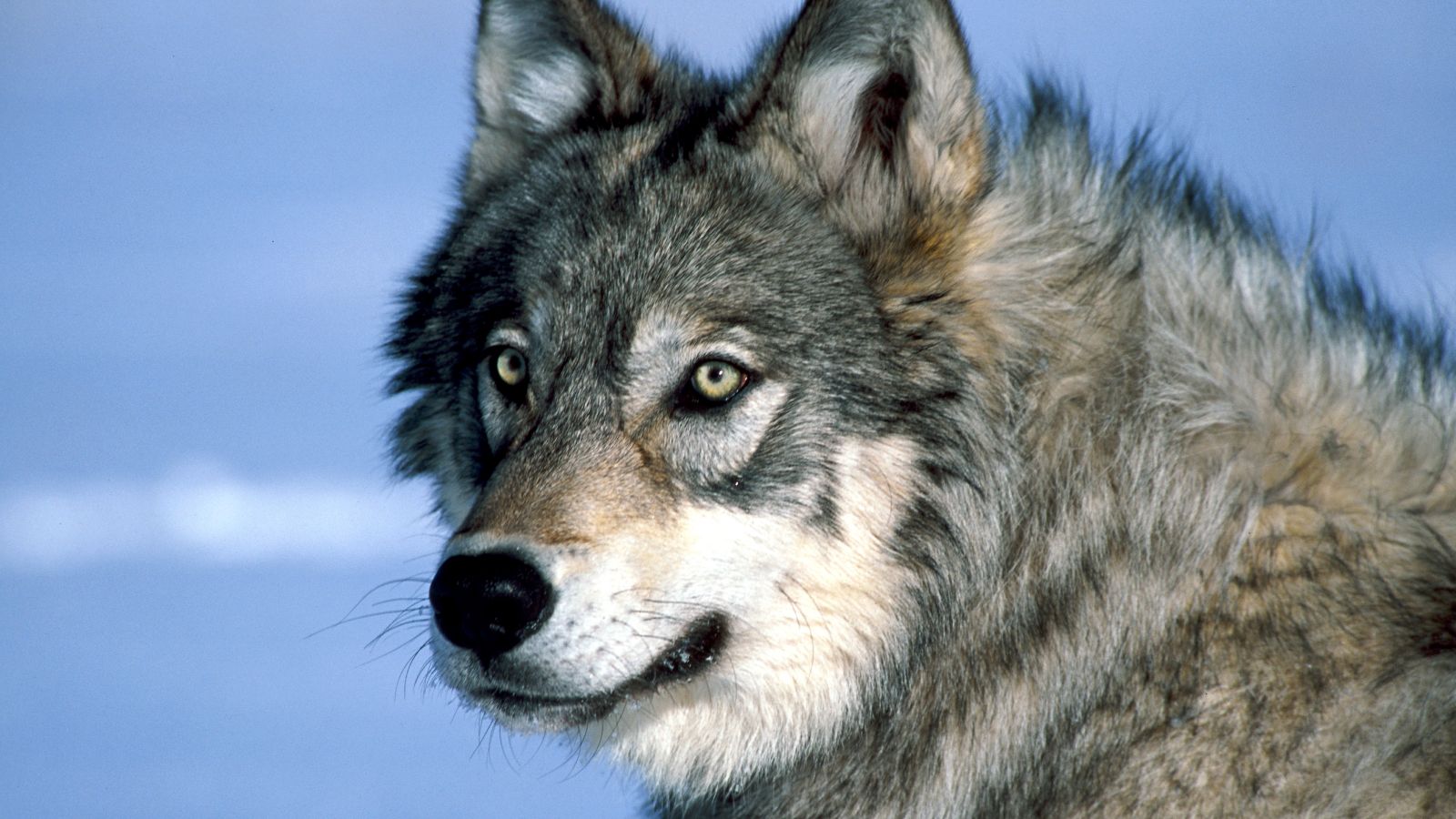
"Gray wolves were reintroduced ... to help control the numbers of elk that were eating young trees"
"The greater good" is a bit abstract, and your framing suggests it's somehow separate from "the people who live there". A different framing of this question is should individuals be able to degrade ecosystem wealth in order to maximize their personal wealth?
This is the climate story in microcosm. We all know burning carbon is against the "greater good", but if we can pretend that our high-energy lifestyle is somehow independent and unconnected to the planetary ecological systems that support us, then of course, why shouldn't I mortgage my descendants' future for some toys today.
It's the United States, that's virtually a constitutional right. If your skin color and cultural conformance checks out.
Eradicating predators created a very convenient, intermittent period where this was less of a necessity, but it also had quite negative externalities.
So the question isn't "is the greater good more important than the people who live there?", but more "is the greater good more important than the convenience of some people who live there?"
This is a question we have to ask ourselves a lot; nobody wants to live near a landfill, a prison, a sewage treatment plant etc, and yet we want them for the greater good.
It's not just predators vs livestock, there are a bunch of things that we didn't used to understand about ecosystems that we do now. The societal cost of letting people displace or kill wild animals with abandon is quite high.
Zoonotic diseases are the first to come to mind. How many preventable cases of Plague or Lyme disease is that livestock worth to us?
https://cpw.widencollective.com/assets/share/asset/pzqhipzb1... (see Funding)
Cursory search shows that not just Colorado does this.
Well if they liked it, their anscestors wouldn't have killed the wolves in the first place.
"is the greater good more important than the original people who lived there?"
It is also worth noting that not every good that is a "common good" is a necessary good. There are many common goods that can be legitimately given up because there is a hierarchy of goods as well.
Moving a few wolfs, I would hardly call that effort! Stopping regulations and allowing some hunters in Yellowstone would have similar effects!
It is more like morons, who do not understand biology are in goverment! Overprotection allowed elk overpopulation!
Waiting for someone to reply to this doing exactly this
I suggest reading Candide by Voltaire, first published 266 years as a critique to the philosophy you are currently espousing.
People: "If God, then why bad?"[0]
Leibniz: "God and bad can coexist. E.g. we live in the best possible world."[1]
Voltaire: "Here's a depiction of some fictional bad."
I don't think Voltaire engaged meaningfully with Leibniz's argument. (I think that Leibniz is simply right tho, in the mathematical sense, so there isn't much room for Voltaire anyway.)[0] : https://en.wikipedia.org/wiki/Problem_of_evil
[1] : https://en.wikipedia.org/wiki/Best_of_all_possible_worlds
regaurdless of what was intended your downvote and reply shows a lack of good faith.
"Embark on a journey to Yellowstone, where a few wolves did not just roam, but rewrote the rules of an entire ecosystem. Discover how these majestic predators triggered a cascade of life, transforming not only the park's wildlife but its very rivers and landscapes. It's a story of how nature's architects can reshape our world in ways we never imagined."
Can other ecosystems do this? Or is Yellowstone the only one?
- intact enough to have quick bounce back behavior upon species reintroduction and
- small enough for you to have a good idea about which species are present
- come with a built-in control variable: the civilian space on the other side of the border represents what would have happened if we had let economics have its way with the land
Maybe you don't need quite that level of protection to see such effects, but generally you do need some. Throwing some wolves at a once-forest that's now half way to being a desert will not always save that forest.
But is see This has a human imperialist reaction: why don't we just micro manage everything!
> Browsing, grazing, loitering in an ideal environment
> Suddenly, mid life, an unidentified powerful beast appears that stalks and kills your kind
> Never know why, the source, or that a third species engineered this outcome because they were too lazy to kill you all themselves and just wanted an automated way of doing so
Worthy of HN? Not so much.
It's not about "automating" the killing of elk. It's about sustainable ecosystems. Human hunting is not the same thing.
The article and study doesn't address its disposable nature of the elk in favor of "look at the trees"
When there are animals suffering, which to most actual people is a matter to highlight. This entire discussion about wolves in Yellowstone has always contorted itself to spare the reader's thoughts on the gruesome reality of what's actually happening.
https://doctorspaghetti.org/pastafarians-pirates-and-climate...
We also know that dog predation of frisbees is a real problem for healthy disc populations.
what?
In my eyes, ecological historicism is just another sin, wasting precious finite resources on keeping up a facade. It would be much wiser, to take specimen from the developing bulb-belt and transplant them up the lattitude to near similar developing bioms, trying to breed them to survive the winter that now befalls there "migrated" biom.
Let the wulves fight for their own survival in this mess and remove protection status. The ground is moving, no sense in building cabins and planting trees on it. Cosplaying nature while sacrificing saveable species seems absurd to me.
So, let wolves fight for survival against humans?
That's tantamount to saying "let's make wolves extinct."
2,200,000 acres, with 100 wolves.
Then they've made the claim that those 100 wolves in 2.2million acres has resulted in plants and fish returning? As opposed to their efforts doing nothing at all?
That said, I believe wolves had a profound effect on the Yellowstone ecosystem, particularly on elk and deer populations. Before their reintroduction, those species had few natural predators beyond hunters, vehicles, bears, and the occasional mountain lion. The imbalance led to overgrazing and the spread of diseases like Chronic Wasting Disease (CWD) in elk.
They've studied it and came to these conclusions, yes. Have you studied it and come to different conclusions?
Without engaging with the rest of your comment, and even assuming that wolves are distributed evenly (of course they are not, and some parts of the park are not suitable for wolves):
This equates to 1 wolf per chunk of land measuring about 6 miles square, so about 15% smaller than the city of San Francisco (which is a small city).
Wolves are territorial and they move through forest quite well. A ~35 square mile territory wouldn't be out of the question.
Edit: Notes from elsewhere:
> Wolf packs in Minnesota, for example, can have territories that range from 7.5 mi2 to >214 mi2 — a 28 fold difference in territory size
> Average territory size in northwestern Montana was 220 square kilometers (185 square miles) but was highly variable (USFWS et al. 2002). Average territory size for Yellowstone Gray Wolves was larger, averaging 891 square kilometers (344 square miles) (USFWS et al. 2002).
> Pack size is highly variable due to the birth of pups, but is typically between 4 to 8 wolves. Territory sizes range from 25 to 150 square miles; neighboring packs can share common borders, but territories rarely overlap by more than a mile.
Territory sizes range from 25 to 150 square miles
That is 15,000 to 100,000 acres per half-dozen wolves in the GP's units.
The effect on quaking aspens in Pardo is also something we need to study long term. Are the two related?
This is like triage, and concern trolling the 40 or 50 year side effects of triage treatment when someone is bleeding out is negligent bordering on criminal and treasonous imo
I’ll say that I’ve not read the article so if it’s in the article then I would rather you just point to that, rather than make this response.
After all, off in a democracy an expert expects to be paid by taxpayers to make decisions that affect the taxpayer the expert should be, at the very least, be able to explain himself in an intelligible manner.
Thats the bare minimum of expectations. I also expect the taxpayer funded expert to provided full access to his data, notes and analysis software.
Im considered an expert in thermodynamics, materials science and E&M. The people that pay me routinely don't understand what I'm working on, but they expect me to explain myself.
But the experts did explain themselves. They’ve published numerous studies on how small wolf populations impact the larger ecosystem.
It’s not even that hard to understand. Yes Yellowstone is large, but there are a finite number of elk herds and the wolves move to follow and prey upon the elk herds.
Wolf packs can kill 20 elk per year per wolf, there are 120 wolves inside the park and 500 immediately around the park wandering inside it and killing elk that wander outside.
At the peak there were 18k elk in the park and now the numbers are down to 2000. There’s plenty of evidence that the decline is a direct result of the wolves.
Controlling elk population has tons of 2nd and 3rd order effects which have also been well documented.
The reintroduction of wolves is associated with an immediate, steady, and durable decline in elk - i.e. pushed the ecosystem past an inflection point into a new equilibrium.
It’s an interesting question and this could be empirically tested if human hunting would be slowly reduced.
Without risk of harm, elk and deer linger near water. This tramples the shoreline. And they love eating noshing on (aspen) saplings. Over time, the shorelines become barren.
With the reintroduction of wolves, shorelines are no longer safe havens. Aspens have returned. With aspens, song birds have returned. Trees shade the water (eg streams), so fish are happier. Trees stabilize the top soil, reducing erosion, allows other plants to become reestablished.
I dimly recall beavers returned too.
--
Aha. I was mostly right (or hallucinating). Here's perplexity link for "impact of return of wolves to yellowstone".
https://www.perplexity.ai/search/impact-of-return-of-wolves-...
I learned about the birds returning because of the wolves while volunteering at Audubon. That linked summary doesn't go into those details.
--
Update: I should've read the OC first. My bad. TIL: (too many) bison also negatively impact riverbanks. I had thought (misremembered) that overall impact of bison was positive. Does Yellowstone need more cougars?
16,000 elk do quiet a lot, especially as they aren’t spending nearly as much time along river banks. Which changes what plants are in and around steams and thus what’s happening in and around those streams.