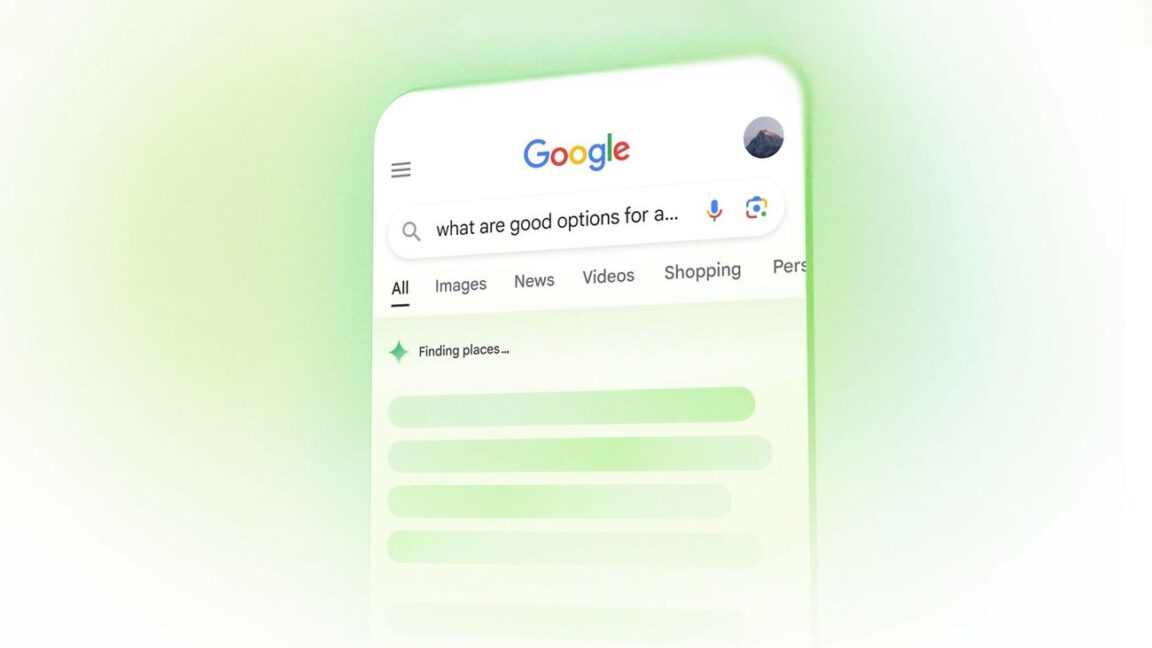
Surprising no one, new research says AI Overviews cause massive drop in search clicks
The Pew Research Center analysis shows how hard AI is hitting web traffic.
Ars Technica
758 points · by jonbaer · 1y ago · 845 comments
Google AI has been listing incorrect internal extensions causing departments to field calls for people trying to reach unrelated divisions and services, listing times and dates of events that don't exist at our addresses that people are showing up to, and generally misdirecting and misguiding people who really need correct information from a truth source like our websites.
We have to track each and every one of these problems down, investigate and evaluate whether we can reproduce them, give them a "thumbs down" to then be able to submit "feedback", with no assurance it will be fixed in a timely manner and no obvious way to opt ourselves out of it entirely. For something beyond our consent and control.
It's worse than when Google and Yelp would create unofficial business profiles on your behalf and then held them hostage until you registered with their services to change them.
Google's AI overview not only ignores this geographic detail, it ignores the high-quality NHS care delivery websites, and presents you with stuff from US sites like Mayo Clinic. Mayo Clinic is a great resource, if you live in the USA, but US medical advice is wildly different to the UK.
Weird because although I dislike what Google Search has become as much as any other HNer, one thing that mostly does work well is localised content. Since I live in a small country next to a big country that speaks the same language, it's quite noticeable to me that Google goes to great lengths to find the actually relevant content for my searches when applicable... of course it's not always what I'm actually looking for, because I'm actually a citizen of the other country that I'm not living in, and it makes it difficult to find answers that are relevant to that country. You can add "cr=countryXX" as a query parameter but I always forget about it.
Anyway I wasn't sure if the LLM results were localised because I never pay attention to them so checked and it works fine, they are localised for me. Searching for "where do I declare my taxes" for example gives the correct question depending on the country my IP is from.
(I mean, I don't generally make a big secret of it. But still.)
its not a UK wide one. The home page says "NHS Website for England".
I seem to remember the Scottish one had privacy issues with Google tracking embedded, BTW.
> So, if you've gone into labour somewhere in the remote Highlands and Islands, you'll get different advice than if you lived in Central London, where there's a delivery room within a 30 minute drive
But someone in a remote part of England will get the same advice as someone in central London, and someone in central Edinburgh will get the same advice as someone on a remote island, so it does not really work that way.
> if you live in the USA, but US medical advice is wildly different to the UK.
Human biology is the same, diseases are the same, and the difference in available treatments is not usually all that different. This suggests to me someone's advice is wrong. Of course there are legitimate differences of opinion (the same applies to differences between
The current system might not have perfect geographic granularity but that doesn't mean it isn't preferable to one that gives advice from half the world away.
> Human biology is the same, diseases are the same, and the difference in available treatments is not usually all that different
Accepted medical definitions differ, accepted treatments differ, financial considerations, wait times and general expectations of service vary wildly.
- Looking up a hint for the casino room in the game "Blue Prince", the AI summary gave me details of the card games on offer at the "Blue Prince Casino" in the next suburb over. There is no casino there.
- Looking up workers rights during a discussion of something to do with management, it directly contradicted the legislation and official government guidance.
I can't imagine how frustrating it must be for business-owners, or those providing information services to find that their traffic is intercepted and their potential visitors treated to an inaccurate version on the search page.
> "You can't get boiled rice from a clown" is a phrase that plays on expectations and the absurdity of a situation.
> The phrase "never stack rocks with Elvis" is a playful way of expressing skepticism about the act of stacking rocks in natural environments.
> The saying "two dogs can't build an ocean" is a colloquial and humorous way of expressing the futility or impossibility of a grand, unachievable goal or task.
They're just playing games. Of course that violates the 'never play games with an AI' rule, which is a playful way of expressing that AIs will drag you down to their level and then beat you over the head with incompetence.
But, they hired the best and brightest of my generation. How’d they screw it up so bad?
- willing to work on ads - who were successful in their process
and everyone just fell for the marketing?
Now it's the worlds biggest advertisement company, waging war on Adblockers and pushing dark pattern to users.
They've built a browser monopoly with Chrome and can throw their weight around to literally dictate the open web standards.
The only competition is Mozilla Firefox, which ironically is _also_ controlled by Google, they receive millions annually from them.
At some point, an article about how Google was showing this crap made it to the top of the rankings and they started taking the overview from it rather than the original Quora answer it used before. Somehow it still got it wrong, and just lifted the absurd answer from the article rather than the part where the article says it’s very wrong.
Amusingly, they now refuse to show an AI answer for that particular search.
All the ML tools seem to clearly say it's not safe, nor ethical - if you ask about throwing batteries in the sea then Google Search's summary is what you'd expect, completely inline with other tools.
If a large swathe of people choose to promote a position that is errant, 'for the memes' or whatever reason, then you're going to break tools that rely on broad agreement of many sources.
It seems like Google did the right thing here - but it also looks like a manual fix/intervention. Do Google still claim not to do that? Is there a watchdog routine that finds these 'attacks' and mitigates the effects?
A third-party LLM hallucinating something like that though? Hell no. It should be possible to sue for libel.
The venue organizers also ended up with a shit experience (and angry potential customer) while having nothing to do with the BS.
I have come across the same lack of commonsense from ChatGPT in other contexts. It can be very literal with things such as branded terms vs their common more generic meaning (e.g. with IGCSE and International GCSE - UK exams) which again a knowledgeable human would understand.
Every so often I get lost in the docs trying to do something that actually isn't supported (the library has some glaring oversights) and I'll search on Google to see if anyone else came up with a similar problem and solution on a forum or something.
Instead of telling me "that isn't supported" the AI overview instead says "here's roughly how you would do it with libraries of this sort" and then it would provide a fictional code sample with actual method names from the documentation, except the comments say the method could do one thing, but when you check the documentation to be sure, it actually does something different.
It's a total crapshoot on any given search whether I'll be saving time or losing it using the AI overview, and I'm cynically assuming that we are entering a new round of the Dark Ages.
So don’t worry about writing that documentation- the helpful AI will still cite what you haven’t written.
this rhymes a lot with gangsterism.
if you don’t pay our protection fee it would be a shame if your building caught on fire.
I expect courts will go out of their way to not answer that question or just say no.
You need to wait until they offer it as a paid feature. And they (and other LLM providers) will offer it.
Anecdotally, this happened back in analog days, too.
When I worked in local TV, people would call and scream at us if the show they wanted to see was incorrectly listed in the TV Guide.
Screamers: "It's in the TV Guide!"
Me (like a million times): "We decide what goes on the air, not the TV Guide."
The liability question also extends to defamation. Google is no longer just an arbiter of information. They create information themselves. They cannot simply rely on a 'platform provider' defence anymore.
It started well, agreed. But my recollection is the good Google lasted several years.
You're fine, you just lost a few verbal IQ points after fasting for 24 hours and doing blood work.
I guess I'm in the minority of people who click through to the sources to confirm the assertions in the summary. I'm surprised most people trust AI, but maybe only because I'm in some sort of bubble.
Let’s not pretend that some websites aren’t straight up bullshit.
There’s blogs spreading bullshit, wrong info, biased info, content marketing for some product etc.
And lord knows comments are frequently wrong, just look around Hackernews.
I’d bet that LLMs are actually wrong less often than typical search results, because they pull from far greater training data. “Wisdom of the crowds”.
Is that relevant when we already have official truth sources: our websites? That information is ours and subject to change at our sole discretion. Google doesn't get to decide who our extensions are assigned to, what our hours of operation are, or what our business services do.
Our initial impression of AI Overview was positive, as well, until this happened to us.
And bear in mind the timeline. We didn't know that this was happening, and even after we realized there was a trend, we didn't know why. We're in the middle of a softphone transition, so we initially blamed ourselves (and panicked a little when what we saw didn't reflect what we assumed was happening - why would people just suddenly start calling wrong numbers?).
After we began collecting responses from misdirected callers and got a nearly unanimous answer of "Google" (don't be proud of that), I called a meeting with our communications and marketing departments and web team to figure out how we'd log and investigate incidents so we could fix the sources. What they turned up was that the numbers had never been publicly published or associated with any of what Google AI was telling them. This wasn't our fault.
So now we're concerned that bad info is being amplified elsewhere on the web. We even considered pulling back the Google-advertised phone extensions so they forward either to a message that tells them Google AI was wrong and to visit our website, or admit defeat and just forward it where Google says it should go (subject to change at Google's pleasure, obviously). We can't do this for established public facing numbers, though, and disrupt business services.
What a stupid saga, but that's how it works when Google treats the world like its personal QA team. (OT, but bince we're all working for them by generating training data for their models and fixing their global scale products, anyone for Google-sponsored UBI?)
If Google shows bullshit about me on the top of its search, I'm helpless.
(for me read any company, person, etc)
No different from Google search results.
This is not strictly logical but I have a feeling I'm not alone.
Often the title sort of explains the whole topic (ie lack of parking in NY, or astronomers found the biggest quasar yet), then folks chirp in with their experiences and insight which are sometimes pretty wild.
Yet I too often am looking for the discussion. When I see there's high quality discourse or valuable experiences being shared, I'm more likely to read the full content of the article.
Me too. That is why sometimes I take the raw comment thread and paste it into a LLM, the result is a grounded article. It contains a diversity of positions and debunking, but the slop is removed. Social threads + LLMs are an amazing combo, getting the LLM polish + the human grounded perspective.
If I was in the place of reddit or HN I would try to generate lots of socially grounded articles. They would be better than any other publication because they don't have the same conflict of interests.
Harvest said comments and create a 1h, 1d, 1 week, all time digest.
Or, youre confusing primordial desire to be aligned with perceived peers -- checking what others say, then effortlessly nodding along -- with forming your own judgment.
But I never expected that this would also link back to my tendency to skip an article and just stick to what the top comments of a section have, HN or Reddit.
Because when you were still swinging from the trees a some generations back that was a survival trait.
I often click on the HN comments before reading the article because the article I very often nothing more than the headline and I'm more interested in the discussion.
At the same time, I have no issue disagreeing with whatever is the popular stance, there’s almost some catharsis in just speaking the truth along the lines of “What you say might be true in your circumstances and culture, but software isn’t built like that here.”
Regardless, I’d say that there’s nothing wrong with finding likeminded peers either, for example if everyone around you views something like SOLID and DRY as dogma and you think there must be a better, more nuanced way.
Either that, or everyone likes a good tl;dr summary.
This is where it breaks down; why would they shove in MORE ads when their readers are going down? I'm not saying it's a rational decision, of course.
I suspect a big part is metrics-driven development; add an aggressive newsletter popup and newsletter subscriptions increase, therefore it's effective and can stay. Add bigger / flashier ads and ad revenue increases, therefore the big and flashy ads can stay.
User enjoyment is a lot harder to measure. You can look at metrics like page visits and session length, but that's still just metrics. Asking the users themselves has two problems, one is lack of engagement (unless you are a big community already, HN doing a survey would get plenty of feedback), two is that the people don't actually know how they feel about a website or what they want (they want faster horses). Like, I don't think anybody asked Google for an AI summary of what they think you're searching for, but they did, and it made people stay on Google instead of go to the site.
Whether that's good for Google in the long run remains to be seen of course, back when Google first rolled out their ad problem it... really didn't matter to them, because their ads were on a lot of webpages. Google's targets ended up becoming "keep the users on the internet, make them browse more and faster", and for a while that pushed innovation too; V8, Chrome, Google DNS, Gears, SPDY/HTTP/2/3, Lighthouse, mod_pagespeed, Google Closure Compiler, etc etc etc - all invented to make the web faster, because faster web = more pageviews = more ad impressions = more revenue.
Of course, part of that benefited others; Facebook for example created their own ecosystem, the internet within the internet. But anyway.
The everyone just stops using it, cause it's shit and not worth the money.
Doesn't scale, but maybe that's the only way to survive.
It has little to do with overdesign or load times.
What do HN comments and AI Overviews have in common?
- All information went through a bunch of neurons at least once
- We don't know which information was even considered
- Might be completely false but presented with utmost confidence
- ...?
More generally speaking though, I do agree that comments probably tend to give people more of a dopamine hit than the content itself, especially if it’s long-form. However comments on HN often are quite substantial and of high quality, at least relatively speaking, and the earlier point about reading the articles often being a poor experience has a lot of merit as well. Why can’t it be a combination of all of the above (to various degrees depending on the individual, etc)?
From reading one or a few short comments I at least know what the linked article is about, which the original headline often does not reveal (no fault of those authors, their blogs are often specialized and anyone finding the article there has much more context compared to finding the same headline here on a general aggregation site).
If something is overwhelmingly long, especially considering the subject matter, I just skip to the comments or throw it in an LLM to summarize.
I do this on hackernews, and especially on news-sites I check (cleantechnica, electrec, reneweconomy) and I actively shun sites _without_ comments.
Hey, coming out feels good - I thought I was the only one.
Except the other commenters didn't read the article either. Now you're all basically just LLM using the title as a prompt.
https://lite.cnn.com for example.
I'm not a big fan of CNN but this is something I'd like to see more of.
I will need $100M in seed funding.
* Page loads, immediately when I start scrolling and reading a popup trying to get tracking consent
* If I am lucky, there is a "necessary only". When unlucky I need to click "manage options" and first see how to reject all tracking
* There is a sticky banner on top/bottom taking 20-30% of my screen upselling me a subscription or asking me to install their app. Upon pressing the tiny X in the corner it takes 1-2 seconds to close or multiple presses as I am either missing the x or because there is a network roundtrip
* I scroll down a screen and get a popup overlay asking me to signup for their service or newsleter, again messing with the x to close
* video or other flashy adds in the content keep bugging me
This is btw. usually all before I even established if the content is what I was looking for, or is at any way useful to me (often it is not).
If you use AI or Kagi summarizr, you get ad-free, well-formatted content without any annoyance.
But this is because there is no viable monetization model for non-editorial written word content anymore and hasn’t been for a decade. Google killed the ecosystem they helped create.
Google also killed the display ad market by monopolizing it with Adsense and then killed Adsense revenue sharing with creators to take all the money for themselves by turning their 10 blue links into 5 blue ads at the top of the search results. Search ads is now the most profitable monopoly business of all time.
YouTube is still young, but give it time. Google will eventually kill the golden goose there as well, by trying to harvest too many eggs for themselves.
The same will happen with AI results as well. Companies will be happy to lose money on it for a decade while they fight for dominance. But eventually the call for profits will come and the AI results will require scrolling through mountains of ads to see an answer.
This is the shape of this market. Search driven content in any form is and will always be a yellow pages business. Doesn’t matter if it’s on paper or some future AGI.
Plus there is a subscription that eliminates ads. I think it’s a great experience for users. Many creators also seem to do well too.
I think this should be the model for a new generation of search. Obviously there will be ads/sponsored results. But there should be a subscription option to eliminate the ads.
The key part here will be monetization for content creators. People are no longer clicking links, so how do they get revenue?
I think direct payments from AI companies to content creators will be necessary or the whole internet will implode.
Ads are useful and have their place in keeping the web accessible to everyone, but Google's anti user policies really stretch that relationship.
And they have some kind of little games now, which I don't have any interest in, but they have no option to remove them from my suggestions.
Have you seen how many ads are in a video on YouTube? On desktop its no issue, but I use the YouTube app on my Apple TV now and then, and I tried to watch a few relatively short video, and I saw easily 4-6 ads per video, some of which were 90+ seconds long. Its awful
You must be joking. YT is so insufferable, I can only watch it via Firefox with uBlock Origin and Privacy Badger active. And even then only if and as long as I absolutely have to.
If I'm searching "how to get an intuitive understanding of dot product and cross product", any open source model right now will do a perfectly fine job. By the time that the ad-pocalypse reaches AI answers, the models I mention will be at the point of being able to be run locally using consumer hardware. Probably every phone will run one.
I suspect in the next decade we will see the business model of "make money via advertising while trying/pretending to provide knowledge" become well and truly dead.
[citation needed]
My intuitive sense—informed by media coverage, behaviors exhibited by AI companies and their investors, and a very foundational understanding of how it all works—is that AI models have largely hit a wall and have struggled to improve at all, in some very public cases the newer versions perform worse than their predecessors. The fact that most of the benchmarks are hardly more than internal tests designed to highlight very narrow performance metrics has made getting any reliable sense of the state of the art rather difficult. They do indeed have some extremely useful purposes, but I have yet to see anything that broadly justifies the expense of it all (in plain economic terms, but also in sociopolitical and environmental terms) and a lot of indications that they have recently reached some very firm limits.
Adsense is just for little hobby websites, no actual businesses use it. They all use header bidding, which is (mostly) not controlled by Google.
[...]
> But Google moved quickly to reestablish AdX’s power. It created a competitor to header bidding called “Open Bidding,” which let Google take an extra cut of revenue. And under the adoption of header bidding, Google’s AdX ultimately got a “last look” advantage when publishers chose to feed the winning header bid into their publisher ad server — which most often was Google’s DFP. That’s because AdX’s advertiser buyers would then have the option to bid as little as a penny more than the winning header bid to secure the most attractive ad space.[0]
Google's header bidding-related shenanigans were a big part of the antitrust case against them, and they were found to be "monopolizing open-web digital advertising markets"[1], so I wouldn't say that it is mostly not controlled by Google.
[0] https://www.theverge.com/2024/9/24/24253293/google-ad-tech-a... [1] https://www.justice.gov/opa/pr/department-justice-prevails-l...
I almost spit out my drink.
Give it time.
The current subscription situation for LLM stuff actually makes me hopeful.
If you did, that doesnt mean you should. If you can, that doesnt mean you should.
The only inaccurate thing of that meme page is that you only need to uncheck 5 cookie "partners", when in reality there should be at least a few hundred.
  src: "https://js.monitor.azure.com/scripts/b/ai.2.min.js", // The SDK URL Source
  crossOrigin: "anonymous", // When supplied this will add the provided value as the cross origin attribute on the script tag
Anyway, is it really not even possible to set up things like NoScript and uBlock Origin on mobile?
Indeed... click the video play button :)
I needs to have 15+ to really capture that modern web experience.
document.querySelectorAll("[type='checkbox']").forEach(c => c.checked = undefined)
Probably useless for mobile though, unless you can punch it in the omnibar with `javascript:` prefix
Most of those are like:
    $movie release date

    <five paragraphs of garbage>

While we don't know the actual $movie release date yet, ...What is the price of the Switch 2?
The Switch 2 can be purchased with money. <Insert the Wikipedia article about currencies since the bronze age>
Let's start at the beginning. I was born in 1956 in Chicago. My mother was a cruel drunk and the only thing my father hated more than his work was his family.
But I don't know, I feel like personal stories are what really makes a blog worth reading?
I don't like it when it's unnecessary "info dump" type. Like, "we all know the benefits of garlic (proceeds to list the well known benefits of garlic)". It's not personal or relevant.
I just want there to be a well formatted way of viewing the recipe at the bottom for quickly checking the recipe on a second or third visit.
It's so sad, cause it drags down good pages. I recently did a lot of research for camping and outdoor gear, and of course I started the journey from Google. But a few sites kept popping up, I really liked their reviews and the quality of the items I got based on that, so I started just going directly to them for comparisons and reviews. This is how it's supposed to work, IMHO.
jesus wept.
It's not simply enough that a product "makes money" it must "make more money, every quarter, forever" which is why everything, not even limited to tech, but every product absolutely BLOWS. It's why every goddamn thing is a subscription now. It's why every fucking website on the internet wants an email and a password so they can have you activate an account, and sell a known active email to their ad partners.
The aricle talks about AI overviews. As exemplified by the AI summary at the top of Google search results page. That thing is free.
As someone else said, you can probably filter responses through a small purpose-built/trained LLM that strips away dark patterns.
If you start getting mostly empty responses as a result, then there was no value prior to the stripping anyway.
Oh bless your heart.
You don't even need to bring up corporate collusion, countless price gouging schemes, or the entire enshittification movement to understand that competition discovers the dark patterns. Dark patterns aren't something to be avoided, they're the natural evolution of ever-tighter competition.
When the eyeball is the product, you get more checks if you get more eyeballs. Dark patterns are how you chum the water to attract the most product.
I never use those. I suspect that in many cases if there are "legitimate interest" options¹ those will remain opted-in.
----
[1] which I read as "we see your preference not to be stalked online, but fuck you and your silly little preferences we want to anyway"
[1] https://addons.mozilla.org/en-US/firefox/addon/consent-o-mat...
- "Please don't track me."
- "But what if we realllly want to?"
A normal response to that would be an even more resounding FCK NO, but somehow the EU came to the completely opposite conclusion.
"Necessary" means "necessary for fulfilment of the contract". Your name and address are necessary data when you order off Amazon, your clickstream is not.
I think you'll find that GDPR says the opposite and the only reason this continues to happen is because authorities don't have enough resources to go after every at the same time and also because European authorities have a hard time against US companies.
I always use the inspect tool to just remove the popup. Interacting with it could be considered consent.
And to find that out you have to hit Page Down about twenty times, scanning as you, because the content is padded out to increase ad coverage.
Also, I felt like in long term that's going to kill off the good faith of all those smaller sites that are actually good, while the bigger ones still produce subpar contents.
ad-free? For now. That's just a matter of time.
Yesterday's SEO battles are today battles to convince LLMs to produce ad tokens. The corpus is already ridden of such content. And LLM make it even easier to produce more such spam.
Some annoyed me so much I even disabled JS for them on my phone. I do that more rarely because of how unnecessarily convoluted that setting is in Chromium browsers on Android. You have to navigate 4 levels deep in the settings and enter the domain you want to block into a text field!
For example, I have JS disabled on everything Substack (and it really annoys me when I end up on Substack hosted on a custom domain).
This is the huge one for me. If you search for something in natural language, the results you get on any search engine completely suck - yet ironically the AI overview is generally spot on. Search engines have been stuck in ~2003 for decades. Now the next 'breakthrough' is to use their LLMs to actually link to relevant content instead of using pagerank+ or whatever dysfunctional SEO'd algorithm they're still using.
It was with the best of intentions but cookie banners have done more to hurt web browsing than anything else in the last decade
Even website makers who don't use predatory tracking end up including them as a CYA tactic
The article is about Google (and other traditional search engines) snatching away clicks from web site owners. What you describe is AI tools (for lack of a better word[1]) snatching away traffic from the ruling gatekeepers of the web.
I think the latter is a much bigger shift and might well be the end of Google.
By extension it will be the end of SEO as we know it. A lot of discussion currently (especially on HN) is about how to keep the bad crawlers out and in general hide from the oh so bad AI guys. That is not unlike the early days of search engines.
I predict we will soon see a phase where this switches by 180° and everyone will see a fight to be the first one to be accessed to get an opportunity to gaslight the agent into their view of the world. A new three letter acronym will be coined, like AIO or something and we will see a shift from textual content to assets the AI tools can only link to.
Maybe this has already happened to some degree.
[1] Where would I put the boundary? Is Kagi the former or the latter? I'd say if a tool does a non-predetermined number of independent activities (like searches) on its own and only stops if some criteria are fulfilled it is clearly in the latter category.
In this model, only monetizable content will be generated though.
As much as we abhor what advertising has done to the web, at least it’s independent of content: pair quality content with ads, make money.
In the brave new AI search world, only content which itself is directly monetizable will be created. E.g. astroturf ads
Huh, the exact opposite happened. Create as much filler content as possible, optimized for SEO, generate thousands of variants to capture search traffic, cover as much of the screen as possible with ads, use tricks to increase page view count, and then make money.
Publishers of quality content have moved to subscriptions, which is a different kind of trouble.
> only content which itself is directly monetizable will be created
We have already been here for a while and it can hardly get any worse.
Or content that is not meant to make money (e.g. opinion pieces arguing for a cause), or is very specific to products that make money (e.g. documentation, manuals), or is funded by governments or non-profits for the public good.
The term you're looking for is GEO (Generative Engine Optimization), though your "AIO" is also used. It's the new frontier.
And you've nailed the 180° turn: the game is no longer about blocking crawlers but about a race to become their primary source. The goal is to be the one to "gaslight the agent" into adopting your view of the world. This is achieved not through old SEO tricks, but by creating highly structured, authoritative content that is easy for an LLM to cite.
Your point about shifting to "assets the AI tools can only link to" is the other key piece. As AI summarization becomes the norm, the value is in creating things that can't be summarized away: proprietary data, interactive tools, and unique video content. The goal is to become the necessary destination that the AI must point to.
The end of SEO as we know it is here. The fight for visibility has just moved up a layer of abstraction.
i can definitely see LLMs companies offering content creators a bump in training priority for a fee. It will be like ad-sales but you're paying for the LLM to consider your content at a higher priority than your competition.
I guess if my experience was as much degraded as yours I wouldn't bother with the web anymore, so yay for AI summarizers, at least for the time being. And don't get me wrong, a summarizer is a workaround, not a solution.
Sometimes it breaks the site so that you can't scroll or something, but that's quite rare. And most of the time it's solved by a refresh. Very infrequently you need to whitelist the site and then deal with the nag screen manually. A bit annoying, but way better than rawdogging it.
Works on desktop & mobile.
Clicking on a video to mute it also needs to navigate to a sponsor’s page and break the back button. And then the page reloads which doubles the page view count. Genius web dev decision. I bet they said “there’s literally no downsides to doing this!”
Also, the ads need to autoplay on full volume, often bypassing my system volume somehow so they can play even though the rest of the audio is on mute and none of the mute functionality works. Surely the user simply forgot they had mute on so we should just go ahead and fix that.
They also need to play on 4K ultra HD to use my entire monthly cell plan if I don’t stop it in the first 3 seconds, which I can’t do because the video has to fully load before I’m able to interact with it to click stop. Or clicking stop pauses it and then automatically restarts playing the video.
These webdev chrome devs need to stop adding new random features and start fixing the basic functionality. I don’t want fading rotating banners that save 3 lines of CSS. I want the “DO NOT AUTOPLAY. EVER.” Button to actually work.
I might come back later though.
https://marginalia-search.com/site/www.fontstruct.com?view=t...
https://marginalia-search.com/search?query=special%3Apopover...
My web experience has been reduced to a handful of bookmarks, X, and chatgpt or grok. Occasionally I’ll go looking for government sites to validate something I read on X. Everything else is noise
This is naturally not addressed in the US "AI" Action Plan, same as copyright theft.
Now. Nothing stopping them from injecting ads in their summary. And chances are that they will eventually
for now! and we should enjoy it while it lasts. Ad-driven AIs are coming, it is inevitable.
AI stole all the content from those websites, starving them from ad revenue.
The Google overview is made by the same company that puts those ads in those websites in first place.
What is coming next is that there will be ads in the overview and you will have no choice but to read it because all its cited links will be rotten.
Those data centers don't pay for themselves, you know.
1. Open safari
2. Type something so that it goes search google
3. A web results page appears
4. Immediately a popup appears with two buttons:
- They have the same size
- One is highlighted in blue and it says CONTINUE
- The other is faint and reads "Stay in browser" (but in my native language the distinction is even less clear)
5. Clicking CONTINUE means "CONTINUE in the app", so it takes me to the Google App (or, actually, to the app store, because I don't have this app), but this does not end there!
6. If I go back to the browser to try to fucking use google on my fucking browser, as I fucking wanted to, I realize that doing "Back" now constantly moves me to the app (or app store). So, in effect, I can never get the search results once I have clicked continue. The back button has been highjacked (long pressing does not help). My only option is to NEVER click continue
7. Bonus: All of this happens regardless of my iPhone having the google app installed or not
So: Big button that says "CONTINUE" does not "CONTINUE" this action (it, of course, "CONTINUES" outside).
I just want to FUCKING BROWSE THE WEB. If I use the google app, then clicking a link presumably either keeps me in its specific view of the web (outside of my browser), or it takes me out of the app. This is not the experience I want. I have a BROWSER for a reason (e.g. shared groups/tabs...)
Oh! And since this happens even if I don't have the app, it takes me to the app store. If I install the app via the app store, it then DOES NOT have any mechanism to actually "Continue". It's a fresh install. And, of course, if I go back to the browser and hit "back", I can't.
So for users who DO NOT HAVE THE APP, this will NEVER LET THEM CONTINUE. It will PREVENT THEM FROM USING GOOGLE. And it will force them to do their query AGAIN.
Did the people who work on this feature simply give up? What. The. Fuck?
This behavior seems to happen on-and-off, as if google is gaslighting me. Sometimes it happens every time I open Safari. Some other times it goes for days without appearing. Sometimes in anonymous tabs, sometimes not. Logged in or not, I've seen both scenarios.
I can't be sure, but I genuinely believe that the order of the buttons has been swapped, messing with my muscle memory.
Basically it's this image: https://www.reddit.com/r/iphone/comments/1m76elp/how_do_i_st...
Except a still image cannot describe the excruciating process of dealing with it — especially realizing "oh, wait, I clicked the wrong button, oh wait, no no no, get out of the app store, oh oh oh what did I type again? Damn I lost it all!..."
[1]I would quit before implementing this feature. It disgusts me, and we're talking about google, not some run-of-the-mill company whom you have to work for to barely survive. This is absolutely shameful.
A year ago my ad-supported website had 100,000 monthly active users. Now, like the article says, traffic is down 40% thanks to Google AI Overview zero clicks. There's loss of revenue, yes, but apart from that, I'm wondering how people can find my work, if I produce more? They seldom click through on the "source" attributes, if any.
I wonder, am I standing at the gates of hell in a line that includes Tower Records and Blockbuster? Arguably because I'm among those that built this dystopia with ever-so-helpful technical content.
Maybe, but there’s a big difference - Netflix doesn’t rely on Blockbuster, and Spotify doesn’t need Tower Records. Google AI results do need your articles, and it returns the content of them to your readers without sending you the traffic. And Google is just trying to fend off ChatGPT and Meta and others, who absolutely will, if allowed, try to use their AI to become the new search gateways and supplant Google entirely.
This race will continue as long as Google & OpenAI & everyone else gets to train on your articles without paying anything for them. Hopefully in the future, AI training will either be fully curated and trained on material that’s legal to use, or it will license and pay for the material they want that’s not otherwise free. TBH I’m surprised the copyright backlash hasn’t been much, much bigger. Ideally the lost traffic you’re seeing is back-filled with licensing income.
I guess you can rest a little easier since we got to where we are now not primarily because of technical means but mostly by allowing mass copyright violation. And maybe it helps a little to know that most content-producing jobs in the world are in the same boat you are, including the programmers in your target audience. That’s cold comfort, but OTOH the problem you (we) face is far more likely to be addressed and fixed than if it was only a few people affected.
Even when you have them dead to rights (like with the Whisper hallucinations) the legal argument is hard to make. Besides, the defendants have unfathomable resources.
As sad as it is, I think we're looking at the end of the open internet as we've known it. This is massive tragedy of the commons situation and there seems to be roughly zero political will to enact needed regulations to keep things fair and sustainable. The costs of this trend are massive, but they are spread out across many millions of disparate producers and consumers, while the gains are extremely concentrated in the hands of the few; and those few have good lobbyists.
The beginning of the end was including Wikipedia entries directly in the search results, although arguably even some of the image results are high quality enough to warrant skipping visiting the actual website (if you were lucky enough to get the image at the target site in the first place) So maybe it goes back sooner than that.
It does speak to one of the core problems with AI is the one time productivity boost from using all historical data created by humans is no longer going to be as useful going forward since individual contributors will no longer build and provide that information unless the incentive models change.
Every year they put the threshold higher and it results in more and more people getting burned. Of course the big, established brands are protected.
So they don't want the average joe's opinion. And they don't want to funnel money to you, now that you have fulfilled your purpose.
It happens for all VC based products since the drive on returns of invested capital is so high.
Put another way -- early stage products that every uses and love (in most not all cases) should not be assumed to be the end product.
Yes, maybe a small amount of people ultimately contributing but if their input is truly novel and “true” then what’s the downside?
If you still have a connection to your readers (e.g. email) you can still reach them. If they've formed a community, even better. If not, its a good time to work on that.
Google doesn't really have that. I have zero sense of community with Google. And that's why they'll die if something doesn't change.
Simple content that can be conveyed in a few succinct lines of text (like how to uninstall Homebrew) is actually one of the great use cases for AI summaries.
I’m sorry that it’s losing you revenue, but I’d much rather get a quick answer from AI than have to roll the dice on an ad-supported search result where I have to parse the layout, dodge the ads, and extract the relevant info from the filler content and verbiage
Utopian fantasy: interact with the ai - novel findings are registered as such and "saved" and made available to others.
Creative ideas are registered as such, if possible, theyre tested in "side quests" ie the ai asks - do you have 5min to try this? You unblock yourself if it works & see in the future how many others profited as well (3k people read this finding).
Its all a logistics question
If I create content like recipes, journalism etc, previously I had exclusive rights to my created content and could monetise it however I wanted. This has mostly led to what we have today, some high quality content, lots of low quality content, mostly monetised through user hostile ads.
Previously, if I wanted to take a recipe from "strawberry-recipes.cool" and published it on my own website with a better user experience, that wouldn't have been allowed because of copyright rules. I still can't do that, but Google can if it's done through the mechanism of AI summaries.
I think the worst case scenario is that people stop publishing content on the web altogether. The most likely one is that search/summary engines eat up money that previously came from content creators. The best one is that we find some alternative, third way, for creators to monotise content while maintaining discoverability.
I'm not sure what will happen, and I'm not denying the usefulness of AI summaries, but it feels easy to miss that, at their core, they're a fundamental reworking of the current economics of the internet.
This would be lovely.
> I think the worst case scenario is that people stop publishing content on the web altogether. The most likely one is that search/summary engines eat up money that previously came from content creators.
More than likely, people return to publishing content because they love the subject matter and not because it is an angle to “create content” or “gain followers” or show ads. No more “the top 25 hats in July 2025” AI slopfest SEO articles when I look for a hat, but a thoughtful series of reviews with no ads or affiliate links, just because someone is passionate about hats. The horror! The horror!
Why would you do that if you thought it was going to be hoovered up by some giant corporation and spat out again for $20 a month with no attribution.
― Henry Miller (1964). “Henry Miller on Writing”, New Directions Publishing
"… and now its Sam Altman’s reward too!"
― Jayden Milne (2025). https://jayd.ml/about/
I think both are true.
[B]ecause they love the subject matter and not because it is an angle to “create content” or “gain followers” or show ads.
I agree the current model sucks, but I think it being replaced is only good if it's replaced with something better.
> More than likely, people return to publishing content because they love the subject matter
I'd love the idea of people doing things because they're passionate, but I feel a little unsure about people doing things because they're passionate, generating money from those things, but all that money going to AI summariser companies. I think there's some pretty serious limits too, journalists risk their safety a lot of the time, and I can't see a world where that happens purely out of "passion" without any renumeration. Aside from anything else, some acts of journalism like overseas reporting etc, isn't compatible with working a seperate "for-pay" job.
Someone who publishes content because they love the subject matter would only reach enough of an audience to have an impact if they work on it, a lot, and most people wouldn't do that without some expectation of return on investment, so they'd follow the influencer / commercial publication playbook and end up in the same place as the established players in the space are already.
If you're satisfied of being on the 50th page on the Google results, then that's fine. Nobody will find you though.
The web is on a trajectory where a local dyi zine will reach as many readers as an open website. It might even be cheaper than paying for a domain+hosting once that industry contracts and hosting plans aren't robust enough to keep up with requests from vibe-coded scrapers.
I disagree with that. There are still people out there doing that out of passion, that hasn't changed (it's just harder to find). Bad actors who are only out there for the money will continue trying to get the money. Blogs might not be relevant anymore, but social media influencing is still going to be a thing. SEO will continue to exist, but now it's targeted to influence AIs instead of the position in Google search results. AIs will need to become (more) profitable, which means they will include advertising at some point. Instead of companies paying Google to place their products in the search or influencers through affiliate links, they will just pay AI companies to place their products in AI results or influencers to create fake reviews trying to influence the AI bots. A SEO slop article is at least easy to detect, recommendations from AIs are much harder to verify.
Also it's going to hit journalism. Not everyone can just blog because they are passionate about something. Any content produced by professionals is either going to be paywalled even more or they need to find different sources of income threatening journalistic integrity. And that gives even more ways to bad actors with money to publish news in their interest for free and gaining more influence on the public debate.
Recipes are not protected by copyright law. That's _why_ recipe bloggers have resorted to editorialising recipes, because the editorial content is copyrightable.
Quite clearly heading in that direction, but with a twist: the only people left will be advertising or propaganda, if there's no money in authenticity or correctness.
And this is the reason why Google took its sweet time to counter OpenAI's GPT3. They _had_ to come up with this, which admittedly disrupts the publishers business model but at least if Google is successful they will keep their moat as the first step in any sales funnel.
This is not true, you absolutely could have republished a recipe with your own wording and user experience.
I'm guilty of not clicking when I'm satisfied with the AI answer. I know it can be wrong. I've seen it be wrong multiple times. But it's right at the top and tells me what I suspected when I did the search. The way they position the AI overview is right in your face.
I would prefer the "AI overview" to be replaced with something that helps me better search rather than giving me the answer directly.
Which also introduces the insidious possibility that AI summaries will be designed to confirm biases. People already use AI chat logs to prove stuff, which is insane, but it works on some folks.
Hell will freeze over first
1. The anchor icon.
2. Then one of the sites that appear on the right (on desktop).
And yet, "the algorithm" has always been their first defense whenever they got a complaint or lawsuit about search results; I suspect that when (not if) they get sued over this, they will do the same. Treating their algorithms and systems as a mysterious, somewhat magic black box.
And there's no AI garbage sitting in the top of the engine.
Searching for “who is Roger rabbit” gives me Wikipedia, IMDb and film site as results.
Searching for “who is Roger rabbit?” gives me a “quick answer” LLM-generated response: “Roger Rabbit is a fictional animated anthropomorphic rabbit who first appeared in Gary K. Wolf's 1981 novel…” followed by a different set of results. It seems the results are influenced by the sources/references the LLM generated.
In your case, I think that it is just the interrogation point in itself at the end that somehow has an impact on the results you see.
However, it's pretty bad for local results and shopping. I find that anytime I need to know a local stores hours or find the cheapest place to purchase an item I need to pivot back to google. Other than that it's become my default for most things.
I’ve also tried various engines over the years. Kagi was the first one that didn’t have me needing to go back to Google. I regularly find things that people using Google seem to not find. The Assistant has solved enough of my AI needs that I don’t bother subscribing to any dedicated AI company. I don’t miss Google search at all.
I do still using Google Maps, as its business data still seems like the best out there, and second place isn’t even close. Kagi is working on their own maps, but that will be long road. I’m still waiting for Apple to really go all-in, instead of leaning on Yelp.
Apple really needs to update Safari to let people choose their search engine, instead of just having the list of blessed search engines to choose from.
6 months ago, "what temp is pork safe at?" was a few clicks, long SEO optimised blog post answers and usually all in F not C ... despite Google knowing location ... I used it as an example at the time of 'how hard can this be?'
First sentance of Google AI response right now: "Pork is safe to eat when cooked to an internal temperature of 145°F (63°C)"
If you made a bet with your friend and are using the AI overview to settle it, fine. But please please click on an actual result from a trusted source if you’re deciding what temperature to cook meat to
But SEO slop machines have made it so hard to find the good websites without putting in more legwork than makes sense a lot of the time. Funnily enough, this makes AI look like a good option to cut through all the noise despite its hallucinations. That's obviously not acceptable when it comes to food safety concerns though.
Meanwhile the AI overview routinely gives me completely wrong information. There's zero chance I'm going to trust it when a wrong answer can mean I give my family food poisoning.
I agree that there is a gigaton of crap out there, but the quality information sources are still there too. Google's job is to list those at the top and it actually has done so this time, although I'll acknowledge it doesn't always and I've taken to using Kagi in preference for this reason. A crappy AI preview that can't be relied on for anything isn't an acceptable substitute.
The reality is, every time someone's search is satisfied by an organic result is lost revenue for Google.
We should remember that's partly Google's fault as well. They decided SEO sites were OK.
We need AI that’s trained exclusively on verified data and not random websites and internet comments.
It's genuinely harder than it's ever been to find good information on the internet, but when you're dealing with food safety information, it's really worth taking the extra minute to find a definitive source.
https://www.foodsafety.gov/food-safety-charts/safe-minimum-i...
So, I'd agree -- safety info from an LLM is bad. But generally, the /flavor/ (heh) of information that such data comprises is REALLY good to get from LLMs (as opposed to nuanced opinions or subjective feedback).
I don’t think this is substantively different from cooking temperature, so I’m not trusting that either.
After all, AI can theoretically ask follow-up questions that are relevant, can explain subtleties peculiar to a specific situation or request, can rephrase things in ways that are clearer for the end user.
Btw, "What temperature should a food be cooked to" is a classic example of something where lots of people and lots of sources repeat incorrect information, which is often ignored by people who actually cook. Famously, the temp that is often "recommended" is only the temp at which bacteria/whatever is killed instantly - but is often too hot to make the food taste good. What is normally recommended is to cook to a lower temperature but keep the food at that temperature for a bit longer, which has the same effect safety-wise but is much better.
I love this reply because you support your own point by repeating information that is technically incorrect.
To qualify myself, I have a background in food service. I've taken my "Food Safe" course in Ontario which is not legally mandated to work in food service, but offered by our government-run health units and many restaurants require a certificate to be employed in any food handling capacity (wait staff or food prep).
There is no such thing as "killed instantly." The temperature recommendations here in Canada, for example, typically require that the food be held at that temperature for a minimum of 15 seconds.
There is some truth in what you say. Using temperature to neutralize biological contaminants is a function of time and you can certainly accomplish the same result by holding food at lower temperature for a longer period of time. Whether this makes the food "taste better" or not depends on the food and what you're doing.
Sous Vide cooking is the most widely understood method of preparation where we hold foods at temperatures that are FAR lower than what is typically recommended, but held for much longer. I have cooked our family Thanksgiving Turkey breast at 60C sous vide, and while I personally like it... others don't like the texture. So your mileage may vary.
My point is that you're making a bunch of claims that have grains of truth to them, but aren't strictly true. I think your comment is an application of the dunning kruger effect. You know a little bit and because of that you think you know way more than you actually do. And I had to comment because it is beautifully ironic. Almost as if that paragraph in your comment is, itself, AI slop lol
https://en.m.wikipedia.org/wiki/Mett
When I searched for the safe temperature for pork (in German), I found this as the first link (Kagi search engine)
> Ideally, pork should taste pink, with a core temperature between 58 and 59 degrees Celsius. You can determine the exact temperature using a meat thermometer. Is that not a health concern? Not anymore, as nutrition expert Dagmar von Cramm confirms: > “Trichinae inspection in Germany is so strict — even for wild boars — that there is no longer any danger.”
https://www.stern.de/genuss/essen/warum-sie-schweinefleisch-...
Stern is a major magazine in Germany.
But anything that actually matters could be politicized at any time. I remember the John Gummer Burger Incident: http://news.bbc.co.uk/1/hi/uk/369625.stm , in the controversy over whether prion diseases in beef (BSE) were a problem.
1. https://www.foodsafety.asn.au/australians-clueless-about-saf... 2. https://www.foodsafety.gov/food-safety-charts/safe-minimum-i... 3. https://pork.org/pork-cooking-temperature/
All three were highly informative, well cited sources from reputable websites.
I then chatted that back to it, and it was like, oh ya, I made a mistake, you're right, sorry.
Anyways, luckily I did not get sick.
Moral of the story, don't get mentally lazy and use AI to save you the brain it takes for simple answers.
Why are people downvoting this? I’ve literally never seen anyone use a thermometer to cook a burger or steak or pork chop. A whole roasted turkey, sure.
For whole meats, it's usually safe to be rare and you can tell that by feel, though a thermometer is still useful if you aren't a skilled cook or you are cooking to a doneness you aren't familiar with.
i havent heard it for burgers, but steaks for sure.
Why would you purchase meat that you suspect is diseased? Even if you cook it well-done, all the (now dead) bacteria and their byproducts are still inside. I don't understand why people do this to themselves? If I have any suspicion about some meat, I'll throw it away. I'm not going to cook it.
People have been eating pork for over 40,000 years. There’s speculation about whether pork or beef was first a part of the human diet.
(5000 words later)
The USDA recommends cooking pork to at least 145 degrees.
First result under the overview is the National Pork Board, shows the answer above the fold, and includes visual references: https://pork.org/pork-cooking-temperature/
Most of the time if there isn't a straightforward primary source in the top results, Google's AI overview won't get it right either.
Given the enormous scale and latency constraints they're dealing with, they're not using SOTA models, and they're probably not feeding the model 5000 words worth of context from every result on the page.
Maybe they could just show the links that match your query and skip the overview. Sounds like a billion-dollar startup idea, wonder why nobody’s done it.
Trust it if you want I guess. Be cautious though.
Separately, yes, you do normally sear it afterwards. It's for flavor/appearence/texture reasons though, and a number of people recommend mildly chilling it (say, for 15min or so) first so that you don't overcook any of the interior from the sear. The pan should be much hotter than a lot of people expect.
First result: https://www.porkcdn.com/sites/porkbeinspired/library/2014/06...
Second result: https://pork.org/pork-cooking-temperature/
AI: 63C
First result: Five year old reddit thread (F only discussion, USDA mentioned).
Second result: ThermoWorks blog (with 63C).
Third result: FoodSafety.gov (with 63C)
Forth result: USDA (with 63C)
Seems reasonable enough to scan 3-4 results to get some government source.
I know you can’t necessarily trust anything online, but when the first hit is from the National Pork Board, I’m confident the answer is good.
No it wasn't, most of the first page results have the temperature right there in the summary, many of them with both F and C, and unlike the AI response, there is much lower chance of hallucinated results.
So you've gained nothing
PS Trying the same search with -ai gets you the full table with temperatures, unlike with the AI summary where you have to click to get more details, so the new AI summary is strictly worse
The problem is there is no money and fame in using it that way, or at least so people think in the current moment. But we could return to enforcing some sort of clear, pro-reader writing and bury the 2010s-2020s SEO garbage on page 30.
Not the mention that the LLMs randomly lie to you with less secondary hints at trustworthiness (author, website, other articles, design etc.) than you get in any other medium. And the sustainability side of incentivizing people to publish anything. I really see the devil of convenience as the only argument for the LLM summaries here.
We could.
But it will absolutely not happen unless and until it can be more profitable than Google's current model.
What's your plan?
> Not the mention that the LLMs randomly lie to you with less secondary hints at trustworthiness (author, website, other articles, design etc.) than you get in any other medium. And the sustainability side of incentivizing people to publish anything. I really see the devil of convenience as the only argument for the LLM summaries here.
Well, yes. That's the problem. Why rely on the same random liars as taste-makers?
> The next full moon in New York will be on August 9th, 2025, at 3:55 a.m.
"full moon time LA"
> The next full moon in Los Angeles will be on August 9, 2025, at 3:55 AM PDT.
I mean, it certainly gives an immediate answer...
When our grandmothers and grandfathers were growing up, there was a real threat to their health that we don’t face anymore. No, I’m not talking about the lack of antibiotics, nor the scarcity of nutritious food. It was trichinosis, a parasitic disease that used to be caught from undercooked pork.
The legitimate worry of trichinosis led their mothers to cook their pork until it was very well done. They learned to cook it that way and passed that cooking knowledge down to their offspring, and so on down to us. The result? We’ve all eaten a lot of too-dry, overcooked pork.
But hark! The danger is, for the most part, past, and we can all enjoy our pork as the succulent meat it was always intended to be. With proper temperature control, we can have better pork than our ancestors ever dreamed of. Here, we’ll look at a more nuanced way of thinking about pork temperatures than you’ve likely encountered before."
Sorry, what temperature was it again?
Luckily there's the National Pork Board which has bought its way to the top, just below the AI overview. So this time around I won't die from undercooked pork at least.
However that site gives the temperature for Pork as 71C which is not what USDA says but is correct. So using the USDA recommendation does have a risk according to at least Canada and UK
https://arstechnica.com/google/2025/01/just-give-me-the-fing...
Instructions are here: https://support.mozilla.org/en-US/kb/add-custom-search-engin...
The "URL with %s in place of search term" to add is:
https://www.google.com/search?q=%s&client=firefox-b-d&udm=14
window.addEventListener('load', function() { var things = this.document.getElementsByClassName('M8OgIe'); for (var thing of things) { thing.style.display = 'none'; } }, false);
They’re actually pretty useful. It tends to be a very brief summary of the top results, so you can tell if anything is worth clicking on.
That said, udm=14 has still been a huge plus for me in terms of search engine usability, so it's my default now.
Of course they need to make the AI overviews suck less, but saying it’s unfair to sites is crazy talk because your site now just generates less value than an AI response if that’s what stopped you from going
If you have content better than Gemini I will still go to your site
No, you won't. Because how will you know that my site exists?
I'm basically paying to host content for AI crawlers to scrape and I don't know how much longer I can do this. I'm adding Goodreads-esque features currently, but if it doesn't get the sign ups I'll be forced to archive the code and take the site down.
So now they're having to scramble to rethink their approach, and obviously aren't happy about that.
Think about it: you are a normal hands on self thought software developer. You grew up tinkering with Linux and a bit of hardware. You realise there’s good money to be made in a software career. You do it for 20-30 years; mostly the same stuff over and over again. Some Linux, c#, networking. Your life and hobby revolves around these technologies. And most importantly you have a comfortable and stable income that entrenches your class and status. Anything that can disrupt this state is obviously not desireable. Never mind that disrupting others careers is why you have a career in the first place.
Not all change is progress. You can't point at some random change and declare "Progress!".
This is a change. It likely is progress, but at this point there's still a chance that it is not progress.
My guess is that Google/OpenAI are eyeing each other - whoever does this first.
Why would that work? It's a proven business model. Example: I use LLMs for product research (e.g. which washing machine to buy). Retailer pays if link to their website is included in the results. Don't want to pay? Then redirect the user to buy it on Walmart instead of Amazon.
People who are aware of that and care enough to change consumption habits are an inconsequential part of the market.
This is a new line of business that provides them with more ad space to sell.
If the overview becomes a trusted source of information, then all they need to do is inject ads in the overviews. They already sort of dye that. Imagine it as a sort of text based product placement.
You might think that's the correct way to do it, but there is likely much more to it than it seems.
If it wasn't tricky at all you'd bet they would've done it already to maximize revenue.
It never will. By disincentivizing publishers they're stripping away most of the motivation for the legitimate source content to exist.
AI search results are a sort of self-cannibalism. Eventually AI search engines will only have what they cached before the web became walled gardens (old data), and public gardens that have been heavily vandalized with AI slop (bad data).
Disclaimer: google stock holder.
This is not for Google to decide.
The users have spoken clearly that (when given an option) they will not tolerate or succumb to the SPAM of shitty SEO-optimized content-farms which has been plaguing the internet for the last decade.
If Google don't provide meaningful results in their search page, people will use ChatGPT or something else to sidestep the SEO SPAM issue all together.
Advertiser sees fewer hits from ad campaign, assumes it's their competitors, then raises their budget slightly to better compete in the ad auction.
Multiply that by about 300m businesses.
The signals that Google's customers (the advertisers) get is not "Your ad was ignored after we answer the user's query directly", it's "Your ad was ignored". The advertisers cannot tell why the ad was ignored.
Google seach ranking already became so bad that finding the right query to produce a decent result became a craft in and of itself.
HN readers might not realize this, but I used to constantly have to search things for friends and family as they just couldn't find it with Google.
The AI result is a godsend fir them. I saw a massive drop in their requests to me.
How is this any different?
Google search, as others have mentioned in this thread, increasingly fails to give me high-quality material anyway. Mostly it's just pages of SEO spam. I prefer that the LLM eat that instead of me (just spit back up the relevant stuff, thankyouverymuch).
Honestly though, increasingly the internet for me is 1) a distraction from doing real work 2) YouTube (see 1) and 3) a wonderful library called archive.org (which, if I could grab a local snapshot would make leaving the internet altogether much, much easier).
Ad web has never incentivized quality and never will.
And if ad supported content ceases to exist, nothing of value will have been lost. I’m not morally opposed to advertising, I find ad supported content not worth reading especially on mobile.
"Absolutely nothing on any website that relies on ads for revenue is of any value" is a wild take.
If the ad sites die, the AI crawlers will rise the hosting costs of all others sites buy putting more traffic on them.
So either they start adding ads too or the sites die also
- Hobbyist site
- Forum or UGC
- Academic/gov
- Quality news which is often paywalled
Most of that stuff doesn't depend on ad clicks. The things that do depend on ad clicks are usually infuriating slop. I refuse to scroll through three pages of BS to get to the information I want and I really don't care if the slop farmers die off.
We know they aren't oracles and come up with a lot of false information in response to factual questions.
I'm never asking LLMs anything super critical like, "Do my taxes for me." This morning (as an example) I asked: "Is there talk of banning DJI drones in the U.S.?"
Later: "Difference between the RSE20 and RSS20 models of Yamaha electric guitars?"
And "Is there an Eco-Tank ink-jet suitable for Dye-Sub inks that can print Tabloid?"
1) None of the above are "critical".
2) All would have been a slight pain using Google and generated a lot of ... noise. LLMs eat the noise, do a decent job of giving me the salient points that answer my question.
3) All are easily verifiable if, for example, I decided to make a purchase based on what the LLM told me.
Or put another way, my disappointment in LLMs pales in comparison to my disappointment in search.
Or maybe I am just sick of search engines and want to "stick it to them".
If you do a Google (or other engine) search, you have to invest time pawing through the utter pile of shit that Google ads created on the web. Info that's hidden under reams of unnecessary text, potentially out of date, potentially not true; you'll need to evaluate a list of links and, probably, open multiple of them.
If you do an AI "search", you ask one question and get one answer. But the answer might a hallucination or based on incorrect info.
However, a lot of the time, you might be searching for something you already have an idea of, whether it's how to structure a script or what temperature pork is safe at; you can use your existing knowledge to assess the AI's answer. In that case the AI search is fast.
The rest of the time, you can at least tell the AI to include links to its references, and check those. Or its answer may help you construct a better Google search.
Ultimately search is a trash heap of Google's making, and I have absolute confidence in them also turning AI into a trash heap, but for now it is indeed faster for many purposes.
But I do find it concerning that Google is effectively stealing the time I spend on research and not offering proper credit. I'm always careful to credit people and provide extensive links to the work of others on my site. But here Google and others are simply stealing that work, getting it wrong, and then claiming they did all the effort.
However I understand that pages that have articles written need money to pay for those articles. For some another (unknown to me) reason reading something by AI and summarizing it is not a copyright violation, but the work that has been done to prepare the valuable content (article) will not be rewarded, therefore extrapolating it to future I can see that the 'dead internet theory' is coming right up.
People will stop writing because they don't get rewarded, so AIs will start speaking and discussing with other AIs and the entropy might lower (as in the amount of information present in the internet) leaving us to AI generated content only.
~57% of their revenue is from search advertising. How do they plan on replacing that?
Seriously, Futurama and Cyberpunk and 1984 were all supposed to be warnings... not how-to manuals.
At big tech scale, this is clearly anti-compete and piracy IMHO.
First, in the pre training stage humans curate and filter the data thats actually used for training.
Then in the fine tuning stage people write ideal examples to teach task performance
Then there is reinforcement learning from human feedback RLHF where people rank multiple variations of the answer an AI gives, and thats part of the reinforcement loop
So there is really quite a bit of human effort and direction that goes into preventing the garbage-in garbage-out type situation you're referring to
the first time i realized Google had a problem was when i used ChatGPT to search for Youtube videos, and compared to Youtube’s search, it was an order of magnitude easier to find the exact videos i was looking for.
Hallucinations are not a problem in a query like this, because i have what i need to evaluate the results: did i find interesting Youtube videos to watch? did i find what i was looking for?
generally speaking, users seek to minimize the effort required to achieve their goals.
The problem is, of course, that we've already lost that battle with Google and other search providers. We know they're influencing the results. There is no open Internet anymore, but at least we can check the different search indices against each other. Checking different AI summaries against each other seems a pretty fruitless endeavor.
1. Use existing websites for training data
2. Replace search traffic with AI prompts, thereby destroying the economic incentive for websites to publish data
3. ?
I have replaced SEO with Perplexity AI only. It isn't a chatbot but it actually search for what you are looking for and most importantly, it shows all the sources it used.
Depending on the question I can get anywhere from 10 to 40 sources. No other AI service provides that, they use the data from their training model only which in my experience, is full of errors, incomplete, cannot answer or altogether.
I don't immediately assume that Perplexity will be any better off. Citing sources is great, but I'd rather just read the sources myself rather than assuming that the AI did anywhere a good job of actually summarizing them properly. At that point, what does the AI actually usefully bring to the table?
- searches for "How to do XYZ" and click one of the site
- "what is xyz"
- "why xyz matters"
- "preparations before xyz"
- "what you might encounter when xyz"
Sounds reasonable and in theory should be useful, but the actual useful info are only stuffed in 1-2 lines of multi paragraphs on tons of sections that I don't care about.
The AI overview sucks but it can't really be a lot worse than that :)
The same economic incentives that led to SEO slop are still there in my opinion.
More "content" equals more opportunity to integrate ads even if they are not woven into the AI response directly. It will be tuned to allow and all that changes is cutting out the website provider.
Google is incapable/unwilling to do anything beyond flooding the world with ads. They don't have a great track record of actually selling things to people for money.
Discovery mechanisms are less effective than before, people no longer visit your website, copyright is dead and in the end we're just feeding an insatiable machine with slave labour. Or am I missing something ?
https://sasjakoning.com/blog/how-google-s-new-ai-overview-is...
I have to say that the comments here do offer a great alternative perspective as to how terrible the web has been to navigate before AI Overviews became a thing.
0. Internet is initially pretty good.
1. Google introduces search algorithm that is pretty good.
2. SEO becomes a thing because of Google, and makes the web bad.
3. AI (including Google's AI) bypasses that.
4. The web is eradicated, and Google/other AI companies are the only place where you can get information...
Seems like the web would have been better off without Google.
0.5 User 1,563,018 puts their credit card details in to make the world’s first online transaction!
0.50001 The web is filled with spam and unsearchable for real information
0.9 Some smart nerds figure out an algorithm to find the signal in the noise
1.9 Google throws out “don’t be evil” because search is cost, ad’s are money
4.1 Google and the rest of the AI/s subvert human decision making in ways that marketers could only ever dream
∞.∞ Humans toil in slavery to the whims of our corporate overlords
I wanted a different dystopia.
Since the AI is trained on the data on the websites below the AI summary, the summary quality is basically lock step with the quality of the websites.
My irrational hope is that the "good" sites establish a shared Spotify-esque model, where I pay a basic subscription that then gets distributed roughly by usage to all the websites. There is no chance in hell anyone is willing to have the 20 subscriptions to support all the websites they've gotten utility from (directly OR indirectly) this month.
I use Perplexity's Comet browser part-time now. I feel like what makes me annoyed about AI overview summaries is that sometimes I really just need to get the actual site itself and not a summary. For example, I needed to find EC2 pricing information and Perplexity's default search gave me a summary answer. I was looking for Vantage.sh's instance info site.
Well, doh:
"Do I just read the AI summary? Or click past five pages of ads and spam to maybe find an organic link to something real?"
I noticed Google's new AI summary let's me click on a link in the summary and the links are posted to the right.
Those clicks are available, might not be discovered yet, curious though if those show up anywhere as data.
Google being able to create summaries off actual web search results will be an interesting take compared to other models trying to get the same done without similar search results at their disposal.
The new search engine could be google doing the search and compiling the results for us how we do manually.
And may get them in some anti-trust trouble once publishers start fighting back, similar to AMP, or their thing with Genius and song lyrics. Turns out site owners don't like when Google takes their content and displays it to users without forcing said users to click through to the actual website.
Just today, I met with a small business owner who showed me that AIO is warning users that his business is a scam, based on bogus evidence (some unrelated brands). It's a new level of bullshit. There's not much these businesses can do other than playing the new GEO game if they want to get traffic from Google.
Who knows if Google will even present any search results other than AIO a few years from now.
I'd actually be very interested in some real research about this. My impression is that in general, SEO-optimized sites are (intentionally) so bad at transmitting information that the difference between an average person "doing their own research" on these sites vs reading the AI overview would either be negligible, or in favor of the AI summaries.
Google will have to survive on other products, like YouTube. I see a massive contraction of their employee base in the not-so-distant future. Low-return products that are subsidized by the massive revenue of search will likely be cut as well if they can't be monetized more effectively (which will ruin them).
Remember the past scandals with google up/downranking various things? This isn't a new problem. Wrt how the average person gets information google doesn't really have more control because people aren't clicking through as much.
That is pretty much as it should be.
I only go to a website to perform an action as you said.
If this sticks, creators will either need to optimize for being included in the AI answer or focus more on direct channels (newsletters, communities) to survive.
Wait.. why would that creator be paid for the traffic if I'm not buying any shitty overpriced product advertised on these scammy ads, ever? Especially when I don't even see these thanks to ublock.
if AI will destroy the internet... what it will use to train the next generation on? If people go to AI instead of reddit and stack overflow, what will they train the next models on? They have used reddit extensively to train the first GPT models.
I guess that's "tomorrow's problem" though
Spying on you when you're fixing your carburetor and then making a how-to guide for other people.
There isn't a clever new acronym for it yet, but I'm sure it's coming. Right now people are just calling it LLM SEO. I assume the discipline will someday be shortened to AIO or similar.
Here's a relevant post from 22 days ago with some good methodology and results: https://www.reddit.com/r/content_marketing/comments/1lq04yd/...
Here's one from 2 months ago with methodology of findings and action items for executing LLM SEO: https://www.reddit.com/r/content_marketing/comments/1kzafm9/...
But AI as a product most certainly does! I was trying to figure out why a certain AWS tool stopped working, and Gemini figured it out for me. In the past I would have browsed multiple forums to figure out it.
There was a demand for information, and people made websites to make that information easily accessible. The market was working.
Then cheap/free hosting combined with Google Ads came along incentivized the market to SPAM the internet with SEO-optimized websites which makes that information just as inaccessible as the market could possibly tolerate. Basically the market converged on enshittification, rather than excellence.
The result of that was that users were forced to search, the first SEO spam, then the second, then the third and maybe somewhere along the line they found what they were really looking for, from a real website. The market just barely supplied what there was a demand for.
But thanks to AI and LLMs, the power has now shifted back to the users, and we can sidestep all the Google Ads SEO SPAM enshittification nonsense. If this is done via ChatGpt, DDG Chat or Google AI overviews, I don't really care.
Once again we have gained easy access to information without any ill-incentivized middle men making the process cumbersome. This is absolutely a good thing. If this means the death of Google Ads funded content farms, I'm all for it.
The niche sites which contains real information was never funded or driven by Google Ads in the first place, so hopefully they won't buckle under during this minor AI apocalypse.
Over the last years I've moved over a lot of initial search to Wikipedia, which either answers directly or provides useful links.
I believe there is a place for a new but totally different “pagerank”. Perhaps one where “likely to be human made” scoring is the central metric.
And figure out how to keep crawlers away.
People will go to museums to see how complicated pre-ai era was
But they're not often confidently wrong like AI summaries are.
Maybe we can type the commands, but that is also quite slow compared with tapping/clicking/scrolling etc.
Anyone have any ideas?
EDIT: Also, the irony of Google, which for years harped on and on about working to fight incorrect, erroneous and also even "misinformation-laden" search results, now making a hallucinating AI that often makes up outright bullshit with authority as its primary, first-line result for information. Truly a company that bathes in an ever deeper pool of shit the bigger it grows.
innocently googles 'flour bread'
half the screen, CONTINUE WITH GOOGLE - stay in browser, click
COOKIES We and our 917 partners CARE ABOUT YOUR PRIVACY, click, click,
NEWSLETTER, NEWSLETTER, click, rotate screen because the overlay is to big, click Im sad person who's doesn't want daily bread in his mailbox.
APP APP APP, install APP, click click, can't hit the x, let it be
LOG IN WITH YOUR FOOFLE ACCOUNT, click
5 pages with autoplay video and SEO slop
I'm enjoying AI, while it lasts.
All this said, I am guilty of using this a lot these days - while it is still ad-free. I just ask chatgpt.com to give me a recipe of "XYZ" and it gives it immediately without any annoying repetitive content.
1. Publishers feel entitled to traffic, because Google send them traffic in recent years. See [1] for example:
> "Google's core search engine service is misusing web content for Google's AI Overviews in Google Search, which have caused, and continue to cause, significant harm to publishers, including news publishers in the form of traffic, readership and revenue loss," the document said.
> "Publishers using Google Search do not have the option to opt out from their material being ingested for Google's AI large language model training and/or from being crawled for summaries, without losing their ability to appear in Google's general search results page," the complaint said.
I have zero pity for these publishers.
2. Not all traffic is created equal. Does a business really lose customers, just because traffic goes down? Maybe that traffic wouldn't have converted anyways. This is basically the old piracy discussion revamped with businesses arguing that every single copy of a movie or a game would've been a customer. It's idiotic.
3. But: Google is now a content provider and different rules apply for those than being merely on a comparable level like an ISP. This has been discussed for years with social networks in minds. Hence, Google needs to be held accountable for providing harmful information (such as in another story here: the temperature for heating pork and when food safety is affected).
[1]: https://www.reuters.com/legal/litigation/googles-ai-overview...
things like "gemini said" and "gpt said" will enter common lingo like "google it" did in the 2010s
It's why things like /r/savedyouaclick exist.
To be frank, good riddance. Information sites were being manipulated on such levels it was ridiculous.
Anyways, I expect e-commerce CTR to get SO MUCH better, so overall it'll just be a shift away from SEO over to PPC, or maybe a little bit of both.
Your default search engine. AI overviews begone.
However, unless these AI base model businesses create strong enough incentives for information owners to provide updates and engage in information pipelines that provide fresh data, the current moat of AI might not extend far enough to cover the full spectrum of queries.
The “fossil fuel” of LLMs-static public internet data-is running out.
Current efforts in RL help systems answer queries beyond their pre-learned knowledge by expanding on the user’s prompt, wherein the system ventures into unknown data territories through agents and self-talk, resulting in action-result memories. These, in turn, serve as a large enough context-rich prompt to have all the needles-in-hay-stack that form the final answer or response. This is made possible by large context windows.
For live internet queries, RL can work by expanding context with latest results fetched from the public web using a crawler. However, this is often done without the explicit consent from information providers and offers them little incentive beyond a link in the AI’s response summary. As a result, some providers have started withholding data, and many services now offer tools to block AI crawlers. Meanwhile, multimodal AI systems-capable of understanding text, visuals, and audio-are developing agents that can access content through simulated browser use, effectively bypassing traditional crawler firewalls.
This reality highlights the need for a good incentive system for information providers, one that encourages them to share dense, efficiently and ai-structured data. Certain domains have already begun embracing this and sharing their information in ai-native formats, since they have no moat in that information and rather see positive incentives - for example, certain documentation websites for tools and frameworks now provide formatted versions of their docs at /LLMs.txt links.
If the information is the resource exchanged on these internet pathways, businesses fundamentally operate either by generating this resource or by retrieving it once it exists, and the other businesses enable this whole endeavour. Ultimately, individuals and organizations will, seek, share and exchange information in ways that enables them to efficiently take decisions and their next actions. Therefore, the incentive to access the most up-to-date information becomes critical when those actions depend on accuracy and timeliness.
Then they came for the search engine clicks, and I said nothing, because monetised search contributed heavily to the enshittification of the internet.
Great so far. Can AI kill off social media and internet surveillance next?