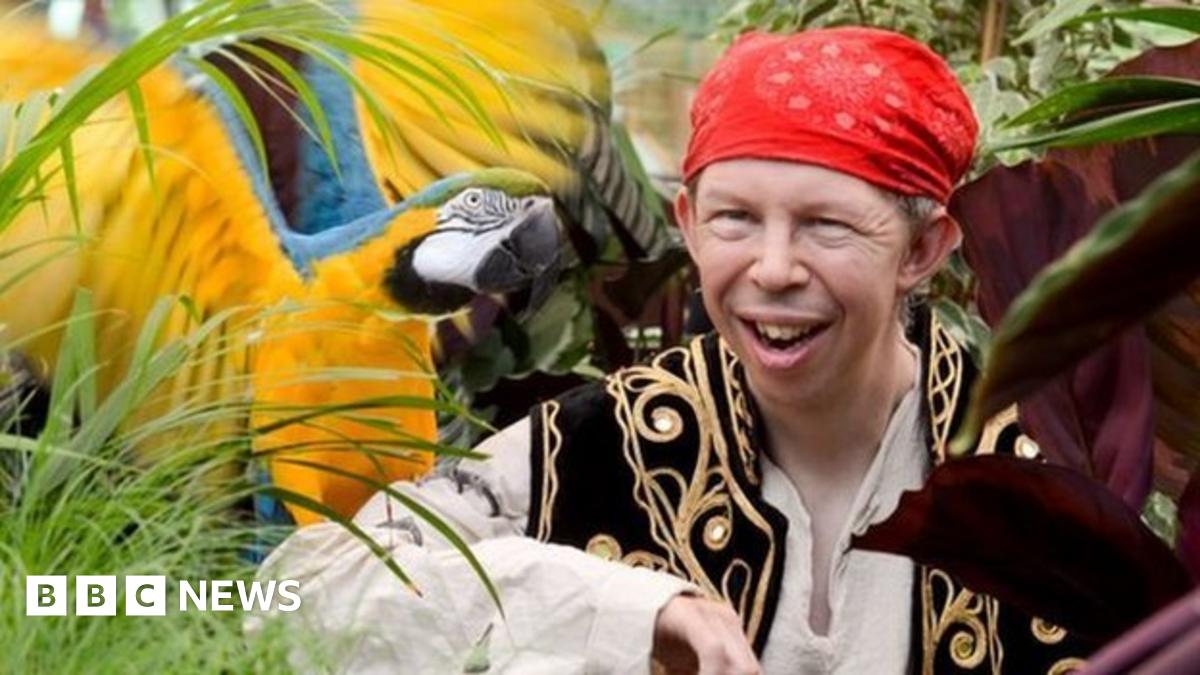
Living with Williams Syndrome, the 'opposite of autism'
One in 18,000 people in the UK have Williams Syndrome, meaning they are empathetic and friendly, but can have learning disabilities and anxiety.
BBC News
116 points · by colinprince · 1y ago · 102 comments
> They can feel anxious over stimuli such as the buzzing of a bee, or the texture of food.
Plenty of autistic folks are empathetic, social, and friendly. And many experience stimuli that cause anxiety.
The whole "it's the opposite of autism" doesn't actually help anyone understand and, IMO, reinforces the incorrect idea that autistic people are asocial, emotionless automata.
Moreso than anything about emotions, body language, social skills etc this is the most common trait. It pops up in odd places no matter how much you mask or learn the visible skills.
This shows up in a lot of ways: sensory (can't just filter out the tag on the back of your shirt), interests (can't recognize that you're spending just a liiiitle too much time on that model train), food (don't categorize trying new foods as interesting, so you don't), etc. But human socialization is incredibly complex, and while many of us can do decently well at learning it, imagine trying to get a grip on social cues without being able to tell what's relevant and what's not. Sounds pretty bad, doesn't it?
It also is a working theory that well matches my experience with the autistic people in my life. "Deficits in cognitive empathy/ inability understand intuitively what other people are thinking", aka "theory of mind", is a really good description of how things are often difficult, and I think "different stimulus input filter" is a pretty good hypothesis for how it might arise.
The opposite of autism is schizophrenia, where abstract thinking fails completely, and the person is unable to find correct answers to everyday problems.
Neurotypicality is merely a socially acceptable level of schizophrenia.
Autism results when the level of abstraction is significantly higher than the surrounding society:
You can't automatically understand the concrete speech, and you especially can't understand the "implications" that rely on the concrete magical thinking.
People can't understand you, because their level of abstraction isn't sufficient to understand the actual meaning, so they assume you talk about something random.
People overread the gaze of more abstract thinkers, and underread the gaze of less abstract thinkers, due to the difference in the field of view.
Compare Taylor Swift (ultra concrete, easily understood by neurotypical people) vs Rihanna (very abstract)
The title does put 'the opposite of autism' in quotes, to make it clear it's someone's phrasing, not a matter of fact, but the body of the article quotes someone from a foundation for the disease saying:
> "There is a classic autistic profile to which Williams Syndrome is the polar opposite. People can gauge the mood of a crowd and adopt without understanding the nuances of the situation."
That, it seems to me, could be a defensible point. That is not something you'd ever say an autistic person would be good at; it's antithetical.
But more to the point, not everything is an attack on autistic people. These are people trying to make a case that people should care about and be aware of the welfare needs associated with a poorly-understood disorder (which is maybe a hundred times rarer than autism). It would be fair I think to allow them the room to explain that.
> But more to the point, not everything is an attack on autistic people
No one said it was. I said it perpetuates a stereotype. I think that's different than an attack, personally. It's careless, not malicious.
But careless can still be irritating.
This disorder actually sounds somewhat adjacent to autism. Many autistic people have intense affective empathy and get overwhelmed by other’s emotions, especially in groups. But often we just shut down, which appears like nothing is registering and we have no empathy.
The DSM-V combined together a bunch of old disorders with largely overlapping symptoms and no consistent differentiation at the diagnostic level.
It's my impression that people now use the term autism is for pretty much any sort of neurodiversity (and even for traits within neuronormal, e.g. likes math).
For what it's worth Wikipedia says, ASD is:
> a neurodevelopmental disorder by differences or difficulties in social communication and interaction, a need or strong preference for predictability and routine, sensory processing differences, focused interests, and repetitive behaviors.
Would you say this is stereotyping ASD?
I'm not trying to be combative but genuinely want to understand.
Apparently per Hacker News autism is like being left handed. A minor personality quirk that is completely irrelevant in day to day life.
When I got older I began to develop connective tissue disorders and spasticity, which were incapacitating until I found treatment. I was diagnosed with EDS but that may also have been not-quite-correct, since apparently these issues are also common in WS.
Also, it apparently _is_ possible for people with WS to also have higher-than-average IQs. God, life is so frustrating sometimes!
hEDS is far more common than currently thought because the medical diagnostics are not very sensitive, it’s a spectrum and what doctors tend to think of hEDS is the severe form of it.
> Lizzie Hurst, chief executive at the Williams Syndrome Foundation, says: "People [with the disorder] conduct themselves in a way that makes them extremely vulnerable.
> "They don't have the cognitive ability to match their linguistic age.
> "There is a classic autistic profile to which Williams Syndrome is the polar opposite. People can gauge the mood of a crowd and adopt without understanding the nuances of the situation."
The last bit of that is the difference, right? You wouldn't say an autistic person could easily gauge the mood of a crowd and adopt. These are people who are -- compared to neurotypical people! -- social butterflies, linguistically talented, friendly, open, happy-go-lucky, but gullible. This is not the picture of classic autism for sure. It does feel somewhat opposite.
But then I guess one of the interesting things about opposites is that they are within the same plane or category, right? The opposite of a knife is another item of cutlery, not a haddock.
It seems like this syndrome is a genetic deletion, which is not my understanding of autism, but it presumably could have some similar neurological impacts.
Indeed, naïvely it almost seems to me like in Williams Syndrome what is missing is something that causes the brain to keep the mirror neurons in perspective. People with the syndrome rapidly experience a sense of closeness with people they don't actually understand and whose motivations may be harmful.
Tamed is a nice read by Alice Roberts, about domestication of various species like potatoes and horses (most of them before written history, so it's a puzzle with pieces being put together with archeological finds). One chapter is about dogs aka domesticated wolves
Williams Syndrome: The people who are too friendly - https://news.ycombinator.com/item?id=44011380 - May 2025 (2 comments)
Williams Syndrome - https://news.ycombinator.com/item?id=24536693 - Sept 2020 (2 comments)
Williams syndrome - https://news.ycombinator.com/item?id=22082839 - Jan 2020 (7 comments)
Williams Syndrome: What World’s Most Sociable People Reveal About Friendliness - https://news.ycombinator.com/item?id=20093646 - June 2019 (5 comments)
Living with Williams Syndrome, the 'opposite of autism' - https://news.ycombinator.com/item?id=7583121 - April 2014 (65 comments)
Edit: lol no need to actually poke around just see wikipedia https://en.wikipedia.org/wiki/Williams_syndrome#Cause
Symptoms of autism in Williams syndrome: a transdiagnostic approach
https://www.nature.com/articles/s41598-024-68089-0
Autism and Williams syndrome: truly mirror conditions in the socio-cognitive domain? https://pmc.ncbi.nlm.nih.gov/articles/PMC9351567/
And I don’t think being endearing to people is representative of empathy.
FWIW, this describes me (ASD, diagnosed) on XTC.
https://en.m.wikipedia.org/wiki/Sensory_processing_sensitivi...
There are different levels of ADHD, and many are judged as stupid in school simply because they're bored and overstimulated at the same time.
The rest of the traits described are pretty common in ADHD from my experience.
The comments here need to be a bit careful with what autism is as it can present itself very differently in people. In part this is because the medical establishment doesn't know a lot yet about what it is. Only quite recently did they find that there's 4 subtypes [1].
It's funny. My wife, non-autistic, tells me I'm one of the most emotionally intelligent men she knows. She keeps saying that. In part, I trained it through meditation (1000 hours in), in part it's just really about paying attention. She hasn't been the only one. I've also met one person at times saying I lack empathy and come across as robotic at times. But I can tell you, in general, I empathize and feel things. I have noticed that I can't always communicate well that I understand what other people mean. When I was younger they went on to explain it to me and it was always really annoying since I understood but people thought I didn't.
I often go against the grain with things because I think things are foolish. If I'd have done otherwise, I'd have definitely been trapped into the toxic masculine culture and drink a lot more alcohol. So often times what I do may not look empathetic or sympathetic but that's because many people don't care that they are toxic themselves and then just put the emotional burden to me.
Related to empathy: ever since I got the autism diagnosis, to the people I've told, I've seen an uptick in them saying I'm not empathetic at times by one person. So sharing your diagnosis does give some people a prejudice over you that shouldn't really be there.
[1] https://www.princeton.edu/news/2025/07/09/major-autism-study...
Yes, that is in the article.
Anything you wish to add?
Developments since then the article lacks?
I see, I hope you can understand where I was coming from, seeing the year in the title paired with what looks like a snarky comment devoid of any analysis of said article.
I just can't sorry