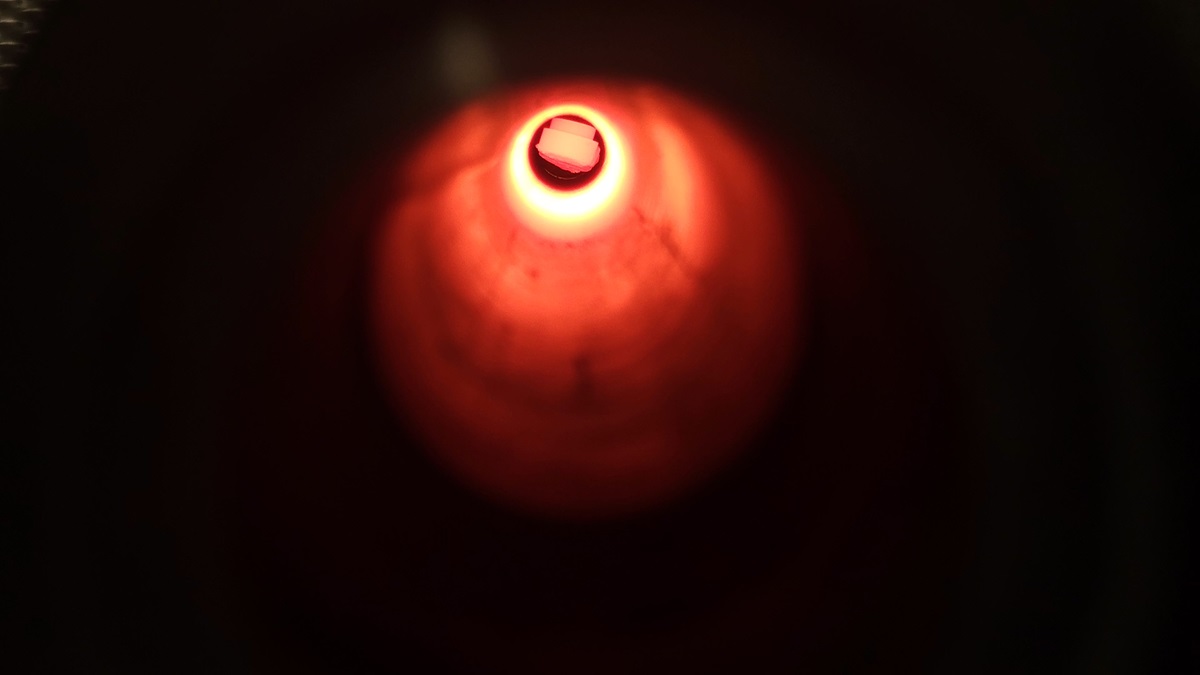
How to make metals from Martian dirt
Swinburne and CSIRO researchers have successfully made iron under Mars-like conditions, opening the door to off-world metal production.
csiro.au
80 points · by PaulHoule · 1y ago · 99 comments
Burning fuels seems to be out. So I guess nuclear or solar?
Mars solar is weaker than earth, but I guess let's of panels plus lots of batteries could work. Sorta. Not sure it produces "tons" of material very quickly.
Nuclear is the other option. But would rely on fuel from earth. Not to mention that building a reactor big enough to sustain a colony, plus industry, would be challenging. And of course landing fresh uranium on Mars would be risky. (It's heavy, and any accident would render a chunk of Mars radioactive for quite some time.)
Oh, and the reactor would need to be air-cooled not water-cooled.
But, I guess, yay regolith?
Do you think that nuclear fuel is some kind of green glowing stuff like in Simpsons? New nuclear pellets is just a bunch of uranium dioxide, which is mildly alpha radioactive. In other words, as long as you are not inhaling its dust, it's more or less safe to handle even with bare hands.
Even the worst possible kind of accident is likely to be absolutely irrelevant from the radiation safety point of view considering high levels of natural solar radiation on the surface of Mars.
The guy's clearly not the sharpest tool for this ...
If you model the rest of the universe out of Earth's highly protective environment as "already being the result of a major nuclear accident", you're not actually that far off. The people evacuated from Chernobyl received about 33 milli-Sieverts of radiation [1]. The surface of the moon gets about 60 micro-Sieverts of radiation per hour[2]... or, in other words, being on the surface of the moon for 20 days is the rough equivalent of experiencing one Chernobyl disaster. This is just a rough estimate for intuition purposes, it's not exactly the same radiation in both cases, but it's close enough to make the point. This page [3] says the surface of Mars is about .7 milli-Sieverts of radiation per day, for about 30 micro-Sieverts per hour (to use the same units as the moon above), which is about right for the inverse-square and slows the exposure to one Chernobyl per 40 days.
And by universal standards, that's still rather low radiation. There's entire galactic clusters with the central blackholes blasting sterilizing amounts of radiation out into their entire cluster. Earth is fairly special; a good reason not to mess it up. The "jump to Mars plan" is perhaps not impossible but it's really, really, really hard.
[1]: https://nuclear-energy.net/nuclear-accidents/chernobyl/chern...
[2]: https://www.space.com/moon-radiation-dose-for-astronauts-mea...
On a larger scale (GW) the answer is likely nuclear, unless we can come up with a realistic way to produce solar panels on Mars. Mass-wise, nuclear scales very well, but solar is nearly linear.
There's also some possibility we come up with a creative way to produce methane or another fuel.
This is fine for "residential", but perhaps not suited to industrial scale.
Yes, I expect nuclear is the best choice of a list of 1, but it will be substantially harder to build one on Mars than here. For starters the lack of water, and the lack of atmosphere density would result in substantial cooling challenges.
However you slice it, energy on Mars is completely dependent on earth. Panels, batteries, uranium- none of it can be made on Mars, and all have "short" lifespans.
heat exchange(s) such that the human settlement(s) are warmed by this "waste" heat? Mars is cold, and likely need to have many pipes to generate heat for human settlement, so why not build it in via this need?
One of the big drawbacks on Earth is that you have to launch the satellite to orbit. For Mars, stuff is in orbit when it gets there, and landing it is the challenge.
Mars has an axial tilt similar to Earth's, which means that, like Earth, a satellite in stationary orbit will have full "noon" sun 99.5% of the time. A solar panel in stationary orbit around Earth will collect five times as much energy in 24 hours as one on the ground. The Martian atmosphere would filter less sunlight, so call it 4X for Mars.
Batteries are getting cheaper on Earth but they're still a lot of mass to send to Mars. Near-constant uptime with satellites mostly eliminates that problem.
At first, you do have to land the ground collector, but it's mostly antenna wire. Should be pretty robust and you won't have to worry about keeping the dust off it. Once you're making metals from Martian dirt, you can produce most of it locally, from dirt.
The biggest downside compared to nuclear would be that dust storms would at least partially block transmission.
Edit: side benefit would be you could use the heat directly for processes like this metallurgy thing.
Also uranium is not as radioactive or lethal as you'd think in this case. It can be sent there safely and without issue.
Also reactors can be MSR (molten salt reactor) greatly reducing water needs.
Calls for in-situ-utilization, doesn't it?
none of that maters without a good supply of water to crack for fuel and air and general living, and as there is a whole world to work with, it is likely that there are a few areas that will have a fortuitous convergence of ALL the things possible, in one spot, kind of like early settlers finding a stand of trees, felled by beavers, bark stripped and pre notched for assembly into a cabin, next to a pond with fish and medows all around
to put things in perspective
pure gold would be good for use as sheet metal, as it's ductility and ease of refinement would make it the cheapest alternative
it's doable, but only just, and only if we get our shit together and decide that an impossible, ultra long term project to become an interplanitary species is a better way to use our excess capacity than whatever the fuck it is we are doing now
https://www.themartiangarden.com/ https://www.amazon.com/Regolith-Simulant-Authentic-Martian-R...
What ever happened the asteroid mining folks? They have a similar problem, albeit with very little gravity and no atmosphere, but their metals are in theory worth a lot more (platinum, gold, silver, Etc.)
There was a similar idea/proposal for extracting aluminum from Lunar regolith, also a good space mission for private interests.
Once you've got basic metals you can make more interesting things, with iron you can make reinforced concrete which would be an interesting building material on Mars I suspect.
Both of these can hurt your ROI considerably assuming you can solve for them at all with the masses involved. They're also usually moving at a pretty good clip and are bad to set up long term for. I think until we have a long term presence in the asteroid belt that this is mostly going to be SF rather than that it will actually happen.
there are no realistic proposals for asteroid drives ala https://en.wikipedia.org/wiki/K240
- solar sails transport themselves without using reaction mass
- you're not competing with cheap resources on Earth to be used on Earth, rather resources from Earth transported past LEO
eliminating many of the fundamental objections to scenarios where ISRU materials get transported somewhere.
Cons are:
- a good sunshade and a good solar sail are different things
- plastic + metal solar sails seem to get corroded badly over time
- if you think the turnaround time between Earth and Mars is bad, you are talking half a decade or more to round trip parts plus a 45 minute communication delay at some times; you either need to send people with all the problems that entails or have advanced autonomy and a manned simulation platform somewhere in near-Earth or cislunar space.
I've got a good picture of what parts of the "head end" that consumes asteroid materials and turns them into reasonable chemical feedstocks looks like with the exception of how to devolatize the asteroid to begin with and where to get the storage tanks to store early offgassing before the metals line comes online. (Storage tanks are an interesting question for manufacturing since the chemical factory needs plenty of them.) I also have some idea of what the "shipyard" that builds the actual sails look like. Trouble is you probably need a Drexler machine to make spare parts and also make customized parts given that you don't really know what you're up against when it comes to the "head end" (though upper pyramid parts of the chemical factory and the shipyard can be simulated close to Earth) ... and Drexler's concept for a Drexler machine doesn't work.
Seems way easier to get our act together on earth. It's all solved from a technological angle.
I personally consider this a folly.
On the other hand, no comprehensive survey of Luna was ever done, and we target Mars or even asteroids why? I'd like some at least plausible reason for this.
It is true that Luna is halfway to Mars in dV on hohmanns. But not in time spent. Never will be.
Sure, this would be slow. But I think it'd be viable. You could move them into earth's orbit or even slam it into the moon.
You won't be moving the whole asteroids, but a few hundred tons of extracted platinum-group metals? Certainly doable.
With the asteroids, I assume the idea is to bring enough platinum and gold back to Earth to offset the costs of getting them from space. That doesn't sound especially realistic, but in the right circumstances I guess it could be.
With aluminum on the moon or iron on Mars, that will never happen. You'd have to want to use those materials on location.
So what would the value be of producing aluminum on the moon?
Building more rockets? Interesting detail: there isn't enough oxygen there to cause aluminum to immediately be covered with a skin of aluminum oxide. I wonder what the energy cost of an extraction process for aluminum on the moon would be. At the same time I would hate to see the moon mined, that's one piece of common property that we should maybe try to preserve unless we have no other alternative, not just for commerce.
https://www.jpl.nasa.gov/news/the-moon-is-rusting-and-resear...
and Apollo astronauts brought back perfectly good Iron ore. It's true that there is lot of aluminum and titanium on the moon and a lunar economy might use that but there is enough iron that if loonies wanted to make things out of iron they could make things out of iron.
Making steel, with controlled carbon content, would be quite another challenge. Carbon is readily available on Mars, but only in the form of CO2.
There are numerous ways to fix carbon from CO2. If you can grow plants you can make a char out of them which what people used to use to reduce iron and add carbon as an alloying elements. There is a huge amount of research on turning CO2 into CO so that it can be mixed with H2 (then they call it syngas) and then build up larger molecules such as methane, methanol, gasoline, fats, etc.
https://news.mit.edu/2024/engineers-find-new-way-convert-car...
It's not a question of being able to do it but instead doing it better, cheaper, harder, faster, ...
The funny thing about reduction of iron (and many metals) is that it can be done with either of the two ingredients of syngas, CO [2] or H2 and either way you get the oxide CO2 or H2O as a byproduct. If space colonists think that volatiles are precious they'll practice chemical cycling, turning those back into reactive CO or H. On the moon or asteroids I'm pretty sure people would think either C or H2 is precious and wouldn't waste it, I am not sure about Martians (e.g. if you can get CO2 out of the atmosphere it might not seem like a crime to vent it)
[1] people think "technology" and they think "metals" but actually a lot of what you want is made of carbon, hydrogen, oxygen and nitrogen (CHON)
[2] what a blast furnace uses
You've got the problem that there's nothing that could manufactured on Mars that would be worth bringing back to Earth. If a Martian colony was dependent on Earth for anything it would expect to get its resources cut off at any time, and even if you can get spare parts and stuff from Earth the turn-around time counting the synodic period and transit time will always be several years. See
https://en.wikipedia.org/wiki/The_Martian_Way
I think it could be possible with some combination of synthetic biology, fermentation, flow chemistry, 3-d printing and such. It's a good northstar for research into "advanced manufacturing" which could come in handy here on Earth.
And note that even what we call "cast iron" - a material that reasonably could be preferred to steel for some industrial purposes - is an iron-carbon alloy that in fact has more carbon than steel[1].
[0] https://www.texasironandmetal.com/strength-of-steel-compares...
it isnt always oxygen that does this, a difference of RedOx potential allowing redistribution of electrons is all you need.
mars has a perchlorate problem thus carbon compounds are converted to carbonate via Oxidation when encountering ubiquitous perchloate mineral deposits.
its toxic to carbon based biochemical forms, and destructive to carbon materials, such as carbon fibre; carbon nanotubes; carbon steel; even a lot of keypads.
~~~~~~~~~~~~~~~~~~~~~~~~~~~~~~~~~~~~~~~~~~
Pesky Perchlorates All Over Mars:
Cast iron is lighter than steel, not heavier, because of its higher carbon content.
However, objects made of cast iron are indeed heavier than similar objects made of steel, and this is what you must have in mind, because the objects made of cast iron are always made thicker, both because cast iron is weaker, which requires greater thickness for the same strength, and because it is harder to make thinner objects by casting than by forging.
Make metals at the top of Everest. Then we’ll talk.
It would also be different enough that it's not a useful or meaningful comparison. You might as well say "bake a cake while standing on stilts, then we'll talk".
By the way, humans have been mining, and on-and-off purifying, iron from the Saharan dune sea for a thousand years. https://en.m.wikipedia.org/wiki/Zou%C3%A9rat
This is the key advantage of going to Mars or Moon surface, as opposed to operating a space station. A space station exists in a vacuum. Surface bases have access to local materials.
Sadly, very few planned space missions have this kind of ambition. That recent proposal US had about putting a nuclear reactor on the Moon was at least a step in the right direction - if you're bringing an entire reactor, that means you're establishing a permanent base, complete with an industry that would generate the demand for power.
Not trying to be pedantic but really curious, it should be off-earth not off-world, right?
Off-world meaning that the iron production is made by alien not human.
* away from earth or (in science fiction) from a place treated as the native world.
* involving, located in, or coming from a place outside one's native world or planet.
While Wiktionary defines it as:
* (chiefly science fiction) Not on Earth.
* (chiefly science fiction) Away from Earth.
https://en.wiktionary.org/wiki/offworld
To me that sounds like Mars would qualify
There is a 0.0% chance you understood that.
I'm not sure of the point in sending a human there and back without a colony, but that wouldn't stop us if we find an emotional reason. The poor astronaut will die young after their return, of course, but that's true for many occupations already.
Not surprised at the downvotes I got. "We're going to live out there! Soon!" is baked into us by every TV show, movie, and book around us, it seems. But it is nowhere as easy as "2001: A Space Odyssey" promised. Not even as easy as "Space 1999".