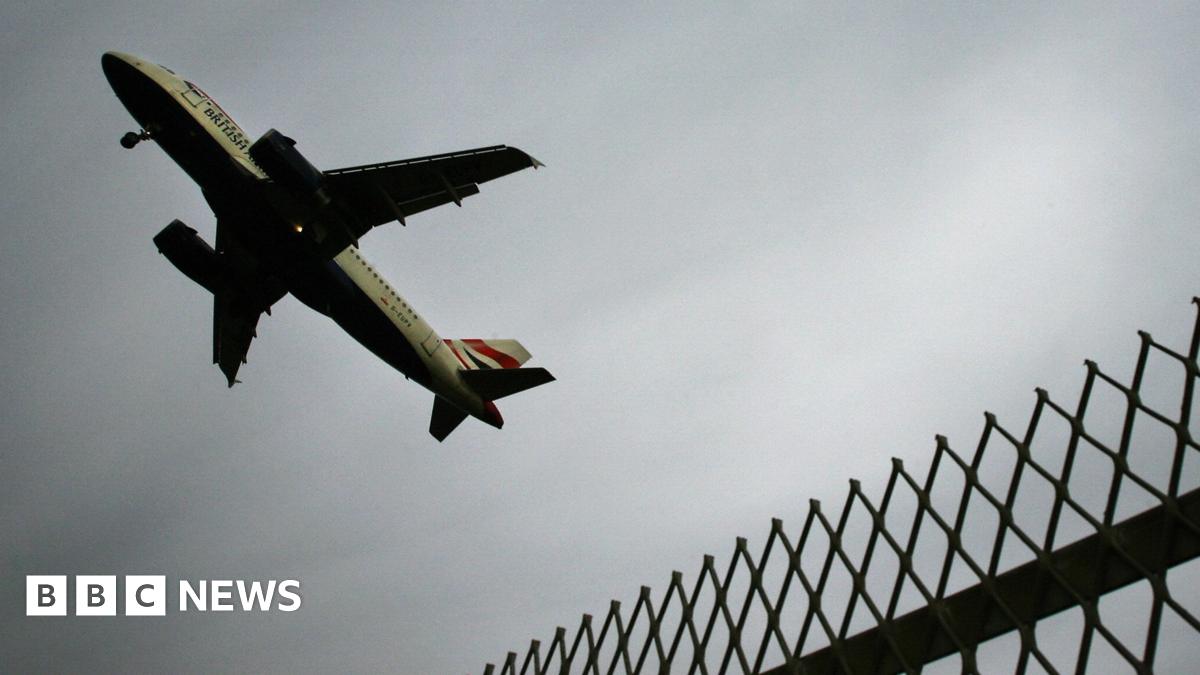
How often do plane stowaways fall from the sky?
Police are investigating whether a man found dead on a west London street was a stowaway who fell from a plane. Just how often does this happen?
BBC News
56 points · by quonn · 14y ago · 51 comments
Even with a canister of oxygen, at 35,000 feet you can't breath if you aren't in a pressure suit. Just doesn't work that way.
Even with a canister of oxygen, at 35,000 feet you can't
breath if you aren't in a pressure suit.
You can breath at 35,000 ft without a pressured suit, but go much higher and you can't.
At sea level, you have 760 mmHg of air pressure. Oxygen is 21% of the air mixture, so you have a partial O2 pressure of 160 mmHg.
At 35,000 ft, air pressure is 179 mmHg [1], so if you breath 100% pure oxygen, you're getting the same amount of oxygen you'd get at sea level.
Go up to 50,000 ft and the air pressure is only 83 mmHg, so even breathing 100% oxygen, you're only getting 50% of the oxygen you'd get at sea level.
[1] http://www.engineeringtoolbox.com/air-altitude-pressure-d_46...
Is there, perhaps, some reason why I can't? Lungs exploding because of the 1ATM pressure differential, for instance? It seems that 1ATM is not that much, but perhaps it is... That's what I'm curious about.
"At 18,000ft (5,490m), experts say, hypoxia will set in, causing weakness, tremors, light-headedness and visual impairment...Above 33,000ft (10,065m) the lungs require artificial pressure to function normally."
    Above 33,000ft (10,065m) the lungs require artificial
    pressure to function normally.
It seems to be that above 40,000 feet that the oxygen you're taking in can't be absorbed if the air you're breathing isn't sufficiently pressurized. Decompression sickness will be your biggest problem.
Presumably they were talking about conventional oxygen masks and not the tight fitting, high pressure masks that pilots use.
In any case I was fairly shocked that breathing pure oxygen made such a small difference at altitude, but the difference it does make can be critical at the limits of human endurance.
just once
I approached a couple of old fellows top-roping a route on the Niagara Escarpment. I asked if they would be long, as I wanted to do the route. They invited me to jump on their rope. I had a look. It was dirty and the sheath seemed to be detaching from the core. The end was kinked and frayed. How of ten do you change your ropes, I asked in horror.
"Every time they break. Why?"
"In a lot of places around the world, the control of movement and airside control areas is not the same as what we have here."
"It's much easier in some locations to access the airside areas than it is in the UK. The only way it could be prevented is if the rest of the world tightened their procedures."
I would think the obvious solution would be to slap a big old multilingual warning sign on the wheel wells, clearly stating "flying in wheel wells WILL result in death by asphyxiation, hypothermia, and severe physical trauma".
Attempting to stop people or bombs in under carriage would EXACTLY BE SECURITY THEATER. That is an overreaction to insignificant but recently hyped/fear mongered threat that results in no statistically significant reduction in risk. But, writes up good in the papers.
People thinking like you are why security theater can exist.
However, I wasn't saying that we should be trying to stop this. I meant to show up, conversely, that a lot of the existing security is there merely for show.
How many planes have been bombed by someone sneaking something into the wheel well?
I can't imagine it would be too hard to place a bomb in the wheel well of a plane parked in Nairobi, for example. The biggest issue would be avoiding the pilot's pre-flight check.
That wouldn't be to hard to do if you are a member of a ground crew that has access to the aircraft after the pilot is on board.
BTW, we keep bombs out of the cargo area well because there was a time we didn't do this well at all. Then this happened: http://en.wikipedia.org/wiki/Air_India_Flight_182 along with this: http://en.wikipedia.org/wiki/Pan_Am_Flight_103
What might be better is having a camera or motion sensor in the wheel well that can look for surprise guests.
I almost want to go to the class graduation ceremony of every high school in america and say "tl;dr AT LEAST FUCKING GOOGLE IT." :)
We basically had to do menial tasks, like read a deck of cards, play "paddy-cake", etc., and then put our oxygen masks back on once we thought we were too impaired, while a technician was there with us.
However, I think the simulated altitude was 20k or 25k feet.
Needless to say there's a reason that O2 is (legally) required in unpressurized aircraft for anything over 10k feet.
I have flown at 12k for 1 hour and could tell that the air was much thinner and that going much higher would have started to impair.
I think that most commercial aircraft run somewhere between a 6k and 8k cabin altitude and as such a whole different set of rules apply. I don't know for sure - I'm only a private pilot.