498 points · by DaveZale · 1y ago · 179 comments
In a nutshell there is a slightly interesting idea that deserves further study. That's it.
So, one could make a similar article saying "Myocardial infarction may be caused by sugar consumption" and support it by analyzing the recent diet of 200 people who died of heart disease and finding that 95% of them recently consumed a lot of sugar.
I think a population study to assess the odds ratios of a risk factor on people who die of heart disease vs not would be valuable (but is a very different beast).
One could apply the same flawed logic to claim that propensity for myocardial infarction may cause certain bacterial infections.
"we found some bacteria in people with heart disease, let's try killing the bacteria" is really bad logic.
Like another commenter posted it's similar to saying a lot of house fires had fire trucks in front of them, let's do some trials where we destroy some of the fire trucks to see if that helps.
I think you not only missed the point but also are doubling down on your mistake by conflating correlation with causality. You don't conclude that burger craving is caused by owning a car by observing drive-through restaurants.
Sugar is a very indirect cause of heart attacks, everyone knows that most heart attacks are a culmination of decades of diet and exercise habits. It's still worth researching everything to do with that, but it's pretty low value research because it's hard to draw any actionable conclusions from it other than "eat healthier and exercise", which is already well known.
The research in the article is talking about a direct cause. Bacteria exists on arterial plaque, viral infection triggers bacteria to multiply, something about that process causes the plaque to detach and cause a heart attack. If that ends up being a rock solid cause and effect, even for a subset of heart attacks, that could lead to things like direct prevention (anti-virals before the heart attack happens) or changes in patient management (everyone with artery disease gets put far away from sick patients) that could directly and immediately save a lot of lives.
The post you replied to was saying that the data from the study isn't as strong as the article and headline make it out to be, which is usually the case. For this one though I'm reading that less as "it's a nothingburger" and more as "it's a small interesting result that needs a lot of follow up".
And actually, if as a lot of science is now suggesting, inflammation and damage due to eating oxidization-prone lipids (aka refined oils) in combination with refined sugar is a big part of the cause of arterial damage and heart disease, that could be easily be the biggest root cause in most of these cases. The bacteria if they even play a causal role at any point, could be a result of previous damage due to diet (and lack of exercise).
The paper's idea of treating heart disease by giving patients antibiotics seems really problematic to me. Destroy your health with poor diet and lack of exercise, and then once you start to feel the effect of this, take antibiotics and destroy your gut health too.
Quote: Of the bacteria detected, oral viridans group streptococcal DNA was the most common, being found in 42.1% of coronary plaques and 42.9% of endarterectomies. Immunopositivity for viridans streptococci correlated with severe atherosclerosis (P<0.0001) in both series and death from coronary heart disease (P=0.021) or myocardial infarction (P=0.042).It's definitely not the strength of correlation. It's not even the probability that the opposite of the null hypothesis is false!
What Question Should Be Addressed Next?
• Could a short‐term antibiotics treatment given at the acute phase affect the outcome of myocardial infarction, and would it be possible to develop new diagnostic imaging and prevention methods for bacterial biofilm?
I didn't read the article but just based on the parent comment, it sounds like this baseline hasn't yet been established. It seems very wrong to start testing antibiotics without first establishing the baseline of whether everyone has this bacteria.
On the other hand most people with "flu" in summer months are not infected with Influenza, so an improved influenza treatment isn't going to make a big difference for them unlike in winter. We know other reasons you might get those symptoms which are more likely in summer.
<https://en.wikipedia.org/wiki/Peptic_ulcer_disease>
<https://en.wikipedia.org/wiki/Timeline_of_peptic_ulcer_disea...>
One of the rare examples of a mental health condition being virtually completely eliminated is that of General paresis of the insane, a symptom of late-stage syphilis.
Successful treatment and elimination of syphilis in patients and populations through antibiotics. As one of the few cases of near-total elimination of a class of mental conditions, this a useful reminder to the psychiatric profession that not all mental conditions have causes limited to the brain and its function, whether through its biochemistry or neural/behavioural processes.
<https://en.wikipedia.org/wiki/General_paresis_of_the_insane>
I think a better example is the very recent (i.e., in the 2000s) discovery of anti-NMDAR encephalitis which can very closely resemble schizophrenia [1].
In syphilis, there were at least other manifestations of disease that can (and were) known, unlike this totally unappreciated mechanism (which better resembles Barry Marshall and H. pylori).
What are these other ways? There's an intuition that bodies are like computer programs that can fail in unpredictable ways, but this is usually false and belies a failure to see links between 'novel' and previously described mechanisms.
Human bodies, not so much, mostly because we lack the capability to monitor, measure and emulate the behaviour of such complex systems. As such, we gain medical knowledge using statistics, usually covering most common "failure modes" first, but we increasingly learn that those are never as clear cut either as our observation technology improves (as it does with science otherwise too — eg. Newtonian mechanics is completely true up to some error bars and constraints achievable in that period).
Up until that point, I’d never had any heart-related issues, nor does anyone in my family. Just two days before being admitted to the hospital with a suspected heart attack, I came down with food poisoning. It wasn’t pleasant, of course, but I thought it was nothing unusual—something a couple of days of rest and hydration would normally resolve.
Since my bloodwork at the hospital matched the expected results for a heart attack, and I underwent surgery, the doctors understandably focused on treating the immediate problem rather than identifying the underlying cause (I’m eternally grateful to the team and staff at St. Vincentius-Kliniken. I truly don’t think I’d be here without them).
That said, I’m glad to see this area receiving more attention. Hopefully, it will lead to further studies and the development of better strategies for prevention and treatment.
Most people assume that "heart attack" is a distinct clinical entity, but the majority (~80%) of elevated troponin levels are not exactly what comes to mind when people say "heart attack," but will often be described to patients as a heart attack (sometimes out of ignorance and others out of convenience, as the actual explanation for what is going on takes a lot more time and effort).
https://www.thelancet.com/journals/laninf/article/PIIS147330...
Hopefully it leads somewhere that brings us new preventative care.
Phages can penetrate biofilms [1]. (They have practice.)
Phages are intensely species specific to bacterial species, so they don't work unless you identify exactly what you're targeting. Also, even if they can penetrate biofilms, that doesn't mean you can successfully deliver them to the biofilm in the human body, since they have to survive the whole blood stream and the normal human immune response to "not self" things.
Evolved resistance is changing at least the first part of that relationship.
Phages as you note are far more tailored, and may (if I understand correctly) need to be targeted to a patient's specific infection's genetic line. It's as if you had to select ammunition based on the specific type of target you were hunting, if not specific individuals. In the early days of antibiotics it was far more a case of "fire and forget" with a single magic bullet. (Not literally always, but for the overwhelming majority of bacterial infections.)
There are countless ways to make medicines and treatments around old technologies and other things that are off-patent, in a way that is novel and able to be patented.
Even boring old generic medicines often find themselves reformulated into new treatments as combinations, variations, or in some cases simply a different dose and indication.
Nope. Plenty of governments fund this sort of research. And chances are there isn’t an off-the-shelf phage that ticks the boxes, which means you need some amount of genetic engineering, in which case Monsanto has your back.
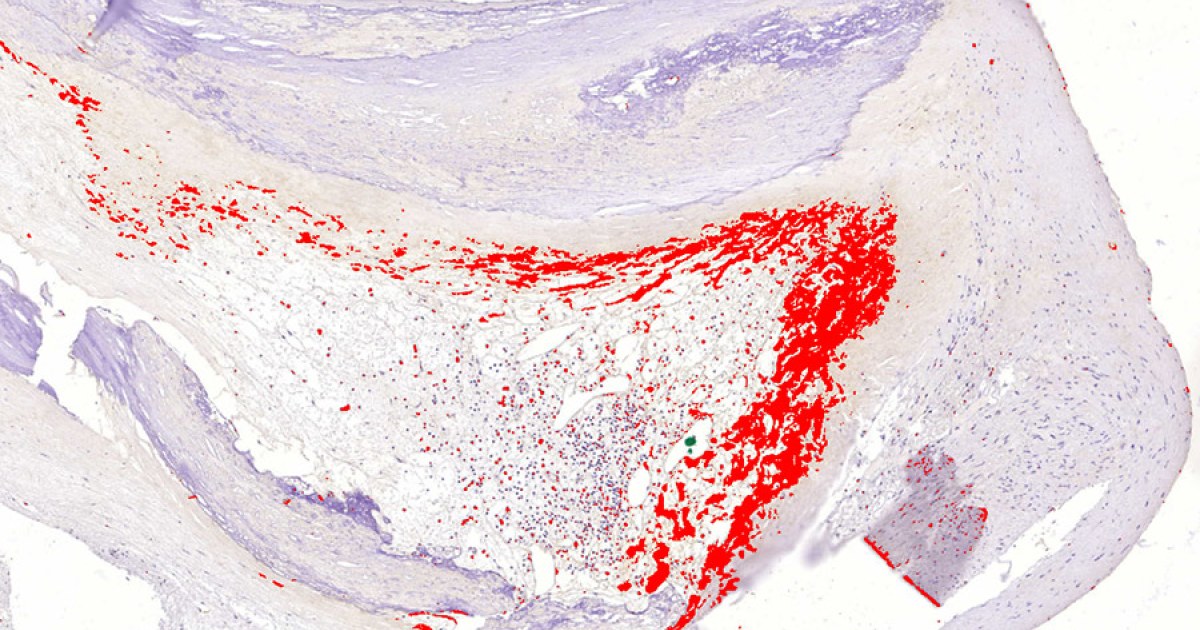
In this study, the researchers designed a custom antibody that binds to oral bacteria. Then they used histological staining to identify specific biofilm structures inside the atherosclerotic tissue. Bacteria released from the biofilm were observed in heart attack cases, which gives us evidence that when the body's immune system responded to these bacteria, it triggered inflammation which ruptured cholesterol-laden plaque. So now we have more insight into the mechanism behind why inflammation is associated with heart attack risk.
The "pantheon" of risk factors for heart disease are:
* hs-CRP (inflammation): the mechanism studied by this research. High inflammation roughly doubles your risk of heart disease.
* ApoB - 20% of people with normal cholesterol will have abnormal ApoB, and be at risk of heart disease (ApoB is a structural protein in lipoproteins which cause arterial plaque).
* Lp(a) - the strongest hereditary risk factor for heart disease (Lp(a) acts as a multiplier on ApoB, since it camouflages cholesterol particles from your liver)
* HbA1c - insulin resistance /diabetes is a risk factor for just about everything.
* eGFR - estimates the volume of liquid your kidneys can filter, and is an input to the latest heart disease risk models (PREVENT).
All of these risk factors can be measured with a blood test + doctor review. Easy to order online: https://www.empirical.health/product/comprehensive-health-pa...
Basic LDL cholesterol and triglycerides blood panels are still an essential part of heart disease bloodwork, too.
I would suggest most people start by asking your doctor for some of these tests at your next annual checkup, as many of them and the doctor visit are likely covered by insurance. The ACA has special handling for routine annual checkups, so don’t assume it’s going to be expensive until you’ve checked the cost with your insurance. A routine bloodwork panel will also include a number of other important measures that are routine and very cheap. It’s helpful to have all of these on your medical record so trends can be identified over time.
-lp(a) and apob were covered
-ldl is computed on the standard panel, not an actual measurement
-accidentally got lp(a) twice and it varied quite a bit, so they may use different labs that are calibrated differently
-hs-crp is not offered
-doctor didn’t seem particularly aware of the more “niche” tests but was open to putting them in during my yearly physical
For example, one person got billed $1,338 for just an ApoB test when insurance denied coverage: https://www.reddit.com/r/PeterAttia/comments/14a4an1/apob_te...
Part of why we do cash pay (and pre-negotiated pricing with the labs) is that you avoid weird catastrophic scenarios like this. The price is upfront and transparent.
(It's too late to edit the original post, but my affiliation is on my HN profile.)
1) Isn't ApoB measurement pretty much in tandem with LDL, VLDL, and triglycerides? I realize it's being recognized now as the necessary factor for arterial dysfunction, but it seems like a lot of hoopla is being made as if it were some "silent" overlooked factor when for the vast, vast majority of people their ApoB levels are entirely explained by the other 3 lipid panel line items carrying it, and they have been in use for decades and are strongly targeted by the medical establishment
2) Isn't Lp(a) a separate lipoprotein altogether which is an independent risk factor for MACE? I've never heard of it "disguising" other cholesterol in testing.
2) The terminology is confusing, but each Lp(a) particle is "just" a cholesterol particle wrapped with an extra protein, apoprotein (a). So each Lp(a) particle includes one ApoB molecule (the structural protein in atherogenic cholesterol particles) and many cholesterol and triglyceride molecules, but the extra protein makes each Lp(a) particle about 6x more atherogenic than a typical cholesterol particle.
there's a small subset of people with more atherogenic triglycerides that ApoB picks up over and above just tracking with the LDL, but...you probably knew that just looking at them
For measuring inflammation, besides hs-CRP, additional tests are relevant and overlooked: regular CRP, ESR, and homocysteine.
Additionally, a heart attack can result from parasite induced inflammation too, e.g. in chagas disease, which is becoming increasingly common in the US while being very undetected without explicit testing. It is also very difficult to treat, but the gist 4196f31d12a43a95756e792500ff516f has some info on treating it. Lyme disease too can harm the heart permanently. In both cases a pacemaker could help as applicable.
For homocysteine, one proxy is B12 or folate (which are more cost-effective to test). To my knowledge, ESR is used in certain rheumatologic conditions, and was used more often in the past, but isn't currently used for heart disease.
>All of these risk factors can be measured with a blood test + doctor review
As all CVD risk stratification with cardiologist review, the most important accuracy is sensivity (avoiding false negative that will escape review) of SCORE-2 and PREVENT, 48% and 26%, respectively [1].
The paper alternative proposal increased the sensitivity to 58% by performing clustering instead of conventional regression models as practiced in the standard SCORE-2 (Europe) and PREVENT (US).
These type of models including the latest proposal performed very poorly as indicated by their otherwise excellent and intuitive display of graphical abstract results [1].
[1] Risk stratification for cardiovascular disease: a comparative analysis of cluster analysis and traditional prediction models:
https://academic.oup.com/eurjpc/advance-article/doi/10.1093/...
I took it to the doctor, doctor just shrugged it off and said it's probably fine and I might have just been fighting off a cold.
FYI the person who posted the link is cofounder of the company he linked to.
You can ask your doctor to order these tests at your annual checkup, too.
Major League Eating (MLE): a professional organization focused on competitive eating contests.
Mister Leather Europe (MLE): an event within the European leather subculture.
Immune response to bacteria in arterial plaques can cause them to break up and cause the attack (my lay-interpretation) so the bacteria is a trigger, but "infectious disease" is a bit of hyperbole.
“Dormant bacteria within the biofilm remain[ing] shielded from both the patient’s immune system and antibiotics because they cannot penetrate the biofilm matrix” whose rupture “result[s] in thrombus formation and ultimately myocardial infarction” sounds like infection more than careless bacteria kicking up muck.
"Some myocardial infarctions attributed to an infectious disease."
"A myocardial infarction may be due to infectious disease."
My maternal grandfather died of an aortic separation. This caused a myocradial infarction, which was not due to infectious disease. I had my aortic valve replaced with a mechanical when I was 2, and 9, and 31, so I'll have a more nuanced kind of heart failure.
- Does this suggest that courses of antibiotics might reduce heart attack risk?
- Does this suggest that regular use of, e.g., Listerine might reduce heart attack risk? (While, perhaps, slightly increasing esophageal cancer risk.)
It would be interesting to run an epidemiological study to see if current interventions move the needle in a meaningful way.
Don't use "antiseptic" mouthwash; it kills beneficial bacteria in the mouth, causing bad bacteria to multiply.
I have personal experience of this.
eg. https://www.science.org/content/article/antibiotics-cut-hear...
https://www.nejm.org/doi/full/10.1056/NEJMoa043526
still hasn't really panned out
How does flu affect the heart? The virus only rarely infects the heart directly. Instead, the adverse effects of the virus on the heart are due to atherosclerosis of the arteries of the heart. Many people over age 50 have atherosclerosis — and in some people it has not yet been diagnosed. Because atherosclerosis narrows the arteries and reduces the flow of blood, less oxygen reaches the heart muscle. When the effect of the flu on the lungs lowers the amount of oxygen in the blood, this further reduces the supply of oxygen to the heart. This can lead to a heart attack or cardiac arrest (sudden death).
Is this risk more than theoretical? Many careful studies have shown there is an increased risk of heart disease following a bout of flu. In one study of 80,000 adults with influenza, nearly 12% had a serious cardiac event, such as a heart attack, during or in the weeks after getting the flu.
Even temporary stress on the respiratory system can cause long-term damage to the brain, lungs, and heart. Because of Covid, we started to learn that an acute, severe infection can affect people much later.
That research led to the beginning of an understanding that repeated flu infections can contribute to premature death even many decades later.
That sounds really high
Okay I just looked it up and this was only among hospitalized individuals which makes a lot more sense because most people just stay home unless it's very bad but that is still surprising to me
This is a pretty cool finding. Biofilms are also beyond reach of antibacterials usually. And seing a commensal become a problem due to "location, location, location" is also cool.
Nice article. Cool leads
Chronic strep throat (sometimes leading to guttate psoriasis) are thought to be due to this feature. The bacteria can form these biofilms in many places, including the tonsils. It's implicated in things like periodontitis. (Another streptococcus, S. mutans, causes cavities.)
They're very sneaky bacteria, due to what's called molecular mimicry. The bacterial surface has a protein called M protein, and some of this protein's epitopes (stretches of amino acids) are the same or similar to human proteins like myosin, similar enough that antibodies cause cross-reactivity with human tissue. This is why strep bacteria can cause rheumatic fever and some other diseases.
Strep has also been implicated in psoriasis; we have good evidence that the cross-reactivity is what kick-starts the disease and is in some way responsible for why it's chronic.
The disease is only the named group of symptoms. The potential cause of the disease is the bacterial infection. Those are very different concepts.
I think I'll go floss.
This is perfectly well known and absolutely nothing new.
This study merely expands research on the topic (focus on bacteria+biofilm instead of flu).
So "Myocardial infarction may be an infectious disease" is a weird clickbait title. We know. We knew for a long time.
We also have quite a few of anti biofilm agents in IV formulations that could have an effect inside of the cardiovascular system if used in high dosages, but the molecules are old, cheap and unsexy, so no one will try. (ambroxol and NAC come to mind)
Furthermore, while there are issues of misaligned incentives across the industry, of the top 10 pharma companies: Roche, AstraZeneca, Bayer, Novartis, Sanofi, Novo Nordisk, GSK, are all based in Europe, so your assertion further down makes no sense.