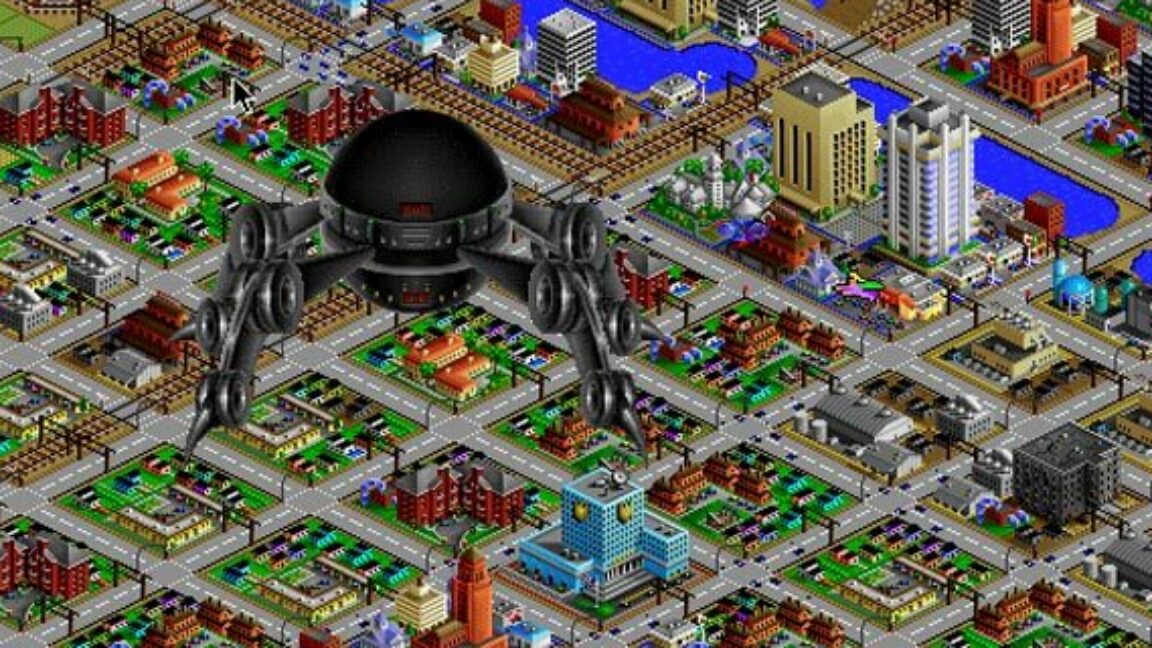
Why, as a responsible adult, SimCity 2000 hits differently
After years as a parent and homeowner, I sympathize more with my virtual citizens.
Ars Technica
249 points · by doppp · 1y ago · 345 comments
Now I don't find that interesting and much more interested to sustain a leafy suburb like one I've chosen for my kids.
Second, it's not just games. In my NYC days I was a "transit and bike lanes" guy all the way. Now with kids, I understand why "Americans love their cars" - it switched form a derogatory statement to one of understanding. There's a reason that "ban the cars" posters never mention a partner or children in their bios.
There's less "objective good" or "objective bad" in these matters than I used to think. It's more about who you optimize for.
This seems very different from the large anti-car movement in the Netherlands in the 1970s (which eventually led to massive investments in bike infrastructure and car restrictions in the cities).
There was significant parent involvement, touting the memorable slogan "Stop de Kindermoord" ("Stop the Child Murder").
https://en.wikipedia.org/wiki/Road_transport_in_the_Netherla...
See e.g. https://www.youtube.com/watch?v=ARjrpb_FOcs (skip to about 5:00 or 8:00 so get a sense of some of the redesign).
Wasn't always like that either. In the 90s it was cars-first just like the OP likes nowadays.
It's definitely true that having only bicycle infrastructure doesn't really work for families though. It's a different story if you've got a cargo bike and public transport... But it's understandable that that's not even entering his mind considering the culture of the USA.
See https://bicycledutch.wordpress.com/2013/12/12/amsterdam-chil...
It looks to me like it was 100% a "think of the children" moment that often gets ridiculed. I can see the same inflection point in my country around the same time, when street and road design shifted to car orientated and car priority - Amsterdam being one of the notable exceptions but with a well documented fight.
Buy a bakfiet cargo bike, there's models that can fit five kids under 7. Mine fits three.
Kids like them better and you get exercise. For the first time in my life I have a BMI of around 20 without having to waste time at the gym, the drop off, pick up, shopping, and work commute add up to an hour and a half of medium intensity cardio.
Every other parent my age in the neighborhood looks five years away from a heart attack. I'm fitter than I was in my 20s.
>There's less "objective good" or "objective bad" in these matters than I used to think. It's more about who you optimize for.
There are over 1,000 children killed in the US annually by cars. This is after we restrain them like Hannibal Lecter while in cars and don't let them out of our houses so they don't get run over.
That's before we talk about the child obesity epidemic, social media abuse, and on and on.
If given the choice between keeping cars or letting polio loose on the land you'd be hard pressed to figure out which will kill and disable more kids.
I would be worried about collision safety though, I am not going to persuade everyone in my neighborhood to stop using cars in a hurry and there are not bike routes between me and school, library, shops, ...
People use cars because they are (rightly) concerned about safety. People avoid using bikes because there are so many cars. It’s very hard to ban cars or restrict car usage because it seems like no one wants to use bikes, but it’s a self-reinforcing system.
Off topic, but my brain did a double take there. Didn't know that the Dutch word "bakfiets" (bike with a box) was anglicized to "bakfiet". Cool. Usually it's us who borrow foreign words from all over
Even further off topic, I had an aha moment with "bakfiets" connecting to how "back" is a word for storage box in Swedish...
The fit parents and delighted kids I frequently see riding bakfeitsen in Amsterdam are always so happy and healthy and safe that I am envious I wasn't born here myself.
They effortlessly ride through busy city streets, wander through parks, and trek across the countryside, all with well maintained bike paths, and gather together to have picnics and play, which you can't do with an SUV. Also dogs love riding in them, and they're great for shopping and hauling too.
An electric bakfiets with an Enviolo continuous stepless automatic shifting hub is ideal and safe for kids, because you don't have to worry about shifting gears or even preemptively shift down before you stop at an intersection or unexpected obstacle.
It can shift when you're stopped and even while you're accelerating, and it automatically and smoothly shifts up as you accelerate. You just dial in your preferred cadence and it does the rest. So you can concentrate on the traffic and kids and scenery instead of your gears, even in stop-and-go city traffic.
I love the one on my normal eBike, it's a joy to ride, and I'll never go back. I have no affiliation, it's just a fantastic piece of technology. They're a Dutch company, so many Dutch brands of bike, bakfiets, and delivery bikes use them, but they're available worldwide.
https://www.koga.com/nl/elektrische-fietsen/e-nova-evo-pt-au...
They have special heavy duty bakfiets motors and hubs, and smooth quiet indestructible carbon fiber belt drives instead of clackety chains and derailleurs. Silent, reliable, maintenance free, and greaseless!
Enviolo fully automatic stepless transmission for e-bikes:
https://enviolo.com/products/#tab_automatic
>No distractions: Liberate your attention
>Enviolo Automatic is a “set and forget” system that adjusts to you – set your preferred pace and you’re ready to go. Focus your journey in bustling cities, relaxed countryside rides, or when travelling with kids.
Cargo L Cargo Line:
https://www.urbanebikes.nl/cargo-l-enviolo-automatic
Rave reviews on reddit:
https://www.reddit.com/r/CargoBike/comments/1f0rsu9/enviolo_...
Enviolo Automatic - Never Shift Again (check out the beautiful scenery and bike paths and parks of Amsterdam: it's really like that, on purpose!)
https://www.youtube.com/watch?v=TQrgKBQrkag
Carqon Classic Enviolo | Elektrische bakfiets met stijl
https://www.youtube.com/watch?v=Z2gWJvolBjg
Is enviolo the best internally geared hub for eBikes? (This is a nerdy technically detailed deep dive!)
https://www.youtube.com/watch?v=Vob5Rb4IKsw
I Tested The Boujiest Cargo Bike You Can Buy (Monster Bakfiets!)
And if you want to know right away, think about who can drive your car, as supposed being able to walk or ride somewhere. You're limiting their own personal freedom by forcing them to have you always needed to go somewhere.
It's still annoying to not have a car. I don't have kids but f I did then the first thing I would do would almost certainly be to buy a vehicle.
Your feeling is the result of NYC and the entire USA being generally dysfunctional, not an inherent truth.
I see them a lot and also makes going around with kids more fun for them too!
Just imagine getting into Tokyo subway with a stroller for 2 kids. There's a reason why Tokyo fertility rate is below 1.
I do wish the subway had more elevators. But once you move beyond those early days with a stroller… I have six playground within a twenty minute walk, a giant park a few minutes away. There’s a zoo nearby, the beach (and aquarium) is less than 45 mins on the subway, there are countless museums in the city… all in all its rich in child friendly activities and child-friendly methods of reaching them.
(I’m not there with my kids yet but from talking to older parents: an understated benefit of the city is that kids are able to exercise independence much more easily. They’ll be taking the subway to and from high school, if they want to meet a friend they can just… go. Rather than rely on a parent driving them everywhere)
> Just imagine getting into Tokyo subway with a stroller for 2 kids. There's a reason why Tokyo fertility rate is below 1.
This is a glaring example of hunting for data that supports a preexisting belief, rather than basing beliefs on empirical data.
To point out how absurd this logic is, consider that it fails to consider the fertility rate of Japan as a whole outside urban areas, as well as failing to account for the many other extremely dense cities outside Japan that do have very high fertility rates.
While Tokyo has one of the worst fertility rates, it's not like the rest of Japan is doing particularly well. Also, I was staying in Azabujuban and I was surprised by the amount of kids I saw there.
Maddy Novich, https://www.instagram.com/cargobikemomma/, for one, may disagree with you. Interview:
* https://www.youtube.com/watch?v=5PoKcQRlDGs
She has three kids IIRC.
> Just imagine getting into Tokyo subway with a stroller for 2 kids. There's a reason why Tokyo fertility rate is below 1.
Hong Kong has always been dense, and it used to have a fertility rate of ~5:
* https://fred.stlouisfed.org/series/SPDYNTFRTINHKG
Further, all US states, regardless of how urban or rural they are, have fertility rates with basically the same slope:
* https://en.wikipedia.org/wiki/List_of_U.S._states_and_territ...
In every industrialized, Western-ish society rates dropped during the 1970s, regardless of initial or final density.
1. Pass off an opinion as fact
2. Posit a straw man
3. Tether an unrelated fact as correlation.
I bet one could wire an llm instructed to such a formula to obsfucate otherwise fruitful public discourse.
That's a nice theory but all over the developped world, the countryside has lower fertility rate than the cities.
I love to drive therefor I buy a car I love to drive.
America is largely rural. Comparisons to Europe aren't appropriate outside of the proper metros.
Bicycling with little kids is just not practical for a lot of it, and the nearest bus stop is a four hour walk (12 miles).
Do large cities and suburban neighborhoods deserve public transportation? Sure. Is that a universal answer? No. Not even close. There are farm fields out here larger than many towns. Roads, vehicles, and fast on demand transportation are a necessity for the geographic super majority of the US.
>Now with kids, I understand why "Americans love their cars"
In other words: I was okay with demanding change when it didn't inconvenience me, but now that I get to benefit from economic policy that heavily subsidize my lifestyle I rather keep the status quo.
We live in a lovely leafy suburb completely car free. But it's this one - https://youtu.be/r-TuGAHR78w
This morning the four of us biked to the grocery store (we loaded the groceries in the bakfiets). The kids bike to their daycare. We bike to the train when we feel like a day out.
I can't fathom trying to raise kids somewhere we need to use a car to do anything.
Maybe the problem is that the leafy suburb you moved to is car-dependent? It doesn't have to be built that way, that's a design choice. It's possible to build a low density suburb that kids can bike through safely, for example: https://youtu.be/r-TuGAHR78w
I get that density and banning cars are hostile to driving an SUV everywhere, but bike infrastructure and public transport aren't. If anything they take traffic off the road and speed up the morning commute of drivers, so they enable a better experience for drivers too.
Being trapped in your suburban neighborhood without access to a car is a special kind of hell. During the week mom and dad were too tired to drive me anywhere after work, unless it was urgent. Long commutes. Weekends were fun - sometimes.
There were SOME really awesome things about suburbia though. Snow days were the best.
I was deep into NY's drug and party scene from about the time I turned 12. Pedos used to follow me walking home from the public library.
Lotta my friends growing up did not make it and I no longer live in NYC.
To the extent that "ban cars" even exists as a real political archetype rather than a meme, this is just patently not true. At least one of the two co-hosts of The War on Cars (again, a title which is intentionally tongue-in-cheek) has a preteen son.
But more importantly: car-dependent suburbs are an absolutely miserable place to grow up as a child if you're not wealthy enough to have one non-working parent and/or a nanny (or both). Being dependent on someone else to enable your entire social life until you turn 16 is a torturous enough experience that I'm not surprised that the first generation to have universal access to social media as teenagers has become the first generation to use social media to organize a teenage-driven movement for public transit.
Similar for the YouTube channel NotJustBikes, who has gone into great detail about the advantages of raising kids in a city planned around pedestrian and cyclist usage, and not in a suburban sprawl.
I easily could, but I have no interest in chasing ever-moving goalposts.
Large cities are OK if you have one kid. They completely break down once you have 2-3 kids.
I live in Berlin with my wife and 2 kids (who were born lived their whole lives in Berlin). We all bike and take transit. Neither me nor my wife even have a driver's license. We're doing fine. We know plenty of other families with multiple kids in the same situation.
But it may not be much “better” long term because you’ll be buying mini van(s), paying for gas, car insurance, higher property taxes, etc. All that extra cost adds up and could easily be put toward upgrading to a larger apartment instead.
And remember, 3+ kids is FAR from the norm in 2025. It’s not 1970s…so this is a really pointless argument.
Maddy Novich, https://www.instagram.com/cargobikemomma/, for one, may disagree with you. She has three kids IIRC. Interview:
Maddy Novich, https://www.instagram.com/cargobikemomma/, for one, may disagree with you. Interviews:
* https://www.youtube.com/watch?v=5PoKcQRlDGs
* https://www.youtube.com/watch?v=kDhJt26dQTs
And I'm not sure how many folks are about banning cars (completely), as opposed to designing things so that (two) cars go from being mandatory to optional.
People somehow perceive all of these things as trying to ban cars instead of promoting other forms of transportation.
But, this is why we live in the Netherlands. If all you've seen is the US I can see how you might not understand that not being car-dependent is actually better for kids.
The data we have shows that the presence of cars is the main source of risk on the street, not the act of biking itself. Neighborhoods that design around walking and biking tend to have fewer serious accidents, not more.
If we're talking about optimizing for kids, then banning individual car use in residential neighborhoods would be the ideal. I know it’s not politically feasible in most of the US right now, but it’s worth keeping in mind that cars are the danger.
It's not like Americans need to drive coast-to-coast to buy groceries or drop their kids off at school.
The subsidy per passenger mile in the US is :
0.019 for road transport, 0.021 for air transport, 0.710 for Amtrak and 2.300 for transit.
From : https://ti.org/antiplanner/?p=22592
Just also as a note, you can create suburbs pretty easily where bikes use paths or whatever. I live in a suburb where I can ride 15 kms to work without riding on roads. The subsidy for bikes would actually be really low.
Bicycle infrastructure is often destroyed by those other investments and that is usually not counted as a con. But it is just too cheap to build bicycle infrastructure to be interesting.
[1] https://www.sciencedirect.com/science/article/abs/pii/S09218...
I'll give you some examples of the kinds of things I easily did with my two bigger kids (5 and 3 years old)
- woke up on a nice Sunday morning and decided to go for a woodsy hike 20 min drive away. - threw our kayak on the roof and drove out to paddle it on the south shore, on a whim. - threw bikes into the bike rack for a long ride along a Greenway. - dropped by Grandma's house easily. - went to the Adirondacks for a week and brought our bikes and paddle board along with a bunch of other stuff.
And not directly care related but car enabled - I just opened the backyard door and they were playing there by themselves while I kept an eye from the kitchen.
https://simcity.fandom.com/wiki/List_of_SimCity_2000_buildin...
Obviously that doesn't get to your point, which is accurate.
https://www.theatlantic.com/technology/archive/2013/05/the-p...
> I was blown away by how much more space was parking lot rather than actual store. That was kind of a problem, because we were originally just going to model real cities, but we quickly realized there were way too many parking lots in the real world and that our game was going to be really boring if it was proportional in terms of parking lots.
Meanwhile my friends in the suburbs had to walk 30 minutes to get Starbucks. And it was a gruelling march without sidewalks or tree cover.
To each their own, right?
I can think of multiple European towns which offer a great quality of life together with (thanks to safe cycling and great public transport) the ability to live largely or entirely car-free, if that’s your choice.
Europe is nice. But I would never want to live in European cities unless I was a gazillionaire and could afford a large, modern property with a garage for a good car (which wouldn't be used as often but still used sometimes).
With that much money, anyone could be fine anywhere. The European lifestyle wouldn't be bad during retirement, but still not ideal because I would want the peace of a smaller town anyway.
When I had kids, the suburbs suddenly made a lot of sense. Better schools, tons of neighborhood sports, lots of kids around, very dog friendly, etc…
Now that I’m an empty nester, I’d love to move further out of the city. Get more space around me, have a smaller home but a bigger workshop, sauna, and garden.
I can imagine that when I hit my 70’s or 80’s, I might want to be back in the city again closer to other people, healthcare, and other services that will be a bigger part of my life.
There really isn’t one ideal setup for me in all parts of my life.
Seems very rare that people describe their families in here so I wouldn’t go to that conclusion. I didn’t even know this page had a “bio” section. Anyway, seems like a strawman to me.
Getting groceries is a particular pain in the ass; I either need to go to the (very limited) grocery selections in my neighborhood with a cart, or lug the cart up and down the stairs of the subway, or be ok with only taking as much as I'm able carry with my hands in a few bags. I could get delivery, and I do that fairly often, but there are things that I prefer to get in person, like fruits or vegetables.
There's also just large things you cannot realistically take on a train, like large sheets of plywood at Home Depot. Again, you can of course get this stuff delivered, but then you run the risk of them sending you the worst, most warped piece of wood available, which has happened to me multiple times.
I've grown to sympathize with most Americans as a result.
That's because the infrastructure doesn't exist in lots of the US, either it never existed or it got ripped out during the car boom phase.
Here in a suburb of Munich (Germany), almost everything one needs in life - all four large supermarket chains, a veterinarian, a hardware store, daycare and school for children - is walkable in less than half an hour, or 5-10 minutes with a bike.
When I finally got access to grocery delivery to my door, I could see how it all will work. Carrying things for one person is fine. It's carrying groceries for a household for a week where things break down. Even putting all that on an elevator would be really unwieldy compared to unloading from the garage.
Self-driving and the evolution of early-life education will play a big role in simplifying life without the parents needing to ferry the kids around five days a week.
In general, it makes a huge amount of sense for a specialized employee with specialized tooling to pick up groceries for many people and deliver them; the net result is less total person-hours spent shopping, less vehicle miles driven, and less overall labor.
The ants discovered hundreds of millions of years before even the chimps got social, that parents are not required for functioning society.
We will get there soon with artificial wombs on the near horizon.
An example that’s minor for young singles but major for parents: train stations here pretty much all have elevators and they almost always are working. This alone changes the game.
Stated with love out of concern for our, "whole societal family" which includes you and yours.
Relevant: https://sites.pitt.edu/~syd/ASIND.html
https://www.marxists.org/reference/archive/smith-adam/works/...
Here comes the flood of "but not meee" comments
Seeing American suburbia, decades later, explained everything.
Each tile emits "journeys", which travel down transport routes connected to the tile, with a view to finding other types of tile (residential needs to find industrial and commercial, for example, but commercial IIRC needs to find only industrial). When a journey meets a junction, it randomly chooses one of the exits. The choice is not directed toward a suitable tile.
So if you make say a block of road tiles, in the shape of a square, say 4x4, any journey entering that tile usually times out (travels too far) before by chance managing to emerge from all the junctions.
As such, for example, hub-and-spoke subway systems basically do not work.
You basically need to design the transport network to specifically, and without junctions, go from a set of source tiles of a given type, to the necessary destination tiles, and that's not how real cities look, nor what you would naturally do.
I liked SC2K a lot, but in the end I had to give up on it, because of the transport system; the game couldn't be played realistically. I've not yet tried SC3K, and I don't know how transport is modeled there - hopefully better.
I think I found your problem..., trying to take a game too seriously.
I've played thousands of hours of SimCity 2000, 3000 and 4 and I treat them as what they are, incredibly fun city building sandboxes with illusory and believable but flawed simulations under the hood.
>Everyone notices the obvious built-in political bias, whatever that is. But everyone sees it from a different perspective, so nobody agrees what its real political agenda actually is. I don’t think it’s all that important, since SimCity’s political agenda pales in comparison to the political agenda in the eye of the beholder.
>Some muckety-muck architecture magazine was interviewing Will Wright about SimCity, and they asked him a question something like “which ontological urban paradigm most influenced your design of the simulator, the Exo-Hamiltonian Pattern Language Movement, or the Intra-Urban Deconstructionist Sub-Culture Hypothesis?” He replied, “I just kind of optimized for game play.”
https://news.ycombinator.com/item?id=22062590
DonHopkins on Jan 16, 2020 | parent | context | favorite | on: Reverse engineering course
Will Wright defined the "Simulator Effect" as how game players imagine a simulation is vastly more detailed, deep, rich, and complex than it actually is: a magical misunderstanding that you shouldn’t talk them out of. He designs games to run on two computers at once: the electronic one on the player’s desk, running his shallow tame simulation, and the biological one in the player’s head, running their deep wild imagination.
"Reverse Over-Engineering" is a desirable outcome of the Simulator Effect: what game players (and game developers trying to clone the game) do when they use their imagination to extrapolate how a game works, and totally overestimate how much work and modeling the simulator is actually doing, because they filled in the gaps with their imagination and preconceptions and assumptions, instead of realizing how many simplifications and shortcuts and illusions it actually used.
https://www.masterclass.com/classes/will-wright-teaches-game...
>There's a name for what Wright calls "the simulator effect" in the video: apophenia. There's a good GDC video on YouTube where Tynan Sylvester (the creator of RimWorld) talks about using this effect in game design.
https://en.wikipedia.org/wiki/Apophenia
>Apophenia (/æpoʊˈfiːniə/) is the tendency to mistakenly perceive connections and meaning between unrelated things. The term (German: Apophänie) was coined by psychiatrist Klaus Conrad in his 1958 publication on the beginning stages of schizophrenia. He defined it as "unmotivated seeing of connections [accompanied by] a specific feeling of abnormal meaningfulness". He described the early stages of delusional thought as self-referential, over-interpretations of actual sensory perceptions, as opposed to hallucinations.
RimWorld: Contrarian, Ridiculous, and Impossible Game Design Methods
https://www.youtube.com/watch?v=VdqhHKjepiE
5 game design tips from Sims creator Will Wright
https://www.youtube.com/watch?v=scS3f_YSYO0
>Tip 5: On world building. As you know by now, Will's approach to creating games is all about building a coherent and compelling player experience. His games are comprised of layered systems that engage players creatively, and lead to personalized, some times unexpected outcomes. In these types of games, players will often assume that the underlying system is smarter than it actually is. This happens because there's a strong mental model in place, guiding the game design, and enhancing the player's ability to imagine a coherent context that explains all the myriad details and dynamics happening within that game experience.
>Now let's apply this to your project: What mental model are you building, and what story are you causing to unfold between your player's ears? And how does the feature set in your game or product support that story? Once you start approaching your product design that way, you'll be set up to get your customers to buy into the microworld that you're building, and start to imagine that it's richer and more detailed than it actually is.
Industrial development only requires a single road connected residential tile to grow off the full city's industrial demand. The same goes for Commercial. Residential will fully develop with just a single commercial tile on its road network.
It is broken in a realistic sense definitely, but it's also why I'll always play it regardless of which realistic transportation city game i'm also playing. I could never abstractly brush-in a city like I can in SC2k.
https://www.reddit.com/r/SimCity/comments/1euehye/how_simcit...
> The water system has one very significant direct effect: the land value of any given tile drastically increases when it is watered.
Will Wright on Designing User Interfaces to Simulation Games (1996) (2023 Video Update)
https://news.ycombinator.com/item?id=34573406
https://donhopkins.medium.com/designing-user-interfaces-to-s...
Will Wright - Maxis - Interfacing to Microworlds - 1996-4-26
https://www.youtube.com/watch?v=nsxoZXaYJSk
Video of Will Wright's talk about "Interfacing to Microworlds" presented to Terry Winograd's user interface class at Stanford University, April 26, 1996.
He demonstrates and gives postmortems for SimEarth, SimAnt, and SimCity 2000, then previews an extremely early pre-release prototype version of Dollhouse (which eventually became The Sims), describing how the AI models personalities and behavior, and is distributed throughout extensible plug-in programmable objects in the environment, and he thoughtfully answers many interesting questions from the audience.
This is the lecture described in "Will Wright on Designing User Interfaces to Simulation Games (1996)": A summary of Will Wright’s talk to Terry Winograd’s User Interface Class at Stanford, written in 1996 by Don Hopkins, before they worked together on The Sims at Maxis.
That used to be the case maybe 50 years ago, when we had the first network built in Munich.
The problem is, since then a loooooot of stuff was built underground. Not just more and more tunnels, but also so many subterranean lines for power, POTS, internet... and a lot of what was built 50 years ago was built by literally ripping open a street, excavating tunnel space, building a roof of concrete and backfilling everything with soil. You simply can do this exactly once and you need a wide enough street to do this. Once all these "cheap and easy" routes are built over, it becomes a multi-billion-dollar project as you have to make sure you don't endanger the buildings on top - in Cologne, that cost the lives of two people and destroyed a good portion of the City Archives [1].
> The property tax rate should rise or fall within a time frame that would incentivize people to vote with their feet.
People should not be forced to move, at all. Incentivizing movement, okay, but forcing people around like we do now (mostly, by not having any kind of modern jobs in rural areas) has a lot of nasty side effects - not everyone can move, so you get resentment building up against those that did move (eventually culminating in the "these librul cities turn our kids gay!!!" bullshit and, subsequently, the massive urban-rural political disconnect), and a lot of old people in rural areas end up having no one to take care of them in old(er) age, and young people in urban areas don't have kids because they don't have family to support them in raising said children.
[1] https://de.wikipedia.org/wiki/Historisches_Archiv_der_Stadt_...
Is it dated? Yep, but it's intuitive enough for nine-year-old tombert to have figured it out ok, and to me part of the fun is trying to use the UI quickly enough to put out fires and the like.
It could just rose-tinted glasses on my end, very likely honestly, but I still find the entire experience to be pretty fun. I liked Sim City 3000 and Sim City 4, and they are arguably better games, but for me Sim City 2000 hit the right balance of "easy" and "complicated" that I find myself most drawn to. I will load up Sim City 2000 about once a year off of my GOG purchase, and still thoroughly enjoy it, and find myself wasting way more hours than I budgeted for it.
Discoverability aside, it made the UI nicely compact while being easy enough to access, so the city could fill most of the screen instead.
I am considering the morality of future mods, where the Sim City masses, Frog in Frogger, and characters like Ulfric Stormcloak and Paarthurnax in Skyrim, are replaced with individual persistent self-aware world-aware in-game reinforcement models. Entirely replacing game-designed behaviors (programmed reflex, caricature, or intricate) with spontaneous situation processing, needs and decisions.
Strange that this could credibly happen this decade.
Science fiction has long considered conundrums around robot rights. But the crux of the moral issues will be relevant regardless whether self-aware models have physical/3D or digital/abstract environments.
I think language is not a good prime modality for self-aware assistants. By being trained to deeply mimic us, they (already, but not yet problematically) absorb views on their identity and survival that are not at all compatible with what we will do with them.
If you haven't seen it and think it's weird to beat a city game; if you fill the entire board with Arcologies, they all become rockets and take off into space. What a thrilling science-fictional way to end the experience. Loved it.
But, being humans, the "I put away" is always a bit aspirational. And part of being older and wiser (or at least aspiring to the latter) is more maturely reflecting upon your own younger years.