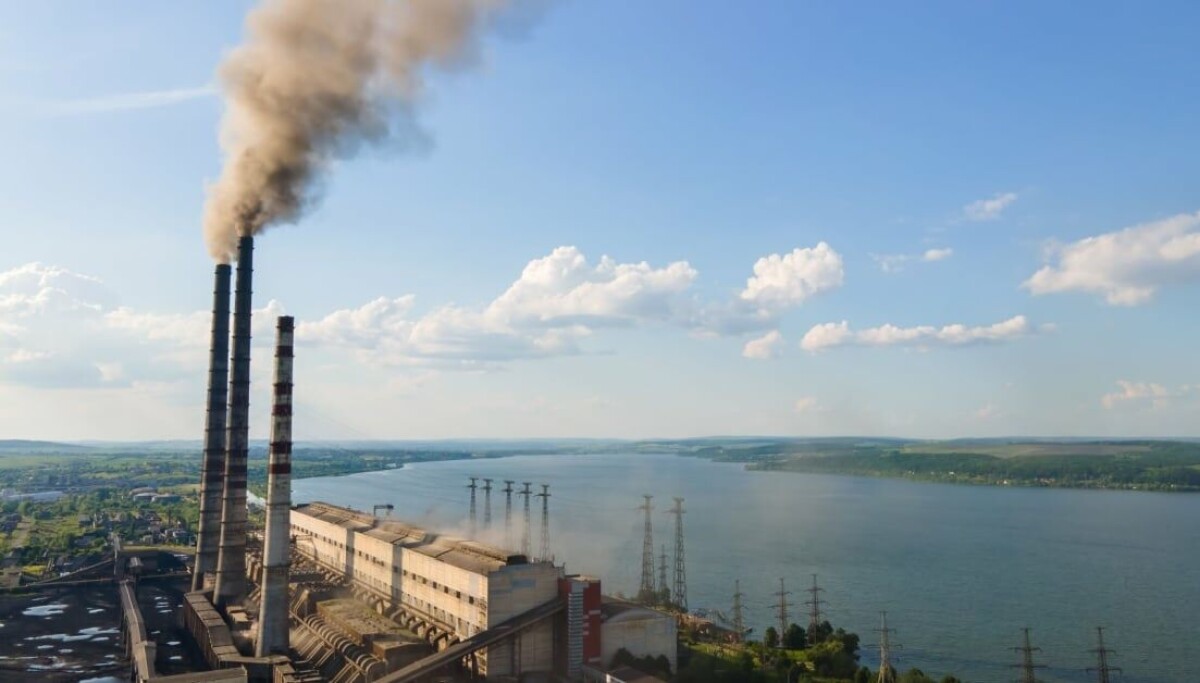
Coal making a comeback as US datacenters demand power
: High gas prices and surging AI demand send operators back to the dirtiest fuel in the stack
theregister
125 points · by Bender · 1y ago · 143 comments
But we sure did make a great profit on those datacentres so worth it to destroy the planets habitats.
Remember, WW2 didn't bring civilizational collapse. In fact one could argue it even accelerated industrial development. Doesn't mean much to those who perished.
It depends where you lived.
It sure did in China, Japan, Germany, large chunks of the USSR.
Civilisation was rebuilt, but it sure collapsed.
Perhaps the author of that comment comes from the USA?
We're killing what we eat (and what we eat is nurtured by) at a rapid speed, at scale. This will first show in bearable price increases (as it already does with coffee and cocoa) and only get worse from there, think famine (in regions where this has not happened in a lifetime).
Good luck with keeping a civilization 'stable' when people are hangry at scale.
And the worst part is: While war can be ended, un-extincting is not a solved problem at all.
I think I would take the opposite side of your bet, maybe not at even odds but not at terrible ones either.
Back to serfdom that is.
OTOH why referring to something almost nobody knows, when it's basically the same shit in 'The Expanse" for most of the people on earth? They even have worthless UBI and free meals, and it's an absolute shithole in spite of that.
I think at some point everyone must face the fact that they're not on this planet by themselves.
It seems highly plausible that there will be a large exodus of humans from previously habitable zones as the temperatures increase and access to food and water become highly variable. Some areas will likely still have access to decent agricultural conditions (e.g. greenhouses can help to control the local climate in order to grow food), but there will undoubtedly be increased conflict over dwindling resources.
Sure, we won't collapse to Mad Max levels, not in the West at least, but our quality of life will decline steeply.
[1]https://www.bbc.co.uk/travel/article/20231218-why-olive-oil-...
This is an incredibly short sighted and ignorant view. If you live close to the equator, the climate is visibly changing and is becoming borderline deadly.
It's not a long comment.
> we run the real risk of collapsing civilisation if we don't change urgently
the scale of impact goes beyond extinction, to encompass wiping out entire system types.
99.9% of species are already extinct, the fossil record is huge. I get that people don't like change, but species going extinct doesn't really move the needle much. That is what they do. Every species eventually goes extinct, species going extinct isn't much of a motivator to go around making humans suffer. We can't stop species going extinct but we can make people comfortable.
And the experience has been that civilisational collapse is much more likely for the people who don't use fossil fuels. If we've got cheap energy then pretty much any problem is solveable and most of the cheap energy production is coming out of the country with the most fossil fuel plants.
Edit, because I'm guessing the "civilizational collapse" line's going to catch the response, instead of the "will, not capacity" part:
Pick any one of:
* Sea levels rise by 2-3ft
* The jet stream breaks down
* The north atlantic current breaks down
* Large swaths of the globe between, say, +/-33deg off the equator experience heat waves sufficient to make being outside more than ~30 or so minutes unprotected a life threatening event for normally healthy individuals multiple times per year (note these areas of the planet contain several billion people, and not the rich ones).
* Climates change sufficient to move productive agricultural zones substantially outside of where they've been for roughly the entire industrial area, causing regular crop failures and unpredictable food prices
* Large scale droughts and flooding become a regular event
* Category 5 becomes the low side of what we'd expect a hurricane to hit
And walk through the political, economic, and social ramifications of it, and then realize we're looking at all of them - and we're already seeing the beginnings of them _today_.
I'm not arguing against environmentalism. I'm arguing for humanity and against doom prophesies. We are the descendants of the survivors of the last cataclysmic instant-hellfire-and-brimstone extinction event, and we've only gotten more robust since.
Species extinctions are insignificant if evolution and migration can allow other species to fill niches left behind. This is the first time extinctions are happening faster than evolution. And while migration is significantly disrupted by infrastructure.
As to your second comment, solar is the cheapest energy.
Species usually go extinct at a rate at which new diversity can take their place. The current rate of extinction is hundreds of times higher than that, and leads to ecosystem collapse.
That is just a mathematical truism. If all species died tomorrow and only humans were left we'd still hit an equilibrium where species were going extinct at the same rate new ones were appearing. The system moves quickly to an equilibrium where usually extinctions = new species.
In practice ecosystems collapse fairly regularly. This stuff isn't planned and nature is messy. Every time something changes ecosystems might collapse.
> Billions of people have died in the past, but it would obviously be a catastrophic tragedy if billions of people died this year.
Sure. Most people would make a show of moral objection to that. But if we look at what the humans actually do - they typically kill everything in sight that is larger than dog, concrete over what is left and poison any insects that made it through the slaughter. I dunno if anyone is tracking how many species we've wiped out on the road to apex predator, but there are going to be quite a few already. Cities are great for humans and not much else. In fact, we purposefully cause ecosystem collapses because it suits us.
That argument is only going to get pushback from very argumentative people but it is actually unpersuasive in practice. A billion human deaths is a tragedy but extinct species seems like it would be acceptable for bettering the material comfort of humans. Humans have generally accepted that trade in the past and we're still purposefully trying to ... I dunno, specie-cide a few that we don't like.
The more common baseline I've come across is comparing the estimated rate of species extinction from the last century or so versus the baseline historical extinction rate.
To pick an arbitrary article about extinction rates with citations to published research:
> But this estimated [background extinction] rate is highly uncertain, ranging between 0.1 and 2.0 extinctions per million species-years. Whether we are now indeed in a sixth mass extinction depends to some extent on the true value of this rate. Otherwise, it’s difficult to compare Earth’s situation today with the past.
> In contrast to the the Big Five [mass extinction events], today’s species losses are driven by a mix of direct and indirect human activities, such as the destruction and fragmentation of habitats, direct exploitation like fishing and hunting, chemical pollution, invasive species, and human-caused global warming.
> If we use the same approach to estimate today’s extinctions per million species-years, we come up with a rate that is between ten and 10,000 times higher than the background rate.
https://theconversation.com/what-is-a-mass-extinction-and-ar...
1. For all of the others, we are piecing together bits of evidence spanning eons. Can we really compare estimated background extinction rates over hundreds of millions of years to the by-comparison hyper-detailed and extensive data we have from the last 100?
2. This time it's different. Humans are categorically different from past drivers of extinction. I don't think there is a whole lot to extrapolate from. We can selectively preserve species we care about. We can run roughshod over others without even noticing. The impacts of our actions on the global ecosystem, from construction to medicine to pollution to deforestation, are unique. We could hold in a relative stasis where biodiversity continues declining but at too slow of a rate to really be considered a mass extinction. Or we could blow it all up tomorrow. Or we could unlock bioengineering and see an explosion unlike any before. By the criteria in the article it could be millions of years before we can say anything conclusively.
Solar is cheaper now. Has been for awhile.
I don't understand the reasoning behind that. Obtaining fossil fuels, refining and delivering them to where they are needed all requires a substantial number of systems working together. Disruption to e.g. refineries will stop people from being able to use fossil fuels.
Meanwhile, alternate sources such as solar and wind are cheaper and require far less civilisation to make workable (e.g. setup your own solar cell and plug it into your isolated supply).
There's a limited amount of fossil fuels on Earth. We definitely are going to stop using them as a major energy source at some point because of that, the question is if we get to get a choice as to how we reduce and stop using them or let the production curve peak and the economy collapse once that happens if nothing was anticipated. With additional climate change to deal with by that point.
Ehhhhh this argument is hopeful at best. The problem is we're changing the temp faster than base keystone species' evolution can adapt.
Without them it's super super unpredictable what'll actually happen.
The worry being mass extinction because we lost plankton or similar. Huge amounts of oxygen production and co2 capacity disappears rapidly with that.
Objectively untrue. Globally, though the rise over the last couple of decades is disturbing, emissions are most likely leveling off again; they may have broken past the mid 2010s levels and appear to be rapidly rising in the last few years, but this is just a slight "over-recovery" from the impressive ~5.7% drop in 2020 (mainly from COVID restrictions of course). US emissions peaked in 2005 and were ~18.6% lower in 2023 (the last year of Our World in Data figures). And, you know, China is pivoting.
https://ourworldindata.org/co2-emissions
> and its going to be catastrophic.... But we sure did...
This attitude tends to inspire unproductive doomerism rather than urgent change.
No, that is true already. Look at the "rate" tab of the Mauna Kea data, it shows growth on average. Of the rate of CO 2 growth.
Only true because of the regulatory burden imposed by the government on their construction, there's nothing about the design or construction of the plants which takes that long.
Look at China, it takes them about 6 years to build a nuclear power plant. Politicians have been using climate change as a political tool for decades, if they had started pushing the construction of these plants back when they first started talking about the issue we could have been bringing enough power plants online by now to already have solved the problem.
"The oil burning power plant is a natural part of the reserve energy plan, and replacing it with nuclear would be way too expensive."
After that debate, the green party (in combination with their other coalition parties) has now green lit the construction of a new natural gas power plant, as part of the strategy of using wind and solar during optimal weather conditions and fossil fuels in poor weather conditions. This strategy goes under the long-term plan of using green hydrogen in the future. Currently there exist a experiment of using green hydrogen for steel production, which has yet to become economical viable, and experts in the field of green hydrogen is predicting around ~50 years until green hydrogen may become economical viable for electricity production. Until then the plan is to continue expanding the fleet of fossil fuel burning power plants.
To me its very obvious who is trying to sell fossil fuels for another 50 or so years. It is those that fund, approve and build new ones. The people responsible for those decisions are responsible for the fossil fuels that will get burned, and in turn delaying implementation of non-fossil fueled solutions.
This claim explains a lot about our previous interactions. It's also the polar opposite of my experience.
I have never heard a single advocate of nuclear advocating for fossil fuels, and I certainly don't do it myself. I've also never heard them speak against solar (and again I also don't do this). It's purely about defending nuclear from fear-mongering and trying to make it possible faster, rather than being crushed under ridiculous and unjustified regulations.
France's nuclear electricity isn't even that cheap and they were all built decades ago.
https://oaklandside.org/2025/09/22/oakland-coal-terminal-leg...
When all the carbon frozen in the permafrost of Siberia is released back into the ecosystem, the Earth with once again look like a tropical paradise it once was, being able to sustain giant cold-blooded reptiles.
(Well, not sure they actually were reptiles, but most likely cold-blooded.)
I wonder if the vast chunk of humanity that shares this trait will be able to survive the scenario. I doubt it somehow.
I can also get away with no powered cooling for my gear. ie: I need cooling well before my gear does.
The GOP was the leader but the Democrats added to it but pretended they cared. At least the GOP told the truth that they were out to destroy the Climate.
We had almost 50 years to work on it, but people who could lead decided they wanted to keep their jobs and bribes instead of doing good for the US and the World.
For this, I fully blame Reagan and his enablers.
Heck this also takes away any incentive to restart the coal plants by private companies if they are being financially supported and already in the process of converting them to nuclear, and it takes away an incentive to build more long-term because each nuclear plant provides a lot more power on average. Another thing to lobby for would be for more SMRs funding and less regulation overall in nuclear (it's insane how overly regulated nuclear is based on one soviet fuck up of a crappy underfunded/flawed powerplant (chernobyl). Fukushima plants (commissioned in 1971!) were hit with a once in a lifetime 9.5 magnitude earthquake and tsunami on top despite being less than 100 miles from the epicenter even with regulatory lapses and no direct deaths.
(And where did you get 9.5 from?)
Citation needed. The famous SV names are all dumping money into right wing authoritarian political causes.
"There are no rich, low energy countries"
[1] Both numbers on page 14: https://ember-energy.org/app/uploads/2025/09/China-Energy-Tr...
Besides, if the cost of keeping up with China is breathing deadly coal smoke, I’m not sure the decision is as obvious as you make it seem.
https://ember-energy.org/latest-insights/global-electricity-...
https://www.carbonbrief.org/guest-post-why-china-is-still-bu...
In terms of coal its usage has started to decrease in actual terms since the start of 2025. All demand growth and more is solved by new built renewables and storage.