36 points · by sipofwater · 1y ago · 55 comments
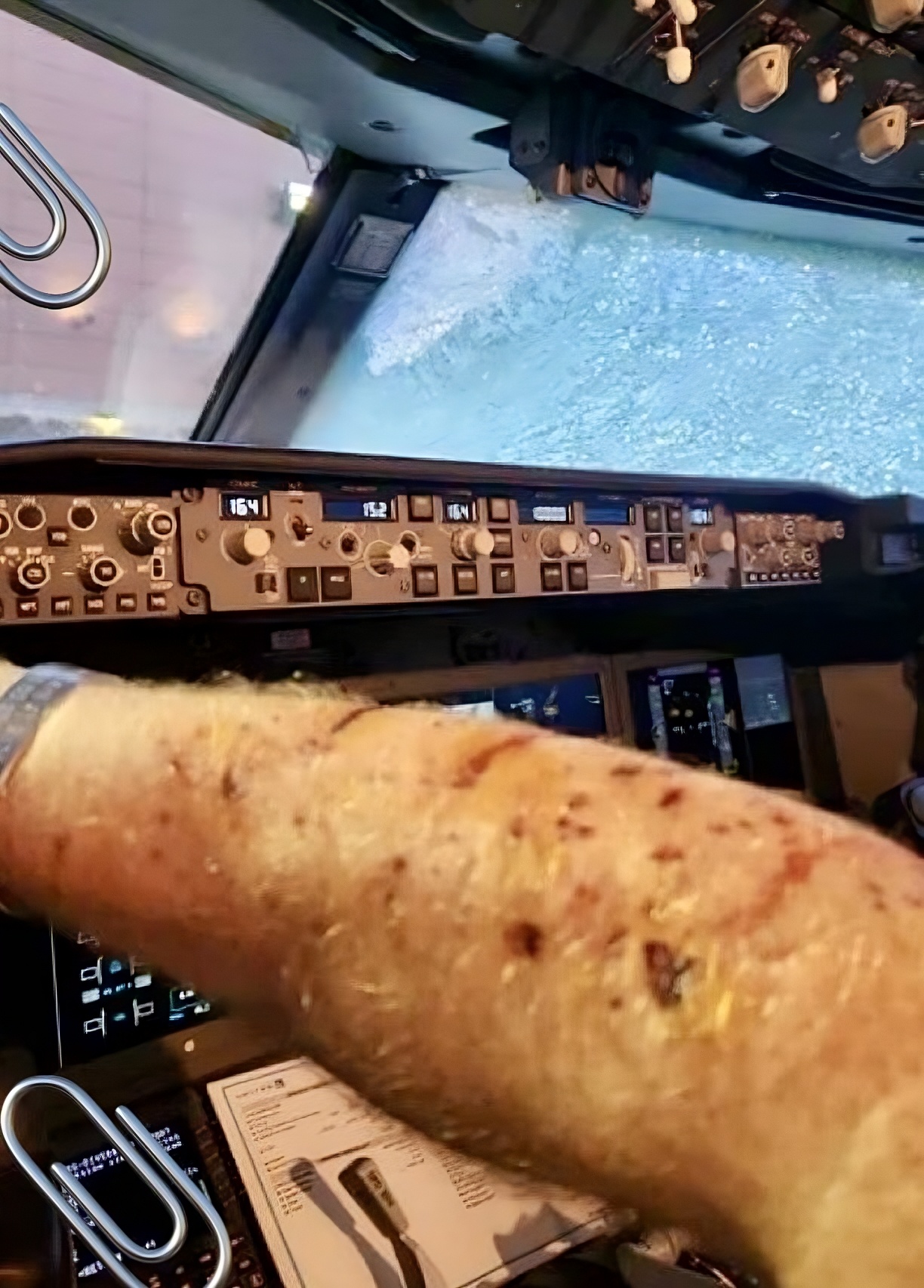
So while it can be extremely unlikely from a probability standpoint that this plane was stuck by space debris, and it can also be extremely unlikely that he saw it before it hit, it’s not a false statement just because the probability says it’s unlikely.
And of course, despite probability, folks still get struck by lightning.
Yep, and:
"In 1998, Bill Morgan, an Australian man from Melbourne was captured on film winning a AU$250,000 scratchcard while re-enacting his previous scratchcard win for a news report. The video of the event has since been widely shared online."
"Morgan, a 37-year-old truck driver living in a caravan, was almost killed in a car crash which caused him to develop a heart condition. He then suffered an allergic reaction to the drug used to treat this condition, which triggered a fatal heart attack. He was declared clinically dead for 14 minutes and 38 seconds before being revived by paramedics. He subsequently lapsed into a coma for 12 days, during which his family were advised to turn off his life support. After being transferred to a different hospital, he woke up and made a full recovery."
> His dramatic change in fortune attracted local media attention, and two weeks after his first scratchcard win in May 1999, Nine News asked him to re-enact it for the B-roll footage of their news report. While being filmed scratching off another card inside the shop, he turned around, held up the ticket and said, "I just won 250,000. I'm not joking. I just won 250,000."
1998 was when he suffered a car crash followed by serious medical problems.
I'm more likely to get struck by lightning than win the lottery, sure. But it's much more likely that someone wins the lottery this week (~100% in fact) than that someone gets struck by lightning this week.
Edit: my point about independence of events still stands, but it turns out people get struck by lightning amazingly often. The chance of someone in the world getting struck by lightning this week seems to be about 99%!
No it isn’t? Not only are the individual odds of winning the lottery lower than the individual odds of being struck by lightning, but far more people are exposed to lightning on a weekly basis than participate in any given lottery.
I wonder if a report done in October 2025 would give a different estimate, considering we have a lot more stuff in space now compared to 2023.
Maybe this is space shuttle math where real-world accidents tell us that the risk is significantly higher. But it'd be the first documented case of a meteor or space debris, so I'd guess it's still unlikely.
Well, not by itself, but isn't that risk based on how many numbers of objects there are in space? And since we're launching more stuff into space than falls out of it, the numbers used for the calculations may be changing?
Although the odds are incredibly slim, I wondered around the time if it could have actually been a meteorite striking the aircraft, passing through the fuel tank and causing the explosion. Presumably it would have been moving very quickly, might have looked like a missile to an observer, and wouldn't have left any shrapnel debris/marks in the wreckage.
I would imagine that the space debris mentioned in the article would be a lot less dense and moving much more slowly (relatively speaking) than a meteorite at the impact with the aircraft.
There's some degree of things we just can't do anything about. We just have to accept it and move on. There's something about the human condition that makes it easy to say, and hard to do, and harder for some people than others - wishing you luck on your journey.
Focus on what you can control (exercise is a miracle drug that will lower your risk of so many problems! Don't smoke! Use sunscreen!) and enjoy life as best you can.
Not sure if this helps though...
Smells like fake news.
* This looks relatively convincing.
https://avherald.com/h?article=52e80701
https://x.com/oeingoboeing/status/1979588783982133360
* They obviously would have cleaned up the wounds... this can be a few hours old , surface wounds build crusts quickly
2) even if it did... rentry velocity is like miles per second, that would give you on the order of single digit seconds to recognize something on an intersecting trajectory and take action...
3) even then, I would bet that an object on this trajectory and speed would get filtered out as noise by aircraft radar because it is so antithetical to the types of things an airliner needs to inform pilots of.
It's hard to overstate just how much random junk is up there.
How high in the atmosphere, though? They're not likely to hit the ground, sure, but 36,000 feet isn't the ground. Second, designs fail. 432 Park was designed not to have cracking and spalling concrete, yet NYT has a story today about exactly those things. Third, people lie about designs and capabilities. Pretty sure anyone who has ever worked in computing (especially with VC involved) has seen that. Who made that claim, and did they ever back it up?
I'm not saying that Starlink is the culprit here. The evidence is thin. OTOH the possibility can't just be dismissed because of a claim about a design to prevent a similar (but not identical) thing.
The atmospheric entrance for these (starlink) sattelites is basically as shallow as possible, so the object spends the most time possible in high atmosphere (think 60-90 km, where the atmo is thick enough to engulf the object in plasma, yet extert low pressure to slow it down, prolonging the time its burning. In otherwords, you couldnt achieve better parameters to burn stuff on deorbit.
All of it will probably be fully burned way before 50km - planes fly at 8-12
Would the elevation of the airport matter (for air pressure on that cracked windshield)? Did they pick SLC because it's higher?