Why an abundance of choice is not the same as freedom | Aeon Essays
It’s only in recent history that freedom has come to mean having a huge array of choices in life. Did we take a wrong turn?
aeon.co
155 points · by herbertl · 1y ago · 110 comments
- Comprehensiveness: instead of pork or beef, you can choose from meat, fish, tofu or egg as your protein source.
- Non-commitment: choosing one of them doesn't prevent you from choosing another for the next meal.
- Safety: none of them shouldn't be so expensive that it hurts you financially, or poisoned it hurts you physiologically beyond its nutritional nature.
I'm not talking about meals but elections, by the way.
https://medium.com/@trendguardian/free-will-a-rich-fairy-tal...
By the way, it doesn't matter how many choices you have - if you can't chose the one you want, you don't have any freedom at all.
It's not all-or-nothing. I'd rather have a choice instead of none.
I used to work adjacent to car financing. One of the "tricks" used in car negotiating is the "fake choice": "oh, you want to pay less for the car? Well. I can give you X OR Y for FREE!". Now you spend time thinking if you want X or Y, forgetting thay they are worth $200, and what you really want is $1000 less on the car.
Be careful with the "choice" you think you are making
Having only one choice is equal to having no choice.
Having only two choices isn't notably better, especially if both options are equally bad.
Left unspecified-- do you mean as measured scientifically? Or do you simply mean that a person perceives that this choice won't prevent them from choosing differently for their next meal?
A 'free market' means freedom from monopolistic and rent-seeking practices (according to a Marxist). Yet we have a different capitalist take on what a 'free market' is, which is more like a choice between Pepsi, Coca Cola and own-brand cola, with plain old tap water not on the menu.
1. Freedom TO or
2. Freedom FROM?
Both are valid in discussions of freedom, but I find the west tends to focus considerably more on #1 than #2.
Positive rights of course directly imply slavery so it makes sense people wish to frame them as negative rights.
I may have incredible freedoms inside a market, but I have little to no freedom from markets (or capitalism) I have no practical freedom between different economic systems. Capital has eaten it all. I detest being essentially forced to participate in a system I don't believe in where the alternative (living in the woods alone) isn't really an alternative at all. It's Moloch or the wilderness.
A free market in that sense is one in which (more or less) anyone can sell (more or less) anything at (more or less) any price. Historically, the freedom to do this was impeded by laws and/or arbitrary rule making, even if today monopolies, monopsonies and rent-seeking are a bigger problem in many markets.
Generally speaking, what all other definitions boil down to is Sam and Hanna wanting to make a consensual transaction, and some third party who has nothing to do with said transition interfering "for the greater good" or whatever. Which is nonsense, it's the complete opposite of freedom.
This is also the position of Adam Smith and, for that matter, everybody except for the monopolists and their sycophants.
I think the latter are sometimes referred to as the Chicago School and someone should really buy that place out to split it up and sell it for parts. I bet they have some nice buildings that are worth way more than any of their theories.
> Yet we have a different capitalist take on what a 'free market' is, which is more like a choice between Pepsi, Coca Cola and own-brand cola, with plain old tap water not on the menu.
Let's not ignore the third thing here. There are actual economists who will make arguments like "monopolies are efficient because of economies of scale" -- all empirical evidence to the contrary -- and presumably actually believe them. But there are also, you know, monopolies, and government officials in their pockets, who say things like that knowing that they're full of crap because that mendacity has been lucrative for them.
And maybe we need to start putting those people out on their butts or into a prison cell.
"A government which maintained law and order, defined property rights, [long list of other functions of government,] engaged in activities to counter technical monopolies and to overcome neighborhood effects widely regarded as sufficiently important to justify government intervention, and which [something about welfare]—such a government would clearly have important functions to perform. The consistent liberal is not an anarchist."
Obviously he didn't like regulation at all, and was probably struggling to decide how much of it to tolerate, but that doesn't mean he wanted monopolies.
It’s that when you little to no choice we say you aren’t free. It doesn’t follow that having more choices makes you free, but it is a prerequisite. Serfs tied to the land were not free, they had a choice to stay and struggle or leave and risk wandering and starving. Not much of a choice.
Also the author seems to be worried that people will make bad decisions with their choices, and this seems not like freedom to the author.
This piece makes me uneasy, it’s like there’s this effort to justify limiting our choices and calling that freedom. I’m wondering where this is going.
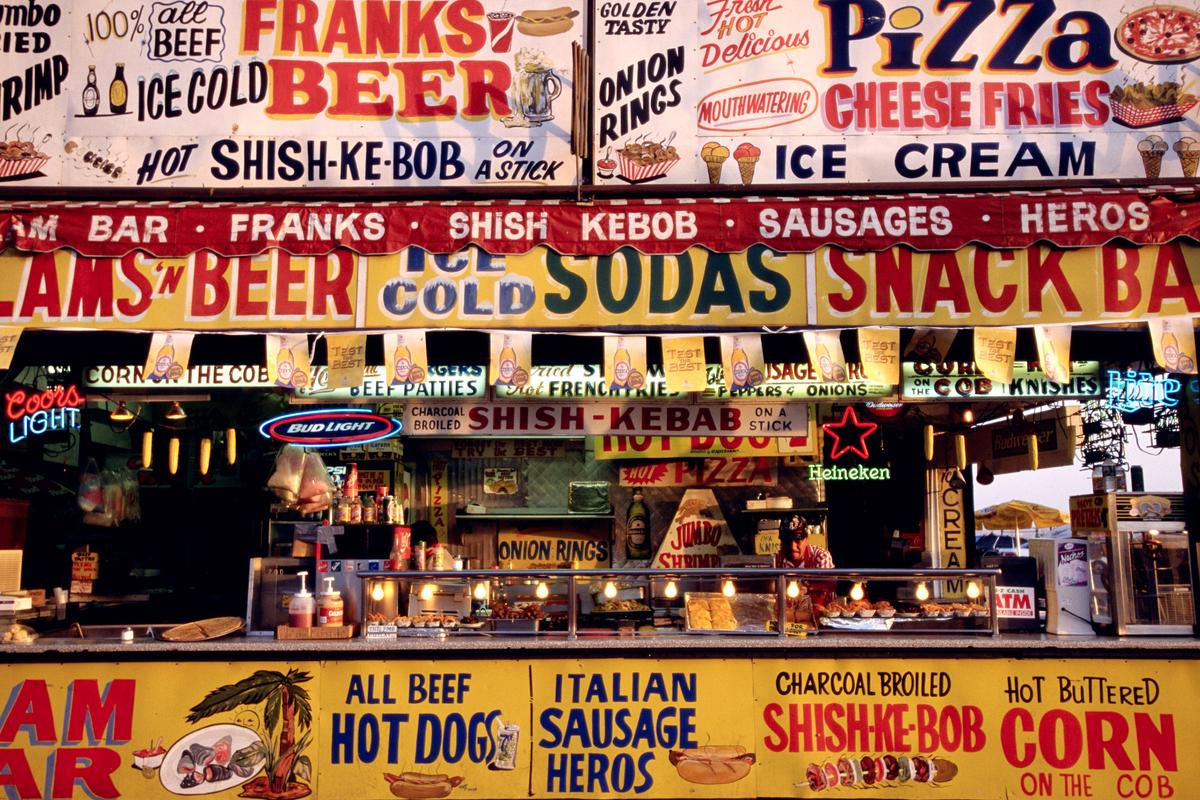
You have a myriad of artificially created choices that amount to more or less the same outcome; think of a supermarket, where all products are the same high-processed food and imported vegetables. Freedom would be having a competing family-owned local shop with proximity products.
To have meaningful choice, you cannot depend of having a single homogeneous environment providing all the choices you can make; this can come from having healthy competition, or sometimes by you creating your own choices when there were none.
Removing our freedom—or ability to choose—to kill others, take them as slaves, take away their stuff*, etc, is an increase in overall freedom of the society, especially as that removal is expanded to everyone in the society, no matter how wealthy or powerful they are.
* With impunity, through laws and enforcement thereof; being able to physically prevent us from doing such things en masse is a different kind of question.
Past a very low threshold, it’s the quality of the choices that matter not the quantity. And I don’t mean workmanship or value, but the cost/benefit ratio of the choice.
Your example is completely orthogonal to liberty. Choices are completely orthogonal. If the serf could leave and not starve, he still wouldn't be free because they would find and drag him back and punish him. He wasn't permitted to make the choice, it being incidental that he wouldn't survive long enough to be punished for it in most circumstances.
If they had refrained from punishing serfs that leave you'd still insist there is no freedom there, I think, because of the starvation. But no one is obligated to feed you so that you can choose options that would otherwise starve you.
>Also the author seems to be worried that people will make bad decisions with their choices
For good reason. Given choices, humans inevitably pick the worst of them. And I'm not talking about those that are only bad options in hindsight.
>it’s like there’s this effort to justify limiting our choices and calling that freedom.
There's no effort, that's called reality. Reality limits choices, and it is effortless.
Even sort of bing a libertarian, objectively speaking, yes, I think other people will make bad decisions with their choices.
I find this argument interesting, because I think it’s a plea to rationality. people who consider themselves good/rational are humble enough not to paint the rest of humanity with such a broad brushstroke. But I think it’s wrong, I think it serves more as an emotional plea than a rational one.
So yes, I think the author probably thinks that too many choices will lead people to make bad choices, and in fact not only do I agree with the author but I would guess many? Most? People would be happy to apply this to themselves.
Said who? This is an argument from invented opposition. I’m not sure anyone actually defines freedom as "a huge array of choices". The author seems to invent a mainstream narrative just to dismantle it(arguing against a straw man)
Abundance of choice and freedom are orthogonal. Having the right choice and being free are not.
It's the inversion of something which is correct.
If you don't have any choice or are limited to a small number of bad options, that's not freedom. Freedom requires choice.
But choice is necessary, not sufficient. Having a thousand frivolous choices that are all bad and still not the ones you ought to have is not it either.
Evidence of a fact is different from the fact.
> Said who? This is an argument from invented opposition. I’m not sure anyone actually defines freedom as "a huge array of choices".
This is an argument about who "defined freedom as ..." and I pointed out who did.
And an evergreen one is the single differentiating feature. Like color. How many kitchenaid appliances have been sold in a faddish color only to be replaced by white or black or red a handful of years later? Those things were tanks. Still are to an extent.
When people decry that nobody else will pay them to be an artist or to follow their passions they’re really decrying that they’re unwilling or unable to follow their passions without either giving up something or without offering enough back to other people to justify their use of their resources. Reality doesn’t give a shit whether or not you’re free, neither does the guy that built your house or grew your food, or the nurse that wipes your ass when you get sick.
You either have to be the change you want to see or stop whining that other people won’t adjust their lives to conform to the way you want them to be, without subjecting yourself to any discomfort beyond jeering from the sidelines. It’s really easy to imagine a world in which you’re free to benefit from everybody else’s lack thereof, children do it all the time.
> "But an emphasis on choice as a form of liberation has occasioned serious resentments in different sectors and geographies, where it can seem a direct threat to other, more communal values and needs." I think this quote sums it up nicely. Personal liberation is not a threat to mutually beneficial communal values. If you need to force people to behave as part of your community, then it should be voluntary. One should be able to choose to pursue any form of freedom or community they'd like. If you want freedom to be "an act of pure imagination" and live a communal lifestyle, you should have the choice.
The one thing that truly made a difference for my own personal satisfaction was in realizing that inaction and despairing about society because of my own problems were a defense mechanism to justify what might happen if I tried to actually make things better, and either failed or became something I moralized against. Who gives a shit that there's too much cereal? What's actually making people unhappy is not enough of something else, or something missing in their lives that they can't find. Ultimately you either choose to do nothing or to try to make things better, and accept that inaction is itself a choice.
It's not the lack of freedom, but an outcome of it that the author finds undesirable - same with their argument that the amount of choice is so overwhelming that it begets freedom. I've been to the grocery store enough to just get what I like and get it out - you either have to willfully participate in it to let something that unimportant overwhelm you, or think your inability to not get overwhelmed is universal or important enough to not realize that some people want those options more than you, or just are unbothered by it.
If you allow yourself to participate in something meaningful then you just won't care about having so many unimportant decision to make, because you'll choose to not think about them, even if it means you have to accept that there might be even worse outcomes than picking the wrong carton of milk. Personally, I believe that it's what might actually help the author get over whatever it is that causes them to point the finger at having too many options - find something where your decisions matter.
Anyway, "consumer freedom" as we know it is a facade, with a handful of conglomerates owning most of the brands you know, a few large investment funds owning the conglomerates, and a few factories in Asia supplying many of the parts and products that nominally Western brands sell. The choices aren't meaningful and the costs are higher because we try to maintain this appearance of choice (hence, Temu).
And if you think I'm whatever cultural archetype you hate that keeps things this way, just know that my life sucks too and I'm giving up a lot to just try to make it better for other people instead of moseying along hating what I do and how powerless I am. But pretty quickly you realize people hate that even more than they hate their own suffering, nothing you do will ever be good enough for them because they just want to be miserable and make it someone else's fault - if they take any responsibility for it, they have to admit that it's not going to just change for them.
Nothing is actually stopping you from making your own music, nobody has to listen to it though, unless you make them. But it's your only choice if you don't like the music you have already. Just get ready for people to tell you they don't like it.
But, as you say, that's not because people don't want choice. It's because the choice was often between "safe and decent and expensive" and "unhealthy or dangerous but cheap" and sometimes even "unhealthy or dangerous and also expensive." The choice wasn't meaningful.
I live in an apartment, but I've got a few food plants on my deck. People do what they can within a broken system driven by the profit motive (read: exploitation), but it IS a system and it IS broken, and that's something that no amount of advocating for "consumer choice" or "working hard" within the broken system will change. And you bet your ass that I'd love to see what we have get replaced with one with fewer "choices", where the remainder are actually good ones.
Maybe stop complaining yourself and make that happen. As for me, I'm getting ready to harvest my sweet potatoes and draw a few storyboards. Hopefully one day the world will catch up to the fact that I don't actually have to do the former because we produce more than enough industrially, and that people who can do the latter are a badge of honor for our objective prosperity, and not a burden.
Talking about freedom in terms of a selection of products in a marketplace seems very shallow.
Art thou one ENTITLED to escape from a yoke? Many a one hath cast away his final worth when he hath cast away his servitude.
Free from what? What doth that matter to Zarathustra! Clearly, however, shall thine eye show unto me: free FOR WHAT?
Nietzsche, ~1889
“Modern man lives under the illusion that he knows 'what he wants,' while he actually wants what he is supposed to want. In order to accept this it is necessary to realize that to know what one really wants is not comparatively easy, as most people think, but one of the most difficult problems any human being has to solve. It is a task we frantically try to avoid by accepting ready-made goals as though they were our own.”
― Erich Fromm, Escape from Freedom (or The Fear of Freedom in another translation)
In practice, we all restrain our choices in ways that we hope narrow our focus and abilities towards things that matter. It would be nice to read a piece that explores how this can be true collectively.
However, I still think that, in general, more freedom of choice is only a good thing.
> Is there any real difference between the scores of toothpastes or breakfast cereals in contemporary supermarkets?
That depends. Do you have a preference for one flavor of toothpaste or cereal over another? Do you have dental issues that require a toothpaste with whitening effects, or without fluoride, or with baking soda? In a cereal, do you value health concerns over taste, or vice versa? If so, then yes, there is a real difference between different choices in these cases. Making one choice over another can have a direct impact on quality of life, if often a minor one. And this is what makes freedom of choice so important for me: it’s the freedom to strive to improve quality of life—synonymous with the pursuit of happiness.
Of course, as the article briefly touches on, freedom of choice isn’t the only kind of freedom, and arguably isn’t the most important one, either. I think this is the point the author was trying to make, but she doesn’t go into much detail. Freedom from oppression is a prerequisite for freedom of choice, and freedom from suffering is (on paper) the ultimate goal of it. Therein lies the debate: when does increased freedom of choice impede on these other two freedoms? Which should be prioritized in these cases? The line is different for everyone. I would’ve liked to see the article add more nuance to the discussion.
That's okay because those choices are their own. I think most people would rather make their own choices and live with the consequences than have the ability to choose taken from them even if that'd mean being forced into something that would be better for them than alternatives. Personally, I don't equate an abundance of choice with freedom, but a lack of choice or unnecessary constraints on avilable choices aren't going to make people more free either.
    They say that choice is freedom
    I'm so free it drives me to the brink
    ...
    They say that choice is freedom
    I'm so free it's driving me insane
    ...
    They say that choice is freedom
    I'm so free I'm stuck in therapy
- is an abundance of choice not freedom, or is freedom not strictly speaking “good”
- is there a freedom to be able to have a life on rails? Maybe 50 years ago you grow up in a small town with a coal mine, and you get married to someone from that town and work in that mine for the rest of your life. That choice or lifestyle is not available to a lot of people anymore.
- non-compatible choices —- some people say about work from home is always good, because each person has a choice, some can work from home, some in the office, but these choices just aren’t compatible. Having a work from home policy generally means that people who want to work in the office don’t get the experience they were hoping for.
- super markets. consolidation means there’s only a few brands of supermarkets left. But those super markets have more choice than ever before - but they also tend to have a pretty narrow selection of raw ingredients / produce. What is freedom here?
* the loss of special experiences. My city had a great authentic Thai restaurant. It was great! I could go whenever I wanted, but when I actually went to Thailand, I was a bit disappointed that nothing really felt new there.
* the loss of human connection. I think the world was a better place when Tv during the day sucked. We’ve fundamentally lost the need to rely on each other for entertainment, and I think this has impacts in community formation, friendship and dating.
* Adaptation to self vs self-adaptation. When there was less choices you had to change yourself to appreciate new things. Now one can probably almost precisely do the opposite, only find the things that match who you currently are.
The first freedom of course is freedom from fear (e.g. from fear of being snatched from the street just because you are brown and speak with an accent)
Perhaps the contemporary fight back against 'woke' is really about the important and empowering choices in life being denied to too many?
"Privacy choices"
Having a lot of choices is often a strong indicator that you also have freedom.
You see that in our political discourse. Debates over things like gay marriage, immigration or abortion are encouraged because they don't cost the oligarchy any money. Discussion about things like income inequality that may reduce the power and wealth of the upper class is discouraged.
This article on the other hand seems to say that people have equated choice with political or economic or philosophical freedom and, furthermore, that this equivalence is a false one. It’s a deeper and more difficult argument to make. I think “The Paradox of Choice” makes a lot of sense but this article leaves me unconvinced. For example I’m not understanding the argument this piece makes about the abortion debate. Abortion rights proponents are not arguing that the right to choose abortion is an empty promise. They’re arguing that women need to have real choices so they can in fact choose abortion if they wish. The arguments this piece makes to suggest choice does not promote freedom seem to me to support the opposite conclusion: that choice is an essential component of liberty and freedom.