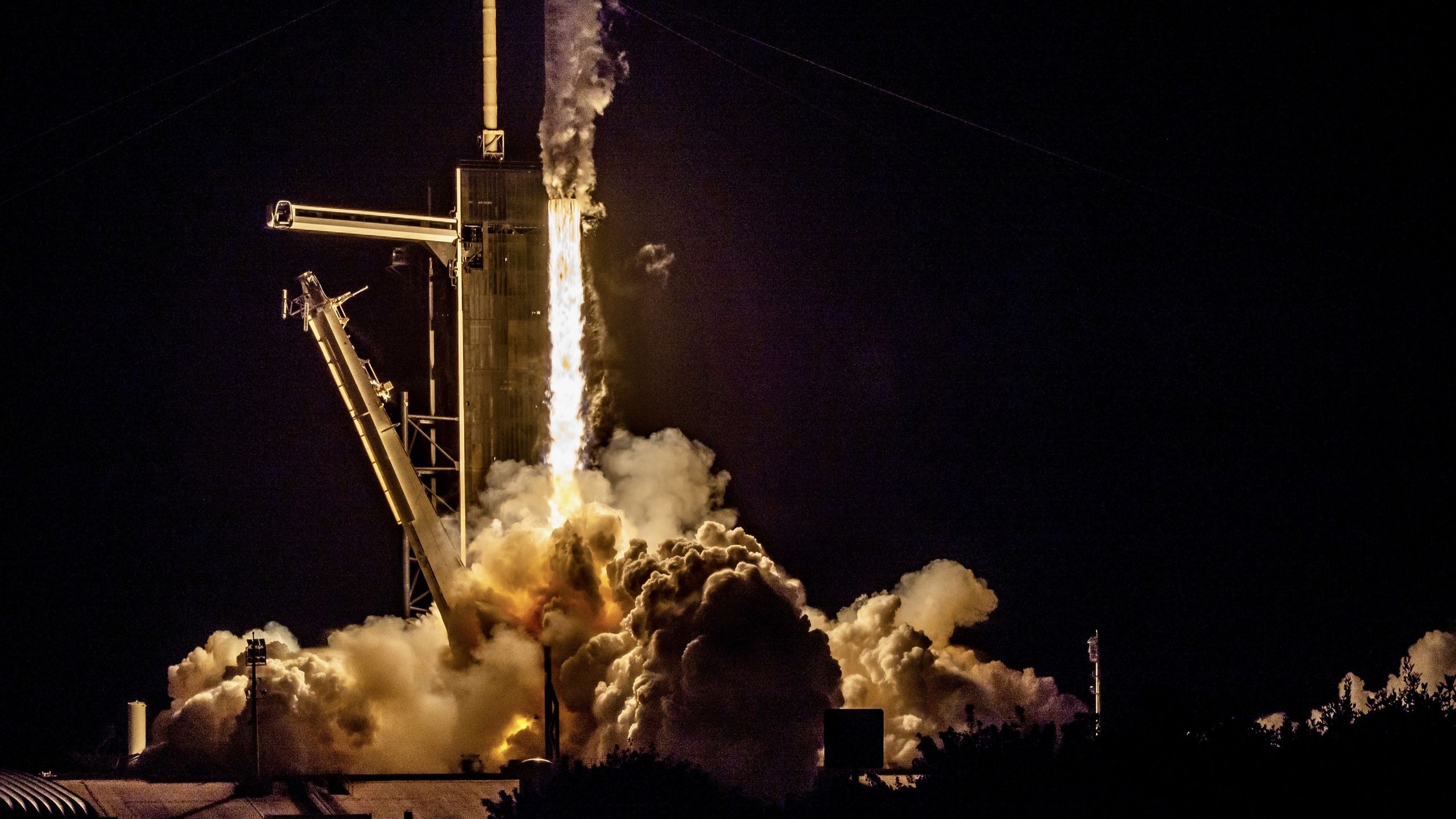
FAA restricts commercial rocket launches indefinitely due to air traffic risks from government shutdown
Restrictions begin just after NASA
Space
150 points · by bookmtn · 1y ago · 100 comments
Unfortunately, the article title is somewhat incomplete, as the restriction on commercial rocket launches is only for certain hours (for now, at least):
> Accordingly, with respect to commercial space launches and reentries, under the authority provided to the FAA Administrator by 49 U.S.C. §§ 40103, 40113, and 46105(c), and authority delegated to the FAA Administrator under 51 U.S.C. § 50909(a), it is hereby ordered that, beginning at 6:00 a.m. EST on November 10, 2025, and until this Order is cancelled, Commercial space launches and reentries will only be permitted between 10:00 p.m. and 6:00 a.m. local time.
> Beginning 6 a.m. EST (1100 GMT) on Nov. 10, commercial launches to space can only take place between the hours of 10 p.m. EST (0300 GMT) and 6 a.m. EST (1100 GMT), according to the FAA order.
I just wanted to make that clear since not everyone reads the article before hopping into the comments and the title could be easily interpreted to prohibit all rocket launches.
1. When an FAA owned and operated facility does not have adequate staffing levels, ATC may elect not to provide the following services:
a. Radar Traffic Information Service;
b. Radar Assistance to visual flight rule (VFR) aircraft;
c. Terminal Radar Services for VFR aircraft;
d. VFR Traffic Pattern Operations;
e. Practice Approaches to VFR aircraft;
f. Flight checks services to restore inoperable equipment and approaches;
g. ATC services to parachute operations; or,
h. ATC services to certain special or unusual operations
Now the difference might be that ATC will be more likely to deny these requests, which could be somewhat disruptive to flights that were expecting to be approved. But it should never be assumed so hopefully they have backup plans.
The others do directly increase workload and regularly get denied at busy airports (some outright "ban" training activity or charge so much as to make it impractical).
That's going to really piss off everyone around Ventura, CA (they get the sonic-boom when landing a booster on a barge for most launch trajectories from Vandenberg).
The order also only applies to domestic flights, so observed percentages on flightaware will be lower than those in the order.
It's not even technically difficult - we only allow error-prone humans to do the job because of inertia.
Build the system now, and then next time there is a government shutdown or shortage of air traffic controllers, we can say 'only planes equipped with an ipad with automatic air traffic control are allowed to fly'. Within 24h every plane in the nation will be equipped.
Air traffic is not a deterministic system, it is squishy and significantly more complicated because it involves humans, complex mechanical systems, and weather floating on top of a sea of limited resources.
Those could be sent as short text messages that appear on a screen in the cockpit, for the pilots to acknowledge receipt of with a limit set of responses, and would give ATC a lot more time to focus on their other duties.
The general experience from the last 50 years is that reducing the human capacity for error by automation was mostly helpful in air traffic safety.
At the very least, safety mechanisms such as TCAS should be introduced where possible [1], to act as a protection of last resort when humans fail.
[1] https://en.wikipedia.org/wiki/Traffic_collision_avoidance_sy...
There are a ton of details on the page that go into why it is so hard. One reason is that there are a lot of fundamental things to build and deploy before anything can be automated. E.g. before ADS-B (equipment on planes that detects its own location with GPS and automatically broadcasts it), ATC needed to talk to pilots and ask them where they were in a lot of cases. ADS-B has only been required on commercial flights since 2020.
Then it also suffers like every large government software project where a bunch of $100+ million contracts get paid out to private companies while nothing gets built. And it's part of annual appropriations, so funding was unpredictable. It's like working at a software company that had a major layoff or hiring spree every year for the last 20 years. If we could figure out how to run major project, the value to humanity would be enormous.
We are very, very, very far from automated ATC. We can't even get automatic TRAINS to work reliably and thats a far simpler problem.
Edit: More automation is certainly an idea that ATC should continue to pursue, and there has been progress already. But the idea that total automation is possible much less easy ignores a lot of the complexity and reality of how air traffic actually works.
But the money comes from ... ?
Than again, ATC needs to deal with people talking on the radio, so the current system has a really long way to go to be completely automated.
Making an autopilot for airplanes is significantly easier than cars.