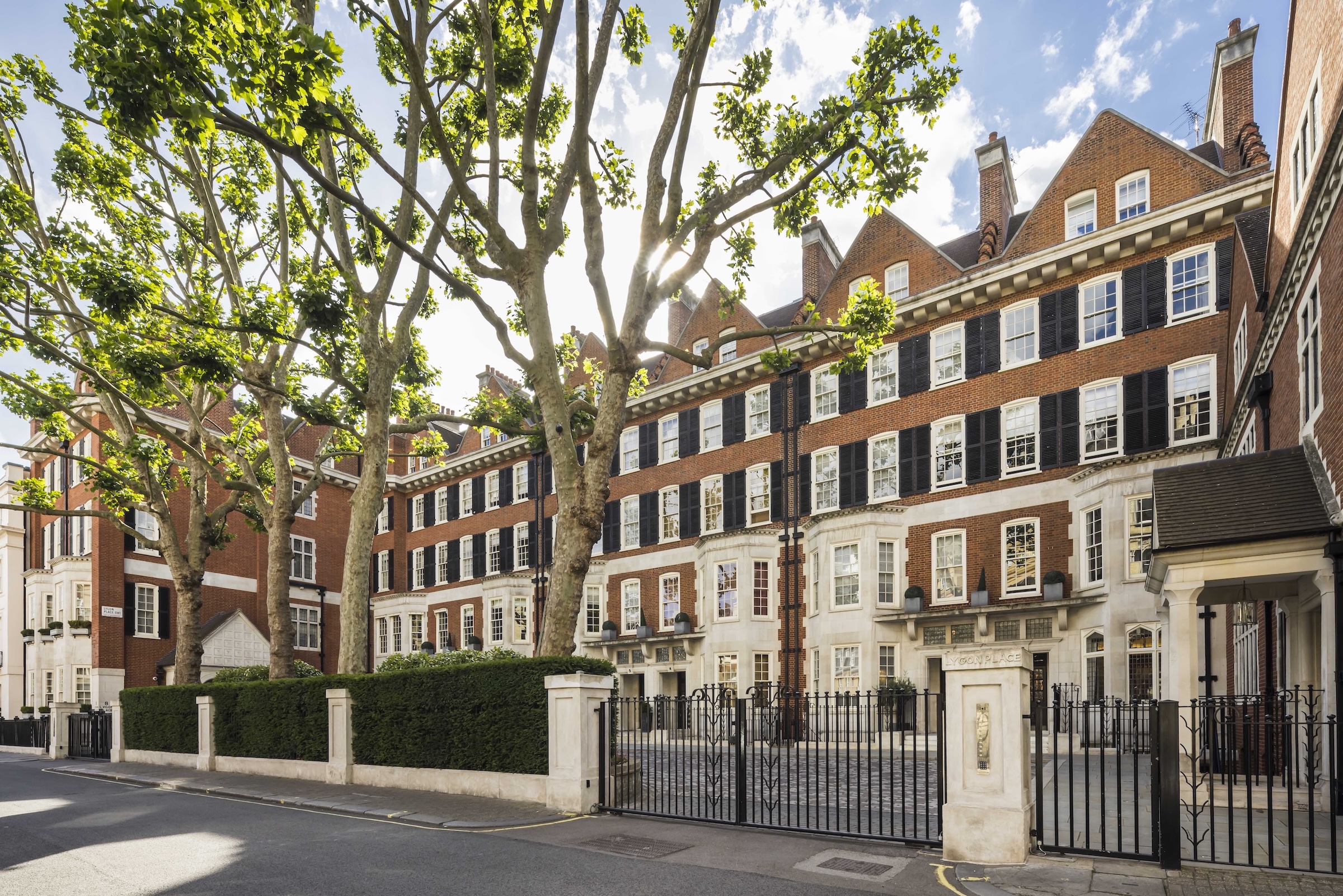
Jack Ma bought UK mansion after years-long 'disappearance’
Jack Ma's wife Cathy Ying Zhang quietly bought £19.5 million London mansion amid Ma's rapprochement with Chinese regime
SourceMaterial
53 points · by robtherobber · 1y ago · 61 comments
However, this causes land speculation which drives the price of land up, and people do not want to develop properties because it would means investing in buildings which costs money to build and maintain and entails risk and ongoing effort.
The correct solution to this is a land value tax, which if implemented correctly, should drive down the price of land down to zero and force Jack Ma's family to either commit to actually investing in UK's economy or park their wealth elsewhere.
None of this is true.
Step by step:
>as it is fixed
Something not being able to be moved is a negative, not a positive
>finite
New land is created all the time. The netherlands has created an entire new province.
> and doesn't depreciate in value
Only true legally. I can assure you land does depreciate, as can any farmer that has used it to farm the same crop for years and now finds its yields reduced as a result.
>except through market trend
So, just like any other asset?
> it basically only go up as long as the economy itself grow.
Untrue, simply check any number of rural areas that have had the life drained out of them over the past 50 years.
Land is useful, but let's not pretend like it's something it isn't.
You're 'technically correct' but the total amount of land being created is so small as to be meaningless in a global sense.
Your arguments are fixated on extreme corner cases. I'm not sure what you are arguing for.
By that argument we don't even need to create any land at all. There is plenty of empty or nearly empty land all over the world. It may not be as desirable as specific places, but i can assure you the cost to make large swathes of land inhabitable by humans is comparatively low.
Also, Netherland did not create land, because ocean is a type of land. They merely improve the land to the point that it can be used by people walking around, but that also preclude the ocean to be used by other means such as aquaculture and building coral reefs which can be used to provide ecosystem services and sustenance to humans.
They terraformed it :)
>The correct solution to this is a land value tax, which if implemented correctly, should drive down the price of land down to zero
We have prices to help decide what is the most valuable use of a resource. Trying to implement a bunch of policy to cancel out price signals will lead to all kinds of dysfunctional situations.
Fixed percentage property tax based on market data and legitimate appraisals is the right kind of tax on land (or as correct as it gets; the ideal is that people pay for what public services they use and no more).
>force Jack Ma's family to either commit to actually investing in UK's economy or park their wealth elsewhere.
They are investing in the UK economy by owning land there. A mansion requires maintenance and property tax payments. The UK is not entitled to tell people how they must spend the fruits of their labor. If you'd rather the mansion not go to a foreign rich person, you could ban foreign purchases of mansions. But this would no doubt hurt the people who build and maintain them. Furthermore, Jack Ma probably has limits placed on him by his country. He may only be free to buy a mansion. He will no doubt use it... Leaving a country takes time.
If you want to be mad about land prices, be mad at the infinite deficits and credit bubbles being inflated in the West.
There's too much overlooked survivor bias with "I wish I owned real estate..." retrospectives. What people are really saying is that they wish they had speculated, but that's no different than "I wish I owned [NVDA]..."
Take homes values. On a real$ basis, "home prices show a strong tendency to return to their 1890 level[s]" [0].
1. People just move if things get expensive. Urban land area is only 2.6% of total US.
2. Tech improvements unlock cheaper and more durable homes.
What Jack Ma's doing is a completely different level of personal estate management and a flight to safety.
[0] https://en.wikipedia.org/wiki/Case%E2%80%93Shiller_index#Eco...
Isn't most land already 'taxed' by a mortgage? Or for a cash purchase it is 'taxed' by the opportunity cost of the investment? Plus rates (taxation) for commercial land in my city are also expensive compared to cost.
Yet these costs don't drive the price of land to zero.
I'm not sure how to work this to everyday people's benefit - are the taxes to be so large punative that half of everyday home owners need to sell up? (I mean, the tax will only depress value if sales are avoided, or existing owners choose to sell, right?)
I'm probably in the "increase supply until no one else wants one" camp...
Isn't land values proportionate to population density? Whatever tax systems that intend to combat rising land values should force density on down trend, no?
https://en.wikipedia.org/wiki/Land_value_tax
also take a look at https://en.wikipedia.org/wiki/Georgism
https://x.com/EleanorOlcott/status/1834109085450731530?s=20
"In 2018, 51,302 new startups were founded. Last year, that number was down to 1,202."
That's the cost of authoritarian centralization. But it would also be dishonest not to concede the other side of the ledger. A government that eliminates all challenges to its authority also doesn’t depend on coalitions or election cycles, so doesn’t need to bargain with public-sector unions, entrenched lobbies, or party factions to stay in power. That concentration of authority can give Beijing a longer planning horizon than governments that live inside a permanent 18-month election cycle.
That’s the structural trade-off: fewer constraints and more long-term maneuvering room, at the price of suppressing bottom-up initiative, i.e. entrepreneurship.
This is not a value judgment: it’s just the logic of political institutions. Centralized regimes can move quickly, avoid gridlock, and pursue 20- or 30-year industrial policy. But the same mechanisms that let them think long-term also deter the kind of decentralized experimentation that produces new firms and new ideas.
I dont think it has anything to do with Ma, but the complete collapse of Chinese VC after COVID along with property market bubble burst.
really? A billionaire can't afford UK's stamp duty??