83 points · by geox · 11mo ago · 69 comments
Important context: here debt is counted as negative. This means a person with no debt but zero wealth also owns more wealth than bottom 20% or so cumulatively because the debts of people cancel out with others wealth. I think this is misleading.
The question is, do your really believe loan sharks and other lenders are saviors of the poor?
In absence of lenders the issue of poor people would need to be solved systemically. Instead the government abstains and lets poor sell themselves to the highest bidder.
When it comes to calculating wealth in the context of social justice it's absolutely correct to count debt as negative.
Housing.
I said this during UBI discussions, wealth distribution and the Anti-Big Tech and it is still not getting any attention. Anywhere between 400T to 700T in the world today are Real Estate Assets. The biggest and easier way to solve wealth distribution is allowing Real Estate or average house / home prices to slowly return to 1990s level. Or with 4-5x multiple of average yearly salary.
It is always someone else that is greedy. My American friends and I? It doesn't make sense. We are just trying to get by!
Someone who is using all their income to pay off student loans is "giving away".
Someone in a capital city can be living paycheck to paycheck, spending all of their money due to high rent. Meaning they're "giving away", except not to people poorer than them. They're giving away to people richer than them, so the last part is somewhat correct, but it's not funny so why are you laughing?
It feels as though over the last few decades, all we have seen is a continuing trend of increasing amounts of wealth being amassed by a smaller and smaller circle of people.
What I find incredibly hard to judge is the point at which the current system leading to this will face violent reorganisation.
We've had feudalism, communism and fascism (and even a few attempts at egalitarian democracies long before that), but they all failed. It is tempting to say they all failed because "they could have never worked". That's easy to say with hindsight.
Once the current experiment implodes, will we all be armchair experts, scoffing at the idea that this could have ever worked also? And if so, why isn't anyone looking at the system and trying to change something?
The other systems usually ended in world wars or violent revolution. Often the ruling class became too comfortable / belligerent, just to then be replaced by the same thing (but maybe with a bit of lag. See the 2nd world war's ending. The middle class thrived up until about the 70s/80s).
Would feudalism have stayed if they'd had the levels of surveillance and AI-powered control we are currently facing? How about communism? Could a planned economy work if that is suddenly super-charged with computers and AI (and the necessary oppression to achieve it)?
Capitalism mixed with strong safeguards ensuring that there is a return for productivity for everyone feels like the best attempt we've made at a system that works for everyone until all the safeguards began being dismantled in the 70s.
Can we return to that system or is regulatory capture irreversible and therefore capitalism will always inevitably lead back to feudalism? And what can be done about it once AI and automation ensure the hegemony can't be touched anymore?
I have no answers, only questions...
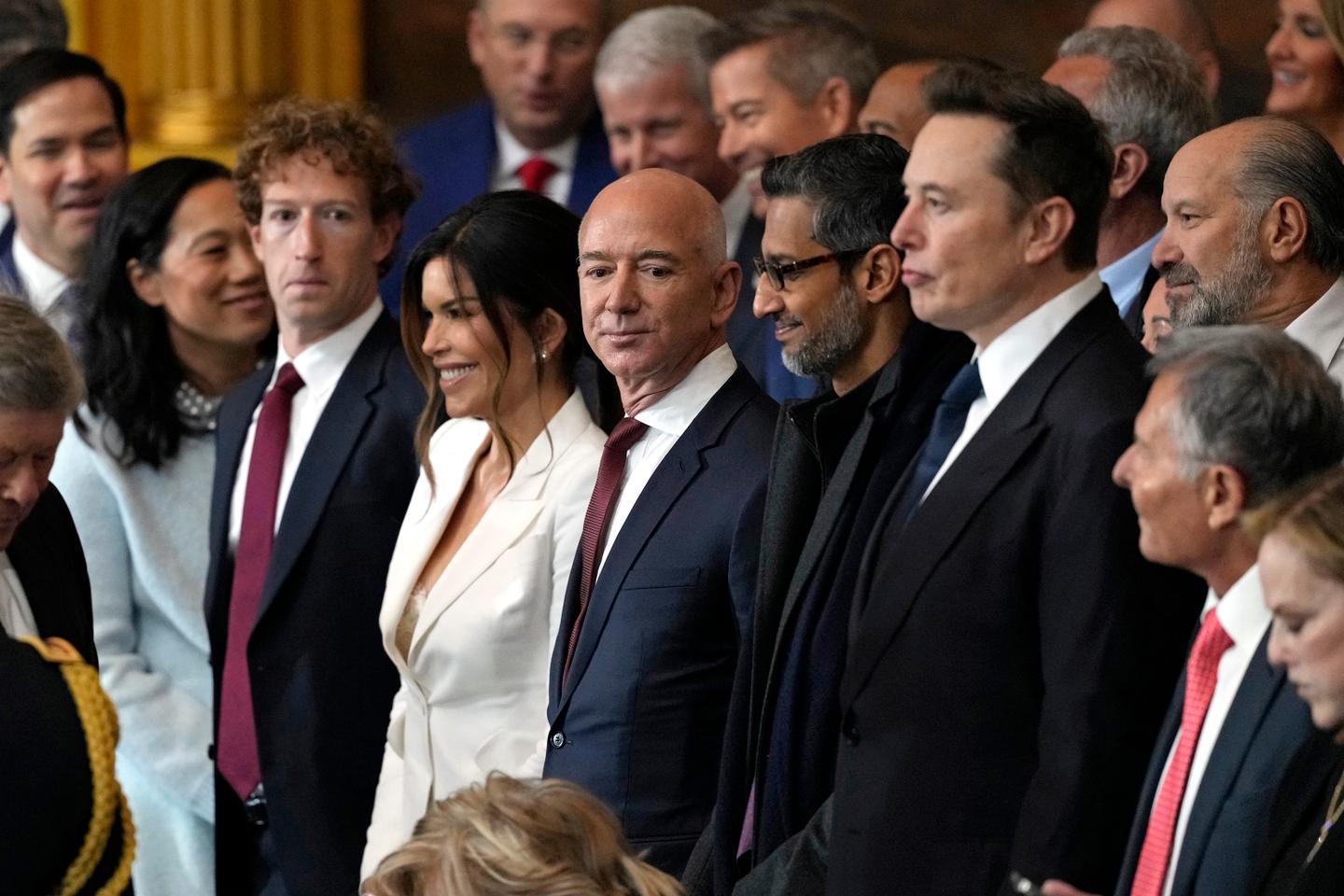
And yes, for that you have to raise tax all investments. The exactly opposite of what we are doing where investments usually get tax breaks. Will it kill the growth? Only one way to find out. Without AI companies growth is zero already.
So, what are bad incentives and what'd we do about it?
Capitalism in the large is fine. In the medium lens tax avoidance by corporations, and those with a litany of cpas is a problem. The idea that the only function of a corporation is to increase share price is a problem. All these derive from a perspective that all that matters is the next reporting cycle or tax return.
I don't like the Chinese goverment, but i do respect the fact that they think longer term. Show me the money; show me the money is not the America we want or need to be.
Complicated tax code is another area the rich hide behind. Another problem is there are different rules for the top 5% and those connected to politicians. Our current administration in the US is a good example of just how bad that is.
Here is the US we have over corrected from the pre-Carter era in favor of the top 5% and corporations.
You mean when the US left the gold standard and began a 50 year period of inflationary money printing?
That same inflation is a direct transfer of wealth to the asset class, and a hidden tax on the working class.
> Can we return to that system
Not directly. There is zero chance that the US can return to the gold standard, but they could lose their position as the world currency and be replaced by something that is resistant to inflation.
Isn't is exactly the same with the system we have now?
The question we have to ask is about 99% of population of peasants who work 8h a day same as they did in Mesopotamia. Do they have a living standard, healthcare, possibility to have social bonds, possibility to retire. Basically all the things to have a life.
If peasants are able to have all this, I really don't care if some King of ours has 20 trillion or 50 bazillion. In money or in gold.
And the trend has already started. The latest budget big will make healthcare inaccessible to mire Americans.
Oh, sure, you aren't a slave. You can't be bought and sold like property. But try going a few months without a paycheck and tell me how that goes. And if you happened to get lucky at some point and escaped wage slavery - you have to be cognizant of the fact that most didn't, and never will, by design.
Modern wage slavery vs whatever they had in Mesopotamia is just details of the perks that the owners decide to hand out.
If productivity goes up, something has to give. We either work less or we earn more.
If productivity goes up and we work the same amount of time for the same amount of money (and let's not kid ourselves, if anything we'll end up working more time for less money), the social contract has been broken.
I don't care how rich some outlier becomes, so long as it isn't at the sacrifice of our own self-actualisation. But that is exactly what is (and has been since the 70s) occurring. That trend is unlikely to reverse and it won't lead anywhere good.
Wealth grants power. Opinions from money matter gain greater reach and traction, and these very quickly turn into influence and power. The current US administration clearly shows how wielding power for your own ends gives you money. It's a toxic cycle that rewards grift instead of work.
You don't care, but this is a serious problem for society because it's a negative aspiration. Don't be good, don't try hard, just be rich or die a peasant.
But the peasants have limited appetites for gruel and work when all they see is grift and abuse. They revolted until old money stopped stopped demanding fealty. Will the new masters learn before we peasants eat the rich?
So I agree with your sarcasm and I also agree with the parent comment that the current admin is doing a better job "clearly showing" how this works to everyone.
It’s not like they are using their wealth on frivolous consumption. Which means redistribution would only change who controls the investment and not the actual consumption patterns of people. Implication is that poor people will consume the same as before after redistribution with perhaps some extra assets. So nothing materially changes other than some security. Poor people will continue to consume the same as before.
Bigger problem is it’s not so clear that redistribution is necessarily a good thing because I feel the people who made money are more likely to make better decisions on their own companies. I don’t know how companies would fare if for example Amazon were redistributed and run like some public company.
It's unclear what you mean by "redistribution".
> I feel the people who made money are more likely to make better decisions on their own companies
The majority of publicly-listed companies aren't majority owned by their founders. They're still focused on profits and being competitive.
Instead of "redistribution" the way you imagine it (central planning), what if it was more like a sovereign wealth fund?
The government owns shares in all companies, like an index fund. It acts like a normal institutional investor. In fact I wouldn't mind contracting out the management of these holdings to a sober company like Vanguard. And dividends from these holdings are used to reduce income taxes. Stop penalizing people for working and earning more.
2. private equity is a necessary evil that tries to make something out of companies that never had a good future anyway. not a lot of billionaire wealth is in PE. in fact pension firms are one of the largest stakeholders in PE which means the common people have stake in them too. what is your take on that?
3. i want other people to succeed too - our society is built such that any rando can convince YC and get funding.
There is nothing “free market” about this. There is no equitable or efficient destitution of resources when this kind of thing happens - and it will always happen, because it is an inevitability.
I disagree.
What proof do you have that the random homeless guy and a kid graduating Stanford that was paid for by their parents, can convince YC to get funding?
There is no functional difference between a handful of plutocrats deciding capital allocation and a handful of monarchs deciding capital allocation. If you are pro capitalism you should be against letting wealth, and the associated decision power, accumulate in a few individuals
China is a good example - they had something like a monarch allocating capital throughout the country and setting prices. Even they realised it is not scalable.
Thank you, omnipotent billionaires, for your generosity and grace!