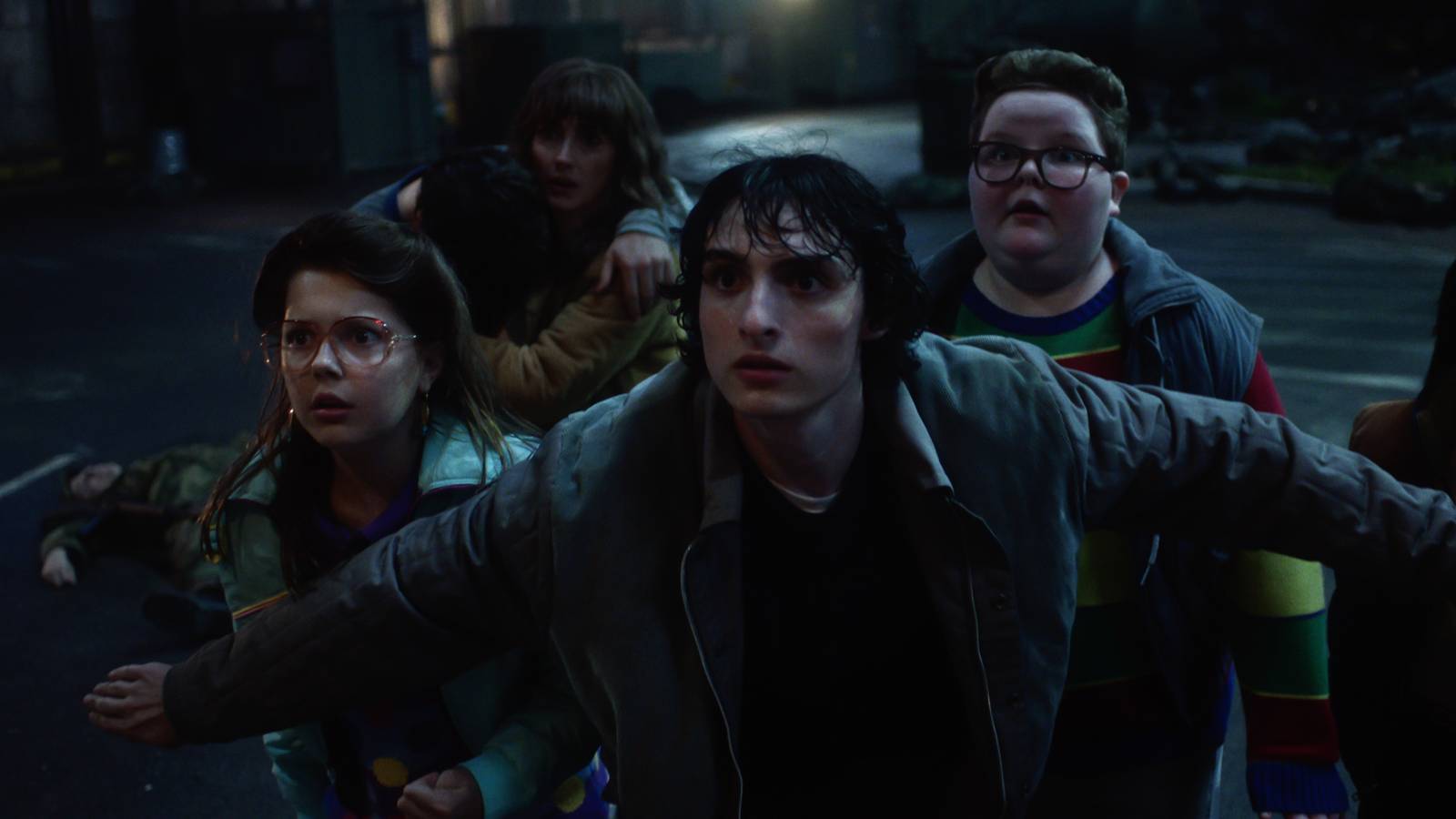
Stranger Things Creator Insists Viewers Turn Off "Garbage" Settings For Premiere
Stranger Things creator tells fans to turn off "garbage" controls.
ScreenRant
440 points · by 1970-01-01 · 11mo ago · 820 comments
It seems they want to make these settings usable without specialist knowledge, but the end result of their opaque naming and vague descriptions is that anybody who actually cares about what they see and thinks they might benefit from some of the features has to either systematically try every possible combination of options or teach themselves video engineering and try to figure out for themselves what each one actually does.
This isn't unique to TVs. It's amazing really how much effort a company will put into adding a feature to a product only to completely negate any value it might have by assuming any attempt at clearly documenting it, even if buried deep in a manual, will cause their customers' brains to explode.
(The trickiest thing is actually brightness. LG originally used to set brightness to 100 nits in Filmmaker Mode for SDR, which is correct dark room behavior -- but a lot of people aren't in dark rooms and want brighter screens, so they changed it to be significantly brighter. Defensible, but it now means that if you are in a dark room, you have to look up which brightness level is close to 100 nits.)
Game mode will indeed likely turn off any expensive latency-introducing processing but it's unlikely to provide the best color accuracy.
It makes me wish that there was something like an industry standard 'calibrated' mode that everyone could target - let all the other garbage features be a divergence from that. Hell, there probably is, but they'd never suggest a consumer use that and not all of their value-add tackey DSP.
I'd suggest living with it for a while; if you do, you'll quickly get used to it, and then going to the "standard" (sic) setting will look too blue.
It would also help if there was a common, universal, perfect "reference TV" to aim for (or multiple such references for different use cases), with the job of the TV being to approximate this reference as closely as possible.
Alas, much like documenting the features, this would turn TVs into commodities, which is what consumers want, but TV vendors very much don't.
(Still cheaper than a Netflix subscription though.)
Sony specifically targets the reference with their final calibration on their top TVs, assuming you are in Cinema or Dolby Vision mode, or whatever they call it this year.
This is all out there -- but consumers DO NOT want it, because in a back-to-back comparison, they believe they want (as you'll see in other messages in this thread) displays that are over-bright, over-blue, over-saturated, and over-contrasty. And so that's what they get.
But if you want a perfect reference TV, that's what Filmmaker Mode is for, if you've got a TV maker that's even trying.
It wasn't that long ago, that the manual spelled out everything in detail enough that a kid could understand, absorb, and decide he was going to dive into his own and end up in the industry. I wouldn't have broken or created nearly as much, without it.
But, a few things challenged the norm. For many, many reasons, manuals became less about the specification and more about the functionality. Then they became even more simplified, because of the need to translate it into thirty different languages automatically. And even smaller, to discourage people from blaming the company rather than themselves, by never admitting anything in the manual.
What I would do for a return to fault repair guides [0].
[0] https://archive.org/details/olivetti-linea-98-service-manual...
A punch card machine certainly requires specs, and would not be confused with a toy.
A server rack, same, but the manuals are pieced out and specific, with details being lost.
You’ll notice anything with dangerous implications naturally wards off tampering near natively.
Desktop and laptop computers depending on sharp edges and design language, whether they use a touch screen. Almost kids toys, manual now in collective common sense for most.
Tablet, colorful case, basically a toy. Ask how many people using one can write bit transition diagrams for or/and, let alone xor.
We’ve drifted far away from where we started. Part of me feels like the youth are losing their childhoods earlier and earlier as our technology becomes easier to use. Being cynical of course.
I’m with you personally, but the companies that sell TVs are not.
On my TCL TV I can turn off "smart" image and a bunch of other crap, and there's a "standard" image mode. But I'm not convinced that's actually "as close to reference as the panel can get". One reason is that there is noticeable input lag when connected to a pc, whereas if I switch it to "pc", the lag is basically gone, but the image looks different. So I have no idea which is the "standard" one.
Ironically, when I first turned it on, all the "smart" things were off.
They want a spy device in your house, recording and sending screenshots and audio clips to their servers, providing hooks into every piece of media you consume, allowing them a detailed profile of you and your household. By purchasing the device, you're agreeing to waiving any and all expectations of privacy.
Your best bet is to get a projector, or spend thousands to get an actual dumb display. TVs are a lost cause - they've discovered how to exploit users and there's no going back.
I also auditioned the LG G5.
I calibrated both of them. It is not that much effort after some research on avsforum.com. I think this task would be fairly trivial for the hackernews crowd.
Top-down processing
(or more specifically, top-down auditory perception)
This refers to perception being driven by prior knowledge, expectations, and context rather than purely by sensory input. When you already know the dialog, your brain projects that knowledge onto the sound and experiences it as “clear.”
(This may also apply to the "everything's too dark" issue which gets attributed to HDR vs. SDR)
Up until fairly recently both of these professions were pretty small, tight-knit, and learnt (at least partially) from previous generations in a kind of apprentice capacity
Now we have vocational schools - which likely do a great job surfacing a bunch of stuff which was obscure, but miss some of the historical learning and "tricks of the trade"
You come out with a bunch of skills but less experience, and then are thrust into the machine and have to churn out work (often with no senior mentorship)
So you get the meme version of the craft: hone the skills of maximising loudness, impact, ear candy.. flashy stuff without substance
...and a massive overuse of the Wilhelm Scream :) [^1]
[^1]: once an in joke for sound people, and kind of a game to obscure its presence. Now it's common knowledge and used everywhere, a wink to the audience rather than a secret wink to other engineers.
https://en.wikipedia.org/wiki/Wilhelm_scream
EDIT: egads, typing on a phone makes it far too easy to accidentally write a wall of text - sorry!
I could probably fix over half of the problems I have with TV audio with a decent sound bar, and a good one is a decent percentage of the cost of a brand new TV.
Our need to turn up the volume in dialog scenes and turn it back down again in action scenes (for both new and old content) got a lot less when we added a mid-range soundbar and sub to our mid-range TV (previously was using just the TV speakers). I’m not sure whether it’s sound separation - now we have a ‘more proper’ center channel - or that the ends of the spectrum - both bass and treble - are less muddy. Probably a combination of the two.
Voice comes through the center channel. Music tends to come out of multiple speakers, and so do a lot of explosions and sound effects.
Most people don't have multi-channel setups at home. So you get everything coming out of 2 speakers or a sound bar.
What that means, is that you get 4+ channels of music and sound effects mixed into 2 channels. So it ends up drowning out the single voice channel.
When I play movies through Kodi, I generally go into the audio settings and turn up the center channel. This fixes the issue every time for me.
I think the main problem is that producers and audio people are stupid, pompous wankers. And I guess it doesn't help that some people go to cinema for vibrations and don't care about the content.
Then I noticed that native speakers also complain.
Then I started to watch YouTube channels, live TV and old movies, and I found out I could understand almost everything! (depending on the dialect)
When even native speakers can't properly enjoy modern movies and TV shows, you know that something is very wrong...
It only works if you're watching in a room that's acoustically quiet, like a professional recording studio. Once your heater / air conditioner or other appliance turns on, it drowns out everything but the loudest parts of the mix.
Otherwise, the problem is that you probably don't want to listen to ear-splitting gunshots and explosions, then turn it down to a normal volume, only to make the dialog and whispers unintelligible. I hit this problem a lot watching TV after the kids go to bed.
As much as I enjoy deafeningly bright explosions in the movie theater, it's almost never appropriate in the casual living room.
I recently bought a new TV, Bravia 8ii, which was supposedly not bright enough according to reviewers. In it's professional setting, it's way to bright at night, and being an OLED watching HDR content the difference between the brightest and darkest is simply too much, and there seems to be no way to turn it down without compromising the whole brightness curve.
But also, people in old movies often enunciated very clearly as a stylistic choice. The Transatlantic accent—sounds a bit unnatural but you can follow the plot.
In Poland our original productions have so badly mixed sound that in almost none series in my native language I cannot understand without captions.
But the upside of it is - with English being my second language - I understand most of movies/series I watched.
Are you talking about the center channel on an X.1 setup or something else? My Denon AVR certainly doesn't have a dedicated setting for dialog, but I can turn up the center channel which yields variable results for improved audio clarity. Note that DVDs and Blurays from 10+ years ago are easily intelligible without any of this futzing.
it's very funny how when watching a movie on my macbook pro it's better for me to just use HDMI for the video to my TV but keep on using my MBP speaker for the audio, since the speakers are just much better.
Just anecdotally, I can tell speaker tech has progressed slowly. Stepping in a car from 20 years ago sound... pretty good, actually.
IMO, half the issue with audio is that stereo systems used to be a kind of status symbol, and you used to see more tower speakers or big cabinets at friends' houses. We had good speakers 20 years ago and good speakers today, but sound bars aren't good.
Lower spec speakers have become good enough, and DSP has improved to the point that tiny speakers can now output mediocre/acceptable sound. The effect of this is that the midrange market is kind of gone, replaced with neat but still worse products such as soundbars (for AV use) or even portable speakers instead of hi-fi systems.
On the high end, I think amplified multi-way speakers with active crossovers are much more common now thanks to advances in Class-D amplifiers.
Doesn't matter if it makes vocals part of the backgroud at all times.
I don't find the source anymore but I think that I saw that it was even a kind of small conspiracy on tv streaming so that you set your speakers louder and then the advertisement time arrive you will hear them louder than your movie.
Officially it is just that they switch to a better encoding for ads (like mpeg2 to MPEG-4 for DVB) but unofficially for the money as always...
Film makers want to preserve dynamic range so they can render sounds both subtle and with a lot of punch, preserving detail, whereas ads just want to be heard as much as possible.
Ads will compress sound so it sounds uniform, colorless and as clear and loud as possible for a given volume.
It's not just that. It's obsession with "cinematic" mixing where dialogues are not only quieter that they could, to make any explosion and other effects be much louder than them, but also not enough above background effects.
This all work in cinema where you have good quality speakers playing much louder than how most people have at home.
But at home you just end up with muddled dialogue that's too quiet.
It's the obsession with accents, mixed with the native speakers' conviction that vowels are the most important part.
Older movies tended to use some kind of unplaceable ("mid atlantic") accent, that could be easily understood.
But modern actors try to imitate accents and almost always focus on the vowels. Most native speakers seem to be convinced that vowels are the most important part of English, but I think it isn't true. Sure, English has a huge number of vowels, but they are almost completely redundant. It's hard to find cases where vowels really matter for comprehension, which is why they may vary so much across accents without impeding communication. So what the actors do is that they focus on the vowels, but slur the consonants, and you are pretty much completely lost without the consonants.
As a native English speaker studying Spanish, my impression is that English cares about the consonants and Spanish is way more about the vowels. YMMV
In a movie the characters may be far away (so it needs to sound like that, not like a podcast), running, exhausted, with a plethora of background noises and so on.
Which is just another drama that should not be on consumers shoulders.
Every time I visit friends with newer TV than mine I am floored by how bad their speakers are. Even the same brand and price-range. Plus the "AI sound" settings (often on by default) are really bad.
I'd love to swap my old tv as it shows it's age, but spending a lot of money on a new one that can't play a show correctly is ridiculous.
I turned it off though and use an external Atmos receiver and speakers.
They are notorious for bad vocal range audio.
I have a decent surround sound and had no issues at all.
Oh, and the youtube videos don't have the infamous mixing issues of "voices too low, explosions too high".
It's the source material, not the device. Stop accusing TV speakers, they are ok-tier.
When you have a good setup those same movies sound incredible, Nolan films are a perfect example.
I want to get a 3.0 setup with minimal changes to the equipment.
My brother has 2 of the apple speakers in stereo mode and they sound pretty good imo.
Nothing beats true surround sound though.
Regarding internal speakers, I have listened to several cheap to medium TVs on internal speakers, and yes on some models the sound was bad. But it doesn't matter, because the most mangled frequencies are high and low, and that's not the voice ones. When I listen on the TV with meh internal speakers I can clearly understand without any distortion voices in the normal TV programming, in sports TV, in old TV shows and old movies. The only offenders again are some of he new content.
So no, it's not the internal speakers who are at fault, at all.
New content especially comes with more channels, more channels that will get muddled into your two for output.
Do you spend the effort of specifically selecting stereo tracks (or adjusting how it gets downmixed)?
Second, I'm 55. There ARE programs I turn on the captioning for, but it's not universal at all. Generally, it's things with accents.
We absolutely do not need the captions at our house for STRANGER THINGS.
To be a bit more helpful, what are you using to listen to the show? There are dozens of ways to hear the audio. Are you listening through the TV speakers, a properly set up center channel speaker, a Kindle Fire tablet, or something else? Providing those details would assist us in actually helping you.
If on a PC, there are numerous websites with various VLC "movie" settings to combat this issue. I've tried several with mixed results, I always end up reverting to default at some point because for some movies, they work, but other movies not so well, and it's horribly annoying to constantly tweak VLC advanced settings (too many clicks IMO). The idea being that with VLC, you can change frequency volumes to raise typical frequencies for voices and an in-turn lower other frequencies typical in actions scenes e.g. for explosions.
I've certainly had the experience of hard to hear dialog but I think (could be wrong) that that's only really happened with listening through the TV speakers. Since I live in an apartment, 99% of the time I'm listening with headphones and haven't noticed that issue in a long time.
I had a 720p Sony Bravia from around 2006 and it was chunky. It had nice large drivers and a big resonance chamber, it absolutely did not need a sound bar and was very capable of filling a room on its own.
Engineering tradeoffs--when you make speakers smaller, you have to sacrifice something else. This applies to both soundbars and the built-in speakers.
Voice boost makes the dialogue louder.
Everyone in the house loves these two settings and can tell when they are off.
I suspect downmixes to stereo and poor builtin speakers might be heavily contributing to the issue you describe. Anecdotally, I have not encountered this issue after I added a center channel.
Nor do I have any issues with the loudness being inconsistent between scenes. I suspect that might be an another thing introduced by downmixing. All the surround channels are "squished" into stereo, making the result louder than it would have otherwise been.
Depending on what you're using there could be settings like stereo downmix or voice boost that can help. Or see if the media you're watching lets you pick a stereo track instead of 5.1
Also, in consumer setups with a center channel speaker it is rather common for it to have a botched speaker design and be of a much poorer quality than the front speakers and actually have a deleterious effect to dialog clarity.
Try listening to some mono pink noise on a stereo loudspeaker setup, first hard-panned to a single speaker, and then centered. The effect is especially obvious when you move your head.
Yes we know how to mix for stereo. But do we still pay attention to how we do?
It mostly boils down to filmmaker choices:
1. Conscious and purposeful. Like choosing "immersion" instead of "clarity". Yeah, nothing speaks "immersion" than being forced to put subtitles on...
2. Not purposeful. Don't atttibute to malice what can be explained by incompetency... Bad downmixing (from Atmos to lesser formats like 2.0). Even if they do that, they are not using the technology ordinary consumers have. I mean, the most glaring example is the way the text/titles/credits size on screen have been shrinking to the point of having difficulties reading them. Heck, often I have difficulties with text size on by FullHD TV, just because the editing was done on some kind of fancy 4k+ display standing 1m from the editor. Imagine how garbage it looks on 720 or ordinary 480!
For the recent example check the size (and the font used) of the movie title in the Alien Isolation movie and compare it to the movies made in the 80-90s. It's ridiculous!
There are many good youtube videos that explain the problem in more details.
Flatscreen TV's have shitty speakers.
The sound is mud, we've just become accustomed.
https://www.audiology.org/consumers-and-patients/hearing-and...
I turn on closed captions for most American films, but I find that I rarely need them for British ones.
The US is only at most 30% of Hollywood revenue.
I use a Playstation 5 for everything including Netflix, Apple TV and so on. But every time I turn on the PS5, my TV detects the Playstation and automatically changes the TV's Sound and Video modes to "Gaming", which makes dialog difficult to hear on TV. So I change the setting manually using its horrible remote control, only for it to change back to Gaming the next time I use it.
What you describe about it being hard to hear dialog is exactly what I'd expect from someone who has their TV turned down as a result of using the score/soundtrack and loud sound effects as a reference point, which consequently is too low a volume to hear the dialog.
I wouldn't be surprised if you're actually experiencing what your TV's processing turned off is like and sound balancing is actually what you (as in you, personally) _want_ it to be doing.
Not on my Samsung oled - there is an effect to boost the brightness of dark scenes (turning completely black screens into a gray smudge) that cannot be turned off completely.
Something that recently changed my viewpoint a little bit was that I was noticing that 24-30 fps content was appearing very choppy. I couldn't figure out why it looked like that. It turns out it's because modern OLED TVs can switch frames very cleanly and rapidly, CRTs or older LCDs were not like that, and their relative slowness in switching frames created a smoothing or blending effect.
Now I'm considering turning back on my TVs motion smoothing. I'm just hoping it doesn't do full-blown frame interpolation that makes everything look like a Mexican soap opera.
Unfortunately this is another basic feature that tends to be "branded" on TVs. On my Sony Bravia it's split into a combination of features called Cinemotion and Motionflow.
3:2 pulldown (or other telecine patterns) is what was used to go from 24 FPS film to 30 FPS interlaced NTSC video. Your TV or video player needs to undo that (going back to the original 24 FPS) in order to fix a judder ever 5 frames. But that is not going to fix the inherent choppiness of fast camera movements with 24 FPS film and is also not relevant for most modern content because it is no longer limited to NTSC and can instead give you the original 24 FPS directly.
Something like this:
I think you just find one with the same output specs as your PS5.
I agree with you though. We have a Sony Bravia purchased back in 2016 for $900. It has thr Android TV spam/bloat/spyware but it’s not used and never connects to the Internet which has made the TV quite usable over the years. Apple TV is connected, Sonos too, and everything works fine without any crazy settings changes. I’m not looking forward to whenever this thing needs replaced (which will likely be it actually breaking versus being outdated).
Turns out it does not even care if I set lower resolution in Xbox display settings. So I had to just disable game master mode. And I don't miss anything.
I have a nec multisync, which is a banger. Its also designed for 24/7 duty cycle, so its less likley to burn out. It also goes brighter than normal TVs.
However I don't think they do OLED yet. I think you're stuck with LG.
I think I could get a proper aftermarket Samsung remote for their older models with 100 buttons and not have to use the menus as much.
For you it's film, but most people have their thing, and you're probably doing the same thing to something else in your household.
In a Greek restaurant I sometimes eat at there's a TV set to some absurdly high color saturation, colors are at 180%. It's been like that for years. Nobody ever even commented on it, even though it is so very very clearly uncomfortably extreme.
That's a weird one to include. It doesn't impact the pizza at all, it still tastes the same. Plus it's common to eat pizza with a fork in Italy.
I was at my parent's house the other day for Christmas and tried to start watching Wong Kar-wai's Blossoms Shanghai, but the TV made everything look so terrible that I couldn't continue with it. I was having a hard time figuring out what was just from his style and what was whatever crap the TV was trying to do to it on it's own. I'm amazed people don't realize things just look like shit on their TVs now?
To be fair, 24p is crap. You know and agree with that, right? Horizontal pans in 24p are just completely unwatchable garbage, verticals aren’t that much better, action sequences in 24p suck, and I somehow didn’t fully realize this until a few years ago.
A lot of motion-smoothing TVs are indeed changing framerate constantly, they’re adaptive and it switches based on the content. I suspect this is one reason kids these days don’t get the soap-opera effect reaction to high framerate that old timers who grew up watching 24p movies and 60i TV do. They’re not used to 24p being the gold standard anymore, and they watch 60p all the time, so 60p doesn’t look weird to them like it does to us.
TVs with motion interpolation fix the horizontal pan problem, so they have at least one thing going for them. I’m serious. Sometimes the smoothing messes up the content or motion, it has real and awful downsides. I had to watch Game of Thrones with frame interp, and it troubled me and it ruins some shots, but on the whole it was a net positive because there were so many horiz pans that literally hurt my eyeballs in 24p.
Consumers, by and large, don’t seem to care about brightness, color, or framerate that much, unless it’s really bad. And most content doesn’t (and shouldn’t) depend on brightness, color, or framerate that much. With some real and obvious exceptions, of course. But on the whole I hope that’s also something film school taught you, that you design films to be resilient to changes in presentation. When we used to design content for analog TV, where there was no calibration and devices in the wild were all over the map, you couldn’t count on anything about the presentation. Ever had to deal with safe regions? You lost like 15% of the frame’s area! Colors? Ha! You were lucky if your reds were even close to red.
BTW I hope you take this as lighthearted ribbing plus empathy, and not criticism or argument. I’ve worked in film too (CG film), and I fully understand your feelings. The first CG film I worked on, Shrek, delivered final frames in 8bit compressed JPEG. That would probably horrify a lot of digital filmmakers today, but nobody noticed.
On your presentation point, I think 20 year old me would have generally agreed with you but also argued strongly that people should be educated on the most ideal environment they can muster, and then should muster it! This is obviously silly, but 20 year old me is still in there somewhere. :)
Shrek was really well done, nice work.
60fps will always look like cheap soap opera to me for movies.
24 fps wasn’t chosen because it was optimal or high quality, it was chosen because it’s the cheapest option for film that meets the minimum rate needed to not degrade into a slideshow and also sync with audio.
Here’s an example that uses the 180-shutter and 1/7-frame rules and still demonstrates bad judder. “We have tried the obvious motion blur which should have been able to handle it but even with feature turned on, it still happens. Motion blur applied to other animations, fine… but with horizontal scroll, it doesn’t seem to affect it.” https://creativecow.net/forums/thread/horizontal-panning-ani...
Even with the rules of thumb, “images will not immediately become unwatchable faster than seven seconds, nor will they become fully artifact-free when panning slower than this limit”. https://www.red.com/red-101/camera-panning-speed
The thing I personally started to notice and now can’t get over is that during a horizontal pan, even with a slow speed and the prescribed amount of motion blur, I can’t see any details or track small objects smoothly. In the animation clip attached to that creativecow link, try watching the faces or look at any of the text or small objects in the scene. You can see that they’re there, but you can’t see any detail during the pan. Apologies in advance if I ruin your ability to watch pans in 24fps. I used to be fine with them, but I truly can’t stand them anymore. The pans didn’t change, but I did become more aware and more critical.
> 60fps will always look like cheap soap opera to me for movies
Probably me too, but there seems to be some evidence and hypothesizing that this is a learned effect because we grew up with 24p movies. The kids don’t get the same effect because they didn’t grow up with it, and I’ve heard that it’s also less pronounced for people who grew up watching PAL rather than NTSC. TVs with smoothing on are curing the next generation from being stuck with 24 fps.
Let people enjoy things. If you don’t even watch TV yourself, it shouldn’t bother you how other people enjoy their own TV. If someone enjoys frame interpolation for their private watching, so what?
Most other movies/series instead are so dark that make my mid-range TV look like crap. And no, it's not an HW fault, as 500 nits should be enough to watch a movie.
Oppenheimer didnt suffer from either of those issues but I’ve only watched it once on a good TV.
Could barely tell what was going on, everything was so dark, and black crush killed it completely, making it look blocky and janky.
I watched it again a few years later, on max brightness, sitting in the dark, and I got more of what was going on, but it still looked terrible. One day I'll watch the 'UHD' 4k HDR version and maybe I'll be able to see what it was supposed to look like.
It’s honestly not the worse AI content out there! Lots of movies I wouldn’t consider watching but that I’m curious enough to see summarized (eg a movie where only the first title was good but two more were still published)
And no, I'm not talking about the gay thing. The writing is simply atrocious. Numerous plot holes, leaps of reasoning, and terrible character interactions.
Basically I think the main problem with the show is the character of eleven. She’s boring. She isn’t even really a character as she has no thoughts or desires or personality. She is a set piece for the other characters to manipulate. That works in the first season. But by season 3 it’s very tiring. She just points her hands at things and psychic powers go. This is why it might feel weird when Will tells everyone he is gay and all the original boys are like dude we are totally cool with you being gay and give him a group hug then eleven joins too it feels weird. To use the show’s language, she isn’t really part of the party.
Season 3 is a great example of how the show pays too much attention to eleven without developing her character while giving her lots of screen time. billy is a very interesting character you could spend a lot of time understanding why billy is the way he is but instead you get one dream sequence because eleven sees his dreams and oh his dad sucks. Except you knew that already from season 2. And most of elevens screen time when not shopping at the mall is spent pointing her hands at things to make psychic powers go boom.
But this is basically the problem with the show. The writers like eleven too much. And she is incredibly boring as a character after season 1.
I think the show succeeded greatly in the first season at creating actions for the characters to do that developed both their characters and the narrative. And those happen in this 1980s nostalgic world. But I think the shows attachment to eleven has ultimately harmed the narrative.
That being said, I do think that the general narrative of the show going from the demogorgon to the mindflayer to vecna and the abyss is very dungeons and dragons. Haha. That would be a fun campaign to play.
The interesting thing when turning on filmmaker mode is the feeling of too warm and dark colors. It will go away when the eyes get used to it. But it then lets the image pop when it’s meant to pop etc. I also turned off this auto brightness [2] feature that is supposed to guard the panel from burn it but just fails in prolonged dark scenes like in Netflix Ozark.
[1] https://youtu.be/uGFt746TJu0?si=iCOVk3_3FCUAX-ye [2] https://youtu.be/E5qXj-vpX5Q?si=HkGXFQPyo6aN7T72
From that point on, everyone gets 10 inch thick plot armour, and then the last two episodes skip a whole season or two of character development to try and box the show off quickly.
Television writers pussying out in their finales is its own meme at this point. Makes me respect David Chase and how The Sopranos ended all that much more.
It's the way stuff is done, the characters' changed behavior, incomprehensible logic, stupid explanations, etc.
Turning it off was shocking. So much better. And it was buried several levels deep in a weirdly named setting.
The "soap opera" feel is NOT from bad interpolation that can somehow be done right. It's inherent from the high frame rate. It has nothing to do with "video cameras", and a lot to do with being simply too real, like watching a scene through a window. There's no magic in it.
Films are more like dreams than like real life. That frame rate is essential to them, and its choice, driven by technical constraints of the time when films added sound, was one of happiest accidents in the history of Arts.
Yes! The other happy accident of movies that contribute to the dream-like quality, besides the lower frame rate, is the edit. As Walter Murch says in "In the Blink of an Eye", we don't object to jumps in time or location when we watch a film. As humans we understand what has happened, despite such a thing being impossible in reality. The only time we ever experience jumps in time and location is when we dream.
I would go further and say that a really good film, well edited, induces a dreamlike state in the viewer.
And going even further than that, a popular film being viewed by thousands of people at once is as though those people are dreaming the same dream.
I remember when I was very little that it was actually somewhat “confusing”, or at least quite taxing mentally, and I’m pretty sure I see this in my own very little children.
As we grow and “practice” watching plays, TV, movies, read books, our brains adapts and we become completely used to it.
That can be a factor, but I think this effect can be so jarring that many would realize that there's a technical problem behind it.
For me 24 fps is usually just fine, but then if I find myself tracking something with my eyes that wasn't intended to be tracked, then it can look jumpy/snappy. Like watching fast flowing end credits but instead of following the text, keeping the eyes fixed at some point.
> Films are more like dreams than like real life. That frame rate is essential to them, and its choice, driven by technical constraints of the time when films added sound, was one of happiest accidents in the history of Arts.
I wonder though, had the industry started with 60 fps, would people now applaud the 24/30 fps as a nice dream-like effect everyone should incorporate into movies and series alike?
Real is good, it’s ergonomic and accessible. Until filmmakers understand that, I’ll have to keep interpolation on at the lowest setting.
> Films are more like dreams than like real life. That frame rate is essential to them
Complete bullshit.
I think the criticisms of The Hobbit when it came out in 48fps showed that it's not just that.
You've just learned to associate good films with this shitty framerate. Also, most established film makers have yet to learn (but probably never will) how to make stuff look good on high frames. It's less forgiving.
It'll probably take the next generation of viewers and directors..
TV's should not try to be anything more than a large monitor.
You'd think television production would be calibrated for the median watcher's TV settings by now.
I think TV filters (vivid, dynamic brightness, speech lifting, etc) are actually a pretty decent solution to less-than-ideal (bright and noisy environment, subpar screen and audio) viewing conditions.
Since consumers are not trained to critically discern image and video quality, the "Wow!" often wins the sale. This easily explains the existence of local dimming solutions (now called miniLED or some other thing). In a super bright Best Buy or Walmart viewing environment they can look fantastic (although, if you know what to look for you can see the issues). When you get that same TV home and watch a movie in the dark...oh man, the halos jump off the screen. Now they are starting to push "RGB miniLED" as if that is going to fix basic optics/physics issues.
And don't get me started on horrible implementations of HDR.
This is clearly a case of the average consumer not knowing enough (they should not have to be experts, BTW) and effectively getting duped by marketing.
To be fair, "vivid" mode on my old Panasonic plasma was actually an impressive option compared to how an LCD would typically implement it. It didn't change the color profile. It mostly changed how much wattage the panel was allowed to consume. Upward of 800w IIRC. I called it "light cannon" mode. In a dark room, it makes black levels look like they have their own gravitational field despite being fairly bright in absolute terms.
There is a lot of panning in the initial scenes of The Hobbit (opening scene is the fall of Erebor). I watched that movie initially with the new higher frequency, and everything was soooo smooth. When I rewatched it, every single time I have to experience the terrible, terrible choppy, hard-to-see-anything lower frequency transformations and I cry. This is the 12st century, and the movies can't even pan across some landscape smoothly?
In that first viewing I saw everything in those caves, it was so easy. Oh how I miss that.
------------------------
Settings that make the image look less like how the material is supposed to look are not "advances".
Q: So why do manufacturers create them?
A: They sell TV's.
Assume that every manufacturer out there is equally capable of creating a screen that faithfully reproduces the content to the best ability of current technology. If every manufacturer does just that, then their screens will all look extremely similar.
If your TV looks like everybody else's, how do you get people strolling through an electronics store to say, "Wow! I want that one!"? You add gimmicky settings that make the image look super saturated, bizarrely smooth, free of grain etc.. Settings that make the image look less like the source, but which grab eyes in a store. You make those settings the default too, so that people don't feel ripped off when they take the TV out of the store.
If you take a typical TV set home and don't change the settings from default, you're typically not going to see a very faithful reproduction of the director's vision. You're seeing what somebody thought would make that screen sell well in a store. If you go to the trouble of setting your screen up properly, your initial reaction may be that it looks worse. However, once you get used to it, you'll probably find the resulting image to be more natural, more enjoyable, and easier on the eyes.
That basically isn’t true. Or rather, there are real engineering tradeoffs required to make an actual consumer good that has to be manufactured and sold at some price. And, especially considering that TVs exist at different price points, there are going to be different tradeoffs made.
Are movies produced in this colour space? No idea. But they all look great in SRGB.
A work colleague got himself a 40" HD TV as a big computer monitor. This is a few years ago. I was shocked at the overamped colour and contrast. Went through all the settings and with everything turned to minimum - every colour saturation slider, everything that could be found - it was almost realistic but still garish compared to SRGB.
But that's what people want, right? Overamped everything is how those demo loops at Costco are set up, that's what sells, that's what people want in their living rooms, right?
I just want accurate colors to the artists intent, and a brightness nob. No other image “enhancement” features
https://www.indiewire.com/features/general/christopher-nolan...
Movies have dark scenes nowadays mainly because it is a trend. On top of that dark scenes can have practical advantages (set building, VFX, lighting, etc. can be reduced or become much simpler to do which directly translates into money saved during shooting).
If I had to guess, the trend of dark scenes are a direct result of the fact that in the past two decades we our digital sensors got good enough to actually shoot in such low-light environments.
Also, as a digital video expert I will allow you to leave motion smoothing on.
That's what's so good about it. They say turning it off respects the artists or something, but when I read that I think "so I'm supposed to be respecting Harvey Weinstein and John Lasseter?" and it makes me want to leave it on.
> black frame insertion is to lower even more the pixel persistence which really does nothing for 24fps content which already has a smooth blur built in to the image
That's not necessarily true unless you know to set it to the right mode for different content each time. There are also some movies without proper motion blur, eg animation.
Or, uh, The Hobbit, which I only saw in theaters so maybe they added it for home release.
> he best is setting your tv to 120hz so that your 24fps fits evenly and you don't get 3:2 pulldown judder
That's not really a TV mode, it's more about the thing on the other side of the TV I think, but yes you do want that or VFR.
Yes, I usually run add blockers, Pihole etc, I’m away from home and temporarily without my filters.
> Duffer’s advice highlights a conflict between technological advances and creators' goals. Features like the ones he mentioned are designed to appeal to casual viewers by making images appear sharper or more colorful, but they alter the original look of the content. By asking fans to turn these features off, he is stressing the importance of preserving the director’s vision.
It is perfectly understandable that the people who really care about how their work was colour-graded, then suggest you turn off all the features that shit all over that work. Similarly for the other settings he mentions.
Don't get me wrong, I haven't seen the first season, so won't watch this, but creators / artists do and should care about this stuff.
Of course, people can watch things in whatever dreaded settings they want, but lots of TVs default to bad settings, so awareness is good.
With that being said, I’ve definitely seen TVs that just don’t have FILMMAKER MODE or have it, but it doesn’t seem to apply to content from sources like Chromecast. The situation is far from easy to get a handle on.
These settings are the television equivalent of clickbait. They are there to get people to say "Oh, wow!" at the store and buy it. And, just like clickbait, once they have what they clicked on, the experience ranges from lackluster and distorted to being scammed.
Most people have absolutely no idea what goes into making the pixels on their screens flicker with quality content.
This way, you should not need to change them unless you want nonstandard settings for whatever reason.
I wouldn't call it a "technological advance" to make even the biggest blockbuster look like it was filmed with a 90s camcorder with cardboard sets.
Truemotion and friends are indeed garbage, and I don't understand how people can leave it on.
(How did we decide on it if the defaults are terrible? A neighbor bought the same one on sale and figured it out ahead of me.)
Unfortunately settings won't help Season 5 be any better, it verges on being garbage itself, a profound drop in quality compared to previous seasons.
"After battling Skynet her whole life, Sarah Connor has vowed to even the playing field... no matter what the cost. Coming soon in Terminator: Hawkins!"
The tone felt considerably different: constant action, little real plot, character interaction felt a shallow reflection of prior seasons, exposition rather than foreshadowing and development. I was cringing during the “Tom, Dick and Harry” section. From body language, the actors seemed to feel the same way.
Takeout is a horrible way to do regular backups. You have to manualy request it, it takes a long time to generate, manual download... I only use it for monthly full backups.
Much better way for continous incremental backups is IMAP client that locally mirrors incomming emails (Mutt or Thunderbird). It can be configured to store every email in separate file.
Then the release of the next three were just so much worse. More of the same bad stuff, but now they're rewriting the bad guys, good guys, and world setting. Major characters have fallen to the wayside, other side characters are now main. Tons of stupid, "I'm angry at you" followed by splitting up while being hunted by monsters, or hashing out some grievance while being chased by monsters in an end of the world scenario.
The cast is not awkwardly cute anymore. They are full grown adults playing children. I can forgive this as I know the difficulties in getting a production together. But it does make the petty squabbles -- which are constant -- more unbearable.
I'll watch the last episodes at they come out this week, but I have low hopes. It would be nice to see something actually wrapped up nicely even if the show is stumbling to the finish. So help me though, if they win through the power of friendship and love...
I was going to write a lot more but I just want to not think about this anymore, I'm so disappointed. It seems like the best we can wish for from Netflix shows is that they get cancelled before they turn into whatever this became...
It was 10 stars before it was even released... Are humans still needed at all? Just have LLMs generate crappy content and bots upvote it.
I'm a parent with young kids and I just do not have time to delve into all the settings. I've managed to stop films looking like soap operas but I'm not sure exactly what I've adjusted.
Also, if I'm watching from my pc on the same TV using VLC player is it a mistake just to leave the TV on "game mode" ? This seems to work fine, but I've no idea how that interacts with settings on the TV.
One last rant, it seems to have a setting that uses a light sensor to darken the picture if the room is dark. It seems to be nearly impossible to turn off except through some service menu nonsense I really don't want to touch. The only temp fix is turning the TV on and off again, which I've resorted to when I literally couldn't see what was going on in the film.
I just tried Filmmaker mode on my Samsung S95B and, like you, I find it very dark. Another flaw of this TV is that if the edges of the screen darken (like the borders in widescreen movies), the entire panel goes dark.
I didn't know about the other bug. I wonder if that is actually what I'm seeing rather than the dark room thing I'm talking about.
Here's how bad it was in 2017. One of the earliest things I watched on that TV was "Guardians of the Galaxy" on some expanded basic cable channel. The fight between Peter and Gamora over the orb looked very jerky, like it was only at about 6 fps. I found some reviews of the movie on YouTube that included clips of that fight and it looked great on them, so I know that this wasn't some artistic choice of the director that I just didn't like. Some Googling told me about the motion enhancement settings of the TV, and how they often suck. I had DVRed the movie, and with those settings off the scene looked great when I watched it again.
I like how it looks because it is "high quality videogame effect" for me. 60 hz, 120hz, 144hz, you only get this on a good videogame setup.
I'm an avid video game player, and while FPS and sports-adjacent games demand high framerates, I'm perfectly happy turning my render rates down to 40Hz or 30Hz on many games simply to conserve power. I generally prefer my own brain's antialiasing, I guess.
Edit: to clarify, I'm suggesting that some people might prefer to let their brains "fill in the missing frames" rather than see the extra frames shown explicitly. For example, you might be more likely to notice visual tearing at 60Hz than you are to take note of visual tearing at 24Hz when you're already accustomed to filling in the missing pieces, or to a greater extreme, across two panels of a comic strip portraying motion.
If you watch at a higher frame rate, the mistakes become obvious rather than melting into the frames. Humans look plastic and fake.
The people that are masters of light and photography make intentional choices for a reason.
You can cook your steak well done if you like, but that's not how you're supposed to eat it.
A steak is not a burger. A movie is not a sports event or video game.
What next, gonna complain resolution is too high and you can see costume seams ?
The film IS the burger, you said it yourself, it shows off where the movie cheapened on things. If you want a steak you need steak framerate
They literally had to invent new types of makeup because HD provided more skin detail than was previously available.
It’s why you’ll find a lot of foundation marketed as “HD cream”.
I'm a filmmaker. Yes, it was.
> What next, gonna complain resolution is too high and you can see costume seams ?
Try playing an SNES game on CRT versus with pixel upscaling.
The art direction was chosen for the technology.
https://www.youtube.com/shorts/jh2ssirC1oQ
> The film IS the burger, you said it yourself, it shows off where the movie cheapened on things. If you want a steak you need steak framerate
You don't need 48fps to make a good film. You don't need a big budget either.
If you want to take a piece of art and have it look garish, you do you.
The technical limitations of the past century should not define what constitutes a film.
Did you read an interview with the cow’s creator?
He had been told to slow down because 24hz simply could not capture his fast movements.
At 144hz, we would be able to better appreciate his abilities.
Real artists understand the limits of the medium they're working in and shape their creations to exist within it. So even if there was no artistic or technical merit in the choice to standardize on 24 FPS, the choice to standardize on 24 FPS shaped the media that came after it. Which means it's gained merit it didn't have when it was initially standardized upon.
...that being said motion interpolation is abomination
Sorry for being snarky. It's just that I have large difficulties enjoying 24 fps pan shots and action scenes. It's like watching a slide show to me. I'm rather annoyed that the tech hasn't made any progress in this regard, because viewers and makers want to cling on to the magic/dream-like experiences they had in their formative years.
I would vastly prefer original material at high frame rates instead of interpolation.
But I remember the backslash against “The Hobbit: An Unexpected Journey” because it was filmed at 48 Hz, and that makes me think that people dislike high frame rate content no matter the source, so my comment also covers these cases.
Also, because of that public response, we don't have more content actually filmed at high frame rates =)
I haven't thought about or noticed in nearly two decades
My eyes 100% adjusted, I like higher frame and refresh rates now
I cant believe that industry just repeated a line about how magical 24fps feels for ages and nobody questioned it, until they magically had enough storage and equipment resources to abandon it. what a coincidence
Last time I heard this reasoning about bad TV settings was during the infamous GoT episode that was very dark.
Producers generally don't warn about TV settings preemptively as if to warn, so it makes me a bit concerned.
Stranger Things already face complaints about S5 lately, having viewing issues on the finale would be the cherry on top.
Plus ordinary people don't give a sh*t. Most people can't see the difference between HD and 4K (remember that in developed countries, most people are over 40, and 25% overall suffer from myopia). In the 00s, people all had 16:9 TVs and watched 4:3 programs horribly stretched without batting an eye. Most Full HD large screens suffered from horrible decoding stutter late into the 2010s.
AI frame-gen Film grain Chromatic aberration Motion blur
Once the TVs became video cards with filtering and fake refresh rates this was always our fate.
Monitors and default video card drivers have had issues in the past. You'd think the TVs would update their filters with as much spyware data mining they do. But alas, your TV will likely never improve by software in any significance. History has proven that.
Disabling all the features to the hardware spec is best, never connecting a smarttv to the net. Interested in any true exceptions.
(However, modern TV sets are often filled with enough other junk that maybe you will not want all of these things anyways)
Also, this is probably just because I’m old, but a lot of recent TV seems inadequately lit, where you can just barely see part of one character’s face in some scenes. It’s like they watched Apocalypse Now and decided everything should be the scene with Marlon Brando in the cave.
For those unfamiliar with the term you should watch Vincent Teoh @ HDTVTest:
https://www.youtube.com/hdtvtest
Creative intent refers to the goal of displaying content on a TV precisely as the original director or colorist intended it to be seen in the studio or cinema.
A lot of work is put into this and the fact that many TVs nowadays come with terrible default settings doesn't help.
We have a whole generation who actually prefer the colors all maxed out with motion smoothing etc. turned to 11 but that's like handing the Mona Lisa to some rando down the street to improve it with crayons.
At the end of the day it's disrespectful to the creator and the artwork itself.
I don't care about the "filmmaker's intent", because it is my TV. I will enable whatever settings look best to me.
(You ever think about how many fantastic riffs have been wasted with cringe lyrics?)
Ever look at the lyrics to Toto's Africa? We can start there, someone send a poet please
Every PC gamer knows you need high frame rates for camera movement. It's ridiculous the movie industry is stuck at 24 like it's the stone age, only because of some boomers screaming of some "soap opera" effect they invented in their brains. I'd imagine most Gen Z people don't even know what a "soap opera" is supposed to be, I had to look it up the first time I saw someone say it.
My LG OLED G5 literally provides a better experience than going to the cinema, due to this.
I'm so glad 4k60 is being established as the standard on YouTube, where I watch most of my content now... it's just movies that are inexplicably stuck in the past...
Obviously not, because generations of people saw "movement" at 24 fps. You're railing against other people's preferences, but presenting your personal preferences as fact.
Also, there are technical limitations in cameras that aren't present in video games. The higher the frame rate, the less light that hits it. To compensate, not only do you need better sensors, but you probably need to change the entire way that sets, costumes, and lighting are handled.
The shift to higher frame rates will happen, but it's gonna require massive investment to shift an entire industry and time to learn what looks good. Cinematographers have higher standards than random Youtubers.
It is a fact that motion is smoother at 120 fps than 24, and therefore easier to follow on screen. There are no preferences involved.
> Also, there are technical limitations in cameras that aren't present in video games.
Cameras capable of recording high quality footage at this refresh rate already exist and their cost is not meaningful compared to the full budget of a movie (and you can use it more than one time of course).
Yes, but that's not what you wrote. "unwatchable judder that I can't even interpret as motion sometimes" is false, unless you have some super-rare motion processing disorder in area MT of your brain.
> Cameras capable of recording high quality footage at this refresh rate already exist and their cost is not meaningful compared to the full budget of a movie
Yes, but that's not what I wrote. The cost to handle it is not concentrated in the camera itself. Reread my comment.
The guy should just advocate for people to buy $2k+ TVs instead of $200 ones.
To preempt replies: ask yourself why 24 frames per second is optimal for cinema instead of just being an ancient spec that everyone got used to.
I dunno if it's just a me thing, but I wonder if a subconscious part of my brain is pegging the motion smoothed content as unnatural movement and dislikes it as a result.
Also imagine the hand of a clock rotating at 5 minutes’ worth of angle per frame, and 1 frame per second. If you watched that series of pictures, your brain might still fill in that the hand is moving in a circle every 12 seconds.
Now imagine smoothing synthesizing an extra 59 frames per second. If it’s only consider the change between 2 frames, it might show a bright spot moving in a straight line between the 12 and 1 position, then 1 and 2, and so on. Instead of a circle, the circle of the hand would be tracing a dodecagon. That’s fine, but it’s not how your brain knows clocks are supposed to move.
Motion smoothing tries to do its best to generate extra detail that doesn’t exist and we’re a long way from the tech existing for a TV to be able to do that well in realtime. Until then, it’s going to be weird and unnatural.
Film shot at 60FPS? Sure. Shot at 24 and slopped up to 60? Nah, I’ll pass.
movies above 24fps won't become a thing, it looks terrible and should be left for documentaries and sports
People are “used to” high FPS content: Live TV, scripted TV shot on video (not limited to only soap operas), video games, most YouTube content, etc are all at 30-60FPS. It’d be worth asking yourself why so many people continue to prefer the aesthetic of a lower framerates when the “objectively better” higher FPS has been available and moderately prevalent for quite some time.
Higher frame rates are superior for shooting reality. But for something that is fictional it helps the audience suspend their disbelief.
With one caveat, some games that use animation-inspired aesthetics, the animation itself is not smoothed out but basically ran on the slower framerate (see guilty gear games) while everything else (camera movement, some effects) is silky smooth and you still get quick reaction time to your inputs.
If it did horror films would be filmed at higher frame rates for extra scares.
Humans have a long history of suspending belief in both oral and written lore. I think that 'fps' may be as functionally equivalent as the santa clause stories, fun for kids but the adults need to pick up the bill.
"Everyone" includes the filmmakers. And in those cases where the best filmmakers already found all kinds of artistic workarounds for the lower framerate in the places that mattered, adding interpolation will fuck up their films.
For example, golden age animators did their own interpolation by hand. In Falling Hare, Bugs' utter despair after looking out the window of a nosediving airplane is animated by a violent turn of his head that moves farther than what could be smoothly animated at 24fps. To avoid the jumpcut, there is a tween of an elongated bunny head with four ears, seven empty black eye sockets, four noses, and eight teeth. It's absolutely terrifying if you pause on that frame[1], but it does a perfect job of connecting the other cells and evoking snappier motion than what 24fps could otherwise show.
Claiming that motion interpolation makes for a better Falling Hare is like claiming that keeping the piano's damper pedal down through the entirety of Bach's Prelude in C produces better Bach than on a harpsichord. In both cases, you're using objectively better technology poorly, in order to produce worse results.
But synthesizing these frames ends up with a higher frame rate but with the same shutter angle / motion blur of the original frame rate, which looks off to me. Same reason the shutter angle is adjusted for footage that is intended to be slow motion.
Went to the in-laws over the holidays and the motion smoothing on the otherwise very nice LG tv was absolutely atrocious.
My sister had her Nintendo Switch connected to it and the worst thing was not the low resolution game on the 4k display - it was the motion smoothing. Absolutely unbearable. Sister was complaining about input lag and it was most definitey caused by the motion smoothing.
I keep my own TV on game mode regardless of the content because otherwise all the extra “features” - which includes more than just motion smoothing - pretty much destroys picture quality universally no matter what I’m watching.
is it just me or does this article's last paragraph feel particularly AI generated..
whether the author did use AI or not isnt my main gripe -- it's just that certain wording (like this) won't be free from scrutiny in my head anymore :(
"Duffer’s advice highlights a conflict between technological advances and creators' goals. Features like the ones he mentioned are designed to appeal to casual viewers by making images appear sharper or more colorful, but they alter the original look of the content. By asking fans to turn these features off, he is stressing the importance of preserving the director’s vision."
But vivid mode (et al) literally loses information. When the TV tries to make everything look vibrant, it’s effectively squishing all of the colors into a smaller color space. You may not be able to even tell two distinct objects apart because everything is similarly bright and vibrant.
Same with audio. The famous “smile” EQ can cause some instruments to disappear, such as woodwinds.
At the end of the day, media is for enjoyment and much of it is subjective, so fine do what you need to do to be happy. But few people would deliberately choose lower resolution (except maybe for nostalgia), which is what a lot of the fancy settings end up doing.
Get a calibration if you can, or use Filmmaker Mode. The latter will make the TV relatively dark, but there’s usually a way to adjust it or copy its settings and then boost the brightness in a Custom mode, which is still a big improvement over default settings from the default mode.
That's a lost cause. You never know what sort of random crap and filters a clueless consumer may inflict on the final picture. You cannot possibly make it look good on every possible config.
What you can do is make sure your movie looks decent on most panels out there, assuming they're somewhat standard and aren't configured to go out of their way to nullify most of your work.
The average consumer either never knew these settings existed, or played around with them once when they set up their TV and promptly forgot. As someone who often gets to set up/fix setups for aforementioned people, I'd say this is a good reminder.
But then getting into recommendations like "turn off vivid mode" is pretty freaking pretentious, in my opinion, like a restaurant where the chef freaks out if you ask for salt. Yes, maybe the entree is perfectly salted, but I prefer more, and I'm the one paying the bill, so calm yourself as I season it to my tastes. Yes, vivid modes do look different than the filmmaker intended, but that also presumes that the viewer's eyes are precisely as sensitive as the director's. What if I need higher contrast to make out what's happening on the screen? Is it OK if I calibrate my TV to my own personal viewing conditions? What if it's not perfectly dark in my house, or I want to watch during the day without closing all the blinds?
I tried watching the ending of Game of Thrones without tweaking my TV. I could not physically see what was happening on the screen, other than that a navy blue blob was doing something against a darker grey background, and parts of it seemed to be moving fast if I squinted. I cranked the brightness and contrast for those episodes so that I could actually tell what was going on. It might not have aligned with the director's idea of how I should experience their spectacle, but I can live with that.
Note that I’d also roll my eyes at a musician who told me how to set my equalizer. I’ll set it as I see fit for me, in my living room’s own requirements, thanks.
> Whatever you do, do not switch anything on ‘vivid’ because it’s gonna turn on all the worst offenders. It’s gonna destroy the color, and it’s not the filmmaker’s intent.
I’m interested in trying the filmmaker’s intent, like I’ll try the chef’s dinner before adding salt because it’ll probably be wonderful. But if I think the meal still needs salt, or my TV needs more brightness or contrast, I’ll add it. And even if the filmmaker or chef thinks I’m ruining their masterpiece, if I like it better that way, that’s how I’ll enjoy it.
And I’m very serious about the accessibility bit. My vision is great, but I need more contrast now than I did when I was 20. Maybe me turning up the brightness and contrast, or adding salt, lets me perceive the vision or taste the meal the same way as the director or chef does.
The equalizer analogy is perfect.
Having said that, there are a lot of bad HDR masters.
The point you make isn't incorrect at all. I would say that TV's should ship without any such enhancements enabled. The user should then be able to configure it as they wish.
Plenty of parallel examples of this: Microsoft should ship a "clean" version of Windows. Users can they opt into whatever they might want to add.
Social media sites should default to the most private non-public sharing settings. Users can open it up to the world if they wish. Their choice.
Going back to TV's: They should not ship with spyware, log-ware, behavioral tracking and advertising crap. Users can opt into that stuff if they value proposition being offered appeals to them.
Etc.
I strongly agree with that. The default settings should be… well, “calibrated” is the wrong word here, but that. They should be in “stand out among others on the showroom floor” mode, but set up to show an accurate picture in the average person’s typical viewing environment. Let the owner tweak as they see fit from there. If they want soap opera mode for some bizarre reason, fine, they can enable it once it’s installed. Don’t make the rest of us chase down whatever this particular brand calls it.
I was also gradually switching to treating this season as a background noise, as it fails to be better than that. It is insultingly bad at places even consumed this way.
For example Kate Bush's 1985 "Running up that Hill" because a huge worldwide hit after appearing in season 4.
Not she why Netflix is destroying destroying the experience themselves here.
On the other hand, things that are objective like color calibration, can be hard to “push down” to each TV because they might vary from set to set. Apple TV has a cool feature where you can calibrate the output using your phone camera, it’s really nifty. Lots of people comment on how good the picture on my TV looks, it’s just because it’s calibrated. It makes a big difference.
Anyways, while I am on my soap box, one reason I don’t have a Netflix account any more is because you need the highest tier to get 4k/hdr content. Other services like Apple TV and Prime give everyone 4k. I feel like that should be the standard now. It’s funny to see this thread of suggestions for people to get better picture, when many viewers probably can’t even get 4k/hdr.
No.
I know I'm pretty unsophisticated when it comes to stuff like art, but I've never been able to appreciate takes like this. If I'm watching something on my own time from the comfort of my home, I don't really care about what the filmmaker thinks if it's different than what I want to see. Maybe he's just trying to speak to the people who do care about seeing his exact vision, but his phrasing is so exaggerated in how negatively he seems to see these settings makes it seem like he genuinely thinks what he's saying applies universally. Honestly, I'd have a pretty similar opinion even for art outside of my home. If someone told me I was looking at the Mona Lisa wrong because it's "not what the artist intended" I'd probably laugh at them. It doesn't really seem like you're doing a good job as an artist if you have to give people instructions on how to look at it.
That's arguably a thing, due to centuries of aged and yellowed varnish.
You can watch whatever you want however you want, but it's entirely reasonable for the creator of art to give tips on how to view it the way it was intended. If you'd prefer that it look like a hybrid-cartoon Teletubby episode, then I say go for it.
I hear you, artists (and fans) are frequently overly dogmatic on how their work should be consumed but, well, that strikes me as part-and-parcel of the instinct that drives them to sink hundreds or thousands of hours into developing a niche skill that lets them express an idea by creating something beautiful for the rest of us to enjoy. If they didn't care so much about getting it right, the work would probably be less polished and less compelling, so I'm happy to let them be a bit irritating since they dedicated their life to making something nice for me and the rest of us, even if it was for themselves.
Up to you whether or not this applies to this or any other particular creator, but it feels appropriate to me for artists to be annoying about how their work should be enjoyed in the same way it's appropriate for programmers to be annoying about how software should be developed and used: everyone's necessarily more passionate and opinionated about their domain and their work, that's why they're better at it than me even if individual opinions aren't universally strictly right!
When walking past a high end TV I've honestly confused a billion dollar movie for a teen weekend project, due to this. It's only when I see "hang on, how's Famous Actor in this?" that I see that oh this is a Marvel movie?
To me it's as if people who don't see it are saying "oh, I didn't even realise I'd set the TV to black and white".
This is not high art. It's... well... the soap opera effect.
Similar is the case for sound and (to a much lesser extent) contrast.
Viewers need to be able to see and hear in comfort.
This is more comparable to color being turned off. Sure, if you're completely colorblind, then it's not an issue. But non-colorblind people are not "snobs".
Or if dialog is completely unintelligible. That's not a problem for people who don't speak the language anyway, and would need subtitles either way. But people who speak English are not "snobs" for wanting to be able to understand dialog spoken in English.
I've not seen a movie filmed and played back in high frame rate. It may be perfectly fine (for me). In that case it's not about the framerate, but about the botched interpolation.
Like I said in my previous comment, it's not about "art".