America's New Dietary Guidelines
The Dietary Guidelines for Americans reset U.S. nutrition policy by restoring science, common sense, and real food as the foundation of national health.
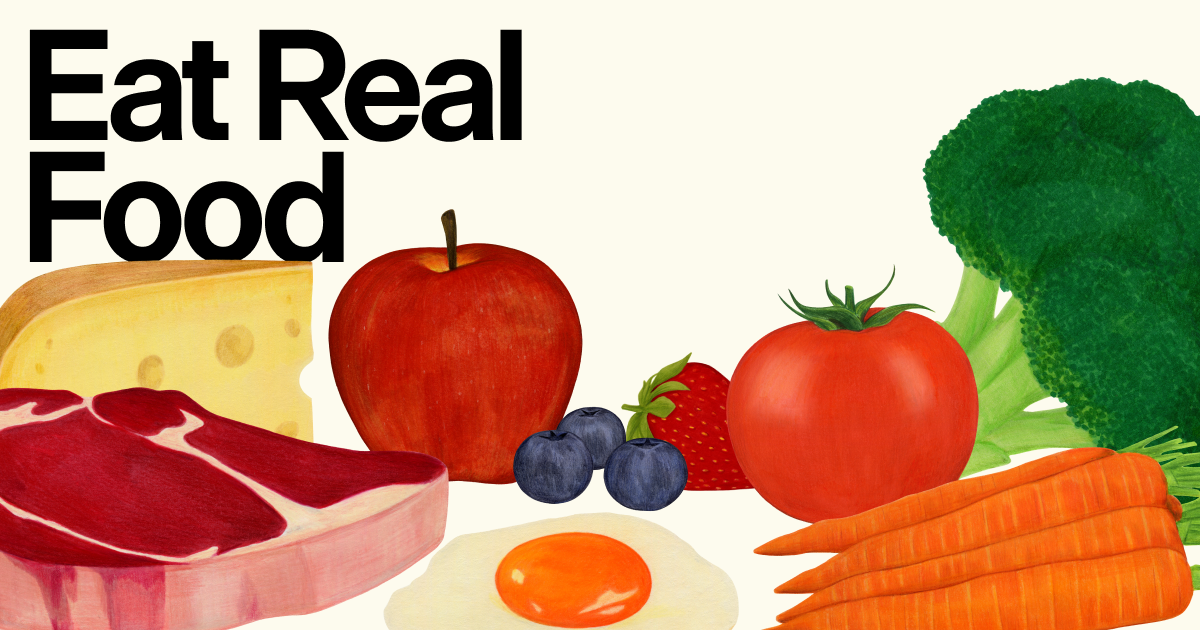
Eat Real Food
1163 points · by atestu · 10mo ago · 1638 comments
Here's industry reports
https://www.nationalbeefwire.com/doctors-group-applauds-comm...
https://www.wattagnet.com/business-markets/policy-legislatio...
And straight up lobbying groups
https://www.nationalchickencouncil.org/new-dietary-guideline...
https://www.meatinstitute.org/press/recommend-prioritizing-p...
Lobbying groups, putting out press releases, claiming victory...
Here's some things you won't find in any of the documents, including the PDFs at the bottom: community gardens, local food, farmers markets, grass fed, free range... Because agribusiness doesn't make money with those.
Just because you might like the results doesn't mean they aren't corrupt as hell
Agribusiness absolutely makes money off of those. In fact they had a hilariously easy time adapting to the consumer trend because all they had to do to label a cow “free range” or “grass fed” was change the finishing stage to a lower density configuration instead of those abominable feed lots you see along highways. The first two stages, rearing and pasturing, didn’t change because they were already “free range” and “grass fed”. Half of the farmland in the US is pastureland and leaving animals in the field to eat grass was always the cheapest way to rear and grow them. They only really get fed corn and other food at the end to fatten them up for human consumption.
The dirty not-so-secret is that free range/grass fed cows eat almost the exact same diet as regular cows, they just eat a little more grass because they’re in the field more during finishing. They’re still walking up to troughs of feed, because otherwise the beef would be unpalatable and grow quite slower.
True grass fed beef is generally called “grass finished” beef and it’s unregulated so you won’t find it at a supermarket. They taste gamier and usually have a metallic tang that I quite honestly doubt would ever be very popular. The marbling is also noticeably different and less consistent. Grain finished beef became popular in the 1800s and consumers in the West have strongly preferred it since.
I’m not sure you can even find a cow in the entire world that isn’t “grass fed”. Calves need the grass for their gut microbiomes to develop properly.
And this is exactly what people have wanted, and are willing to pay a premium for.
Don't conflate the US and the "west".
I only vaguely said “the West” because I didn’t want to get into the complexities of subsistence farming, regional quirks, and pedantics like “soybeans hulls are often considered roughage”.
About a third of beef in the world is truly grass finished and two thirds of that is subsistence farmers who can’t afford the grain. Most of the rest comes from Australia, Brazil, and New Zealand because it’s more competitive to leave them in pasture than import the grain.
As much as you may want to hold your nose up at the US, the (vast) majority of beef sold in the world is grain finished and has been for a long time. It’s just more economically competitive and people strongly prefer the taste and texture.
Australia is more interesting because it’s 50% grass finished but I could never find a source on how much of that was exported to SEA or US and what products it went to.
Another country that predominantly grass finishes is Brazil but they export mostly to China. Again I couldn’t find a source on how much of exports to the US go to meat products (we source a lot of our hamburger meat and pet food from random countries). I remember in all three cases very little is exported to the EU.
In NZ the cattle stand around in paddocks in all weather's with no shelter, but how do you know they are not fed supplementary feed?
Dairy herds almost all are
Probably most of them, but definitely not all of them. https://nltimes.nl/2025/08/18/dairy-cows-netherlands-never-g...: “The total number of dairy cows in the country reached 1.5 million last year. Of these, over 460,000 cows—roughly 31 percent of the national herd—did not spend any time outside“
A factor with cows kept for milking is that you want them to be able to walk to the milking robot at all times, and moving food to where the robot and the cows are can be easier than moving the robot to where the food and the cows are.
People talk a lot about water and land use, but if you have the conditions of land that is (a) naturally watered and (b) not flat enough for arable farming, using it for livestock is much more environmentally friendly than, say, feeding them imported soy - leaving only the methane problem.
Next time you see a meat-eater, thank them for their service. If it wasn't for their heroic efforts we'd be overrun with cows, great lumbering beasts wandering around the streets blocking traffic and trampling our gardens.
[1]: https://www.reuters.com/world/china/brazil-surpassing-us-top...
I personally don't have any insight into the situation and I definitely don't want to defend big businesses, I'm just explaining what you're replying to.
I took the heart of their point to be about local food infrastructure and co-ops and farmers markets, and the grass fed bring cited insofar as it was complementary to those.
You rightly note that "grass fed" beef is effectively the same as "made with* real cheese", technically true even if it's in the parts per millions, and not at all a signal of authenticity it might seem to be at first glance. But I feel like this is all a detour from their point about local food infrastructure.
This is a material win for humane treatment of animals as well as the health of the consumers who aren't eating the stress hormones of a tortured large mammal. The price difference isn't even that big. Of all the things to complain about in the meat industry, this is not top of mind in my opinion.
[citation needed]
Are those relevant to addressing America's national diet deficiencies? None of them are currently anywhere big enough to make a practical difference to most people.
Also most of the health problems with what people eat are from what foods they eat and how much they eat rather than from not choosing the highest quality of those particular foods. E.g., someone might snack often on candy. If they can be convinced to switch to snacking on fruit it doesn't really matter much if they get that fruit from Safeway or a farmer's market. Maybe the farmer's market fruit is healthier for them than the Safeway fruit but the difference will be tiny compared to the gains from switching from candy to fruit.
"local farmers markets have shown to address concerns about food deserts especially in lower income communities" or some obvious non-controversial observation. Maybe "community gardens have been demonstrated to increase lifespan in multiple studies"
The point is these things are decided on by a committee. To find out where their priorities are one of the bigger tells is when you find really obvious things that are not there.
If this was a sincere effort, where is all the obvious stuff?
A big part of getting people to eat better is educating them about seasonality and what good produce should taste like, so that they end up actually liking it.
Later I got some vegetables from a friend who had grown them at a local allotment garden. Made some vegetable soup with them and I swear it's one of the best meals I've had, and I've had some real nice meals.
Flavor in each case was so far beyond what I can get in the grocery stores here it's hardly comparable.
We need to be smart and not knee jerk into feel good memes though. Local gardens and community gardens have higher resource use per acre than large farm ops. Commercial farm infrastructure is far more resilient and lasts longer while consumer gardening gear is cheap and disposable. Consumer gardening gear manufacturers factories burn tons of resources to crank out tons of low quality kit, consumers burn through piles of it. That's not sustainable either.
Plus you really want the average American dumping chemicals in community ground water to grow the biggest pumpkin in the zip code?
Americans need to find common ground on the path forward not fragment into tens of millions of little resource intensive potato farmers
It amazes me how few people are cognisant of this very obvious and important fact.
Just because it’s out of sight doesn’t mean it doesn’t exist. Industrial farming and specially animal farming is one of the most polluting industries, subsidized to produce environmental damage, population diseases and animal abuse.
No, it should be measured in terms of amount of input relative to the amount of output. It’s almost never the case that small farms is going to be more efficient—not only cost wise, but for the environment—than large scale farming.
I'm virulently anti-tribalistic and it's hurt me professionally, socially and romantically my whole life. Trust me, I've got nobody. It's a big problem.
So yeah, the tribal claim, that's just you. You're just talking about yourself
> “Goshdangit why did arbiter of change get lobbied by [tangential cartel]?”
I don’t think it’s a good take, although I won’t go so far as to accuse you of political bias. It’s not like the guidelines say to eat Tyson-branded chicken; Let’s not complain about positive progress.
You know what got the flawed food pyramid created? Lobbying by Seventh Day Adventists. That did not get enough outrage as it hurt countless people in ways that are difficult to quantify. They made fat and meat the enemy across the country because of their religious beliefs. They paid off researchers and even had one claim that Coca Cola was healthier than steak.
Let’s focus on forward progress and not how we got there.
I'm thousands of miles outside the US sitting firmly in the center watching left and right be at each other's throats over absolutely everything so maybe we're kind of alike.
The point of guidance like this is to be trustworthy and authoritative. If I have the ability to independently evaluate it myself, then I didn't really need it in the first place.
Of course, I might be mistaken to have ever trusted the government's nutrition guidance. It's not like undue influence from industry lobbying is unique to this administration.
At what point in time was the government's guidance ever to be accepted on blind faith without critical evaluation? Take this input, compare with data on the same topic from other positions that are far from the source and make up your own mind.
You're playing the tribalism game by setting up this strawman, you too are being played.
I'd personally be just as critical towards anyone who claimed they were fighting a "war on protein" that plainly doesn't exist. Americans consume more meat per capita than nearly any other country.
A lot of people in this post need to do some self reflection.
I have people in my personal sphere that make this sort of argument and it honestly feels like gaslighting. The undercurrent is: "Look, you don't like this guy, I get it. But if you can't see that he does some good, then you are the one who is irrational and not really in a sound state of mind." Meanwhile completely preventable, life-threatening, life-destroying diseases such as measles are back because of the obscurantist beliefs that come with this "new refreshing outlook". This is a bit like saying: "look, you can say what you want about the Spanish inquisition but they kept rates of extra-marital affairs down."
Corporations love this sort of feel-good campaign (the same way they love performative LGBTQ / feminism / diversity when the culture wars swing the other way) for two main reasons: (1) they distract from fundamental issues that threaten their real interests; (2) they shift the blame on big societal issues completely to the public. They do this with climate change, they do it with increase of wealth inequality and they most certainly do it with public health.
All developed nations have a problem with processed food. Granted, it is particularly severe in the USA, but the ONE THING that separates the USA from almost every other developed nation in our planet is the absence of socialized healthcare. This is the obvious salient thing to look at before all others, so also obviously, a lot of money will be spent to misdirect and distract from this very topic.
sure, although if tribal differences are always experienced as fundamentally morally repugnant one might think the moral calibration is screwed a bit too tight.
>I think that it is reasonable to not expect me to be able to find "something positive" in it.
Sure, I do think it is possible that some groups are so morally repugnant that they have absolutely nothing to offer whatsoever. For example that tribe of cave dwelling cannibals in the film The 13th Warrior, man those guys sucked! But the comment seemed more to be about how it is weird that when you find some group does some things that you find morally repugnant then they have nothing they do that can ever be good.
I have lived in places in which I find much of the surrounding culture to have behaviors that I found morally repugnant, or intellectually repugnant for that matter, but even at my most contemptuous of a culture and a people I will at times be forced to admit, honestly, that they have behaviors that can also be considered admirable (in many cultures the repugnant bits are so tightly bound to the admirable bits though I can see how it is difficult not to condemn everything)
I'm not sure you appreciate how symmetrical this statement is. You are on Team A, saying it about Team B, but nothing in the statement actually depends on that permutation of teams -- it could be equally compellingly said by a Team B member about Team A.
No it isn't reasonable. In fact it is one of the stupidest things you can do. If you read any history, you will see that failures in military, politics, science etc. (really pick anything) are often due to key people simply refusing to learn from their opponents and/or refusing to adjust to the new reality. Often this is done because they find their opponents morally repugnant, or lacking in some virtue they happen to hold as important.
It is fine if you don't like the current US Administration. However if they do something that happens to be good, it is fine to acknowledge it as such, while still pointing out what else they are doing wrong. Otherwise you just come off as a sore loser and people will stop taking any notice of you.
This give off an air of virtue signalling to the extend of self destruction. Almost funny thinking about it.
Unfortunately the only way to opt out is to basically stop participating at all. No more consumption of tribal news media and since most news media is incredibly tribal (even saying it’s not tribal is in fact tribal)… it basically means no more news media consumption. Which makes you uninformed instead of merely misinformed.
I dunno the solution to this. It’s a complex web of everybody playing to their incentives including the algorithms that aggregate things for consumption.
Again though, I’ll firmly emphasize that it is the other tribe that is wrong. My tribe isn’t biased or hateful or outrage driven. We say we aren’t so clearly it’s not possible.
I'm not saying they can't reach that point, but this ain't it. They are just getting details wildly wrong and being generally obtuse, but this is an attempt at not seeming completely insane and should be graded on that curve. You can't expect every little detail to be insane, that's asking a lot.
I think the person above may just feel skeptical of the scientific and medical opinion of most of the people running the US government. I know I do. When I read "gold-standard science and common sense," I rolled my eyes. Because the previous news cycle said they don't think meningitis vaccines are important for kids, yet say they follow gold-standard science. It's hard for me to reconcile the two.
EDIT: "rooted in...personal responsibility."
"America is sick. The data is clear. 50% of Americans have prediabetes or diabetes 75% of adults report having at least one chronic condition 90% of U.S. healthcare spending goes to treating chronic disease—much of which is linked to diet and lifestyle."
It also has this moralizing tone, and seems to make some pretty bold claims about why Americans have prediabetes or diabetes. For example, with the introduction of GLP-1 drugs, like Ozempic, people (including some I know well) have significantly reduced their diabetic risk. And they're still eating the same processed foods.
Also, "linked to diet and lifestyle" is a pretty broad claim. Maybe the undersleeping and overcaffeinating actually matters more for increased appetite and desire to eat less healthy foods.
In short, I just don't trust many people when they say health is so inextricably and exclusively tied to food source, especially when they tend to think most vaccines are net negatives for individuals and society.
- Ban some of the ingredients like they did for trans fat
- Force better labeling, like the Nutri-Score in France and EU
- Tax the more unhealthy choices so they don't become the cheapest solution - and maybe use that tax money to subsidize healthier alternatives
This site looks like they're just shaming the consumers for falling for the tricks the government allows the food industry to pull off.
I remember a European MEP who was fighting the food industry to impose Nutri-Score saying on TV that no constituent comes to them saying "help me, I'm too fat". However many expect politicians to boost the job market. The food industry knows that, so each time you try to impose some regulation they'll say "if you do that, we're be forced to do so many layoffs!"
I think the bigger danger of giving this credit is lending any legitimacy to RFK Jr who is actively undermining actual medical advice and wrecking havoc on our childhood vaccine programs.
Just because a broken clock is right twice a day, doesn't mean you need to give the broken clock credit for being right.
By doing this "oh it's just tribalism" lends legitimacy to RFK Jr and furthers his ability to kill kids with preventable disease and further damage the credibility of modern medical science.
"Oh he has some good ideas" Yeah? Which ones? Does the average american have the time/curiosity/capability to sort through which of his ideas are good and which ones will kill their kids?
They actually make a considerable amount on those last two items, taking advantage of those who want to consume meat more ethically.
(Though, in reality, "grass fed" and "free range" are both misleading terms, and none of the meat on offer is likely to be humane.)
How are these connected to nutrition? The difference in nutrition between a local banana and a non-local banana is ... zero?
Much research indicates 0.5 to 0.7 g/lb provides most of the benefits, with continuing but diminishing gains above 0.7 g/lb. And the benefit is not just for "body building", but also for minimizing muscle loss during weight loss and improving insulin sensitivity. Other research indicates we may benefit from higher levels as we age.
You need at least 0.8g / kilo (referring to 0.4g / pound) if you are doing nothing heavy, like walking to the office.
If you do moderate sports, you are hitting 1.0g / kilo immediately.
If you do some more extensive sports, like 3 - 4 days / week in gym, you jumü to 1.2 - 1.4g / kilo.
Bodybuilders are quite above :-))
Regarding the number of chicken breasts - scary for me, Im enough with a half one every second or third day.
There was a great movie about vegan & bodybuilding with known sports people: The Gamechangers - https://en.wikipedia.org/wiki/The_Game_Changers
I get that I include some rice, peanuts etc. in there, but even if I quit EVERYTHING else there's no way 4 to 5 chicken breasts a day is accurate.
>Eating real food means choosing foods that are whole or minimally processed and recognizable as food. These foods are prepared with few ingredients and without added sugars, industrial oils, artificial flavors, or preservatives.
The new pyramid reflects a healthy plate of food: mostly meat and veggies, and a little piece of bread on the side. It's almost genius.
This policy selectively emphasizes the most difficult to import foods so it also plays into isolationist nativist policies.
If you think meat lobbying groups just wanted a new triangle and this isn't going to extend to water, land, energy, and environmental policies along with farm subsidies and even merger&acquisition and liability policies, sorry ...
This thing is for them, their profitability and their investors. They didn't lobby on behalf of your personal health...
Open a position on the MOO ETF. I just did. Might as well make some money from it
also, hi there! (da from oblong)
It's still decent a guidance, but the previous one was as well.
This is worth millions of dollars a day and we're sold it as common wisdom from the mom and pop country doctor.
I'm pretty sure you did the rhetorical equivalent of looking at a roomful of pregnant high school girls..
.. and declaring one of them to be closest to virginity.
https://food-guide.canada.ca/en/
Ctrl+F'd and didn't see any of those words mentioned a single time either. What a corrupt country Canada is.
Which is why sane countries make paying for access and influence illegal.
Which are these sane countries? How do you think lobbying should work then? Everyone should get equal access? Hunter and gatherer man was egalitarian like that. Afaik it is a universal feature of civilization that this eventually breaks down. Of all the existent modes of dealing with this problem, money is probably one of the better ones compared to some historical or even contemporary alternatives. I actually will be very surprised if you come up with a single country that credibly makes "paying for access and influence illegal" as that is pretty much the history of all of human civilization, but I would welcome being surprised.
So? They are fighting fire with fire.
Or should sugar,casino and tobacco industries have all the lobbying
Also this doesn't surpass the minimal threshold for being shocked anymore, there's more critical shit going on, I can't be here being outraged at checks notes meat companies pushing that meat is healthy
The way we count calories is based on how many calories are in a meal vs the resulting scat, and that just isn't an accurate representation of how the body processes protein such that a protein-heavy diet doesn't have as many calories as you probably think it does, which makes it a healthy choice in an environment where most food-related health problems stem from overeating.
However I agree with your skepticism insofar as when they say "prioritizing protein" they probably mean "prioritizing meat," which is more suspect from a health standpoint and looks somewhat suspicious considering the lobbyists involved.
the "industry" obviously makes much more money on "highly processed" and branded foods - more intermediaries, more profits & margins
literally everyone can compete freely in the "whole unprocessed foods" market, and the only real differentiating factors will be quality & taste (as it should be)
Would you say the same thing about the covid vaccination campaigns during the Biden administration? Because billions of dollars were poured into those as well, with record profits for big pharma.
The fact that people lobby to make more money from good food rather than sugar/fat crap is a good thing not a bad one
The original food pyramid was based on a world crafted by calory deficit and worked for it's time, but in a life of excess it causes mass obesity which is partly why americans are so fricking fat.
A demand for the average American to eat more meat would have to explain, as a baseline, why our already positive trend in meat consumption isn't yielding positive outcomes. There are potential explanations (you could argue increased processing offsets the purported benefits, for example), but those are left unstated by the website.
[1]: https://www.agweb.com/opinion/drivers-u-s-capita-meat-consum...
[2]: https://ers.usda.gov/data-products/chart-gallery/chart-detai...
That number seemed unreal to me, so I looked it up. I think it represents the total pre-processing weight, not the actual meat meat consumption. From Wikipedia:
> As an example of the difference, for 2002, when the FAO figure for US per capita meat consumption was 124.48 kg (274 lb 7 oz), the USDA estimate of US per capita loss-adjusted meat consumption was 62.6 kg (138 lb)
Processing, cutting into sellable pieces, drying, and spoilage/loss mean the amount of meat consumed is about half of that number.
> The US is the biggest consumer of beef in the world, but, according to new research, it’s actually a small percentage of people who are doing most of the eating. A recent study shows that on any given day, just 12% of people in the US account for half of all beef consumed in the US.
> Men and people between the ages of 50 and 65 were more likely to be in what the researchers dubbed as “disproportionate beef eaters”, defined as those who, based on a recommended daily 2,200 calorie-diet, eat more than four ounces – the rough equivalent of more than one hamburger – daily. The study analyzed one-day dietary snapshots from over 10,000 US adults over a four-year period. White people were among those more likely to eat more beef, compared with other racial and ethnic groups like Black and Asian Americans. Older adults, college graduates, and those who looked up MyPlate, the US Department of Agriculture’s (USDA) online nutritional educational campaign, were far less likely to consume a disproportionate amount of beef.
High steaks society: who are the 12% of people consuming half of all beef in the US? - https://www.theguardian.com/environment/2023/oct/20/beef-usd... - October 20th, 2023
Demographic and Socioeconomic Correlates of Disproportionate Beef Consumption among US Adults in an Age of Global Warming - https://www.mdpi.com/2072-6643/15/17/3795 | https://doi.org/10.3390/nu15173795 - August 2023
(my observation of this is that we can sunset quite a bit of US beef production and still be fine from a food supply and security perspective, as consumption greatly exceeds healthy consumption limits in the aggregate)
By itself, this figure doesn't really mean much. On any given day, less than 1% of people have birthdays, but that doesn't mean there's a small percentage of people who are having most of the birthdays
The following paragraph is more valid, but the 12% figure still seems dubious.
Go on...
> One limitation of this work is that it was based on 1-day diet recalls, so our results do not represent usual intake[0].
Ah.
[0]: Demographic and Socioeconomic Correlates of Disproportionate Beef Consumption among US Adults in an Age of Global Warming https://www.mdpi.com/2072-6643/15/17/3795
This phrasing strongly suggests it’s not the same 12% every day. In which case… it’s probably not that noteworthy.
This sounds like.. not very much. I eat 6-7oz of ground beef with breakfast alone, pretty much daily! Are people really eating less than ~1/2 cup of meat over all their meals combined?
https://idlewords.com/2006/04/argentina_on_two_steaks_a_day....
what???? there is entire family that eat entire Cow that can feed the whole village, that is crazy
What evidence do you have that the loss adjusted numbers have gone down while the preprocessed numbers have gone up so dramatically?
The problem with the number is that people see it and imagine pounds of meat like they see at the grocery store, but it's measuring pounds of meat that go into the meat processing plant.
> What evidence do you have that the loss adjusted numbers have gone down while the preprocessed numbers have gone up so dramatically?
No, the two numbers show the ratio.
The "pounds of meat consumed per person" from the FAO is a pre-processed weight.
The pounds of meat consumed per person from the USDA is the end-user weight. It's about half of the FAO number.
Point being someone eating a couple bags of jerky over a workday would probably count as having eaten literal pounds of beef, despite consumed weight being much lower. Water is noncompressible and makes your stomach full very quickly.
I find that to be a challenging amount of meat. It's a lot! And to find out that's average???
Americans eat way too much meat. Cheese, too.
The real number for meat consumption at the end consumer is about half that amount.
When you compare the macros of that to sausages or ribs or even steak it’s quite drastically different.
Also I’d guess you aren’t covering your meat in thick sugary sauce every time…
I used to drink protein shakes, but now I am actively against these. Artificial sweeteners provoke insulin release [1] [2] that leads to type-II diabetes.
[1] https://pubmed.ncbi.nlm.nih.gov/2887503/
[2] https://www.sciencedirect.com/science/article/abs/pii/S10568...
Kinda makes zero cal sweeteners look good.
> Was that too much
I challenge you to eat 5 pounds of animal products in a day, for three days.
I don’t believe that the average American eats nearly a pound of meat per day. I do believe if the average American ate meat before carbs, we could get there, and all be a lot healthier, though.
For me, processed carbs make me much hungrier, but the kale salad I’m eating right now makes me less hungry.
I started at 70kg (181cm), so pretty skinny, and without prior resistance training. I ate between 120and 140g of protein per day, without any shakes.
I am aware that these gains would not have continued, but my body obviously had more than enough with 130g to build muscle. I did eat a calorie surplus, but
200g seems like A LOT.
Just as an example of an opposite experience.
(american, vegetarian for 13 years, athletic, former meat eater, long carb centric diet that i'm trying to change)
I can eat 200g of lentil noodles in a sitting.
im probably more conscious about what i eat than the average person, just on virtue of watching macros lol
I think you’re conflating 200g of protein with 200g of meat that has protein.
Eggs work too.
Heart disease is a real risk. Don't ignore it. It's not something that only happens to other people.
(But I doubt the cheese I find so delicious is that same as the cheese that's so prevalent in American diets...)
Also, you need to adjust for demographics. In 1900, 35% of the population was under 15: https://demographicchartbook.com/index.php/chapter-5-age-and.... Today it’s only 19%. Children and babies obviously eat a lot less meat than adults, and they make up a much smaller share of the population today than back then.
> It has become internationally famous for embracing and promoting an unhealthy diet of incredibly large hamburgers. Customers are referred to as "patients," orders as "prescriptions," and the waitresses as "nurses." All those who weigh over 350 pounds are invited to unlimited free food provided they weigh themselves on an electronic cattle scale affront a cheering restaurant crowd.
> The menu includes the Single Bypass Burger®, Double Bypass Burger®, Triple Bypass Burger®, Quadruple Bypass Burger®, Quintuple Bypass Burger™, Sextuple Bypass Burger™, Septuple Bypass Burger™, and the Octuple Bypass Burger™. These dishes range in weight from half a pound to four pounds of beef. Also on the menu are Flatliner Fries® (cooked in pure lard) and the Coronary Dog™, Lucky Strike no filter cigarettes, alcohol, Butterfat Milkshakes™, full sugar Coca-Cola, and candy cigarettes for the kids!
The more you know.
In reality, I don't think anybody in the US follows the food pyramid religiously. But I do think people (try to) follow the main strokes of what the government tells them is a healthy dietary balance, and so any recommendation to increase their fat/protein intake will result in more meat consumption even if the guidelines doesn't itself proscribe that as the only source.
Do you really observe that in your circles? I've lived in 6 different states, from Maryland to Idaho, and I've never got an impression that many people take any real though or consideration for their health at all. If anything, I'd armchair guestimate something like 10% of adults seem to put any real attention of effort into their health. I feel like late teens to late college year people put more effort in general, but only because they themselves are on the meat market and don't usually have complex lives (kids, careers)
If you go to Western Europe, they're not drinking lots of skim milk, and if you eat things from the bakeries, there's more butter and not as much low quality vegetable oil or sugar. When my French cousins come here, they find lots of the stuff sold here revoltingly sweet.
And even then this rule is not perfect because of individual genetics, metabolism rates, activity level, percentage of lean mass, etc.
Americans (US citizens) really do eat a lot. What the hell
But here we have the problems with the numbers and why they should only be guidelines. Consumption of protein needs to increase as you get old (into the range we consider for athletes). And basing consumption on body weight is stupid, because telling an obese person they need to eat twice as much protein as a non-obese person is probably wrong.
1. It’s proteins and fats, not just protein. The site specifically calls out avocado as an example.
2. It’s from meat and vegetable sources. Other commenters have mentioned that you get more protein from non-meat sources than you expect.
Case in point: the Mayo Clinic article titled "Are you getting enough protein?"[0]
It claims that protein is only a concern for people who are undereating or on weight loss drugs, yet it cites protein recommendations that many people find challenging to meet (1.1g/kg for active people, more if you're over 40 or doing strength or endurance workouts.) To top it off, it's illustrated with a handful of nuts, which are pretty marginal sources of protein. It's bizarrely mixed messaging.
[0] https://www.mayoclinichealthsystem.org/hometown-health/speak...
I really like this study of a population of highly trained athletes and their diets/protein intake: https://pubmed.ncbi.nlm.nih.gov/27710150/
In that study they eat > 1.2g protein/kg body weight, but 43% of that is "plant sources", meaning grains, legumes, fruits and vegetables. Like one serving of oatmeal is 6g, things you don't think of as "protein" add up and you have to count them. The athletes in that study are Dutch and 19% of their protein intake came from bread.
But what always happens with protein recommendations is that they say "x grams protein/kg bodyweight" but people hear "protein is meat, you are telling me to eat x grams/kg bodyweight of meat." Very few people ever look closely enough at their diet to develop an intuitive sense for counting macros.
All of the protein recommendations I've seen were for lean mass. You don't feed fat.
Even a cup of cooked rice or a slice of bread has several grams of protein.
https://pubmed.ncbi.nlm.nih.gov/38118410/
What happens is that the excess of protein stays in your system, but, if you don't use the nutrient by exercising, the caloric excess will obviously make you fat.
"These findings demonstrate that the magnitude and duration of the anabolic response to protein ingestion is not restricted and has previously been underestimated in vivo in humans."
Though of course "meat" is too vague a category to be helpful. Obviously there's a link between beef and heart disease and colorectal cancer. There seems to be no health problems associated with consuming chicken or seafood.
(Note that I am neither a vegetarian nor a vegan.)
EDIT down-thread to prove my point you'll see people citing studies in favor of and against the new recommendations. The studies are almost always in animals or use self reported data with tiny sample sizes.
Obviously there are exceptions - particularly right now - but those are solved by rooting out corruption.
food industry has to be policed -- The Jungle by Upton Sinclair is a high school level story featuring the meat packing industry. All around, additives and substitutes are more profitable than raw ingredients.
That is, how many pounds of meat the average American eats in a year. An increase of 100 pounds means about an extra quarter-pound a day.
You need to go to much more recent times to get worsening results/predictions.
There was no such observation, just claim going contra observed data. The period you picked does correlate meat consumption going up with health getting better.
You said that meat consumption went up for last century. Then you claimed that "our already positive trend in meat consumption isn't yielding positive outcomes" - except that majority of that period did yielded positive outcomes.
https://pmc.ncbi.nlm.nih.gov/articles/PMC8805510/
> Conclusions: As observed from the food availability data, processed and ultra-processed foods dramatically increased over the past two centuries, especially sugar, white flour, white rice, vegetable oils, and ready-to-eat meals. These changes paralleled the rising incidence of NCDs, while animal fat consumption was inversely correlated.
Americans also just need to eat less period, but that’s a separable issue.
No we don't. Please show me where.
Are you claiming the old food pyramid is where?
Because Bush jr deprecated that in 2006, and his new, balanced pyramid was again replaced in 2011 by MyPlate, which did not tell you to eat more processed carbs, and was not even a pyramid.
Why do so many of you people think that something that was very clearly replaced twice is still somehow in effect? How much of the recent history of the US are you guys missing? Did you lose your memory or something?
I learned the 1992 food pyramid in school. I was in college by the time they changed it, and I have no idea what the current one says. When the government undertakes a mass campaign to socialize children into a particular idea that’s what happens.
When you couple this with the motivations of industrial food companies (some of whom are now owned by tobacco companies), and the research they do into the neuroscience effects of flavour, texture, even packaging of food, you'll start to spot that a push to "Real Food", and for that food to be less processed and more inclined towards protein, is more likely to result in overall calorie reduction.
One of the things that isn't cutting through on this program is saying "eat protein" is assumed to mean "eat meat", which some assume means you can eat burgers. Nope. Healthy protein is not red meat that has been fried - that's going to take a bit more education, I expect.
This is something I have been thinking about and researching for awhile, because there is so very much confusing language out there.
Your quote says over the last century, so I'm going to use roughly 1920 as the baseline. It also refers to a per capita increase of meat consumption by 100 pounds, or about 45.4 kilograms (to make the math easier). This is roughly an increase of 124g of meat per person per day (or about 3oz if that makes more sense to you).
This equates to a daily increase in per-capita protein intake by 25-30g (depending on which meat and how lean it is).
In 1920, the average American adult male was about 140 pounds, and ate about 100g of protein per day, which works out to roughly 0.71 grams per pound of body weight (or about 1.6 grams per kilogram).
In 2025, one century later, the average American adult male is 200 pounds, and if he eats the same ratio of weight to protein, you would expect that he would eat around 140g of protein per day, which is slightly higher than the increase in per-capita meat consumption over the same time.
However, if you look at actual statistics of what people are eating in protein, you'll see that the average American adult male is actually eating about 97g of protein per day, or about 0.49 grams per pound (1.1 grams per kg), which is much less than we ate a century ago, which means that that the increase in meat consumption doesn't match change in protein, so is offset by either less non-meat protein, meat with lower protein content (e.g. more fat), or both.
There was some discussion lower in the thread about bodybuilders vs normal people, and about basing your calculations on lean body weight vs full bodyweight. Lean body weight calculations are often used for bodybuilders, but those numbers are elevated (typically 1 gram of protein per pound of lean body weight). For someone who is sedentary to lightly active (e.g. daily walks), the calculation is based on full body weight, not lean body weight, and is about 0.7 gram per pound (or 1.5 grams per kilogram), which matches this recommendation exactly.
Hitting these targets has been shown to greatly increase satiation, reduce appetite, but it does not make you lose weight, and it is not permanent (reducing your protein intake removes the effect, which makes sense). However, long term studies show that people who increase their protein intake to these levels and lose weight (through calorie reduction or fasting) keep that weight off.
Finally, from what I've been able to cobble together, high protein intakes combined with high fat and high sugar intakes does not have the same effect as a diet that matches the recommendations here (ie. it's not just about higher protein intake, it's about percentage of calories from protein, which should be around 20-25%... 200 pound sedentary to lightly active adult male, 140g of protein, or 560 calories, in a total diet of 2250-2800 calories, depending on activity level)
Meat is as well. Maybe organic in small quantities, not too often can help.
Fish is problematic as much is contaminated with mercury and other heavy metals (we poisoned the ocean).
Dairy (in certain forms) offers the same benefits.
I really enjoyed "keeping up" with her when we were dating, because I was really tired of eating the same things all the time. There's really a lot of delicious plant proteins if you take the time to look.
(That being said, our kids like meat. We just don't eat it all the time.)
I don't understand people freaking out over this - outside of a purely political reflex - hell hath no fury like taking away nerds' Mountain Dew and Flamin' Hot Cheetos.
Nor do I understand the negative reactions to new restrictions on SNAP - candy and sugary drinks are no longer eligible.
Personally I'm not a fan of any diet that recommends high meat consumption and I say that as someone who eats everything.
Cattle outweighs the total livestock on this planet by a 10 to 1 factor.
While governments pretend to do stuff for the environment, they seem to always ignore the extreme cost on the environment and pollution caused by cattle. Even focusing on CO2 emissions by industry avoids the elephant of the room of the insane levels of methane produced by cows, a gas that's 200 times more harmful.
There is little evidence that a meat heavy diet is good for people, but there's plenty of evidence of the contrary.
So, to be honest, while I don't freak out and I'm all for freedom, there has to be also some kind of consciousness into how do we use the resources on this planet, and diet is by far more impactful than the transport of choice.
> While governments pretend to do stuff for the environment, they seem to always ignore the extreme cost on the environment and pollution caused by cattle.
While governments and politicians generally like to portray themselves as being driven by morals, they are actually driven almost entirely by economic interests.
> So, to be honest, while I don't freak out and I'm all for freedom, [...]
Well, I would like the freedom to live on a planet with an intact ecosystem. I also think that animals would like the freedom to live a life free from unnecessary exploitation.
> [...] and diet is by far more impactful than the transport of choice.
Both are high-impact areas, but changing your diet is much easier than changing your choice of transport - in some countries. Transport emissions account for about 25% of all emissions, 60% of which are caused by individuals' use of cars.
And after all of this, we haven't even touched on what fishing is doing to our oceans.
Not the one that put out that statement
If we phrased it from a carbon perspective that would probably help it be more popular, at least for beef which is a huge methane emitter.
It seems odd not to include cattle in total livestock.
You could add all the squirrels, elephants, lions, cats, birds, all of those, and you're not even at a fraction of mass of the cows we grow.
https://youtu.be/sGG-A80Tl5g?si=yFnHO9cX3apu1yBh
I think cows get to much blame
I think that incredibly biased channel and extensively criticized video gets too much credit
The issue is that "Ultra-Processed" does not mean "candy and sugary drinks" and even "sugary drinks" is overly broad. Can SNAP pay for sugar-free Coke but not classic coke? What about Gatorade?
SNAP already had reasonable restrictions. This very much feels like a "middle management style" project. Dedicating resources to a nebulously defined BIG project regardless of whether or not it actually improves outcomes.
So yea, how about drinking water as your primary source of hydration?
If you are poor, the last thing you need is Diabetes, Cancer, Hypertension, Cardiovascular disease, etc.
The problem also is there is a huge amount of fraud with SNAP with people claiming benefits for multiple people and then reselling their SNAP cards to just make cash. The people buying the endless cases of Mountain Dew often have just bought a 50% discounted SNAP card off some other person who isn't starving at all.
And where is the evidence of widespread fraud? The MAGA crowd keep pretending everything government is full of fraud, but they keep faring abysmally at finding said fraud. The problem is not fraud, but wasted effort. Most things government involve a lot of duplication of effort because everyone wants a piece of the pie. And all too often they spend a dollar to save a dime. A pair of examples illustrates the problem:
1) My wife tried to buy what turned out to be a 31 pound watermelon. Oops, has to be weighed on a properly certified scale to be allowed to sell it--and every such scale they have only goes to 30 pounds. Once the problem was identified the manager proposed a simple solution: sell it to us for the price of 30 pounds of watermelon. Not even a minute.
2) DMV. They made a field too short, two people used different abbreviations to fit into the field, the registrations didn't match and the unused portion of the old registration that should have transferred over didn't. By the time it was fixed IIRC 4 people had been involved, something like an hour passed. Over what turned out to be $6. (Not that I knew the number when I squawked.) The vast majority of that time was spent trying to document to the system that it was proper. Nobody with the authority to simply say moving this money is proper, do it.
And the related problem of politicians always wanting to visibly do something. Lots of duplicated effort because of this. Locally, several professional type fields require a separate business entity for every licensee even if they are part of something else that is licensed. A few hundred dollars a year per person for absolutely no benefit to society.
You are proposing eliminating fraud by eliminating the system. "You can't have failing tests if you have no tests"
Might as well tell people they also just need to eat plain rice for every meal too.
I get there is some fraud on SNAP. I know people on SNAP. Most of them use every single cent on decent food. I've seen fraud, though. In Chicago I would place a bet that most non-chain convenience stores will sell you cigarettes on SNAP. Some of them absolutely sell weed on SNAP.
I'm glad to see this announcement and despite the leadership in Washington right now I don't think these adjustment will be seen as too controversial by the American public. The recommendations are based on a lot of good nutritional science that's been out there for years, but the buck seems to stop at the conversation around fat.
They went to great lengths to remove the debate around good fat vs bad fat from this discussion. Even reading the report, emphasis is put on the discussion of why we use so many pressed oils in the food chain, but not why we phased lard and shortening out of the American diet.
"Eat real butter" is ostensibly a recommendation presented at the bottom of the webpage, but butter is not a healthy fat. Same with some people's obsession with frying in beef tallow, but the report doesn't want to dig into this distinction for obvious self interested reasons. They even recommend:
> When cooking with or adding fats to meals, prioritize oils with essential fatty acids, such as olive oil. Other options can include butter or beef tallow.
Which is a good recommendation. But no, you don't want to replace olive oil with butter or beef tallow. There's a lot of good nutrition science to back this up, but the report would prefer to not go there. Maybe "eat some butter" is appropriate, but unless the FDA wants to have an honest conversation around HDL and LDL cholesterol and saturated fats, I don't see this inverted pyramid doing too much good for overall population health (besides raising awareness)
Regarding fat I think "eat real whole unprocessed food" is a simple way to cover it. These guideliness recommend using less added fat including avoiding deep frying, and if one must use fat to use a minimally processed (i.e. pressed or rendered) form like olive oil or coconut oil or butter or animal fat. Though they failed to mention the distinction between refined and unrefined olive oil - today much of it is refined i.e. highly processed.
But regardless I have it on very good authority that with the BBB some within the Republican party wanted to limit EBT to only be able to purchase healthy food. No soda, no candy, no chips, etc. A couple calls from Coke, Pepsi, etc lobbyists shot that down.
The success of SNAP comes despite its inherent inefficiency, friction, and the indignity of its limitations. We structure the program the way we do in order to mollify voters who twitch at the idea of the poor ever enjoying anything.
Inequality isn't just about healthcare costs, biological metrics, etc. It is also deeply corrosive socially and psychologically, and this side of things is systemically underappreciated in policy circles.
To be sure, our food and diets are bad. Americans broadly should eat healthier. But are society's interests really better served by insisting that a poor child not be allowed to have a cake and blow out the candles on his birthday, the way all of his friends do?
Fucking hell, if this is true, I don't know how those people sleep at night. Really, It's a failure if my imagination, but I don't imagine how people like this function. I'm sure I've done my share of indirect harm in this world, one way or the other, but being so on the nose about it would make me absolutely nauseous.
Most liberals I know think they shouldn't but that its stupid to police this aspect of people's behavior if they are on EBT. Most liberals might even feel more comfortable regulating everyone's behavior by taxing unhealthy foods than they would just bothering poor people with it.
I can think of one issue here. Ultra-processed foods, candy, and sugary drinks are cheap and shelf-stable. They're cheap because they're subsidized. Fruits and vegetables are more expensive, and they don't last very long. So a person on a very limited SNAP budget will get less food under the new restrictions.
The answer, of course, is to make it so that fresh produce and other healthy options are cheaper than the junk food. I have a hard time seeing that happening, given how susceptible the administration is to being "lobbied".
For example, hot dogs are ultra-processed. Obviously hot dogs are not the healthiest food but also obviously "franks and beans" is a pretty good meal for a tight budget and is something you should be able to get with SNAP.
For the most bang for your buck you want to be eating less expensive real protein like chicken and pork and filling up on salads. Limit carb intake from beans and other starches. Prefer fruit for carbs because it has fiber and vitamins you can't get anywhere else.
I'm confused by these statements. How are you deciding to measure the quantity of "food"? If you see food as a means to deliver nutrients, fresh produce is already far cheaper than junk food.
From the perspective of your body, you can sustain yourself much better on a smaller amount of nutrient dense calories than a larger amount of empty ones. Obesity is not merely an overconsumption of calories or a measure of food or body mass.
For example at one store there was confusion as to why a ready to eat cup of cut fruit packaged with a plastic spoon from the store's deli department was ineligible, but a slice of cake packaged with a plastic fork from the store's bakery was eligible. Apparently the cake being made with flour makes it OK, regardless of how much sugar is in the cake and the icing.
SNAP changes like this may be better on a population health level, to be sure. On this I have no evidence. But each restriction placed on food for people living in destitution may mean some people go hungry. (And this excludes issues of caloric density.) I would like to see better data, but sadly, there is none.
But if I had an empty kitchen, lacked the funds to invest in bulk purchases, and had 30 minutes to cook and eat, I'd be eating very differently.
I'm not sure if you mean buying pre-prepared meals is expensive. If that's what you are saying, I agree.
But if you're stating that preparing meals (at your own place from raw ingredients) is expensive. That's simply not true, at all.
The sources of those macronutrients also matter. The ideal range for saturated fat is 5-10% of total calories. Meat consumption, especially red meat, is associated with higher risk of colorectal cancer. Dairy consumption is associated with higher risk of prostate cancer.
I haven't read the new guidelines in detail but if they're recommending red meat and whole milk as primary foods, then they are not consistent with the research on cancer and cardiovascular disease risk and I doubt that people following them would meet the AMDRs or ideal saturated fat intake.
Your point about the sources mattering isn't tangential; it's the entire point. The reason the AMDR exists is to encourage good sources. A diet of 65% white sugar and 25% butter isn't exactly what it had in mind though, and it's those sources you want to scrutinize more heavily.
Even for red meat though, when you control for cohort effects, income, and whatnot, and examine just plain red meat without added nitrites or anything, the effect size and study power diminishes to almost nothing. It's probably real, but it's not something I'm especially concerned about (I still don't eat much red meat, but that's for unrelated reasons).
To put the issue to scale, if you take the 18% increased risk in colorectal cancer from red meats as gospel (ignoring my assertions that it's more important to avoid hot dogs than lean steaks), or, hell, let's double that to 36%, your increased risk of death from the intervention of adding a significant portion of red meat to your diet is only half as impactful as the intervention of adding driving to your daily activities.
The new guidelines seem to be better than just recommending more steaks anyway. They're not perfect, but I've seen worse health advice.
I would agree that with proper knowledge and planning, it's possible to reduce carbs and increase protein/unsaturated fats while maintaining adequate fiber and micronutrients. But in practice, I think it's much more common to see people taking low-carb diet recommendations as a license to eat a pound or more of meat per day, drink gallons of milk per week, and completely ignore fiber intake, which is objectively not healthy.
Maybe different areas of expertise aren’t equally valid, and even good experts often can’t see the forest for the trees in terms of developing actionable advice.
The only recommendations to limit fish that I have seen are due to mercury exposure risks:
https://www.fda.gov/food/consumers/advice-about-eating-fish
Coal burning and incidental industrial releases drastically increased the amount of mercury in surface waters over the past century. The released mercury gets transformed by bacteria into organomercury compounds which are lipophilic and concentrate up the food chain, meaning that predator fish like tuna and swordfish can contain orders of magnitude more mercury than the water they live in.
There are plenty of fish with much lower mercury levels (like salmon, trout, and sardines):
https://www.fda.gov/food/environmental-contaminants-food/mer...
You can eat all the salmon you want without worrying about mercury, and I haven't seen government advice to the contrary.
Those people are worse than Astrologers.
At least astrologers stick to their fantasy, while, since I remember being old enough to count, I already lost track of how many times they've told us that "eggs are bad" and then "eggs are good" again, and then bad, and good, and... I've lost track.
Then they told us to eat cereal at breakfast, and that bread and potatoes are the basis of a good diet, then that fat is the killer and then that we should replace butter with plant based alternatives and the list goes on.
Nutritionists aren't scientists. They aren't even good at basic logic and coherence. So, no, I don't want them in charge of dictating policies.
This new JFK Jr diet has something in common with the Paleo "cave man" diet, which at least makes some sense in the argument ("this is what our bodies have evolved to eat") if not the specifics. I'm not sure where the emphasis on milk/cheese and eggs comes from since this all modern, not hunter-gatherer, and largely unhealthy, and putting red-meat at the top (more cholesterol, together with the eggs), and whole grain at the bottom makes zero sense - a recipe for heart attacks and colon cancer.
https://www.cnbc.com/2026/01/07/rfk-jr-nutrition-guidelines-...
With regards to dairy, it's more about a person's individual reaction to it. It's a similar argument with nutrient density (since milk is intended for growing offspring, obviously it's going to be very nutrient dense). The downside is potential inflammation or not having the enzymes to process it.
I would definitely not lump eggs and dairy as "bad" in any way though.
Also, the "cholesterol" thing is a very bad thing to focus on. Cholesterol is not bad! You need cholesterol. (What do you think cell membranes are partially composed of?
Whole grains are not as good as you think. Often, they're made from strains that are optimized for growing and robustness not nutrition. Also, unless you're exercising a lot you really don't need much in the way of carbs.
There is also not a very strong connection between dietary cholesterol and serum levels, anyway.
As far as eggs and dairy go, sure they are healthy for who is meant to be consuming them - baby chickens and baby mammals, but that doesn't mean they are good for us in excess.
There have been, and continue to be, so may flip flops in dietary recommendations and what is good/bad for you, that it seems common sense is a better approach. All things in moderation, and indeed look to what our relatively recent ancestors have been eating to get an idea of what our bodies are evolved to eat - whole foods and not processed ones and chemical additives.
Your body produces cholesterol naturally, without any meat or dairy. In my case it actually produces way more than I need, even on a vegan diet, because of genetic factors. People should test their LDL and evaluate whether eating cholesterol is healthy _for themselves_ as it’s different for everyone.
https://news.harvard.edu/gazette/story/2025/11/looking-to-bu...
There was a story about this in the NYT recently (can't find it) and IIRC, it basically said protein is out and fiber is in. It wasn't that simple, but that was my takeaway.
A glass of water with psylium husk a day and you solve a lot of modern diet problems.its also super cheap,a $20 bag can last you a year.
Just because an article comes from Harvard doesn't mean it's correct -- Harvard scientists were also behind the original food pyramid, and were likely paid off by the sugar industry.
Turns out just slowing down digestion can have a lot of benefits.
Also, most Americans eat very, very little fiber. Anything is an improvement. I believe the FDA recommendation is 30 grams a day, and most Americans eat, like, 2.
However, most Americans are not deficient in protein. They eat lots of meat, and very little veggies.
I sometimes wonder if the complexity of the human body doesn't stop us from seeing things that can have great positive effect on a set of people because it's counteracted by the effect on another set of people so the result in the whole is cancelled out. I now wonder if the statistic methods used in these studies take this into account.
All this to say that I approve of controlled self-experimentation, but you need to be very rigorous and brutally honest. Most people are not.
If you're on a low-carb diet you should supplement fiber.
The entire problem is that most people in high- and middle-income countries are in fact doing something blatantly wrong - they are consistently eating vastly more calories than they use. Some of those people are ignorant of what 2000 to 2500 calories actually looks like, some are deluded, but a very large proportion know damned well that they're eating far too much and do it anyway.
The obesogenic environment that we now live in is partly due to the influence of the processed foods industry, but in large part it's simply a product of abundance. Before the late 20th century, it was simply inconceivable that poor people could afford to become morbidly obese. Agricultural productivity has improved beyond all recognition and the world is flooded with incredibly cheap food of all kinds.
We've spent the last few decades trying to push back against that with all manner of initiatives intended to endgender behavioural change, with very little success. It doesn't really matter what guidance we give people when they have shown a consistent inability or unwillingness to follow it.
If we're actually serious about the effects of diet on public health, I think there are only two credible options - extremely heavy-handed regulation, or the mass prescribing of GLP-1 receptor agonists. All of the other options are just permutations of "let's do more of the thing that hasn't worked".
There was a temporary period where I had some GI issues from changing what I ate very abruptly, but that wore off as my gut bacteria adapted
https://en.wikipedia.org/wiki/Cholesterol#Medical_guidelines...
https://www.heart.org/en/news/2023/08/25/heres-the-latest-on...
"Most studies regarding cholesterol are bought and paid for by the egg industry. "
An actual steak or hamburger ground at a butcher would be a pretty gigantic step up for most people.
It's a fad diet being recommended, and parts of the advice being good don't make it good overall.
Because poor people should be allowed to enjoy some of life's pleasures as well.
All you have to do is look at this food pyramid and the old food pyramid and ask "if I had to feed one of these a week to my kid which would I pick".
It's clearly superior and it's just sad that people are so just defiant to good, for who knows what reasons.
The restrictions on SNAP are insidious because SNAP is supposed to enable one to live a normal life -- and that includes occasionally buying things that are not "healthy" in a bubble. The mantra that many health professionals will use is "there are no unhealthy foods, only unhealthy diets". Combine all that background with traditional stigma associated with SNAP/food stamp benefits and a picture starts to emerge of why policy was to embrace more foods and how this administration is often called the "administration of harm".
My understanding is that it adds a complex layer of regulation where one did not previously exist. Large retailers and grocers have the systems that can accurately track this. (Essentially: does your POS have the ability to sync with the Federally Approved Foods For Poors list or not.)
Smaller convenience stores (more common in places where poor people live) are less likely to have the resources be able to comply. Rather than get sanctioned for accidentally selling a Gatorade on SNAP, they will simply pull out of SNAP altogether. This means that even the non-sugary foods they have will no longer be available to people on SNAP.
The net effect is expected to be to remove SNAP purchasing ability from entire geographies. I understand the effect is expected to be most pronounced in rural and dense urban areas.
Its an addiction. Try taking away an alcoholic's alcohol and sit back and enjoy the infinite rationalizations about how its heart healthy and lowers stress and its just a couple a night, etc etc.
Its not like it is a tan suit.
Why should I trust them with the food pyramid? How do I know if anyone who actually has expertise was consulted when his signature move has been axe experts and bring in “skeptics” with no actual background since day 1?
I’m supposed to play ball and accept health advice from the antivaxxer who has led to countless unnecessary deaths? Who walked up with the president and said “Tylenol is linked to autism” with no evidence?
No way.
Edit: it’s worth mentioning that he and a bunch of “MAHA” proponents cite the natural and healthy food in Europe but never want to use the dirty word that makes it happen: regulation. If we are serious about unhealthy additives and other food concerns, then we need robust regulations. They aren’t serious about change. It’s easy to go “we’re gonna have everyone eat healthy and natural stuff” but when it counts they won’t do what is necessary. [also toned down my heated language]
What I hate, and react against, is the package deal. We get a better food pyramid, but we also get antivax imbeciles and a resurgence in easily preventable diseases. We get an official nod of approval given to idiots who think you can treat cancer with "alternative" treatments. We get blaming autism on Tylenol with incomplete and inadequate data or, wait, maybe not, or maybe, or whatever that was.
I think it reflects a deeper problem though. The "crunchy" "natural" alt-med orbits have usually had better ideas about nutrition. They've historically been right about whole vs. processed foods, more protein and fats and less simple carbs, sugar being bad, etc. Unfortunately they've historically been wrong about most other things. They're wrong about vaccines, wrong about just how powerful and effective diets can be, mostly wrong about psych meds, and wrong about giving the nod to unmitigated quackery like homeopathy.
I also think that tends to be a common problem with any and all populism, whether left or right. The present establishment may be corrupt or broken, but replacing it is hard, especially when it tends to have a talent monopoly. "Serious" people who go into medicine go to college, then grad school / med school, then get licensed, etc., and pick up establishment views. The people who want to do medicine but don't take this path tend to be amateurs and quacks and weird ideologues.
Venezuela's been in the news lately. My understanding of what happened to their oil industry is: they had it working okay with professionals doing it, and then there was a populist revolution. Then they kicked out all the professionals. Then they had no idea how to run an oil industry. The professionals were linked to a foreign power and probably taking too much profit at the expense of the Venezuelan people, yes, but they also knew how to extract petrol.
Edit: You see more sympathy here than many other educated places for this stuff, and there's a reason for that.
I think CS people are extremely open to autodidactism, probably too open, and I think that's because CS and programming is one of the few serious fields where it is actually common for an autodidact to equal or exceed a trained professional.
The zero capital cost near-zero real world implication nature of computational experimentation facilitates this. You can just read open literature and sit and play until you get good and it harms nobody and costs almost nothing. Math is another field where there have been genius autodidacts that have made huge discoveries. The arts are obviously mostly like this, excluding those that are very hard to learn alone or have capital costs.
Medicine is definitely not a field like this. I don't think you can autodidact medicine. As a result, doctors outside the establishment are usually not good. There have been historical examples, but few, and most of them came up through the ranks of real medicine before pushing a radical idea that turned out to be right.
Also note that even in CS and math, most outsider ideas are wrong. Outsider ideas are kind of like high risk / high reward investments. It's very hard for anyone, insider-trained or not, to formulate a deeply contrarian or wholly original idea that is correct, but when someone does it makes the news because it's both rare and often high impact. The hundreds of thousands to millions of deeply contrarian or original ideas that were worthless or wrong don't make the news.
Regarding, smoking and bloodletting, the former was bought and paid for by industry, that is just fraud. For the latter, there are cases where bloodletting actually works. Medieval medicine isn't the backward thinking we often ascribe to it and many would argue that it wasn't a "Dark" ages at all. There are even modern instances where maggots are the best solution for cleaning wounds. Even given that history, the recent advances by people whose jobs I can't even begin to understand, can nuke my entire immune system to treat a cancer and bring me back to full health. That is not something an autodidactic can do.
Clearly if you eat a T-bone steak and half a dozen eggs daily combined with 25 pull-ups, you don’t need any vaccines.
My own opinion is that you should also get at least 0.5g fat to 1g protein as a baseline... more would be for energy in lieu of carbs.
Pretty sure nobody reputable has ever said “eat less protein”
You see it across all kinds of industries. Presumably each individual is just engaged in the solitary imaginary thought war. Surely they're not soldiers on multiple fronts. Superheroes?
It's an idiocracy bit, the continual flanderization of the USA. It reminds me of carlin's act about how everything we do has to be contextualized into war: we can't just solve homelessness, we have to declare WAR on homelessness (https://www.youtube.com/watch?v=lncLOEqc9Rw).
There are differences: the previous guidelines are very down on saturated fat, for example. But I feel like a lot of people are imagining that this is replacing the old food pyramid with the huge grain section at the bottom bigger than everything else, when that's been gone for over a decade.
Realistically I don't think these guidelines really have much effect at all, except maybe things like school lunch programs that may be downstream of them.
The literal food pyramid that’s printed god knows where and that is recommended in many countries due to US recommendations.
Have you been to the site OP linked?
And 52 GOP coward senators that approved the idiot. The only stand out was Mitch McConnell because he was almost paralyzed by polio as a child and knows first hand the damage RFK is doing.
I'm amazed the new guidelines don't recommend a daily portion of roadkill, preferably raw.
i think it's a perfect example of why advocates for any policy should have specific, achievable, and well-documented goals - you never know who might be an ally. politicians don't want to do this sort of detailed work, they're looking for preexisting policy they can champion, and if you're standing there ready to hand it to them when they're looking for it you get get good stuff done.
Even before RFK Jr rubbed his metaphorical nutsack all over our healthcare system, doctors pretty much always told me to eat better. They told me to avoid processed foods, avoid sugar, and focus on fiber and protein.
I don't know why RFK Jr. is getting credit for telling people to eat healthy, especially since some of his recommendations (e.g. telling people to eat french fries if they're fried in beef tallow) are actively bad and will likely lead to people becoming more overweight and less healthy.
Sure he may be a meathead moron who can only advocate that the military should get jacked, but if the military really DOES need to get in better shape and his brainiac predecessors weren’t actually doing anything about that, he’s actually functionally smarter than them.
So to answer your question, if RFK is doing the thing that needs to be done, he should get the credit.
[1] note: using this method (spacebar to jump one screenful, and shift-spacebar to go back up) on sites that insist on doing the "sTiCkY hEaDeR" idiocy results in losing a line or two on every page, so, I guess, don't get too used to it as it's hard to use today.
https://www.familyconsumersciences.com/2011/06/usda-food-pyr...
This is the guy famous for having and being proud of his brain worm.
State a problem. Propose a "solution" without doing anything to establish that it is actually a solution. Make it about "real", ignore the real issue of what one gets from the calories consumed. It's not the processing that makes food bad, it's that ultraprocessed foods are optimized for enjoyable eating, messing up our body's regulatory system. We eat too many calories too fast and get little from them other than calories.
Especially objectionable to me is whole milk. It's so easy to drink so many calories.
Remember all the talk about banning COVID vaccines? In the end they just changed the wording of the federal recommendations and included things like "having a sedentary lifestyle" as one of the vague reasons to get a COVID vaccine. In some states you had to get a doctor to write a prescription, annoyingly, but the overall picture is that it's still much easier to get a COVID vaccine in the US than under something like the NHS.
To clarify, I'm not in support of the actions or the administration. I'm just pointing out that this is becoming a trend where they say one thing but do something milder.
Regarding the NHS: Here's a link showing NHS COVID-19 vaccine eligibility, which is highly restricted relative to the access we enjoy in the United States: https://staustellhealthcare.nhs.uk/surgery-information/news/...
Again, I'm not saying the current system is good or that the NHS has it right, but trying to put it in perspective.
There is another side to the nutrition recommendations beyond pure nutrition and that's economics. Pro business Republicans were loathe to anger big food producers.
On the flip side, this new food guide is now advocating a diet that is far more expensive for average consumers at a time when food inflation is already hurting so many households.
The new "guidelines" for alcohol are pretty laughable though. I say that as someone who enjoys his fair share of beers. “The implication is don’t have it for breakfast," <- direct quote from celebrity Dr Oz during the press conference.
Unfortunately their stances on vaccines, supplements, and mental health make are still awful
Pathetic
The deeper problem is that you can feed a family with a few bucks at a fast food joint. Eating correctly costs money, money that Americans don't have.
A fast-food meal is an expensive meal by global standards. The problem is partly cost. And party education and time. But it’s almost certainly not income.
No you can't, in reality. It only seems so because the fast-food industry is heavily subsidized by taxpayer dollars.
Organic food would be much more affordable otherwise
Like, don't get me wrong, RFK will kill N*10^5, N*10^6 people with his outlook on diseases, but....how many people have had their lives wrecked by "fat makes you fat", "ketchup is a vegetable", and "eat a balanced diet composed entirely of sausage, flour, and sugar"? As a GenXer I've been dealing with the echoes of this for a long time.
If by this you mean to ask if the new guidelines are the same as previous ones from the 80s, then no. The new pyramid is different, makes different recommendations (more meat, for instance, and less wheat and grains). The website linked to explicitly shows how it is different from the previous "food pyramid" guidelines.
For those who don't believe me - go find some old family photos of your parents or grandparents, whichever generation would have been young adults in the 1960s or 1970s. Compare them to people of the same age born any time after, say, 1990. Nothing come of one sample, but people from the previous generation just weren't fat in their 20s like we are.
Yes, there's more to it than that. But food is a big part of it.
A lot of vaccines are tailored towards the mother going back to work. They could be tailored for a later schedule if there is concern about secondary effects like autism and the child is being cared for at home.
Again I’m not anti vax but I also don’t think the protocol designers are providing alternative options which they should.
It would sound more scientific and less anti-vaxxer if you said “concern about secondary effects like astrological contamination”
The American cult of personality is ridiculous. The only winning move is not to play.
He believes in the miasma theory and just maintaining a healthy immune is enough to keep you from getting sick.
Just read his book, "The Real Anthony Fauci" and you'll realize that this man shouldn't be trusted to run a kindergarten nurses office.
Growing up, my mom, a pediatrician, never let tylenol in the house because she saw too many kids come through the pediatric ER with liver failure because of it in her hospital shifts. It's the leading cause of acute liver toxicity in the US.
To clarify, this is an example of RFK's lunacy, not the user's opinion to be voted on.
Are you of the opinion that the European recommendation is insufficient? Would you petition European healthcare industry that they are requiring too few vaccines? If so, I would expect Europeans to be chronically far more diseased than Americans, do we see that in the data?
Link to autism comments: https://www.cato.org/blog/circumcision-tylenol-autism-rfk-jr...
Misc including 5g comments: https://www.forbes.com/sites/saradorn/2024/11/15/rfk-jrs-con...
I know it’s important to have an informative guideline, but isn’t it strangely reminiscent of “just say no”?
If a particular clock was never right, that would actually give it positive information value, because it would at least tell you one time it isn't.
One of the big design flaws of the engima machine was that no plaintext letter ever encrypted to the same letter.
So funny to see people reflexively defend those things being left off because it confirms their own beliefs. A deeper inspection of the actual guidelines has them being very fair to plant proteins:
> Consume a variety of protein foods from animal sources, including eggs, poultry, seafood, and red meat, as well as a variety of plant-sourced protein foods, including beans, peas, lentils, legumes, nuts, seeds, and soy.
The thing is... the pyramid is just a graphic, the actual words give more context.
Since we're talking about the actual wording of the report, it admitted the significance of previous reports deciding to order plant foods before animal products. That is reversed in this most recent report, and very intentionally, which they make clear. They also pretend that the health effects of saturated fat intake are still fuzzy, as if the evidence doesn't heavily point towards it being detrimental.
If anyone is holding to unshakeable beliefs and unwilling to consider evidence, it's the shoddy scientists (many with meat-industry related conflicting interests) that wrote the report.
The original commenter is simply misinformed about them excluding plant based protein. That is what his comment was shows.
There are plenty of lactose intolerant people. These people can meet their nutritional needs without dairy. (For Calcium: via Sardines, leafy greens, Tofu, etc.)
I can see why you would expect something like that from this administration, but surprisingly the linked webpage seems to be based in fact.
Broccoli are not an excellent protein source from a dietary perspective.
Similarly, it's a "complete" protein, whereas most vegetables and legumes are missing necessary amino acids.
The downside of beef isn't the "density" of nutrients: the downside is high saturated fat. Chicken breast, though, is similarly high in protein without the saturated fat downside.
In practice, there's no evidence of amino acid deficiency in vegans/vegetarians except ones that restrict even further (potato diet, fruitarians, etc) https://pmc.ncbi.nlm.nih.gov/articles/PMC6893534/
Besides the ever-popular soybean being a complete protein, if you have normal variety in your diet, it's just not something you have to worry about.
That is not what your linked article says. It says there is not evidence of protein deficiency, and the deficiency of amino acids is overstated. Not that there is no deficiency.
And vegan/vegetarian health is really a 2nd order variable here. Vegans and vegetarians could have massive amino acid surpluses and it remains a fact that vegetable proteins lack useful amino acids that meat has. Maybe the vegetarians are eating lots of eggs. Maybe they are taking lots of supplements. Maybe they are actually eating meat despite calling themselves vegans and vegetarians. It doesn't matter. There really is no disputing the fact about the composition of meat/vegetable protein.
So the problem with steak isn't the steak itself it's the "steak dinner" where the meat comes with sides such as french fries and drinks such as beer.
   - Chicken: 27/100g
   - Beef: 31g/100g
   - Hemp: 32g/100g
   - Pumpkin: 33g/100g
   - Soy: 36g/100g
   - Seitan: 75g/100g
Eating only one type of food is not good for your health, whether it is a plant or animal product.
There are other downsides to beef .. such as the batshit crazy use of ecosystems and resources required to produce it at industrial scale.
Got a (beef) cow roaming in your yard, somehow getting by on whatever grows out of the ground? Enjoy your steak! Generating 6x the calories via a water-intensive cover crop to feed the cow so you can eat it later? Just say no.
I usually suggest around 0.5g fat to 1g protein as a minimal, higher if keto/carnivore.
Just because vegetables, lentils or nuts contain protein it doesn't mean it's the same/equivalent to the protein in an animal product.
Meat is actually super easy for humans to digest and it has no downsides to it. All vegetables on the other side contain plenty of anti-nutrients such as folate and oxalates.
Everything in human body, skin, connective tissues, tendons, hair, nails, muscles is essentially built out of protein and collagen. Fats are essential for hormone function.
In moderate amounts, sure. But frequently eating red meat (more than two or three servings a week) is terrible for you. There's "a clear link between high intake of red and processed meats and a higher risk for heart disease, cancer, diabetes, and premature death": https://www.health.harvard.edu/staying-healthy/whats-the-bee...
AGEs are also present in vegetables and legumes, but certain meats like bacon contain unbelievable amounts relative to other foods. (Interestingly: Rice contains almost no AGE's.)
Full guide: https://pmc.ncbi.nlm.nih.gov/articles/PMC3704564/
Red meat has been linked to cardiovascular disease https://academic.oup.com/eurheartj/article/44/28/2626/718873... https://www.tandfonline.com/doi/full/10.1080/10408398.2021.1... etc
Unprocessed meat is what humans what have been eating for hundreds of thousand of years.
Meat products are commercial new inventions and contain stuff like preservatives, volume expanders, flavor enhancers and coloring agents. They also typically contain added sugars, sodium, malto dextrin, corn syrup.
One can't seriously put these together and call them the same, make a study where participants might be eating SPAM and then conclude that "red meat is bad".
Given the choice between "Domino's vegetarian pizza", "IKEAs meatballs" and "steak that is fried,salted and peppered" which one do you think will be the healthiest option?
I guess I'd challenge the 'no downsides' claim. Few people stick to super lean grass-fed cuts, and the picture on the site is even a ribeye steak :P
The protein density (g/kcal) of a ribeye steak is basically the same as tofu (I think like 14g/100kcal vs 11g/100kcal in tofu)
I know I'm moving the goal posts slightly (I admit I didn't know about bio availability, and see now that I have more to read up on e.g. Broccoli), but am learning as I discuss rather than arguing a fixed point.
It was definitely eye opening on the sort of ancient benefit of meat. It's really hard to reach your muscular potential without it.
To quote famed businessman and philosopher Eugene Krabs: "Money."
And of course broccoli and legumes doesn't have a lobby group, do they?
In terms of value meat is far more important than vegetables unless I am missing something?
Per calorie beef and broccoli are actually surprisingly similar, but broccoli comes with fiber, calcium and vitamin C, while beef comes with saturated fat.
Of course, broccoli is not very calorie dense, so you would need to eat a lot.
More realistically, tofu, which has about as much protein per calorie (and almost as much per gram) as middling lean beef. But has half the saturated fat, more iron, more calcium, and fibre.
You just get more good stuff, and less bad stuff with veg.
People just don't want to actually put in the effort to prepare it.
It's not a problem for saucy dishes like a curry, but even experimenting with friends and borderline "molecular cuisine" techniques I have never once managed to flavour tofu itself :(
Milk can help in regions with dietary low calories, but is mediocre or bad for fat US citizens.
I also found the food shown very misleading.
Possibly because those foods are culturally un-American or something silly like that
I guess one way to solve the elderly entitlement crisis is if we all just start dropping dead from heart attacks.
Are you abusing "dense" to mean calories over calories, rather than the expected calories over weight measure? Even a cursory search shows the latter to be untrue. The former is disingenuous, because despite "density", people do not eat kilograms of broccoli daily to hit minimum-viable protein targets.
Agree that g/kcal isn't perfect but g/g has its own corner cases like water content skewing things badly (e.g. dried spirulina is 57% protein by weight but you'd never eat more than like a gram in a serving). I never meant to suggest that people should be eating broccoli _in place of_ turkey, only that by _de-emphasising_ the protein content of many vegetables in favor of animal proteins, the graphic encourages meal planning that must always contain an animal protein. More insidiously, in my experience at least, it blurs the line between the nutrition content of different animal proteins ("I have my veg I just need 'a protein' now") which leads to more consumption of red meat regardless of quality.
The graphic that I wish someone would make is the 'periodic table of macro nutrients' that positions foods along multiple dimensions at once but I don't know how you would actually do it in just two dimensions.
At 23g/100g, lean beef has a very high protein/weight ratio. Similar to chicken and turkey breast and exceeded only by canned tuna and processed protein isolates like soy protein isolate, whey protein isolate, and wheat gluten. For comparison, protein content of firm tofu, lentils, and chickpeas is much lower, at 14g/100g, 9g/100g, and 8.5g/100g, respectively. They all contain a lot more carbs per 100g than lean beef.
Further, lean beef contains a full and balanced amino acid profile, which lentils, tofu, chickpeas, soy protein isolate, and wheat gluten does not. It's an excellent food. However there is evidence that charred red meat and red meat containing nitrites is associated with a slight increase in colorectal cancer, so people should be consuming minimally processed red meat where possible, as per the guidance.
> The DGAs recommend a variety of animal source protein foods (ASPFs) and plant source protein foods (PSPFs) to provide enough total protein to satisfy the minimum requirements set at the Recommended Dietary Allowance (RDA) of 0.8 g/kg body weight for adults and to ensure the dietary patterns meet most nutrient needs [3, 4]. However, over the past 20 years, an extensive body of research has underscored the unique and diverse metabolic roles of protein, and now there is compelling evidence that consuming additional foods that provide protein at quantities above the RDA may be a key dietary strategy to combat obesity in the U.S (while staying within calorie limits by reducing nutrient-poor carbohydrate foods). Instead of incorporating this approach, the past iterations of the DGAs have eroded daily protein quantity by shifting protein recommendations to PSPFs, including beans, peas, and lentils, while reducing and/or de-emphasizing intakes of ASPFs, including meats, poultry, and eggs. The shift towards PSPFs was intended to reduce adiposity and risks of chronic diseases but was primarily informed by epidemiological evidence on The Scientific Foundation for the Dietary Guidelines for Americans, 2025–2030: Appendices | 350 dietary patterns, even in some cases when experimental evidence from randomized controlled trials (RCTs) was available to more specifically inform this recommendation. Another key aspect that DGA committees have inadequately considered are the nutrient consequences when shifting from ASPFs to PSPFs. ASPFs not only provide EAAs, they also provide a substantial amount of highly bioavailable essential micronutrients that are under-consumed. Encouraging Americans to move away from these foods may further compromise the nutrient inadequacies already impacting many in the U.S., especially our young people. Compounding this is the recent evidence highlighting the fallacies of using the unsubstantiated concept of protein ounce equivalents within food pattern (substitution) modeling, leading to recommended reductions in daily protein intakes and protein quality since ASPFs and PSPFs are not equivalent in terms of total protein or EAA density. Given that 1) there is no Tolerable Upper Intake Level (UL) for dietary protein established by the Dietary Reference Intakes (DRIs) and 2) consuming high quality ASPFs above current recommendations has shown no negative health risks in high quality RCTs, it’s unclear as to why previous DGAs encouraged shifts in protein intake towards limiting high quality, nutrient dense ASPFs. It's essential to evaluate the evidence to establish a healthy range of protein intake and to substantiate whether or not limiting ASPFs is warranted and/or has unintended consequences. An alternative approach that may be more strongly supported by the totality of evidence is the replacement of refined grains with PSPFs like beans, peas, and lentils. Given their nutrient dense profile (e.g., excellent source of fiber, complex carbohydrates, & folate, etc.; good source of protein) nutrient dense PSPFs complement but do not replace the nutrients provided in ASPFs (i.e., excellent source of protein, vit B12, zinc, good source of heme iron, etc.). By including high quality, nutrient dense ASPFs as the primary source of protein, followed by nutrient dense PSPFs as a replacement for nutrient-poor refined grains, a higher-protein, lower-carbohydrate dietary pattern can be achieved which likely improves nutrient adequacy, weight management, and overall health. -- https://cdn.realfood.gov/Scientific%20Report%20Appendices.pd... Appendix 4.9
Ruminant meat is absolutely one of the best bioavailable forms of a mostly complete amino acid profile, though eggs and dairy is more complete with differing ratios depending on form/feed.
As to lentils, tofu, chickpeas etc. They're fine for most people in moderation, but they are also relatively inflammatory and plenty of people have digestive issues and allergies to legumes (I do), soy is one of the top 10 allergens that people face. While almost nobody is allergic to ruminant meat.
Whole grain bread or infant formula can be “highly processed” despite very healthy.
In the end someone else cooks for you and packages it. They can cook healthy or not or in between, add a lot of salt or little, .. as always it’s more complex.
1: https://www.nature.com/articles/s41430-022-01099-1
2 https://www.cambridge.org/core/journals/nutrition-research-r...
Ultimately, everything is highly processed or we’d be eating rocks. The magnificent manufacturing line in animal or even plant cells is one of the most processed things at the finest molecular level that we know!
A slab of beef isn't the same as a "burger patty*" where the meat is coming from 54 different pigs, including cartilages, tendons, skin &co and contains 12 additives coming from the petrochemical industry.
The same applies to vegetarians/vegan stuff, you can make a patty from beans at home with like 3 ingredients, or buy ready made patties containing hydrogenated trans fats, bad additives, food coloring, &c.
I think someone else cooking for you isn't the problem, the problem is at "packages it". Because, when you cook something at home, it's good for a few days to a week -- but food processors effectively always need various additives to keep the food shelf-stable for long enough for it to go factory -> warehouse -> store -> your house -> your meal. There are definitely exceptions (eg raisins are dried grapes, end of story) but generally this is the problem.
> Whole grain bread... very healthy.
Are you sure? Ever noticed how when you bake bread at home, it's basically 4 days on the counter before it's inedible, right? Yet commercial bread lasts for weeks.. ever wondered why that is?
As for processed food in general, I could be wrong, but my mental exercise goes along the lines of "would my great-grandma know what this is?" Eggs, butter, milk, fruits, vegetables, flour, rice, meat, fish, etc etc. But if it has an ingredients list and a nutrition label.. probably best to avoid making it a staple of your diet. Yes, I get it, cooking is a pain in the ass and everyone hates "the dinner problem", but IMO it's worth it for your health.
I don't get the cooking pain or dinner problem anyway nor do I know anyone irl who has that luckily. I hear it online sometimes and then I check their profile and it becomes clear why.
Wait, do you really not understand why people have issues cooking healthy stuff for dinner? I don't think the average person can bake a loaf of bread every morning, or cook a meal for a family of four every day.
Personally I tend to batch cook for my wife and me, but my daughter's almost gonna start needing to eat solids soon, so we'll have to cook for her as well. My mom also brings us a lot of food but not every family is fortunate like that.
Meals are simple — a protein (usually meat, but sometimes beans or lentils), a carb (rice or pasta, usually rice) and veggies (frozen). Make a lot and freeze it. I can't imagine cooking real meals for 3 people every day with our work schedules.
In general, the more processing steps involved, the more things companies can do to make the food more delicious, cheaper to produce, etc., at the expense of customers' health. There is also a significant correlation between "highly processed food" and "contains way too much refined grains and oil".
However, it's absolutely possible to process the food heavily and add lots of ingredients and still maintain a healthy food if you actually care about the customer's wellbeing. It would just result in a product that is less competitive in the short term, so companies have little to no incentive to do it.
Mainly, it will be very hard to change the cooking habits of people in this sense. Chopping your own vegetables is much harder than buying the right (processed) food that doesn’t change anything else about your habits. It sounds super “free” - I doubt it will have large scale impact on the US average diet. Better regulate your food.
> Health Secretary Robert F. Kennedy Jr. has directed the Food and Drug Administration to review the nutrients and other ingredients in infant formula, which fills the bottles of millions of American babies. The effort, dubbed “Operation Stork Speed,“ is the first deep look at the ingredients since 1998.
> “The FDA will use all resources and authorities at its disposal to make sure infant formula products are safe and wholesome for the families and children who rely on them,” Kennedy said.
https://news.wttw.com/2025/06/03/kennedy-has-ordered-review-...
For example, normal simple bread should only have 4 or maybe 5 ingredients.
to keep this focused on hacker news. this is like asking the programming community to solve "some intractable social problem," and then sometimes you get an answer, "well, what we need is, a new kind of open source license."
disputes over guidelines and the meaning of highly processed, outside the academic humanities context, is kind of pointless right? if you are talking about cultural influence - you can't coerce people to eat (or not eat) something in this country, so cultural influence is the main lever government can pull regarding food - the answer to everything is, "What does Ja Rule think?" (https://www.okayplayer.com/dave-chappelles-ja-rule-joke-is-h...) that is, what do celebrities say and do? And that's why we're at where we are at, the celebrities are now "running" the HHS.
There's a definition for highly processed food, it's whatever Ja Rule says it is. Are you getting it?
Not all JavaScript code is bad, nor is all AI-generated code bad (neither good).
We see this black and white simplification all over the place, no trade offs desired anymore. We pick a bad characteristic about a (new) habit product food or technology and that’s enough to render the whole thing inferior.
There is good tries with nutrition transparency in some EU countries, as an example for education around food.
if people can and want to understand it, they can make good choices.
Maybe the US isn’t ready or wishing for such level of education and freedom. Even some EU countries are not.
Ultra-processed is where all of our issues are coming from. If you can't identify ingredients in something, or you see e-numbers, emulsifiers and such, it's UPF. Essentially any fast food, branded items, ready meals or heavily plastic wrapped long-shelf life stuff.
Cognitive decline and overweight conditions have risen in line with the uptake of UPF. A 10% increase in UPF leads to 25% increase in the chance of dementia. UPF lead to overeating, and the way they are processed causes them to cause insulin spikes in the body which lead to inflammation, including in the brain.
"processed" and "healthy" are oxymorons.
I think it's better to tell people to restrict themselves to "whole foods".
For one, most all preservation methods are processing, including canning, freezing and drying. You can't possibly claim that frozen or canned veggies are unhealthy
A big challenge is how do you make rules/terms for that uneducated (on the topic) folks, disinterested folks, and lower IQ folks (MeanIQ - 1SD) can readily understand and apply in their busy + stressful lives?
You can compose a pretty healthy diet from what’s called “processed” (prepared, cooked and packaged). From the very same pyramid.
For example, eating a fruit is very different from drinking fruit juice. And the process of "juicification" destroys fibre. [1]
And this is just mild processing.
It gets worse for other processed foods that have preservatives etc.
Infant formula is just a scam. Nothing beats breast milk when it comes to feeding babies.
Infant formula puts you at risk of corporate scams — https://x.com/i/status/2009105279414141380
[1]: https://www.stanfordchildrens.org/en/topic/default%3Fid%3Dfr...
Of course there’s better things as whole grain bread in plastic foil (whole grain bread freshly made) or infant formula (breastfeeding). But they are more healthy than other things that rank better in NOVA.
I find when it comes to health advice, generally government sources can't be trusted because there's too much special interests and money involved. You really have to do your own research.
[1] https://www.npr.org/sections/thetwo-way/2016/09/13/493739074...
https://www.nytimes.com/2011/06/03/business/03plate.html
It's amusing how outraged people were when Michelle Obama did her Let's Move campaign focused on eating healthy and exercise and now people are pretending it's all new.
(There was also a version before that, in 2005. The "MyPyramid." That one emphasized exercise by having a person walking up a revised version of the pyramid. Though it had a whole giant category for "milk," admittedly as a knock against it. I'll grant today's did a good job in de-emphasizing dairy compared to 2005 and 2011.)
I haven't thought of a word for it yet, but it has something to do with how many people participate in the discourse now. The numbers are large enough that someone somewhere will always have some opinion. Every time.
It's the same people who got offended because Obama asked for spicy mustard because they thought that was too fancy, but still actively voted for the guy who actively plates everything with gold so as to maximize how tacky everything looks.
They've never been internally consistent and I'm not entirely convinced that they have any principles outside of "own the libs".
But what is this administration actually doing to change American diets? It's going to take a little more than throwing up a marketing landing page with a well produced video and nice photos.
Not all government action is in the form of a specific law with specific enforcement mechanism.
Americans eat so much processed food simply because it is much cheaper than fresh food. Processed food is made to get consumers addicted (through convenience, taste, etc.) and encourage them to consume much more. Fresh food is almost the opposite.
I grew up in a country where freshly made food is actually cheaper than processed food, even to this day. People who stick to a traditional diet are mostly thin, while those who stick to a processed food diet gain a lot of weight.
I don't understand how people come to this conclusion
Beans/grains/legumes are cheap
Frozen veg is dirt cheap (and retains its nutrition as good as, or better than fresh). In-season fruit and veg
Which foods are more expensive?
People are door-dashing their salaries away and complaining about the price of fresh food...
Convenience and addiction makes more sense, certainly not price
None of them want to eat only grains and vegetables, and meat is both the most expensive food and also the most damaging to the environment, which I guess is a second thing Americans seem not to care about.
I think we need more education around glycemic index. Protein and fats burn slowly enough that they're not going to spike your blood sugar. Many Americans think that they're the only nutrients with that property.
In general the American diet is very meat-based. Once you hold meat as constant, you realize that fast-food or ultraprocessed food are the cheapest way to get a meat-based meal. E.g. McDonald's is probably the cheapest way to buy a hot meal containing beef (and it used to be even cheaper, you could add fries+coke for just 50c in the past). A lot of poor Americans eat hotdog sausages, microwave meals etc just to get some kind of meat even if it's low quality.
Are you sure? Let's take the example of the McDonald's Big Mac which is $6.72 [0]
The between the 2 patties, the sandwich contains 25g of protein (not grass fed beef) per sandwich. It's fair to assume the majority of the cost of the ingredients of a burger is the meat. The rest is pretty cheap because you only need a small quantity of it to complete the meal.
Here are prices of Costco grass fed beef patties: [1]
15 patties for $36.31 Each patty contains 26 grams of protein, which is more protein than both patties of the Big Mac combined.
cost per patty = $36.31/15 = $2.42
cost of Big Mac = $6.72
That doesn't even come close to the majority of the cost of the Big Mac. I could do a full analysis of each ingredient, but I think it's clear from this data that fast food is not significantly cheaper, especially considering that the Costco patties are higher quality.
Edit: formatting, and also burgers are super fast and easy to cook at home.
[0] https://www.mac-menus.com/big-mac/ [1] https://sameday.costco.com/store/costco/products/20021199-ki...
Why make 2 stops and all that.
Also, if you are busy single person, basically anything not shelf stable is expensive because you have to buy it in high quantities and it will go to waste if you are not skilled at storage. I, a mature adult, know how to store things, but as a younger person things went to rot a lot from inexperience.
Then there is prep. I spent literally all day on sunday just preparing food for the week. It's about 10-12 hours. That's what 2 hours a day to cook during the week. I have lied to myself and said, "oh, I'll cook something" and then eaten out all day from being busy or being exhausted. To save money stuff I could jam into the microwave was cheaper.
This is how you get there. I cook from fresh vegetables all the time now, but I have the time and energy for it. That just wasn't true at all when I was younger.
That's 4% of the population. Food deserts explain some of it but not the majority
The rest yeah I absolutely agree with. People are stressed and time deficient, don't have food storage and prep skills
Maybe in a roundabout way it just comes back to money? If you need to work or study too much and don't feel you have the time to cook, you'll get the easiest options you know
Part of it can be overcome with strategy. I spend 15 minutes a day on food prep and couldnt imagine how I'd make my diet healthier. I'm sure what you make is much more elaborate though haha
0: https://www.ers.usda.gov/amber-waves/2011/december/data-feat...
food deserts are fake. In college I was poor and took a 45 minute public transit commute (2 hops) to the shop-rite. Granny cart and all
Then maybe you shouldn't speak on it until you understand how they came to this conclusion. Knowing you have opinions based on ignorance and refusing to change isn't a good way to live.
Put another way: it doesn't make sense for people to come to that conclusion because it's so obviously wrong if they actually check prices
I then give examples
When I was visiting the US I was shocked how much more expensive “real” food is. Here I am spending more if I eat out or processed food versus cooking my own food at home. In the US it was basically the inverse, didn’t make any sense to me. (N=1 and 10 year old experience, but it seems to have only gotten more extreme since)
I love my meat but if I switched to a vegetarian diet it would be trivial to make varied, delicious meals at $1.50-$2 a portion.
I guess we could have beans and rice every day, but I don't think it's a lot to give my kid a varied diet based on what's in season. Out of season is awful and that's how I ended up spending $15 on berries my kid wanted.
When people talk about these cheap meals, I wonder if they just expect everyone to eat the same thing every day at the lowest quality. I can go to a budget grocery store and get $3 eggs. That's true, but I feel like the local national chain should ve a good enough yard stick.
https://www.food-safety.com/articles/11004-a-2025-timeline-o...
  MAHA Commission assessing health risks from food ingredients and chemicals and developing a strategy to combat childhood chronic disease
  Closing the GRAS loophole
  Phasing out synthetic food dyes
  $235 million specifically aimed at improving nutrition, controlling food additives and addressing food safety
  $15 million specifically for modernizing infant formula oversight
$7 million to support critical laboratory operationsMusk’s disastrous months with the admin defunded and ended a program bringing local farmers’ produce et al to public schools around my state so I’m a little bitter seeing this one.
The devil is in the details.
(I mean besides the fact that the FDA came into existence due to things like selling watered down white paint as "milk")
I enjoy an occasional steak but if the goal is to improve diet of masses, it’s not the food I’d put at the center.
No. The scientific evidence of a carnivore diet reducing inflammation is pretty weak. The scientific evidence of a vegan diet reducing inflammation is way stronger.
As to the calories, yes calories count, but the fact that it is calorie dense doesn't necessarily mean you should avoid it so much as be aware if you are mixing sources and having excessive meals. I know a lot of people on carnivore diets for inflammatory and diabetic control and the total calorie intake is less of an issue in those cases. Even with a pound of steak and a dozen eggs a day, weight loss is still happening for overweight diabetics on carnivore diets.
Just meat is very sating and impossible for most people to overeat in practice... at least from my own experience and exposure. The relative mono diet also helps with this.
Yeah I mean if you're going to maximize your impact just go all out right. Eating beef, particularly in the US, is one of the worst actions you can take environmentally speaking.
More people need to understand how incredibly destructive cattle ranching has been around the world. In the US in particular pretty much all BLM and Forest Service land that isn't protected as wilderness or permitted for extraction (oil/forestry/etc) is used for ranching. That is an enormous area that has literally been turned to cow shit. Even where the cattle don't eat all vegetation in sight they trample habitat and entirely change the ecology of the area.
Source: I spent three years traveling around the western US from 2019-2022 and camped almost exclusively on public lands during that time. The number of beautiful places I've seen completely covered in cow shit is utterly appalling. Why should we let agribusiness use OUR land this way? It is truly such a waste.
In case you're not familiar with this allergy, it doesn't behave like other food allergies: instead of getting instant symptoms, it hits you hours later, making it hard to figure out why you suddenly have hives---unless you already know about alpha gal.
Or he should just lobby to make high quality, lean, grass-fed steaks cheaper so everyone who wants to consume them can consume them. It's not currently cheap.
(there is an argument for why this shouldn't apply to grass-fed meat but that is an extremely small minority of meat sold)
We know saturated fat increases LDL, we know LDL contributes to CVD. This is still an area of active research and there are small populations of people that don't accept the consensus but it is still very much best-practice keep your LDL low.
Saturated fats are good because they're more stable than poly-unsaturated fats for instance.
If you do consume a seed oil (which you really shouldn't -- there's no benefit), you should get a cold-pressed one. But that would be more expensive, so if you're paying more you might as well just get something good like avacado oil or coconut oil.
In fact, from the very same site, here's another article saying it's not: https://health.clevelandclinic.org/saturated-fats-finding-a-...
Saturated fat is OK in moderate amounts, but if you eat too much, it drives up your cholesterol because your body converts saturated fat into cholesterol[1][2].
The issue I have with this new food pyramid is the guidance ignores the danger of saturated fat. It lists "meats" and "full-fat dairy" among sources of "healthy fats", and that's just not true. In the picture that shows sources of protein/fat, 11 out of 13 of the items are animal-based fats. With a giant ribeye steak, cheese, butter, and whole milk specifically (not just milk), they're simply not giving an accurate picture of healthy fat sources.
I personally don't think seed oils are bad, but even if they were, it does not follow that saturated fat is good. The evidence shows otherwise, for one thing, plus it's not like seed oils and saturated fat are the only two kinds of fat. There are plenty of unsaturated fats which aren't seed oils.
---
[1] https://medlineplus.gov/ency/patientinstructions/000838.htm
[2] https://www.heart.org/en/healthy-living/healthy-eating/eat-s...
The point the Cleveland Clinic page makes is that seed oils tend to be what's used in ultra-processed foods, and those are bad for you. So if you avoid seed oils, you wind up avoiding the bad things as a second order effect.
Aside from that it's just hand-wavey "they use chemicals to make it! It doesn't have nutrients beyond the fat!". There's nothing to indicate that using sunflower or peanut oil is any worse for you than using walnut oil.
The connection between omega-6 fats and inflammation is a whole lot more tenuous than the link between ultra-processed foods and inflammation.
Jury is still out on this one.
And I think lumping all seed oils into one category isn't helping. Maybe canola oil is OK and sesame oil is not. Or vice versa.
What is the top thing shown on the plate here?
You can engineer healthy food. The problems isn't the processing. Its that most people who are engineering food do not have "healthy" among the goals.
We're conflating "designed" with "designed recklessly".
It matters because a lot of people can't afford the diet suggested here. The messaging needs to distinguish between adding protein powder because there's no meat available, and living on Cheetos because there's no meat available, and "highly processed" fails to do that.
"Industrially manufactured food products made up of several ingredients (formulations) including sugar, oils, fats and salt (generally in combination and in higher amounts than in processed foods) and food substances of no or rare culinary use (such as high-fructose corn syrup, hydrogenated oils, modified starches and protein isolates)..." [1]
[1] https://en.wikipedia.org/wiki/Nova_classification
I highly recommend Chris van Tulleken's Ultra-processed people for a more indepth read on this fat correlation (excuse the pun :))
Sure, but these companies mostly want to engineer the cheapest shit they can legally sell. It's also valid from regular food, it's a race to the bottom, and that's why veggies/fruit are less and less nutritious over the years
https://pmc.ncbi.nlm.nih.gov/articles/PMC10969708/
> It matters because a lot of people can't afford the diet suggested here.
#1 economy in the world baby!!! 75% of your country is overweight or obese but somehow they can't "afford" good food
The latest conclusion seems to be that the deadly combo is ultra processed foods with high calorie density. That’s what causes us to overeat garbage. Ultra processed low calorie foods are often still junk, but not what is killing us.
Good initiative from the government, i wouldnt have expected them to do something that messes with junk food corporations profits like this
For comparison think about smoking. Imagine a government 70s ad that says "As a nation we are now not smoking and showed people enjoying themselves without a cigatette", but in addition cigatettes carry on being sold anyway. The addiction wins.
I also don’t like the emphasis on meat protein. Small amounts of meat protein a few times a week are definitely healthy for most people, but organic (not soaked in pesticides) beans, lentils, etc. are almost certainly a healthy way to consume extra protein.
I sense the ugly hand of the meat industry in realfood.gov. I think if more people understood how (especially) chickens and pigs are tortured in meat production, it would help people who are addicted to excess meat cut back on their consumption to just what they need for good health.
EDIT: the documentary movie The Game Changers (2018) is an excellent source of information. The scenes interviewing huge muscular vegetarian NFL football players really put the lie to the ‘must have meat’ addicts. That said, I still think small amounts of meat protein are very healthy for most people.
Regarding the class comment, sure a access to some food is class based, but pretty much all westerners can afford basic "real food". I know because I've lived on minimum wage and could buy eggs, rice, beans, chicken thigh, etc.
Yes, obviously what we eat affects our health, I don't think that's ever been in dispute by any significant number of people (despite what the inbreds who love RFK Jr. seem to think), but part of the frustration is that they're acting that that can solely explain all chronic illnesses, ignoring things like air pollution (which they are actively deregulating).
Oh, also, RFK Jr. telling people to eat at Five Guys because they fry their fries in beef tallow is really dumb and is likely to lead to worse health outcomes.
- More protein (than the prior RDA of 0.39g/lb) can lead to inadvertent caloric restriction and weight loss, and obesity is driving a large number of negative health outcomes. Also improves lean mass (muscle) retention during weight loss.
- Processed foods have lower satiety per calorie, and hence can lead to the same outcomes described above.
- Most people can benefit from eating more fruit and veggies. (Lots of people who change to vegetarian inadvertently eat significantly fewer calories because the food is not calorie dense)
The one glaring part I have a hard time reconciling is:
- This new Real Food guide seems like it's going to increase people's saturated fat intake, which is not good. DASH/Mediterranean diet seems to be a better model than both the prior and new pyramids.
6-11 servings of grains, 3-5 veges, 2-4 fruit, 2-3 dairy, 2-3 protein (all sources), minimal fat was absurd and bad. Protein is until you hit your needed macros. Fats are as needed. Processed grains are basically empty calories. a cup or two of whole grains is all you really need and thats it.
These are the prior recommendations: https://lgpress.clemson.edu/wp-content/uploads/sites/3/2024/...
100% evidence based but not branded as contrarian by a bunch of Instagram idiots so people assume they didn’t exist.
Added Sugar: it says <50grams when its clear that NO added sugar is best as the new guidelines suggest.
Fat: it says to choose low fat cuts 95% and low fat milk. There is no basis for these options. you are just reducing the nutrients from fat. You should just drink/eat less of the fatty food if it contains fat, not choose a processed version that removes part of it.
Protein: The protein section clearly skews towards plant based proteins which are fine but for the majority of people animal proteins are going to be healthier and easier to eat enough of. The protein amounts to around 35-60 grams of protein depending on the sources/amounts listed which is not ideal for a properly functioning human
Sodium: It says in multiple places to lower sodium but the studies on sodium were correlative not causative. Meaning there is no basis for a low sodium diet unless you have other health conditions.
So no they are not lying to you and these new guidelines are 100% evidence based given the new evidence that we have had for the last 30 years.
False. Science studies show that up to 50 grams has little effect on your health.
>Fat: it says to choose low fat cuts 95% and low fat milk. There is no basis for these options. you are just reducing the nutrients from fat. You should just drink/eat less of the fatty food if it contains fat, not choose a processed version that removes part of it.
False, it says to choose lean protein and explicitly calls out to avoid processed meat. A lean cut of meat is not "processed" it comes that way.
> Protein: The protein section clearly skews towards plant based proteins which are fine but for the majority of people animal proteins are going to be healthier and easier to eat enough of. The protein amounts to around 35-60 grams of protein depending on the sources/amounts listed which is not ideal for a properly functioning human
False, red meat has been show to be associated with increased cardiovascular disease.
While the risk of fat and salt is likely overblown, overall the previous guidelines were pretty good. These new ones don't call out the dangers of things like red meat.
"There's only one thing I hate more than lying: Skim milk. Which is water that's lying about being milk"
If you can't tell the difference, then it's been a long time since you've had whole milk.
Weird branding and culture war stuff aside, this is probably the least objectionable thing this health administration has done.
That said, I don't know if this would actually move the needle much. The Japanese diet includes so much more processed foods and less protein and they still live longer, healthier lives. I think the ultimate factors are still portion sizes, environment, activity, and genetics.
Pasteurization saves lives. Flash-frozen foods retain more nutrition in transit, while freezing seafood kills parasites. And even the best bread and butter are as processed as food can get.
I'm reading the "chemical additives" list and it's a mix of obviously harmful things with known safe things added in trace concentrations - there's no intellectual rigor and a lot of fearmomgering.
- little Debbie snack cakes
- cereals
- white breads
- hot dogs
- chips
- pizza rolls
- Velveeta
- pop tarts
So I guess you're right, it has no meaning. But you're way off, I don't think anyone is talking about frozen raw fish as "ultra processed", or pasteurized milk.
You can make bread with salt, flour, yeast, and water. Most breads in the grocery store, however, have considerably more ingredients, which are more in the purpose of treating the foodstuff as an industrial product rather than for nutritional purposes.
(That's not automatically bad btw. The amount of ultraprocessed food you can eat is actually probably quite a lot in relative terms before it starts causing health problems --- the problem is when it becomes 70-80% of your diet.)
Homemade bread is certainly not ultraprocessed (especially if made with unbleached flour or even better, whole wheat flour), but factory bread most certainly is considered ultraprocessed.
One common description is that it includes lots of ingredients you wouldn't find in your kitchen.
It sometimes also includes ingredients that have been turned into extremely fine powder, and other very heavy industrial processing. My way of thinking of this is: adults shouldn't eat baby food. Some fast food essentially becomes way to easy to absorb.
I think this interview had a really good description about the problems of the "ultra-processed" label.
https://www.youtube.com/watch?v=JAPgzCiSk9Y&t=377s
But at least the label is triggering some interesting discussions and awareness about bad aspects of industrial fast food.
To quote from Ultra-Processed People:
Mège-Mouriès took cheap solid fat from a cow (suet), rendered it (heated it up with some water), digested it with some enzymes from a sheep stomach to break down the cellular tissue holding the fat together, then it was sieved, allowed to set, extruded from between two plates, bleached with acid, washed with water,warmed, and finally mixed with bicarb, milk protein, cow-udder tissue and annatto (a yellow food colouring derived from seeds of the achiote tree). The result was a spreadable, plausible butter substitute.
I'm not opposed, as protein seems to be a good target to prioritize, but claiming there's a war on protein just seems so out of touch to the point of absurdity. It's practically the only thing that people care about right now.
The normal recommended daily intake for protein is 0.8 g/kg. 1.2-1.6 is silly; that's a recommendation for athletes.¹
Starches have been a dietary staple in pretty much every society forever. Sugars have not. It's silly that they treat grains as a "sometimes" food.
There's also the weird boogeyman of "processed food." Almost all food is processed to some degree & always has been. We've been cooking, baking, juicing, fermenting, chopping, grinding, mashing, etc. long enough that it influenced the shape of our teeth. Certainly we haven't been making Pizza Pockets that long, but the issue there isn't processing, it's ingredients. And the reason people buy Pizza Pockets isn't that they think they're healthy—it's that Pizza Pockets only need to be microwaved, and cooking a real meal takes time that a lot of people just don't have.
[1]: https://www.strongerbyscience.com/athlete-protein-intake/
It's very hard to overeat protein naturally. It's very easy to overeat starches and other carbohydrates naturally.
With regard to "processed" food, it's not a great label. I would use this metric: could you conceivably produce this in an average kitchen with the raw materials? If you can, it's probably safe, if you can't, it's probably something you shouldn't eat. For instance, processing often means "partially hydrogenating" a fat, or milling grains into a fine dust and bleaching them. Sometimes chemically produced oils are deodorized, because they would otherwise smell very unpalatable. You generally should not want your food to be bleached or deodorized..
To reiterate, starches have been a dietary staple in pretty much every society forever, whereas meat has been relatively expensive and rare. The obesity epidemic, which began in the 1970s, did not correspond with the invention of flour or rice.
> I would use this metric: could you conceivably produce this in an average kitchen with the raw materials?
This is completely arbitrary. Why is "milling grains into a fine dust" proscribed, when blending soup in an average kitchen's food processor is fine? We've had mills for millennia and food processors less than a century. Plenty of raw foods smell unpalatable; that doesn't mean the cooked version is secretly smelly or whatever. Besides, what is and isn't a "raw ingredient" is itself arbitrary. I can't make any type of vegetable oil at home, deodorized or otherwise—I don't have an oil press. I can make lard, but that doesn't mean it's better for me.
You're talking about the vibes given by various foods here, rather than their actual health effects.
However, this definition of chemical modification doesn't really include hydrogenated vegetable oil. Industrial hydrogenation is done by raising oil to very high temperatures in the presence of a nickel catalyst & then adding hydrogen. We modify it on a chemical level, but primarily by heating it, not by adding reactive substances. And if that counts as chemical modification, then so does cooking!
Anyway, no—people generally used "processed" to describe a particular vibe they get from certain foodstuffs whose production seems too industrialized. There's no rigorous basis for determining what is and isn't "processed" because people use it to describe their feelings about food, not any underlying property of food.
If you search a simple question like "is bread processed," you get a bunch of articles saying "well, since there's no agreed-upon definition for processing and the definitions we do have aren't particularly clear, there's really no answer to the question. But don't worry, because (given the overwhelming vagueness of the category), it's also impossible to say whether processed foods as a category have any health implications, so you shouldn't worry about it."
The few friends I've known were attempting ketogenic diets over the years kept focusing on the protein side when the actual diet is supposed to be dominated by fat. They've all experienced kidney problems of one sort or another, surprise surprise!
You are being pretty fast and loose with your language here so I will alight what I think you are trying to say.
"Fill you up" I must assume means that you are implying the state of feeling "full" or satiated.
There is really only one study in the field of broad food source satiety: https://pubmed.ncbi.nlm.nih.gov/7498104/
Potatoes are the most satiating food at 323% that of white bread.
The second is Ling fish which is a source of protein, but another one of my assumptions is that when you say 'protein' I am doubtful you mean 'ling fish'. So assuming you mean a 2026 American definition of 'protein' you're probably referring to cow flesh (beef) which is only 176% of white bread, almost half of potatoes.
So, in the future I would suggest spreading the word and correcting your comment by saying "I mean potatoes do fill you up faster"
Thank you for exemplifying the problem so clearly - conflating protein with fat when we're really talking about a simple carbohydrates issue of high energy density with negative satiety.
Excess protein is excreted renally, it's easy to overdo and can cause serious problems.
Most of which are loaded with crazy amounts of sugar to make them taste good.
Have you ever looked at the label on a cup of non-plain "Greek" yogurt? (Which is 90% of the yogurt aisle.)
It's genius really.
It’s not the healthiest food, but it’s a much weaker risk factor than diets high in processed foods (including processed meats), refined carbs, added sugar, and excess salt.
For adults (25–64), the biggest diet-linked contributors to cardiometabolic death were sugar-sweetened beverages and processed meats. [1]
also form the paper:
High sodium intake → ~66,000 deaths (9.5%)
Low nuts & seeds intake → ~59,000 deaths (8.5%)
High processed meat intake → ~57,000 deaths (8.2%)
Low seafood omega-3 intake → ~54,000 deaths (7.8%)
Low vegetable intake → ~53,400 deaths (7.6%)
Low fruit intake → ~52,000 deaths (7.5%)
High sugar-sweetened beverage intake → ~51,000 deaths (7.4%) Low whole-grain intake → ~41,000 deaths (5.9%)
High unprocessed red meat intake → ~2,900 deaths (0.4%)
(Full table is on page 5 of the linked paper)
[1] https://episeminars.web.unc.edu/wp-content/uploads/sites/754...
Meat has it's own internal ranking: Fish, boneless skinless chicken, low fat red meat cuts, high fat red meat, processed/preserved red meats (like sausage, bacon, sandwich meat etc) ... We should shift left in our meat consumption.
I was amused to see (kilo)grams used for the weights. I'll admit that as an American, I have no idea what my weight is in kilograms. Body weight is something that I always think of in pounds. I do use grams sometimes in food prep, but I think even that makes me a bit of an abnormality around here.
Not that I am complaining about their unit choice. I think American's would do well to be a bit more "bilingual" in our measurement systems. Also, the measurements they give are a lot easier to parse than 3/128 oz per 1lb bodyweight.
> Higher intakes of fruits, vegetables, whole grains, unsaturated fats, nuts, legumes and low-fat dairy products were linked to greater odds of healthy aging, whereas higher intakes of trans fats, sodium, sugary beverages and red or processed meats (or both) were inversely associated.
Tons of studies are based on this data and just look at our outcomes. This data is poison.
I am consternated at the proliferation of refined grains. Here are my USA observations:
  - Grocery store or Amazon etc: Whole grain breads and flours are in the  minority, but it's possible to get them

  - Restaurants and bakeries: Impossible to find whole grains; 100% refined
A small flour mill is not that expensive, I wonder why more places do not grind their own flour?
On the other hand: it's not like anyone ever followed the old food pyramid either. I'm now over here waiting with baited breath for the US federal govt to introduce some kind of regulation around the amount of additional sugar, salt and fats in processed food sold in the US (which makes up a large proportion of what people are eating right now).
The food landscape is complex and multi-factorial. I hope that they follow up with other initiatives to improve nutrition at a population level, like regulation and nutrition programs.
Example: Curry has and average of 10-15 ingredients. Malaysian 15-20. Thai: 15–20. China: 10–16. Indonesia: 20–25. Mexican Moles 20-30. Etc…..
note: I expect this is unintentional. The authors of the new recommendations think more ingredients = processed. But it still ends up being an accidental judgement against other cultures.
Indonesia — 20–25
Malaysia — 15–20
Thailand — 15–20
India — 12–18
Mexico — 12–18
Ethiopia — 14–18
China — 10–16
Vietnam — 10–16
Morocco — 10–15
South Korea — 10–15
Italy — 4–7
Japan — 5–8
France — 6–9
Spain — 5–9
Greece — 6–10
United Kingdom — 5–9
Germany — 5–9
Austria — 5–9
Switzerland — 5–9
Good food ingredients are those which are or composed of Good food ingredients.
We can intuitively realize that A salad composed of Tomatoes, lettuce, radish, kale, cucumber, figs etc is at least as good as just eating Tomatoes. But each of those ingredients is a simple good food. IMO the issue is fractionation and concentration (and is weighted by dose). Corn on the cob, good. Corn syrup, bad.
Lots of the traditional dishes from the places you mentioned would be using very whole foods. Like a traditional, non industrial, mole is pretty much a gravy/sauce of very nutrition whole foods. But it's notable there is a highly processed equivalent in a jar.
Michael Pollan interestingly noted that when people cook food for themselves more or less from scratch they usually default to high quality whole foods because we often cannot make the low quality ultra-processed food in our own homes, they can only be made with industrial/factory equipment.
This is some seriously radical stuff, if you take it literally. Every single meal you eat "must" prioritize protein? Why? Who is lacking protein in America?
https://www.ruokavirasto.fi/en/foodstuffs/healthy-diet/nutri...
https://food-guide.canada.ca/en/
Discussion in 2019: https://news.ycombinator.com/item?id=18985017
Gee, I wonder why.
Also I'm no health expert but this seems like a ton of protein. I'd like to see what a day of this diet looks like
Thank you for saying this. It immediately drove me crazy.
Just turn the darn thing over. I won't even complain much about having the bottom bulk be "meat, vegetables, and fruit" with just a tiny layer of grains at the top. But this is a funnel, not a pyramid.
I don't think their own science agrees with them either (e.g. red meats)
In a 2000 calorie diet, 7-9 servings summed over fruits, vegetables, and grains vs. 6-7 servings summed over protein and dairy. 3-4 servings of protein where a serving is 1 egg or 3 ounces of meat means eating a meatless 2-egg breakfast and maybe a single hamburger patty at lunch and that's pretty much your daily protein.
Hardly some carnivorous revolution.
Suffice to say, I don't think any American actually followed the old guidelines, and I doubt any will follow this one either.
[1] https://www.dietaryguidelines.gov/sites/default/files/2020-1...
If you're overweight, your protein target should be based on your lean mass, not your excess mass. While you can have more, you're likely better off conserving the calories.
Also, personally, I tend to recommend at least 0.5g fat to 1g protein. This seems to be pretty close to what you get from a lot of healthy protein sources and given that you actually need a certain amount of essential fatty acids for your body to function, I find this helps from digestion, glucose control, satiety and even weight loss.
Are they saying Real Food™ is incompatible with vegetarianism?
Yes, I see the National Design Studio built it -- but presumably they aren't the ones writing nutritional guidance. Is this FDA? HHS?
This newest iteration appears to have had input from HHS under RFK Jr: https://www.nbcnews.com/health/health-news/us-dietary-guidel...
A simple do / don't list serves this better:
Do: - Do consume more legumes or beans, lentils and peas. - Do consume more fish (low lead options) - Do consume more vegetables and fruit
Don't - Don't consume alcohol or other harmful drugs - Don't consume sweetened items (either added sugars or artificial sweeteners) - Avoid processed food (try to cook as much as possible)
Feel like this is more helpful for 99% of people.
https://en.wikipedia.org/wiki/Kefir
If you're stateside, you can buy it at Publix and other groceries: https://www.publix.com/pd/lifeway-lifeway-original-plain-kef...
What is EVOO btw?
American's don't seem to have a protein restriction problem. Look at your average burger, it is mostly meat, a bit of lettuce, and a bunch of low-quality bread.
I had a "salad" in SF when I was visiting, it was the largest chicken breast I've ever seen, a bunch of bacon and I had to practically go searching for the few leaves of spinach.
Lastly, is it really the guideline that are going to help, or is it accessibility?
Things went well as long as mind was a servant of the body. Then it became the master and dictator of body. The mind started posing itself as a scientist and started questioning everything that were well-tested over centuries. It came up weird things such proteins, vitamins etc, but it forgot that what mattered was the big picture.
Body suffered silently as it lost it's most critical servant whom it trained over millennia.
It was enough to know that water flows down the slope, apple falls to ground, Sun goes around the Earth and life follows a rythm of seasons. Human life never needed Kepler's laws, relativity, quantum physics, computers, cars or sugar.
It's not too late. Listen to your instincts and body signals. Live on a farm (farm means crops and gardens, not just animals). Eat like your ancestors did. Eat less, eat varied food, more of greens and grains, mostly raw with a bit of cooking or heating.
There is something deep in our mammalian systems that never quite shook off the food scarcity thing, I think.
Anyways, if you pay close attention to how people live in advanced countries you'll notice we do almost everything we can to fuck up our health: bad sleeping schedule, way too much time spend siting, bad eating habits, &c. People half starving in the 1700s on a mediterranean diet were doing better than the average modern american when it comes to health.
That's really not true at all. For example, rabbits love sweet stuff like fruit and will readily kill themselves by eating too much, which causes their delicate hindgut fermenter digestive system to shut down.
Like humans, they simply aren't adapted to conditions where they have unlimited sugary food like fruit, so they will eat too much when given the opportunity.
With that said, I do partly agree with you. I do think that becoming too divorced from the natural world drives a great many ills.
I think the challenge is finding the balance. We sure don't have it now.
Okay, sure, I'll start eating a very sugar-focused diet as that's what my body (via high release of dopamine) tells me is best.
The rise of Ultra Processed Food (UPF) is almost inline with the explosion of waistlines around the world. Not to mention several large scale studies have found clear links between high UPF consumption and cognitive decline, dementia and Alzheimer's. In the West, 60 to 80% of peoples diets are UPF.
What we eat is both a short term (overweight and obese people bunging up the public healthcare system) and long term (elderly people with dementia and Alzheimer's clogging up the social care system) catastrophe.
Generally if it's coming in plastic wrap, you don't recognise stuff in the ingredients, or it has a ridiculously unnatural sounding lifespan, it's UPF.
It's disturbing how penetrative UPF are in the food market. I bought an "Eat Natural" cashew and blueberry with yoghurt coating bar this morning. Of course, very unnaturally it has sunflower lecithin, glucose syrup, palm kernel oil and palm oil vegetable fats, making it technically NOVA class 4 UPF.
Ideally the bulk of the volume that you eat should be vegetables and fruits. Meat as nutritionally required/when you like it. Meat at every meal/every day is not needed. Grains are a good filler, but vegetables and fruits are king.
For most people ‘stop drinking sugary drinks ever’ would probably make the biggest life change.
And ‘the athletes plate’ would be the runner up bit of advice if you want something simple - half th plate veggies, 1/4 complex carbs, 1/4 unprocessed meat.
If you want to do it with complexity, count your macros.
Basically like you said, telling someone to not drink sugary drinks, stop eating out as much as possible and be more active is the only general advice really needed
But why use one of your best resources for research..
https://nutritionsource.hsph.harvard.edu/healthy-eating-pyra...
When was this web page last updated?
I think Kris Sowersby is my favorite contemporary typographer.
https://klim.co.nz/collections/untitled/ https://klim.co.nz/collections/tiempos/ https://klim.co.nz/collections/soehne/
- there is no way that any of the fish I am eating was from polluted water or contains any harmful chemicals.
- there is no way that any of the meat I am eating was sick, raised in horrible conditions, had cancer, had significant wounds or puss-producing sores, was fed the feces of other animals, was fed chemicals or hormones, etc.
- there is no way that any of the vegetables I am eating were watered with dirty water or fertilized or exposed to pesticides that are not 100% safe.
Nutrition is important, but this administration's health policy under RFK Jr. is an unmitigated disaster.
Is that a bad thing? I'd rather people eat single ingredient foods and foods without labels (fruit, veg) than neon green cereals. I guess my point here is that it's a little sad the 'right' outcome was as a result of heavy lobbying.
The correct order should have been greens > proteins > carbs for an overweight nation.
We bought a soft drink for holiday game watching — Dr. Pepper with berries or something — and despite a shrink-flated can, it had something like 71% DV of sugar in it. That seemed excessive (and I ended up rate limiting them because of it), but it is frustrating to need to constantly treat the products around me like they're trying to sabotage me.
On the other hand, potatoes are down to near zero this year (bullwhip effect, last year there were crop failures and prices were way up so farmers planted more potatoes). Doesn't necessarily translate to consumer prices but nobody considers potatoes to be expensive anyway.
The Americanised diet had a heavy emphasis on refined carbs, added sugar, added fat, and no fibre. Thats a far cry from whole grains and pulses, which have been researched extensively and are thought to be healthy.
- Despite folic acid in processed foods causing ADD and other problems in those with MTHFR mutations like me, folic acid does help prevent birth defects.
- The U.S. doesn’t produce, transport, or store sufficient quantities of organic fresh food to feed the entire country, nor would schools all have access to it.
> Protein target: 1.2–1.6 grams per kilogram of body weight per day.
Results from this meta-analysis [1] says
> protein intakes at amounts greater than ~1.6 g/kg/day do not further contribute RET [resistance exercise training]-induced gains in FFM [fat-free mass].
Said more plainly: if you're working out to gain muscle, anything more than 1.6g/kg/day won't help your muscle gains.
For those curious about why, see Figure 5. Americans also get too much protein already, ~20% more than recommended [2]. There are negative effects from too much protein (~>2g/kg/day) like kidney stones, heart disease, colon cancer [3]. Going back to the 1.2-1.6 g/kg/day range, this can be a good range if you're already working out, so get out there and walk/run/weight lift/swim/bike!
[1]: https://bjsm.bmj.com/content/bjsports/52/6/376.full.pdf
[2]: https://hsph.harvard.edu/news/protein-is-important-but-were-...
[3]: https://www.health.harvard.edu/nutrition/when-it-comes-to-pr...
There's a lot of misinformation and stereotypes surrounding protein consumption—often portrayed as something only for bodybuilders and fitness enthusiasts.
But for people aging, people looking for strength, folks looking for reducing fat and feeling more full. Protein is extremely helpful
Regardless, there's nothing here (aside from the odd scrolling layout of the page itself) I can disagree with. I'm already following this "diet" in the most part anyway, and that's without consciously thinking that much about it.
- examples of real food
- "coming together", as in being focused on
- zooming away, as in being spread and disseminated widely
It contrasts with the slick, professional look of the rest of the page, showing heart and passion for the message.
1. Eat food 2. Not too much 3. Mostly plants
Though the government's position seems to be at odds with #3. I would encourage more beans and greens, personally.
https://www.poptarts.com/en_US/products/new/pop-tarts-protei...
The only difference is that meat, fat, dairy, fruits and vegetables are grouped together with this new pyramid with grains on the bottom. while south park puts fats -> meat and dairy -> fruits and vegetables -> grains as the order.
Snark aside, american food culture is geared towards people working hard manual jobs, rather than desk work. It was fine in the 70/80/90s when people were still doing that kind of job, but times have changed. If you're burning 2k calories at work, you need a high calorie, high salt meal to replenish what you burnt/sweat out.
I would also gently point out that a "balanced" meal is generally better than a protein heavy meal. It also is highly dependent on your genetic makeup. I am much less sensitive to carbs compared to my Indian friend, My family also doesn't have a history of type 2/1 diabetes.
I'm also not sure how this is going to be balanced with farm subsidies.
It feels a bit Orwellian in some way - Oceania is always the enemy, Saturated fat was never the enemy.
Meat is ok, I try and consume fish and chicken with the odd bit of beef, but the amount of chemicals that goes into processed meat like sliced ham would make a chemist blush.
I wrote a light hearted blog piece just before the new year on giving up processed meat if anyone is interested:
https://tomaytotomato.com/no-ham-anuary/
Also mandatory South Park clip:
But this statement on the home page of that website is preposterous:
"For decades we've been misled by guidance that prioritized highly processed food,"
What guidance ever suggested eating highly processed food? Other than ads of course, but this implies medical guidance. Doctors, nutritionists etc. have been pushing minimally-processed fruits and veggies and avoiding highly-processed food for decades.
What a horrible attempt to portray this as somehow "new" guidance by a "newly enlightened" leader (aka RFK).
Doesn't seem terrible but that already makes me very suspicious of the reliability of this
Additionnally, it is generally cheaper to eat at a fast food place than to actually cook at home. And since people don’t have time to go back home and cook something for lunch, they just eat at subway’s, domino’s or mc donald’s.
And since this has been going on for more than a generation, today’s grandparents don’t even know how to cook from raw ingredients anymore.
The US is sick, but change doesn’t start with food, it starts with fixing the economic inequality.
The world needs less America. Even in food guidelines.
Its awesome that youre feeling better. Its possible, but hard to believe, that its due to nothing but diet changes and if it is, then its hard to imagine that such an extremely specific diet is needed to get the same results.
Feel free to judge for yourself: cysts, acne, eczema, Raynaud's syndrome, dizziness, poor wound healing, easy bruising, tinnitus, eyesight problems, restless arms and legs (damn now that I list this I'm so fucking lucky, waking up with restless arms and legs fucking sucks), twisting my ankle whenever the pavement isn't perfectly flat, hand eye coordination problems and more subjective things like less tension and better sleep
That was not the case a decade ago.
Cooking is processing. Pasteurization is processing. Not all processing is "bad".
To be consistent with their supposed "values", then they have to end subsidies for field corn, wheat, and soy and subsidize organic produce. That will never happen because these are lifestyle influencers playing bureaucrat when they don't know anything.
Total calories will be 1,608 kcal/day.
It's a very depressing diet menu.
Eggs, aside from some of the disease issues are also a very good, nutritionally complete source of protein that are relatively inexpensive.
Another issue is that people have been conditioned to eat/snack all the time... a lot of people have moved towards 2-3 meals a day which is closer to historical norms... have protein be your main source, with vegetables as a side, and maybe bread/pasta at some meals.
There are also beans/legumes if you can tolerate them.
If I saw that there was a Walmart in town, I perked up. Consistent, low-priced and large number of grocery items. Likely better than an unknown, variable, often poorly stocked local grocery (or worse, groceries at a gas station/convenience store).
I also liked seeing the economic diversity of customers that I wouldn't see at home.
In larger cities, I'll choose other groceries if I can for better selection, if not better prices.
Of course, except for maybe Sprouts, all the places I shop emphasize ultra-processed corporte interests.
This is entirely top-down totalitarian shit.
https://en.wikipedia.org/wiki/Gleichschaltung
> [T]he secret of propaganda [is to] permeate the person it aims to grasp, without his even noticing that he is being permeated. Of course propaganda has a purpose, but the purpose must be concealed with such cleverness and virtuosity that the person on whom this purpose is to be carried out doesn't notice it at all.
Note well that something being true, or false, or rooted in truth or falsehood has no bearing whatsoever on whether or not something is propaganda, or can serve as effective propaganda.
Cardiovascular disease is the NUMBER ONE cause of non-accidental death in adults. It kills almost twice as many as cancer. Recommending high cholesterol foods as staples is grossly irresponsible and will result in millions, perhaps billions of curtailed life-years.
So since the beginning of time when the government introduced the food pyramid, we've been in a totalitarian regime? This entire comment is so over the top I question if it's meant to be satire.
Since this is an official US government website, are we now officially using metric?
https://help.macrofactorapp.com/en/articles/83-how-much-prot...
https://papersplain.com/sample/62d71c8ecb6411e042f346088c231...
This guy is my hero:https://arstechnica.com/health/2025/01/florida-man-eats-diet...
- Michael Pollan
Am I missing something?
It also seems like the bigger protein portion over veggies is strangely what I would expect from someone on TRT...
Why, WHY, does this page act like an Apple marketing page and require so much scrolling??? Thanks. I hate it.
Is this true ? I don't think the blame is to place on the previous guidance but people just you know food engineering and natural laziness, no ?
If you go to farmers and ranchers directly, source your protein well, make a monthly trip out to the boonies, cross state lines, etc, you can get some serious savings. Hopefully things trend down this year, things have been rough over the last several years.
Or just talk about how good it is while they let people subsist on the most calories they can get for their dollar?
Also - great... another website as "governance". Put out a press release - it's solved!
It worked I feel better and a few other things... My eye sight improved and my beard, leg and arm hair increased, noticeably.
The cost of living issue could actually work in favor of those with less money as they can afford less of the unprocessed meat and cheese, and would have to 'settle' for more lentils, frozen vegetables and other incredibly healthy and inexpensive food.
yes, I know the cultural reasons that will make this switch highly unlikely, but that is disconnected from the pyramid.
The popular takeaway from the pyramid will not result in a decrease in the popularity of takeaways, ready meals and other UHP foods.
The polarization of the debate is as unhealthy as the eating habits that desperately need changing.
Grains are way too high in carbohydrates and even whole grains tend not to be complete proteins. Eating little but bread, whether it's wheat or spelt or something else, will malnourish you.
The impacts of health of processed grains is large. The impacts on health of GM'd grains is zero.
It might even be better messaging than the healthy plate because it shows the foods visually which is what some people need to see.
Democrats should not reflexive be against this just because they don't like the current president or HHS secetry. Same thing with the restrictions on buying soda and junk food with SNAP.
The supermarket is filled with processed food. Black cat/White cat whatever catches the mouse. The push to eat real food is good. Embrace it even if you don't like people behind it.
It's not scientific and that's exactly what you'd expect out of RFK and MAHA movement.
The intent was good....perhaps... but the processed food manufacturers made bank.
I guess we still call it New York...
WTF is this even referring to? literally everyone here is _obsessed_ with their protein intake, regardless of whether they're a meat-eater or not. of all the things America's at war with, protein is definitely not one of them.
You won't believe or accept the new Orthodoxy.
But your children will.
This is an extraordinarily dangerous false dichotomy and misrepresentation. This government is killing people.
https://www.theatlantic.com/health/archive/2025/09/maha-lets...
Nine pages is laughable and sad. There are entire missing sections on different life stages and transition foods. (edit: I see it now, I scrolled by it because it's way shorter than it usually is) That kind of sensitive guidance on nutrition is supposed to come from this document - which is usually 150+ pages and includes input from committees of registered dietitians.
I'm glad some people are enthusiastic to find nutritional clarity in their lives but I can't imagine this is going to be helpful for the institutions or people that usually rely on it.
Also, please remember this secretary is actively ignoring a measles outbreak, has an obsession with instagram health fads, and is a disgrace to the global scientific community.
This young woman did an excellent explanation of the overall state of things in a YouTube video, for anyone that wants an intro. https://youtu.be/s64PNMAK92c
And given that we know that red meat is probably carcinogen it's insane for anyone to recommend its consumption. You should be eating as little of it as possible and focus on fish, beans and poultry. Ironically there are basically no recommendations anywhere to eat more beans.
Is so blatantly clear to me that the USDA and RFK jr got bought by the meat and dairy industry that's not even funny
I mean, the site runs like ass on my machine and gets the scrolling wrong a lot
But the recommendations are actually pretty good, and I even think the wording and tone is right, and I think it could stick in the minds of modern generations.
It does a good job of not pushing or engaging in any sort of BS conspiracy against seed oil or telling you to eat raw bull testicles or any bullshit.
Though, to be frank, this is what the entire medical establishment has been saying without fail for over 30 years. This was known when we built the original Food Pyramid. We expanded the grains category in it because of grain grower lobbying, and it was known to be not that important, though a grain heavy diet would have been a beneficial recommendation a hundred years ago when America was less wealthy.
The food pyramid shown here was replaced by the Bush Jr admin 20 years ago. Then we had a short lived pyramid that made no suggestions on amounts, and encouraged physical activity, and that was replaced by MyPlate which hilariously puts "dairy" in a glass as if you should regularly drink milk and not otherwise consume dairy.
My one qualm is that 100g per normal sized person of protein per day I think is a bit much, but Americans already do that for diet choice reasons. It really should be more plant food than meat.
But the official medical guidance has been identical for my entire life at least: "Eat a varied and balanced diet, don't over snack, don't drink calories, eat lots of plant fiber, eat basically anything in light moderation, exercise"
Oh sure, the tabloids at the checkout always have some diet fad. It was never supported by science or recommended by the actual field of medical science. Even during the 90s when we supposedly demonized fat, that was primarily diet culture.
The reality is knowing "what is a healthy diet" hasn't been the limiting factor in several generations. People aren't fat because they think chips, soda, and chicken nuggets are healthy for heavens sake.
I thought the analogy was supposed to be a stable (wide) base forms the foundation of your diet.
There's a picture of a loaf of bread next to the word "whole grains".
Does anyone have other examples?
They are against transit funding, urbanism, bike lanes, etc, and are pro-automobile and pro-car-dependency. Remember when Republicans literally killed high speed rail in Ohio?
They are essentially anti-city almost as a base concept. See all their political jabs at cities like New York, Chicago, and San Francisco. One of the healthiest states in terms of obesity rates, California, is the party's punching bag.
The party is trying to end ACA subsidies and is against universal healthcare and access to preventative care. How will Americans access dieticians and nutritionists if they can't afford private health insurance?
How will Americans eat real food if Republicans decide to hold food stamps hostage every time there is a budget dispute?
Trump himself is known to be anti-exercise on a personal level. [1]
[1] https://nypost.com/2026/01/01/us-news/president-trump-explai...
I don't get the 'For decades we've been misled' though - what guidance prioritiezed highly processed food ? From the look on both pyramids, they pretty much recommend the same things, in different proportions (more proteins now, less carbs) - but I don't think any reasonable guidance promoted highly processed sweet carbs before.
Frozen vegetables are pretty cheap and easy to warm up quickly in the microwave or an air fryer. They may not be as good for you as fresh produce, but that can be a reasonable tradeoff based on the season and free time.
Chest freezers are reasonably cheap to buy (new or used) and cheap to operate, assuming you have the physical space and an open electrical outlet. They don't consume much electricity, mine uses about 75W for the compressor (when it's running, which is less than 50% of the time) and about 250W for the defrost heaters (which seem to turn on for about 15 minutes roughly once per day.
One extra thing to consider is preparing something that can transform easily into many dishes.
We cook a "big meal" every weekend (now in winter time is chickpea+meat stew - "cocido madrileño"). It takes around 1 hour to make, but the time is not proportional to the quantity. So we make enough for 3-4 meals for my family of 3 on a big pot.
The nice thing about this stew in particular is that you can reserve the liquid, meat and chickpeas in separate containers in the fridge. The liquid is a very good base broth for soups (heat up, add some noodles, done in minutes).
The meat can be consumed cold, or can be the meaty base of other things (croquettes). We can also rebuild the dish by adding broth, chickpeas and meat into a plate and microwaving it (again, minutes). Or we can add some rice and have a "paella de cocido" (that takes a bit longer, around 25 minutes).
You have to adapt this idea to whatever is available to you in your area and your personal tastes. Perhaps you can prepare a big batch of mexican food, to eat in tacos/wraps/with salad. Or some curry base that can double up as a soup.
Two more things I think should be considered:
1. Change the Nutrition Facts labels to say "Lipids" instead of "Fats". Seems like no matter how many times "fat doesn't make you fat" is repeated, many people are still scared of consuming fat.
2. Reconsider or recalculate the old 2000 calorie per day guidance. I have no actual data to support this — fitness and nutrition self-experimentation is just a hobby of mine — but I have a feeling that the "Average American" (which may also need to be defined somewhere) probably only needs around 1500 calories per day to maintain a healthy weight. There is obviously a wide range of needs depending on height, activity level, occupation, etc. but I feel like if someone is considering a 500 calorie treat, it would be more helpful if they thought "wow this is 1/3 of my daily calories... maybe I should split it with a friend" instead of "meh this is only 25% of my daily calories <chomp>"
We need to eat real plant food.
Things like the composition of school lunches were determined for years by the recommendations that formed the shape of the food pyramid. What gets subsidized with SNAP and WIC was determined for years by the recommendations that formed the shape of the food pyramid.
The depiction of the recommendations does get fixed in people's minds. And then when actual guidelines come out for things that actually matter, like food programs, people expect them to correspond to what they know of the guidelines.
It's not that different from any corporate rebranding announcement. They show you the new direction they want to take the company with new imagery. You don't laugh and roll your eyes and say, "Suuuuure. Show us some new pictures. That'll fix it." You evaluate the direction the imagery says they're trying to go to decide if you think it's an improvement.
So, is eating "real food" like meat, vegetables, and fruit an improvement over a diet based on (especially processed) grains for people's health? Of course it is.
I'm not a fan of this government (or anyone else's, really), but I also think the people who are most likely to take this administration's word for it on something like dietary change are statistically among the people who would most benefit from this kind of dietary change, so I sincerely hope this works, and I'm glad to see they're trying to steer it this way. Even if the damn pyramid is upside down and looks like a funnel.
That said, if you don’t like it, disregard it. No one is forcing you. I think it has too much emphasis on protein but that’s just me.
These guidelines theoretically could influence school lunches. Will it make them worse or better or change nothing? ¯\_(ツ)_/¯
It was replaced with a rainbow-like pyramid in 2005 which completely negated the concept of a pyramid, and then a circle (plate) in 2011.
We need to stop bringing up the food pyramid that everyone already agreed was bad and replaced 20 years ago.
...wait, you mean to tell me extraordinarily few Americans actually listened to guidelines? That this is all performative nonsense?
Honestly, it isn't as ignorant as I expected (although it of course pushes for "whole milk" and other bits of ignorant advice), but it's basically playing on the ignorance of the readers. Americans already eat some of the most amounts of protein worldwide -- yet of course proclaims an imaginary "war on protein" strawman -- yet also are one of the fattest and least healthy countries.
People actually following the prior guidelines in earnest would likely be in great metabolic shape. But Americans don't: They gobble cheeseburgers and drink a dozen cokes and complain that stupid big medicine is trying to con them, while reciting some nonsense a supplement huckster chiropractor told them on YouTube.
Cholesterol only comes from animals. Non-animal protein sources are much safer and healthier for humans to consume. This website is not science, it's ideology.
But we already knew that's all we could expect from RFK and this administration.
We were aware of the problems associated with carbs and sugar consumption and we tried to find alternatives so we switched to 0% sugar foods. It turns out that most of them are filled with sweeteners, mostly sugar alcohols, and they have worse consequences.
In fact, anything that you ingest, and it is not absorbed by your digestive system, must go somewhere. Sugar alcohols can be fermented by the gut bacteria causing other kinds of problems. I would say that the best thing to do is to reduce/remove sugar from your diet without trying to find substitutes.
By the way, my partner went to her GP (NHS) and they just dismissed her case by just saying. "Oh, we believe you have IBS". That's it, case close.
If the message is “eat plenty of protein and fiber” beans and legumes are a great food that has both.
thoroughly discredits what they are trying to do, even if there is some good in here.
Yet, I see absolutely nothing on this website to suggest how they are going to change American diets. Do they think these guidelines don't already exist somewhere?
One of the problems with the way we live and work is that it's so easy to go for the quick option. If you're working 60+ hours a week or trying to run a busy household, unhealthy food options are really attractive for you because they're so convenient. People generally know what good food is, it's just that they make the sacrifice because there's other things going on in their lives.
I've said things like this before and people respond like "well, I run my own business and raise a family and volunteer at my church and so on and on... AND cook perfectly healthy meals 3 times a day!" That's awesome for you, you're amazing, but let's get real.
I'll also get plain beef patties or grilled chicken breasts from misc fast food places in a pinch.
This is a good start. A start. The folks at the top, including RFK Jr. are still captured by big industry.
We need to get off of corn syrup, artificial ingredients, and harmful preservatives.
That said, food deserts still exist, and real whole food is expensive, especially in a time of dire economic stress. I thought that's what subsidies were for, but apparently they are for enriching Big Food / Big Ag executives, their lobbyists, and their bought-and-paid-for congresscritters.
We also need to realize we've been duped for generations into liking things that are overly sweet. Sweet is fine, but we don't need to add stevia or sugar to everything. One of my biggest walls of resistance that I see regularly with my own products is that people have been conditioned to expect that everything in my vertical is super sweet. Just last week I had a parent complain at a sampling that my drink wasn't as sweet as Prime, and thus it's shit. Prime has over an ounce of added sugar in its bottles. I'm marketing to an entirely different set of consumer, too. I offered her a million USD in cash if I could name 10 ingredients on a Prime bottle, and she'd tell me what the ingredient was for, why it helped her son, and the natural origin of the ingredient. She accepted, couldn't get past 1, and then told me that it didn't matter - her son liked what he liked and that's what she was going to buy. We've spoiled generations of people into accepting super sweet things with no idea of why something is or isn't sweet.
One thing I also do is that (i have the luxury of time to do this, which I recognize is something not everyone has) if i want something really sweet and it's not a fruit, I generally make it myself. If I am having a birthday party, I'll make the cake myself. If my nephew wants to leave christmas cookies out for Santa, I'll make them myself. If I want ice cream, I have an ice cream machine and I'll make it myself.
I can still routinely get potatoes in season at 20c/lb, carrots in season at 40c/lb, bananas at 60c/lb, dried legumes at $1/lb or not much more, frozen ground meat in the ballpark of $3/lb, eggs for less than $4/dz (almost as much protein as a pound of fatty meat), boneless skinless chicken breast under $5/lb, butter and cheddar cheese at right about $5/lb, 2% milk at $1.25/L (skim milk powder is a bit more economical if you don't want the milk fat)...
In less healthy options, white flour at 45c/lb, polished white rice less than $1/lb (sometimes as low as 70c), rolled oats at $1.50/lb (though I'm leery about the glyphosate), select dried fruits in the ballpark of $3/lb, bacon at $3.60/lb...
all $CAD, by the way. I converted weights but not currency. Last time I looked at American food prices, you guys had way cheaper meat than us after currency conversion.
> One thing I also do is that (i have the luxury of time to do this, which I recognize is something not everyone has) if i want something really sweet and it's not a fruit, I generally make it myself. If I am having a birthday party, I'll make the cake myself. If my nephew wants to leave christmas cookies out for Santa, I'll make them myself. If I want ice cream, I have an ice cream machine and I'll make it myself.
... Generic sandwich cookies and tea biscuits under $2/lb (though they used to be considerably cheaper)....
I absolutely agree with you about the sweet cravings, though.
Food deserts still exist all over the US. And likely in Canada, too - you're less likely to have the same options in Toronto, Vancouver or Montreal as opposed to say, Nunavut or Yukon.
The issue here is that you specified in-season. The problem with food at scale is that humans are impatient, and want what they want regardless of season. We don't have seasonality in this day and age in the US outside of small things like pumpkins or gourds. Fruits are expected to be available year round.
Your food standards are WAY higher than ours (I say this jealously). Your government gives a fuck about its population. Ours does not.
The concept of a "food desert" is wild to me. I routinely walk 3km each way to get groceries and think nothing of it. One of the best ways to make sure I get exercise.
Do American Wal-Mart locations in small towns charge higher prices than ones in major cities in the same state? I think that might actually be illegal here. Certainly the grocery store flyers are for at least the entire province.
Rather than reading it, assuming it was fact based science. Maybe not the best because governments never get things 100%.... but at least able to trust it. Now specifically because this is RFK's MAHA world, I assume everything on this site is a lie.
After reading through it I don't see anything terrible or stupidly over the top. Yes, more proteins and vegetables good, less heavily processed foods.
64oz rare porterhouse breakfasts is it.
Neat.
(shows picture of butter)
I'm sorry to say this, but butter, even if delicious, is not a "healthy fat". It's "less unhealthy" than margarine, and perhaps that's what they are going for.
Healthy fats are Olive oil (especially extra virgin), avocado, nuts, seeds and fatty fish.
The Scientific Report mentions Trump 4 times, so I looked up Trump's diet. Seems he eats a lot of McDonalds takeout and drinks a lot of diet coke. It seems to me that Trump's diet is an exemplary and healthy diet that follows these new recommendations, which prioritizes foods such as beef, oils and animal fat (including full fat dairy) and potatoes. Cheeseburger and fries, and the diet coke avoids added sugar, while promoting hydration. Trump might be prickly about past criticism of his diet; now he can point to these recommendations.
It is quite stupid to say that the US is sick because of processed food while ignoring poverty, education, and insurance. The messaging should not include that but what can you expect?
Sugar is the real enemy.
Also was this AI generated because Americans dont know what a Kilogram is and wouldnt use it to measure bodyweight.
Can we inform dictionaries and encyclopaedia that data is now a mass noun and it is considered archaic to use data as a plural of datum?
And if you happen to run over a bear cub, drive it to Manhattan and dump it in Central Park.
one by one
completely untrustworthy
I fully expect weather .gov at some point to be taken over, nothing is sacred with these a-holes
https://404media.co/dhs-is-lying-to-you-about-ice-shooting-a...
impeach them all
Is there any proof that "much of chronic disease is linked to diet and lifestyle"?
Is our bar so low that we give RFK credit for saying "eat real food" which everyone knows, while cutting vaccination recommendations, defunding public health and making our health care worse? The implication that chronic illness is a "lifestyle" problem is victim blaming, sure you can point to a lot of individual cases where this is the case, but the main issue is access to good, affordable food. I'm convinced the one thing that ties the varied MAGA coalition together is a belief that the problems of modern America are moral failings of the masses. Many of the coalition truly believe it, and the people rigging the system are more than happy to fund them to distract from their looting, just as the sugar industry funded blaming fat for obesity.
I don't like to be this righteous on HN, but RFK wagging his finger about how "diet and lifestyle" causes most chronic disease, which is where 90% healthcare costs go to, just upsets me. If you truly believe that, then who cares if people suffer from chronic disease. Go ahead and gut public health and the CDC, most people with chronic diseases brought it upon themselves! Doctor says "Eat Real Food".
The only hope I have is that he's committed enough to battle lobbyists and introduce more food regulations, like he did with food dye. That's the tough work, against entrenched power structures and real risk. Until then, it's all just talk.
But I'm sure the Administration will accompany this release with various programs to boost access for the bottom 50% to fresh produce, meat, etc. right?
WTF are they talking about?
Uhm... Skip
for those interested without getting angered by weird scroll behavior, see below.
too bad there's such a focus on animal protein/products, which isn't all that good if you want to design a world-wide society of billions of people that's going to last into the next 1000 years. seems like at least half of the pyramid was designed by Big Agro lobbyists. other than that, i guess anything's better than what the average american eats now.
----
Protein, Dairy, & Healthy Fats: We are ending the war on protein. Every meal must prioritize high-quality, nutrient-dense protein from both animal and plant sources, paired with healthy fats from whole foods such as eggs, seafood, meats, full-fat dairy, nuts, seeds, olives, and avocados.
Protein target: 1.2–1.6 grams per kilogram of body weight per day.
Vegetables & Fruits: Vegetables and fruits are essential to real food nutrition. Eat a wide variety of whole, colorful, nutrient-dense vegetables and fruits in their original form, prioritizing freshness and minimal processing.
Vegetables: 3 servings per day. Fruits: 2 servings per day.
Whole Grains: Whole grains are encouraged. Refined carbohydrates are not. Prioritize fiber-rich whole grains and significantly reduce the consumption of highly processed, refined carbohydrates that displace real nourishment.
Target: 2–4 servings per day.
Meta but my first reaction was they hired laid off Apple.com developers to build this.
Maybe they're trying to channel the excitement people get from a new iPhone rollout toward healthy foods.
Nobody wants to hear that they're a lazy glutton, however, so pop health media conflates various causes and effects. In other words eating foods with higher satiety and lower macronutrient density and walking more is harder than introducing a new dietary restriction to combat the "monster of the week" - inflammation, microbiome imbalance, etc.
Yes, but calories are much easier to rack up in some foods compared to others. There’s this great exhibit I took my kid to see in a science museum that showed that the number of calories in four twinkies was equivalent to something like 20 pounds of carrots. Not sure if those were the exact numbers (it was a long time ago) but the point is that in the modern world it is virtually impossible to become obese if you are eating even large amounts of, say, baked chicken and steamed veggies. No obese person is overeating healthy foods.
Non-animal protein sources (like soy and beans) have very poor bioavailability.
https://www.nature.com/articles/s41598-021-91554-z#Sec5 https://www.consumerreports.org/lead/protein-powders-and-sha...
As I understand it diets with modest amounts of animal protein are cheaper, healthier, and ultimately more sustainable for the ecosphere.
Edit:
Actually make that simply .*\.gov$
It's unbelievable to which point this clown show has permanently dismantled US soft power. Guess they think they have enough hard power to compensate. What with all that good raw milk and meat they're eating...
0,9 grams per kg of LEAN weight is more than enough for normal activity.
You don't need to feed the fat any protein as it will only accumulate more fat.
And food produces a third of the emissions of humankind out of which full vegan would obliterate two thirds as in total of 25% of our emissions. Add the land use rewilding effect of 50-100 gigaton and we'd be net neutral with this one change.
Considering the iconic burning Macdonalds video and this recommendation we seem to be doomed.
I'm lovin it.