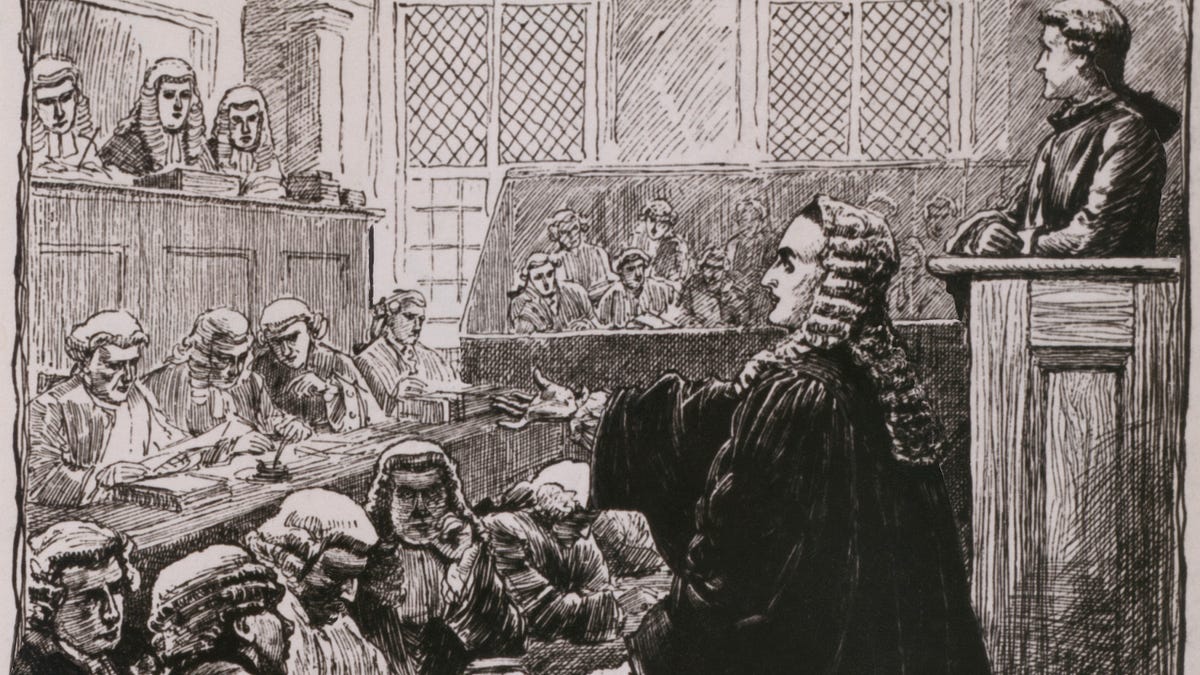
Meta's Legal Team Abandoned Its Ethical Duties
From Big Tobacco to Menlo Park — and the collapse of legal ethics
afterbabel.com
272 points · by shrubby · 10mo ago · 214 comments
Only people ready to do "anything" to optimize their performance rating and team goal are successful at facebook. And remember, facebook only hires smart people. So they do know what they are doing.
Ethics are for the little people, when your stock holdings grow by several multiples ethics are just hindrances.
Afterwards these were returned to the shoal and they started dominating.
Moral development levels by Kohlberg tell a similar story where L1 is the narcissist (Zuck, Trump,...) level. Lobminmows. The current societal level or at least the direction.
L2 is the conventional moral as in the shoal that most of us follow. This level imitates the normal. See Musk as a prime example of the change. You can also revert to L1 by trauma, addiction...
L3 is the post conventional level where you do what's right and can differentiate between normal and right.
So L1 arrested development.
L2 herd moral and narrow empathy. Them vs. us being the right thing.
L3 being universal compassion.
L1 controls the airspace and L2 follows the loudest even though everyone (except the very few who are L1) wants the society to be L3.
So whether we dare to grasp this will decide the faith of our children and also us as the time is running out and the power has concentrated to very few L1.
And IMO the left and the right in the politics are both L2, with minor differences and both have failed us and served L1.
L1 is zillionaire mindset.(Rushkoff and the Mindset) L2 is Banal evil (Hannah Arendt and Banality of Evil) L3 is true ethics or ephics where ethical theory comes to praxis.
Sorry, perhaps bit off-topic but this is fascinating in light of latest news from Greenland and Davos. The current wouldn't have happened though without the help of Zuck, Cambridge Analytica etc.
Their apps also regularly nag you to allow access to stuff like contacts and the photo gallery when you've already said no the first time.
And for a personal anecdote: I was recently helping a senior setup Whatsapp Desktop on her Windows computer. It could chat fine but refused to join calls, displaying an error that said there was no microphone connected. I mean, there is a mic connected and it could record voice notes fine. Turns out that error actually meant that there was no webcam connected, and a webcam is required to join calls. I think it's the same way in the mobile app where you need to give it the camera permission to join a video call even if you turn the video off. Meanwhile Zoom, Teams, Webex, and others allow you to join any call without a mic or camera.
As she didn't have a webcam I first tried the OBS virtual camera but Whatsapp refused to recognize that despite all other apps working fine with it. Somehow Droidcam with no phone connected worked fine, displaying a black screen in the virtual camera feed, and that got Whatsapp to join the call successfully. Absolutely ridiculous and it's clear to me how desperately they want that camera access and that sweet data.
Edit: sorry, not entirely clear, I mean we need Apple's system of granularity. "Deny access to contacts" needs to work even when the asking company (Facebook) tries tricking people
But as a company? Meta has been entirely incapable to innovate since it was renamed. Betting billions on an obviously flawed idea of a Facebook-owned VR universe, then shortly pivoting to a cryptocurrency that ended up being little more than a rugpull, and, after investing billions in expensive AI staff, they're now pulling the plug on that, too
The most successful products like WhatsApp and Instagram were purchased, not internal developments. Nobody cares about Threads and it mostly only exists because Elon Musk destroyed Twitter.
I sure hope Instagram and WhatsApp are bringing in enough money because Meta is running out of things to do, other than milking their current customers dry.
Do they know what they're doing? Do they really?
That is quite clearly not what they are asserting, discussing, or even adjacent to conversationally.
It doesn't help when you're exaggerating to make it have some foundation, and obviously so. (they pivoted from VR to crypto? pulled the plug on AI?)
They didn't offer support for devices that were just 1.5 years old. I will never buy any Facebook hardware again, even if the financial loss isn't important to me. It is a matter of respecting the customer.
If you start with enshitification outright, people might just skip your product.
So it is true, they really do only hire insufferable pricks.
Politicians are notorious for their lack of ethics. Journalists have acquiesced to reprinting police reports and political press releases. Assuming someone unfortunately attains legal standing, the court process is so expensive and tedious it remains unaccessible anyway. This is to say nothing of political corruption or the way criminal proceedings work for people like Meta executives versus the general public.
How do you reconcile this dissonance?
I suppose my concern boils down to the fact that positions like appeals to politicians ends up equating to appeals to empower politicians. This often seems to have the effect of enabling the very big businesses we sought to reign in, and often at the cost of any other alternatives. Rather, I suspect a more productive path would be to seek to remove power from both the Metas of this world and politicians.
[0] “I'm sorry I wasn’t ready ... I wasn’t sure what number you wanted to go with”
- Attorney client privilege is unethical.
- Reducing your legal risk by deleting old data that is no longer needed and no longer on legal hold is unethical.
- Violating laws that say you can't collect data on children is okay to do.
I personally don't see these as bad things. Lawyers will trying and minimize the risk the company is in for violating various laws that exist around the world. I think it is ethical for them to give such advice. I also think attorney client privilege is also a big part of being ethical and saying that it is unethical is just trying to manipulate people's values to the author's benefit.
Generally that lawyers in tech can be both good and bad, but that both the culture at west coast tech companies and how they handle their attorneys often leads to ethical issues that just do not happen in more buttoned down industries elsewhere. In particular many tech companies are just more protective of employees for no discernable purpose. An investment bank faced with a similar situation as the DC v. Meta case would have blamed and terminated the employees and attorneys involved, and trussed them up for prison if needed to protect the company. An oil company accused of faking environmental studies would throw the guy who doctored them under the bus.
This also serves the public interest (although some may disagree) because it preserves a productive company and provides a powerful incentive for management to grind individual corporate criminals into meatballs to protect itself and shareholders.
Meta's instinct was to defend the employee and the illegal activity rather than sacrificing the lamb to protect the company and the shareholders. They are not the only company that does things like this and it just makes no sense. It is something in the water in Northern California that makes them do this or some strange Pacific wind.
The other stupid thing that Meta did was commissioning these studies in the first place. What is the company doing? How does this benefit shareholder value? Is this a jobs program? If you did not like the answers they might give you, you should never have paid a bunch of academics to do these studies in the first place. The company sells digital fent to the masses. Of course it's bad for kids. You don't need a study to tell you that.
It's unchecked greed, that's the thing. It absolutely makes sense if you know you can bring your guy into the office of President - print money and if you break laws and get caught before the President is on your side, use all your resources to prolong the case just enough.
And lo and behold, we saw one Big Tech exec after the other swear fealty to Trump. A mixture of rule by mob (it was literally called the "PayPal mafia") and neo-feudalism.
the article doesn't argue this. It argues that sometimes attorney client privilege can be abused to shield criminal acts and that lawyers and state bar associations have a role to play in preventing those abuses and holding violators accountable, which hasn't happened in this case.
> Reducing your legal risk by deleting old data that is no longer needed and no longer on legal hold is unethical.
It doesn't say this either. It talks about the deliberate destruction of evidence of actual crimes and the intentional suppression of the truth so that people can continue to be hurt.
> Violating laws that say you can't collect data on children is okay to do.
I have no idea where you even got that impression.
The idea is the Meta researcher who said every time they put on a headset, they ended up seeing sexual acts from adults directed at children, was the problem because they were collecting data on children.
This, to me, is the crime. They are purposefully destroying data because they know it poses a legal risk to them. That is different from deleting data that is costing you money and isn't useful to your business. This is also different than counseling them to delete data to avoid problems if there is a security breach. Both of these are valid reasons to delete data in support of the business and in defense of risks associated with holding that data. Counseling that you should delete data because it may be used as evidence against you in a criminal probe though is obstructing foreseeable future investigations because you believe you may be committing crimes. The distinction, I think, is clear.
I agree with you that lawyers should be aggressive about protecting their clients and counseling them but when that counsel is to tell them to obstruct investigations they, to me, are now part of the crime.
I personally don't see these as bad things.
Of course it would break the rules about civility here to directly accuse someone of that. Which makes me want to joke that it's an intentional feature of the site and explains why a VC firm wants to run a tech watering hole.
I don't think it was a useful example since what is happening with Meta is different. It's not like a British soldier admitted to Adams that he murdered someone and Adams shared that fact in court.
Cynically abusing attorney client privilege is unethical and a violation of the powers granted to attorneys by society.
I genuinely hope it's out of: a lack of understanding of legal terms, ethics, and how to read critically. And that it is not trolling.
It's quite stultifying to read as someone who does have those understandings.
It reads as lying at best and trolling at worst, but my red-line is assigning motivation.
Which is a shame, because the article is a good example of what happens when you're cowardly and pretend "reacting to what it is" is "assigning motivation": inter alia, a 17 strike sex trafficker policy, signed off by corporate.
But I don't think the author is correctly interpreting the principles of legal ethics, and their repeated questioning of attorney-client privilege, which I've considered to be one of the foundations of the American legal system, is hard to take seriously.
Also, I don't think their depiction of John Adams's representation of the British soldiers is accurate. From what I can tell, Adams sought only to give his clients as strong a legal defense as possible. In the trial, he called the American protestors a "mob", gave a racist depiction of one of the victims to justify the soldiers' panic, and ultimately saw all but two soldiers acquitted. Adams viewed this as a patriotic act, yes, but only insofar as he believed all accused of crimes in America deserved fair legal representation. He was a lawyer defending his clients, not the judge or jury trying to find the "truth" of the matter.
Yes, this is unethical and also can lead to things like we see in this case where the judge will pierce privilege because it was being abused. But......unless you can prove that is what is going on in the emails, judges are very reticent to pierce privilege.
Any particular reason why you think the author is incorrectly interpreting the principles of legal ethics, including attorney-client privilege?
>Adams viewed this as a patriotic act, yes, but only insofar as he believed all accused of crimes in America deserved fair legal representation. He was a lawyer defending his clients, not the judge or jury trying to find the "truth" of the matter.
I think you misunderstood the point, which was that if Adams had knowledge that the british soldier did have such an intent, he'd be violating his ethical obligations by withholding that information on the principal of attorney-client privilege.
Further reading:
https://dn710108.ca.archive.org/0/items/gov.uscourts.cand.40...
Excerpts:
"And we start with what is perhaps the most succinct acknowledgment of the problem, from a chat between two UX Researchers: "oh my gosh yall IG is a drug... We're basically pushers... We are causing Reward Deficit Disorder bc people are binging on IG so much they can't feel reward anymore... like their reward tolerance is so high... I know Adam [Mosseri] doesn't want to hear it he freaked out when I talked about dopamine in my teen fundamentals leads review but its undeniable! Its biological and psychological... the top down directives drive it all towards making sure people keep coming back for more. That would be fine if its productive but most of the time it isn't... the majority is just mindless scrolling and ads." Ex. 74 at 2152-53."
"One Meta employee warned, "if the results are bad and we don't publish and they leak, is it going to look like tobacco companies doing research and knowing cigs were bad and then keeping that info to themselves? I went... oh." Ex. 91 at 1943."
Attorney-client privilege is always thin with in-house counsel, and it’s a high-stakes, hard-decisions situation both defending and challenging in all cases. The mention of crime-fraud suggests my hypothetical is a tamer than the actual facts considered by the judge, and this may be the real lesson: 5. How do you distinguish between speeding in a school zone and something that requires a fundamentally different response, even one contrary to your client’s goals?
btw, school zones are 20mph or less. It's telling in this analogy that you don't seem to have children of your own?
No, your intuition is incorrect. I often think of the random carnage inflicted by automobiles on bystanders as a model for societal inconsistency, which perhaps was the reason it came to mind for the hypothetical. Tire tracks across the sidewalk, marks on the post, just another risk wanly accepted by society.
Anyway, for a more extreme hypothetical, all you have to do is make the speed more egregious. One answer at 40mph; how high until the attorney walks you to the police station? 250mph? Habitual?
I don't think there's any speed in which an attorney turns you in for the crime of reckless operation since we (society) don't see the risk of harm that didn't lead to realized harm. If you injured or killed someone, you get turned in, but obviously that's too late.
I live on a 25mph street, I often see people traveling at double that speed and there are pedestrians nearly all the time. I've complained to the police only to be told that "it's infrequent so we can't catch them" despite this being a daily experience. I wish we lived in a different reality where these risks weren't so acceptable to the society.
No. Seriously.
Meta buried 'causal' evidence of social media harm, US court filings allege
Meta is far worse than most people realize.
Hi, FAANG engineers
Later in the book, the China story was a close second. In order to get into China (to "grow") - exec team agreed to host Facebook's servers in China where the government could get access to customer private data, so they could stifle dissent.
Tons of other weird/bad/embarrassing stuff too. The author, a member of the core executive team, was seriously complicit but redeemed herself in my view with this no-holds-barred account of the complete lack of ethics up top.
In general a damning portrait of the executive team as just not giving a shit about anything except for growth and willing to actively participate in dictatorship in order to make it happen.
Sheryl Sandberg comes off poorly too, calling her assistant "Little Doll," beckoning her to sleep in her lap during private jet trips and buying her lingerie on business trips. Then on another trip she tried to get a different employee to come cuddle and sleep in the jet bed with her and pouted when this person declined, saying the first assistant always would so why does this person have a problem with it. She also has racist comments, talking about how she likes to always hire Filipino nannies because they are "service oriented."
I don't know how to educate other parents to encourage more controls. Most are too busy to care it seems, the kids are content with their brain rot etc. I hate that these companies turn me into a villain with my kids because they produce hyper addictive crap without any constraints.
Thankfully I don't have the FOMO part with my kids - they all seem to understand the reasoning and seem pretty fine with it - none of them have ever asked for TikTok for instance. We recently went to a family gathering though and I was genuinely shocked to see one toddler, barely able to speak, left alone with TikTok on a phone, just swiping away for hours.
There is a happy medium between "brain rot for hours" and "absolutely zero".
I'm sure folks will come out of the woodwork to say that this isn't relevant as it was 20 years ago and Zuckerberg was just a wee lad at the time. However, I've never seen any evidence that Meta's attitude towards its users has changed since this quote was written. Every new Meta scandal just helps keep this thing relevant for another year or two.
It’s worse than that, it’s like bringing a knife to a fight against an entire army equipped with all the latest and greatest weapons of the day.
Every last one of them should be rotting in jail, but that ain’t good for the ol GDP which is more important that peoples lives.
[1] https://www.vice.com/en/article/unitedhealths-alleged-plan-t...
It's like a video game where the more depraved your thinking is, the more money you make off it, and the rest of the characters sit around like NPCs and just let it happen. Well, maybe they don't, but when they pull a Super Mario Brothers trick the entire state apparatus is used to track them down and imprison them.
Well, I mean, except for large, systemic ramifications that affect everyone in society, but who's counting?
They live in private neighborhoods with private security guards and send their kids to private schools. Once they get enough money they fly on private jets and go to private islands to private parties that you're not invited to.
Simply put the consolidation of wealth in a very small percentage of the population always leads to outcomes like this. These people become completely disconnected from the reality that 98% of the rest of their country lives in.
When I speak with overseas friends there's often a sense of "of course" or "reasonable" moral lines in the relationship between their culture and where capitalism can't tread. That seems completely gone right now in the US, though it's been heading in that direction for decades. It was mediated by social constructs that have since been completely eradicated.
EDIT: Always interesting to watch comment points go up and then come down.
Why is there a requirement for consequences to act moral? If I have to have a threat of punishment to be good, then I'm not being good and it's all transactional.
There are two populations: population A is those who prefer ethical behavior internally and would volunteer for it even if not compelled. Population B is those who don't prefer ethical behavior internally, wouldn't volunteer for it, and must be compelled to act ethically from without if they are to act ethically at all.
In a landscape that impartially disincentivizes unethical behavior, both A and B can coexist.
But in a landscape that DOES NOT impartially disincentivize unethical behavior, everyone acts the same as before—unless there's a benefit to acting unethically. In which case, A, those who prefer to be ethical for its own sake, will inevitably be outcompeted by B, those who engage in any behavior regardless of ethics, so long as that behavior confers advantage.
Enough of that on a long enough time scale and the voluntarily ethical population just disappears.
So, either we enforce ethical behavior (even on those who need no forcing), or we create an unethical free-for-all waiting to happen.
In some cases the "waiting to happen" stage can last a surprisingly long time. Centuries, maybe. But never, as long as B's exist and are free to act, without end.
See, most people don't want to murder and kill other people. For them we don't need to make laws saying murder is wrong and we'll hook your ass to ole'sparky if you proceed to do it.
For you, we do need to make that law so you have to think twice about carving people up like cantaloupes, and for dealing with those that do break the law.
A lot of law is the encoding of moral and ethical behavior. We didn't have the law, some people acted immoral, then we made the law to punish said behavior. For many people this pushed them away from the grey area between legal behavior that is immoral because if they act unethical new laws would be developed to punish them further (and people wonder why we have so many laws in the first place, quit acting like shitheads and we won't).
>then I'm not being good and it's all transactional.
Hurray, you've realized there is no god and the physical world we live in is built on cause and effect, thank you for catching up to the 20th century.
Cause: "you act good"
Effect: "I don't crack open your head and eat the tasty goo inside while screaming like a primate, since acting good allows us to build societies that have benefits for us all"
Morals are not universal; different people have different morals. Ancient Greece would not have batted an eye at relationships that we consider pedophilia. Slaves were kept in various societies over time, as recently as 6 generations ago, with varying levels of "morality" attributed to the practice.
I see what you did there :)
This is at the crux of everything in America. There are zero punishments for corporations and executives but there are bureaucratic lock ins for "customers".
And the answer is not merely regulation. Why shouldn't I be able to switch health insurance at ANY time? If I am unsatisfied with United Healthcare, I should be able to get anything else right away. Why impose laws on me?
If someone could get the cheapest plan when they're healthy and then go switch to the best plan as soon as they started getting sick with something, everyone would do exactly that.
Insurance companies are required to accept patients regardless of pre-existing conditions, so there has to be something counter-balancing that to prevent people from only getting good insurance when they plan to use it.
This really is a problem only the government can solve, by continuously auditing coverage decisions at random, and sufficiently penalizing the companies that understaff at best, and intentionally deny or delay payment at worst.
Currently, years might go by until CMS audits the company, and even then, there are no consequences. Try arguing for a higher budget for more $400k doctors and $200k pharmacists in this environment.
The current situation is because one company can lower premiums by reducing quality of service, all the other ones have to also, and the buyer rarely buys on anything but price since it’s usually a third party buying it, like an employer.
Hold short. They already lost a CEO to an act of revenge at the end of '24... and still didn't think that maybe they should stop, reflect on themselves and cut down on the BS before the next CEO catches a bullet?
I'm not sure if it's audacity, ignorance or stupidity that's at play here.
Why anyone thought that applying laws of shareholder capitalism to health insurance was a good idea is beyond me.
The idea itself of using the one thing capitalism is actually good at - achieving the lowest possible cost in the short term - isn't that bad.
But while that may work out for consumer goods... it's not a good thing to have in healthcare, because here are actual human lives at stake.
But it's not about GDP. It's about shareholder value which is absolutely not representative of the whole population.
Extreme greed is now part of US social contract, top to bottom, and has driven the whole society to madness sadly.
But otherwise your point is correct
https://rooseveltinstitute.org/publications/uber-for-nursing...
If you actually look at the data, the vast majority of expenditures in medicine are the last few months of life. Paying ~500K to 1M to extend life ~6 months so you can spend the time hooked up to tubes and passing in and out of consciousness to deal with the pain is NOT HUMANE.
Ascribing this to just "US companies" is a cop-out or a cope. The US is in complete social collapse across the entire spectrum of society.
I am coming at this from a right-wing perspective.
That is a ship that sailed a long, long, long time ago.
Alas.
He was in hot water and got adopted by the other techno super villains that brought us to this timeline.
(I use the second one as an example, without reference to anything specific, but the first one really did happen. Jason Calacanis talks about it in his interview on Lex Fridman)
At best, you can indoctrinate people with a religion, conventional religion or a modern ascetic stoic humanist religion.
But its silly to think that religion is going to stop 100% of the population from doing anti-social things.
This might be strange to hear, but people have different and conflicting values. The worker at Meta might have a life goal to help society, the executive might have a life goal of making lots of money. These conflict, and its overly optimistic to rely on individual ethics to create a good world to live in.
Now I'll give an example: Should affairs be punished? Currently, there are plenty of US states that don't have laws on this. However, there may be something to be said about having a contractual agreement that penalizes this. If there is no contract, then it doesn't matter.
We can enforce pro-social values, we don't need to rely on individuals being wholly good.
Zuckerberg's only saving grace by now is that he's not the only despicable billionaire.
Well - capitalism nullified that. You need money - and connections - to win for many cases in court. So it is more of a milking game than "the old ideals".
> today’s legal ethics codes still speak of lawyers’ threefold duty: to the client, to the court, and to the country
This creates a conflict of interest. If the lawyer thinks he is not responsible for winning the case, then a defendent should be able to defend himself or herself in court. Though this leads to an automatic loss, let's be honest. The current system is designed to make the courts and lawyers rich(er).
> Imagine if Adams had decided that defending his clients meant winning at all costs.
So why should this matter for the client? Why would Adams be allowed to be lazy and lose? How is that a winning strategy for the client?
> Meta lawyers ordering evidence of child exploitation destroyed
Well - people made Facebook rich. That was a big mistake on their behalf. Now children suffer - perhaps you should not have made Facebook rich in the first place.
> These lawyers collapsed Adams’ threefold duty into one — serve the client alone, whatever the cost to the courts and the country.
I think Facebook should be disbanded, but I fail to see why the lawyers should consider "courts and the country". That makes no sense. Then again I also don't think corporations should have persona-rights either - the whole system is not fair.
> Meta’s attorneys have forgotten that the law’s legitimacy derives from the integrity of those who practice it.
Except that the rich have always gamified the system. Look at Trump.
The whole focus on Facebook here makes no sense. This is a systematic problem. Question the whole system. It is basically legal corruption.
> Holding Meta accountable includes holding its lawyers accountable
They know they work for evil but they get money that way. So the question is: why does evil pay so much money? The whole system is geared towards that.
> The truth will out for Meta’s lawyers — eventually — as happened with Big Tobacco’s
I am not sure this can be compared 1:1. Tobacco lied about cancer and smoking.
I don't think Meta faces the same problem, even if they ruin people's life. The data just isn't as clear as for smoking.
The whole article is really weak. I'd be the first to chop down Facebook, Google etc... and split these up for evil, but you need to write good articles as to why. That article seems superweak. The comparison to Big Tobacco simply don't apply 1:1. And being an evil lawyer in itself does not invalidate a case, even if their rationale for throwing out cases is also garbage.
Can you imagine if you ask an engineer "what's your opinion on the maximum load this bridge can take?" he answered "for a fee, I will claim that my opinion is what you tell me". In any other profession this would be corruption, but when it comes to lawyers that's their job. Intellectual prostitutes.
When we talk about lawyers for companies and billionaires it's a completely different game.
Remember last time a lawyer said they wouldn't represent facebook because they didn't necessarily believe their innocence? Right, never happened. Because on that league, the game is to twist the meaning of words so much that the judge starts to doubt he understands the law himself.
Thanks for reinforcing my point.
To be fair, the deviation from the truth an expert witness may grant tends to be bounded. Whereas the deviation a lawyer may attempt is unbounded. In many cases the bounds don't matter much as the case contains sufficient uncertainly to be a contest of spin targeted at the psychology of the jury.
If you do that ethically, fine. If you're not sure if it's ethical, try anyways. If it's unethical, do it. If it's illegal, do the cost-benefit analysis of what the punishment would cost the shareholders.
That's how these people think, and it's a direct threat to the liberty and well-being of our society.
EDIT: Downvote me all you want, but look around. That's how many of the people at the top of companies think as evidenced by their companies' behavior.
That's a choice, not a law of nature. We can make law that changes that. Individual executives can push back. Society at large can change norms and expectations.
Why would we choose the nightmare world where profit must come first?
The only reason you hear this argument deployed seriously is when the person saying it has their own motivations for wanting profit to be supreme.
People can downvote my original comment all they want, but understand, that is the mindset of people like Mark Zuckerberg. Make money any way possible.
Readers reading the first sentence are probably downvoting immediately thinking that's your PoV.
If the laws make Meta somehow possibly responsible for child abuse happening on Roblox, and the legal team protects them from this, I think the legal team is on the ethical side.
> Holding Meta accountable includes holding its lawyers accountable
Wow. Just wow.
> On October 23, 2025, a judge in a separate case validated what the whistleblowers and court documents had described. Invoking the rarely used crime-fraud exception to pierce Meta’s attorney-client privilege, District of Columbia Superior Court Judge Yvonne Williams found Meta’s lawyers had coached researchers to hide, block, and sanitize studies on teen mental-health harm in order to shield the company from liability. Judge Williams determined there was probable cause that these communications were “fundamentally inconsistent with the basic premises of the adversary system.” [emphasis mine]
Yes, the lawyers are totally in the clear here.
We need brutal, public executions for people like this.