Introducing Forge | Mistral AI
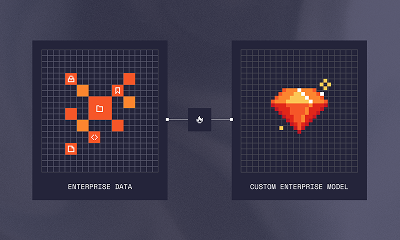
Today, we’re introducing Forge, a system for enterprises to build frontier-grade AI models grounded in their proprietary knowledge.
Mistral
733 points · by pember · 8mo ago · 193 comments
I think, devstral-latest should be it, no? So I write to support and get an answer 12 hours later that says oh, no, devstral 2 is definetely called devstral 2 and then a page of instructions on how to set it up in Intellij... generated with AI. The screens it is refering to don't exist and never did.
devstral-2512 devstral-latest and devstral-medium-latest are all devstral 2 https://docs.mistral.ai/models/devstral-2-25-12
labs-devstral-small-2512 and devstral-small-latest are devstral small 2
devstral-medium-2507 is devstral 1.0
and devstral-small-2507 is devstral small 1.1
Or it can just be a Google like problem where a big company one part doesn't talk to the other.
How? The largest providers that are trying to win devs are locked in a competition to get the devs to continue using the models for free!
The best way to win B2B contracts is to solve the problems that plague business, not those that plague devs. The devs are fickle, have no stickiness and will jump providers to the next free provider, to self-hosted, etc.
Selling to business using Mistral's approach is, I feel, just a good business plan.
"Giving away some credits for free, then making a loss on subscribers" is an absolutely terrible business plan.
This is really why Mistral has any support.
The models are bottom barrel, but its the best Europe has...
Although you could use Chinese models on European servers.
Not everyone is obsessed with code generation. There is a whole world out there.
The problem they have is that this is not a moat - their approach is easily reproducible.
If they can pull ahead in having the most number of pre-trained models (one for this ERP, one for that CRM, etc) and then being able to close sales to companies using these products and sell them on post-trained (give us your specific ERP customisations and we'll give you access to a model that is tailored to your business), then THAT is a moat.
But they need to do this without fanfare. Just close sales, and keep closing, basically. After all, even if other AI providers copy the process, the moat would already have been established for Mistral.
My 2ct: Currently the moat may be that they are not US-American which is not reproducible by any of the US alternatives.
I hope you are right (I am in the process of finalising a product and one of the top-5 selling points contains "outside the jurisdiction of the US"), but in my experience, companies only pay lip service to ethics unless it hits their bottom line.
Companies will use US ai models without issues in a few years.
I have not seen that, actually. I still see most companies who want to jump into AI for the business sort of try RAG, but more often they just buy Chat accounts for their users.
The only place that harnesses appear to be used is in software development, but most companies aren't doing that either.
Isn't the entire deal with LLMs that they are trained as megaliths? How can bespoke modelling overcome the treasure trove of knowledge that megaliths can generically bring in, even in bespoke scenarios?
When generating images most services will have a small agent that rewrites your request and hands it off to the generative image model.
So from the treasure trove point of view, optimized agents have their place. From companies building pipelines, they also have their place.
Right, but this was done to value-optimize the product, i.e. try to always give you the shittiest (cheapest) model you can bear, because otherwise people would always choose the smartest (most expensive) model for any query.
Taking away the model choice from the user introduces a lot of ways to cut down costs, but one thing it does not do is make the product give users better/more reliable answers.
Think of it as a base model (the megalith) which then has the weights adjusted towards a specific use-case (SAP, for example).
They (still) are. https://news.ycombinator.com/item?id=47404796
Their API is consistently among the most used on OpenRouter. While I can’t vouch for it myself, I think this is a decent proxy for capability. You can definitely see glimmers of greatness in their chat interface, it just feels like the system prompts are focused on something that doesn’t interest me.
Its just not good. Its bottom floor for LLMs.
What? That's just demonstrably false. The market doesn't consist of 5 providers.
Free Chinese models are better than it.
I have been finding Voxtral useful though.
In particular, Haiku 4.5 detected some footers that were on every page and moved them to be the footer at the end of the entire document instead, so that the document read more fluently.
I imagine Mistral OCR 3 might have an edge on speed & pricing, but in my low volume / prioritizing-quality case, seems that Claude is still better than Mistral.
next, it sounds like it's going to be .eu
but what about ai.eu
oh, .. why?
> Post-training methods allow teams to refine model behavior for specific tasks and environments.
How do you suppose this works? They say "pretraining" but I'm certain that the amount of clean data available in proper dataset format is not nearly enough to make a "foundation model". Do you suppose what they are calling "pretraining" is actually SFT and then "post-training" is ... more SFT?
There's no way they mean "start from scratch". Maybe they do something like generate a heckin bunch of synthetic data seeded from company data using one of their SOA models -- which is basically equivalent to low resolution distillation, I would imagine. Hmm.
Post-training means everything else: SFT, DPO, RL, etc. Anything that involves things like prompt/response pairs, reward models, or benefits from human feedback of any kind.
i.e.:
1. Do I start with an RLHF tuned model, "pretrain" on top of that (with adapter or by freezing weights?), then SFT on top of that (stack another adapter, or add layer(s) and freeze weights?) (and where did I get the dataset? synthetic extraction from corpus?), then RL (adapter, add layer(s) and freeze?)
2. or do I start at SF tuned model, ...
3. or do I start at raw pre-trained model, ...
Would love to know what the matrix used was.
Pre-training: refining the weights in an existing model using more training data.
Post-training: Adding some training data to the prompt (RAG, basically).
I like a lot what they are doing and I'll be watching them a lot more closely. I'd love to work for them btw!
https://denverite.com/2026/03/12/ai-recycling-facility-comme...
You could take a model like the one referenced in the article, retool it with Forge for oh I don't know, compost, and use it to flag batches that contain too much paper for instance.
These kinds of applications would work across industries, basically anywhere where you have a documented process and can stand to have automated oversight.
But the OP's blog is more about ZK than about NFTs, and crypto is the only place funding work on ZK. It's kind of a devil's bargain, but I've taken crypto money to work on privacy preserving tech before and would again.
Being able to just train a model on all of our domain knowledge would, I imagine, produce much better results.
So it'd be alive in the making decisions sense, not in a "the technology is thriving" sense.
> Of course you would have to set a temperature of 0 to prevent abuse from the operator, and also assume that an operator has access to the pre-prompt
Doesn't the fact that LLM's are still non-deterministic with a 0 temperature render all of this moot? And why was I compelled to read a random blog post on the unsolved issue of validating natural language? It's a SQL injection except without a predetermined syntax to validate against, and thus a NP problem we've yet to solve.
It's certainly different data, but one could argue that real humans have been trained on 3.5 billion years of evolution data.
I'm probably really out of date at this point, but my impression was that fine tuning never really worked that well for knowledge acquisition, and that don't variety of RAG is the way to go here. Fine tuning can affect the "voice", but not really the knowledge.
It's feasible for small models but, I thought small models were not reliable for factual information?
Foundational:
- Pretraining - Mid/post-training (SFT) - RLHF or alignment post-training (RL)
And sometimes...
- Some more customer-specific fine-tuning.
Note that any supervised fine-tuning following the Pretraining stage is just swapping the dataset and maybe tweaking some of the optimiser settings. Presumably they're talking about this kind of pre-RL fine-tuning instead of post-RL fine-tuning, and not about swapping out the Pretraining stage entirely.
I recall that even at Google - with its own search engine and so on - the best way to understand anything was to read code or to reach out to those who wrote them. I don't know how it works in places that work with the "real world" like ASML.
Often the issue is not even about documentation - it's just that it's extremely hard to include all the nuances in text and still have it be readable (code-documentation comes to mind).
Interestingly, I strongly feel that this also where LLMs (and some of our more textually-obsessed academics) fail.
Are you suggesting that it's an aberration that from ~2019 to ~2026 the AI field has been working on general intelligence (I assume this is what you mean by "achieving benevolent knowledge")?
Personally I think it's remarkable how much a simple transformer model can do when scaled up in size. LLMs are an incredible feat of generalization. I don't see why the trajectory should change back towards specialization now.
Don't get me wrong, general intelligence will always be important and should be a part of specialist models to a degree for understanding, but it doesn't make sense to use an 800B+ parameter model to help write an email or do research on company trends. Hell, look at what China has been able to do. Qwen 3.5 9B, exceeds Claude 3.5 Haiku and nears Sonnet 3.5 levels. The 27B variation of Qwen 3.5 is superior to both in many ways and even rivals newer models. There is obviously an inherit lag behind, but we will gradually see a shift as these models become more capable.
Right now we are chasing 1-2% improvements at the cost of billions. Local are already absurdly capable (more and more by the day - same with cloud ofcourse) and smarter than most people in specific areas. To do most jobs, can we honestly say it requires a PhD or higher level understanding to perform? We're chasing something that is becoming more and more not needed from a general day to day perspective. AGI is outstanding, but not practical (at least today). I think we'll get there anyway at our current trajectory (though dangerous), but I suspect things will shift.
That said I think we will see more efforts also on the business side to have models that can help you build a knowledge base in some kind of standardized way that the model is trained to read. Or synthesize some sort on instructions how to navigate your knowledge base.
Currently e.g. Copilot tries to navigate a hot mess of a MS knowledge graph that is very different for each company. And due to its amnesia it has to repeat the discovery in every session. No wonder that does not work. We have to either standardize or store somewhere (model, instructions) how to find information efficiently.
I am a simple stupid Le Chat user with a small mind and the Tredict MCP Server connected to it (to Le Chat, not my mind), which works ok-ish. :-)
Dissapointing.
Would love to take it for a spin, if that is even possible.
Is it possible to retrain daily or hourly as info changes?
... for humans.
...learn a thing or two from NVIDIA or gtfo
> Mistral AI has already partnered with world-leading organizations, like ASML, DSO National Laboratories Singapore, Ericsson, European Space Agency, Home Team Science and Technology Agency (HTX) Singapore, and Reply to train models on the proprietary data that powers their most complex systems and future-defining technologies.
When you can actually represent somebody like the ESA get in touch with them. Otherwise, uh, gtfo.
the naming mess is wild though. i ran into similar confusion trying to set up mistral for a side project — ended up just guessing which endpoint was the right one