608 points · by decimalenough · 8mo ago · 963 comments
In the fantasy imagination of some people, they really think you can take out some military targets of another country and then the oppressed masses will magically revolt, as they completely ignore the failed revolution just a month prior. Surround yourself with enough of these people while excluding and firing those who don't and this is what you get.
Normally this would have been the end of it, lessons would be learned, and strategic directions adjusted. Instead the game was reset and the Iranian side was handicapped to prevent them from doing various things, effectively imposing a scripted result. This led to the US winning by an overwhelming margin and somehow the results of this rigged game were used to align strategic initiatives moving forward.
In modern times we increasingly seem to have entered into an era where people are willing to believe what they want to believe, rather than what they know to be true. And while it's easy to mock politicians and the military for this, this is also a mainstay of contemporary political discourse among regular people, including those who fancy themselves as well educated, on a variety of controversial issues.
I don't know what started this trend, but it should die. At least in terms of war it's self correcting. The US can't handle many more botched invasions or interventions, and I suspect we're already beyond the point of no return in terms of consequences of these errors.
[1] - https://en.wikipedia.org/wiki/Millennium_Challenge_2002
> Normally this would have been the end of it, lessons would be learned, and strategic directions adjusted. Instead the game was reset and the Iranian side was handicapped to prevent them from doing various things, effectively imposing a scripted result. This led to the US winning by an overwhelming margin and somehow the results of this rigged game were used to align strategic initiatives moving forward.
Wargames aren't like laser tag matches where one side wins and then it's over, the point of them is to be a training exercise. It's supposed to be closer to D&D than anything, where the person playing the opposing forces plays a similar role to the DM. If you look at interviews from other MC2002 participants, essentially what happened was that the Navy wanted to practice for an amphibious landing. Due to how they moved their ships, the computer running the simulation thought that the entire naval fleet had been instantly teleported right next to a massive armada of small boats that Van Riper had set up, without simulating what would have happened if the naval fleet had seen the enemy ships in the distance. Additionally, in real life Van Riper's fleet could not have held the missiles that he had told the computer they were carrying and now firing at point blank range at the Navy. The simulator that ran the US naval ships' defenses was also not functioning due to the engagement happening in an unexpected area, so it was turned off. Van Riper was able to sink the ships and defeat the navy within the bounds of the simulation, but not in a way that could have happened in real life.
This is basically like if I found an obscure sequence of chess moves that caused the Lichess server to crash and declare me the winner, then used it to beat a bunch of grandmasters, then went on a media tour saying that this proves that there's some massive flaw with how chess strategy is being taught.
The only big surprise was a rapidly closed engagement zone but even that absolutely could happen in real life, even if through different means. Ukraine's early success with suicide boats was precisely because they were unexpected, undetected, and able to get into range rapidly. If they had simultaneously deployed them at a much larger scale, the results would have essentially been a repeat of MC2002.
And more general, the discovery the 'Iranian' general in MC2002 made, some 24 years ago now, is that the future of warfare wasn't going to be giant behemoth vessels, but lots of really cheap asymmetric systems - another thing that the Ukraine war has demonstrated beyond any doubt. Had this lesson been learned it's entirely possible that the US could have ended up on the forefront of advances in war instead of finding itself in a scenario where the bleeding edge of a trillion dollar military budget is literally just cloning Iranian drone tech.
But you're presenting very specific technical claims (that the boats couldn't physically carry the missiles, that the fleet was "teleported" next to the armada, that the defense simulator was "turned off") as though they're established fact. None of that appears in any sourced material I can find. If you have sources for those claims beyond "interviews from other MC2002 participants," I'd genuinely like to see them.
More importantly, you're glossing over the part that actually matters: what happened after the restart. Red Force was ordered to turn on their anti-aircraft radar so it could be destroyed. They were forbidden from shooting down approaching aircraft during an airborne assault. They were told to reveal the location of their own units. The JFCOM's own postmortem report stated that "the OPFOR free-play was eventually constrained to the point where the end state was scripted."
Even if you accept that the initial result was partly an artifact of simulation quirks, the response wasn't "let's fix the sim and rerun it fairly." It was "let's force a Blue victory and use that to validate the concepts we were supposed to be testing." Van Riper's complaint wasn't just that he won and they took it away. It was that a $250 million exercise was turned into a rubber stamp.
Your chess analogy would be more accurate if, after your opponent crashed the server, the tournament organizers restarted the game but told you which pieces you were allowed to move, then published the result as proof their strategy was sound.
The problem is that the wargame demonstrated that it ended up with the extinction of the Northern Hemisphere every single time. We didn't then change the rules of the game to make it so we could still play nuclear games and come out okay, but instead took this as a major wakeup call. It directly led to a shift in US policy towards the USSR of coexistence, de-escalation, and some degree of reconciliation. Within 7 years the first McDonalds would open in the USSR, and the entire Soviet system would collapse in under a decade after the shift of the strategy driven entirely by this wargame result.
Gen. Van Riper's tactics were apparently discredited in 2002 because they were unfair, but Iran seems not to have received the memo since their moves bear more than a passing resemblance to his.
This is not what Wikipedia's summary describes. Now, maybe Wikipedia has the wrong summary, but according to it the challenge wasn't "discredited". By that point the exercise was over, but 13 more days were budgeted for, so the analysts requested their forces to be resurrected so they could play out the rest of the days, with artificial restrictions so that the rest of the challenge was effectively scripted and left no room for the OPFOR to try novel tactics.
One of the generals (of the blue team) is quoted as saying: "You kill me in the first day and I sit there for the next 13 days doing nothing, or you put me back to life and you get 13 more days' worth of experiment out of me. Which is a better way to do it?"
Also:
> The postmortem JFCOM report on MC02 would say "As the exercise progressed, the OPFOR free-play was eventually constrained to the point where the end state was scripted. This scripting ensured a blue team operational victory and established conditions in the exercise for transition operations."
Of course this means learning the lesson of how the first defeat happened. You reset so that you can learn more lessons. If they ignored the lesson of the first defeat, that's stupid. But the reset itself makes sense.
who rigs the results of a war game and believes the results - only an idiot drunk on power.
It's very interesting that you can look at the situation and say the war game where Iran destroyed the US navy is "not entirely unlike what Iran has done during our invasion" though. I guess in the end different people perceive the reality differently.
A smaller point: all military exercises are heavily scripted--it's more or less impossible for them to be otherwise, as you just can't simulate the details of war that matter without actually killing people, breaking things, and giving up your secret game plans. Usually the goal of this sort of thing is to make sure that everything (people, equipment, doctrine) works together more or less as intended, and people have the experience leading and operating in larger units than they do on a routine basis. The PR people then spin it into an unqualified and historic success, validation of our technology and tactics against the forces of evil, blah blah blah. It is still very difficult to draw the right lessons from these sorts of things--even more so when the civilian leadership of the military has 99 things to consider besides a certain kind of pure military effectiveness (and although I have strong feelings here, we're still doing quite well on the tactical and operational levels in spite of everything).
Fun fact: the Millennium Challenge is still taught as a case study in basic officer training, at least in the Marine Corps (well, probably--it definitely was a little over a decade ago).
Are you saying that Iran is capably fighting and killing US personnel, aircraft, and invading infantry?
I am a little confused about the universe you live in. The IRGC and Basij effectively do not have a chain of command and are effectively moving and acting by momentum, essentially no different than a dead man walking.
Do you know the names of any alive people in the IRGC chain of command? Have you seen videos or evidence of IRGC doing anything to harm US forces other than lob some stuff and hope it hits? Where are the Islamic Iranian armies and navies you imply to exist?
This was by design via the mosaic defense tactic.
They know the US prides itself on decapitation strikes, "taking out the leader of x" was a monthly headline during our time in Iraq, Afghanistan, and during the events of ISIS/syrian civil war. It's how the special forces operated, taking out a "leader", collecting all the names they could find in their possession, and taking those guys out. In the later days of Afghanistan, they stopped even trying to find out who the names were. If you were some mid-level Taliban member's dentist, you'd be fair game.
So Iran built a defense for that, a military that does not need a central command to continue fighting. They have their orders and they'll continue to carry them out. Completely bypass the benefits of highly accurate munitions, cyber intelligence, etc.
That's the same reason the first round of the Millennium challenge won outright. The red-team leadership knew to not expect last year's war today, and used their brains to exploit the weaknesses of a highly mechanized and sophisticated military.
There is no reason to believe that
They have been training for decades for exactly this sort of war, and have experienced veterans at all levels
The US has turned into a Wall-e society just getting off on entertainment and bored with civilized, thoughtful politicians. This is the end result of TOO MUCH prosperity for the average American.
They haven't experienced true hardship in generations and we (the rest of the world) is paying the price of their hubris.
https://www.onthewing.org/user/Bonhoeffer%20-%20Theory%20of%...
They are not intelligent.
People seem to think that intelligence can be isolated. Its not. People can fake intelligence through memorizing a bunch of facts, but that's not intelligence. Every part in a persons mind influences every other part.
And its easy to test as well. Nobody who is hard conservative can answer this simple question - "What concrete, hard evidence would you need to see for you to realize you have been wrong and change your stance on which party you support?"
Its along the same lines that any stupid person doesn't realize they are stupid - if they did, they would know the differentiator between smart and stupid and thus can become smart.
>Israel could force the United States into a war with Iran at any time.
>It should go without saying that creating the conditions where the sometimes unpredictable junior partner in a security relationship can unilaterally bring the senior partner into a major conflict is an enormous strategic error, precisely because it means you end up in a war when it is in the junior partner’s interests to do so even if it is not in the senior partner’s interests to do so.
This situation is not just because we elected a clown, these people donated hundreds of millions to Trump's campaign (Miriam Adelson, Sheldon Adelson, Larry Elison, etc). The same lobby (the Israel lobby) has contributed hundreds of millions more to almost every US senator, to the point that both political parties are pretty much aligned when it comes to serving Israel. There are plenty of politicians in the Democrat party who are quietly supporting this war because at the end of the day they've been bought by the same lobby.
Kamala (the alternative candidate in the 2024 election) has her own ties to Israel, and publicly said "all options are on the table" to prevent Iran from getting a nuclear weapon. Which means had she won the election she likely would have also invaded Iran.
It goes beyond just who we elected, it's huge sums of money flowing through our political system and effectively buying our politicians.
Your second sentence doesn't necessarily follow from the first. Obama had similar words to say about Iran during his administration and never invaded.
No president has ever been this fucking stupid.
I disagree strongly with this assertion. But for sake of argument, let's assume it's true: American politics is permanently captured to Israel's interests.
That still doesn't explain this war. "I think most folks understand that this war was a misfire for the United States, but I suspect it may end up being a terrible misfire for Israel as well. Israeli security and economic prosperity both depend to a significant degree on the US-Israeli security partnership and this war seems to be one more step in a process that very evidently imperils that partnership. Suspicion of Israel – which, let us be honest, often descends into rank, bigoted antisemitism, but it is also possible to critique Israel, a country with policies, without being antisemitic – is now openly discussed in both parties. More concerning is polling suggesting that not only is Israel underwater with the American public, but more Americans sympathize with Palestinians than Israelis for the first time in American history."
If, on the other hand, we acknowledge "Netanyahu...is playing an extremely short game because it benefits him politically and personally to do so," we can allow for similar levels of narcicism and stupidity in the U.S.
Wow, what an insult, to call her as stupid/cheaply buyable as Trump.
I'm pretty sure she wouldn't have had an alcoholic wife-beating former Fox teleprompter-reader who would not have been able to tell her why it'd be a catastrophe to start bombing Iran... As weak Biden was/appeared to be, at least he had a competent team (ok, it wasn't competent enough to pushback against Adolf Netanyahu).
Probably Harris would've tried to restore the Obama-Iran deal like Biden did (https://en.wikipedia.org/wiki/Iran%E2%80%93United_States_rel...), a job that Biden failed because a particular fuckwit fucked it up before him...
> So Iran would now have to assume that an Israeli air attack was also likely an American air attack. It was hardly an insane assumption – evidently according to the Secretary of State, American intelligence made the exact same assessment. But the result was that by bombing the Iranian nuclear facilities in June of 2025, the Trump administration created a situation where merely by launching a renewed air campaign on Iran, Israel could force the United States into a war with Iran at any time.
First, this "both sides bad" take isn't fooling anyone. Everyone sees through your bullshit that you are pro Trump. Like its easy to tell from just this comment, but if anyone thinks Im being super presumptions, feel free to looks at your comment history and you will see Im right.
https://news.ycombinator.com/item?id=46890675#46891294
Secondly, the shitty thing for you is that the conservatives in charge have shown themselves to be just very inept. They could have honesty just rode the rest of Trumps term in silence, and Trump would still have been very popular despite the tarrifs, but they had to fuck it up in the most grandeur way possible of starting a new war.
Which means that Republicans are going to lose the support of the average person who is clueless about politics, and can vote one way or another based on vibes, and
Which means Dems are likely going to take a lot of the power back. At which point, it will become socially acceptable to "punish" conservatives and pro Trump people. There is already work going on to process internet comments and extract patterns of speech to cross correlate them across varying accounts on social media to id certain people, and if id'ed you better believe your work, your family, your friends, and whomever else you are going to be connected to are going to get spammed and your life ruined as much as possible.
So Imma be the nice guy and tell you to tighten up you OPSEC because you are doing an extremely poor job at it.
To be fair, one can find plenty of analysis positing everything for the Middle East. The pointed criticisim is, in Devereux's words: "Iran would thus need a ‘lever’ closer to home which could inflict costs on the United States. For – and I must stress this – for forty years everyone has known this was the strait. This is not a new discovery, we did this before in the 1980s."
1) Every authority figure is telling the Iranian people to stay inside and wait.
2) Revolutions don't happen overnight, the same way that businesses don't succeed overnight, even though from far away it might seem that way.
3) Official Israeli statements estimate it could take up to a year after the war is over for a successful overthrow, even if everything is going according to plan.
The truth is there's a lot of people who want this war to fail, because it will align with their political convictions and hopes.
Last week: "Our aircraft are striking terrorist operatives on the ground, on roads and in public squares. This is meant to allow the brave Iranian people to celebrate the Festival of Fire. So go out and celebrate...we are watching from above," Netanyahu said, speaking from air force headquarters.
It is working on making itself larger cleansing whole areas around it and settling it.
And I'm not sure most of those realise how delusional they were, even now. They will probably rewire their memory to forget what they believed 3 weeks ago, compress the time they were wrong.
I initially thought the 'manufacturing consent' part of the war was botched, unlike Irak, but now to me it seems that people are much more susceptible to propaganda disguised as 'almost true' information on social media, and I am afraid I might be in the same boat.
A few more sceptical voices brought this up, and were told repeatedly that it didn't matter because the Kurds in Syria and Turkey are very different from those in Iraq & Iran.
And there's certainly something in that - but it ignored the clunkingly obvious point that, if America had been thinking at all strategically, a bit more support of Rojava and would have demonstrated to all Kurds that "looking west" would be rewarded.
It has to be hard for Americans to realise that their government has pissed so much of the world off so badly. I suspect we'll see further such errors in analysis and response before the new reality fully sinks in.
[0]https://www.politico.com/news/2025/02/21/cq-brown-trump-fire...
Why waste time convincing anybody of anything, when support for the war will just converge on the president's approval rating anyway?
I suggest a significant cause is Trump's arrogance and only listening to the advice he wants to hear.
I get that people like me have no pull because we're already designated losers, but it would be nice if y'all would just take our word for it.
The US & UK governments were convinced that they would recreate the liberation of Europe, with cheering crowds, flowers in their hair, Mission Accomplished banners and then simply totally dismantle a government & civil service and recreate a new one to their favour. Groupthink is a powerful thing.
America is isolating itself in so many ways. You could rewrite that scene and reach the same conclusion.
Apparently it's "The Wind Rises: The Looming War", a Japanese anime film.
https://www.cornel1801.com/animated/Wind-Rises-2013/video-qu...
- It is a nice night. Hier ist Der Zauberberg.
- "The Magic Mountain" Thomas Mann.
- Yes. A good place for forgetting. Make a war in China. Forget it. Make a puppet state in Manchuria. Forget it. Quit the League of Nations. Forget it. Make the world your enemy. Forget it. Japan will blow up. Germany will blow up too.
This recklessness is a theme I keep seeing when reading about preludes to major war. There is always a side who wants diplomacy to fail and war to break out. It seems to me like the American administration is champing at the bit for a war of aggression.
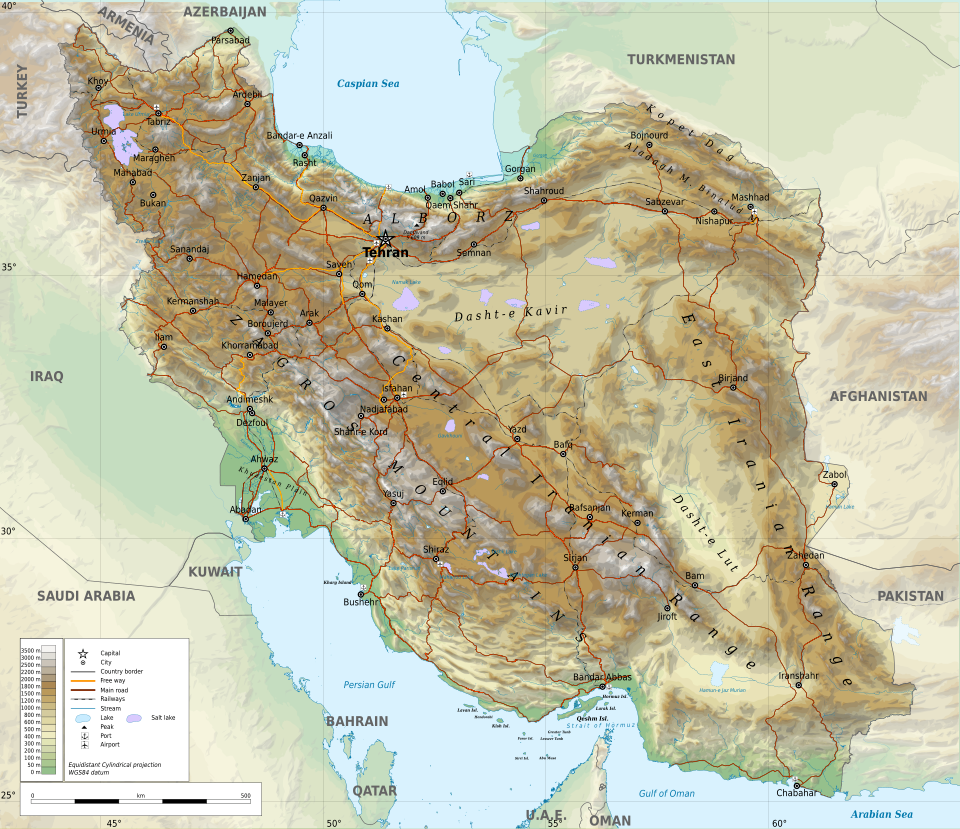
Total War involves an understanding and exploitation of high ground, rivers, and choke points. Like just about any war gamer, with a glance at the map of Iran one arrives at The Pentagons stated wisdom on the matter for decades. Geography says you invade all of it, or cede the straight.
We have this issue many paces in the world and people just don’t get it. North Korean nukes are a threat, but the unstoppable artillery barrage that would kill tens of millions in the first minutes of the war is The Issue. You can’t have snipers on a mountain ridge over your house and feel safe.
Dick Cheney and the Bush family spelled it out over and over. They like money and oil.
It's after the ramp up in production of weapons used in the shooting war started.
Probably not. History has practically zero examples of foreign-caused popular revolts. When you want your person in power, you do a military coup.
What history is littered with is adversaries (a) constantly fomenting dissent in each other and (b) levelling up convenient revolutions. America has been doing the former in Iran since basically 1979. But to say the recent protests "may have been the US" is ascribing way too much influence to Washington.
You should go take a look at what Lenin and many other communists was doing and where he was physically right before the October revolution...
Also, Haiti slave revolt was heavily influenced by the French revolution.
Also, uhh the Taiping Heavenly Kingdom?
The US could not participate in that because we had moved assets to south america to fuck with Venezuela. The war in Iran wasn't started until the USS Ford had been re-positioned back to the middle east.
The implication is that, the US's military failures in the past have been caused by lefty bedwetters wringing their hands about casualties and restricting the military. More generally, caused by "woke" policies that are about political correctness instead of about military success.
I would bet at least $10 that the top people in the administration are baffled that they haven't won the war yet. They're saying, we did everything right. We got rid of the trans people in the military. We fired the worst women and black people in leadership roles. We put a real tough guy in charge of the military. We told our troops to stop worrying about rules of war and let them off their leash. So why is Iran still able to fight?
That's one of the problems with bigotry and toxic masculinity and that sort of thing. Not only does it lead you to harm people, but it also hurts your ability to actually get things done. Thinking that gay people are destroying society is bad if you're in a position to hurt gay people, but it's also bad if your job involves preventing the destruction of society, because it means that you're going to look at idiotic "solutions" to the problem. And because it's not coming from a place of rationality in the first place, you're not going to eventually say, wait a minute, this isn't working, maybe gay people aren't the problem. You're just going to keep pushing at it harder because you know it's right, and if it's not working then it's just because you haven't done it enough.
Who exactly is saying this? Your comment is worthless conjecture.
On many occasions I've read self-soothing wishful thinking messages about my country. In 2022 it was that Russian army is fleeing, all Russian tanks were burned down, and Russian soldiers are deserting from a front lines with a speed of 100,000 persons a day. Here on HN. Written by the people who had no clue how to distinguish Russian tank from Ukrainian tank.
Or in 2022-2023 EU leaders said that Russian soldiers are fighting with shovels and stealing microwaves and washing machines to extract microchips from them.
Or just recently someone wrote to me that we are living in the stone age, whatever that means.
On the other hand, I'm happy that West prefers to live in a bubble with no access to real information. And if you try to convey real information, they'll call you "Kremlin bot" or "North Korean bot" or "Chinese bot". It means that less countries will fall prey to neocolonial practices and wars because you cannot wage wars and govern colonies based entirely on misinformation from propaganda your own media creates out of thin air.
And this WAS true. At one point, Ukraine broke through Russian lines and was pushing Russia back as fast as they could get logistics organized.
In response, Russia mobilized about 300000 people and forced them to fight or die. Usually both. Then started offering jailed inmates a chance of freedom by fighting on the front lines for 6 months. It invited freaking North Koreans to fight on the Ukrainian front!
> Written by the people who had no clue how to distinguish Russian tank from Ukrainian tank.
The thing is, in a large war such as the Ukrainian war (or the Iranian war now) you can have multiple total routs of the opposing military. And still not gain anything. The opposing military can be armed with shovels and they might be formed out of the dregs of society, but as long as they hold the line, they can still stop your advance.
Conscription is enforced with martial law only in ukranian territories, by both the official ukrianian government, and by the russia's occuption forces in donbas.
The Russian economy has not collapsed.
The Russian military has not collapsed.
The Iranian regime has not collapsed.
The Ukrainian regime/state/military has not collapsed. Nor has it reconquered the territory it has lost.
Wait a bit and see if Trump's regime/presidency collapses or not. The same for Iran/Russia/Ukraine/Israel.
The strains (societal/economical/geopolitical) are great and rising, something will give out... (no sanity in sight)
If by that you mean Iranians in Iran chanting "better our a-hole than yours", I'm not so sure that's radicalization.
At least Roman emperors got assassinated by their own bodyguards.
You can also easily find analysis warning of the opposite: the risks of not invading Iran. See Nazi Germany and WW2 for an example what happens when you fail to contain a belligerently rogue country.
Iran invaded the US embassy holding 52 civilians hostage, has conducted unprovoked attacks against US, Israeli and other interests for more than 40 years, regularly launches missiles into Israeli airspace, indiscriminately attacks merchant vessels in international waters, massacres and tortures tens of thousands of their own people for the crime of speaking out against their government, sponsors terrorist groups like Hamas that massacred over a thousand people including children, raped women, etc.
As for your comparisons of Israel to Nazi Germany, did the countries that Germany invaded have a history of launching rockets and terrorist attacks at Germany? Has Israel rounded up Palestinians in concentration camps and executed millions of them in gas chambers?
But you're saying it's Israel that needs to be contained and they are Nazi Germany. Ok...
The rogue nation here is the US.
Oh, you mean the JCPOA that Iran violated (before it was rejected by Trump) by failing to disclose storage of undeclared nuclear material at secret sites in Turquzabad between 2009 and 2018 and at Lavisan-Shian, Varamin and Marivan starting in 2003 to early 2000s?
UN watchdog declares Iran in breach of nuclear non-proliferation duties: https://www.iranintl.com/en/202506123029
The JCPOA, had weak stipulations on nuclear constraints that sunsetted after 15 years. The deal did not address Iran's missile program, human rights record or support for proxy terrorist groups like Hezbollah and Hamas.
> Iran was in good faith negotiation
Iran has historically made promises, broken them and lied about it.
"The best time for Iran to have given up the weapons pursuit was after the 2003 embarrassment of being caught clearly lying about its nuclear program, but it did not. Over the years, the IAEA Board of Governors issued several warnings to the UN Security Council about the “possible military dimensions” of Iran’s nuclear program"
https://thebulletin.org/2025/07/time-for-iran-to-make-a-no-e...
Iran treats it's people like shit and chooses terrorism over the welfare of it's own people
https://newlinesmag.com/spotlight/the-islamic-republics-brok...
While I can easily imagine the Trump crew is a bit impulsive and unprepared, I am VERY sure Israel went in to this with their usual competency, including very clear plans and targets.
If this eventually results in a half decent Iranian government, that would be the best thing that happened to the world this century! A period of war and high oil prices is a cheap price to pay, IF that actually happens.
Could it be fantasy reinforced by some LLM "advisors"? I have a strong feeling that the people in US administration are talking to LLMs which constantly reassure them that their imagination is the best
https://www.google.co.uk/search?q=trump+tariffs+decided+by+a
This operation was cobbled together between Trump, Hegseth, Rubio and Vance without consulting anyone outside that circle. The way they have been selling it, espwcially the strait stuff, smells of unplanned developements all around.
but what I did NOT expect, is how Iran regime would choose strategically suicidal options just to "feel good"
missile-rambo even on non-combatant countries? that'll trigger self-defense attacks...
$2M per voyage? woah... the stait-users don't have a choice, but "make an example out of" iran...
I mean, iran should have just shot israel with all its missiles (select and focus), and bring that "missle interception rate" down to 40%.
Now what did iran gain from shooting everyone? making more enemies, and showing your weaknesses (96% missile interception rate, even from UAE? wtf...)
don't get me wrong -- I'm not saying Trump was right on starting the war. I actually think what the fk was he thinking back then...
I'm just saying even if you're angry and desperate, there are wise choices and dumb choices
Raising the overall costs to the US and its allies is a pretty coherent theory of victory for Iran. Obviously they aren't going to win a conventional fight, but they might be able to inflict enough havoc on energy and commodity markets to the point that it really hurts the US and its allies economically; perhaps enough that they bail out of the war in order to stabilize the global economy.
Trump clearly wanted a quick easy win here and does not want to see massive inflation at home. Sure he personally doesn't give a shit about Americans but the rest of the politicians who enable him do and he's at risk of absolutely torching his own party for years if the war drags on and costs really get out of hand.
All the Iranian regime has to do to win is not lose for enough weeks. If the regime holds out Trump will have to either give up and try to pretend this disaster was a Great Victory, or he'll launch a ground invasion that will almost certainly turn into a quagmire. Bombing civilians makes a popular uprising much less likely, so the US is doing them quite a favor on that front.
They are easier to hit and harder to defend then Israel. That is depleting defense forces more.
Iran has deliberately escalated the war horizontally to create a bigger mess and to make the military adventure more expensive for America and the world.
Iran is saying, "If you attack us, these are the costs."
As an invading military, you're either willing to pay those costs or you're not.
The alternative is recognizing that you can effectively cow large populations of people into submission, no matter how much it sucks, and that the people who do this (in this case, the Islamic theocrats of Iran) can and will forever be a part of the geopolitical landscape with thrall over tens of millions of lives, and seek to influence even more. That there will always - ALWAYS - be a segment of humanity that has no real chance to think differently, to improve their lot, and to peacefully see the changes they want made to their society.
The hope in the immediate post-Soviet era of the early 1990s is that liberalized representative government would spread around the world, and that rules-based order would allow for peaceful resolution of problems through democratic processes and markets. And for a while, this seemed to be the route. Then it became apparent by the late 90s that there were still parties who didn't like the general direction that this was taking, particularly Russia, China, and at least some of the Middle East.
Now that China and the Middle East have become engines of global economic growth, there seems to be a tacit agreement, at least among the people who matter, than authoritarianism is fine so long as the right people get paid and that line continue to go up. In fact, it's more than fine; it's perceived by these people as more efficient at creating economic growth than that messy back-and-forth of representative government. And God forbid you have to set up that representative government after getting rid of an authoritarian one like in Afghanistan or Iraq.
Is it a harbinger of dystopia? Absolutely. But that's the reality that we inhabit.
(1) reducing oil shipments to China is good posturing for the US; hence Venezuela and Iran ahead of 2028. These are shaping operations. China suffers more from these conflicts than the US.
(2) Iran isn't the only one who can control passage throught the strait. All gulf countries can do so. If Iran can cheaply cut off passage, so can Saudi Arabia and UAE and everyone else there. They all have a long term mutual need in keeping this strait open.
All these recent analysis of conflicts in isolation, which always assume a lot of self-interest in disliked politicians, seem to make the analysts and authors blind to a much more probable and sensible grand strategy. Russia invading Ukraine and failing, has been the greatest strategic gift Russia could give to the US against China in setting the stage for shaping a defence of, and deterring an offensive on, Taiwan. Russia lost the ability to defend its proxies at a cost asymetrically small to the US. Hamas broke rank and allowed Israel to eventually decapitate Iran's proxies and air-defense step by step instead of all at once, setting the stage for the opportunity of the current war. And Russia being distracted also gave the US carte-blanche in Venezuela, not only via distraction but by proving that Russian air-defense isn't the thread it was thought to be.
The remaining strategic tension, in my humble opinion, is whether the US depletes its stockpiles too much without a caught up manufacturing capability, so that a Taiwan conflict becomes easy to win by default for China (via a blockade which would essentially be a cold war with few deaths and minimal damage) or if the weakened China (due to oil constraints) would be simply unable to attack in 2028, the strategic window when it can do so.
The situation, in my eyes, is evolving in a state where only two modes become dominant and both are slightly better for Taiwan.
You are missing the even bigger picture. Look back a few decades. The 1973 oil crisis was not just a temporary inflationary event, but the starting point of various technological and political investments that sought reduction in reliance on oil — engine efficiency regulations, nuclear power in France, early research into solar energy. The current war will likely have a similar effect. Suddenly you can't rely on imported fuel any more. And if you look around for alternative energy sources, Chinese solar and batteries and EVs suddenly look a lot more attractive than two months ago. And this is before you factor in the rest of the world reassessing their relation to the US and their confidence in the competence of US military and diplomacy.
(2) I think we all (the author included) agree with you that it's easier to break things than to build them--both hardware and relationships--so it's obvious that maintaining trade through these kinds of choke points requires some degree of cooperation on all fronts. Iran does have a geographic advantage over other players, though (partial exceptions to Oman and the UAE), as well as a clear acute interest in constricting traffic through the strait. Sure, it may be bleeding them, but it seems to be one of the few ways they can meaningfully attack their enemies. It'll be interesting to see if anyone has the will to force the strait open against Iran's efforts.
Generally agree on Ukraine/Taiwan and the bigger geopolitical picture though.
(2) Iran has a temporary but unsustainable interest in constricting traffic, and it's not the only country who could impose a filter there. The mere credible threat of a strike on shipping is enough to stop it, so other countries basically have an equivalent capability to restrict traffic. And all countries, including Iran, are unable to sustain a prolonged closure. The current situation is an unstable, non-equilibrium situation for Iran and it's neighbors.
Overall, all of it doesn't really matter to the US because simply taking Iran off the supply chain of China is good for them. They spin the narrative about starting the war for a variety of other reasons so that they can justify the pain it inflicts on their allies (Korea, Japan - very dependent on those hydrocarbons too, and EU) and choke China's oil supplies without looking intentional. Last time the US overtly blockaded an asian nation's oil supplies, Pearl Harbour happened.
Which is another reason why China had such a structural incentive to move toward solar power, battery storage and renewables in general while also powering most of their early growth with dirty power plants.
I think Trump wants to be remembered for having neutered the China threat and having restored American supremacy and dynamism, and doesn't care too much about what it will cost at the next federal elections. I think he cares more about his legacy and wanting to be remembered as a historical figure on the strategic level. He's portrayed as being merely a fool with self interested dictatorial tendencies but I think attributing such simple intentions to him is self deception and leads to poor analysis. It doesn't pay to trivialize figures for disliking them or their actions.
Without taking camp here, I'll say that taking Trump for a fool is shortsighted, in my opinion.
(2) Again, sure, but Iran can clearly sustain it longer. They've read their Clausewitz and properly understand this as a contest of political will, which they have much deeper reserves of than capital or munitions. Anyone with any power in the Iranian regime knows they have no offramp.
Absolutely agree that Trump cares strongly for his legacy, maybe more than anything except for his self-image, but the most important part of that legacy is being recognized as both popular and a winner--I would argue that these are far more important to him personally than US power and influence on the world stage (shutting down USAID, for example, was a massive blow to US soft power, and the NATO infighting that he initiated is still probably a net negative for US hard power, even if it has had a positive impact on European defense spending and self-sufficiency). He also clearly wants to see that legacy established in his lifetime (hence the obsession with having things named after him). It's hard to imagine this being a particularly effective way to increase long-term US power and influence relative to China, particularly in a way that will generate positive sentiment within the US--especially among the majority voters who favored his populist-isolationist political platform.
The US being a net exporter of oil should benefit from higher oil prices. Defense contractors will also benefit.
The 1970's were probably better than these days. ;)
Most probably, but Israel and US are now being more conservative with interceptor targets though so that seems to go both ways.
Current US interventions should be read as a sign of weakness - an inability to shape events without resorting to naked aggression. Global hegemony can not be maintained through force alone.
And the point remains that this operation has been started in a way that leaves the US in a weaker strategic position, not just in the Gulf, but also, crucially, in the far east. It has now become harder to contain China, both in the medium term by the reduction of US military capabilities both globally and in-theater by pulling out strategic defensive assets from South Korea and Japan; but also long-term, by putting themselves into a situation where they have to do that, retroactively, after painting themselves into a corner elsewhere, therefore undermining their posture as a credible, rational actor that can be relied on to oppose China's ambition in the region.
What's the latest thinking on the 2028 window?
Amidst the US bombing Iran, blockading Cuba, slaughtering the president of Venezuela's guards and kidnapping him and his wife, and so on and so forth - US government talk on China can be removed from reality. So this point -
Mainland China says it is the same country as Taiwan.
The US acknowledges mainland China and Taiwan are the same country.
Taiwan acknowledges mainland China and Taiwan are the same country.
So this discussion of "invasion of Taiwan" means PLA troops in mainland China moving to Taiwan. Which could mean the Chinese navy moving into Xiamen harbor (a Mainland city!) and putting its troops onto Kinmen island which is claimed by Taiwan.
Western elites have antiquated ideas, like talking about the rights the Britsh colonialists have over Hong Kong and other imperial nonsense. They brandishing their liberal ideals in their imperial machinations. But those days are over.
Obviously all actions the US takes have knock on effects elsewhere but those effects tend to become quite unpredictable and also weaker the further you are away from the place where the action happens.
We could talk for days about the knock on effects of the Iran war and sort through them and how all the different actors in the world will react and whether that’s on balance good or bad for the US … but it’s all a bit cute, right?
> (1) reducing oil shipments to China is good posturing for the US
No, it isn't. For several reasons:
1. China has stockpiled ~1.4 billion barrels of oil. it'a net importer. Supplies from Russia aren't disrupted. At present, Iranian oil is still gointg to China;
2. China is rapidly decreasing its dependence on fossil fuels with renewable energy projects on a scale where they're building more solar, for example, than the rest of the world combined. They also produce those panels so there's no supply chain risk there;
3. While the US is a net oil exporter, it's not universal. California, for example, has no pipelines so 75% of its oil comes from the sea. ~20-25% of that comes from Iraq and is disrupted by the Strait being closed;
4. Qatar produces 20-30% of the world's Helium supply and ~20% of the world's LNG, both of which are disrupted;
5. ~30% of the world's fertilizer is disrupted by the Strait being closed. The US is way more impacted by fertilizer disruption than China is.
> (2) Iran isn't the only one who can control passage throught the strait. All gulf countries can do so.
The other Gulf states are US client states. Why would Saudi Arabia close the Strait, which especially hurts US interests?
I also doubt any of them can to the same degree. The entire Iranian military is geared towards this strategy with drone and ballistic missile production on a scale no other country is really built for. It has hardened military infrastructure designed for decades to resist US bombardment.
Other Gulf states don't have this hardened infrastructure and are more vulernable to Iranian attack if it came down to it. Take desalination plants as an example. Yes Iran has those too but Iran also has significant snow melt as a source of water, Mountains, remember? Iran has ski resorts they have that much snow.
> Russia invading Ukraine and failing
Russia has basically succeeded. You have fairly stagnant battle lines where neither side can particularly advance but Russia holds certain Ukrainian territory now for years. Russia is just going to wait for the West to get bored and give up. Russia's economy has proven itself to be surprisingly resilient.
Sanctions just don't work on enemies like Iran, Russia or North Korea as well as they do on allies or former allies because enemies have an entire national project to resist American imperialism. They have to be self-reliant in a way that allies just don't.
This is also why the US client states in the Gulf are hurting way more from the Strait being closed: their economies aren't built for it. Iran's is.
> ... the weakened China (due to oil constraints) would be simply unable to attack in 2028, the strategic window when it can do so.
So this is where you've really gone off the deep end. China is less affected by this, in part because of long-term strategy but short-term because Chinese shipments are still going through the Strait.
American imperialists (which is both Republicans and Demorats, for the record) have this weird idea that China will invade Taiwan. Or wants to. Or it can. None of those things are true.
It really feels like projection, like every accusation is a confession. China must be doing violent imperialism because that's what the US is doing.
China can blockade Taiwan but that won't really do anything any more than an aerial bombardment will do anything to Iran. China doesn't have the amphibious capability to land an invasion on Taiwan any more than the US does in Iran. If you think otherwise, I'm sorry but you're gorssly mistaken.
But all of that ignores the real issue: China doesn't need to invade (or blockade) Taiwan. Why? Because all but ~10 countries in the world already view Taiwan as part of China. In the US (and Europe) it's called the One China policy. It is US government policy and consistent across both parties.
Why would China upset the international order when everybody already agrees with them?
And yeah, it's a dumb idea, but Taiwan, unification in general, seems to be one of the handful of things China can't quite manage to be rational about. They didn't have to grab Hong Kong ahead of time either.
1. What a barrier water is still to this day;
2. How many troops it would take to occupy a country; and
3. The logistics required to support an invasion.
Knowing these things, even a little bit, can dispel a lot of fearmongering nonsense one will see.
On a clear day, you can see the white cliffs of Dover from Calais, France. I believe at its narrowest point the English Channel is 17 miles wide. At its peak the German army in WW2 had ~10 million soldiers and a massive industrial war machine. Yet they couldn't cross the English Channel. They didn't even try.
The Allies did manage D-Day but mostly because German strategy was bad, they were asleep at the wheel and D-Day was logisitcally probably the most complex military operation in human history and it took years to plan.
Look at a map of Ukraine and see where the front line is. The Dnipro River will feature strongly along much of it. That's not a coincidence. To cross even a river you need pontoon bridges to get tanks across and then trucks for supplies. Those bridges can be built quickly but the entire operation and any bridgehead you establish is incredibly vulernable to attack.
100 miles of ocean separates the Chinese mainland from Taiwan. It may as well be 10,000. Or 10. It just doesn't matter.
Taiwan has 1-2 million soldiers (including reserves) and a national project to resist an invasion and occupation. China would probably need at least 1-2 million troops to occupy Taiwan and they would have to get them across the ocean and them supply and arm them.
China simply doesn't have that amphibious capability and Taiwan could play havoc with their supply lines.
I really wish more people would ask "what would an invasion of Taiwan take or look like?" because then we could all waste less time worrying about things that just aren't going to happen. You could reduce any scenario to "can they?", "do they need to?" and "do they want to?". The answer to all three is "no".
Creating fear of this is just another tactic to sell weapons and, to some extent, more revealing about the Western imperialist psyche.
So no, I don't care about what barge ships China is building. At all. It doesn't matter.
Iran has suffered six consecutive years of drought, which has been bad enough that they were considering (before the war) moving the capital from Tehran to Makran on the coast of the Caspian
"Take desalination plants as an example. Yes Iran has those too but Iran also has significant snow melt as a source of water, Mountains, remember? Iran has ski resorts they have that much snow."
Iran is in a dire situation with its water supply. It used to rely on an ancient system of ancient Qanat wells that only provide a fixed amount of water that can't be overdrawn, but in their quest to be self sufficient in terms of food they have gone to groundwater instead. The Qanats haven't been maintained so their output has reduced, probably permanently to some extent, and the ground water table is running dry to the extent that they are considering moving their capital.
China is also a big food importer, they'll feel it eventually
Whether China plans to actually invade or blockade Taiwan or not doesn't matter if the US thinks it will. AFAICT the US is convinced it will, and the mere threat of this is enough to justify Venezuela and Iran, I believe. Higher oil prices are less worse than no more semiconductors.
And I think Russia might have gained some territory, but at the cost of being completely sucked into the conflict, having lost strategically by (1) being unable to support and defend its proxies and (2) having its arsenal and technology thoroughly analyzed and proven ineffective against US weapons. All actors involved know this and it will not remain, but until solved this means that the US knows it can strike countries defended by Russian weapons, at least until counter measures are researched, developed and distributed. This is a temporary advantage and moment of clarity that lasts a few years, not a sustained advantage.
The risk of the US being equally sucked into Iran and suffering the same fate is very high. And China's best strategy here is probably to sit and wait and help US opponents keep the US busy for a while, like the US did on Ukraine with Russia.
The US doesn't want to live in a multipolar world. It wants to remain the hegemonic global superpower, basically to make a handful of really wealthy people even more wealthy at the expensive of everyone else.
So do I believe the US wants to treat China like an enemy that "needs" to be degraded? Absolutely. Do I think it should be that way or has to be that way? Absolutely not. But that is a minority position in US political circles. One thing the Republicans and Democrats are united on is the US imperialist project.
You have a handful of candidates like Graham Platner who think the path forward with China is one of cooperation not competition [1]. The Democratic Party, just like the Republican Party, hates this kind of rhetoric. That's what we're dealing with.
Part of selling that is convincing everyone is that China is or wants to do the exact same imperialism that the US is doing. What's China actually doing? The Belt and Road Initiative [2] where China basically sues its massive trade surplus to go around the world and build ports, airports and roads and to fund mines, farms, power plants and oil and gas. All on significantly better terms than the World Bank and IMF offer [3], so much so that Africa is considered "lost" to US interests in favor of China.
Fun fact: the United States Africa Command is headquartered in Germany [4]. Why? Because no African country wants it. It's one region where the US only has a handful of bases (eg Djibouti, Kenya).
When the country that produces most of the world's weapons is telling you that there's some big military threat that can only be solved by selling more weapons I just ask: consider the source.
[1]: https://x.com/PollTracker2024/status/2028936316285546537
[2]: https://en.wikipedia.org/wiki/Belt_and_Road_Initiative
[3]: https://www.cgdev.org/publication/chinese-and-world-bank-len...
[4]: https://en.wikipedia.org/wiki/United_States_Africa_Command
China's stockpile of oil is only enough for a few months and that is only assuming that nothing happens to the stockpiles or the ability to access them. China does have a lot of renewable energy infrastructure, but these numbers don't convert directly into oil not being important. Oil is still very important. Their military runs on oil and for many kinds of products oil has no alternative. A lot of their population still uses ICE cars. You can put a percentage on it, like they are 60% less reliant on oil, but these numbers are useless if they still fundamentally rely on it in critically important ways. Which, they do.
Russian oil infrastructure has been under attack, which shows China that their oil imports from Russia are not guaranteed and their own infrastructure can be reached. Being at Venezuela and Iran's doorstep also shows that oil imports from them are not guaranteed.
As far as Iran goes, they can harass, but they can also lose all of their income and imports. While Iran and Russia are being scaled down, more western energy infrastructure can be coming online to replace it over the coming years even if this current situation gets resolved soon. Iran is being boxed in militarily, politically, economically, and more. They can troll, but even their trolling options are being slowly reduced. Their long range missiles can only achieve those ranges by removing the warhead and adding extra fuel. They are incapable of defending the island that most of their income flows through.
Speaking of islands. Xi Jinping absolutely wants to take Taiwan and he's been purging his military just like Stalin did before he invaded Poland and Finland. They've been building out manmade islands and military bases in the sea to increase their claim and threaten anyone who would intervene.
There is also a very big difference between political or token recognition of Taiwan as part of China as a cost of doing business vs real belief. The CCP sees Taiwan as a threat to harmony, because it serves as an example of democracy which China will always be a poor example of. If the CCP falls, Taiwan might be able to serve as a new center of gravity, which was also a credible threat from Hong Kong. That is the flip side of the "One China" policy, where it's only good for them so long as the CCP survives. Even without that, travel and communications between them increases interest in a true democracy that gets compared every time the CCP fails at something. COVID, property investment, unemployment, you name it. Ukraine was a similar issue with Russia, partly because they see Russian language and culture as an encapsulation that their mechanisms of control need to dominate within.
Taiwan is in very close proximity, so even if there is a lot of leverage against China from all angles, if they put everything into it they would probably be able to do it at great cost. They don't have the capability matrix to sufficiently achieve a Venezuela. If they tried that right now, it would just start a new 100 years of humiliation if the clock didn't already start the day Xi Jinping got in.
China is still getting oil from Iran. Maybe that'll change but there's still (IIRC) >100M barrels of oil in transit to China.
Aside from that, the point isn't to have indefinite supplies. It's to have supplies the last longer than other countries. This is going to create huge problems for the US beofre it creates huge problems for China.
> Russian oil infrastructure has been under attack
This is a delicate balance. Ukraine can only do so much against Russian energy infrastructure before the US and Europe, who supplies the military, reins it in because of the damage done to the global energy market. This included restricting the supply and use of long-range weapons that could be used to strike energy infrastructure deep in Russia.
Like, did you know that some countries (eg Hungary) are still buying oil and gas from Russia [1]?
> As far as Iran goes, they can harass, but they can also lose all of their income and imports
Iran can do more than harass. They're winning. There is no military path to victory for the US and Israel short of the wide-scale use of nuclear weapons.
> ... more western energy infrastructure can be coming online to replace it over the coming years even if this current situation gets resolved soon
This is just wrong. No Western infrastructure can replace 20Mbpd of crude oil production and losing 20-25% of the world's LNG supply. None. You're talking about investment in the trillions of dollars over a decade or two, assuming you can even find raw resources to extract, whihc is far from certain.
> Speaking of islands. Xi Jinping absolutely wants to take Taiwan
Sorry but no. China considers this its territorial waters. And yes I know some of these "islands" (some are just reefs, basically, that they build artificial islands on) are closer to Taiwan or the Phillipines. China considers Taiwan part of its territory so that's no issue for them. Most of the world agrees (ie only ~10 nations recognize Taiwan).
China doesn't want the US or its allies to militarize "islands" right off its coast. Can you blame them?
> The CCP sees Taiwan as a threat to harmony, because it serves as an example of democracy
This is just "they hate us for our freedom" type Ameribrainned propaganda. China does more for its people than the US does. China pulled ~800 million people out of extreme poverty. The truth is that the Chinese government is quite popular with Chinese people. How do Chinese people talk about the US? One good recent example is the "kill line" [2].
Westoids project Western imperialism on China when China has no modern history of doing imperialism. "But Tibet" is the usual rejoinder. That was 1950. Other than that? There was a dispute with Vietnam over like 50 square miles in the late 1970s. And that's it. You want to compare that to the US history with regime change [3]?
Taiwan just isn't the threat to China Westerners make it out to be. We make it out as a threat because it justifies American imperialism. It's the result of propaganda. China believes that the Taiwan question will ultimately be resolved peacefully and there's absolutely no reason to resolve it militarily.
This is a difference of time frames. Every problem we have is immediate requiring a kneejerk reaction. China operates on five year plans but more than that, China plans far mor ein the future than that.
[1]: https://www.aljazeera.com/news/2025/10/3/how-much-of-europes...
[2]: https://fpif.org/how-the-kill-line-redefined-the-american-dr...
[3]: https://en.wikipedia.org/wiki/United_States_involvement_in_r...
you must be living in the Disneyland?
life must be great in your lala land
One of the few advantages this war might bring would be China letting American radars paint its kit.
"I am not, of course, an expert on the region nor do I have access to any special information, so I am going to treat that all with a high degree of uncertainty." - Then proceeds to tell us about the Iranian regime and other things he is not an expert on.
- Iran's conflict with the US didn't start in June 2025. While it had its ebbs and flows Iran has been in conflict with the US since the Islamic Revolution.
- Iran has been helping Russia in its war with Ukraine. That does have strategic implications to the US. So it's not true that Iran does not matter strategically. Those Shaed drones are flying into Ukraine by the thousands.
- Iran has supported the Houthis in Yemen (which effectively can close the Suez Canal traffic when they feel like it) and has levers on Saudi Arabia both directly and indirectly through Yemen. Another strategic lever.
- The whole comparison to Iraq's ground war is completely irrelevant. Iran and Iraq are very different countries with very different history and this conflict is very different in many ways. The US is not going to invade and conquer Iran.
- If Iran has made so much trouble over the years without ICBMs and nuclear weapons should we just wait for them to acquire these technologies? What do we think about the rationality of this regime vs. the North Korean one? Is North Korea really the right analogy? "Iran was not a major strategic priority" maybe add yet? When it becomes a major strategic priority with ICBMs and nuclear weapons then what?
Nobody knows where this war will end. Did the US have to go to war now? Probably not. Was there an opportunity between the internal unrest, the massacre of Iranian civilians, the intelligence and military superiority. Yes. What would the outcome be of not going to war? What's the certainty of that outcome? I don't think a nuclear Iran with ICBMs would be a good thing for the world and they would definitely go there.
Worth noting that at the time of invasion of Iraq they had about 25 million people per gemeni. They now have about 46 mil people per wikipedia. All else equal, we are comparing 25 mil to 93 mil and not half of 93 mil to 93 mil.
I also used this as an opportunity to reference the now archived[0] CIA Factbook[1] which does put the 2003 Iraq population at 25 million.
The most important aspect of the "toll" is that Iran prefers payment in yuan, not dollars.
If Iran succeeds in nationalizing the Straight and is successful in enforcing the toll, it represents a very serious threat to the dominance of the U.S. Dollar as the world's reserve currency for trading energy.
The straight is not physically closed by Iran. It's closed by insurance companies which asking a very high war risk insurance premiums. Even if you pay $2M it unlikely will reduce the cost of insurance. That's why very few ships are choosing this option (and some of them are shadow fleet tankers which probably have no insurance).
And why should them? It appears that the Iranian armed forces started acted quite autonomously, by design. They know that communications are not secure, so local commanders have a very high latitude in what actions they deem correct to take. If such a commander deems that asking and collecting $2 MM per vessel is a good idea, they'll do it. But if another commander thinks that sinking a passing vessel is what their standing orders are, they'll do it too, not being aware that the toll was paid. So, if you are the captain of such a vessel, what do you do? Do you complain to Iran for not holding their end of the bargain?
> If Iran succeeds in nationalizing the Straight and is successful in enforcing the toll, it represents a very serious threat to the dominance of the U.S. Dollar as the world's reserve currency for trading energy.
This theory seems to predict that CNY/USD should have gone up since Feb 27 as everyone rushes to trade and obtain yuan so they can pay the Iranians. But in fact the opposite is the case; that currency pair peaked Feb 27 after a bull run (well, only about +7%) since approximately "liberation day".
The US has raised tariffs erraticly. Traders seek out a good that can be traded anywhere with predictable low costs and that is gold. So, demand is rising and, if it continues, trades may be denominated in gold.
“The war will surely achieve regime change,” replies the oracle.
“Great, let’s go,” says Trump, who never read Herodotus.
Being bombed does not mean it can target non-combatant countries without consequences... Nor does it mean it can start tolling ships $2M per voyages...
Now that current iran regime has learnt it can do those things...
what choice do the gulf nations, or even all the asian+european (strait users) nations have?
Form a coalition against iran, and send troops to change the regime...
even if US backs away, the others will finish the job
Remind me again, which country started this whole mess?
> what choice do the gulf nations, or even all the asian+european (strait users) nations have?
They can go "yeah, you know, the US has been less than reliable as an ally recently, what with absurd tariffs, saber rattling around greenland, belitteling NATO, etc., and they seem unwilling to change, so we're just gonna pay the piper, and get oil, and make arrangements with the Chinese (aka. the worlds most powerful industry), and if they US doesn't like it, that sounds like a them-problem..."
What's very likely not gonna happen, is other countries fighting the US's war for them. NATO already told trump no, other countries won't give different answers.
And anyone who wants to actually invade Iran...well, let's put it this way: Iran is 3-4 times the size of Afghanistan, with even more difficult terrain, and has a standing army of 600,000 men, with over 300,000 in reserve. They have an air force, are proficient in the manufacture of drones, have a working intelligence network. And they've had 4 decades to dig into defensive positions.
In short, it's not gonna happen.
China poses a huge threat, but some of their worst advantages aren't viable. We know things they have, so we tell them things we have. If you do X, we do Y. Thus some of their big advantages are nullified, unless they get reckless. Same as the nuclear issue, weapons you've invested in yet cannot even use, because they become part of new rules.
Some of that has been clarified in the trade tug of war, showing each other's dependencies. Some is being shown by also showing how easy it is for Russian infrastructure to be hit, or how easy it is to put a choke hold on critical energy, or to simply capture a dictator for that matter. It isn't even just those things, it's also the cadence and timeframe. Venezuela, Cuba, Iran and Russia all under severe pressure within just a few months at the start of 2026.
At most we've maybe seen some limited sabotage of infrastructure inside the US and perhaps aboard a carrier, some sharing of targeting information, etc.
If Russia and China are leveraging any of their real potential for pressure, it sure is hard to tell.
As far as the Euro, Europe is not America. The European Union is also not the United States. America has geographic advantages that Europe lacks. The US has structural stability advantages that the EU lacks. People sometimes argue things like, the EU is more of a framework or general agreement, while the US is an actual country.
The amount of USD in circulation dwarfs all other currencies and makes it more cushioned against shocks. It's much more liquid than gold or bitcoin. If you need to get actual things done in the real world and you need to get them done quickly, USD is the currency you want to generally have.
It's also the least likely to simply poof or disappear. China is the only real threat the US has faced since World War 2 and we're handling it pre-emptively. You could argue we were pre-empting the CCP even before World War 2, since we were supporting the anti-communist forces inside China before Japan attacked it and unified them against it.
The outcome of a lot of wars comes down to physics. The physics are on the side of the US. USD isn't going anywhere. Iranian and Venezuelan oil will be traded in USD now as well.
Whether your little black heart wishes concentration camps or you’re just hoping your paycheck goes a bit further, voting for a con man is a terrible idea.
I mean, even before the $2M toll, if you're kuwait/UAE/saudi/etc, what choice do you have? form a coalition against iran
now.. with that $2M toll, iran just learnt it can just toll the ships...
so what choice do all those strait-using countries have? pay $2M or more, even after US leaves?
nope... they'll form a coalition against iran
it's highly unfortunate that trump started the war, but iran's way of things are just making more enemies -- it'll pay with regime change within few months
But the strait has two sides and Iran only controls one side. The UAE/Oman on the other side could equally threaten to attack Iranian ships unless Iran pays them a toll.
the strait-using countries are surely going to "make a lesson out of" iran exactly for that reason
and do what?
Bomb shit. The Saudi and UAE militaries aren't anything to sneeze at. (The area cross the Strait from the UAE is majority Arab [1].)
I think it's generally good strategy to not provoke new belligerents against oneself.
This is too complacent for my liking. Every rusty trawler is a viable launch platform for Shahed type drones (operational range ~2500 km per Wikipedia). Nearly every US oil refinery and LNG terminal are on the coast. And then there are floating oil platforms (e.g.: https://en.wikipedia.org/wiki/Perdido_(oil_platform))
The article then says:
>One can never know how well prepared an enemy is for something.
And:
>And if I can reason this out, Iran – which has been planning for this exact thing for forty years certainly can.
I'll leave it here for y'all to ponder.
And where exactly are you planning to operate that trawler out of? Or are you going to send it across the Atlantic on its own (well, with a couple of tankers accompanying it, but never mind that) and hope no-one pays attention?
> operational range ~2500 km per Wikipedia
I think you either added an extra zero or were looking at the hyped prototypes rather than the models in actual use. The Shaheds have ranges in the hundreds of miles, not thousands.
I thought I was clear where I was looking - here, you may check for yourself: https://en.wikipedia.org/wiki/HESA_Shahed_136.
You presented the absolute maximum estimate as if it were the conventionally accepted value. That's incredibly misleading.
China operates fishing fleets all around the globe but Iran is not known for this so Iranian fishing vessel in western Atlantics will rise suspicions. An ordinary cargo vessel heading to the Central America on other hand may sail unnoticed.
It's a couple of hundred miles from the frontlines in Kharkiv, and the Russian border to the North is even closer.
I think the furthest hits Ukraine has been able to achieve with drones were on a refinery about 1300km from Ukraine controlled land.
[1] https://news.sky.com/story/four-arrested-on-suspicion-of-syp...
[2] https://www.jpost.com/diaspora/antisemitism/article-890851
The point is Iran isn't going to be landing tactical, much less strategic, fire on America unless we royally fuck up. It will be closer to terror/psyop attacks.
Now the US is not dependent on Middle Eastern Oil, but Japan, China and other countries are. So controlling the region will mean a lever of power over those regions.
The U.S. is dependent on oil and the oil market is global. Even if the U.S. is a net exporter of oil, Americans still pay increased prices for pretty much everything as a result and the economy suffers. The only way around this would be a scheme in which domestic oil producers are forced to sell to American refiners at pre-war prices, similar to the "National Energy Program" that was tried in Canada during the '80's. (Spoiler: It didn't turn out well.)
Yes, the U.S. is less likely to see its pumps run dry and U.S. oil companies are going to be very happy with the increased prices. However, unless it goes the NEP route, U.S. companies are going to export more oil creating shorter supply at home. Americans will pay the same high prices everyone else will be paying. As we're seeing now, the U.S. might actually see even higher price increases than countries like China.
If everyone had electric cars charging from solar then Iran's strait gambit would be much less effective.
"The entire region has exactly two strategic concerns of note: the Suez Canal (and connected Red Sea shipping system) and the oil production in the Persian Gulf and the shipping system used to export it. So long as these two arteries remained open the region does not matter very much to the United States."
First, observe the top 10 oil reserve countries:
1. Venezuela: ~303–304 billion barrels (mostly heavy crude) 2. Saudi Arabia: ~267 billion barrels 3. Iran: ~208–209 billion barrels 4. Canada: ~163–170 billion barrels (mostly oil sands) 5. Iraq: ~145–147 billion barrels 6. United Arab Emirates (UAE): ~111–113 billion barrels 7. Kuwait: ~101 billion barrels 8. Russia: ~80–110 billion barrels (estimates vary) 9. United States: ~40–70 billion barrels (reserves fluctuate with prices/technology) 10. Libya: ~48 billion barrels
China is the world's largest oil importer. Stats are hard, things get mislabeled due to sanctions, but somewhere between 15%-20% of China's oil is-or-was from Iran+Venezuela.
In my view, this partially explains the move in Iran, considering a 3-10 year strategic timeline.
The first time any kind of claim measured in weeks was immediately before Rising Lion last year, and guess what, the IAEA agreed with him.
When dealing with the Middle East we keep underestimating the amount of hardship the people I these countries can endure or be forced to endure.
The article is in large parts about how that's not true. It makes the point that the very existence of the Iranian regime hinges on its opposition to the US, to capitulate would mean for the leaders to lose all support, be overthrown and likely die: so there's no level of suffering that it "can't take anymore". And similar in the US, the leadership cannot survive politically to a capitulation. Hence endless escalation on both sides.
Trump has more flexibility. Really all he needs is an endpoint that FOX News is willing to describe as a US victory. He cares more about image and perception than reality. So, in that space, there is probably room for some negotiated outcome.
Translation: "The victor is not victorious if the vanquished does not consider himself so”
The often missing asymmetry reflects something deep in the mindset of large portion of western population.
Inflation means hardship.
Iran is the first conflict in many years that might inflict tangible suffering on the American people.
This war seems more than likely to drive up oil prices not only in the near term, but in the medium and long terms too! In addition, petroleum usage seems likely to become dependant on sucking Iran's proverbial dick, a notion that very few people in The West will find palatable.
Optimistically then, perhaps this will finally light a fire under everyone's asses to switch to renewable energy sources! Wether it's wind, solar or hydro, a underappreciated property of renewable energy is the energy sovereignty they provide. Once deployed, international trade can stop completely, and you'll still have electricity to heat your homes, cook your food, and drive your car.
No more being dependant on dubious regimes like Iran for your day-to-day.
Admittedly this is true for coal, too, but I think we've already established that it cannot economically compete, so that should play out in favour of renewables in the long run.
Touch screen controls are rife and not only become impossible to use when, say, grease is splattered on them or your hands are wet/wearing gloves (common when cooking on a stove top), they can even be falsely activated by such things. Cold spots can also be a concern depending on your cookware.
Unfortunately a lot of promising technology has matured in a time of consumer product enshitification, and there is no established track record for people to be nostalgic for.
It's not free. It costs trilliions of dollars to build and maintain. I think it's worth it. But one place where the climate-change movement lost the plot was in underplaying costs and overplaying the doom.
And that's just energy. What about pharmaceuticals? Financial markets? Who protects your shipping lanes? Who builds your semiconductors? Where do those factories get their energy from?
I support the diversity of energy sources because they all have strengths and weaknesses. We've got to figure out climate change. But we also can't have, even if you want to somehow "move off of oil" a single country run by lunatics who can decide whenever they don't get their way that they get to seize 20% of the global oil supply. We can't have China dominating rare earth processing either. For some others it may be a reliance on American military technology.
It's the same difference as buying a house now and owning it until it collapses vs. renting a house and being at the mercy of your landlord, or buying a piece of shrink-wrapped software and using it for the next 18 years vs. renting a SaaS subscription that provides a different product next month.
I'm wondering how that works. I have written software that was still being used, 25 years later, but it was pretty much a "Ship of Theseus," by then.
I always take issue with the expression "buying a house now" when you actually mean "pay a mortgage for a house now". With a mortgage, you are at the mercy of the bank and whatever contract you signed. With a rent tenancy, you are at the mercy of the landlord and whatever contract you signed. A landlord will wake up tomorrow and tell you to leave, you have some notice period. Your fixed period deal ends and you can only get a deal that triples your rate.
It's like when people say that self-employed people have no boss, your customer becomes your boss. And you always have one. Everyone that exchanges services/products for money has one.
My secret suspicion is that Trump knew of Israel's attack on the Qatar/Iran natural gas in advance.
If the Persian Gulf is closed for a long period, shale oil in North America will do very well.
Israel also has new natural gas reserves that will be in high demand.
Is the loss of market share of the Persian Gulf nations an unintended side effect?
Self sufficiency exists on a spectrum. On the idiot end is autarky, which only works to keep a small group in power at the cost of national weakness. On the other end is a lack of stockpiles and domestic production that essentially negates sovereighty.
A country running a solar grid with EVs can withstand more economic shocks for longer than one importing oil. And while mining metals is geographically limited, making solar panels and batteries and cars is not.
Recycle one of your old ones. You don't burn solar panels to make energy.*
I think people are still stuck in the fossil fuel mindset. I've started calling it gas brain.
* What happens if China stops selling you panels while you embark on electrification? Nothing. You already have enough electricity from your existing sources (presumably) so you just pause the PV rollout until they wise up. And other countries are starting to get into PV manufacturing. Exhibit A: https://solarmagazine.com/2025/08/india-solar-supply-chain-f... So you can always just buy from someone else.
It's also important to note that the US also produces oil[0]. There are some quirks of the market and refineries that make it difficult to consume our own oil, but we could potentially build more domestic processing. The real problem is that pesky global market that puts costs on the state's ambitions for power. To put it bluntly, American oil is expensive. We can survive an oil crisis iff we are willing to pay astronomical prices at the pump; but if we are doing this assuming we can just enjoy cheap gas while the world burns, we are going to get a rude awakening.
Think about it this way: buying your energy in the form of oil is like exclusively using streaming services for your entertainment needs. It's cheap, easy, convenient - until the plug gets pulled and it suddenly stops being those things. Buying solar is like buying physical media - you have to pay up front and it's more of a hassle to get started, but it can't be turned off on a whim.
[0] It also used to produce rare earths, too. The mines closed down because they were too expensive to operate - not because rare earths are actually rare.
Biggest concerns are usually placement and durability to bad weather.
This may have been true in the past but the economics of today is "whether this is good for 1% of the population" and not in general, yes? If I can buy cheap solar panels from China (or say for the sake of argument someone "friendlier" like Germany) but that gets slapped with tariffs or other means the "administration" (bought by the 1% crowd) has at their disposal to prevent this from happening. If we lived in a free market this would be true for sure but we don't (by we I mean USA :) )
And energy storage, and peaking, and matching demand to supply at the grid level. None of which are included in the usual "costs" of solar.
A longer view of history shows a clear pattern: "After a gasoline price shock, households respond in the short run mostly by reducing travel, although estimates from the literature suggest the response in the short run is quite low (e.g., Hughes, Knittel, and Sperling 2006). Over long horizons, households adjust their vehicle technology and reduce further their consumption of gasoline.
...
The market share of full-size pickups, utility vehicles, and vans fell more than 15 percentage points between its peak in 2004 and early 2009. Small cars and the new cross-utility vehicle segment picked up most of this market share" [1].
[1] https://www.journals.uchicago.edu/doi/full/10.1086%2F657541#...
In Europe between 4–6% of oil and gas is used for producing plastics and globally around 6% of global oil is used. By contrast, 87% is used for transport, electricity and heating.
Stuff like medicine, sure, crucial and very hard to find replacements for.
But single use plastics can probably be replaced 95% (the environment would appreciate it if we banned them), dyes are mostly not vital, synthetic fibers can be replaced 95% with minor critical impact, just using natural fibers, etc.
The petrochemical industry is just the cheapest option in many cases in a world driven by conspicuous consumption of non vital items.
Common plastics are made from highly abundant elements, so running out of oil as a chemical feedstock is a quite surmountable problem given cheap enough energy.
I'm fulling expecting someone will reply to me and say that making plastic wastes 75% of the oil or something during production, and that it's just as wasteful amortized across the lifespan of a wind turbine. I'm tired, man.
I expect that batteries will eventually solve the day-night cycle for solar, but for seasonal storage, natural gas is much easier to store, so this still looks to me like a mix of energy technologies, with renewables getting a larger share.
We can probably stand to use a lot less plastics too. Outside of medicine it's mostly replaceable, and reducing our usage to less than 80% of current usage would be trivial if we didn't burn it for energy.
In that scenario Iran can keep their strait. We won't need them.
If your sovereign territory happens to support them geographically. This is true for many, but not all countries.
Also, without large storage capacity, you might end up being self-sufficient during sunny, windy days, but find yourself very dependent on your neighbor countries for imports on overcast days or at night without wind.
The combination of all of this is especially unfortunate for hydro, where you're pretty much fully dependent on the geography you've been handed.
So I'd say the self-sufficiency story of renewables doesn't fully hold. They benefit from regional cooperation and trade just as much as fossil fuels, if not more. (In my view, that's not really a counterargument, but it does raise the importance of having a well-integrated, cross-border grid even more.)
For example Germany was dependent on Russian gas (before year 2022), which they later swapped for dependency on US LNG. In addition, Germany is dependent on China for PV panels.
Going for the worst possible option, only because the better options are not 100% perfect, is to be considered irrational behaviour.
I guess I'm collecting all the downvotes because I didn't make it sufficiently clear that I'm absolutely in favor of switching to renewables as quickly as feasible. My point was not to stick with fossil fuels in the interest of "sovereignty" or anything like that. Especially massive solar deployment just seems like a no-brainer at this point.
But as we do that, I'd love to be realistic about new interdependencies and failure modes being introduced, so that they can be mitigated as we transform and build out our grids, not discovered in very painful incidents that "nobody could have seen coming".
Kind of sad to see how ideologically driven discussions around energy policy still are, and maybe always will be.
That's like saying without gas stations good luck getting gasoline to the people. It goes without saying that batteries are an essential part of most renewable solutions.
"This recovery period doesn’t just get pushed out by 24 hours each day it gets longer as more production is forced to shut down or is damaged in the fighting. As I write this, futures markets for the WTI seem to be expecting oil prices to remain elevated (above $70 or so) well into 2028."
I don't understand why so many people are raising an objection here when this should be a clear win-win.
Just because there's an obvious good choice for the average citizen doesn't mean we'll take it, as recent history has more than proven.
Another upside seems to be that every Arab country in the Middle East seems to be on the same side as Israel. Nothing unites like a common enemy!
Netanyahu has a deadline. He is facing a snap election. If the Knesset doesn't pass a budget by March 31st, Israel votes 90 days later, and Netanyahu is not expected to win. Worse for Netanyahu, he's on trial for corruption charges, and once he's out of office, he's probably headed for jail.
The war was intended to give Netanyahu's popularity a boost, but that did not work out.
[1] https://www.reuters.com/world/middle-east/netanyahu-seeks-av...
The budget will likely be approved in parliament. Netanyahu has a solid majority and his partners are not interested in triggering elections. I'd be very surprised if that wasn't the case. Netanyahu survived many worse political crisis. I'll be happy to see him gone but he always pulls out some magic trick from his hat. The biggest factor will be whether the Arab parties will unite and actually get their people to go and vote. That they didn't in the last elections is how Bibi got to form the government again. Even if that happens this becomes tricky because you'll likely end up with a minority government.
90 days vs. October isn't that much of a difference either and a lot can change in 90 days.
A lot also depends on whether the Arab parties run together in the coming elections or not.
Israel and the U.S. can absolutely end the war and leave a turd in the Gulf states' mess kits. The former would focus on Hezbollah. The latter start laying into Cuba or whatever.
Not saying it can't happen. There doesn't seem to be a bottom to the incompetence.
On the other hand isn't this how the russian revolution happened? An economic crisis due to a prolonged war leading to a revolution? While i wouldn't bet money on it, it seems at least possible that something similar could happen to Iran.
Trump could literally go on TV and r*e a kid on stage in 4k, and most people would go to work and be like "damn what weird times are we living in"
If shit gets bad enough economically to where there are food shortages and such, you will see US split before any revolution happens.
The Iranian people(not the Islamic Regime which is despised by the vast majority of the people in Iran) tend to be very western friendly and tend to be much more secular than most populations in the region.
> the indscriminate military action of the past few weeks they are probably more likely to get ayatollah'd again.
The Iranian people are well aware that the airstrikes are not at all indiscriminate but are targeting the Regime(there are plenty of videos coming out of Iran of people filming and cheering as airstrikes hit Regime targets), indiscriminate military action would be what the Islamic Regime did when they killed tens of thousands of civilian protesters by firing automatic weapons into crowds of people. The Iranian people understand what is happening.
It happened because Russian empire (and German empire) lacked state security apparatus adequate to the threat. It was fixed by most authoritarian states after that, so e.g. Soviet Union survived for 70 years despite many popular uprisings, which happened almost the whole time of its existence. It went down only when elites in Moscow destroyed it from within.
Fixed that for you.
My takeaway from the war in Ukraine is: it’s going to get worse and last longer than anyone ever imagined.
Can you elaborate a bit on what was unrealistic? (Maybe you have different posts or claims by him in mind?)
"If you are trying to follow the War in Ukraine, I strongly suggest watching the War on the Rocks podcasts for the times they bring in Michael Kofman."
I’ve been caught up in “guilt by association” here. Michael Kofman always struck me as a cheap propagandist. (but I should shut up now)
But I never saw him as a cheap propagandist. Not even an expensive one.
Despite his obvious allegiance, he regularly criticised UAs actions and never went for any of the hurrah-hurr-durr delusions you had anywhere else. During the siege of Bachmut he repeatedly and clearly said that UA has nothing to gain from holding out. I remember him openly critical of the sacking of the defence minister, candidly describing the problems in UAs recruitment, never hyped up drones, avoided predictions and after that first fiasco with Trump and Vance last year he did not hold back criticism towards Zelensky and not once can I remember him painting the Russians as morons. On the contrary, in one episode he dismisses any sort of essentialism and related chauvinism, this was when refuting the idea that broad parallels can be seen between Napoleonic and today's Russia.
> So long as [the Suez Canal and the Gulf] remained open the region does not matter very much to the United States.
I feel his assumption there can't be correct. Just look at the amount of military bases the US has built in the region, or the sheer number of wars there that the US was involved in. I can't imagine that a country would spend that kind of resources, money and lives for an area it deems not of vital strategic importance.
I assume/hope this was meant to say "the people in these countries are not [un]important"? (or just "are important")
As an entirely secular person, I believe every innocent human life is important.
Another problem will be getting to through to Trump who seems to be cocooned in a reality distortion field cast by Fox News, the Israel Lobby and Israel-firsters in his administration. If enough people in his base and dissenters in his administration and the government can speak up and get through to him he might be convinced to change course.
The Democratic Party for their part seem to be quite unanimated in all this. It looks like they're playing a cynical double-game, hoping Trump gets further caught up in a web of his own making. I wonder if it will weigh on them at all if another school gets blown up or another thousand people die while they slow-walk the vote on the next war powers resolution.
[1] - Interesting interview between Kent and Saagar Enjeti https://www.youtube.com/watch?v=6XMyC2Cr7X0
The reality is that plenty of Democrats are "animated" about the war.
If you haven't been paying attention, Trump has declared victory and called it quits roughly every other day for the past several weeks. It hasn't stuck, principally because Iran is the main actor that can decide whether or not to call it quits, and they have no reason to call it quits until they believe that Trump is actually serious in calling it quits.
One of the most surreal things is the sheer disconnect going on. The energy sector and everyone who's impacted are basically running around going "the strait's gonna be closed for months, we're turbofucked." The finance people are betting that the crisis will be over if not tomorrow then next week at the latest. And Trump et al are acting as if the crisis ended yesterday.
> I wonder if it will weigh on them at all if another school gets blown up or another thousand people die while they slow-walk the vote on the next war powers resolution.
The Democrats are the minority party. They don't control the agenda of legislative votes. But sure, blame them for the things they don't control, rather than the Republicans who want to avoid embarrassing their dear leader even as he leads his party to what looks to be utterly crushing defeats in the next elections with some of the most historically unpopular policies ever.
This war doesn't make any sense for US to be involved in. It makes every sense for Israel to have the US involved in.
1. The straight of Hormuz is crazy because of the sheer amount of options Iran has to threaten shipping. It's so narrow that they can even hit ships with artillery fire. No need for missiles or drones at all! Lobbing kinetic shells may sound primitive, but anti-missile defences are designed to deal with large projectiles with minutes or hours of warning, not shell-sized projectiles that hit within seconds. If a U.S. war-ship enters the straight, they could be struck by fire from artillery that's been concealed for decades before they know they're under fire. It's also worth noting that Shahad drones have a larger range than the size of Iran, and they're hidden all over the country. Any ship transiting Hormuz or any ground force trying to land in Iran could face drone attack from anywhere in Iran, or all of it simultaneously. A few drones are easy to intercept, but give Iran a juicy enough target and they could make the decision to simply overwhelm it. Drones are a heavily parallel capability.
2. There are only a couple of lanes deep enough for large ships in the straight. So far, no ships have been sunk outright, and that's probably a deliberate choice on Iran's part. If they sink a ship at the right spot, the straight could become barricaded. Clearing that barricade under threat of fire would be a far worse pickle than what we're seeing now.
3. The critical question to ask is, "How does the U.S. end this?" Just continuing to bomb Iran is phenomenally expensive and likely won't accomplish much. This is a regime that has been preparing for an American invasion since they overthrew the CIA-installed Shah 47 years ago. They probably never seriously expected to win an air-war against the U.S. and have obviously planned for an asymmetric conflict. The U.S. is not going to win this one without phenomenal amounts of blood, treasure, and will, but all of these are in short supply. A ground invasion of Iran would likely be worse than Afghanistan, Iraq, and Vietnam rolled into one. The U.S. can't win this war because they simply can't pay the price. Unfortunately, the straight of Hormuz gives Iran the ability to prevent Trump from simply TACO'ing out and proceeding to invade Cuba. Iran could keep the straight closed even after the U.S. withdraws their forces, and likely will to make sure everybody knows they can control the world economy at will. They're going to expect a peace settlement, and it won't be cheap.
4. This conflict lights a fire under the behinds of all nascent nuclear states. Iran would not have been invaded if they'd managed to build nuclear weapons. Even Iran is more likely to develop nuclear weapons now. Contrary to what some think, Iran isn't going to give up their enriched uranium and end their program just because the U.S. promises not to attack them again. Something like the JCPOA only works if some level of trust is possible, but Trump personally burned that. The best the U.S. is likely to get in negotiations is a superficial promise not to develop nuclear weapons, backed up by absolutely nothing. If the U.S. decides to end the program by force, the result will also be uncertain. Say the U.S. locates and extracts Iran's HEU from those underground facilities. How will they ever be certain they got it all without occupying the whole country?
I'm not a military export but it doesn't look like a very good option. To get accurate targeting information Iran will have to use radars. Radars can be detected and destroyed given that the US has air dominance. Also as soon as artillery will start to fire their position will be calculated by counter-battery radars (and they will be destroyed again thanks to air dominance).
So drones (both UAV and unmanned USV) are likely more viable options for Iran.
(HMS Warspite, a WW1 era ship, managed a 24km hit on another moving ship!)
I hope things do get de-escalated soon, as this is not good for any party (apart Israel and Russia, which are the main gainers of all this mess).
Without NK's hard deterrence (and without being next door to its allies) Tehran is an easy target up until the last second. And even then what's going to happen if they detonate a nuclear bomb? Everyone will sit back and let them build as many more as they feel?
Iran seemingly is coming out of this mess stronger than it was before.
The regime remains unchanged, and is likely less willing to make concessions now. Hell, even sanctions on it being able to sell oil have been lifted, which is a boon to their economy.
They are in effective control of the strait, and justified in exercising it now. Yeah, other gulf countries may try to circumvent it with pipelines and whatnot, depending on how poorly they come out of this war - and it is not like you create a pipeline in a few days. Those are big engineering projects.
If I were a betting man, which I am not, I think they will just resume their nuclear weapons program unchallenged after this, and will likely achieve it. It is clear that no one can stop them doing so.
And frankly, they should. Every country that can have nuclear weapons should develop them, that much is very clear, as the last decade taught everyone.
Replace "Iran" with "Ukraine", the difference being that the latter gave them away.
Just a minor point, but, the shipping routes are thin, but they are not that thin. It would take several ships to do that.
> Unfortunately, the straight of Hormuz gives Iran the ability to prevent Trump from simply TACO'ing out and proceeding to invade Cuba.
Iran already proposed a soft-victory condition that Trump could use to TACO-out. He can just claim it's Europe problem, so Europe deal with the toll.
It's Israel that won't allow TACO.
Yes having the deterrent is strategically beneficial, but working toward it paints a huge target on your back, while you need to pay for development, endure sanctions, etc.
Any state considering such weapons development already knows this. So this war is not new information.
And it's far from over yet.
Iran could very well end up cut off from the strait as rival gulf states build pipelines, rail, and drone defenses. (Sure this kind of long term thinking is not characteristic of the actors involved, but politics change easier around Iran than inside it.)
(Side note: That... seems like a very high figure to me?) For comparison the US spent close to $1 trillion in 2024 on the military. It could have saved lives and spent that money on healthcare. But that's not how govts work. Iran didn't get a drawstring bag with 2T in it and chose to throw it all on nukes.
Additionally, you're trying to bring a (totally valid tbf) logical argument ("Desalination is critical and an excellent place to spend money that's not going into saving lives") to a government that behaves like a cornered wild animal. It will act to save itself first, even if attacking the aggressor hurts itself too in the process.
Of course, but as we see simply focusing on ground forces, drones, and anti-air defenses would be strictly better. (Because they wouldn't be this sanctioned, and they could even have a civilian nuclear energy program too.)
> 2T USD
It's a number coming from an Iranian trade official.
I heard it in this video: https://youtu.be/OJAcvqmWuv4?t=1084 and unfortunately there's no source cited, but I think it's this one: "As former Iranian diplomat Qasem Mohebali admitted on May 20, 2025, “uranium enrichment has cost the country close to two trillion dollars” and imposed massive sanctions yet continues largely as a matter of national pride rather than economic logic."
https://www.ncr-iran.org/en/news/nuclear/iaea-report-and-geo...
see also https://freeiransn.com/the-two-trillion-dollar-drain-irans-m...
It talks about how:
- It's much more expensive to shoot down a Shahed drone than to build one. - Iran could decide to attack water filtration plants in the Gulf countries. - It's almost impossible to win a ground invasion without spending a ton of money because of the mountains.
Basically, even if the US wins this war, the entire world economy will suffer tremendously.
edit: typo
Using the same extraordinarily broad definition of "provocation" required here, can you name a single war in history that was unprovoked? And if not, haven't we just neutralized all meaning from the phrase "provoked war" with our overly broad definition of "provocation"?
Trump has averaged something like 1 bombing run on Iranian leadership ever 2 years. Iranian provocations must be quite effective at making him see red.
This war is only to benefit Israel, and right now indirectly Russia (due to the rising prices). Basically, the US is the main loser/sucker in this war, and we are all poorer for doing it.
The US is doing just fine from this war. The US is an oil and gas producer, the largest in the world. So they benefit from rising prices.
I'd say the biggest losers are countries like Europe, and neutral oil importing countries around the world.
I think this is understated in every analysis I've seen. I would bet good money this was part of the main selling point for the US. Just type in "China Oil" into any search engine or even filter the search to 2023 and earlier. China's oil consumption was surging significantly and they get a huge chunk of their oil through the Strait. It wasn't until 2024 I believe that they started reducing their dependence on oil; which I think suggests that they saw the writing on the wall and were worried about this exact scenario. China is America's number one adversary. If we're making large global moves, there's a high chance it's a strategic move against China.
https://en.wikipedia.org/wiki/List_of_countries_with_oversea...
it's a good selling point. i dont believe leaders cannot understand the diff between 'iran's 90% oil goes to china' and 'china get 90% ot its oil from Iran', but i'm sure some people will buy it
They (rich and well connected) did, but they won't have to suffer the consequences, everyone else will. The Pedo of the United States is now a billionaire that will walk away in 4 years shrugging his shoulders laughing all the way to the bank with them.
Not one person that could stop it, did stop it. Legislature is sitting on their thumbs pretending not to work for Israel and selling us out to big tech and defense spending.
All the Baby Boomers are in the south enjoying the sunshine and shrugging their shoulders.
I don't think Trump himself particularly cares about Iran (or indeed Israel) - as in I don't think he has strong heartfelt views or moral convictions that cause him to act one way or the other in the strategic sense.
But there are those in the White House who do.
My impression from afar is that JD Vance wouldn't have been very supportive of this war, but his faction lost some power after the success of the Venezuelan adventure.
I think that particular move was Marco Rubio, but I'm not sure he would have been crazy enough to make the jump from that working to thinking that war with Iran was a good idea.
It doesn't seem to have been Stephen Millar's idea either.
So maybe it was a bunch or fairly random people from the pro-Netanyahu faction in the WHite House (not sure of names? Maybe Hegseth?) who really believed that this would be a quick bombing attack to take out the Supreme Leader and degrade some Iranian military capabilities, and it would be quickly over?
Maybe it was just Pete Hegseth trying to seem extra macho and people actually listened?
Writing it down makes it clear how very confusing this it. Maybe no one actually wanted this and they just went along because no one was actively saying it was dumb?
It is possible that the current war launched by the US Department of War by the chairman of the Board of Peace is the result of the Abilene Paradox.[1]
However, this vile collection of idiotic thugs more likely reached a Dunning-Krugerian consensus that this would be a quick and easy win. They all think themselves smarter and even nobler than everyone else.
They are however simply more remorselessly corrupt than most people imagined.
Surely the resources required to build and maintain solar panels, turbines, dams, and nuclear reactors are logistically more stable than oil has proven to be.
Why does this happen? It is because israel blackmails American politicians.
It would be better to show all the dirty shit to the public than for the world to die for israel.
They even have missiles targeting the USA in case "they feel over run"! They are an enemy to the world.
Israel is a nuclear power, there is no conceivable scenario in which Israel would cease to exist that doesn't involve nuclear war. Israel also has a long history of defeating coordinated attacks from their neighbors with conventional means alone.
Israel has little to fear from Iran in the air, the IRIAF has been destroyed and ballistic missile launches have tapered off.
In terms of Arab ground armies, only Egypt and Saudi pose much of a threat; the others are small, unintegrated and inexperienced and rely heavily on Western contractor support.
And if Israel, which has the most combat experienced air force in the World, somehow did struggle to defend against those forces, they always have the Samson Option of nuclear-tipped missiles from silos and submarines.
The GCC elites there are living well, with escape plans, but the people know they are viewed as subhuman "arabs" by the Israelis, and are in line for the Gaza Method (which is currently being deployed in the West Bank and Lebanon).
It would be a black swan if this didn't happen.
That's it. That's the whole damn "Causus belli" for this so called "Special military operation." It isn't intended to accomplish any specific geo-strategic goals, it doesn't have a plan or purpose, it's just a convenient distraction and way for some already very rich folks to get even richer.
This is honestly my major issue with the whole "Geo-strategic analysis industrial blogger / YouTuber complex" in that I think they far too often ascribe deeper meaning and geo-strategic planning or purpose to state actions when they can far more easily be interpreted through the lens of the political capture of nations and institutions by the wealthy elites, their greed / self interest and their monological desire to preserve the status quo and thus their own political / economic power.
Nations very seldom do pretty much anything these days because it would be of benefit to their nation or people, they almost exclusively only do things that benefit the wealthy elites who control them.
This war, like all wars throughout human history, is a class war, in that the lives and livings of us regular folks are being sacrificed at the alters of power and profit, all so certain rich folks can get even richer and keep their boot on our necks.
I'm not an American so I'm not sure if the voting base actually believed him.
I'm looking for the bright side, believe me. A couple times I thought I might have seen one. You know, like you did with your hope that he wouldn't start any wars. But the pessimistic view keeps making all the correct predictions.
The point is not "this guy is a genius" but rather "this war was so predictable, even this weird guy could pinpoint with frightening accuracy how this war would happen two years before it started".
1) They control the flow of oil, as we're seeing now.
2) They provide a huge amount of funding to hostile forces throughout the middle east - Hamas, Hezbollah, Houthis, pro-Iran militias in Iraq. This destabilizes the entire region, including important partners beyond Israel (Saudi Arabia, UAE). Their support for the Assad regime in Syria and Hezbollah, who killed nearly half a million Syrians during the civil war there, also created a huge refugee crisis throughout Europe that has led to a rise in far-right parties who are reacting to the failed integration of these refugees.
3) They provide drones to Russia and instructions for how to build those drones.
4) They provide oil to Russia and China, two major geopolitical adversaries.
5) They are among the most significant propagandists that use social media to destabilize the west - having been caught repeatedly manipulating social media platforms like Reddit, Instagram, Twitter/X.
There are also some strategic benefits to the current war, especially if you're a narcissistic kleptocrat running the US:
1) We've already seen the market manipulation.
2) Every bomb dropped is a bomb taxpayers must replace; that money goes right to defense contractors
3) Then consider the American oil companies: they stand to make a lot more money from this, as their products are now more scarce and more valuable. The US, as a net exporter of oil (we import low quality oil because we're good at refining it; we export the good stuff), will make more money.
4) The disruption of the Persian Gulf hurts Russia and China far more than it hurts the US and EU. There are some US allies and neutrals who get hurt (those in east Asia, gulf oil states). But it's not a balanced impact - we definitely come out on top in the current situation in my view.
5) Electric vehicles are starting to look a lot better. Who's Trump's bff and biggest financial backer, again? Does he operate in that space?
I think the overall impact of the attacks on Venezuela and Iran sum to an attack on the hostile Russia-Iran-China axis, with the benefit of hurting some of their minor allies as well. It seems too perfect that we attack the two largest non-allied oil suppliers in quick succession for it to be coincidence. It might not be Trump's plan, but it seems like a long-standing plan to achieve a favorable geopolitical environment.
Dangerous stuff there pal, AIPAC coming for ya now. /s
Other than that, this whole thing is very well written and thought out. I found myself bobbing my head in agreement repeatedly.
I also must point out this gem: "There is a great deal of ruin in a nation." – Very well said.
JCPOA was due to expire beginning in October 2025, so it was not a permanent solution. Iranian nuclear proliferation was closely monitored by Israel and others as a top priority, and there's little doubt that this was the end game: no one could explain the vast enrichment activity in hardened, dug-in facilities otherwise (if you claim "Iran never had a military nuclear program!" while faced with the evidence of multiple scattered military-grade facilities, a missile program and nuclear material enriched to above-civilian grade then you're simply an idiot).
The Iranian combination of a huge missile and drone programs and effect on the Middle East through proxies (de-facto controlling Iraq through the Shia militias and Iran affiliated government, Syria through Assad, Lebanon through Hezbollah and Yemen through the Houthis) meant it had geopoltical control of the entire area.
Iran attacked oil infrastructure before; namely Aramco facilities in Saudi Arabia back in 2019. So it's a weapon it was willing to wield even before this war.
Iran was a key player in the Chinese/Russian axis (Cuba, Venezuela, Iran, Russia, China) that was a global threat to Western interests.
There are persistent reports that Saudi Arabia wanted this war to happen, and I wouldn't be surprised if some of the Gulf states supported that as well, because nothing threatens them more than Iran.
Iran getting nuclear weapons would throw the entire region into a nuclear arms race, so it was much more than the survivability of Israel alone. Saudi Arabia would pursue one, then Egypt (because of the former), and no one knows where it would stop.
I don't think this war was good, but doing nothing was even worse. I trust Israel more than I trust the US to have sound strategy on how this war ends. Israel is entrenched enough in Iran to be capable.
My bet? it will most likely end with a Venezuela situation, where the IRGC remains in place but with different people with different priorities. Iran keeps losing more and more infrastructure by the day, in Iran and outside (like what's going on with Hezbollah).
Assuming Iran can go on like this for a long time with their population suffering (remember the economy was in ruins and there was a serious draught even before this war started) is not realistic. They are playing the Middle Eastern bazaar-style negotiation, but there's not much behind it.
As for Israel: it's enjoying a huge economic boom with defense industry having record backlog (Israel just overtook UK!), massive R&D activities with companies like Apple and Nvidia (see Jensen's latest memo on his unwavering support of Israel and plans to build a 12,000 employee campus in addition to whatever Nvidia has in Israel). Amazon, Google, the works. Very unlikely that trade relations between US and Israel would deteriorate - there's simply no sound reason to do so, unless someone like Mamdani wins the presidency runs a Trump-style amok just with opposite beneficiaries.
P.S. no tears will be shed in Israel for Qatar, either. Qatar is the primary sponsor of anti-Israeli (not to say anti-Jewish) propaganda right now.
It's an unprovoked war by the USA and its handler, Israel, against Iran.
People are being killed, by choice, by the USA and Israel, and the USA and Israel are irreversibly destroying their own personas on the world stage.
Even US hostage Merz is starting to stutter about it.
Everywhere that isn't the USA or a USA vassal, they call the USA and Israel "The Epstein Coalition".
That's how it is viewed. Think about it. That's how appalling it is.
Downvote me, I have no fucks to give; the field is barren.
Is he stuttering into an iron dome?
"Volkswagen may turn car factory into Iron Dome hub with Israel partnership"
https://www.business-standard.com/world-news/volkswagen-isra...
Iran via their proxies have waged war for years against the US and Israel, the war is in no way unprovoked.
Author's analysis, as critical as he is of American presidents breaking their promises, is completely absent of analysis of what would happen if American presidents broke their promises to never allow Iran to develop a nuclear weapon. Never mind that JCPOA had a sunset clause that would allow Iran to resume nuclear enrichment to weapons-grade after the sunset clause.
The author's analysis pretty blatantly exposes reality: the West is losing because it does not have the political stomach to win. Instead of deciding that maybe society should try to develop that political stomach, instead of paying attention to a Trump who got elected in large part on mantras about how America was losing and it needed to start winning, no, Author says this was all a horrible idea and implicitly we should just sit back while our enemies progress along the road of putting nuclear weapons in the hands of terrorists.
Its ironic it's not even discussed anymore in the US. A year in and you can't find a political post on HN, it's all blackholed - we've gone past "I didn't vote for him" straight to posts like this from alternative reality where he doesn't exist, doesn't say or do things.
This does not happen even in the most insane examples like North Korea.
The more likely outcome would be that they would be able to avoid getting their schools/hospitals etc. bombed.
In your mind US should just nuke iran so there is regime change? Can you calculate how this would play out after that happens?
The Islamic Regime is effectively a terrorist organization itself, so Iran getting nuclear weapons would be effectively giving a terrorist Jihadist organization a nuclear weapon. The Islamic Regime simply cannot be allowed to obtain a nuclear weapon and the military costs to stop them will continue to get higher as time goes, this is a problem that we will inevitably have to deal with and dealing with it sooner rather than later is likely always going to be the best option as the costs to deal with the Regime will only continue to increase.
> This does not happen even in the most insane examples like North Korea.
North Korean leaders value self preservation much more than the Islamic Regime leaders do, they also do not use terrorism in same way or to the same degree as Iran does. North Korean leaders also don't generally have ideologies similar to Martyrdom/Jihad like Islamic Regime leaders have(these ideologies specifically make traditional mutually assured destruction deterrence strategies largely ineffective).
a. They have armed and financed their terrorist proxies (Hamas, Hezbollah, Houthis, and others), who used those arms and capital to commit acts of terrorism against their regime enemies (the US and Israel).
b. Witkoff literally offered them free nuclear fuel forever for civilian purposes and they turned him down, bragging that they had enough highly enriched nuclear fuel already for nuclear weapons
c. I can put 2 and 2 together
In what universe does having nuclear weapons protect you from getting schools and hospitals bombed? Israel very likely has nuclear weapons, but Israeli schools and hospitals are getting bombed by Iranian missiles. So what?
Can we believe anything that the senior people in the current US administration say, at this point in time?
With all this considered I think it is clear why Iran is able to bomb Israel back and Israel can't just nuke them.
I think the points you made about why Iran would give nuclear weapons to terrorists make no sense. Because Iran would, presumably, get obliterated when those terrorists use those weapons on any country.
As far as I know, full-on invasion of a country that has nuclear weapons has never occured in history so far. So Iran having nuclear weapons in a defensive capacity is obviously good for them. In fact all countries having nuclear weapons in middle east might have made it more peaceful but would have been obviously terrible for Israel/USA
JCPOA was highly flawed, but it was a lot better than nothing, which is what Trump traded it for.
If Trump was serious about stopping Iran's nuclear program, he would have made taking Isfahan a top priority of the initial strikes.
Delaying the onset of war is not worthless, but it is not the same as arguing that war could have been avoided, which is what people who roll out that claim are really trying to argue. It's only true in a universe where Iran would have collapsed from within before the expiration of the sunset clause, and that clearly was not going to happen.
"highly flawed" implies that it's not very good at its primary goal
> it only delayed Iran getting nuclear weapons
That sounds better than no delay
No one can know this hypothetical, but some def bet their entire futures/careers on this: that an Iran with a more prosperous middle class (as a result of JCPOA) might have had a better chance for social/internal reform, i.e. regime change.
As to Trump's motivations, they don't change this calculus. Iran intended to nuke their neighbors, and Israel, not just before Trump came to power but literally before the first Bush became president. And the full situation is even worse: right after the mullah's came to power in a leftist revolution in 1979, they begged for US and Israel's help to stop Saddam Hussein from nuking them. They got that help ... and then figured that nukes are a great idea.
Here's what the mullahs are most afraid of btw. The biggest threat to their power, the biggest problem for their central-London villas:
https://x.com/NarimanGharib/status/2036761330359615897
This local opposition to them has systematically worsened over time, btw. So I wouldn't put it past the mullahs to nuke Iran itself, eventually. It also means that Iran's islamic regime is threatening everyone, for the simple reason that if they make a single concession loosening their grip on Iran, they'll be lynched, one by one, in the streets, by people they went to school with. That is how much Iran's regime is "winning".
But it's only Donald Trump that has used that as an excuse to make that danger greater.
And acoup has a great counter-point to your tweet in the article.
The Soviet Union dealt with massive internal protest quite successfully for pretty much every single one of its 70 years of existence. The Soviet Union only fell when insiders took it down.
Iran appears to be in absolutely no danger of that happening.
As an American who lives abroad and travels around the world, I've never had the slightest worry about "oh man what if Iran does something?" But I've had to adjust flight and travel plans several times, I've had cost of living surge, I've witness chaos causing terrorist splinter groups that attack countries around the world because Israel and America have started some stupid conflict and said "we had no choice bro we had to attack them because in 80 years they would've made a bomb that might've killed a civilian bro you have to trust me bro." And frankly, I'm done even taking those arguments in good faith. I simply refuse. The mess these two countries cause has caused far more death than even if Iran had a nuke, ten nukes, or one thousand nukes.
Its sphere of influence includes Israel, Gaza (Hamas), Yemen (Houthis), Iraq (various Shia splinter groups), and Lebanon (where Hezbollah refuses to accept the sovereignty of the Lebanese government). You are being willfully ignorant.
And funny you mention Lebanon. Iran isn't the country bombing Lebanon every few years or seizing land there either. But right now another country is invading and seizing land and not accepting the sovereignty of the Lebanese government. [1] Always funny how accusations in 2026 really just are a way of confessing.
[1] https://www.jpost.com/israel-news/defense-news/article-89105...
There’s this weird attitude I see where people claim “realpolitik” to give other nations colonial rights to their neighbors while denying the same to America. If you buy into “spheres of influence” as a concept it’s time to accept that the US, as the world’s preeminent military and economic power, has a sphere of influence that spans the globe.
IMO: this war is just the next step in the 1200-year old Shia-Sunni conflict. The Sunnis hate the Shia, and vice versa. Ever since 1979 when Khomeini came to power, the Sunnis have been on edge. The terrorist attack on Mecca shortly after made matters worse ( https://www.brookings.edu/events/terrorism-in-saudi-arabia-p... ). At first they thought they'd get Saddam to take out Iran; but that brutal war ended in a stalemate. Saudis and Kuwaitis gave billions to Saddam for this, and when it ended, they demanded refunds for a job not done.
This caused Saddam to try and take over Kuwait to wipe out his debts, which in turn freaked the Saudis out. They turned to the US to save them; which in turn pissed Osama off, who was riding tall after kicking the Soviets out of Afghanistan. Gulf War 1 happened, but that didn't placate Osama. Then USS Cole, Khobar Towers, 9/11 happened and US got dragged into the MiddleEast again, this time finally taking out Saddam.
When Trump got reelected, the Saudis and Qataris saw their chance to take out their archenemy Iran. They wined and dined him, invested billions into his and his family's shady schemes, gifted him a brand new jet. In that part of the world, every gift comes with strings attached. So, it was only a matter of time before the US would start trading blows with Iran.
And guess what? MBS is now pushing Trump to put boots on the ground: https://www.msn.com/en-us/news/world/trump-on-brink-of-groun...
The problem with the rulers of Iran was that they did not see the writing on the wall, and continued to poke at Israel via Hezbollah, Hamas, Houthies. They had already lost Syria (with the ouster of Basher Al Assad); they could have just cut their ties with Hamas and Hezbollah and made peace with Israel.
US and Israel attacked Iran because of Shia-Sunni issues?
Saudis want to get rid of Iran, for Shia-Sunni reasons.
Israel wants to get rid of Iran because of the 3 Hs.
Enemy of my enemy is my friend and all that; that's why KSA and Israel mended fences (for now).
Now Saudis cannot take on Iran at all; heck, they can't even take on the Houthis. So ... they found the 800lb gorilla (USA) and convinced it that those mean Iranians had made stupid faces at him.
Iran, meanwhile, showed colossal stupidity and arrogance by supporting these 3 Hs. Houthis, I can understand; they are going after Saudis mainly. But Iran had no dog in the Israel-Palestine fight!
How unimportant was Bin Laden?
Was he important? Genuinely curious because all I know is cultural vibes.
>But countries do not go to war simply to have a war – well, stupid fascist countries do, which is part of why they tend to be quite bad at war – they go to war to achieve specific goals and end-states.
>Again, it is not a ‘gain’ in war simply to bloody your enemy: you are supposed to achieve something in doing so.
There are a few other passages to similar effect, but for brevity, these two will do to illustrate the point: the author seems to be subtly implying that America is a "stupid fascist nation". Actually, the way he keeps clarifying the obvious, I think he expects a good amount of his readers to be "stupid fascists".
I cannot say I wholly disagree with his assessment!
He does nothing of the sort.
I can clarify for you: the mention of fascist countries being bad at war is a link to another article by the author, which explains that fascist countries such as Mussolini's Italy and Nazi Germany were very bad at a war even while they mythologized and romanticized it, and derived their "sense of nation" out of symbolic struggle and might. The article you linked to describes many fascist or fascist-like nations, like Putin's Russia, but does not mention liberal democracies such as the USA.
I recommend you read it.
So why did the author mention that article in this context? Because he wanted to explain that countries -- unless they are fascist countries -- have strategic goals for going to war, and so does the US in this case, and therefore it's warranted to look into those goals and whether they have a chance of being met.
Again, I recommend you read the article in question (the one about fascists being bad at war) before jumping to unwarranted conclusions.
And having a stated objective is quite different from having a real objective. Hitler had various stated objectives for all his wars (Lebensraum, fostering the Ubermensch, and rescuing Germans from the supposed oppressions of the Jews, which of course never existed and was purely a fiction to justify unspeakable horrors). If you take Hitler's words at face value, they were all motivated and not at all stupid wars. But you'd be very stupid to take Hitler's words at face value, especially with the benefit of hindsight!
I think the same arguments are applicable to trump. He has stated several goals, none of which are reasonably achievable. Take trumps words at face value and the war makes sense, but he has shown himself to be a pathological liar, so you'd be an idiot to believe him, especially when his statements lack any connection to the real world. Given how he tends to argue, it wouldn't surprise me at all if trump thinks that "bloodying your enemy" is a win in a war. That's how he works. That's how he handles trade. Doesn't matter if tariffs damage America, so long as they also damage other nations, it's a win. Of course he thinks that way about war too!
The end state trump is looking for is damage to Iran. He'll have it. But the rest of the world (including USA) will suffer tenfold. He doesn't care. Because he's a stupid fascist leader.
Thus, we end up with the conclusion that America had no real reason to start this war, and starting it anyway is an action historically only done by stupid fascist countries, therefore America is a stupid fascist country. It's a fourth order implication, which admittedly is not at all clear, and might not have been intentional.
I'm severely biased of course, I generally hold last week's turd in higher regard than I do trump (turds make great fertilizer!). So grain of salt and all that...
Well there are a lot of very stupid people in this world.
Proceeds to not mention the Epstein files at all. No comment here mentions it either.
All that mess and all those deep connections that were unraveling... I’m not a US citizen, but has that already been forgotten? Do people not consider that they might be relevant in some way to this situation? Or is raising that possibility now generally viewed as a conspiracy theory?
Region instability had ben regularly threatening freedom of navigation in the last five years
And USA may not consider the individual country strategic, but cares deeply about freedom of navigation, because the single market is basically the pillar for their hegemony.
Sarah Paine lectures give overall better lenses to look at this engagement.
They held the threat of closing it, as a deterrent of an attack, and once attacked, they did just that.
You either live in a parallel universe, or are just spewing here propaganda.
Especially in the heavily jingoistic american context, where all of the focus is implicitly on the military means and technology and execution, but people have lost sight of, maybe can not even state plainly, what the point of a military is, what considerations are part of deciding to use it to accomplish a goal.
If you're going to accomplish a strategic goal with a military action, that goal had better be achievable through military action and this one plainly isn't. A historian can see it, a blogger can see it, a programmer can see it. Why wasn't it seen by people whose job is ostensibly to see it?
1. If US was to replace Iran as the one to control exports of oil through the strait, then thos would gain huge leverage on China via control of energy exports from Iran, Middle East more generally, as they have already done in Venezuela.
2. Making it clear that partnership with Russia and China will not provide security, which was shown to be worthless. This counters “The East is rising and the West is declining”, a go-to Xi Jinping line.
4. Securing South America for near-shoring production, decoupling of supply chains from China. Iran, China, and Russia have lots of
5. Disrupting Iranian ability to support Russia against Ukraine via manufacturing of drones in Iran and in Venezuela.
Whether these points are actually part of the strategy, I do not know, but they have been raised by others in the space, and seemed absent in the article.
These rewards are useful to the US if they accomplish regime change to a friendly regime or at least military occupation of a good strip of land.
The article is about how these two preconditions for obtaining the rewards are unlikely to be fulfilled and, at the same time, non-accomplishment might achieve the opposite:
- Iran (and by necessity, other Gulf states if they want to export oil) align more with China
- US-partnership will not provide security (Arab states, South Korea and other allies are now less secure and the US can't protect them)
- US and allies are in a worse position to secure South America
Huge risk with little chances of a reward. That's the article.
Modifying the rewards does not change the game unless the probability of obtaining them increases or that of the risks decreases.
The author is a military historian and professor with a PhD, so not an amateur.
If you think this isn't high grade, or that it is mistaken, please explain how and why.
Maybe the strategic balance creates a situation where it's advantageous for Iran to pull US in regardless of non-involvement. They don't do well against Israel alone (see rather low damage of 4 separate large scale attempts at attacking Israel directly), but US is so much easier to pressure via the Gulf. Indeed, this scenario doesn't quite need Israel.
So US risked getting pulled in not due to attacking in June 2025, but because the cheque given to the Gulf was starting to expire, the power balance was objectively swinging in favor of Iran at the location where Devereaux sees as the most important part of the Middle East. Now, say there are powerful states who feel they are in a decent position now but also that the strategic balance would slip away. What do they tend to do? Devereaux can consult his WW1 history.
The response is as applicable now as it was then. Time will tell.