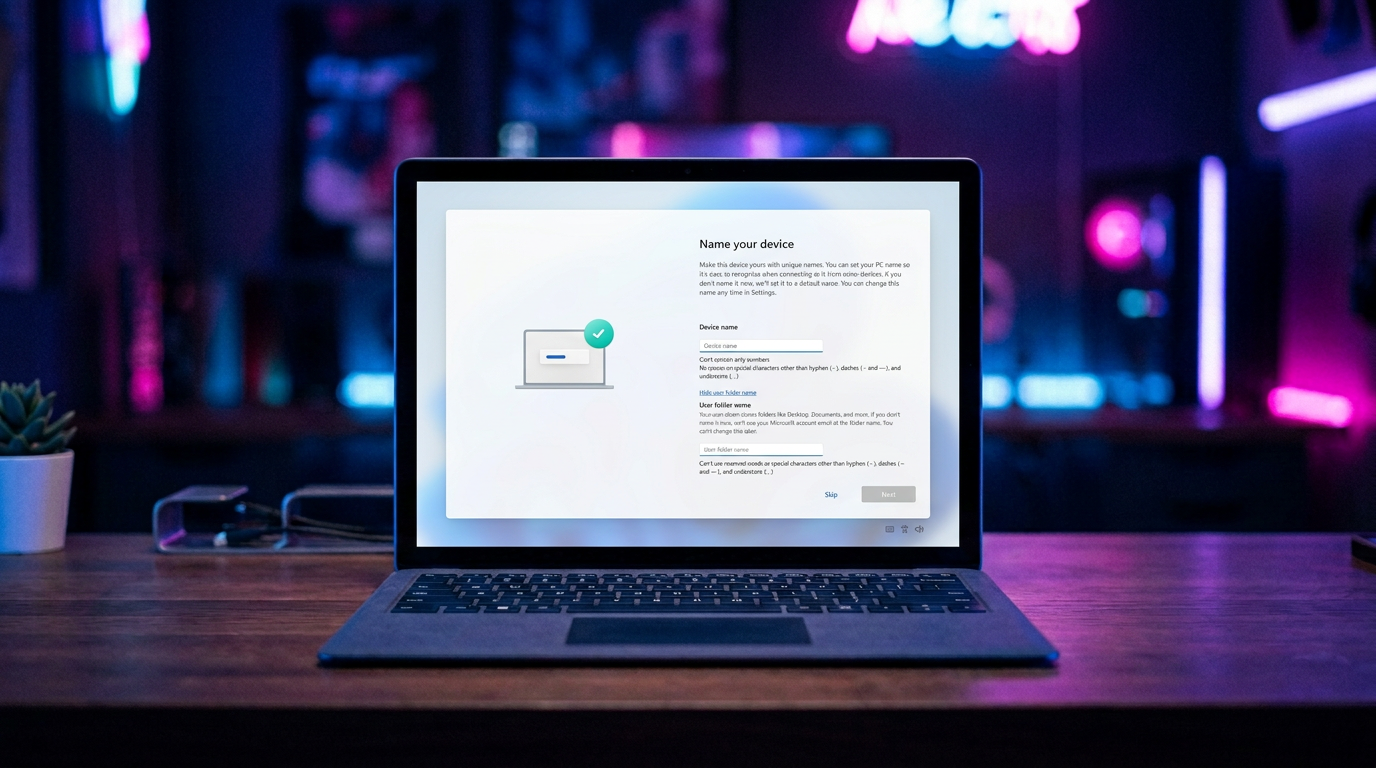
Microsoft insiders push to end mandatory Microsoft Accounts on Windows 11
Microsoft
Windows Central
764 points · by breve · 8mo ago · 616 comments
It has to be a decision from the very top. I hope they realize that Windows is in significant danger, the majority market share for Desktop OS is not guaranteed anymore. It's not just 10% of revenue, it's a foundation for how enterprises ended up on Azure and are bringing big money.
I'm still a Windows power user, MacBook is a wonderful piece of hardware and I'm typing this on one, but I'm not nearly as productive as on multimonitor PC with TotalCommander and Visual Studio where I use all the shortcuts subconsciously.
It's IMHO a better desktop now with the edge snap tile layout and etc. Excellent device compatibility. And I get my linux environment needs satisfied via WSL2 these days.
But damn if they don't get in their own way. I have my own Pro licenses, and even with Pro turning off ads and features is text book whack-a-mole:
* Frequent "Let's finish setting up your PC" after updates
* Killing OneDrive is a like night of the living dead
* Edge popping up "ads" asking you if you want to pin apps when it closes(a lot of windows apps wrap edge, like streaming apps, and show this too on close!)
* Scary Power Automate crap getting injected on updates(haven't seen this in a while)
* Internet search results in the "Home" search
* Random popups and product recommendations
* Registry disabled "features" randomly resurrecting after Windows update
Holy. Hell.
Edit: I recall now; Windows was installing a power automate extension into Chrome during Windows Update un-prompted last year. Caused a minor panic.
As I've said before (https://news.ycombinator.com/item?id=44923555), in my opinion the starting point of this slide for Microsoft was WGA on Windows XP. It was the first time that they made the operating system treat the computer's administrator as hostile.
I need something that actually works. When Linux goes off and decides it'll rewrite its working desktop stack and it's still, ten years later, not useable?
ADHD-Driven development might be fine if you can see your system. When you can't, being at the whims of some teenager chasing the new shiny is just frustrating.
Sure, but Microsoft have to strike a balance, too. If they push too hard in this direction, they'll lose their users to Macs on one side (probably the majority) and Linux on the other (a minority in number, but perhaps significant in expertise and clout). Once an exodus begins, it's much harder to stop. So where we are in that balance, and the state of user mindshare migration, is still interesting to discuss.
Nothing new. Microsoft has been exactly like that since its inception. People are asleep at the wheel of they only realize it now.
If you're (understandably) concerned about the security implications most of the changes can be done manually going off the docs.
The other native Windows feature I really like is the clipboard manager, and I don't have a great replacement for that yet. I'm kind of shocked Apple hasn't built one. If anyone has a recommendation that feels native instead of like a ported Linux widget, please share.
I use Maccy (https://maccy.app/). I've been very happy with it, and wish I'd installed it years earlier than I did. It's open source, and does its one job well.
I haven't used the Windows clipboard manager so I don't know how they compare on features.
People act like it sudden was broken in Windows 11 when in reality it never worked correctly in 7, 8, 8.1, or 10 either. Instead of fixing it, they've only made it worse. It seems like nobody in Microsoft works on core stuff anymore.
Then also in the past year or two the internet search results were lagging the entire search UI causing type jank and stutters.
I disabled internet results in the registry but a recent update seems to have caused that setting to no longer apply ;(
(mind you, MacOS has its own nightmares from KeyChain hell, iCloud crap, signed apps etc - but I can use my Mac laptop without iCloud/etc and go weeks without thinking about Apple)
I guess many of these are fuel for enragement posts (and deservely so), but it's not a reality of how we use Windows.
* Configuring and operating them professionally as part of a larger system. I have "The Linux Programming Interface" and "Windows Internals" sitting right next to each other right next to me.
* Using productivity software professionally or for hobby.
* Doing leisure activities like gaming, reading, etc.
These annoyances are like 0.001% of my interaction with the OS. While super annoying, they are mostly brief and can be worked around(mechanics car though). The value proposition for me is still super high and better than the alternatives for me.
Probably the biggest negative impact on me is how these problems feed the flood of "Microslop" slop drowning out more interesting discourse.
In particular, I advise everyone to turn off web search in the start menu, it makes it so much faster and more useful:
Computer Configuration > Policies > Administrative Templates > Windows Components > Search > Don't search the web or display web results in SearchMacOS has a lot of flaws, but at least I'm not fighting it. If I say to do something, it does it. It doesn't suddenly revert your decision.
I don't know much about MacOS but the same isn't really true of [desktop] Linux. Most of its flaws are not easily fixed in the same way and are much deeper architectural/social issues that require a lot of work to fix.
Windows is super annoying to power users in large part because you know it can be beaten into submission with enough effort, but that effort is usually just not worth it.
Installed LTSB for a conservative superior. He just wanted to work, without changes. I supported that happily. Until we had to start using Office 365.
Or did they revert that restriction?
And the shell environment is POSIX, with most bash scripts just being ootb compatible without WSL-like shenanigans.
Fwiw, this one is entirely predictable. Windows shows the Second Chance Out Of Box Experience (SCOOBE - pronounced like Scooby-Doo) each time a semi-annual update is installed, i.e. once every six months.
The Linux daily driver windmills I am currently tilting at are the lack of 3D infrared sensor-based secure facial recognition. On Linux we currently are missing true 3D mapping, the option to bind the biometric data to the onboard TPM, and running the matching in something like the Protected Media Path stack Windows uses, so Linux facial recognition solutions like Howdy are not as secure as on Windows.
Other deep gaps in the Linux daily driver role are not having a solution to encrypt our disks and hibernate under Secure Boot, nor a comprehensive common application framework for power management like Apple's IOKit and IOPowerSources so my Linux laptop gets far less battery life than my macOS laptop. Linux has many different ways for applications to participate in power management, so as a result there isn't a single way for the applications to cooperatively negotiate for this centralized scarce resource based upon user preferences.
But the death by a thousand tiny cuts I was experiencing on macOS led me to reluctantly conclude I'd rather face the thousand tiny cuts in Linux where at least I have the option to go to the source and address or fix it myself a particular cut got annoying enough. In my clients' corporate land, I hide behind a small army of desktop teams that grind away most of the annoyances you list (mainly through the pricing discrimination magic of Windows enterprise licensing).
I've resigned myself to not hold out hope for re-experiencing what I felt was my personal peak user experience of the early 2000's PowerPC PowerBook and Intel MacBook Pro and early Mac OS X. It was a portable Unix workstation that could run a full virtual Windows box inside, giving me the best of all worlds, and It Just Works bled into every nook and cranny of the entire stack.
I believe a lot of it came down to that Steve Jobs was an intensely personal user of his own products from the perspective of someone doing it himself as much as someone who is the head of a multinational multi-billion dollar corporation could be, with as little corporate desktop support as necessary, and he had an extreme intolerance for annoyances in the small details.
Linux as a daily driver has many, many rough edges. But at least I can durably contribute into it as I solve my own annoying small details, and hope a flywheel effect eventually takes place in the future.
Did you consider coreboot with Heads and a hardware key instead?
Zero bullshit and it just works. Why does this have to be $1k+???
i agree with most of what you said, but this is borderline fantasy.
the majority of home market share is not guaranteed, sure. with how good gaming is on non-windows machines now, there isnt much for a home user to get locked-in with (except games that require windows-only malware i.e. anticheat)
but government, institution (hospitals, universities, etc.) and large non-tech enterprise? that will be windows for at least 20 more years even if they started to change everything now (which they arent). and the number of machines in those places absolutely dwarfs the number of home installs.
This comment is multiple years out of date at this point…Lunar lake was considered an exceptionally successful Mobile processor platform that was extremely competitive with Apple M series chips, Panther lake is supposedly improving on that by an even greater degree, and Nova lake is supposedly an extremely promising upcoming desktop platform, and their Arc graphics are excellent for the price point. This is like writing off MacBooks during their thin and hot touchbar/butterfly keyboard era and then assuming they’re that way still in 2026 when they’re now extremely well received laptops lol
governments, institutions, and large enterprises (like, thousands of people) do not have the power to do anything "suddenly". they have contracts, and cash flow concerns. you cannot suddenly replaces tens to hundreds of thousands of machines.
20-50 years down the road? maybe! they (microsoft) surely arent doing themselves many favors. but they are certainly not in "significant danger" today.
A couple weekends ago, I made the overdue call to kill my dual booting with Windows 10 and go full Linux. I'd considered finding a copy of the embedded Win10 long term version or paying for the patching. The local account was one of the things holding me back from doing the update. I knew I could muck with things to still have it, but figured it would be yoinked away later. Similar thoughts to updating the old threadripper that no longer qualifies for Win11. The reinforcement came from all the blasted copilot integration -- notepad, paint... just looking like evasiveness was going to be everywhere.
For a long time my 'good' box was Linux, my old box was Windows. So much just works. I still have an M2 with Windows 10 on it, but it is not in any machine right now. Will see if I run out of space and need it before they actually provide something I'd want to even have on my desk.
It's not like apple just deciding that we don't do 32bit applications anymore all of a sudden. However many ads MS will shove in windows, as long as they can run software that they depend on, companies and factories won't care.
If you have a PC at home right now, and you're not technically inclined, and Windows is driving you nuts, you're just not getting a new PC again. More and more people are managing without PCs at home, using their phone or a tablet.
To many of us, the idea of your phone as your primary computing device is complete bonkers, but more and more people are choosing that option. Microsoft isn't really giving them a reason to stay, because every time they fired up their laptop Windows updates starts rolling in, taking forever, the UI keeps bugging them about things they don't care about and now there's ads in the start menu. So will Windows attempts to boot, the average person already did the thing they needed to do on their phone.
Windows Home Edition, or whatever it's call now, isn't competing with Linux and Mac, it's competing with Android and iOS, and it's losing.
The switch to Linux is happening this year. Until the end of the year they want all workers on Linux instead of Windows.
It is possible, and fast if you want it.
Haven't they been doing this every 5 - 8 years since 2004?
I think Microsoft won, too.
I think theyre terrified of positive examples. Especially ones with FAR lower TCO and lower geopolitical risks.
out of curiosity, "large parts" of "one german state" is how many machines roughly?
i am suspecting that it is probably nowhere near enough to put windows in "significant danger". however, i am rooting for their success and hope that they thoroughly document (and publish) the process. i have never seen a transition like that go smoothly, let alone when it is in government.
The options for the average user are not linux or windows, but only macOS or Windows. Gaming is abysmal on macOS on any of the current hardware.
That said, I agree with you that there's less-and-less gaming lock-in on windows, but that's because the majority of gamers are gaming on iOS and android.
I don't think you are aware of how much the landscape has changed regarding gaming and Linux.
i dont think this is true. steam surveys also do not agree: linux gamers are about 2x the number of OSX
Majority of mobile gamers. A very distinct category.
Valve is dependent on Windows games market, and Apple mostly cares about iOS games.
I don't know. A company worth trillions of dollars does a pretty fine job of making Windows incrementally worse in new and interesting ways, each release.
There's some truth; the bloated company structure has contributed to these unforced errors, but just at an engineering level, people are releasing this tripe without the skill or training or backbone to know what is bad, and push back on toxic management decisions.
Engineers collaborating with oppressive management is a technical failure. Google is riddled with the same problem. I'm sure all the FAANG-a-likes do. Paying billions in salaries to sycophant devs. They have the market share to keep failing upwards. They don't deserve it.
The penalty for Microsoft ignoring their devs might just be a slow decline into irrelevance, not a bridge collapsing, or an autonomous vehicle hitting the lane barrier because the boss refuses to use LiDAR, but it's all bad management causing an engineering problem.
Everything from Edge as a cross-platform Chrome derivative to .NET as a cross-platform open-source toolkit to their React Native builds and experiments with Android suggest that MS itself understands this. The Linux side demonstrates it with things like Proton and the forthcoming Android desktop mode. The Web demonstrates it in general as it expands in capability and more applications skip shipping native entirely in favor of technologies like Electron. And not that I don't personally sob in system RAM, or have extreme reservations about how we got these things (see: Google and antitrust), but I can't say I hate the ease of switchover.
Ecosystem lock-in didn't go away, but it feels like it's changed a lot.
Whereas in more recent years, keeping a closed-source rendering engine that was no longer competitive in implementing the spec, wasn't being used when people had a choice, and was being used as a dependency for core components of the OS, probably wasn't winning many arguments.
(Edit: yes, I know Chakra was open source. I meant Trident.)
OTOH the Windows UI is far better well designed and intuitive. But yeah... I'd rather fumble around in macOS: Windows is always trying to upsell a service that I don't need. If I say no it will helpfully keep reminding me (my answer is never going to change). I have 32GB ram and a recent processor being fed tons of wattage -- it feels so bog slow.
Windows needs to fix itself fast.
now i'm using kde in linux land and it's the best and most customizable experience. I can't imagine going back to windows ever and would be missing a lot from linux if i went back to macos(though it would be fine).
getting macos keybinding in linux land is a game changer to me: https://github.com/RedBearAK/toshy and this just makes me feel at home.
Meanwhile, Windows had minimize since version 2[0], except for whatever reason windows minimized to desktop icons, and there was no desktop folder. They'd known they'd invented a worse version of Mac OS, and in Windows 95 they made sure that there was not only a real desktop, but also a list of all open windows. This design was so successful that the only major tweak that stuck was merging the taskbar and Quick Launch[1] into something that superficially resembles the OSX dock, but is just plain better[2] because clicking an app icon actually shows you all the open windows.
[0] I don't have a Windows 1 install to check with.
[1] Strictly speaking you could put anything in Quick Launch, but only apps go in the Win7 taskbar
[2] Oldschool NeXT users will point out that in NeXTSTEP, minimized windows had an actual title on them, and the app icon instead of a screenshot of the window at tiny scale.
A lot of shortcuts are shared between windows and linux and fairly consistent across applications. Mac is the one that takes a decided "we're different" approach to shortcuts. I.e., Alt+L for address bar instead of Alt+D, Command swapping with Control, Q instead of W for closing tabs, Command+Control+Q for locking a computer instead of Super+L, etc
Windows menu navigation by keyboard allows almost everything to be done with no mouse, and macOS doesn’t. Alt-space, X will maximize a window from 3.0 to 11. Not a direct shortcut, more like the / menu of Visicalc or Lotus 1-2-3. Not as fast, but close, and better because it’s discoverable - if you forget, the menu is open and you can see the next step.
Doesn't matter if I show them that I can be easily 10x faster, do stuff simply impossible otherwise, has tons of plugins etc. its just ignored.
TC is probably one of the reasons I don't care that much about problems in newer versions of Windows, I don't use Explorer, I don't use windows search, text is viewed with Lister and not Notepad...
The best part about Total Commander is that my license from like 20 years ago is still valid, and every update that comes out still works with it and never pushes for upgrades, etc. As much as new software has dark patterns and upsells everywhere, Total Commander is wonderfully frozen in time in that regard.
Microsoft built its empire because of SMB and Active Directory, and other enterprise features, where actually these things are important.
Ironically orgs hate MS Accounts just as much, as they have to give up a degree of autonomy, control and security compared to how Windows used to be.
I realize you probably are referencing visual studio, but at the OS level KDE plasma seems to have copped Windows hot keys wholesale. I was giving it a go recently and was delighted that even meta+arrow keys for monitor switching fullscreen apps works. My only gripe, and what got me booting back into windows, was that even the latest wifi drivers for my brand new wifi 7 motherboard were too flaky to reliably play multiplayer online games.
A GL.iNet travel router in WiFi to ethernet bridge mode is an excellent stopgap until Linux support arrives. It also has the benefits of (a) taking with you on trips for safer/easier internet use (use your home SSID, even auto-VPN traffic if you want) and (b) letting you plug in other wired-only devices adjacent to the computer.
Here are their travel routers filtered to just those that support WiFi 6 and 7: https://store-us.gl-inet.com/collections/travel-routers?filt...
I used to be, but in 2004 I switched to Linux.
I still use windows as a secondary operating system on another computer, though only Win10. I decided I will not transition to anything after Win10 as Microslop declared war on the users with Win11. Which was the case already before Win11, of course, but I feel the qualitative difference is too much now.
Curious about this, what specifically?
Satya is incentivized to maximize his own pay package, not whatever it is that customers whinge about
If you combine mandatory online user accounts with telemetry and Windows Recall, you have a system for building out advertising profiles linked to known individuals.
Having said the above, I think that KDE is almost there to have a functional UX that can replace Windows. Not there yet because of random bugs, but almost almost.
Once gamers actually switch to Linux, which is a viable thing, they'll teach their family members. Home users will switch to Linux, and Windows will become an exclusively enterprise and government thing. But once average person is comfortable with Linux because they have it at home, those institutions will start switching to Linux too. And that's how Microsoft will fall. Just like most other corporations - through their own greed.
Why?
Also, the Macbook keyboard is fucked. I constantly press buttons I didn't mean to. This literally never happened to me on any other device. And that's after years of using a Macbook.
But I never thought Apple would venture into $599 category. Other than Education I am pretty sure large enterprise customer can get Neo for $499 as well. This completely shift the dynamics. And I guess it wakes a lot of people inside Microsoft, if they don't fight, the collapse of M$ might finally be numbered.
Windows collapsed inwards on itself in 2031 when MS realized telemetry data was 10X as profitable when sold directly to nosy exes, neighbors, priests, and so on instead of advertising agencies. This practice was highly illegal, but the MS legal team unanimously ruled that SCOTUS's ruling on it was unconstitutional. Nevertheless, society barely survived.
Windows XP lives on quietly powering ATMs. We also still have Surface Tablets. They don't function anymore, but they hide the paunch of aging sports commentators well and NFL players and coaches greatly enjoy using them to bludgeon each other on the sidelines.
this kind of thing happens with the founder, but follow-on CEOs very very rarely have the leadership and vision.
I wonder how leadership can be the same for someone who initially folloed others when they joined.
Over the weekend, a family member could not log into their laptop any longer. Turned out to be “a problem with Teams” that required an unscheduled update which was marked as optional. Needless to say that they never used Teams on that machine.
When the login worked partially, their files weren’t accessible because they accidentally saved it on OneDrive which now defaults to storing online only. And OneDrive was also affected by the Teams bug.
Spent a good part of the day cursing in the direction of Redmond.
Utter insanity that this can happen in a major OS. I switched to Linux for personal use years ago and have only gotten more grateful for that decision over time. My head would explode if a Linux distro tried any number of things that Windows regularly does to abuse their users, it's unfathomable.
This is why local backups should always have the highest priority.
Storing online can be useful, but people should never forget that local backups are the best.
The problem is that on a fresh system with a free MS account, OneDrive shows up as the first choice as “$User - Personal files”. No notice that this actually only stores it online and offers only a fraction of the 1TB local drive.
Truly deceptive and my mistake for not noticing when I helped to set up that laptop.
Holy shit that's nuts!
- I search for and buy something, they keep showing me ads for the thing I don't need anymore.
- I check out some random product, they all think if they just show me one more ad with that product, I will surely buy it.
While I am not immune to ads and they help with brand recognition, it can sometimes serve opposite purpose than intended.
You have an account that exists on Microsoft - on being somewhere, multiple places at once, even in location and function, in a ocean of Microsoft but whose existence and ownership of existence is finely permissioned.
vs.
You own your device(s).
Uninstalled, restored from a recent backup, and haven't used it, or any other cloud sync application, since.
Guess what? With Apple's new Neo laptop the price is also way way wayyy out to lunch.
If MSFT gives a business a huge bulk discount to buy their laptops + Office360 + Teams... OK? But as a "consumer" it really sucks.
Want PC gaming? Steamdeck or Steambox.
They're fighting to seize the very specific market segment of "I don't like Windows and don't want to use Linux or a Chromebook, and I'm also poor, but still want to pay a premium price for an underpowered tablet with keyboard glued to it."
Like here's a $500 PC:
https://www.amazon.com/Aspire-Copilot-WUXGA-Display-Processo... https://www.notebookcheck.net/Acer-Aspire-14-AI-review-Basic...
Twice the storage, twice the RAM, comparable GPU. CPU is a slower in single core, but comparable in multi-core. Faster storage. USB 4, HDMI, multiple USB A ports. Supports more than 1 external monitor. Yep, chassis and screen are worse but it's better in many other ways.
My $600 2022 corporate laptop is faster and smoother than a $600 Neo, and that's with the corporate spyware crap installed.
i don't think it makes much sense to recommend specific craptops, every manufacturer seems to have a bazillion SKUs they reset every six months in that price range... buy whatever's on sale :p
or buy used of course
A fun, brightly colored, relatively inexpensive, Windows-less laptop that you can use for doing your taxes while watching a movie has appeal. The performance isn't that important, so long as it is as responsive as the owner's phone.
I have an RTX 5070TI laptop. 95% I use it with Tumbleweed.
Unfortunately with work I don't have too much to play with LLM training and such.
The ultra poor person system is a used 200$ Thinkpad ( something about 2 years old) + your Linux distro of choice.
This is what the average computer user is using to try to run your apps and websites. And remember - a cheap laptop bought today is going to be in use for at least five years.
To me, all of those seem woefully underpowered, but $180 is $180...
Around 300$ it gets better, specifically if you're open to Dell and other brands.
I don't think traditional desktop operating systems are best for most people. I believe a Chromebook, or an iPad with a keyboard, is best.
And with 8GB of RAM you are quite limited in the business sector as you say
The Neo is also not a play for businesses directly. It seems pretty clearly a play for students who will eventually enter the business world with their personal laptop preferences.
Anyway, I installed Linux Mint on there. She has been using it every day and at least according to her there hasn't really been any jank (and I told her to call me any time if something breaks and I'll fix it).
At this point, I think Linux distros have gotten good enough to realistically start stealing users away from Windows. Linux Mint is easy to use, runs fine even on modest hardware, and doesn't push a bunch of shitty ads at you. I think there is an option for telemetry, but I also think that disabling it actually disables it.
Wine and Proton have gotten so good that outside of modern MS Office, most Windows things just run if you need it, but if you're not using MS Office heavily then you likely can get by with web apps and/or the Linux alternatives.
Maybe it really will be the Year of the Linux Desktop!
We got her set up with Discord so she can screen share if she needs to.
Buying a Windows laptop is a default even for a lot of Linux users because the alternatives are mostly too US-centric. In Asia, Framework only delivers to Taiwan - which is astounding given the technically advanced population of consumers in South East Asia. I'm not aware of System76 etc having any sales channels and after sales service setup in Asia either.
Until Asahi becomes a stable choice on Macs, if you want to run Linux on a laptop of a reputable brand, a Windows laptop is basically the only option (even though you may just wipe it). I kept mine dual boot not because I actually use Windows at home but because I paid for the bloody license, even though against my wishes.
I would rather advise XBox, Nintendo or PlayStation for gaming.
Not that I'd know, I've probably seen <10 apple laptop devices in my life and never used one.
Having been using Macs for work and home use for the last few years, I have to say you’re right. And yet, in spite of that, I’d still rather use MacOS over Windows. The fans on my Mac never start spinning up as soon as the login screen appears or randomly when it’s sitting untouched on my desk, I never find MacOS to have rebooted in the middle of the night without asking me, it doesn’t constantly nag me to use iCloud more, and it never shows ads for Apple shit in Finder.
When I use MacOS, the worst I feel is the developers are a bit sloppy. When I use Windows, I feel like the developers actively hate me.
Apple’s real differentiator is their silicon. M series chips are just incredibly good and you get a full workday out of them on battery.
The M1 Pro I still have at work is easily the best laptop I have ever used. For side projects I use an M4 air with maxed out RAM and it has no issues with anything I have thrown at it.
You had gadgets in Vista & 7, but they could easily be disabled. 8 had live tiles for things like the news (effortlessly removable) and introduced the Microsoft Store (which increasingly needs an account). 8.1 added Bing Search to the start menu (requires Regedit to remove nowadays), 10 added news & current events to the start menu, and in 11 they want us to register Microsoft accounts to use the OS.
It's ridiculous how much control we've lost over Windows so that Microsoft can tell shareholders more people are doing Bing searches and signing up for Microsoft accounts than ever before.
Source: I work on the Microsoft Store.
If it is in fact possible then you’ve done an excellent job hiding it.
There are definitely concerning trends with the direction of macOS development, but I still maintain a Windows 11 PC in a closet that just runs steam to play games and holy shit it makes Tacoma feel like the pinnacle of UI design and consistency.
That is putting it kindly mind you, it has become increasingly user hostile software. Distrusting you, the owner of the computer and software, whilst also exploiting your information and usage telemetry, hoovering up private files into the cloud, pushing their online services into every crevice. MSPaint connects to the internet now, like back it off just a little bit you greedy sods. Can't a man draw some pixels in peace?
1) Kernel-level DRM for multiplayer games (looking at you, Marathon)
2) Intentionally nerfed MSO 365 apps on web and macOS
You could make a strong case that MDM (which InTune uses as well) negates the AD + GPO advantages of the past 20+ years in enterprise.
This finally forced me to quit League of Legends (this is a buff)
Come! dota and deadlock welcome you
Don't get me started on that. Outlook PWA is so stupid that I can't delete invitations without sending a decline response. Run all rules on the inbox? Tough luck, no such option. I use a Linux VM at work and the only Microsoft thing I am forced to run on my Windows PC is Outlook. That PC is basically the VM launcher at this point because everything else I need to run is on KDE inside the VM and I couldn't be happier that I get to use KDE both at office and home. Microsoft deserves every ounce of hate that it gets and much more.
Maybe worth checking what Steam Deck's connection has configured differently given it's on the same network?
Good point about AI too.
This is on mint Linux and unless I'm remembering wrong years ago it was mint Linux that had the same issue completely different hardware and network
With ssh access to the underlying arch/fedora fork, it'd be an easy fix with AI
I have not had any issues I can remember with Linux wifi for as long as I have used wifi.
You have a non-default gateway in addition to a default one?
Also, I recently switched from KDE Plasma (one of the Bazzite options) to xfce4 and I've seen massive gains in battery life, about 1-2hrs extra. I don't remember how many hours I used to get on win10 on this laptop, but I'm sure it has never been as good as this.
I think I'd probably say that the problem with Windows is it's made and maintained by people who own macbooks.
We don't need three garbage corporate operating systems mismanaged by MBAs, we already have two!
Anyone who's ever tried to get support online with a question about Linux will quickly meet *actual* user hostility as they're asked why they didn't know to check for the config file in the filing cabinet in the basement behind a locked door saying beware of leopard, how dumb they are, etc.
Linux is indeed for people who can love linux. For people who don't like computers, there's basically no solution.
Windows, MacOS, Android, iOS.
Ironically, 3 of the 4 are unix based with product people in the loop.
Linux can work as the savior of computer users, but it's not going to happen with a bunch of people who fetishize using a computer like trinity in the matrix.
Personally, although I'm not a Linux maintainer, I am a dev and I love doing work that makes UX better for everyone.
If I could wave a wand, I would reduce the number of Linux distributions down to 10 and absolutely no more.
It is a ridiculous waste to have this many duplications of work and bugs, along with the lack of collaboration.
To specialize that statement a bit, Linux is made and maintained by people who showed up and contributed. These two facts create a vicious cycle. The people show up to add things they love to Linux, and Linux becomes something that only those exact people love. We're deep into this spiral where Linux has become specialized for ultra-nerds who enjoy solving puzzles to get their wifi to work.
If you look at old Linux magazines, the community is completely different. People were focused on "beating Microsoft" and democratizing computing. The people who took those goals seriously have left the scene.
Do we think these companies aren't selling anything??
Every product person I have worked with was just a SME in their domain, and pushed for a cohesive piece of software that solved their (users) needs.
For instance, almost none of the useful settings from win32 apps sync - migrating to a new PC is painful, your apps don't move, your settings are all missing. It takes weeks, you don't just login to it. So this idea that it makes all your settings sync is maybe 10% true.
The argument for this online account (vs just a container for apps) is that you think a few Windows appearance settings must be synced always, or that you want to save things like your BitLocker keys in the cloud (which probably makes them visible to FBI or whoever else). And the security implications need to be spelled out in plain language. And in the end, it's a pretty bad argument - Grandma doesn't need BitLocker, but the people who do want a clear explanation. A lot of the rest could live in a "Microsoft apps" credential layer: Edge, OneDrive, Office, etc.
I want to feel like I can login to a recovery console and fix a bad partition. I want to keep using the same username across Linux and Windows. I want to recover a router with the old laptop that has actual ethernet, and who knows if it has cached credentials? My Microsoft account is my least used one, and who knows if it is secure?
One last thing: logging in with biometrics is amazing, but why must I use a low-security PIN in place of your pre-existing password?
Please fix it all.
FAFAIK, all characters that are allowed in a user password are also allowed in device PIN codes. Knowing Microsoft, I'm sure there's domain policies to alter/restrict this. And the idea behind it is sound: that PIN is tied only to a single device, meaning that even if someone watches you enter your device passcode (or uses a keylogger), they can't go to a different machine or online portal and re-use the captured credentials there.
The reason why it is tied to device isn't to protect against over the shoulder watchers, it is that the resulting key that is stored in the system is unique from system to system so you can't lift the key from one machine and use it on another. Maybe not as useful for a PIN but does make it harder to use a stored key to replace a biometric key so a compromised key doesn't leave every system you've ever logged into vulnerable to a key-auth attack.
Last weekend I finally started dual-booting Arch Linux as a trial. Yesterday I deleted my windows partition.
Too late, Microsoft.
I’m dealing with sub-par Office on my work machines. But as MS moves/forces Office into online modes and I’m hoping that it’ll just be an electron app I can pull up.
I can buy a thinkpad and install linux on it without once creating a microsoft account. I can buy an android phone supported by GrapheneOS, and use it as a perfectly fine phone without ever creating a google account.
I cannot buy an iPhone without creating an apple account, without getting ads shoved in my face by apple, without them deciding what I can and can't install on it, and them charging me for the privilege of writing my own software.
Microsoft doesn't deserve as much shame here as Apple does since MS isn't requiring their hardware vendors to lock down the hardware to only be able to run Windows (even though they very well could). Apple, with iOS, is.
You can both buy and use an iPhone without creating an Apple account. You are limited to the built-in apps, but those built-in apps cover most common use-cases.
Most people wouldn't want to do this, of course. But you can.
I know exactly what I’m getting when I open the one with Apple, and I have visibility into it from the settings of every device, feels secure and I never get emails or spam associated to it.
The Microsoft account is another story. It’s a black box, I don’t know what they are collecting, I know that even if it looks like a square today, it’ll be a hexagon tomorrow, and a triangle the next day. They’ll change the product name, merge with some other crap, etc. to access it, you’ll have to remember what the service was when you created it. Live? Hotmail? Outlook? Are they the same as my windows account? Who knows.
It’s just not trust worthy IME. I don’t have an issue with creating an account, I have an issue not knowing why I need it or what I get from it.
Again, android phones with GrapheneOS or windows machines with linux let me use my hardware fully without creating any advertising-ridden-evil-corporate-company's account, including building and running my own apps.
I can't even build my own code for iOS, let alone run it, without an apple account (and paying apple money).
Does Windows machines with Linux here mean WSL2 on Windows? I think the problem people have had with Microsoft accounts is exaclty that they need to use a Microsoft account to use their computers and they don't like it.
If it instead means Linux machine (not sure what Windows has to do with it), then I think people are genuinely happy to have the freedom to use their hardware as they see fit without asking for permission or updating Microsoft or Apple.
You can use an Apple computer without an Apple ID and build your own code on it, but that does seem to be a holdout from the old days when Apple had products like the II Plus and System 9. It feels like they're moving towards the Microsoft model of /mandatory/ accounts even for their desktop OS.
There is also the ability to build code on your Mac and run on your phone without paying, but pretty sure at least one step in that requires a free account. Guess you could download, build, and run open-source apps that way.
Both of them deserve equal amount of shame because they're both trying to do the same, force you to have an online account associated with a local user profile, either directly or indirectly.
Not sure why it has to be a contest who "we should shame the most" or whatever, how about saying both of them suck when it comes to this?
Windows had a good thing going (if you ignored some bad releases), but them pushing it too far with 11 and the Linux desktop making great strides, sort of put the nail in that coffin for me.
Not sure what they can do to make me reconsider. It's a trust issue now.
It went from web devs and designers to now HR, admins, anyone. I don’t think we’ll swap Active Directory just yet but I would’ve never thought we’d do this. We’re an old school slow red tape wrapped industry.
Cloud too, Azure could not secure our business even though we’ve been Microsoft everything. We’re in AWS.
The direct answer, though, is largely one of execution. Microsoft isn't just pushing this heavily. They are doing so poorly.
So you can't have Firefox, Organic Maps, good ad blocker, popular chat and video apps and numerous other things without it. Do you consider that normal?
I will say that I think the forced linking has encouraged other unpleasant behavior like the profile folder hijacking to OneDrive. I rather like having this stuff in OneDrive. I do not like that it is pushed so aggressively. “We moved all your stuff to OneDrive. You need to subscribe so we don’t delete it.” This feels hostile. So some of the distaste with logins tied to the cloud is probably more about the surrounding ecosystem.
What benefits am I getting from a Windows account? Syncing my profile picture? OneDrive is a mess I rather not have, is never happy.
You can install XCode CLI dev tools without an Apple account, which comes with clang and swift for example. With this, you can build most Mac software, but I don’t think you can run Swift tests without a full XCode.
As the sibling comment notes, you can install GCC/llvm and whatever other open source tools and build Mac software without full XCode.
You can also install Apple container support without an Apple account.
I'd definitely much prefer if even for "ecosystem" the companies would not require online account except where truly necessary (purchases?), but for operating the OS itself, I do feel there's a line in the sand where online account requirement = no.
Most people DO use one, though, because that's how you access the iCloud services that underpin the Apple ecosystem. But it's not MANDATORY.
My understanding is that you cannot even log into a Windows machine without an MSFT account. That's a big difference.
An Apple account together with an iPhone and MacBook let’s you share clipboard, passwords, notes etc., a no brainer.
Windows laptop and iPhone? I guess an Apple account still is more useful here too, actually. So the average user does not really need an MS account, hence the annoyance.
You can also still log in with a completely local account as well. It takes a few extra minutes to set up but once configured it works fine.
The system is full of dark patterns and roadblocks that steer users towards an MS account, but you don't have to use one.
And phones have been little spying machines from the start, people are more used to their phone spying on them than to their PC doing the same. I don't think macbooks require an Apple account for example.
Microsoft is a cloud provider now -- their software exists to support their cloud business.
Except an iPhone and iPad,to install apps people want and need. The number of people who use an iPhone without apps can be rounded down to 0
The answer is: Because the Apple Login is not calling out for every service, including login.
Honestly, for anyone who's on this site, switching to Linux isn't hard or problematic. Go for something like fedora silverblue and you get a similar experience where you don't have to control the operating system yourself.
The only thing would be if your company wants you to be on windows.
And then every few years I have some reason to boot Windows and I go "ah, here it goes, I bet this is gonna be slick as hell".
But you already know how the story ends - every single time it's a confusing, hostile, slow and ugly experience.
Also, it used to be that you could say "actually, if you really take care to set it up, Linux is usable for nontechnical people". But nowadays Linux is actually the obvious choice for non-Apple hardware. There's really no reason to leave your family on Windows. Specialised applications are the _only_ remaining reason to use Windows, and most people don't need them.
My dad has also been primarily a Windows user since it existed. A few weeks ago he switched over to Linux, his first time running it.
MS is killing themselves with this mess.
It's just better without Microsoft.
Like, I know that "I am the product" when I open Instagram or Facebook, but the overall experience makes me not think about it; using Windows I get constantly remembered that I am the product: ads, forced Copilot, telemetry making things slow/showing up in the Task Manager, more ads, mandatory account (more telemetry, yay!), Edge begging me to use it... I'm just trying to do my work and the OS gets in front of it!
This is (technically) a paid operating system. Ubuntu is free and doesn't do 1/100th of that (and Ubuntu isn't even the best distro in that regard). I tolerated Windows 7, tolerated 10 a little bit less, but Win 11 is impossible to use. And I haven't even touched the performance issues...
That was when I completely left that ecosystem, Office 365, everything. It was literally impossible to log in. Not surprisingly, the Office 365 bills continued to charge even though accounts were inaccessible. To this day, i'm far too scared to even attempt to use Azure on a personal account for this reason.
This is the minimum peace offering acceptable to your long suffering users.
2026 is the year of the Linux desktop. It's time - Linux has never been better or easier to use than it is right now.
One has to wonder if this change will occur, that is due to these state laws requiring various levels of age verification. I can see MS stating you need to have this account because of the Age Verification Law in your State.
In a way, California's law is a huge gift to big tech, and now it is being replicated to other US states with additional requirements.
I look back fondly to the time I had using my Dell XPS when WSL first came out, they had me hooked. I've been using MacBook Pro for about a decade now and I can't even fathom going back to windows. Every time I open the start menu I feel personally attacked.
I used to obsess over reading xda developer forums and playing around with my android phone. I would laugh at the "sheeple" using apple products for not being customizable and giving away their freedom.
At this point in my life "it just works" is good enough and no longer a point of ironic derision.
I am the same. I used to fiddle and obsess on customising every last thing possible. Now I just want the damn thing to work, and MacOS does exactly that.
Really wanted one, but was a poor recent college grad at the time.
Is the reasoning that if you don't have a Microsoft account, they'll do less of the ads nonsense which is baked into the OS? Maybe I don't get what the issue is.
I've tried linux, but haven't converted (though I'm tempted), but my mac has a mac account and nobody seems to complain about that, my android has a google account, why is a Microsoft account so much worse.
The things I feel it is more important for Microsoft to get rid of 1) the push for OneDrive everywhere - Mac is as bad if you don't have iCloud 2) updates requiring "set-up" and trying to trick you into adding services in the process 3) Windows Hello moving the "sign in" button down 10px once it recognizes you....WTF!! 4) ads, ads, ads (though if you don't use start button much or Edge, I think this is mostly avoided 5) letting apps add shortcuts to your desktop on an update.
What am I not understanding?
I guess I'm wondering why Apple and Google don't get the same pushback?
It's such a small niche right now they do not even care if they're in their cloud. Enterprise users are the absolute majority of their user base revenue-wise.
However dropping the requirement might force them to change some things. Like in Azure-related stuff such as OneDrive where you have to design/build/test it behave differently if the user is not constantly logged into the Azure account. This means that they might decide to continue to force the Azure account and if they lose more of the end consumers so be it.
Unless they decide to separate Home and higher versions of Windows even more and drop the requirement for the home version users. But it might be more trouble than it's worth.
Enterprise is where the money is.
Get out before their terms allow them to sue your company and hold your data to ransom if you think about migrating away.
I think he needs to be replaced before his obsession kills the golden goose that is windows.
"Ya I hate that. Working on it." - Could mean anything, which I would argue in this case, is equivalent to being meaningless. Does this mean Hanselman has a team with tickets lined up for the next sprint to allow offline accounts as a first-class workflow? Or does it mean he sent an email to the relevant stakeholders asking, "Hey guys, what can we do about this"?
I am not encouraged that we will see a change in momentum from Microsoft on this issue.
Windows account login provides decent value: Bitlocker recovery, device management, Onedrive sync (even the free version), simpler RDP & remote RPC authentication.
You won’t even defeat telemetry with a local account. Windows TOS grants telemetry consent.
Why do you guys care so much about this? It feels like a bikeshed – something easy to complain about with little nuance. What will be won if MS concedes?
Try to think about it from a vendor perspective. How much more difficult it is to maintain support for local accounts, now that so many activities depend on online support. It's preferrable to have a universal/ online credential you assume to be authenticated, rather than having each app test for identity. This applies to consumer experiences (e.g. cloud storage, AI inferrence), and vendor service (telemetry, crash reporting, etc)
For your main PC, are you really using it anonymously (like you would with TAILS or other secure OS)? In practice most people are immediately logging into email (google), Microsoft, facebook , github etc the moment they set up their PC. So it seems to be overcomplicating things for Microsoft to deny them the credential, when it carries so much more value for both the consumer & the vendor.
Its not about anonymity. It's about control. I don't want to ask permission to login to my computer. It's that simple.
It just doesn't make any sense. Starts off the user experience with a kick in the nuts and a slap across the face. "You don't own this machine"
Much like politics, you want sane, healthy competitors. Microsoft enshittifying as much as possible might bump up the Linux numbers in the short term, but I think it would be unhealthy for Linux in the long term. You want a major power like Microsoft pushing back on some of these trends, which completely opens the door for small players to benefit from that pushback.
I hope the folks at Microsoft can roll back as much of the slop as possible.
Mostly agree until this line. MS enshittifying their ecosystem is the resting state and if you believe in the free market (I don't btw), customers voting with their money or data (since they're the product) should be applauded.
TBF Apple does this too on macOS and arguably iOS. I think a lot of their longstanding pushes to merge the two OSes is hostile to their user base who want stronger separations of concerns; a desktop OS has different requirements and capabilities than a phone or a tablet.
Would love to have a Neo with Sequoia which in itself is a step back from Sonoma, but I haven't truly loved any of their OSes since Mountain Lion.
  1. Create an admin user "setup" with a throwaway Microsoft account on first boot.
  2. From there, create a local user "admin".
3. Reboot into "admin" with internet off, delete "setup", and run a bunch of deshittification scripts to get rid of AppX(Provisioned)Packages.If you're going to go through all of this there are easier ways to just work around the install and crap limitations. They are also still annoying, but at least easier.
I'm still on Windows 10. Fuck you Microsoft for making Windows 11 worse than Windows 10. The simple fact I can't stop them from updating my Windows 10 machine and it reboots my machine makes me so angry that's one of the main reasons why I will never upgrade. Microsoft Recall is a non-starter for me, even though they made it "better".
If they force me to upgrade, I'll move entirely to Mac and install Linux on my current Windows desktop.
Now maybe you shouldn't have to do those tweaks but it's certainly not a major hardship.
For giggles, I just logged into my charity's Outlook account. I tried to log out, but it's showing me a "Your privacy matters" popup explaining why my privacy doesn't matter, and the "sign out" menu item stopped working, presumably until I agree to let them hoover my data. (Aside: the "To adjust your optional connected experience, go to Privacy settings." link doesn't take me to my privacy settings. It takes me to a page telling me how to get to my privacy settings.)
You cannot convince me that anyone at MS actually uses their public-facing auth system for anything ever. MS gets love for backward compatibility, but I see it as laziness. Instead of making one system that "just works", like Google and Apple and AWS and every other large vendor on the planet has managed, they half-ass support all 537 different auth systems they've ever deployed, driven by what I imagine must look like a giant nested switch/case behind the scenes. "OK, the user didn't have an "@" in their username, so call `legacy_pw_auth_23(form.password)`. It did have an "@", and also a "@minecraft." in it, so call `minecraft_v1_real_pw_authorizerer(form.password)`, unless it also contains `foo@minecraft.`, in which case call `minecraft_migration_2014_null(form.password)`, except in February, which has 28 days most of the time, where we call..." Heaven help you if it guesses wrong and sends you down the wrong twisty passage.
I'm far from a Google fanboy. I use their stuff for work, and it's alright, but it does not spark joy in my day. Still, I bet if the Microsoft Account login worked anywhere near as clearly, reliably, and rationally as Google sign-on, then Windows wouldn't get 1/10th the pushback we're seeing. If I couldn't authenticate to my own desktop any more reliably than I could auth to Outlook, I'd want nothing to do with it, either.
Ended up just logging in on my personal account and then scrubbing it after. I also got rid of S Mode.
I bought a Windows Pro license a decade ago (maybe for Win7) and I'm still using the same license for Windows 11 on a new PC.
For that to happen, people have to be pissed off enough that it starts affecting metrics. Then, that needs to be detected, a decision to do something about it has to be made (we are probably somewhere around here), then that decision needs to be implemented step by step by removing all the enshittification... and in the meantime, the reputation as a terminally enshittified product keeps growing.
Even if most of the enshittification is removed, the reputation will stick for a while, just like the product was able to initially keep being successful despite the enshittification.
People said the exact same thing about Linux ever taking off on the desktop, but slowly but surely it’s increasing. The effect always comes, eventually.
There's no future for Windows. I think most people should move to Linux, or to macOS if they still need proprietary software for work.
I have a gut-level disdain for and distrust of Windows.
I then have to make a judgement call wrt them being competent enough for me to walk them through the process of booting into recovery mode and prying this shit out.
The official support channels, if they respond at all, often take weeks to handle it.
And FWIW, I still see this happen to people with Apple products more.
requiring an account for basic stuff might make sense internally but from user side it just adds unnecessary steps
Windows has an absolute onslaught of competition about to stream its way, and they're gonna be paying for every little enshittified user experience they've embedded into their OS. Hope they enjoy ripping that out just to slow their user numbers deathspiral
The people inside Microsoft fighting to keep mandatory accounts out are the equivalent of a crew throwing furniture off a sinking ship, hoping to buy more time. They're smart enough to have an innate sense of where things are going, and it might even help a little, but man... good luck.
That sounds more like they were ok with it at the time and now they are seeing how much it actually backfired.