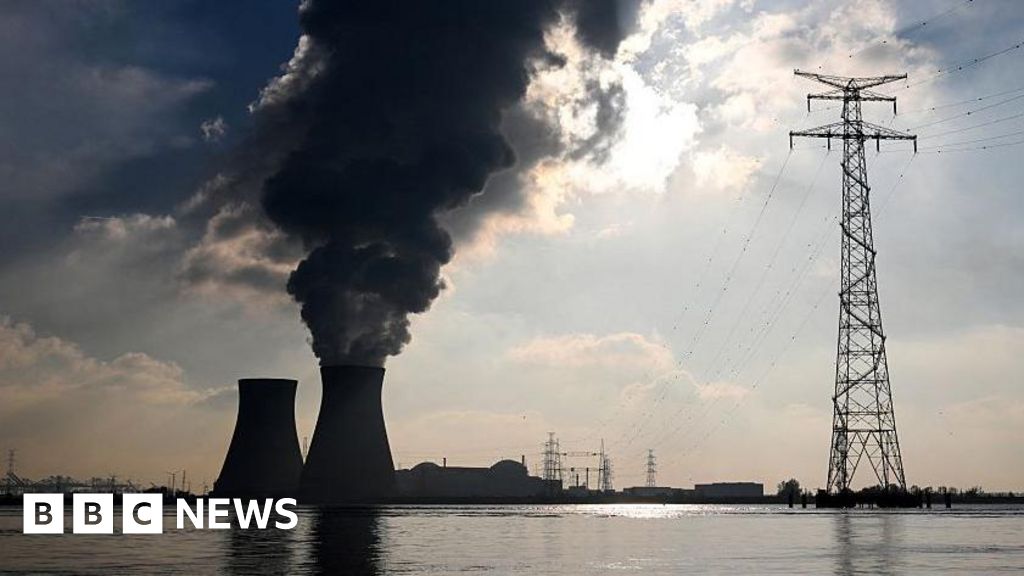
Faced with new energy shock, Europe asks if reviving nuclear is the answer
As war drives up gas and fuel prices, Europeans turn again to the issue of energy independence.
bbc.com
56 points · by dabinat · 7mo ago · 108 comments
The sooner we get this over with the better. Install as much solar and wind as we can and get to the point where we have a glut and then back the up with decentralized storage.
What does this mean?
This is a good goal. But it needs to be more rigorously defined. Autarky can be done. But then you need to accept North Korean living standards.
> Much better if you can have many (millions) of points of generation, storage and consumption and a far more opportunistic level of interconnect
Again, to a degree. You can't decentrally power a modern city. So that means either no more cities, which is expensive, or ruinously-expensive power in cities, which again, in practice, means de-industrialisation.
The only problem is that we have to convince the centralized power industries to give up their complete control of our local and global economies.
I have been thinking about this for decades, as the path forward has been obvious for that long. Those in control just keep doubling down.
It appears that they would rather destroy our ecosystems, and risk economic collapse, instead of just adjusting their investment strategies.
https://h2roadtrip.com/mr-hydrogen-sweden-lives-almost-a-dec...
Rather extreme, but technically possible!
Europe's energy strategy–together with Russian and American military adventurism and Chinese economic nationalism–probably puts it into a recession this year. I have a lot of respect for the aims of the European project. But as currently structured, I see no mechanism by which hard decisions can be made.
[1] https://eur-lex.europa.eu/legal-content/EN/TXT/?uri=CELEX%3A...
Either approach would take too long.
"The energy imports dependency rate in the EU was 57%, which means that nearly 60% of the EU’s energy needs were met by net imports" [1]. To put that in perspective, Sri Lanka–an island nation–has an import dependency ratio of 60% [2].
A European recession is coming because Europe made wrong decisions in the past. I don't know if there is anything it can do in the short term to fix this. Just, potentially, alleviate the pain.
> there is literally no way for them to revive nuclear for some reason?
Nuclear's problem in the West is we overregulate it. I'm not seeing a clear way for the EU to fix this problem, barring France striking a deal in exchange for extending its nuclear-weapons umbrella.
For nuclear, the EU's veto rules mean between Germany's greens and Hungary's Russophilia, nothing transformative can get done.
[1] https://ec.europa.eu/eurostat/web/products-eurostat-news/w/w...
[2] https://data.worldbank.org/indicator/EG.IMP.CONS.ZS?most_rec...
People keep speaking of the EU as if it had the authority of a country. It does not. While it was empowered by the members states to regulate certain things, a lot of things come down to each individual country. Pointing at the EU is a way to launder the failures of each country.
For instance, while there are regulations on emission reduction and percentage of renewables, how those are achieved is on each country. It was not the EU that made Germany retarded with nuclear. If anything, the EU regulation on emissions reduction and renewables make the countries here slightly less dependant on oil and gas.
For the EU to make the "hard decisions" that would allow it to be relevant in the global stage, it would need to federalize. Become a de-facto country.
All of this spend is on top of no electrical generation. And what parts were sold to other plants that now need replacements. So every industry that supports those parts and manufacturing would also have to spin up more resources. Economically there would be positive effects.
The reason the American plants are restarting is a lot of private capital, a lot of government money and a willing regulator. 2 billion usd is a steal compared to 25 to build a new one.
Having the most expensive energy in the entire world is not the way to be competitive. Especially when next door to Quebec with its cheap hydro power.
Maybe Europe will take the "most expensive energy in the world" title away from Ontario. Europe's LNG energy infrastructure is expensive, but new build nuclear is even more expensive.
Those are where immediate price volatility occurs and quickly compounds.
With that said, there is no such thing as an energy shock right now. Instead, Europe has allies who blatantly attacked a sovereign nation. The answer to that is to condemn and sanction the instigators. What are laws for if they can selectively applied? This is a political problem.
Approximately 100% of the energy in our solar system radiates from the Sun. Long term, solar is the answer. Nuclear is a really good carrier. In the medium term, we need more energy. Preferably cheap. Ideally clean. Going all in on one mode doesn't make sense because it virtually demand the creation of bottlenecks and single points of failure.
Nuclear takes to long to plan and build. If that is fixed, then great.
There are two economically-viable renewable sources: solar and wind. Everything else is, to put it succinctly, bullshit.
We're not producing and deploying as much solar and wind as we can. But global production has limits. Going all in on just those two (together with batteries) requires massively overpaying. That, in turn, makes the economy uncompetitive.
> Nuclear takes to long to plan and build. If that is fixed, then great
Permitting takes forever, too. Nuclear can be done quicker and cheaper, we've seen China do that. It's a good part of the mix because we just need to add power, and ideally, with economies of scale.
A few nuclear plants will do absolutely nothing against a nuclear winter.
Yes we should turn to renewables as much as possible, but we should replace fossil powerplants first, and then nuclear.
I'm honestly not sure if 100% renewables is even in the cards for Europe. It's located further north than you probably think [1], which means less sun. Wind is a better fit than solar in the north, but in Sweden we do occasionally get entire weeks with almost no wind, and effectively 0 sun. Hydro is a good alternative for Sweden, and one that is built out extensively.a good thing about hydro is that you can control how much energy it produces to fit demand(ie, produce less energy on windy days). You can't really do that with nuclear.
The entire energy situation in the north is super complex. In the winter any energy source will be profitable, as energy prices skyrocket, sometimes as much as SEK 3/kWh. In the summer however you might end up paying to produce, as energy prices go negative.
The problem with solar panels and arctic seasons is that you get periods with high energy demand alternating with periods of high energy production. And the periods are way too long to bridge with batteries (~3 months).
The extensive solar buildout in Sweden means free energy in the summer, which means a lot of energy production is gonna be a loss leader for around 3-4 months.
And then extreme power shortages where you can charge premium prices during 3-4 winter months, with a brief period of sanity and approximate balance in between
It's a very weird situation, and we're definitely building a sustainable power grid in "hard mode".
On top of that Sweden actually exports energy to Germany, because they decided nuclear power was scary.
A nuclear base production would be my first choice, and then balance primarily wind and hydro for the majority of the remainder. Solar panels are kind of wasted in the north, but a godsend in continental Europe. Ideally Sweden would invest German solar fields, or just cut them off from our already strained grid during the winter months(serves them right for shutting down all their nuclear for no reason, fucking idiots)
[1]https://youtube.com/shorts/C7-t_Ya6gI4?si=3EnxpFce59-VZb8B
Europe needs to be adding power sources. Anyone talking about replacement right now or in the next few years is counterproductively misreading the political situation.
> Nuclear development is a long-term project, not a short-term fix to current energy insecurity.
Long answer? Still no. Flamanville [1] took 15 years (1o over estimate) and the cost was five times what was projected. Hinkley Point-C [2] is first projected to come online in 2030 (18 years after commencement) and the costs will at least double. Both are mentioned in the article.
The amortized cost of nuclear power makes it among the most expensive forms of electricity generation. And they take forever to build. Not a single nuclear power plants (of the ~700 built in the world) has been built without significant government contributions. And they won't get cheaper. SMR (also mentioned in the article) doesn't make sense. Nuclear plants are better when they're bigger. SMR is just another way of extracting money from the government for dead end research.
Europe as a whole has a history of colonialism. This is the basic for European social democracies: offshorting their problems and costs onto the Global South. They've taken the same approach with energy. In the 2010s, Europe outsourced its energy security to Russia and that has had obvious conseequences for Ukraine.
This was actually an incredibly rare W for the first Trump administration: in 2018 the administration warned Europe of the dangers of Russian gas and badgered Germany into building an LNG port with the Trump-Juncker agreement [3]. This was both correct and fortuitous after Europe suddenly needed to import a lot of LNG from 2022.
Europe also outsources its security to the United States and that's partly why they're in this mess now. Europe is suffering for providing material aid to a war of choice in Iran that they didn't consent to or otherwise want. The article mentions the issue of finding money for defence spending to meet US demands. That's money primarily for US defense contractors. You think that might be an issue?
Renewables, particularly wind and solar, are the path forward. As is divorcing itself from being a US vassal state.
A lot of Europe's policies come down to the failed austerity policies after 2008. Taxing wealth and barring profit shifting to low-tax jurisdictions is the path forward here, not strangling ever-decreasing social safety nets. Austerity is corporate welfare for banks.
[1]: https://en.wikipedia.org/wiki/Flamanville_Nuclear_Power_Plan...
[2]: https://en.wikipedia.org/wiki/Hinkley_Point_C_nuclear_power_...
[3]: https://www.csis.org/analysis/us-lng-europe-after-trump-junc...
Go further south and Spain has recently been paying €25/MWh [3].
[1]: https://www.powermag.com/flamanville-3-europes-hard-won-nucl...
[2]: https://www.reuters.com/article/markets/currencies/new-frenc...
Are you offering to cut my energy bill in half? Yes please!
There is no natural law that says nuclear must be expensive. Correctly managed, it is an excellent power source.
But there's a weird juxtaposition here: You criticize the fact that nuclear power must be subsidized to be accomplished, but support strong social safety nets. To me, relative energy independence is a core societal goal and nuclear is a hell of a lot better than coal or oil or NG. It still requires fissile material, though.
I have always found this an odd argument. Granted, thermodynamically, nuclear plants' efficiency scales with size. But allegedly fuel only makes up 10% of the lifetime cost of a plant. Even more if you think construction costs overrun.
So let's say you make a plant that is smaller and requires 50% more fuel, but is also 10% cheaper to build. You're already ahead by 4%. And SMRs at least promise far more than 10% savings.
The argument that SMRs could be cheaper due to economies if scale is often dismissed as pie in the sky - and maybe it is - but this is also precisely what brought down the cost of renewables. Germany bought their wind turbines a mere few years ago and paid way more than they would have done today.
With SMRs there's nothing stopping you from sticking 10 on one site, where previously you'd put 1 or 2.
And don’t forget all the other expertise that comes from being a country that is able to build reliable nuclear reactors. China is _the_ production superpower not just because it can build x or y, it’s because it has all the supply chains to be able to do it at scale.
If a country invests into that expertise - you get a lot of very capable engineers, a lot of tech and supply chains to deal with making it all happen, again and again, at scale. That in itself would be something that can offset the raw “price” of a single reactor, though it is very hard to quantify.
Like how much has USA actually lost by relinquishing its historical role of guarding international trade? Maybe it won some independence, but maybe the upstream effects to its economy would be bad?
We don’t know for sure about nuclear, but when a similar scientific project was put on a national scale - the space race - USA got silicon valley out of it.
I don’t know how fair that is. Modern leaders looked at Appeasement in pre-WW2 and thought they could pull it off by tying their economies to that of their enemy so that war would be ruinous for both. It didn’t work but only because we now know China is bankrolling Russia’s sham economy.
The only disagreement is that I think nuclear should be pursued even when building the plants is expensive. It is clean and mostly safe. I think energy should be abundant. It's the sort of thing you want a surplus.
The biggest disgrace is the vassalage to the US in terms of defense, which fuels the US MIC. Whenever Trump speaks of leaving NATO, I quietly hope he actually follows along this threat.
Why? Do you have a fetish for wasting money?
You missed the asterisk where endless dependence on coal, gas or oil is a non-optional requirement.
Who the hell cares if nuclear is expensive to get going? Plenty of things cost a lot - healthcare, social spending, roads, all of it. Those war machines that exist to prop up the fossil fuel industry cost a pretty penny as well. It's only when we get to nuclear that the talking point becomes cost. If governments don't even want to provide energy independence then perhaps they should end the slavery they call income tax.
The only things that ever comes up in elections about energy is the price.
But let’s ignore the price.
There is still no long time storage for the nuclear waste.
And even if we ignore that. People are worried about drones flying over airports. Wait when drones fly over nuclear power plants.
I don’t hear much worries in wars that rockets could hit a WEC.
Talking about energy independence, what do you think where the nuclear fuel comes from?
BTW if you don’t want to pay the membership fee of a country aka taxes, you’re free to leave
Yeah, because solar and wind are both expensive and unreliable, and fossil fuels are both expensive and destructive. The point is that the price isn't worth it.
> There is still no long time storage for the nuclear waste.
This is a non-argument, just like it was last year.
> And even if we ignore that. People are worried about drones flying over airports. Wait when drones fly over nuclear power plants.
2026, new argument dropped. Almost as much of a non-argument as the one above.
> Talking about energy independence, what do you think where the nuclear fuel comes from?
There's uranium everywhere https://en.wikipedia.org/wiki/List_of_countries_by_uranium_r... and it's not much more of a search away to find out who already refines it.
> BTW if you don’t want to pay the membership fee of a country aka taxes, you’re free to leave
The membership fee isn't giving up your money, the membership fee is participating in improving the country. It's this backwards ethos that has most European countries in the toilet.
I mean, European energy policy in a nutshell.
Please don't lie like this. Renewables do not require endless dependence on fossil fuels.