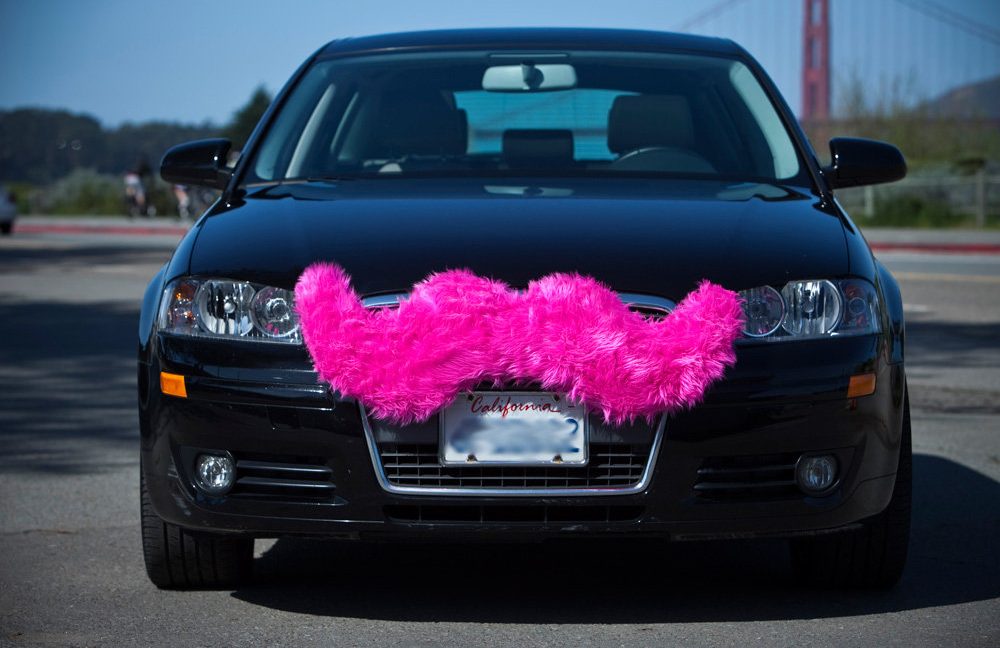
Lyft, SideCar, and Uber all slapped with $20K fines from CA regulator
Uber has even more worries, with a new class-action lawsuit from taxi drivers.
Ars Technica
82 points · by co_pl_te · 14y ago · 97 comments
Right now, the financial impact of these outfits is minimal. But when they seriously start impacting government revenues, expect the lawmakers to come out swinging. They'll tag-team with the taxi union(s) and make life hell for the Sidecars, Ubers and Lyfts of the world.
The more significant dynamic behind regulatory capture is the simple fact that the groups who are most interested in taxi regulations and the membership of CPUC, and who are most incentivized to lobby for advantageous laws and to try and get friendly people on the Commission, are the very taxi firms being regulated.
And if by the "services" you mean blocking competition and being the enforcement arm of the unions - then I could do without these "services", thank you very much.
All the reports I've read have been spot on (though the AirBnB founders disagree). The hotels are paying this tax. Some of your members properties look awfully like a hotel. You collect the money, you collect the tax.
Unlike the taxi companies who actually have a monopoly, the hoteliers just want the same deal to apply to everyone.
Most vacation rental agencies I've dealt with wish they were taxed as opposed to being de jure illegal but de facto tolerated. That uncertainty has made acquiring new properties and investing capital in the business quite risky.
That's not to say that the deck isn't somewhat stacked against vacation rentals. There is a hotel lobbie that's dead-set to kill the industry. Unlike the agencies, the hotel people are quite organized (although that's changing in my experience).
And there's an even greater threat from the fact that most vacation-rental properties are owned by foreigners who are seen as driving the price up of longer-term rentals because of the new emphasis on the short-term market. I do think that rising rental prices in many urban centers is the biggest short-term danger -- PR and real.
At the same time, vacation rentals are becoming more and more necessary to tourism in big cities. E.g., Paris has more than 75+k apartments rented by the week, with occupation rates above 50%. If you made it illegal, there wouldn't be nearly enough hotels to cover those millions of travelers. And enforcing a ban on a per-property basis would be extremely expensive in terms of man-power.
My prognosis is that the market matures, the cities find a way to benefit through taxation, vacation rentals become a bit less price-competitive versus hotels because of that taxation, and it grows from an $80b a year market to a $200b a year market [see http://software.homeaway.com/Media/Files/pdf/RezFest2012-Bre...].
I know next to nothing about Uber and that business, and I am sure the taxi lobby will do its best to kill it, but in the end one should never underestimate gov't ability to be clever when it comes to finding new revenue through taxation, especially during these times.
[I have invested in a couple of companies in Europe in the vacation rental market]
Please specify how, in this case, what is beneficial about the illegal operation of a taxi company for consumers (and taxi drivers) concerned about safety?
See what I did there?
I'm, not going to dig through the history of taxi regulation in the SF bay area to defend a point that is already made in law. Rape on women by unlicensed taxi operators has led to calls for mandatory police checks in the UK. Attacks on drivers in NZ led to the introduction of cameras in all taxis. So, forgive me thinking that ignoring the law as a basis for undercutting the competition is a shitty way to run a business.
1. Safer cabs a. mechanical inspections b. limited hours - safer driver 2. Prevent price gouging 3. Prevent circuitous routing 4. Limit congestion by reducing vehicles on road
IANAL and I don't know if the lawsuit has merit, but there is slightly more to it then just someone stamping their foot and yelling, "Unfair!"
And while I think Uber is an awesome service, it's not totally unreasonable for the state to insist that if you are acting as a taxi, you need to have proof of insurance beyond what's required for a normal driver.
I don't think it's a degree of how onerous the requirement is. It's more a matter of what does it accomplish? There's not a precedent for double covering in the industry, and Uber certainly isn't gaining a competitive advantage because of it. It seems strange that they're lumped in with the other two services who clearly use unlicensed drivers.
Speculating though, perhaps there are limitations and red tape issues that would prevent them from doing so. Most likely, they don't want / need to operate the fleet of cars, just the technology that connects them to the customers.
Thank God regulations like this exist to make sure that everybody pays their protection money.
Anyone who disagrees clearly hates poor people and taxi drivers... or something.
Although I do agree that a world where these types of "collaborative consumption" services (like AirBNB) are essentially unregulated (or at least more open to competition) is much better, it is true that a number of industries are regulated, and incumbents that have been "playing by the rules" were promised a protected business environment. And it's not like they didn't have to give anything up in that trade - a taxi medallion in NYC is worth a lot of money - they have been exchanged for over a million dollars.
So the question is: how do we transition to the better world without being unfair to the "stranded capital"?
Protecting a business environment always comes at a cost to the consumers, whether it is through tariffs, regulations, licences, restrictions or whatever.
I don't feel sorry for the existing businesses, because they constructed a legal framework to protect themselves instead of trying to keep up with the competition. At any point the natural will of people to come up with something better will route around the regulatory framework they hid themselves behind.
Incumbents have been playing by the rules all right - rules that they have successfully lobbied for, that protect them at a cost to everyone else.
The stranded capital has to remain stranded, and sucks to be them. Otherwise you open a can of worms, and extreme economic stagnation will follow, because doing business becomes a case of who can construct the best regulatory fences, not who can deliver the best products and services.
It's not called risk capital for nothing. You risk losing it.
TLDR; cry me a river, taxi companies, and next time innovate instead of regulate.
NB this does not apply in equal degrees across all industries, and your horses -> cars example doesn't qualify.
In addition, note that I was agreeing with you that the transition, on the whole, is definitely desirable. I'm only arguing that there may be moral consequences in not upholding society's end of the trade I describe above.
>not upholding society's end of the trade I describe above.
The deal - as it was, has been, or whatever, was simply some type of legislative barrier passed using the threat of imprisonment and/or fines as the stick. While you could argue that 'society' passed and agreed to these rules through the democratic legislative process, in reality it's far more arcane than that (don't watch sausages or laws getting made).
In reality, no law in a democracy can be promised to exist past the next election period. Sure, mostly it doesn't happen that way, but laws passed some time ago in a different technological state of progress are not inviolate, never-to-be-repealed things cast in stone.
There are no moral consequences at all. People win and lose every day, in every industry, for millions of reasons. It would be immoral to try and stop this creative destruction process and try to freeze life at a certain point. Because that would deny the future winners from winning, and permanently cast the losers in the 'loser' role.
The underlying beauty and strength of democracy is that it can change and destroy old concepts, old rules and old leaders peacefully. This is the killer feature that makes up for it's otherwise many flaws.
Government is often a poor proxy for society. I suspect most people in any given US city would not like to artificially limit the supply of taxi drivers and were not consulted about the decision to do so.
The only difference in this case is that the corrupt officials that betrayed the public interest in exchange for votes and support of a group of special interests are not in jail yet.
You could give existing civil servants tenure both to be fair to them and ensure a gradual transition.
http://techcrunch.com/2012/07/01/uber-opens-up-platform-to-n...
It's pretty clear to me that the folks that are suffering from über are the taxi dispatch companies. These companies lease out the cars for a daily fee, like 150 bucks per day. The driver can do whatever he wants as long as he pays that daily fee. The cab company pays insurance because they own the cabs. Cab drivers are essentially independent contractors. They start making money after they've covered the cab cost for the day.
So why should the cab companies care if a driver is using über? From what I've heard, when a dispatcher has a good order, like for a trip across town on a slow day, they'll ask for a cut. In other words the cab companies are supplementing their taxi rental service with a cut of the fares they dispatch. And as a cab driver, if you want to get good orders you have to stay on the dispatchers good side.
Über changes the balance of power. As more people use über, the drivers have to rely on the dispatchers less, and the tit-for-tat system is deflated. I think this class action suit is an attempt to retain the status quo by cab companies. Über shouldn't be responsible for insurance until they start owning their own cabs. If the cab companies have their way, both the drivers and passengers will suffer.
Fundamentally, these guys just need to increase social capital with regulators and invest in legal infrastructure. The government is just like another giant company with dependencies and old architecture. Trust me, it's just like investing in weird ERP integration to get access to all of those clients. It's not something that is necessary to the evolution of your product, but it's something you just have to do because the market is just shaped that way.
Also, any press is good press, and once these three get large enough, it'll be widely unpopular to not support them.
Ok, now please pass a law saying internet providers can't limit how much data I can send each month nor prioritize one type of traffic over another. After all, that is hurting internet businesses!
To your larger point, the disgusting part is the behavior of the regulators, who should not succumb to the lobbyists and campaign donations of the livery industry. However, it's also absolutely wrong to attempt to influence government for personal gain. We all have a moral duty to do what's good for everyone including ourselves. Taxi unions need to recognize that protecting incompetent systems to enrich their members at the expense of everyone else, by using government as a weapon, harms every user of public transportation and several businesses and in the long run sets the drivers up for an unnecessary catastrophic collapse of the taxi system when it becomes completely unbearable by the public.
https://www.change.org/petitions/tell-the-puc-to-support-rid...