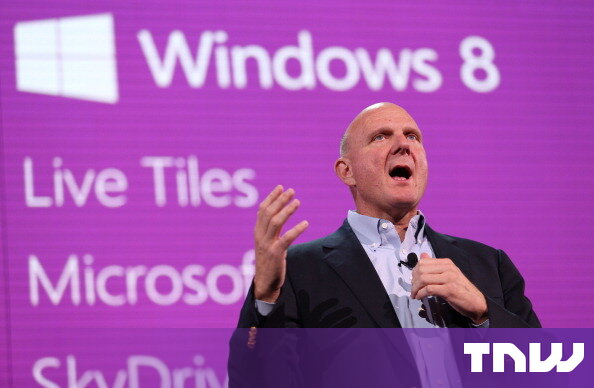
Windows 8 Store Passes 20,000 Apps, Almost 18,000 are Free
There are now over 20,000 apps available in the Windows 8 store, although not all of them are available in all regions and languages. 18,000 apps are free.
TNW | Microsoft
40 points · by Reltair · 14y ago · 41 comments
In other app stores, the white background lets you navigate quickly, as a simple list with icons.
Wasn't there someone at some level in the company who could point out how unusable that is?
It sure does. But what does Microsoft do with those recommendations?
The company had a group test the Kin devices, too. The group decided the devices were unusable, and Microsoft decided to launch them as-is anyways.
http://www.wired.com/gadgetlab/2012/11/unreleased-internal-m...
Without knowledge of the test conditions and methodology, this is a meaningless statement.
I wonder what made them abandon the familiar web page layout where you can scroll down, and there is even keyboard support for 'Page Up/Down'.
Also, I feel like the other stores are far better searchable for some reason. Incidentally, is there a way to see the most popular apps of all categories? I can't seem to find that.
Or maybe I just haven't gotten used to it yet or no common marketing language has emerged yet.
One thing I have noticed since I started doing Product is that there is no shortcut to simply using your product A LOT to do product well. A side effect is that I can generally get a feel abojt how much time someone spent using their own product because the more serious inefficiencies or features become universally obvious ... but after 10 or 50+ uses over a period of time.
(That said, it would be very interesting to compare means and standard deviations between app stores. Would they differ?)
OO is grotesque and slow.
Google docs, for the ease of simultaneous editing is fucking awesome (I just watched 4 people simultaneously update our Saturday thanksgiving meal spreadsheet), but the functionality is pretty basic and clumsy to access.
I've just realised I like Excel, for what it is. I feel dirty. Maybe this week has been too long.
Note: I haven't made any games with consumable IAP. Other app types with upgrades and ad removal.
However, what I would really like to know is the number of non-trivial apps. Sadly, that is impossible to count. But every platform has its equivalent to fart apps that add no value to the platform whatsoever.
It will be interesting to see how the Windows App store evolves on both Windows 8 and Windows phone. Because that percentage of apps being free definitely won't be extremely profitable for developers. Especially if that's what users grow to expect.
In the iOS app store people spend a lot of time talking about the race to the bottom and how 99 cent apps are detrimental to people trying to make livings as independent developers. Imagine how much more difficult it could be when the race was to free.