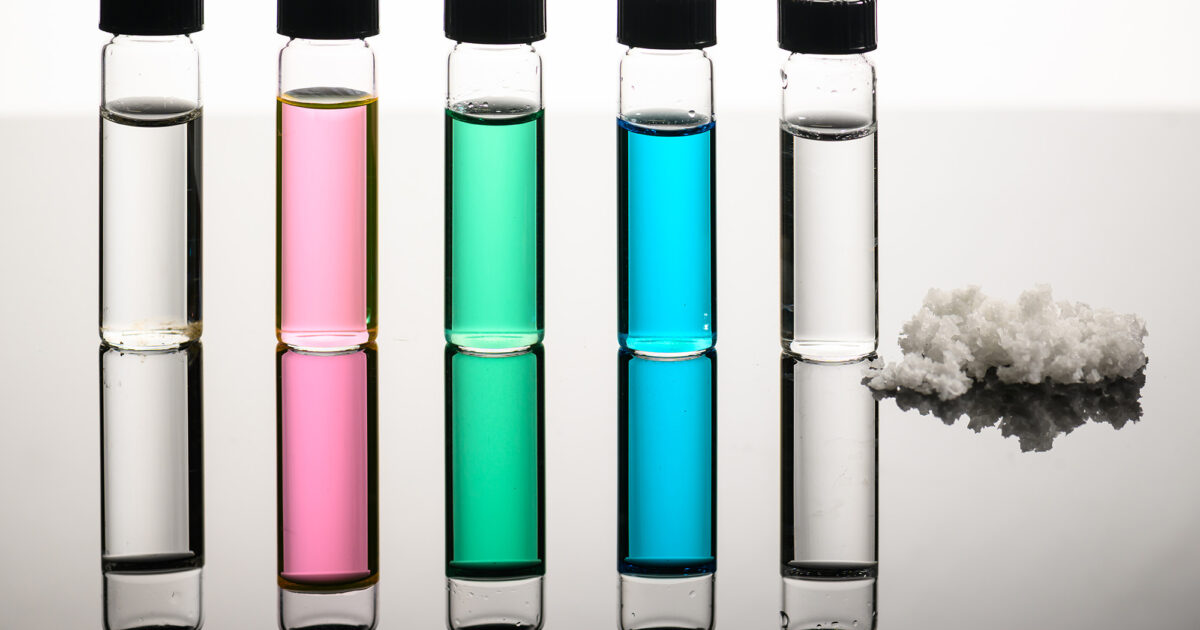
New method turns ocean water into drinking water, without waste
The energy-efficient desalination system produces fresh water without chemical additives and transforms leftover salts into useful materials.
News Center
520 points · by speckx · 5mo ago · 213 comments
This paper is interesting, however, in directly producing crystalline salt, which is lower volume than brine and easier to dispose of, maybe even valuable.
ps. I have no clue what I'm talking about
Animals in the ocean of course do live without fresh water. Some of them just live off of water extracted directly from their food or from metabolizing that food, which produces water. Some animals have specialized cells that excrete salt so that can take in salt water and separate out the salt.
Unfortunately for terrestrial animals, it's just not that simple. Seawater contains a lot of microbial life, some of which can be infectious or toxic. Going to the coastline to drink is potentially hazardous, because it usually means descending a hill on a predictable route which will be attractive to predators. And you need to get pretty far into the water, usually, because of nasty stagnant runoff, which can come from decaying matter that washes ashore, and sand in the surf. That means you risk drowning. Plus, you don't just need the energy for desalination, but the infrastructure (similar problem to real life!), which means more and larger juxtamedullary nephrons in the kidney, which is already a major weak point on the back due to the high blood flow in the kidney. Meanwhile, most of your food contains a lot of water, especially if you're one of the 99.99999% of animal species that doesn't cook it.
> Testing their solar-thermal desalination technique using samples of water from the Pacific, Atlantic, and Indian Oceans, Guo and his team were able to make the surface self-cleaning. In other words, it extracted freshwater and directed the remaining salts to the passive region where they could be later collected without reducing the panel’s efficiency.
This is not "large" this is a moderate improvement. Albedo is likely only marginally affected, and the solar power input over area is the same.
Depending on this cost of this process it could very likely be a wash in terms of NPV
"Desalination system could produce freshwater that is cheaper than tap water" (2023) https://www.eurekalert.org/news-releases/1002811
ScholarlyArticle: "Highly efficient and salt rejecting solar evaporation via a wick-free confined water layer" (2022) https://www.nature.com/articles/s41467-022-28457-8
"Solar-powered system offers a route to inexpensive desalination" (2022) https://news.mit.edu/2022/solar-desalination-system-inexpens...
In thermal cycles, the problem has been in the condensation step. If there is a carrier gas present this inhibits heat/mass transfer at the condenser surfaces. The usual way of getting around this has been to operate the system with no carrier gas, but that requires pressures below atmospheric pressure, requiring strong walls to withstand external atmospheric pressure.
The MIT invention was a bubble tray contactor, where air is bubbled up through trays of progressively cooler water. The water/air bubble interface provides a large surface area at low cost. One of the markets for this was cleaning up brine from fracked wells.
The company, Gradiant, is still around but has evolved to involve a wider range of water treatment technologies (which is very sensible from a business viewpoint, as customers buy complete solutions, not individual technologies). https://www.gradiant.com/
An RO desalination plant needs electric energy to drive the pumps, which might be generated by panels which are 15-20% efficient. So, if you can have cheap thermal desalination panels, they come out ahead even if 6x less energy eficient, you avoid the whole expensive and fragile desalination plant and you gain a low skill, distributed setup.
RO is about 2-4x the theoretical minimum, depending on how much water you're willing to reject.
You don't want to be super duper inefficient but "no waste that has to be dumped back out" feels really big to me
Easy, but not necessarily good for the spot you're pumping concentrated salt back into.
IMO this is an issue where NIMBYs are using environmental concerns as a smokescreen to block new desal plants from ruining the vibe at their beachfront property. Rhymes with the opposition against offshore wind farms.
But wait! There's water mass loss due to leaky pipes and outdoor pools!
Mixing salt water and brine is perfectly ok. Just use a phase diagram.
Just make prettier-than-Himalayan salt lamps out of it and sell it to hippies. Easy solution.
Just put it on your fries.
Come on guys please at least attempt to think what you’re about to type, please, I beg you.
this is delusional ecological
Overall though, it’s just such a tiny concern. Ocean is huge. If we kill everything in a 100 foot radius, that’s 0.0000000008% of the ocean being destroyed. Less than a drop in a bucket.
They're still at lab scale in glass. They haven't built a usable system, even a small one. The big claim here is that it doesn't clog; capillary action moves the salt out of the active area to another area, where some yet to be developed mechanism removes it. That needs to be demonstrated. If they can come up with something that runs for years without clogging or replacing the active material, that's a real advance.
Laser surface preparation is known.[2] It's useful for roughening smooth surfaces in a very structured way, in preparation for painting. The result is a smooth paint surface. If you sandblast to roughen, the first paint layer is somewhat irregular. Then you need to sand and paint again to get a smooth surface. Laser roughening has been tried for auto painting, but didn't go mainstream. A good question here is whether commercial laser surface prep systems can make the material this new process uses.
Great book on this BTW: Path Between the Seas. I couldn't put it down.
Another example is ultra black coatings. Those are a forest of tiny black objects arranged so that light gets reflected multiple times and is absorbed. The commercial version is called "Vantablack". It doesn't wear well, but for optical applications such as the insides of camera lenses and telescopes, that's fine.
Another MIT paper on desalination from 2024 has a more conventional electrically powered system that can adjust its operating speed depending on how much power is coming in. So it can run off intermittent power sources such as its own solar panels.[3] Rather than buffering the energy with batteries, just buffer the water in a tank. This made it to field test and has some efficiency numbers.
It's annoying to see these one-off announcements with no followup. A short note a year later reporting why there's no further work would be useful to later workers.
[1] https://news.mit.edu/2023/desalination-system-could-produce-...
[2] https://drl.mit.edu/publications/journal/
[3] https://www.greenmemag.com/science-technology/breakthrough-m...
Obviously it needs to be cleaned regularly otherwise the salt encroaches into the sensitive bits. However the cleaning method doesn't require dissolving, just scraping.
Now you ask: why don't we just recover magnesium from brines if it's so great? Magnesium recovery from seawater isn't that easy: typically you have to treat it with some kind of alkali (often Ca(OH)2), so the cost is dominated by the extraction process (your alkali is consumed!), and you're competing with a pretty cheap ore. But if you have a solid byproduct, instead of a liquid, the options for magnesium recovery might be a lot more efficient, potentially offsetting the cost.
The fourth-most-prevalent ion, sulfate, might also be interesting, at least in a hypothetical post-petroleum future where sulfur as a byproduct of fossil fuel extraction is no longer "free". Sulfate is also annoying to extract from seawater, but again if we have a solid, the rules change.
As for the "table" salt itself, I think we'd quickly saturate (!) the market.
I'm not sure what to say, because it looks like you are copy-pasting from Wikipedia or something like that. Anyway, Mg(OH)2 is not found in seawater. Mg2+ is found as a dissociated ion. When you dry it, it mostly becomes MgCl2 with a little MgSO4. Mg(OH)2 is produced from seawater by the alkaline extraction process I mentioned before, and the process in TFA is interesting because it might be better.
Also, nobody would ever make magnesite ore. I referenced magnesium ore prices to estimate the value of the magnesium-as-ore in sea salt, because using finished magnesium prices would be misleading. Magnesium is mostly consumed either as the metal or as the oxide in cements and ceramics.
At least read what you're pasting
The new system replaces the earlier version that used specially engineered death metal.
“We collected a total of 9.3 g freshwater along with 0.343 g of sea salt from the ABF-STIC with a 9 cm2 surface area over the course of 9 hours. This is equivalent to generating 10.33 liters m−2 of freshwater and 0.38 kg m−2 of sea salt per day. The salinity of the desalinated water is found well below the WHO and EPA standards for safe drinking water.”
However the enclosure system required looks rather complicated and might be sensitive to external temperature (maybe a solar PV-powered cooling loop would help) and I imagine the cost-per-square-meter of the material is rather high, so this looks more like something for emergency response situations or maybe a desal system for a mega-yacht. If it could be scaled the idea is interesting, maybe as lithium separation from concentrated geological brines?
Totally underrated area for academic pursuits.
At least in the sciences you have access to lots of opportunities you don’t have at bigger name schools.
They set me up in life in a way that I don’t think would have happened elsewhere.
Slow it down from trickling down a slope and you have two things: more vegetation (which also retains water) and more time for that water to penetrate the ground for local wells.
You can completely "terraform" a desertic region https://youtube.com/shorts/cfhbtgon4Nk?is=oAExB5UeMAsShBux
The reason it doesn't actually work is that it is extremely inefficient. Getting water to condense requires you to somehow reject massive quantities of heat. That's fundamental to physics.
Also, literally anywhere a dehumidifier is reasonably effective, is humid and usually doesn't have such dire water problems. Deserts have extremely low humidity and dehumidifiers working in a desert will produce very little water.
Even a good humidifier in a humid environment is burning KW to generate on the order of ten liters of water a day.
There are a couple places on earth that are essentially deserts but have an early morning humid fog roll through regularly, and those places figured out capturing that water in the air long long before we invented the refrigeration cycle.
It is literally cheaper to desalinate.
Maybe you could build giant greenhouses to fill with sea water and let the sun evaporate the water and collect that with a dehumidifier? Still absurdly inefficient. Water has such an obscene specific capacity for heat that any thermal avenue of separating it from something else will use immense energy.
Israel desalinates 75-85% of its drinking water. The problem is political and economic dysfunction.
California for example could be doing widespread desalination with nuclear power and technology from the 1970s. They could also greatly expand reservoirs and waterways, but don’t do it. Very similar to Rome in the 400s, when people were using aqueducts built by a past civilization but lost the ability to construct them.
Solar on the other hand is very cheap, and you don't need to desalinate 24/7 -- just do it when power is cheapest (which is during the sunny times if you have large amounts of solar, during windy if you have large amounts of wind, etc)
The good news in a desert: plenty of sunshine. So you can generate a lot of electricity with some cheap solar panels, there is plenty of space to put some down, and there aren't a lot of NIMBYs around to complicate the permitting process for that.
Some desert ecosystems actually depend on condensation with specialized plants and animals harvesting humidity from ocean breeze. Large parts of e.g. the Sahara border on the Atlantic ocean. Lots of water in the air but not a lot of rain. And even if humidity is low, there still is some water in the air usually.
But the simple fact of course is that there is a lot more water in water than there is in air. If you want to extract meaningful amounts of water from air, you need to process a lot of it.
And who's going to know if you are drinking it or watering your garden?
It also requires more infrastructure to get yield. In theory all you'd need to have is these etched metal plates, a transparent dome and a source of briny water. (and a cleaning mechanism)
The etched plates creates 100% humidity (probably more as it'll condense out)
Who all has access to a femto laser? As far as I know these are all patented, and most of those patents (or at the least companies with rights to production) are in the USA, according to a professor who told us so some years ago in university (in central Europe, but he is quite old already, so I am not sure if his information was 100% up to date; but otherwise I do not doubt the validity of his claim made). So someone is going to milk rather than help. Will be interesting to see what happens to that in some years. My current guesstimate is that nothing will really happen or change.
Sand -> Glass -> heated saltwater -> freshwater + minerals -> ??? -> profit?
Combined with some mangrove farms, surely desert coasts are able to support more life.
Wonder if this is scalable tech, and how quickly it can 'process' water. I guess if they're combined with transparent solar panels, it could be quite an epic tech.
https://en.wikipedia.org/wiki/Red_Sea%E2%80%93Dead_Sea_Water...
Some over stuff whhich are cool to read about:
Redirecting Siberian rivers into Central Asia https://en.wikipedia.org/wiki/Northern_river_reversal
Redirecting Congo basin rivers to replenish Lake Chad https://en.wikipedia.org/wiki/Lake_Chad_replenishment_projec...
Filling in a depression in Egyptian Sahara desert and fllooding it with Mediterrraanean water to generate huuuuuuuuuuuuge hydro https://en.wikipedia.org/wiki/Qattara_Depression_Project
(Similar ideas proposed for Lake Eyre, the lakes in Tunisia, and the Afar Depression in Djibouti, too).
It's all gonna get on the glass (from above and below), and eventually the salt left behind is going to build up. The salt left behind is very hard on any structure or machinery used to move it which makes repairing the large glass enclosure a pain. All this for a slow trickle of water is generally not worth it.
https://www.solarwaterplc.com/featured-news/whats-inside-thi...
[1] https://news.mit.edu/2024/how-light-can-vaporize-water-witho...
Brutal. 𖤐 \m/ 𖤐
...except for the huge piles of salt.
If the salt was not waste, surely people would already be extracting it from the brine and the existing methods would also be "without waste".
I would like to read more about this from an authoritative source.
https://www.frontiersin.org/journals/marine-science/articles...
https://www.sciencedirect.com/science/article/abs/pii/S14635...
I suppose you could water down the ocean water it’ll was drinkable, or like just add half a teaspoon of sea water to a cup or drinking water.
Buy all work done eventually decades in to waste heat.
@GP: Instead of a plain complain, it's better to get an interesting discussion to write an explanation of why the post makes no sense, or instead find the good debunking comments and upvote them (there are two or three good comments near the top now).
I try to be that guy (personal hall of shame https://hn.algolia.com/?dateRange=all&page=0&prefix=false&qu... ) but life is too short and I have other things to do IRL.
Also, it's not my area. It's close enough to have a good guess, but in this case for me it's better to let someone else give an accurate reply.
---
Back to this post:
It obviously makes no sense. You have salt water, you extract the water, you have to get rid of the salt. Why waste time reading the details? [There are some interesting technical ideas about new surfaces, more on this later.] Reading the details their brilliant idea is to make salt cubes and sell them. So there is no waste!
When you get rid of the salt using brine, it's easier to transport and dilute the liquid. With solid salt you must scrape it form your high tech surface (without scratching it?!) and now the solid salt is difficult to transport. Also, to sell it you must purify it because it will include nasty things like crabs legs and sea smell.
Once you extracted the 99% of the water, it's difficult to extract the other 1% of the water because it's saturated solution with a low osmotic pressure, vapor pressure and a high boiling temperature. Also, water inside the block of salt is difficult to extract, and you must crush the small blocks.
Salt production is done in big salt lakes areas, where energy is "free". I like to consider it like a huge natural solar panel. You get heat for "free" and dry wind for "free". You must pay for them in an industrial facility. Also, the normal process still requires a lot of manual labor of guys/gals with [mechanical] shovels to makes piles of salt, wait, turn it a few times, wait, turn it a few times, wait, ... and you now have a nasty salt that you still have to purify to be able to sell it.
So they will get salt that is too expensive to sell, and too much of it to flood the market, and if you put it in the garbage can it will be classified as [industrial] waste.
---
The technical part looks interesting, but it's on the bottom of an unrealistic title and first paragraph. The interesting part is about the new surface with nano details and titanium oxide that absorbs Lithium. It sound interesting and they published it so there is some validation of the claim, but after the nonsensical first claims I'd want to take a look at the feasibility details.
---
>> Can we please ban university press releases
> Why?
I work in an university and I expect technical accuracy from the press department of an university. We want people to give us money in exchange of doing real and interesting things. We want people to trust the medical doctors when they give health advice, or a lot of other specialist about other public policies.
A lot of press release of the universities have a lot of exaggerations, burning the trust of the people. Before opening one here, I like to guess what is the real result and what is the bullshit part. I think that a complete ban of university press release here is too much, but I understand why the GP is annoyed.
i'm hoping it doesn't scale, honestly.
You're not worried? If it's for batteries? For sure they'll extract whatever they can.
(I checked, some deposits are old lakebeds like https://en.wikipedia.org/wiki/Salar_de_Uyuni and others are igneous.)
It's also possible - true, I bet - that all the car batteries and storage batteries 8 billion people could possibly use are equivalent to only a tiny fraction of all the lithium in the ocean, but it would be harder arithmetic to confirm that, as well as being irrelevant on account of land-based mines existing.
> The brine byproduct wreaks havoc on sea life when it’s deposited back into the ocean by raising the salt level and lowering oxygen in the water.
Managing return of concentrated brine should be entirely tractable in the literal ocean.
It’s obvious you can safely put salt back into the ocean with enough dilution. I bet a middle schooler could design a system to do it.