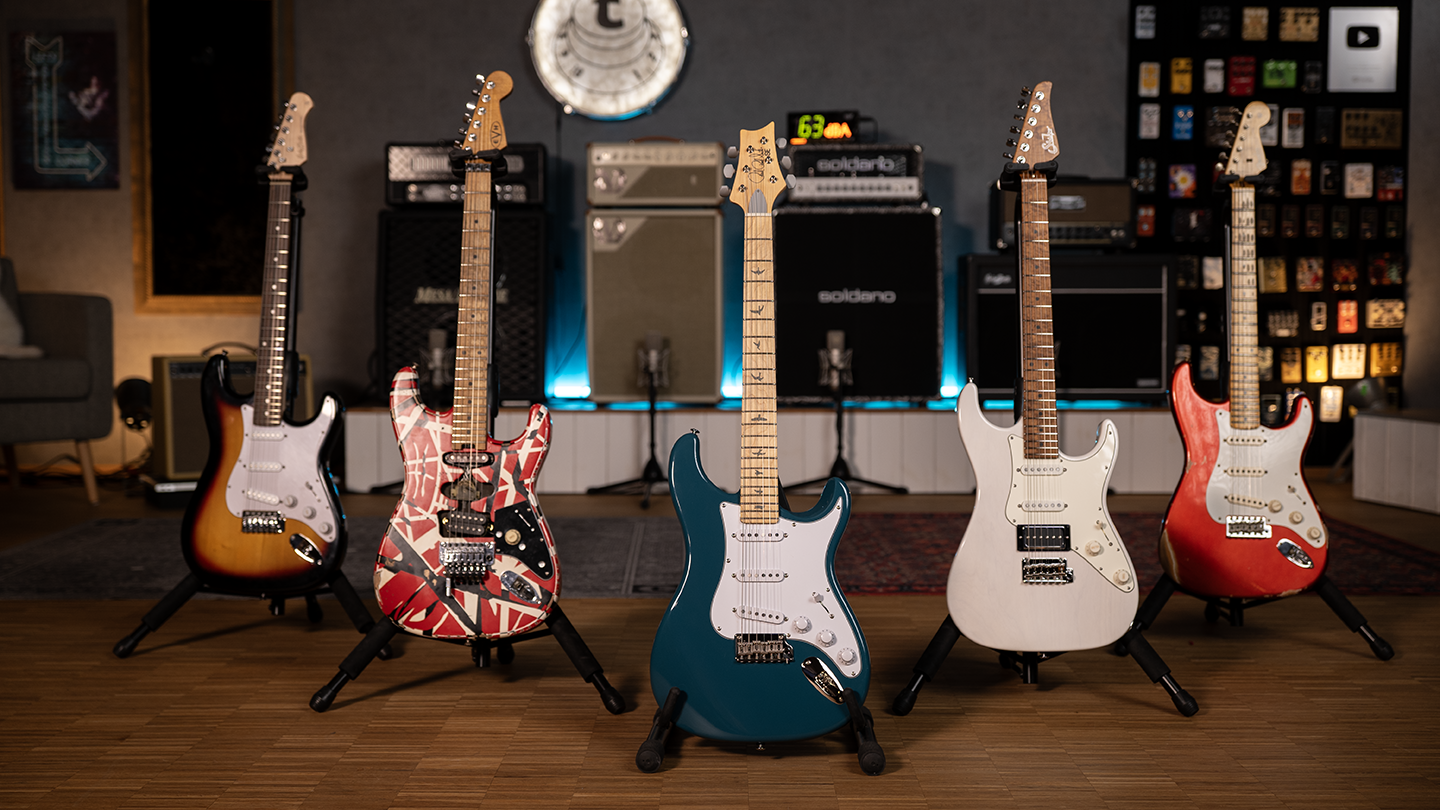
Thomann takes legal action against Fender - Thomann Blog
For brand diversity and innovation: Why we are taking legal action against Fender's cease and desist demand.
Thomann Blog
203 points · by Audiophilip · 5mo ago · 140 comments
> In 1985, Bill Schultz and a group of investors—including company employees and external companies like Servco Pacific Capitol—purchased Fender from CBS for $12.5 million and renamed it "Fender Musical Instruments Corporation" (FMIC).
> Ownership changed in December 2001, when private equity firm Weston Presidio bought a controlling stake in Fender for $57.8 million.
> Longtime investor Servco instead bought out Weston Presidio, with TPG Growth as an equal partner.
> In 2020, Servco bought out TPG Growth's stake, making them Fender's majority owner.
A long history of private equity ownership. I'm not sure CBS owning them would be much better, which started in 1965.
As much as I like to blame private equity for the downfall of once great companies, I'm not sure how to feel about this one, as they've been investor owned and passed around for decades.
It's the 2000-2020 exchanges that were detrimental
I play a Gretsch... which interestingly is actually "controlled" by Fender after looking it up; still owned by the Gretsch family
(It’s surprisingly hard to think of a motivating example.)
Too many Clapton lawyers have gotten hip to boutique builders. Fender would rather make them buy a $5000 Masterbuilt Custom Shop Deluxe Roadworn Heritage Double Relic No-Caster than a Tom Anderson or Suhr. Same for kids buying Harley Bentons and ESPs - a $1000 Indonesian-built instrument is their future if Fender has anything to say about it.
The thing is, they already do that, or have in the relatively recent past. Arguably, they invented that move in the 1980s when they started selling non USA/Japanese models as Squier models.
There's only so much that brings them, though, and guitar music ain't what it used to be. The pie isn't growing very much (maybe at all) and now there's competition trying to capture more of the market.
Would Bill Schultz have done the same thing if the 80s and 90s hadn't been so good to rock music? Hard to say, but if the alternative was "No more Fender", maybe.
But the weird German lawsuit was always about the fact that some private equity suits (or bad Hawaiian shirts, it seems) are upset that Thomann (and others) sell the PRS Silver Sky, which as they have probably deduced from the reverb.com data they now own, likely outsells equivalent Fender models by some margin.
So I think Thomann are just bringing it on.
And they aren't the only ones: LSL hired the lawyer who won the judgement that put the S-type body shape in the public domain in 2009.
I think it’s more likely that this is about the ST series than about the Silver Sky.
Each Silver Sky model (SE or non) outsells the equivalent Stratocaster model, from what I understand, by a noticeable margin, which Servco will now know with clarity, because they have sales data from reverb (which they acquired one month before they took out this lawsuit).
It is a naïve take, but have a look at what Fender's CEO looks like, how he dresses and carries himself, and tell me that a big part of this isn't injured pride that John Mayer went to PRS.
I think if this was really about the cheap body guitars — a nearly zero-margin market for decades — they wouldn't have sent a C&D to LsL or PRS, because that was always going to invite trouble.
Harley Benton is a problem at some small level and I am sure Fender will suggest it is, but Fender have had a "buy the real thing" type of marketing campaign for both Fender and Squier since the 90s at least.
The 2009 lawsuit made this clear; it detailed all Fender's "buy original" marketing campaigns as a way of pointing out that Fender has never policed the right to make the S-type body shape.
Squier competes pretty adequately with Harley Benton and all the other cheap brands; at that price, being "Fender's budget brand" has prudence associated with it.
What has changed is that Fender are losing out at the top end to high-end luthiers who give a shit, and PRS. And now they know exactly how badly. This lawsuit will feature a lot of data from reverb.com, I suspect.
Fender sells at least 10x more guitars than PRS.
The server was some tower server in a back office with a note reminding everyone not to turn it off.
With Thoman being hugged to death right now I would like to think of there being a similar situation (its probably fine, but it made me feel nostalgic).
The hardware manager was cool and would let employees turn slabs of wood into Tele- and Strat-style bodies after hours.
When the Fender/German court ruling came down, my first thought was: Fender has had roughly 70 years with the Stratocaster design, and the broader industry has been making S-style guitars for decades.
Surely at some point a body shape becomes generic, right?
It's never belonged to Fender Corp
I think the iPhone at one time defended the design of its “squircle” corners. Eventually settling out of court.
I always read around here how european server companies are incompetent so there is no european infrastructure so european companies have to host everything on AWS. But this biggest european music store apparently powers their huge store from some server in the back office?
Which is it?
US companies sometimes try to make "trade dress" or trademark claims, but that's much weaker than copyright.
A more serious review of the works of applied art problem comes from the Columbia Journal of Law and the Arts.[2] That article ends with "Thus, the 'separability' line Congress has drawn, albeit often difficult to discern coherently, places most overall designs of useful articles in the public domain." Separability means being able to take the decorative design off the useful object. This covers logos on T-shirts, for example. A T-shirt with no logo still works as a T-shirt. But if you can't take the decorative part off the functional object, it's not separable. The common squiggle-shaped bicycle rack is an excellent example. That won design awards and is admired, but it's not copyrightable - you can't take the squiggle off the bike rack and still have the bike rack.[3]
The Fender Stratocaster hits that limit - take away the Strat form, and there's no guitar there.
[1] https://legal-resources.uslegalforms.com/a/applied-art-doctr...
[2] https://journals.library.columbia.edu/index.php/lawandarts/a...
[3] Brandir Int’l, Inc. v. Cascade Pac.Lumber Co https://law.justia.com/cases/federal/appellate-courts/F2/834...
Edit: of course this case is in Germany, so US law doesn't apply and I claim not information on what their laws are.
Plus, FMIC may not even be able to prove that they legally own any rights that do exist! It's not at all clear they acquired the long-lived rights from Leo Fender when he sold to CBS; they only secured a ten year agreement not to compete, and the design patent they had on some aspects of the body shape would have expired in 1969 or 1970.
The body shape is in the public domain in the USA; it has been for 17 years.
Part of me thinks that they are insane and part of me thinks they want to be acquired because they have debts.
(Absolutely baller move for LSL to hire that guy)
The various curves and bevels on the Stratocaster aren't arbitrary aesthetic features, they're affordances to fit the human body. Change them too much and you get a guitar that won't balance on your knee or that pokes you in the ribs or that limits your access to the high frets.
Ola Strandberg set out to design the most ergonomic guitar possible. His design is both radical and basically derivative of the Strat, because Leo Fender happened to find something close to the perfect solution in 1954.
https://strandbergguitars.com/en-GB/product/boden-essential-...
> Ola Strandberg set out to design the most ergonomic guitar possible
It looks somewhat ... not how you expect the guitar to look.
"The upper horn ensures perfect balance, the cutaways make it easier to play in the upper registers, and the contours of the body increase playing comfort. The shape of the Stratocaster was created to provide musicians with the most functional and ergonomic tool possible.
This is exactly why it has been taken up, developed further and reinterpreted by luthiers all over the world over decades."
I personally do not like the price though.
In particular the cultural impact of the S-shape guitar has been enhanced by people playing non-Fender S-shapes.
Think Eddie van Halen on his Frankenstrat which has it's own Wikipedia entry and has been displayed in the Metropolitan Museum of Art. That was probably a Charvel body.
That goes to the heart of the "work of applied art" argument.
Fender escalates legal campaign against S-style guitars - https://news.ycombinator.com/item?id=48189539 - May 2026 (132 comments)
Archive.org link: https://web.archive.org/web/20260624025836/https://www.thoma...
Now other brands are eating their lunch, and Fender is seemingly trying a last hail marry to get this settled. My guess is that if they manage to get a positive ruling in Europe, they'll somehow try to use that as case for US courts.
Leo Fender himself declined to copyright the Strat body
Leo Fender himself sold "Strat clones" of the exact variety Fender Corp is trying to ban, after the sold the Fender name. I own one.
So Fender Corp is trying to retroactively assert that Leo Fender stole his own design from Fender Corp in 1979, they didn't have any issue for 47 years, but now because a Chinese company didn't show up in German court, they have eternal license to the design Leo Fender explicitly chose not to sell them.
Fuck Fender. My Jazz Bass is still my favorite instrument, I've had it 20 years and played hundreds of gigs, but I guess I'm never buying another
Compare this, for example, to smartphone chargers or headphones and their compatibility.
Audio hasn't changed at all in the last two centuries. An analog audio signal is fundamental physics and there's nothing to gain or change or improve in any meaningful sense. TRS/phono jacks likewise are just so brute force stupid and rugged that there was never a reason to change.
The connectors and interfaces never changed because the underlying signals never changed because there's nothing to change. Digial electronics on the other hand legitimately have gone through real and worthwhile changes, and been radically redefined many times in the last 60 years.
Almost everything anyone has tried to do to modernize electric guitars in a non-compatible way has had big downsides.
Almost any guitar with a pre-amp or whatever built into it that would allow it to use a cable like an XLR cable ends up needing batteries in the guitar, which then introduce a maintenance/failure point. And very often efforts to introduce this stuff haven't sounded great.
The only place this has kind of changed is super high gain guitars for metal. They are more likely to use active pickups, they'll have a battery, but they still use standard cabling for compatibility.
Anything that is modernized ends up being more expensive and harder to work on yourself. A basic guitar like a Strat or Tele has incredibly simple electronics and is super easy for any guitar player to learn to fix themselves, and most of the parts inside are super cheap. And it all just works really well.
And the audience never cares, they care about the notes you choose to play and the message the musician cares to get across.
No need for "probably". That absolutely works.
https://www.youtube.com/watch?v=r_F7aiOvdwE
(technically a "diddley bow": https://en.wikipedia.org/wiki/Diddley_bow)
Of course, none of this will ever happen.
Having a court stop actual counterfeits -- sure, nobody has a problem with that. That's not what this is.
Then there was the headstock thing, Fender was notorious for pursuing makers of guitars with headstocks that had any resemblance to the Strat headstock. Let's ignore how limited the design space is considering the constraints of six strings - six tuners at the end of a narrow strip of timber. Fender was obviously acting in an anti-competitive way at that point. At the same time, the quality of their own products continued to drop. Coincidence?
Now they are going after anything that looks like an electric guitar.
The general "S-style" body form, as popularised/iconified by the Stratocaster is popular for many reasons. A lot of those reasons (I would say most) are practical/functional.
Fender shouldn't be allowed to possess the shape, let alone use it as an anti-competitive weapon in order to coast along for another century just because the brand happens to come with some notable IP.
Fender's monopoly over the shape shouldn't be protected by law/courts. Here's why:
It's a functional design -- a matter of ergonomics and practicality. For a lot of guitarists, the S body style is the most effective, comfortable shape to play.
For a concrete example of an "iconic", yet clearly functional design feature: the top point of the "S" is where the front strap hook is. Having this point protrude forwards (along the neck) helps balance the weight and this provides the player with physical control over the mass of the guitar.
Many of the subtle features of Stratocaster body are obvious practical improvements -- it's the result of filing down sharp edges that were noticed when attempting the play the instrument. Imagine you're starting from a classical acoustic design, what steps would you take to make it more playable and make it electric at the same time?
It's an incremental design built on forms that have been used by luthiers for centuries. It's not a Fender shape -- it's an (electric) guitar shape.
I wish them (and their PE overlords) a powerful defeat, ideally in a court of law, but if not, in the court of public opinion.
2) Fender sued said small Chinese Aliexpress vendor in a regional German court for selling a "copied" design in Germany
3) The small Chinese guitar vendor didn't turn up, obviously
4) Fender got a default judgement that the S-type (Stratocaster etc.) guitar body shape (which has indisputably been in the public domain in the USA since 2009) is a "functional work of art" in which they have copyright.
5) Fender's weird law firm went on a rampage, in the EU and USA, using said default judgement as if it represents some kind of precedent, warning guitar firms (PRS included) and music retailers to stop selling them, recall and destroy their inventory on sale in the EU, and confirm they had done so, or be sued
6) guitar people, especially luthiers working in the USA who have solid reason to believe the S shape is public domain, took that about as well as you'd expect
7) Fender tried to walk it back, especially the bit about smashing perfectly good guitars
8) Thomann, based in Germany, certainly Fender's largest retailer outside the USA and one of the biggest music retailers in the world, have decided not to take it lying down.
Have seen several like this in the last months, though in much more niche areas and with barely any publicity.
So the whole thing really looks like legal bullying.
The S-type body shape has been in the public domain in the USA since 2009. One of the luthiers that Fender sent a C&D has hired the lawyer who secured that 2009 judgement against Fender, and he has been quite withering.
Fender have a huge uphill struggle here, and they clearly do not understand just how much time hobby guitarists with money spend watching Youtube. Big mistake.
Am I missing something about Germany following a precedent system for patent/copyright or something, or is this even dumber than it sounds?
Sorry, I rushed through my comment and perhaps didn't make it clear.
They have a default judgement only. But they used it to demand US-based manufacturers recall European-bound inventory, destroy it and certify it destroyed.
Even though they know full well that inventory can legally be sold in the USA — which is part of the near-comical gaslighting walkback the FMIC CEO attempted the other day. They are already admitting it's not a USA thing.
Except this one is apparently coming from actual accredited lawyers? (Who knows, I'm not a lawyer, maybe it really does work that way and Fender is the first company to figure out how to exploit this)
But the thing is, if the counterfeit had a Fender logo and a Fender Strat style headstock, they could simply have used trademarks to deal with that — because they do have internationally recognised trademarks and the specific headstock shape is one.
They instead claimed something rather more broad and contentious that has not been tested in court in the EU but is fully at odds with 17 years of guitar industry business built on a legal finding in the USA.
A cynic would say that FMIC knew the vendor would not turn up and fight.
Worse part is that lefty fenders always have something fucked because they put zero care into them, despite charging a premium for them.
Fender doesnt even make a good product. I've pulled strat style guitars out of dumpsters that were better than a fender.
I'm just super sick of hearing about this story. Guitar players online are way too worked up about this. Fender is being annoying, but there is no way I'm getting rid of my Fender guitar or amp over this, and there is no way any of this would stop me from buying another one.
The Fender shapes just don't need to be copied at all. I live near a famous boutique type shop. They may have some boutique guitars that rip off the shapes of Fenders, it's been tolerated, but they have a lot of guitars that don't rip off Fender shapes and many of them are really great guitars.
Too many players are acting like the sky is falling if Fender wins with any of this stuff. The sky is not going to fall. We'll go back to the way things used to be where Fender body shapes weren't ripped off so often and it will be fine.
I think some of the doom and gloom is also because too many players are super obsessed with buying more and more guitars all the time. It's all about what is the next purchase as opposed to just enjoying the guitar they have.
Fender's quality is very good now compared to when I started playing.
But so is everyone else's.
You clearly aren't bothered by it having a different headstock shape, Suhr could and probably will just change the body shape a little bit and it would be fine.
Ibanez sells tons of guitars like this. They're double cutaway guitars that are kind of similar to the Stratocaster shape, but they are uniquely different and still loved.
The weirdest thing is someone who hates Fender and won't buy a Fender but simultaneously demands that their guitar looks so close to a Fender that it would be in danger of infringing.
There's so many cool companies doing unique body shapes, if you're gonna take the time to build a guitar why not put some thought into the design?