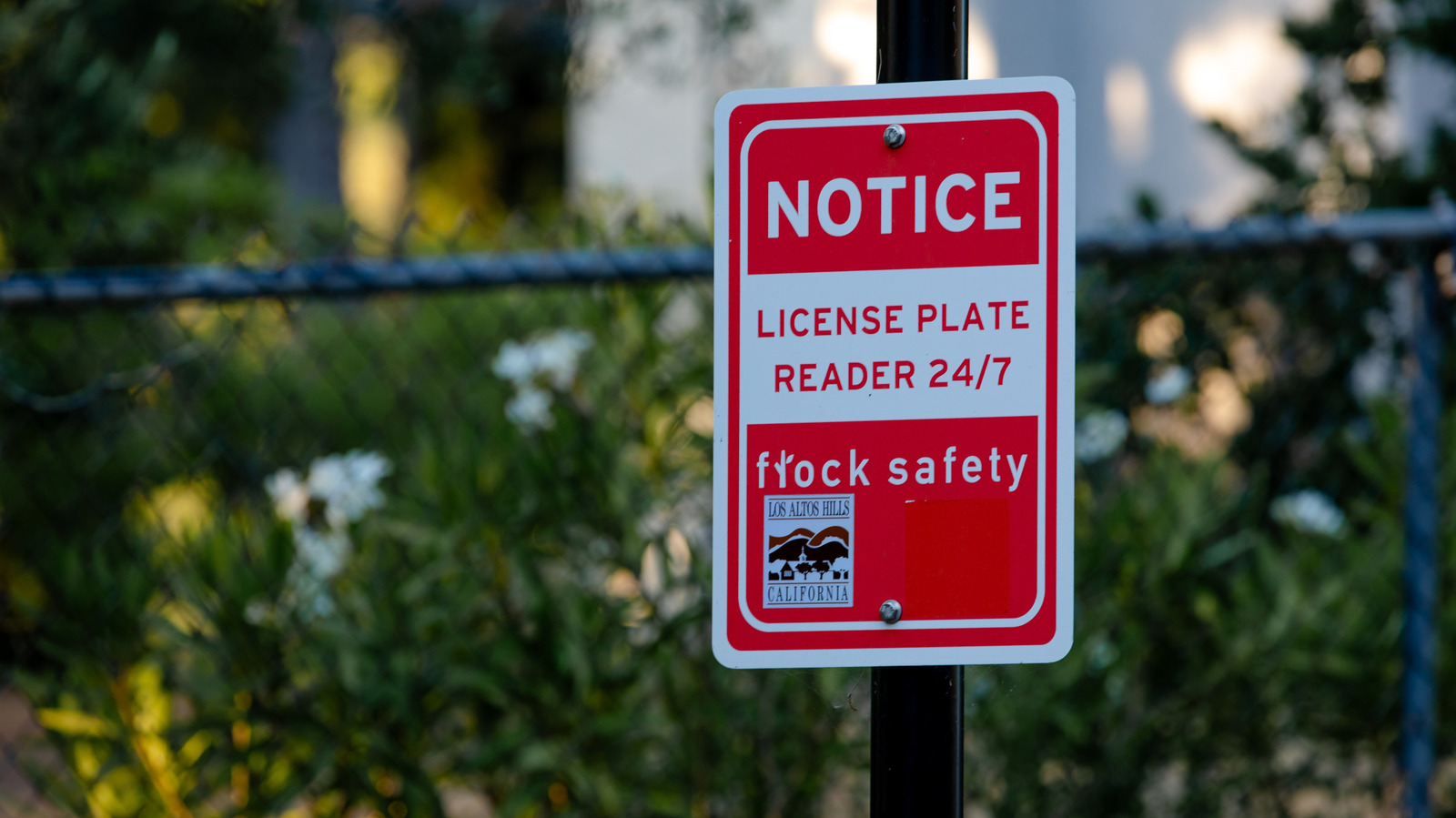
Flock cameras track more than your license plate, and they're spreading fast - Engadget
Mounting privacy and security issues have residents and activists concerned.
Engadget
398 points · by SanjayMehta · 5mo ago · 324 comments
There's been over 70[1] documented wins.
Don't feel like this is a lost cause, it clearly isn't. If everyone who was going to comment on this thread instead or additionally got involved by going to a city council meeting and explaining the problems to friends/family, many more cities could reject them.
I'm fond of pointing out on HN that the muni I live in is likely one of the 10 most progressive-leaning in the country (it's the most progressive-leaning municipality in Chicagoland). Even here, Flock had an ardent cheering section, of normal people who think expediting the interdiction of stolen vehicles (which are vectors of violent crime) is a perfectly reasonable thing for a city to invest in.
The effectiveness is dramatically oversold. This has literally happened to me. Called 911 midway through the theft, cops pulled it up on Flock, the best they could tell me was "they went towards the highway" (no shit, Sherlock).
I saw the parts on marketplace a week later (definitely mine, unique staining), 2 hours after they were listed and called it in. The PD where the parts are wouldn't do anything unless my PD called, my PD said the officer in charge was on vacation so they can't do anything until he's back.
Take a wild guess who hasn't heard anything back. This should be their ideal situation; they got called mid-robbery, and someone else located the parts afterwards. If they can't solve that with Flock, lack of information is not the holdup here.
The thing that Flock does that is actually immediately problematic is that it operationalizes BOLO/hotlist databases that weren't intended to be used in real-time. Our deployment of Flock curbed more innocent vehicles than actual stolen cars, because Illinois LEADS isn't reliably updated, and so pings on vehicles that were reported stolen (whether or not they actually turned out to have been stolen as opposed to borrowed by a family member or something) weeks ago and recovered.
1) I tried posting on Craigslist's "Community" section, in a simple attempt to reach out and connect with others who may be concerned. The posts were automatically blocked before even being published on the site. I tried multiple versions of this (i.e. with links and without, with pictures and without, etc.), from multiple accounts. Same result every time; the posted did not go through.
Obviously the word "Flock" would be easy to filter on, but if memory serves, even my very pared-down attempts that only used "surveillance" or "cameras" were blocked.
Why would Craigslist stop Flock-related posts from going through? The only answer I can think of is something along the lines of a National Security Letter. Certainly others here are much better informed about this realm than I am. Any other possibilities or perspectives, I'd be interested in hearinng.
I would also be interested in seeing what results other people get when they attempt to post on this issue to Craigslist.
2) So far my initial efforts to reach locally out via online contact channels to the City Council for more information have not been fruitful, and seem to be getting stonewalled (I'm not giving up yet though). In the meantime, I was able to do find the Flock contract, initial proposal, and other related documents using the City Council's agenda and minutes search tools. These search tools seem to vary by city, but may be worth looking into in your area.
That's because you lack imagination. 99 percent chance they are blocking you because they don't want "divisive political rhetoric" on the platform. Allowing a surveillance state is "apolitical" as long as it doesn't involve rocking any boats or making any noise.
... and NSLs don't do that. It would really be nice if people actually understood what NSLs were before blaming everything on them. Trust me, they are bad enough without inventing stuff.
The law that regulates it and all the validation process is flawed and they know it.
I'm not totally sure, but it may even be the stupidest of all possible outcomes: they still exist, the cops can't access them, and their only value is selling private information.
Last I checked the Lowes and Walmarts of the US share this data as its locks down shoplifters quicker.
Not for free, they can't. Flock isn't a charity. So your local cops can't get the data, but others can.
However:
> This makes AI powered cameras like Flock's distinct from traditional surveillance or traffic cams, which require someone to manually look over footage in order to find a specific vehicle or individual.
Is a bit misleading. These days, anyone can give an LLM footage from any source, and get this kind of information.
An LLM isn’t going to help you here, but basic Computer Vision and a SQL database has been a solution _if you have the cameras_. I wrote a license plate reader as a university project using OpenCV almost 20 years ago.
One of the risks of LLMs is that a lot of tasks go from "an expert could do this easily given a few weeks" to "anyone who thinks to ask an LLM can do this easily and get results the same day"
By that logic, all problems are solved with LLMs, though.
I did this with Gemini 3, mostly for fun and to test it's capabilities. Teslausb records all dash cam videos and auto syncs it to my nas when in wifi range. Yolo and opencv extracts and does ocr on any defected license plate, and puts it all on a map, along with trip information. Not particularly useful or interesting, and not something I would have done pre-llms, but the difficulty was basically writing a one paragraph prompt and using some free tokens
Police setting up a 1984 monitoring system throughout your city, tracking every car, person, activity -- yields lots of questions, oversight, concerns, debate, challenges, etc.
Some private business doing the same, and then letting the same police use it at will as a paying customer -- yay, all of the invasive monitoring with none of the oversight.
Privacy laws now.
I'm frequent surprised by how many people think that privacy laws block the police from recording their activities in public. For whatever reason, Flock is getting a lot of press, but this is hardly a new field.
- Benito Mussolini
There's a very important difference between "anyone could walk through my door and steal my stuff" and "this person walked in my door and stole my stuff".
Flock cameras are roughly that secure.
"I gave the person keys to my house and then I trusted they wouldn't open bathroom doors while somebody was there".
Like law enforcement is being given access to the systems, the door isn't "left open", a key was given to them.
Here's another way to look at this. Municipalities are the primary operators of ALPR cameras. Any municipality that would scan bumper stickers looking for Trump opponents is not going to be receptive to any appeals for regulation.
One problem with this whole debate is that people are coming to it with movie plot concerns rather than understanding what's actually happening with them. That wouldn't be a big deal if this was a slam dunk public policy case, but it isn't: there is broad bipartisan support for these devices.
There are deeply problematic things happening just with license plate pings!
Is a bit misleading itself, to do this at scale requires all those iffy data centers.
In my area, I pass by at least five Flock cameras driving to my grocery store, meaning that Flock knows how often I get groceries, who rides along with me, which stores I visit, and how long I spend at each location. They can infer my working hours and routine travel routes. They have the technical capability to analyze the spatial and temporal distribution of my movements, and could "flag" me when I travel at odd hours or to unusual locations if they so chose. I would have no knowledge of or recourse against that invasion of my privacy. Flock is profiting from arbitrage of the mismatch between current laws around camera use in public ("no reasonable expectation of privacy") that, when legislated, did not envision a future where cheap always-connected hardware would enable a single company to blanket the country in ML-enabled camera/microphone turrets. These aren't "just cameras in public", these are full-featured surveillance stations networked to a centralized database and powerful edge compute capability, enabling the systematic tracking of every citizen at a precision that rivals placing GPS tracking bugs on every car (which is typically illegal). And because it's a private company, none of this information is auditable by (or accountable to) the general public that is subjected to the surveillance. In my view, what Flock is doing is deeply unethical and a gross exploitation of both US citizens and the spirit of the law.
Skeptical me seriously doubts this is an effective solution for crime. But maybe that's because this country has a history of being willing to do a million expensive and privacy violating things, and only if it's a punitive measure.
Making it a well-paid, high status job is another way to deal with it.
Not easy. Not cheap. Involves fixing quite a few incentive structures as well and weeding out corruption... Yeah, I guess you're right, speeding things up a bit at the cost of everyone's privacy and liberties is going to be what they go for.
There's no salary you can pay that attracts smart enough people to these jobs in some places (while being fiscally somewhat responsible). It's similar to the problem with doctors in rural areas where wages don't matter.
I don't think anyone other than the manufacturers have made claims of cameras reducing crime. You can put all the AI bells and whistles on them, but they're still just cameras.
They're a fallback option, not a dragnet. The police are generally reactive to reports of crime, not proactively trying to piece together the details of everyone's lives and nail them the moment their dog poops on the sidewalk. No AI can even do that anyway and it would be a waste of money.
There are two vocal camps of people on these threads that are eroding HN: fearmongerers and grifters. I don't understand how it got this bad, but that's the real crisis here.
I have relatives who are cops and lawyers and city councilmen. No cop is sitting in a back room somewhere tracking all the cars on every street trying to do, uh, whatever it is people here are claiming they are going to do to them.
I won't speculate as to what your law enforcement family members may or may not be capable of when it comes to this technology, but I will speculate on what they will likely do if they found out about an obsessive stalker police officer that's watching their ex-girlfriend and her new partner using this tech: they will likely assist in hiding it so as to ensure that the optics of the justice system are not marred.
The reason I suspect they will behave in this way is not because they're bad people - but because they're likely normal people who are subject to normal influences and incentives. There will be no personal benefit, and significant personal risk associated with whistleblowing on this hypothetical officer, and so they will find rationalizations for why they shouldn't. Why it's fine to let this "one bad apple" go for the greater good of the optics of the justice system.
So it goes.
[0] https://www.404media.co/cops-keep-getting-arrested-for-using...
[0] https://www.404media.co/cops-keep-getting-arrested-for-using...
As others have pointed out, they're not just ALPRs or traffic cameras, and their use-cases, official and unofficial, are extremely dynamic and expanding fast. They are not the only thing of their kind, but they justly earned the lightning rod status for their conspicuous cooperation with the administration's immigration thuggery and the douchy--but highly consequential--pronouncements of their CEO. Moreover, there's a ticker tape of daily news about police misuse of Flock's database, mainly for stalking exes and things like that.
This _is_ a stop on the way to a Chinese-style surveillance state, and there's nothing inevitable about it. But it will happen if we allow it to happen.
Ben Johnson's video on the security vulnerabilities, linked in the article, always deserves an explicit shout-out. It's likely to intrigue the tinkerers here:
So the Nth generation group of townies that run any given rural shithole will happily slap them up, the government represents them as far as they're concerned.
And meanwhile in some snooty inner ring Chicago suburb that fancies themselves "progressive" (but in what direction?) they slap up the same damn cameras because they see it as a means to make more efficient the enforcement of the myriad of rules on which their enclave depends and they are wealthy and well represented so they have no fear of it being used against them.
Rural Georgia probably has a little of column A, little of column B going on.
The way to beat this isn't vandalism, it's getting them banned from every municipality and county in the country, while fighting at state levels for more bans.
It's also silly talk from kids online, just like "Don't vote, burn your local Wal-Mart" is only meant to impress other online children. The rest of us know that you'll neither vote, nor burn down the Wal-Mart.
Cameras recording tour activity in malls, and on public roads has been the case since the 90s. Flock became a lightning rod of attention due to ICE, but they don't actually represent any change from the status quo.
At the end of the day, a camera in public can only record images of people in public. That does not and never did require a warrant.
Only in the sense that the frog has been boiled gradually. The mere presence of cameras in public spaces is not the inconsistency that you seem to think it is. A nationwide centralized aggregator is not even remotely the same thing as a privately owned corner store having a purely private video feed of the front door.
This is no child's play. The ads you see all around are designed for you not to click. They just want to inject more metadata to make you more identifiable.
Once I followed one of those fake stories like "look what happen with this pregnant horse" and it was literally 50+ pages of a possibility ai generated story that never ended. If you just moved to the main site the story was hosted the content was completely different and no link to the thing you were reading.
Why would anyone pay an ad for something like that? It needs to have a reason and I don't think it is to talk 52 pages about a horse who was pregnant
This includes "ancestry tests", security cameras with AI in them, upload IDs to "verify", and even social media where you are allowed to upload pictures with others in them.
And since we "supposedly" live in a democracy, we should be allowed to have a vote to decide on this, the group that wins is the majority, right? I don't understand why we're allowing our rights to erode before we have an informed election about this, in democracies.
Furthermore surveillance isn't just an all or nothing thing. For example, the government can record your activities in public without a warrant, but they can't subpoena your phone calls without a warrant. That degree of surveillance has more checks and balances.
How you somehow try to go from recording people in public to "ancestry tests" is a pretty nonsensical argument.
> And since we "supposedly" live in a democracy, we should be allowed to have a vote to decide on this, the group that wins is the majority, right?
No, you'd have to win much more than the majority to change the constitution, which defines a lot of privacy rights. But if you have enough votes, then sure you could change the constitution.
(I can't speak to any places that might have a lot of corruption or ill intent.)
Places that aren't too corrupt, you'd be better off encouraging a partnership among citizens, police, lawmakers, and other officials. Which is how it's supposed to be. Everyone in the government has their respective duties, and they operate within a framework that's ultimately decided by the people.
If, for example, police propose certain surveillance, to help keep everyone safe, within their scope, then sometimes someone with different or larger scope might need to say, yes, but there's also these other considerations. Eventually a decision is made by the public or their elected representatives, and everyone nods with respect, and aligns, and continues their respective duties within the frameworks.
If you're really committed to fairness, you'll take away the off-duty/unofficial privileges and immunities that they have which are not shared with "people too."
Now of course your narrative is rude and more entertaining but sadly far from the mark. Saying “that’s not what I paid for” is all fine and dandy but it’s cuts both ways.
Hopefully the absurdity of broad scale surveillance can't be so easily lost in hyperbole
Instead, a cop has to catch you in the act so now everyone runs red lights; I'm not even sure Houston puts cops on the traffic beat.
And eventually you kinda entitle yourself to it too since the first part of your green light was spent waiting for other people to run their red light.
To go from my house to the grocery store 4 miles away, I have to drive by 6 flock camera deployments. Hardware store 6 miles away? That's at least 9-12 cameras I have to pass.
I literally cannot leave my neighborhood without Flock knowing about it because they've installed them at every single entrance.
And that's just the driving portion of a trip. I stopped going to Big box stores almost completely because I'm tired of looking up as I walk down the aisles and see a fucking screen showing me on camera with big red letters stating "Recording in progress". That's not enough though, you go to the self checkout and have cameras above you and in the checkout machines watching and recording and analyzing your every movement and facial expression.
It's blatantly obvious what's going on if people would look up from their phones for 10 minutes and pay attention.
The operating theory of all of these cameras is that anything happening in public sight is by its nature not private. The federal government is dumping millions and millions of dollars into grant programs for municipalities to buy it… It’s a giant federal surveillance program disguised as decisions made by individual police departments.
It’s hilarious and depressing to contrast the HN community reaction to Snowden versus the mostly meh response to flock.
Well, duh. It doesn't know your plate from anyone elses so your plate gets recorded along with everyone else. If you go about a normal person's business then there is no harm and nothing happens.
I'm sure someone will decide harm is being done even when nothing happens.
There is an expectation you are not constantly tracked everywhere you go by a nationwide surveillance apparatus, that your location is not constantly monitored, indexed and shared. Unless you expect to live in an Orwellian distopia.
Flock is a clever workaround that should be illegal, but before that can happens we can get them removed at the city council level.
Traffic cameras, by comparison, only record people's in public. A police officer isn't violating privacy laws by standing at an intersection and writing down the plates of cars passing by is he? Flock is just automating that task.
The whole reason why we have license plates is to facilitate monitoring cars. If we really think that people have a right to keep their vehicular activities private, then surely the bigger privacy violation is the fact that we require cars to display unique identifiers in a prominent manner?
No law is that simple. You can be photographed when you’re out in public most places, yet stalking is also illegal most places.
You can take notice of beautiful women in public. You cannot take upskirt photos.
You can eavesdrop on a conversation at the park. You cannot put mics under all the benches.
Privacy is a situational continuum of invasiveness. Just because there is no expectation of privacy from the state in using public roads does not mean we should tolerate corporations building profiles analyzing the comings and goings of citizens.
During the development of the legislation, my opponents included Flock Safety (YC S17) and Axon, and, later, others. I had a rather contentious meeting at one point with a legislator and several Flock (YC S17) C-levels.
This has been eating a big part of my life for over a year now, so it's deeply, deeply disappointing to see some of the same talking points repeated on HN all this time later.
1. We've known for a year now that Flock (YC S17) captures more than just license plates. We decompiled some of their code on a legally-obtained device. That code very clearly included categories of interest for their onboard object detection software, and included, "cat", "dog", "person", "bicycle", among other vehicle-related things.
2. We also obtained, through public records requests, training materials from a local police department, and training materials from other police departments, that together showed that not only did the Flock (YC S17) interface provide search options for bicycles, but that police departments were sharing tactics for finding non-automobile objects in images.
3. Flock's (YC S17) own marketing materials have been advertising their ability to find "missing people" given a description of an individual's clothing for a long time now. See e.g.: https://www.flocksafety.com/products/flock-freeform
4. Newer devices are also running http://happytimesoft.com/products/rtsp-server/index.html RTSP software but I can't speak publicly about how I know that.
5. These systems were immediately abused by police departments across the country for non-law enforcement purposes, or for purposes contrary to local or state laws. Proponents of surveillance keep trying to steer the conversation towards "but think of all the crime we can prevent!" while pointedly avoiding all of the plethora of abuses of this system. Flock (YC S17) could have anticipated this or, by now, put controls in place to at least appear to want to reduce these forms of abuse, but they have never cooperated with any of that. There is no other way to view this at this point than that Flock tacitly approves of abuse of their system and any efforts they do undertake only ever result in less public oversight.
6. It is very much not a lost cause to fight against this. You don't have to accept a venture-capital-funded, rapid-growth, your-data-is-our-value tech company rolling out surveillance in your community because they convinced a gullible and poorly-informed police department that it's in everyone's best interest. There are many headwinds against these fights, but they are being won, and the fact that they're happening in larger population centers (which tend to be a bit more liberal) is purely a consequence of the effort required to win.
But, I've talked directly with a lot of community members across the country, and opposition to these systems cuts across political lines. Working to shut these down in your community is good work, and moreover, can help connect you to some other very decent people in your community.
And also FWIW I've had an ongoing dialogue with a local police chief on how to do a better job of balancing public safety against other concerns. There is a spectrum of opinions on these systems within the law enforcement community as well.
Flock (YC S17) has no place in a healthy society. "Hackers", of all people, should understand that in a way that the average member of the public wouldn't be expected to.
https://www.msn.com/en-us/news/us/vandals-strike-cut-flock-c...
Although Tokyo does have a system of traffic cameras which log traffic movement and license plates, that's most all that it does. Except in cases of murder or kidnapping (or political influence), it's quite rare to request the recordings of many private cameras. Outside of big cities, it's even more rare.
The largest connected system of cameras I'm aware of are for the subway camera systems (Shinjuku, Shinagawa, etc). Although independent systems, together they can do facial recognition to track individuals. Not a lot of AI yet, though.
In Tokyo, it is not uncommon to see bikes parked on residential streets with keys left overnight in their wheel locks (as if there aren't even mischievous 12 year olds?!). Oh, and outside of the cities, crime is even more rare. It is common in youth hostels for there to be open cubbies where personal items are stored in the front near the door. Nothing is taken. Most common thefts are: umbrellas (considered a fungible public good?), unlocked bikes (in high traffic business areas), women's underwear (off of outdoor drying racks).
Then come the big police department.
Allowing a private company to profit of holding information about me is innerving to me.
I would feel better if it was 100% run by the police. ( better, not good )
Still, a few some areas of Asia achieved this reputation back when cameras were still extremely rare.
https://usafacts.org/answers/what-is-the-crime-rate-in-the-u...
But if the choice is between liberty and safety, then Americans are supposed to choose liberty, that's why America is what it is.
Ben Franklin famously said, "Those who would give up essential Liberty, to purchase a little temporary Safety, deserve neither Liberty nor Safety."
Even the Yakuza participate in society. When they have big disasters, the local mobsters are usually helping people out, before the authorities can get going.
A friend of mine (white guy) married a Chinese woman and when they visited China they were subject to slurs and dirty looks in public.
There's a whole category of videos on social media of Japanese furiously angry at Westerners acting like fools on their subways. They're not happy about it.
I’m not going to pretend that an anecdote fully captures a problem but considering I spent over a month there just living a normal life I imagine that if the problem were widespread I’d have many chances to experience it.
My elderly parents were there for two weeks too and they have nothing but positive things to say.
And finally, my wife’s cousin married a White man from Ireland and he has loved the place for the many years he’s lived there.
Ultimately I do agree with the original thesis around monocultures.
Many Asian cities are safer -- and they undisputedly are -- for cultural reasons. You can't create culture through surveillance.
The subway was extremely hostile. People were regularly drugged out of their mind. I saw one guy try to drink a Coca Cola upside down and spilled it all in the bus. Another crazy chased my limited mobility Estonian friend who wanted to visit nyc alongside me when she went alone for groceries.
Could it be that your frame of reference is broken and/or you’re numb to it?
I think the only objective conclusion we can come to in a comments section is that going by “I visited there” vibes isn’t going to be useful.
https://www.numbeo.com/crime/compare_cities.jsp?country1=Uni...
Before, if the cops asked for witnesses to come forward, they always got someone because they had a good reputation and were trusted.
A few years of the people saying no to flock and the cops and city hall ignoring us has destroyed that trust.
Now, when the cops ask for help, they get told to go flock themselves.
I'd suggest a better way is to reform policing. They need to start working for all the people, not just the Epstein class.
Is the anti-prosecution narrative
They have severe consequences for criminal behavior and no subculture that elevates criminality.
And which subculture, specifically, would you be referring to here?
ah yes, the famously dependable statistics of east Asia, with their famously free press and citizen auditing communities, and the famously dependable impressions of tourists and expatriates...