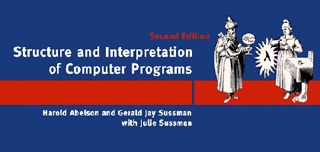
355 points · by gjvc · 4mo ago · 48 comments
https://bjc.berkeley.edu/team/snap/
Snap!Con 2025 - Brian Harvey - ACM Karlstrom Award Address
https://www.youtube.com/watch?v=pDK2PE_pkqQ
Brian calls SICP the actual best computer science course ever invented, which is quite a complement from the guy who wrote the second best computer science course ever invented. ;)
He has a lot of interesting thoughs about AI in education.
https://forum.snap.berkeley.edu/t/hygienic-macros/3258/6
>I admit that my slogan "Snap! is Scheme disguised as Scratch" would sort of push in the direction of hygienic macros. But historically we built Snap! more with the idea of Logo disguised as Scratch. It was just when we added lambda that we started thinking more in Scheme terms.
It is possible to use pretty much any decent Scheme system with SICP, but the language has changed since even the Second Edition, so I don't recommend it. That said, once you are working on your own projects, nothing stops you from using a different system, even though you might have to RTFM to see modern equivalents to ancient idioms.
https://en.wikipedia.org/wiki/Macintosh_Common_Lisp
Rosetta wasn't a thing yet, so Connectix (who also made the famous QuickCam) filled that gap years earlier.
https://en.wikipedia.org/wiki/Connectix
> Connectix Corporation was a software and hardware company that released innovative products that were either made obsolete as Apple Computer incorporated the ideas into system software, or were sold to other companies once they became popular.
SpeedDoubler and RAMDoubler were great, and actually kinda delivered on their promises. But what I really needed during the reign of System 7 was BootDoubler: software that made every other reboot instantaneous.
I was just about to ask just that question?
Thank you, SM
In reality you get lectures from individuals that became professors because they are great at politics/research but not at teaching (very different skill).
If you even get them and not their 25 year old assistants.
And this is apparently super common even in ivy league universities as Youtube lessons have shown me over and over.
I think you have the “even” backwards. Elite research first universities have this problem more than teaching-first, low research output programs.
Be thankful when you get the 25 year old PhD students & post-docs. They care more about teaching and remember learning the material recently and are more willing to talk & help you.
unless you mean 'systems programming' as just 'the crap one does to try to glue together all the grotty pre-existing systems' and 'developing a good sense of taste about 3rd party libraries', in which case no, its not really very relevant.
although even here there is insight, I watched a video of Sussman describing why they were putting down SICP and demanding that MIT develop new introductory courses. he was so graceful and considered, putting his polished jewels away. the time when we could reasonably be expected to see across and through all the layers of abstraction was over.
Is there any way to clean them up?
I’ve never understood, therefore, the motivation behind trying to “translate” SICP into a language like JS (or Python, etc.) It over emphasizes the importance of the preferred language in a way that very obviously undermines the book.
The point being: if you’re gonna do SICP do it in Scheme. You’ll get more out of it.
One of the two professors (Dr. Sussman) that give the lectures in this series is a co-creator of Scheme.
You don't have to imagine, you can look at the code used in the JS version and it goes through some fun contortions to get around the fact that JS is not expression oriented (like Scheme). This is from page 35 (PDF: https://sicp.sourceacademy.org/sicpjs.pdf):
function count_change(amount) {
return cc(amount, 5);
}
function cc(amount, kinds_of_coins) {
return amount === 0
? 1
: amount < 0 || kinds_of_coins === 0
? 0
: cc(amount, kinds_of_coins - 1)
+
cc(amount - first_denomination(kinds_of_coins),
kinds_of_coins);
}
function first_denomination(kinds_of_coins) {
return kinds_of_coins === 1 ? 1
: kinds_of_coins === 2 ? 5
: kinds_of_coins === 3 ? 10
: kinds_of_coins === 4 ? 25
: kinds_of_coins === 5 ? 50
: 0;
}That certainly works, but it's awkward. Here's the Scheme code from the 2nd edition of SICP:
(define (count-change amount) (cc amount 5))
(define (cc amount kinds-of-coins)
(cond ((= amount 0) 1)
((or (< amount 0) (= kinds-of-coins 0)) 0)
(else (+ (cc amount
(- kinds-of-coins 1))
(cc (- amount
(first-denomination
kinds-of-coins))
kinds-of-coins)))))
(define (first-denomination kinds-of-coins)
(cond ((= kinds-of-coins 1) 1)
((= kinds-of-coins 2) 5)
((= kinds-of-coins 3) 10)
((= kinds-of-coins 4) 25)
((= kinds-of-coins 5) 50)))
The JS code has to use the ternary ?: to get around the fact that it does not have a good equivalent to `cond`. You can see that they've gone through a literal translation of Scheme to JS that results in very unidiomatic JS code.