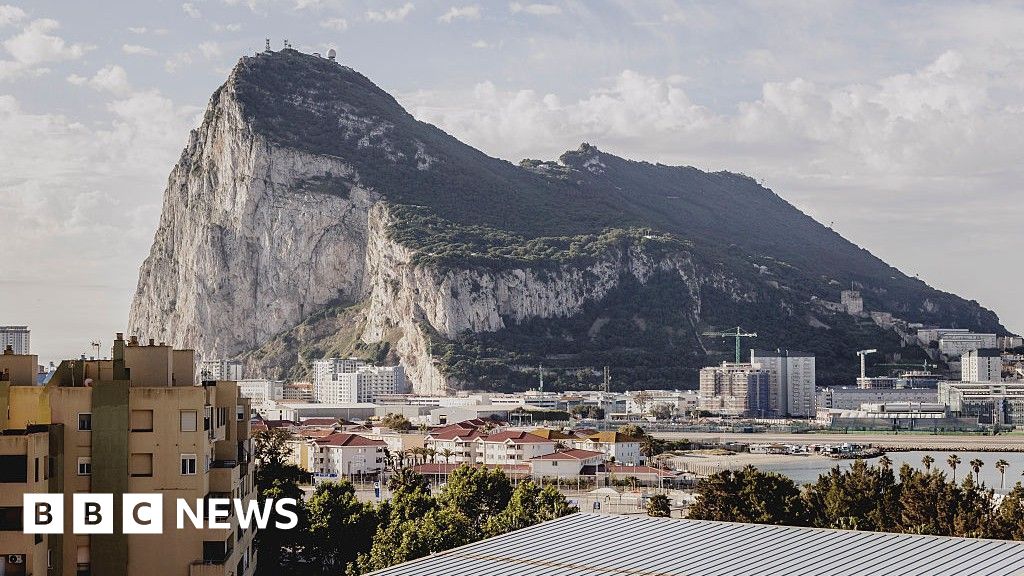
New era for Gibraltar with removal of border controls with Spain
It is hoped that free movement between the UK territory and Spain will provide an economic boost.
bbc.com
32 points · by tosh · 4mo ago · 122 comments
entering: Spanish side: passport scan, UK side: 5 second look
exiting: waving through
I think the twp main problems are not who Gibraltar belongs to, but 1. Gibraltar is that it is kind of a tax haven next to one of th areas of Spain with more poverty and unemployment, which is also one of the main drug entrances of the country. This combibation is explosive and really problematic for the people in the Campo de Gibraltar, especially the youth. 2. The people of Gibraltar must also be sovereign and don't want to belong to Spain, so I think we should respect that.
I think this kind of agreement make a compromise, integrating better Gibraltar with the area, making it possible for the people around to benefit from the Gibraltar's economy, bridging Gibraltar and Spain closer, while respecting the sovereignity of the people of Gibraltar.
However, I must say, a similar agreement could be done with Gibraltat belonging to Spain, which I would consider fairer, but still not the most important point.
I am telling that Gibraltar people should decide which country they want to belong to, same thing with Ceuta and Melilla.
I think in a very abstract sense I agree that exclaves like this are weird and it would be cleaner if they didn't happen (Gibraltar returned to Spain, Ceuta and Melilla returned to Morocco), but that's thinking of this as a systems design problem rather than one that cares about people. I recognise that this is not an empathetic view, and my own opinion is worthless and I hold onto it very weakly.
Is this your standard for whether or not something is colonialism? Do you apply it consistently throughout, even when its inconvenient for you?
After 10 generations, the people are every bit as local as the previous population was. 300 years is such an abyss of time that most of us would fail to name a single of our ancestors by name.
Kladsko was a Czech city from approx. 1000 to 1742. The old town still looks a bit like very small Prague [0]. Was lost in a war (to the Prussians no less), it is gone, not our anymore. Tough luck. Others live there now, it is theirs.
[0] https://cs.wikipedia.org/wiki/Kladsko_(město)#/media/Soubor:...
Land borders that one doesn't like doesn't equate to colonialism. It's just a land border that you don't like. The people of Gibraltar voted almost 100% to be British on more than one occasion. Trying to make them not British is the definition of colonialism
The distance from London to Gibraltar is closer than the distance from London to Bermuda, but nobody finds that weird. France has French Polynesia on the opposite side of the world. Russia has Kaliningrad. Norway has Svalbard. South Africa has another country, Lesotho, right in the middle of it. India wraps around Bangladesh like a tentacle. Azerbaijan has a random piece of land and makes a sandwich out of Armenia. Spain has islands directly west of Morocco. France has land on South America.
The whole world has freaky borders. The only clean borders are places like Wyoming and Colorado.
So no, as a general rule I can't agree. I can certainly agree that there are some rather silly cases, but it's just not practical for all islands to be self-governing, so I can't agree with the general rule you propose.
That's the same, whether it's Gibraltar, Scotland, Cornwall, the Canary Islands, Ceuta, Taiwan, Falklands, Cyprus, Texas, Point Roberts, Crimea, Canada, Greenland, etc etc.
We can argue about the thresholds needed, the length of time of residence ("squatters rights" etc), the minimum size of a given area, but the principal remains.
https://en.wikipedia.org/wiki/1967_Gibraltar_sovereignty_ref...
https://en.wikipedia.org/wiki/2002_Gibraltar_sovereignty_ref...
It gets all complicated and messy when war is involved, of course. I'm talking about peaceful transfers of ownership here.
After 500 years? Yes
Somewhere between is reasonable to debate, but many people won't even agree on the principal of self determination, at least not consistently. Personally I wouldn't put the threshold longer than a human lifetime
> Questions about ceding the territory to the United Kingdom and later to Canada have been raised since its creation; however, its status has remained unchanged.
[1]: https://en.wikipedia.org/wiki/Point_Roberts,_Washington
Meaning: the people who live in a place get to decide who governs them and their society.
People in Gibraltar, The Falklands, the Channel Islands, the Isle of Man and Northern Ireland all have different wants, needs and asks of the UK, and the UK honours all of them. There are other overseas territories with different relationships, plus the Commonwealth too.
If that ask changes (and in Northern Ireland it likely will in our lifetimes, the others less so), the governance will change.
Sometimes there is an ask for a closer relationship through the British Commonwealth (such as South Africa). Sometimes there is an ask for the UK to go away, thanks but no thanks (such as Malta). Each relationship is handled individually, but through a lens of self-determination. That's the priority in the FCO, in Parliament, in UK media. If a tiny nation wants to be British, the UK will go to war over it despite it making little sense (Falklands). If a tiny nation wants independence despite tactical advantage for UK to keep it, independence will be fought for (Malta happened, Diego Garcia is a WIP - watch this space). Where there is division (Northern Ireland), the majority view is observed, but with democratic and cultural structures created to try and make sure minority views have a voice in that governance.
That said, there is a caveat: observance of treaties tend to over-ride local preference in some cases, so if there is a legal argument to ignore the wishes of the locals, those wishes may be ignored: Hong Kong is the most prominent example of this in recent times (locals seemed to want to stay British, China said the 100-year agreement was up and there'd be no renewal, end of, so China it became).
Diego Garcia is another example, which has got messy because of the Whitehouse not understanding the UK's perverse inclination towards local democracy and the right to self-determination (see also non-UK entities the Whitehouse has not understood well: Greenland, absurd noises about Canada, and so on).
When able, the UK has consistently been committed to restoring governance to a local population's preferred model peacefully since ~1950 (India being the last real mess), and if the people of Gibraltar want to be governed by the Spanish, they'd be governed by the Spanish within ~2-3 years.
The idea that local people should have no say in this because "it's obvious" who "they belong to", is the colonialist notion here. A land isn't about geography. It's about people. It took a long time for the UK to understand this. Eventually they did. Most European colonial powers did. Others are still trying to catch up, it seems.
> Meaning: the people who live in a place get to decide who governs them and their society.
Except for Scotland, of course.
> Travellers arriving from countries outside Schengen, such as the UK, will have to show their passports to Gibraltarian and Spanish officials at the territory's airport and port.
So an L for the UK as Gibraltar has again freedom of movement to the EU (that edit: half the British hated so much), and lack thereof to the UK...
Looks like NI voted ~55% remain and Gibraltar ~95% remain, but too bad, England voted ~53% leave, so screw all you little overseas territories with actual land borders who are most directly impacted.
The impression I got was leave voters either thought it would all work out somehow, or that they cared so little about the non GB territories to the point that they felt they didn't need to address to question.
What should have happened was the ability for any person to retain their European citizenship, or if under 18 choose on their 18th birthday. Then the remainers would not have had their rights stripped away.
The catch being if more than 50% of adults took this up, then the UK would not leave.
Northern Ireland got the best deal of the three. Thanks to the Good Friday Agreement, people there can get Irish (and therefore EU) passports.
This is a perennial issue in Scottish politics, but Scotland, unlike Northern Ireland, and maybe Kent, does not have a land border with the EU.
My personal hope was that the UK would remain in the EU, but both the EU and UK would take a look at themselves. Instead both are heading more and more towards censorship and heavy control of their citizens.
> Looks like NI voted ~55% remain and Gibraltar ~95% remain, but too bad, England voted ~53% leave, so screw all you little overseas territories with actual land borders who are most directly impacted.
Most people only care about things like that when they're on the losing side of a vote. When they win, the attitude is "fuck you, we won, comply."
See: the total lack of respect from urban US voters/politicians for the different social policy preferences rural areas often want.
A generalisation that only applied to, at most, 52% of the voting British public
Indeed. And, At a point in time ten years ago. In voters who skewed older.
See the Voter Flow diagram: https://www.reddit.com/r/europe/comments/1pj8kzd/voters_and_...
EDIT: not Schengen, sorry, although I'm pretty sure I just used my national (European) ID to go to London many many years ago and not my passport.
Gibraltar isn't going into the Schengen, it's just going to follow all of the rules of the Schengen area. It's always(?) required a passport check anyway. It's definitely semantics, though!
> EDIT: not Schengen, sorry, although I'm pretty sure I just used my national (European) ID to go to London many many years ago and not my passport.
You could travel with ID cards pre-brexit. The Schengen area has _no_ checks on the borders, so you don't even need an ID card. (However, the place you're travelling to/from may require you to carry one).
As an aside, I have always found it ironic how Spain continuously whines about Gibraltar while doing the exact same thing to Morocco. At the very least, Spain was smart/lucky enough to lobby the UN early on to not include Ceuta and Melilla in the decolonization list.
Gibraltar, on the other hand, was just lost in the War of Spanish succession to the British Empire, and has had a British connection to them since then, but never before
But applying this logic universally would change the world map, not to mention that this justification ignores the fact that the concept of a nation state is relatively new as a norm.
Regardless, I and many others will continue to ridicule Spain’s paradoxical position on Gibraltar. Hopefully a just resolution is realized for all parties at some point in the future.
The UN argument boils down to Spain lobbying the UN early on (post-WW2) at a time when Morocco and other North African and West Asian states either did not exist yet or did not have the ability to represent themselves well at the UN.
Or do you think Spain has a legal right based on geographic proximity to enforce a culture on those people despite existing treaties, laws, culture and democracy?
Britain has been doing this to Ireland for the last 800 years. You still continue to hold their land, oppress its people and do your best to exterminate what shred is left of their language.
If Chinggis himself rose from the grave, I'd care a lot more about his thoughts on these matters than a Brit's.
I say this as somebody who is paternally British and maternally Irish. My great-grandfather was in the Royal Irish constabulary, but his eldest daughter (my great Aunt), married a leader of the IRA. Most of my Irish great uncles came to England from Ireland and enlisted in the British Army and the RAF in WW2 while Ireland remained neutral. After the War, some of them returned to Ireland, some of them stayed in England.
The real picture of life on the ground is complicated, and I'm going to assume you are not living amongst it, by your use of "their" when talking about Ireland.
At the point of Irish independence it was decided that those parts of Ireland who majority wanted to be part of the Irish republic should form a republic, and those that didn't (the six counties of Northern Ireland), would remain part of the United Kingdom. And so it is today.
The 100+ years since have held multiple chapters in the story, including murders on both sides, terrorism in the UK (including an attempt on a sitting Prime Minister's life), oppression of republicans in Northern Ireland, and a hard-fought and wrung out peace agreement.
The current First Minister of Northern Ireland is the leader of Sinn Fein, a formerly proscribed (read: banned), party that was considered the "political arm of the Provisional IRA" (they are the terrorists who bombed PM Margaret Thatcher).
The way we got to that state was the Good Friday agreement in 1998. That allows people in Northern Ireland to express both their Britishness and their Irishness (yes, they can have both! In the same person!), without fear of reprisal or judgement, either culturally or officially. People explore their cultures as they see fit. They vote for people as they see fit, even if London doesn't particularly like the leaders they vote for. They live. And they have a say in how things should be.
There is no oppression of the language. Gaelic is slowly flourishing again in the Republic, and those who wish to use it in Northern Ireland can do so. There's no mandate for dual language road signage in Northern Ireland as there is in Wales, but there's no real ask for it either: at some point it might happen, in the same way the Welsh Language Act came about in 1993 (another sign of UK government encouraging self-determination - the Welsh Assembly).
Successive recent governments of the Republic of Ireland for their part are happy with this situation: the price of keeping the peace if the six counties were handed over to the Republic today would likely bankrupt the Irish treasury (and it would have been worse during The Troubles): it would break the Good Friday agreement, there would be a rise of terrorism and so on. They know they'd have to ask for external assistance, and then we're just back to the worst of The Troubles.
The vast majority accept the right to self determination is the way, now, and for the future. Over time, it's expected the appetite within Northern Ireland to become part of the Republic will grow within the population itself. This is because of demographic change: the unionist population is slowly becoming a minority (funny how when a Catholic demographic of Republicans are told not to use birth control their birthrate is higher than the Protestant population who do use birth control - I am here today thanks to this marvellous papal determination :) ).
One day, there will be a vote. One day, change will happen.
But it won't be because of something being imposed. Or an imposition being removed.
I suggest you do a little more research, and look into what's actually going on with the UK here. The history of it - as with the history of most things - is rich, complex, sad, hopeful, and lived. It's not a slogan. It's not a talk given by a politician at a fund raising event. It's not the quip given by a guy you hear talking about it in a bar or at a dinner table who never set foot in any of the countries he's talking about. Just be a bit more curious.
The Falklands were never Argentinian. The "native" inhabitants are the ones currently living there.
No. The reason was not economic, the reason was that the government polled the people living there and found that support for remaining British is ~100%.
Oil was found later, the fisheries were never worth maintaining the island for.
Must give props to English honesty though, most people would be savvy enough to come up with some sophism to cover this reprehensible chain of thought. But it's so ingrained in your minds that you have some divine right to your unlawful colonial holdings you just won't even bother.
PD: get the fuck out of Ireland and allow their Scots their referendum.