119 points · by uneven9434 · 4mo ago · 61 comments
Edit: Sorry, to be more explicit: by global standards large swaths of Americans DO live pre-WWII lives and have poorly constructed homes and lifestyles.
my personal experience suggests that cost of living vs living standards is pretty uniform globally if compared on a national level. (at least in the places i have been to. higher cost of living in a country always also meant higher living standards, and vice versa. differences only mattered within a country with popular locations being more expensive, and there mostly it affects the cost for homes.). so your idea that raising poor families to $2500/mo would make them wealthy is only true if they don't try to change their living standards.
and what does that have to do with international economics being based on exploitation? again, that's an interpretation of the things we can see here. i don't disagree with the interpretation, it's just that the photos do not themselves make the interpretation, they only observe.
You can live a perfectly comfortable life on that; you don't have to worry about bills or medical expenses, and you can afford to get a mortgage and buy a house (probably costing around $300k or so)
That's why I'm surprised about people from a richer nation saying they can't afford things.
If you had the same salary in Switzerland or Luxembourg which, believe it or not, is not impossible, there would be a lot of items that you can't afford. Salary is important but cost of living matters as well. Granted, inside the same country, figures could change drastically but people tend to live where there are lots of job opportunities where it's more expensive.
To pay off 300k within 30 years at current mortgage interest of 4% you'll have to pay 1432/month (215k of interest will be necessary)
Depending on the amount of taxes you have to pay, thats likely > 50% of netto wage
In developed countries, people buy (or rent) the things they need. Most financial transactions are recorded, taxed, regulated, and with 3rd parties involved at every step (who also expect to get payed). Car insurance, home insurance, electrical bill, etc etc. Grocery prices go up, you pay more. Renting, and rents are raised? Tough.
But in less-developed countries it's not rare for people to grow their own food. They could be living on 0 income & still have food on the table. Swap produce & services with other people in town. No 3rd parties, no taxes (see: informal economy). Build their own home on family-owned land. Insurance? What insurance?
TLDR; there's many flavours & angles on what "poor" or "rich" means in practice.
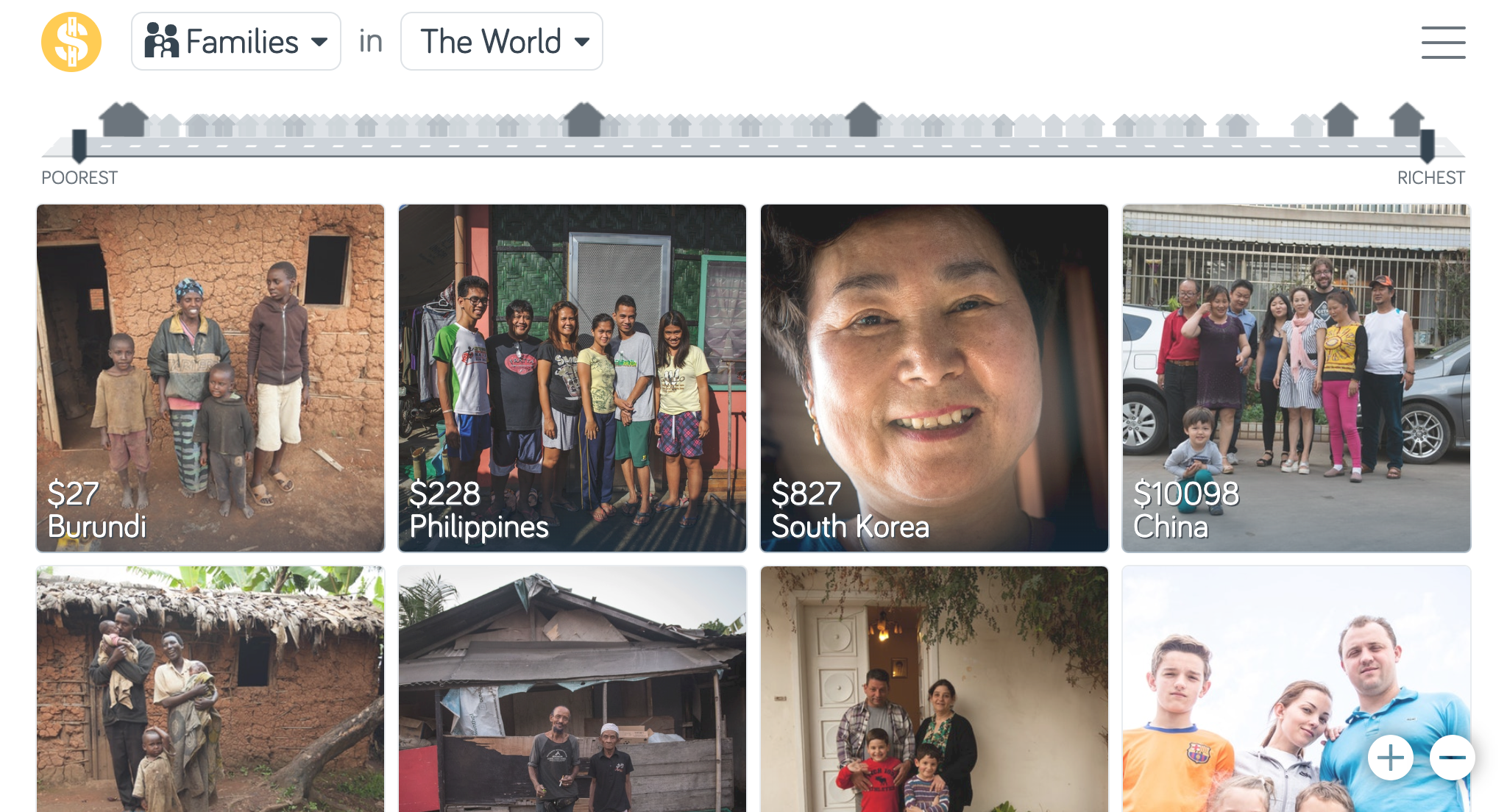
High salaries and an industry boom over the last decade created a sort of whiny arrogance amongst software developers, and particularly those of Silicon Valley. They desperately want to see themselves as the elite.
Of course the elite get their mansion where they want. They are entitled to it.
Meanwhile people making $50000/month in San Francisco can't afford a house because half of it is taxed away and housing is astronomically expensive.
When you have a highly inelastic supply (constrained by zoning laws, density limits, and geographical boundaries), prices rise to the maximum margin of what the highest-income buyers are capable of paying.
Regarding taxes: Since taxes apply to all local high-earners equally, it doesn't change their relative purchasing power against one another in the local housing market. If taxes were suddenly halved, that extra liquidity would be priced into the next bidding war, driving home prices even higher.
When half that $50K gets taxed, half of what's remaining has to be saved up for retirement in a place that deeply discriminates against age, you don't have much left to save up for buying a $2M house.
Buying a $2M house is saving for retirement. Owning your own home in retirement is a massive financial win. And if you own a home in an expensive market, you can sell it, buy one in a more affordable market, and then the difference is unlocked retirement savings.
https://www.zillow.com/homedetails/80-Prentiss-St-San-Franci...
check this out.
Edit:
So the numbers are not a direct exchange rate to USD.
Q: How were dollar values assigned to households? A: The households’ door numbers represent the consumption values (US dollars) that each adult in the household has per month. This figure comes from a combination of the household’s self-reported consumption and income levels. We then checked the official cost of living data in each country to adjust the values for purchasing power parity (PPP) and converted the value into US dollars. Read more about how we assigned the Dollar Street values here.
I'm not familiar with the situation in San Francisco. But in Santa Cruz, the cost to own with a 20% down payment is ~50% higher than the rent for the same unit. If you can't afford a substantially higher down payment, you're not really in the market for a home.
With $7k/month after tax, you would probably be renting an 1br, or maybe a cheap 2br. But your income is not high enough to buy anything, unless you start looking for homes well outside the town.
* in an area not going to get shot or mugged
* structurally earthquake safe so that we don't die