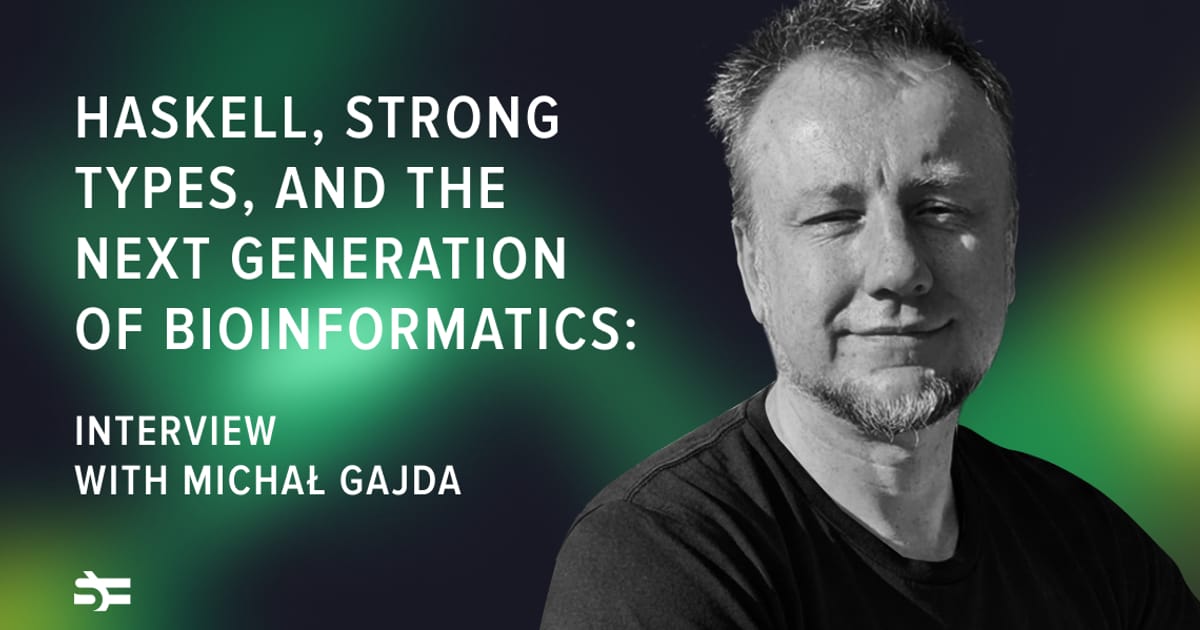
Haskell, Strong Types, and the Next Generation of Bioinformatics: interview with Michal Gajda
Bioinformatics combines scientific discovery with the challenge of processing large, complex, and imperfect datasets. In this interview with Michal Gajda, we explore how Haskell’s strong types, purity, and functional abstractions can support reliable and high performance biological data processing. Drawing on projects such as hPDB, JSON Autotype, and XML TypeLift, Michal discusses scalability, parser development, and the barriers to wider adoption of functional programming in bioinformatics. He also considers how better education, tooling, and AI assisted programming could make Haskell more accessible to future scientists.
Serokell