99 points · by speckx · 3mo ago · 50 comments
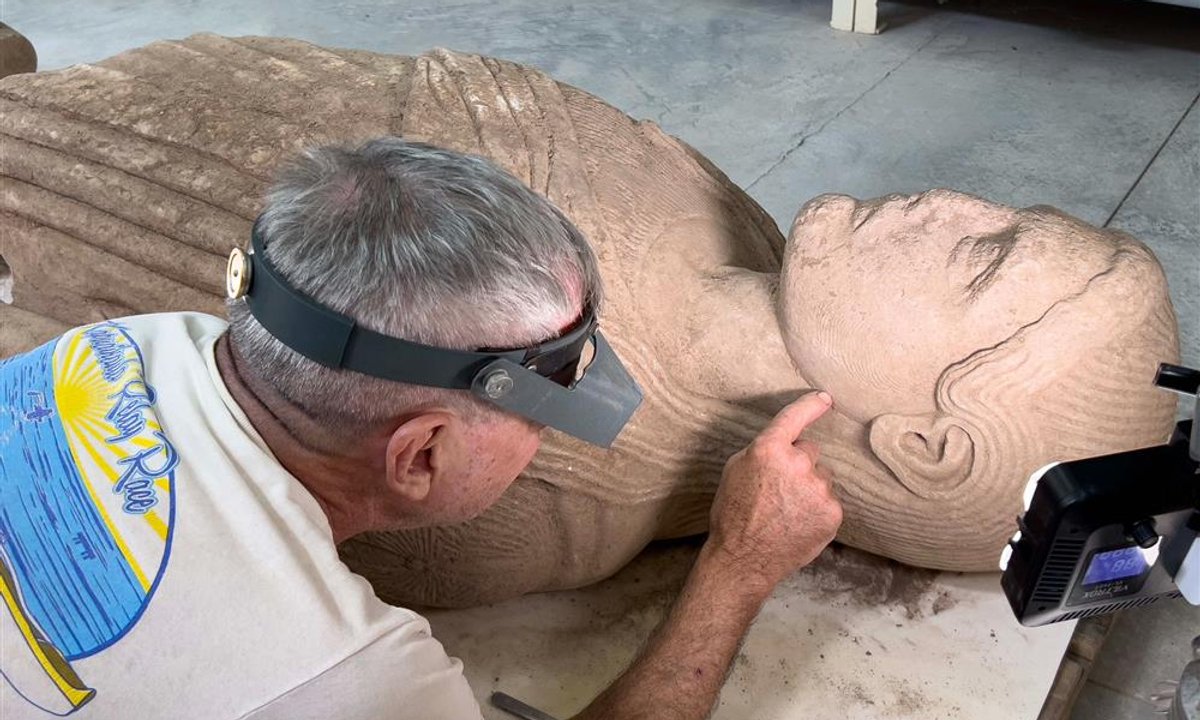
The sculpture is very 3-dimensional. I don't get how it made a good paving stone, or how being used as a paving stone didn't end up conflicting with the "well preserved" part more.
Besides which, ever been to/seen the streets of Pompeii? Flat, level surfaces for road construction only seemed important to the Romans as a side quest. They would fill the gaps with stone and mortar - perhaps that is the case here.
So maybe it was about one of those parts and the lower one looks like it could be a decent paving stone.
Didn’t the country rename / rebrand to Türkiye?
https://en.wikipedia.org/wiki/Name_of_Turkey#Presidential_ci...
Türkiye has expressed the desire that their exonym be uniform. The United Nations has complied in their policies and materials. The United States switched for diplomatic contexts, but in terms of mapping and geography, decided to retain the traditional English spelling.
They don't have authority over a language, however, so English-speakers continue to spell it as they see fit.
Uncivilized does not mean stupid or brutes.
The classic checklist definition is: cities, writing, centralized state, agriculture, social stratification with rulers.
I would rate Narwala Gabarnmang as one of the earliest sites of civilization, personally.
Well, "civilisation" is a Western European word for a Western European concept.
It is is a rock shelter with a ceiling held up by pillars that appear to have been deliberately shaped and arranged by removing supporting columns to create usable space.
It has one of the longest continuous occupation records anywhere (charcoal dates back over 45,000 years, with art possibly around 28,000 years old), and it produced the world’s oldest known ground-edge stone axe fragment, dated to roughly 35,000–65,000 years ago, predating similar technology elsewhere by tens of thousands of years.
However: no writing, no cities, no centralized state, made by mobile hunter-gatherer groups rather than settled agriculturalists.
Granted you can also argue the same about Incans and to some extent Mesoamericans, so it’s kind of debatable.
This entire discussion stems from the fact that the word "civilization" is essentially defined to fit the societies people already consider civilizations. There are technologically, politically, and socially complex societies that aren't "civilizations". My recommendation is to avoid the word entirely. Trying to use it scientifically leads to confusion.
Requirement for a writing system is an arbitrary condition. A lot of civilizations, especially in that region, have strong oral traditions.
Also would a knotted thread record keeping system count as writing?