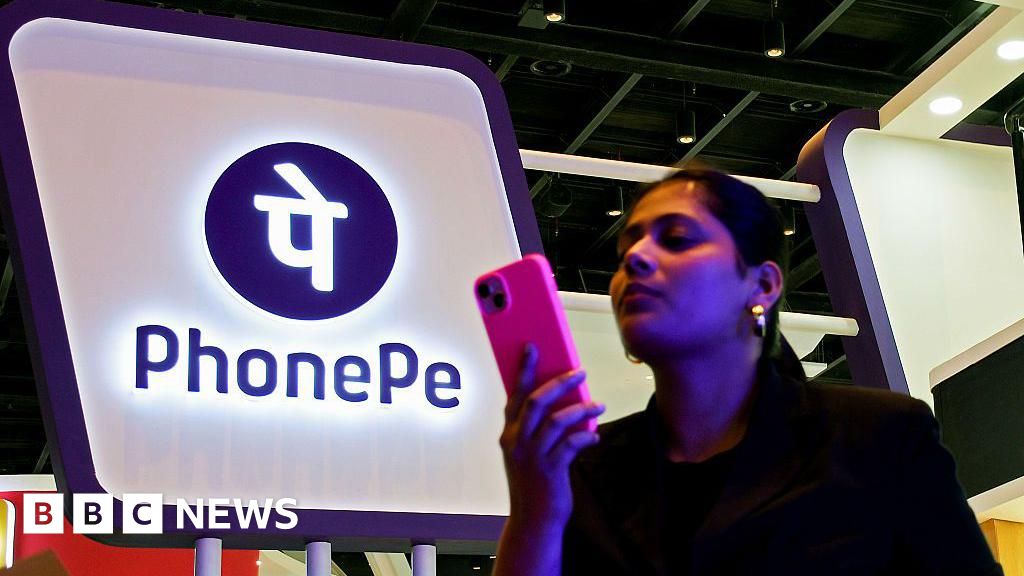
UPI: India built a digital payments miracle. Now comes the bill.
India's UPI may finally face merchant fees, raising questions over who pays and whether users will resist.
bbc.com
182 points · by monkey_monkey · 3mo ago · 263 comments
India is forced to subsidize farmers to the tune of $37B JUST for urea. Governments routinely offer free bus services to women, free cash handouts to women, free electricity to farmers (who then use the power to pump out groundwater and grow paddy in areas otherwise not suitable for it). The list goes on.
A $1B subsidy to eliminate friction on the payment front is peanuts.
https://en.wikipedia.org/wiki/Exorbitant_privilege
I don’t want international private companies controlling payments, better have my own elected government manage it.
The main thing that makes card transactions more expensive is the merchant bank assuming chargeback risk, but that's because card payments are an entirely different transaction type. Pix is digital cash. You typically cannot get refunded for any reason. Cards are not digital cash. You can get refunded for fraud and unauthorized transactions.
Whereas if you give other countries the obvious win that they can stop paying ~3% of their entire economy to a foreign payments network then you lose the fees anyway and that other stuff on top of it.
The American Empire is alive and well.
(Anglo-)India is of the Anglophones, by the Anglophones and for the Anglophones for all practical purposes.
That's why laws etc. are mandated to be written in this foreign language that's incomprehensible to the majority, and why there's a strict near-apartheid like barrier preventing higher education (and with it, higher employment) to non-Anglophones.
The only reason I imagine we don't hear about this systematic discrimination that prevent downstream material development like industrialization (as opposed to the ethereal one like caste) is perhaps because Western institutions have vested geopolitical interest in having such a large vassal, intellectually if not politically.
https://indhospitalsolution.com/blogs/keralas-hospital-gold-...
> The research from the United States — which is a decade further down this road — is sobering. Studies of PE-acquired hospitals document consistent patterns: non-revenue-generating services reduced, staff-to-patient ratios cut, ancillary charges inflated, and a systematic shift toward high-margin procedures.
https://jeswinjos.medium.com/someone-is-quietly-buying-keral...
There it is! Behind every revealed shittery and fuckery, there's one name that constantly come up. As for this example, I'll give you a clue: it's not India.
Correlation is not causation. Banks have demanded this (getting rid of Zero MDR) for many years, even prior to Trump assuming office. However, it may have momemtum now due to the impending trade deal. But that's speculation either way, and the burden of proof rests with whoever is making that assertion.
What the government conceded (or gained, which could be a boring topic relatively) would make an impactful story. Unfortunately, newpapers today mostly rely on correlation rather than doing the hard work of finding someone who'll spill the beans. There's very little of Tehelka-style "Operation West End" (or "All the President's Men" for a movie equivalent) going on these days.
Unfortunately, current Modi govt is compromised due to Adani and the Epstein files. It can only hop and jump to whatever Trump orders.
>A $1B subsidy to eliminate friction on the payment front is peanuts.
These are entirely independent issues.
Should India subsidize farmers like this? IDK, maybe
Should India charge fees on UPI payments? IDK, maybe
Also: just because money is being wasted on cause $X does not mean that there's more of it lying around to be wasted on cause $Y! You've got to draw the line somewhere!
Do you know what it costs to run the cash infrastructure? Maintaining physical branches, employees to handle cash, counting machines, counterfeit detectors, security personnel, armoured transport, theft risk etc. The costs of maintaining a centralised digital infrastructure pales in comparison to this. If anything you should get a discount for using digital.
Under Indian law, companies must spend 2pc of their net profit on CSR activities (corporate social responsibility). Ask banks to use that money. The Indian banking sector made a combined profit of $40B this year. 2pc of that is $800M. Close to the $1B number.
> You've got to draw the line somewhere!
Draw it in the farm sector! They do not have to pay income tax on their income, get subsidies on fertilizers, free electricity, guaranteed prices for their crops. Small farmers cannot take advantage due to average holding size, and large farmers laugh all the way to the bank!
> Transactions above ₹2,000 account for only about 4% of total UPI transaction volume, but they make up roughly 67% of the total transaction value.
https://www.outlookbusiness.com/news/will-upi-payments-above...
$1B or even $5B is nothing, given the impact UPI has had across the country.
Basically country is going to shits purely due to votebank politics, and this is true across party lines no matter who is in power.
Highly recommend reading about Farm Bills that govt. had to take back even when surveys by Supreme Court showed that over 85% farmers across the country were in favor of those bills and wanted them turned into laws.
edit: replied to comment was rephrased during reply.
In other words in developed countries farming is mechanized in India it's not and until it's mechanized India is doomed to always be an agricultural pastoralist developing Nation
- Free Bus Service Schemes for Women in India: A Gendered Approach to Public Transport and Economic Inclusion - https://www.impriindia.com/insights/policy-update/free-bus-s...
- Freebie or Freedom? Tamil Nadu’s Free Bus Travel Scheme for Women - https://www.impriindia.com/insights/policy-update/free-bus-s...
There is also a misconception. It is not in all public transport. In TN state, it is on select buses - slower buses only.
The UPI experience is built for a single audience in mind. It has changed the way people transact in India but at the same time it's been an absolute nightmare for a tourist to play along. The only route for a tourist to use UPI is via third party apps, which charge a markup for loading money (3%). But let's say you accept that as a part of travelling - the limitation of tourist wallets is that they can't be utilised for P2P payments - exactly what UPI is most used for across the country.
Alternative, since no one accepts cash anymore, is that I have to carry thick wads of cash so I can hand out exact change. That still gets you the stink eye because most vendors don't like to deal with cash anymore.
Same issue in a lot of Southeast Asia. After jumping through all hoops to get the correct app, id verified and paying a hefty fee, it was still a gamble if the restaurants would have a business QR code or a personal one.
One time in Laos I was on an island that didn't have an ATM, almost no cards were accepted and I had run out of local currency. So I ended up asking for the QR code before ordering at the restaurant to make sure it would work out.
In India it's super annoying when taking autos because the drivers won't have change and in 99% of the cases they have a personal code. So I just ended up using Uber with credit card, much less hassle.
I don't know, central banks seem super afraid of money laundering somehow. But just allow me to spend $100 or what, I just want to buy a quick coffee or a fruit from a street vendor, not a Rolex.
Unfortunately, this cannot be fixed. India has a huge boner for papers, KYC, etc. The state isn't going to let you access payments and communication services without a colonoscopy.
Smaller, in fact, than what they pay in their own country for credit card fees.
Well they do, but last time I looked you needed to physically go to a branch, but not all branches do it - yeah I'm not going to spend half a day on my trip just to pay slightly easier. It needs to be something you can sign up in the airport in 10 minutes for.
Every time I've been to India I just ended up finding an ATM (that works with my card) and carrying around massive wads of cash. I even stayed at a hotel once that couldn't take international cards.
Indian built UPI for a single audience AKA their citizens
But the solution to this should be to simplify the tourist experience and to allow payments from foreign banks and cards. Traveling to China has a huge hassle in the late 2010s due to everyone local switching to WeChat/Alipay but it not being available for tourists, but in the last few years (I last visited in 2023), you could use WeChat/Alipay with a non-China bank card.
https://www.npci.org.in/blog/upi-one-world-your-digital-pass...
Some P2P is between family/friends. Or you are paying rent etc. But a lot of it is business transactions that move funds from one savings account to another because the auto driver is accepting a payment in his mother's or wife's account or something similar. There is so much friction in the banking system if you have to create a current account that this is pretty common.
The system needs to improve drastically to support the two sides instead of letting it be. Should help your use case as well if that happens
An NRI account with PhonePe is good enough as someone with OCI, but even in my ancestral town and village Visa and AmEx adoption by payment processors has been high despite no real diaspora or tourism.
And there's no real point in optimizing for the kind of tourist who's going to go visit a slum like Paharganj or go to Kasol to partake in drugs.
That said, I guess it also depends on where an NRI or PIO is from as some states have better payment processor penetration than others.
But tbf, when my SO and I go to VN to visit family, it's the same story there (Momo/Zalo and cash rule Vietnam outside the tourist bubble of D1/D3/Thao Dien/Da Lat/Da Nang/Hanoi and we resort to her Vietcombank account).
Last time I bit the bullet and set up Mony, which at least got me access to UPI, but it's limited mostly by government policy: you can't complete the KYC process until you've physically landed in India, can't transfer to personal accounts, fees on adding money, fees on keeping money (they charge "unused balance" fees!), etc.
In what situation were you as a foreign traveler where you needed to pay UPI?
Convenience stores and hypermarts like Reliance SMART/Digital and DMart or QuickCommerce platforms like Blinkit accept Visa and AmEx credit cards. Transit via Uber, Ola, and co accept Visa and AmEx credit cards. And most restaurants and bars targeted at outsiders accept Visa and AmEx credit cards. And Hotels accept Visa and AmEx credit cards or can be booked via platforms that accept them like AirBnB.
So transit, residence, restaurants, and convenience stores (all of which will be reimbursed by your employer) are all doable via credit card.
Fundamentally, UPI was built for India3, as were other peers across Asia, not foreigners.
But my SO and I never understood the tay ba lo mindset. Catering to them is what kept Thailand and the Dominican Republic stuck in tourism-induced Dutch disease because it incentivizes extractive and low productivity economic sectors like real estate and low skill services at the expense of human capital development and investing in high productivity industries.
Or a credit card.
.... the markup being what the credit card companies charge them.
Essentially UPI was there to stop the industrial fraud and money laundering that was going on india. I have not actually checked the efficacy of this though. The last time I checked was when modi made the largest bank note not legal tender.
That part aside it does sounds like VAT (a 20% sales tax on all purchases) but for transactions.
Here in Poland we have a budding "save cash" movement. And they make some good points about freedom and privacy but are the loudest about the processing fees when mostly it's a way for smaller merchants to avoid paying taxes. Which is fine, I think they should be exempted anyway, but let's not pretend that it's the 0.5% in fees rather than the 30% in taxes.
Also, some of us have actual lives to live and not obsess over such details, life is way too short and has much more to offer than bean counting accounting.
Sounds like it should just be public infrastructure and the government pays to maintain it.
Governments have paid to maintain a finance system since the introduction of token money (by minting the currency as a public good; also funding policing to prevent counterfeit) so this is effectively the same.
Hopefully they allow foreigners some track to access UPI in the future.
[1]: https://www.ecb.europa.eu/euro/digital_euro/timeline/profuse...
Not cheap and only to business QR codes (so proper shops which probably will take credit card anyway), but it works.
The government has yet to decide the rate or exactly where it will apply, but proposals under discussion include a merchant discount rate (MDR) of 0.3-0.5% - a small fee paid by a business to the banks and payment companies that process its UPI payments - on larger transactions at big businesses.
The government says consumers and person-to-person UPI payments will remain free. If merchant fees are introduced, they will apply only to some transactions above a set threshold, at a nominal rate, meaning most UPI payments will remain free.
One option reportedly under discussion would target transactions above 2,000 rupees at larger merchants, leaving small businesses and low-value payments untouched. Transactions above that threshold account for only about 4% of merchant-payment volumes but roughly 67% of their value, according to brokerage firm Jefferies.
That could generate a sizeable new revenue stream - up to a billion dollars, by one estimate - for banks and payment companies while leaving the everyday smaller payment to the neighbourhood grocer effectively unchanged.
I see this often cited, but in reality it's a farce. "UPI is international" the staunch defender says, so I rebut "Yes, in one place at the Eiffel Tower... everywhere else? The French have no idea what UPI is, and your bank will charge you stupid FX fees for card payments".
Meanwhile if I'm in India, people look at me weirdly for paying with UPI yet most won't take card payments outside of tourist areas or it will get declined because foreign cards are blocked - and if you try to pay cash suddenly nobody has any change, will refuse to take the 20 rupee note they gave you yesterday, or have concerns about whether the notes you literally just withdrew from an ATM are legitimate - meaning you can end up with notes that are defacto unspendable despite being perfectly legal tender and in acceptable condition.
And as a tourist... you want UPI? There are a few ways but they're byzantine, apps locked to the Indian App Store (for tourists?), in-person KYC upon landing, very low first-payment limit, topup/signup and idle fees that push the net fee % easily into the 5-10% range.
Lets look at a perfect example... you pre-KYC on an app ahead of your trip on the one app that allows remote KYC, but you can't load money onto - first you must provide your visa, but the eVisa doesn't count they want the actual visa stamped in your passport. You land, immediately after customs you submit the picture of your visa stamp and wait an indeterminate amount of time, it could be 8 hours, or 24 or 48 or it could get rejected and you could be required to do in-person KYC (either you go to them, or they come to you within a ~5hr window... but only in the major cities).
So day 1 it's impossible to use UPI. It gets approved on day 2, you take a taxi somewhere maybe a nice restaurant, your UPI is now loaded with INR and you try to pay the driver... Your driver has a personal UPI account, you can't pay him! You only have cash... Large denomination INR notes because that's what the ATM provides, he doesn't take card and refused to admit he has change. You eat the already inflated cost and swear to only use app-based services (assuming the Taxi Mafia hasn't had them banned in your city).
You get to the resto and enjoy a meal with your friends, it's a nice place and somewhat expensive, you come to pay, the bill is reasonable and you think "I will pay with UPI", you try paying, it's a business account so should be OK! NO.... You have exceeded your first-day limit! Waiter tells you there is no card machine, and they have no change for cash...
Eventually you leave India, there's a non-trivial amount left in your tourist UPI account, you look for somewhere to withdraw it back to your card - no physical counters open at the airport, you request a withdrawal via the app... it never comes, the next month you get hit with a 500 INR inactivity fee, your visa expires and the app shuts down, next month 500 INR inactivity fee - can't make support requests through the app any more because your visa is no longer valid... Your balance slowly goes to 0 because you didn't think to spend every last rupee on your way out so it gets eaten by the system.
I say a small sub-1% fee on UPI is fine, it's great infrastructure when it works, but more needs to be done with global UPI integration. I have QR enabled payments available across maybe 10 different countries and India sticks out as being the one that's consistently an absolute pain and actively works against you.
Any experience or rec's for Thailand?
Otherwise you're stuck with AliPay+ merchants (easy via Wise) or TAGTHAi which should still work but is expensive and sucks.
--
I forgot about https://p2p.me - they're taking the regulatory arbitrage 'personal travel payment concierge service' approach, basically "work around the problem, not with it" as the founders realized the people making the regulations neither know nor care about on-the-ground practicalities.
After whatever maybe 15 years that have banned the practice.
    ...That may be about to change...

    ...The government has yet to decide the rate or exactly where it will apply...

    ...One option reportedly under discussion would target transactions above 2,000 rupees at larger merchants, leaving small businesses and low-value payments untouched. Transactions above that threshold account for only about 4% of merchant-payment volumes but roughly 67% of their value, according to brokerage firm Jefferies....
IOW, introduce multiple names for the same thing to hide it behind confusing complexity.
The history of payment systems is a history of risk. A quick primer,
All large-scale payment systems that interface with banks must have an answer for the inherent conflict between what the bank does (i.e. provide debt) and how it does it (by taking savings).
If the purpose of banks is to take capital from customers and use it to provide debt to others, then how much money should they keep for their customers' withdrawals and transfers?
If you do constant transfers back-and-forth 24x7 multiple times a second, then banks need a lot of capital at hand to manage the liability.
So even though gross settlement is supposed to be real-time, most RTGSes allow banks to borrow from their government's central bank via an "intra-day credit" system and then effectively net / settle at the end of the day, https://www.newyorkfed.org/research/epr/08v14n2/exesummary/e...
This loophole in a supposedly real-time system reduces the amount of money that banks "actually" owe each other. This allows banks to keep smaller reserves and provide greater amounts of capital to their customers.
You can see the different daily settlement points for the US here, https://www.federalreserve.gov/frrs/regulations/ii-federal-r...
But if you net only a few times a day, it creates risk. What if a bank becomes insolvent in between? Then it wouldn't be able to meet the obligations created by its customers, which would mean that other banks would fall short on their obligations and so on.
It's a network contagion effect; which is partly why the US Fed spent the better part of a decade studying counter-party risk in settlement systems before designing the latest version of its RTGS.
The Fed has protocols in place to stop such contagions before they start. Does the Indian government and its central bank? Where's the capital required going to come from? If a bank fails, who pays for its obligations? The Fed (currently) has a free infinite money glitch backed by the US Military, but the Indian government doesn't. So... where's that money going to come from?
Who is underwriting this system? Have they modelled systemic collapse? Because given what I've read about Indian banks and their bad debts, https://www.bbc.com/news/world-asia-india-58654740 it's a when not an if.
Cue a billion people panicking...
As a happy user of UPI, I think is incredible. I want it to be more resilient, from our national economic standpoint. A (small as possible) fee, judiciously applied, will hopefully create generally constructive back-pressure on the digital side of the cash economy.
---
Why the oxymoron; "digital side of the cash economy"?
Zero-cost-to-consumer one-rupee instant transaction system is basically cash economy. Because, at least here in India, our so-called "informal sectors" have switched wholesale to it in Metro to Tier 2 cities. Significantly in Tier 3 cities and smaller towns. And non-uniformly across rural / village panchayat areas.
UPI, and indeed, digital transaction uptake essentially hews close to the availability of reasonably reliable grid electricity and mobile Internet connectivity and access to banking services. The abundance of low-cost UPI-capable devices is useful only if these precursors are useful.
Reasonable fee as an economy-scale tuned mass-damper.
I hope the result of applying merchant-fee-as-back-pressure, at any size of transactions, translates into a sizeable up-tick in hard cash transactions. Nations of people that want to remain sovereign and democratically-run, ought to incentivise heterogeneity of money flow mechanisms. Especially, they/we, the people, must ensure, through our democratic influence as citizens, that a sizeable portion of the/our economy is person-to-person hard cash transactions.
And this provides a measure for "is the fee punitive?". Let's say, hypothetically, India's money supply mechanism is resilient if about 75% of money supply is digital, and 25% is hard currency. Anything outside this envelope is tending towards punitive costs on the people, both as tax payers and as transaction-fee-payers. Our central bank could manage the money mix, through judiciously tuned per-transaction fee on UPI and other digital payments, not unlike managing the volume of banknotes in circulation. The digital printing press is infinite money, if the effective fee is zero (psychologically). Sometimes, you want to make the fee zero, to bring it all into balance again, but most times, you want to create some friction to keep it from becoming a nation-state level attack vector (whether self-goaled or externally inflicted).
Crypto currencies and/or CBDCs are emphatically NOT the answer for such resilience.
I'd go so far as to argue that those forms of currency undermine (pun intended) sovereign economic resilience, where "sovereign" includes the little guy as much as it does a multinational or a country.Crypto system infrastructure is brittle by design and construction. Its effective use is predicated on the magical availability of wildly complex planet-scale electrical and communication infrastructure, not to mention dedicated tending-to of fast-decaying compute hardware, by literally every single participant in the network. A USB stick of gold-brick valued crypto, buried in the backyard is not at all equivalent to a brick of solid gold buried in the backyard.
Digital money systems make top-echelon black-box corruption easy. Hard cash makes it hard.
Recent years have made it patently obvious that digital-first money flows are wide open to centrally-controlled and/or monopolistic manipulation by individuals in power.
Consider the logistics of managing USD 1M in small bills. Hell, even USD 100 bills because 1M of those is about 10 Kilograms of paper mass (or about 22 pounds for you non-SI enjoyers (why?)). Now you need a large handbag, or a cool trench coat with several large pockets.
Multiply 1M in USD 100 bills, by 1,000, for billion-dollar corruption. That is 10,000 Kg of paper bills alone [0]. Now, add to that, the industrial pallets, containers, and packing material to hold it all sensibly. Let's say 1,000 Kg for each such cash pile.
Further, add to that the real-world infrastructure and organisational capacity to construct, maintain, secure, transport, and otherwise manage the infrastructure needed to hold and deploy your USD 1Bn in hard cash. This staggeringly capital-intensive exercise is subject to economies of scale.
These facts of life make it that much harder for anybody, especially enemy nation-state actors, to physically perpetuate large-scale money-supply based corruption of the kind being increasingly perpetuated by individual people, in private and public life, because they are able to exercise state-level power over digital economies.
Furthermore, currency notes are ridiculously hard to counterfeit --- AFAIK Indian banknotes (and US ones) are among the most secure (as in transaction-trust-secure) forms of monetary exchange humans have crafted.
Printing and injecting those into an economy at scale, to launch an inflation-attack requires nation-state level capacity at multiple levels, and the geopolitical incentive to do so. And if they do, it does not remain surreptitious for long.
Co-opting money systems, especially crypto-currencies to private ends and/or a offensive economy-destabilising tools, is trivial in comparison. You don't need to launch a 51% attack on the ledger. You just need a big enough psychological spanner, delivered into everyone's infinite brainrot feeds, to make 'em believe in The One True Currency; one that benefits you personally the most, obviously...
Obligatory XKCD: "Security" https://3d.xkcd.com/538/
---
[0] More paper-napkin arithmetic: https://www.ehd.org/science_technology_largenumbers.php and https://goodcalculators.com/money-weight-calculator/ etc... (no affiliation to any of them).
(edit: fix typos, add clarifications, maybe I should have made an actual blog post... my publishing workflow isn't indieweb enough yet, sorry :'))