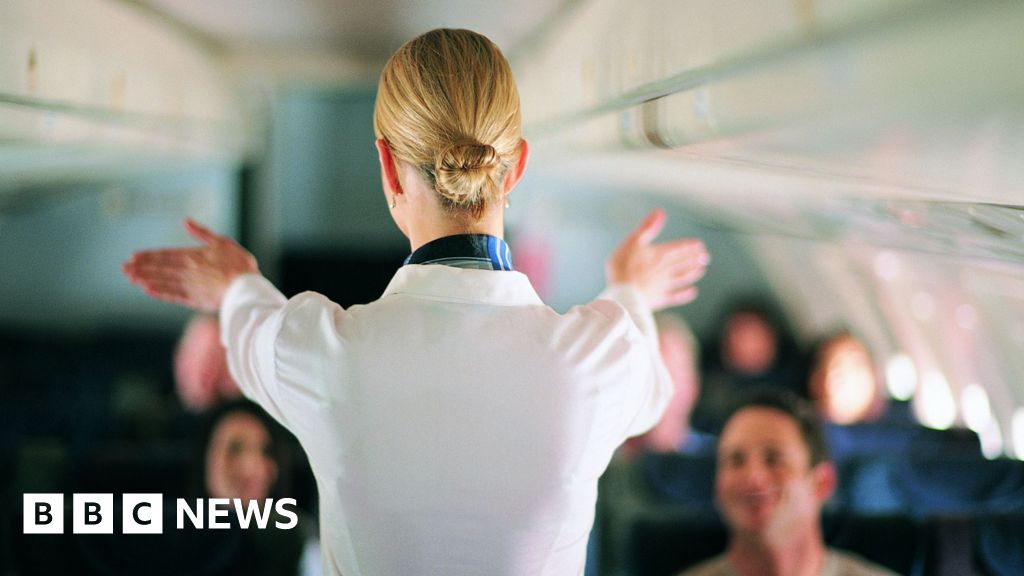
Radiation link in flight attendant's breast cancer, French court finds
Former Air France stewardess Sophie Lainault has had her cancer recognised as an occupational disease.
bbc.com
94 points · by dazhbog · 3mo ago · 59 comments
https://hms.harvard.edu/news/pilots-flight-attendants-have-g...
But how can they point to one individual and say it's causal? Maybe they caught some radon. Maybe something else?
It’s possible that the standards of evidence in a civil case is low enough that they don’t have to demonstrate a causal link. Only that there is radiation in the air and that radiation causes cancer.
https://www.bbc.com/future/article/20180306-a-spa-where-pati...
Most exposed are not the visitors, but the thermal bath workers.
"Workers and visitors in thermal spas are exposed to radiation from radon and short-lived daughters. Radon concentrations in the premises of a thermal bath in Budapest were investigated; high radon concentrations (up to 7.15 kBq.m-3) were found in some rooms. Bronchial dose and effective dose equivalent values were estimated for the staff and the visitors. In some cases the effective dose was about or in excess of 20 mSv annual limit for the workers. Doses for the visitors were about 4 mSv per year, but exposure of the public from radon is still outside the scope of the system of dose limitation."
https://academic.oup.com/rpd/article-abstract/56/1-4/319/310...
There are few places on Earth with high natural background radiation:
Ramsar, Iran (the maximal estimated dose-rate received by inhabitants is 80 mSv/year
Kerala (India), Orissa (India), Guarapari (Brazil), Yangjiang (China)
https://pmc.ncbi.nlm.nih.gov/articles/PMC12402632/
https://academic.oup.com/jrr/article/65/Supplement_1/i32/792...
Yes, disasters are worse but most other power options are killing people in non visible ways.
It seems absolutely silly, but even wind power kills more people per TWh produced than nuclear due to workplace accidents in installation/maintenance.
Also not sure why lung cancer from oil/coal air pollution would be less visible than hypothetical radiation-induced cancers.
EDIT: Source: https://ourworldindata.org/grapher/death-rates-from-energy-p..., accidents include indirect deaths. Solar is the only energy source that beats nuclear in safety.
The fact that even a small amount of discharged radiation can cause damage makes everything more expensive for those companies, not just design and certification of the reactor itself but also liability insurance.
Cancer-related mortality among US pilots and flight attendants
I'm sorry, what? The first flight I took which I recall in detail was in 1995 and even back then the "no smoking sign" seemed redundant.
Guess it wasn't.
From what I remember as a kid in the 1990s in the US, smoking was allowed on international flights. It was one of those grey areas that happen when traveling between countries with different laws.
I've also seen a lot of jokes about French culture being waaay more "pro smoking" than US culture.
Thus smoking beling allowed on Air France until 2000 doesn't surprise me.
Seeing the sidewalks / parks outside of the main train station in Prague covered in cigarette butts as an American tourist in 2019 was certainly something.
Last time I was in London I saw enough disposable vapes on the sidewalk to build a home-sized backup battery...
Vape fumes also smell far less bad and are almost not toxic to bystanders.
It leaves lithium ion batteries everywhere. There are even YouTube videos by people scavenging them to build small battery banks.
You use your healthcare insurance card to access the goods - whoever thought of this has quite the sense of humour.
(British Airways banned smoking on their Concorde flights in 1997.)
Debates are about persuasion, not reality. And, in some contexts (like whether you should go to jail), there is a process argument that there needs to be a debate-like process. Science deals in facts and statistics that have associated uncertainty. For scientific questions, there should be better decision making processes than courts.
> Sophie Lainault...sought to have her cancer recognised as an occupational disease, brought on by conditions at work.
> This has now been confirmed in a landmark court ruling...which said that cosmic radiation was one of three carcinogenic hazards arising from her profession. The other two were passive smoking and prolonged night work.