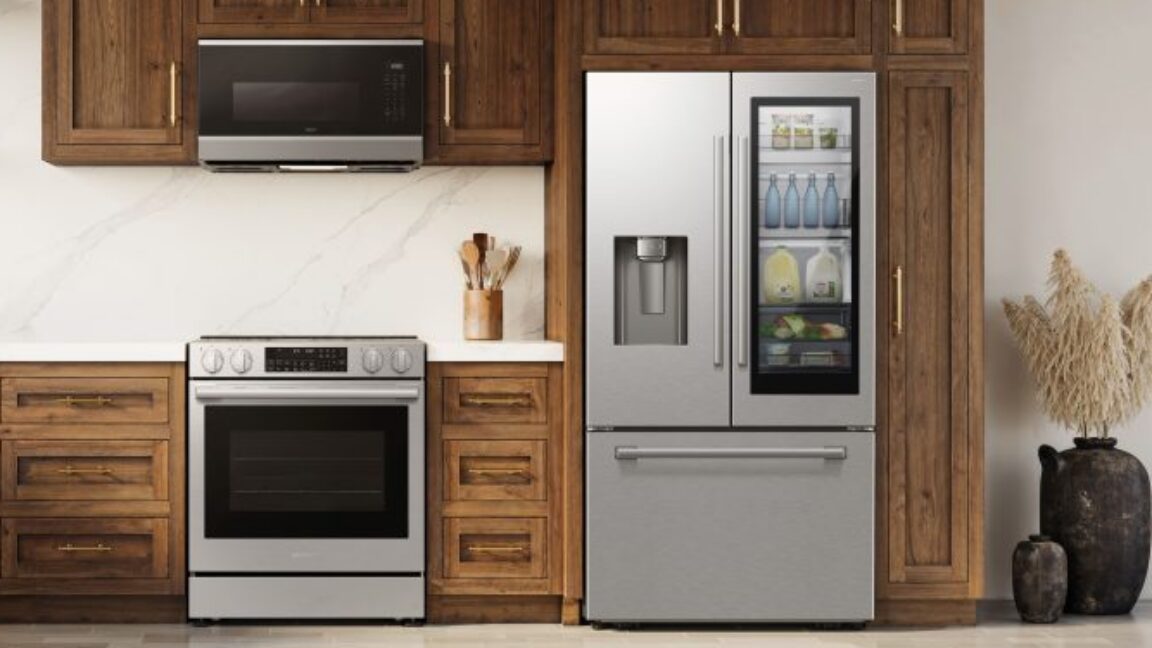
Owners mourn spoiled food after firmware update bricks Samsung smart fridges
So absurd and embarrassing ..."
Ars Technica
323 points · by nonfamous · 2mo ago · 336 comments
Obviously the review of a brand-new device or vehicle with 100 miles on it is going to have a disconnect from the realities of 60k miles of rocky ownership but I remain baffled when people buy a 7 year old used V6 Traverse, a vehicle extremely well known for catastrophic engine failure, and if I question their decision I get a "the reviews were good!". It seems like journalistic malpractice to not retroactively update reviews with a warning when critical widespread shortcomings are found later in a products life.
I'm guilty of it as well, if forced to choose blindly I'd pick Sony over WMFSENSY. But I'm beggining to wonder, with the recent casualness with which brands lower quality, whether they'll be a generational change and people will start ignoring brands entirely.
I'm starting to change my mind myself. My last Nike shoes weren't even the same size/shape (apparently they make left and right shoes in different countries now). At that point might as well go for the knockoffs.
This feels like a joke about just in time inventory and globalization, but I'm worried that it might be true.
The most natural way for shoe mismatches is from the showroom. Customer grabs 5 pairs, tries some on, they get mixed up when returning to stock. Same shoe and size (hopefully, lol), but different production number and different factory/origin.
I've sworn off Bosch appliances after a 2 year fiasco of service calls with one of their dishwashers. The thing was still about $900 plus install. At what price point am I to believe it's not the worse-on-purpose line, as they cheapen the product every year. They seem to have models from $700 to $2000.
A bad $900 model sours me on gambling that the $1200, $1500 or $2000 model is the good one this year.
Seems like almost everything moderately priced has soles made of a extremely lightweight, squishy soft plastic that neither has much traction nor any toughness — worse than cheap flip-flop material.
Shoe companies should be embarrassed to put their name on such crap, yet they try to pass it off as premium.
Only at the same price. If there's a big discount, I'm going to prefer the random letter jumble from China because it's probably a standard design that a lot of factories are producing because it works well enough.
The only reason I lean towards Sony all things being equal is because I know that Sony gets sued when things go wrong, and won't just drop the brand and close up shop like the random letter jumble.
Also I would prefer Sony if lead would be a problem somewhere in the thing I'm buying.
On the contrary, *insertanynonenglishnamebrand* (*newbrand*) doesn't need to have any care in the world. If the product is trash, they would replace the name next year, bonus points if they declare bankrupcy and don't pay their obligations.
One problem is that business forces keep turning brands into rugpulls.
After enough of this nonsense, brands are less of a reliable indicator.
Amazon pushed that to its inevitable endgame, where each product is a unique look-at-reviews situation. (and coincidentally the amazon advertising business is there while you run the product choosing guantlet)
This is something that frustrates me to no end. How are clothing item sizes not standardized yet?
For example, I recently went to buy new Jeans, so I went to the same store where I got my current Jeans, asked for a size 28, and tried it on. How is it possible that my size 28W Basic Straight Jeans from Fox fit me, while a pair that fits the exact same description is too small?
I later went to a different branch, and there I found another pair which fits the exact same description, and it did fit me!
I have encountered this type of thing inany places, like when buying shoes one of the employees at the store told me "We don't have this in size 42 in stock, but we do have 41 and our sizes are larger".
Imagine if you went to McMaster Carr and asked for an M3 screw, and being told "We are out of M3, but our M2.5 is larger so it should work for you"
However, clothes are nearly impossible to simultaneously standardize and commoditize: people (and their feet) come in all shapes and sizes, so different brands in particular, but also different lines of those brands, will have different proportions.
As a tall guy, I hate that clothes keep growing in width with larger sizes, but rarely grow in length (pants/trousers included), but only because you can't get things without trying them on in multiple sizes.
If you do not understand why standardized sizes are not mandated or something similar, just look at any bespoke garment creation and all the variable measures being taken for a shirt, pants or jacket — just make realistic combination of all of them in different sizes, and you are looking at ~1000 "standard sizes" or more.
The problem with this is it's a bit hard to put "well known" in a news article about a negative piece of news, because the manufacturers tend to threaten to sue you unless you have some kind of source or some kind of actual numbers. So this ends up just circulating as received wisdom within the car-knower community but not to the general public. Unless they get lucky with Reddit search results.
I noticed today that Autotrader.co.uk have recall warnings for certain cars, though.
Last I checked Samsung had the most engagement on Facebook just behind Netflix. This means that they are spending tons of money to put their products in front of their customers via social media marketing. Go out and ask any normies for the top 3 brands for electronics, especially that of home appliances, Samsung will definitely be up there somehow, because most people think that big brand = good. How do they know it's big? Well, you see them everywhere!
So I imagine that, "the reviews were good!" is just the surface. The truth is that they ignored all the writings on the wall. In the reality created by the constant exposure, the manufacturer is a big brand, thus they make good cars. Unless someone runs a counter advertisement to tell them about the critical problem the same amount of time or more than when they're shown the car whooshing through multiple scences sytlishly.
I’m puzzled as well, buying a car that depreciates 60-70% in 7 years seems like a horrible idea, you could spend roughly the same on a Toyota Highlander or Honda Pilot and only face 30-40% depreciation after 7 years. This information is freely available if you google “[vehicle model] depreciation curve”.
Nissan (and Stellantis, Mitsubishi) decided to stop making better cars and focus almost exclusively on subprime lending, the rest of the story tells itself once you have that information.
That's just one of those secrets that you need to know, though. It's like knowing to ignore the unemployment rate (in the vast majority of cases) and instead to look at the prime-age employment rate. People rarely think of something like that without being told.
Maybe cruel, but I haven't found a better way to get someone to realize the error of their ways… because logic has obviously failed them.
[1] https://youtu.be/GceNsojnMf0 [2] https://youtu.be/-fC2oke5MFg
someone did not like you linking that!
OK, that's a fair statement, but!
My 2017 Altima has been great. Comfortable to drive, bluetooth connection that doesn't drive me crazy, space for passengers and cargo, manageable maintenance, I even use it to tow a small trailer with lawn equipment, no issues! I'm up to 190,000 mi with only minor repairs that I could do myself. I got my money's worth out of this one.
That said... I do avoid smart appliances, especially LG and Samsung. The additional features do not seem to add enough value to overcome the potential problems.
You don't have the CVT, do you?
I know atleast one dealership that never even mentioned a cvt fluid change despite the schedule for it being only 1000 miles away, but it was the last service before being paid off and if you don't come back and replace it on yoir own dime thats a potential new sale in 2 years.
The CVT is a steel belt though so that fluid should be replaced sooner rather than later because metal particles build up in oil. And at some point its not far from throwing a handful of sand inside of it and it will eat itself alive.
Now interference engines detonating when the timing belt breaks isn't new, but putting a belt in a bath of dirty and burnt oil that makes it a mess and expensive to replace and basically impossible to inspect is pretty silly. A chain would not have had such problems and become an efficiency and running issue from a stretched chain instead of sudden and catastrophic failure of a broken belt.
It also has the problem of rubber belt pieced clogging up the oil system.
Its fine for people that get all the regular maintence and oil changes strictly on time. But not everyone does it so diligently. And if you buy it as a random used car you have no way of really knowing how good that belt is without a list of every oil and belt change and how hard they drove it.
Ford's recently designed engines were designed with a timing belt internally that operated in an oil bath.
They are currently walking that decision back and attempting to make it look as if it wasn't planned obsolescence (dry cambelt engines or proper timing chains means that the engine would last almost longer than the person who bought it if they did the regular maintenance. A cambelt that cannot be changed because its internal means that there is a limit to how long the engine would last.)
Needs changing at 100,000 to 150-000 miles or every 10 years.
The 10 year service is a spendy one.
Goes to show how long brand name goes, especially on appliances.
Also I don't see how it's unfair to expect refrigerators that cost a grand to do their one job without firmware.
Just total engineering incompetence of forced updates with new features for no reason that degrade core workflows and introduce needless instability.
Even Tesla which plays fast & loose with some things.. the car does not come to a halt if the infotainment/GPS/etc tablet reboots. It's VERY disconcerting as you have no speedometer, the car is eerily silent, etc.. but the car still drives.
Just sloppy, cheap, lazy engineering.
I would love a fridge with a camera inside and a smart enough AI to tell me (1. what's in the fridge (2. how long it's been there and (3. what I've eaten from it. Some companies have tried making this kind of fridge, but AFAIK they don't work very well.
Features that are smart listed on the product page[1]:
Family Hub™ 21.5”: Family Hub™ keeps your family connected from anywhere; search recipes, share pictures, stream music, access YouTube and control your smart devices all from your the fridge* (*A WiFi connection and Samsung account required)
SmartThings Energy: SmartThings lets you monitor and manage your smart refrigerator's power usage; get energy saving tips and alerts to help lower your electric bill all from your phone.
Now Brief: The Now Brief provides a daily overview of information including the weather, your schedule and latest health data on your Family Hub ™screen, when it's not in use; customize your Now Brief dashboard using your favorite apps and widgets to get a quick glance of what's relevant to you.
https://www.lowes.com/pd/Samsung-30-cu-ft-Smart-French-Door-...
Extremely uncompelling stuff. Now add in that it is probably beaming your usage habits for your ad profile, always listening for voice commands, and apparently will break into freezing mode, and I cannot imagine why anyone would even consider this. If they were giving them out for free or paying people to put in their house, their existence would make sense tp me. Now I've learned that n>1 people paid multiple thousands of dollars for this and I assume it is not the only model out there.
I get mail from my utility that I use more electric than average. However that doesn't give me anything actionable to do about it. I don't need another nag about things I can't do anything about.
Here's a tip to save some electricity on the fridge: unplug all the smart stuff.
A fridge only uses a couple kWh a day and there's not much to optimize other than "keep the door closed" and "don't overfill it".
Just about the only thing I might want to see on a smart fridge door is maybe a shared family calendar that can sync with an external calendar provider, and that's not even listed as a feature.
I can see why customers might want something like this though. We have a Skylight calendar in our house. It's just a big ass calendar. The software and service that Skylight provides makes it a VERY GOOD big ass calendar, but I can see some people thinking "i use my fridge all the time; why not just have a self-updating calendar there?". (Magnetic calendars on fridges are very popular.)
But, no, Samsung and LG literally sell this concept as doomscrolling as a service. So dumb. They look super tacky also. EVERY ultra high end fridge is literally two solid doors or designed to disappear behind closet doors. Nobody's staring at their fridge while pulling out their eggs and bacon for breakfast lol
What they don't tell you: when the fridge door is closed the light turns off.
(yes HN this is a joke)
More seriously, in a previous job I did inventory/POS systems for pubs which would track the obvious things like "you got ten casks of beer delivered this morning and have sold 50 pints, at what point do you need to order more beer". It would genuinely be useful to have inventory tracking for fridges. At one point this would rely on barcodes, but machine vision should be good enough for now. The problem is, as with many smart things, it needs to be reliable and frictionless enough that it's better than just the Mark 1 Eyeball.
Also it's very difficult to trust if it might end up integrated into a purchase system. Does "you always have milk in the fridge" sound good? Yes. Is it going to be like "HP Instant Ink", a massive and slightly wasteful ripoff? Well, quite possibly.
I am always on the lookout to automatate as much boring, everyday tasks. A Smart Fridge like that would allow you to generate shopping lists and reduce food waste by alerting you to possible soon-to-be-spoiled food.
A bit like what roombas are doing for cleaning. You still need to do it yourself a bit, but they help.
Not necessary, not even a gamechanger but another neat home automation. Would be nice, sad to hear they don't work well.
My idea of a dumb fridge: a fridge that updates firmware, bricks itself, and lets all my food spoil.
Taking photos of the fridge is a solution, but then phones were too stupid until recently to be able to find those. Even know it's a mixed bag.
We live in a world of dumb devices that could be so much smarter.
Remember this classic? https://www.wired.com/2015/07/hackers-remotely-kill-jeep-hig...
- Reminders to change the ice/water filter get sent to my phone. There's an indicator light, but the phone notification is nice, too. The app also records when the filter was changed—useful to confirm that I'm "tasting" that the filter needs changed early.
- When we had a teenager living with us, getting remote notifications that the refrigerator door was left open probably saved us a few fridge-fulls of food.
Other than that, it's just a fridge that works reasonably well. My one complaint has nothing to do with smart features: about once per year I have to spend 5 mins to defrost the ice maker with a hairdryer. Just infrequent enough for me not to investigate the source of the problem.
[0] I don't say "smart" here because nothing's really smart/automated and it doesn't have a screen, speaker, microphone or camera. RF28R7201SR/AA if you're curious.
> - Reminders to change the ice/water filter get sent to my phone.
How do you deal with all your other maintenance tasks around the house? with other appliances? with your car? Why not use a central system, like a task/reminder app?
> - When we had a teenager living with us, getting remote notifications that the refrigerator door was left open probably saved us a few fridge-fulls of food.
I would understand a child leaving the door open but a teenager doing it that often is kind of wild? Regardless, wouldn't a reminder beep that starts when the door has been open for 5 minutes be better? Must everything be on your phone? It's not even actionable if you're not in the house, where you'd hear a local beep.
I do. I have OCD. Redundant systems and being able to confirm things are key for me.
> I would understand a child leaving the door open but a teenager doing it that often is kind of wild?
Teens can be absent minded. You might be shocked by how common it is for families with teens to replace a set of forks that just disappeared one by one.
> wouldn't a reminder beep that starts when the door has been open for 5 minutes be better? Must everything be on your phone? It's not even actionable if you're not in the house, where you'd hear a local beep.
It does beep when opened too long.
Remote notifications are the point. They are actionable: when I get the remote notification, I shoot off a text "close the fridge".
The filters I buy come with little date stickers to put on it.
I feel like this is what people say a smart fridge _could_ be good for, but can they even do that? From what I understand the most sophisticated ones can tell you if some specific items are in your fridge, and otherwise they just do basic shit like display photos and tell the weather.
I will take a solidly engineered fridge with a good energy usage profile every single time over some overengineered wifi-connected piece of crap.
Never underestimate the value of convenience to people.
How? Are there cameras inside the fridge that check best before dates, and what food is in there? Having a fridge that is actively spying on what I eat seems even worse.
I want my appliances to last far longer than devices like my phone or computer.
There is absolutely no way these manufacturers will continue updating them even close to as long as I want to own them. So then you're stuck with an insecure and functionally useless, bad looking (in my opinion) appliance. That you paid extra to own and see ads on.
... and hopefully be simple. My washer and dryer (made in late 90s) are dirt simple inside, with parts readily available. I recently had to replace the belt in the dryer, and a water valve in the washer. It was a diy job, with the help of a few youtube videos.
My neighbor guest's car got stuck in their driveway recently when an electronic parking brake malfunctioned. It really feels like all the gadgetry is a step backwards.
I like knowing if I (or someone visiting our house while we're gone) left one of the doors open or when it needs maintenance done on it.
My $150 "smart toothbrush" (some Oral B iO model) has accelerometers to track its head position and the app lets you know if you're not covering certain areas well enough. Since using it properly (i.e. checking the app and adjusting my brushing) I don't have to go to the hygienist as often.
https://old.reddit.com/r/assholedesign/comments/1ow6cpu/appa...
https://old.reddit.com/r/nottheonion/comments/1pi2ax1/woman_...
My parents are of the generation where they put a TV in every room and just keep it on 24/7 news all day long. They don’t understand a world without ads and certainly don’t go out of their way to avoid them
If you have an option of regular stairs or stalled escalators, use the stairs.
You can hard reset the latter one by holding down the home button for ten seconds, but while it turns back on the indicators don't function... even while driving
They take this type of bug very seriously but obviously any platform will have bugs. It’s the legacy automakers I worry about, since their software has always been outdated crap and this problem needs the best in test automation
My 2015 Jeep Cherokee had a freakout one day: the power steering stopped working mid-drive, on the highway. I was 50 minutes from my house, had to turn around and drive back home (an exhausting exercise given that modern cars are not built to function without power steering). I got to the dealer, parked in the lot, turned the car off, wait 30 seconds, turn it back on, everything worked fine.
That never happened again, but once is enough to put somebody in a dangerous-to-life situation.
It's not just the infotainment system we should be worrying about. Most modern cars are now distributed computer systems.
You must not fear it that much.
This is a direction all manufacturers are going into, so there is little actual choice. And buying used is not a real solution; where do tomorrow’s used vehicles come from?
There's no obligation to purchase such cars.
It only happened when it was particularly cold outside. I eventually figured out that there is an external temperature sensor that causes the fridge to stop cooling below a certain external temperature. And that space in the kitchen was particularly cold in the back. But I could never read it below 55, so I think the sensor was faulty.
But the reading on the front is what really annoyed me. I had to keep a thermometer inside the fridge so that I didn't accidentally eat food that felt cool enough but was bad.
This happened every year. I eventually gave it away for free, with a warning to the person.
This extends all the way up to software. Be wary when someone pushes a modern replacement of a reliable and effective tool you already have.
Recent household BS: music playing out of my thermostat.
Wife tried playing music out of Sonos, but the clunky app was laggy and had also signed her out of Spotify. No problem, you can also just play direct from Spotify app into Sonos speakers. She opens Spotify, selects "Living Room" and next thing you know our THERMOSTAT was playing music.
Neither of us know this was possible, neither of us enabled it, apparently it's existed for years but for some reason Saturday was the day that "Living Room" thermostat beat out "Living Room" Sonos in the Spotify sort order.
There were product managers on both sides of that decision to prioritize enabling such a stupid feature.
I'd pay for it to not be possible. I'd disable it on either/both ends if they had a toggle, which of course they don't. MVP baby.
Probably not. And that is why it happened - nobody thought about this at all until everything working as designed fails.
That is the thermostat probably is an off the shelf tablet with a speaker that they put other things on to make it a thermostat - this is the obvious thing to do and a lot cheaper than making your own completely custom hardware for this job. The software on the thermostat is likewise off the shelf (probably android) which has spotify in the base install and nobody took it out. Then you set the thermostat to be in the living room - again because that is the obvious thing to do. Finally your wife plays music and spotify sees two devices in the living room and picks one - which happens to be the wrong one but they have no way to know that.
The above is entirely likely and at no point (until know when I point it out) has anybody thought of it.
Apparently a firewall rule is about the only way to stop this.
Excessive needs bring you excessive pain.
It turns out that grocery stores with real time inventory on websites & pickup/delivery are a much better solution.
I have my weekly order I add my usuals to, and then add items to the cart all week as I noticed I am out/low while making dinner.
I found it after learning that Samsung is planning to start charging $5 a month for API access but another benefit is reducing the risk of something like this.
"Smart" that I can back is simple sensor acquisition over open protocols. I would appreciate being able to MONITOR my fridge/freezer/stove/oven/washer/dryer. Changing shit over those connections is not needed, nor wanted.
The future truly is incredible
TIL that they really shouldn’t.
It might not "run fine" when you take that into account.
https://www.techradar.com/home/smart-home/samsung-launches-a...
https://mnews.sbs.co.kr/english/article.do?newsId=N100876742...
I can understand some people would like their heating/cooling systems to be available online as a convenience, but a fridge?
Granted, I think the very concept of a smart fridge is a bad idea no matter how you execute on it... but they still managed to take a bad idea and execute on it badly. Amazing.
For example, nuclear weapons are certainly well-engineered, but I think it's reasonable to disagree on if they were a good idea or not.
No, if you are already making bad decisions, you are going to make more. I never argued that good engineering means the idea was good.
I was at the store and one fridge had built in cameras so you could get pictures of your fridge all the time. :S