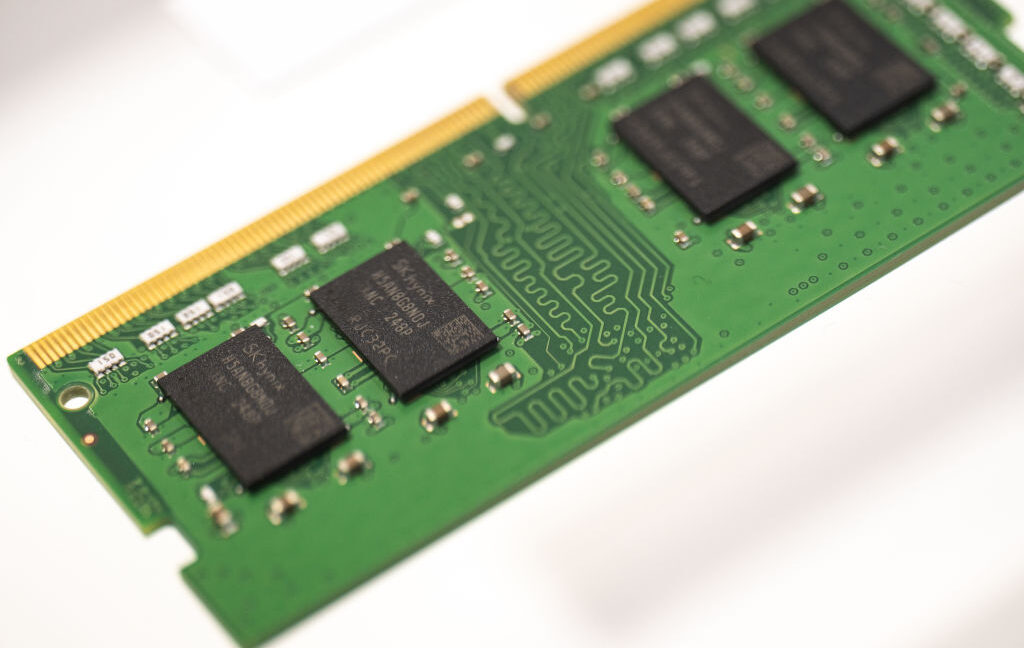
Memory executives expect RAM shortage to continue through 2028
Prices for memory sold for 2027 "are much higher than 2026 prices."
Ars Technica
45 points · by el_duderino · 1mo ago · 66 comments
This means they are now caught in a mad scramble to source all sorts of stuff, including RAM, potentially as a matter of life and death.
What's less clear to me, though, is whether datacenter builders will be able to make good on these purchase agreements. It seems these projects have every opportunity to fail, and the path to success keeps getting narrower. What are the odds that chip manufacturers ultimately get caught holding a bag of chips that nobody can buy in one hand, and a bag of IOUs from bankrupt customers in the other?
how does one prepare for the moment it actually happens? what would it look like?
what were the immediate consequences of dotcom for the normal folk?
As for preparation, I'm not sure. I have a 401k that I'm worried about. I'm too young to really remember the dotcom bubble, let alone have any stake in the stock market at the time.
Compared to the dotcom boom, firms are well positioned in terms of capital - they have revenue and profits.
However, there's still the absurd speculative valuations, risk, and high expenditure (on said data centres). Also, Andrew Bailey from the Bank of England, personal opinion - https://www.bbc.co.uk/news/articles/cv8e30enrkxyo
Has anyone else here been trying to rent some cloud gpus for reasonable money? I have. I have signed up to a dozen "providers" that advertise everything from tesla cards to b200 only to find stuff is either out of capacity or double/triple the price.
Why? Weapons are low-volume compared to commercial products, and they probably use trailing edge or weird bespoke components.
I was digging around the other day, and at least the initial versions of the Tomahawk cruise missile had the computing power of an original IBM PC. That just shows how little computing power is needed for a lot of advanced weapons capabilities.
... for what were then 'advanced' weapons capability in high-cost units produced and expended in relatively small numbers with high yield payloads.
The modern drone warfare version of expendable, high volume, high technology small units with two way communication via fibre-optic and RF jamming resistant multiple channels, and the ability to do on-device video object identification and terminal flight control when active electronic counter measures degrade operator control...
That seems like exactly the kind of gear using commodity DDR4/5 sodimm and dimm modules and literally burning them up at then end of nearly every sortie. Even if they are using much smaller units (smartphone grade RAM) it's still cooking the limited output of the global memory fab capacity, and from the fields covered in fibre-optic blankets, I think it's safe to say there is a significant volume of electronics equipment being consumed.
So yeah, AI might be ordering memory and putting it in datacenter, but eventually that material will be available for e-waste recovery (repurpose first, then recycle later). Both are competing for the same limited fab capacity.
At my knitting group last night one of the conversation topics was how everyone's computer feels really unstable these days. One person stopped volunteering at a local charity because, after a recent website rewrite, she has too much trouble with the page locking up when she's trying to sign up for hours.
Last weekend I got talking to another parent at my kid's gymnastics class about how her computer's really struggling since they rolled out some "modernization" rewrites of internal business applications, and it's making it hard to get her work done.
What I'm getting at is, if we do have to get used to memory being more expensive, that might be very disruptive. Programmers will have to do a major about-face on how they've been writing software in the post-AI era.
I'm guessing you meant to say "pre-AI era."
But don't kid yourself. What that means is right before they prompt "and don't make mistakes," they'll prompt "use less memory."
But DRAM has always been almost completely dominated by consumer device needs, and consumer requirements leveled off hard maybe a decade ago. Once you had a 4G system, things were mostly OK. Pervasive VM use and general bloat pushed that up by maybe a factor of two or three since, but that's it.
AI is different. It wants that capacity for different reasons and puts it in different places. And almost none of us really saw that coming more than ~18 months ago or so. Certainly not to the extend that you'd conclude "we've been ignoring it".