157 points · by Hooke · 1mo ago · 58 comments
He has a long-running series where he works to make a new Antikythera mechanism using ancient (bronze age) technologies. He's a master machinist, so he has fabulous insight into workholding, precision, etc. https://www.youtube.com/show/VLPLZioPDnFPNsHnyxfygxA0to4RXv4...
His skeleton clock build is one of my favorite pieces of internet content ever, up there with Bartoz's gorgeous webpages: https://ciechanow.ski/cameras-and-lenses/
i was also lucky enough to visit athens years ago and see the mechanism in person at the national archaeological museum... it's an amazing exhibit, and if you're ever in that neck of the woods i cannot recommend it any more. :)
Spoiler warning: Starting in 2013, two mechanics graft a Celica GT-Four drivetrain into an Austin Mini. Now thirteen years later, Episode 43 came 12 days ago and they drove it. Project Binky drives!! it drives!!! In our lifetime!!
"The Egyptians built using stone but wrote day to day on papyrus.
The Sumerians built with mud and wrote on clay tablets.
This is why we have lots of Egyptians buildings but not much of their writing and the opposite with the Sumerians."
Well, we have a lot of Mesopotamian writing. Nothing like the amount they wrote, but more than we want to deal with. Most of their writing sank into the water table and dissolved, like the buildings.
Papyrus isn't a reason for any lack of Egyptian writing; just like everything else, papyrus won't rot in Egypt because of the lack of water.
Papyrus was amazing material for the time, but it was also a curse on future archeologists. The Achaemenid Persians went from being illiterate, to writing on clay, to capturing Egypt and writing on Papyrus, in one human lifetime. We have more surviving Persian writing from the short time they wrote on clay than we have of the two hundred years of their history after that.
The Medes turning up to fire the clay tablets probably contributed a lot to their longevity.
This just isn't an issue at all. You're not taking historical documents off the shelves of a modern building - and if you were, sunlight still wouldn't matter - you're digging them out of the ground. Water is what matters; that's why we have so many things from Egypt that could never have survived anywhere else.
Fire, yes, it's worse for paper than it is for clay. But like I just said, we're missing the majority of Mesopotamian documents because they were never fired. We still have a minority that were. What does the same logic applied to Egypt tell you?
The interesting part is that these figures are transitory. If they are not maintained, they disappear - which almost happened to the Long Man of Wilmington (https://en.wikipedia.org/wiki/Long_Man_of_Wilmington). Hence at least for the White Horse, we know that there has been at least an intermittent custom of scouring out the figure and replacing the chalk since prehistoric times up to the present. It's not as neat as a village gathering every seven years to do the job, but there is still a continuity of custom.
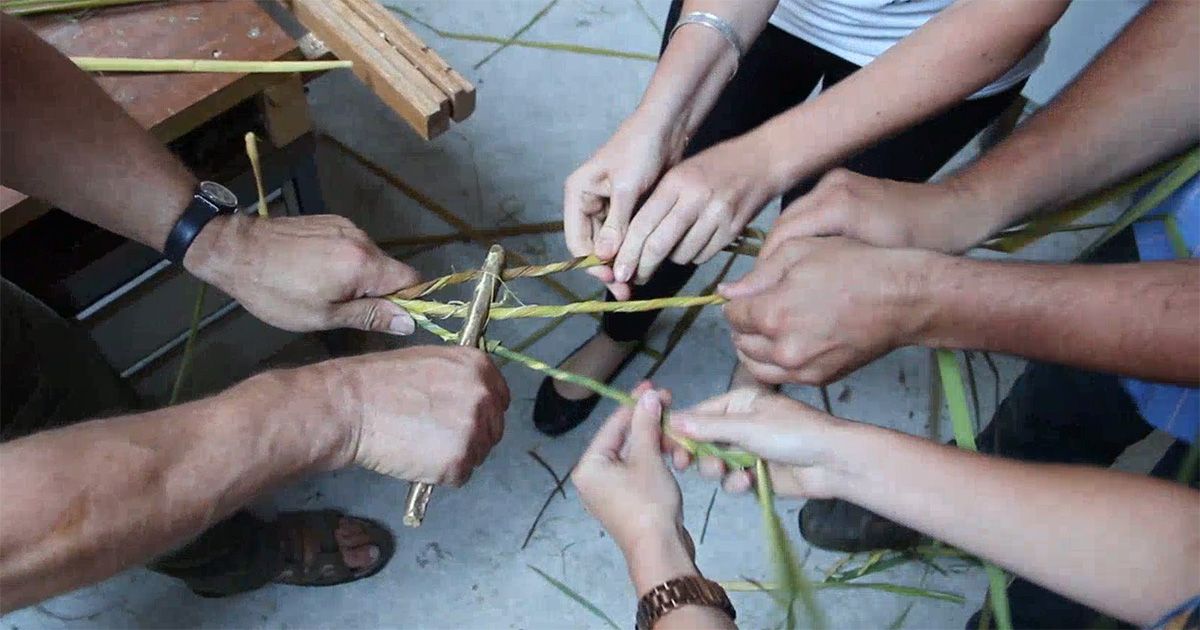
It's a bit magical when you figure out how to do it, it doesn't seem to make any sense yet it works.
Lots of videos of how to make it on the Internets using nettle, or some other plant (flax is still used to make clothes today though through industry methods).
https://youtu.be/Q8X9l42ZgsU?is=hW5M_JXqsPtiuHVk
Rope making is possible but not really likely.