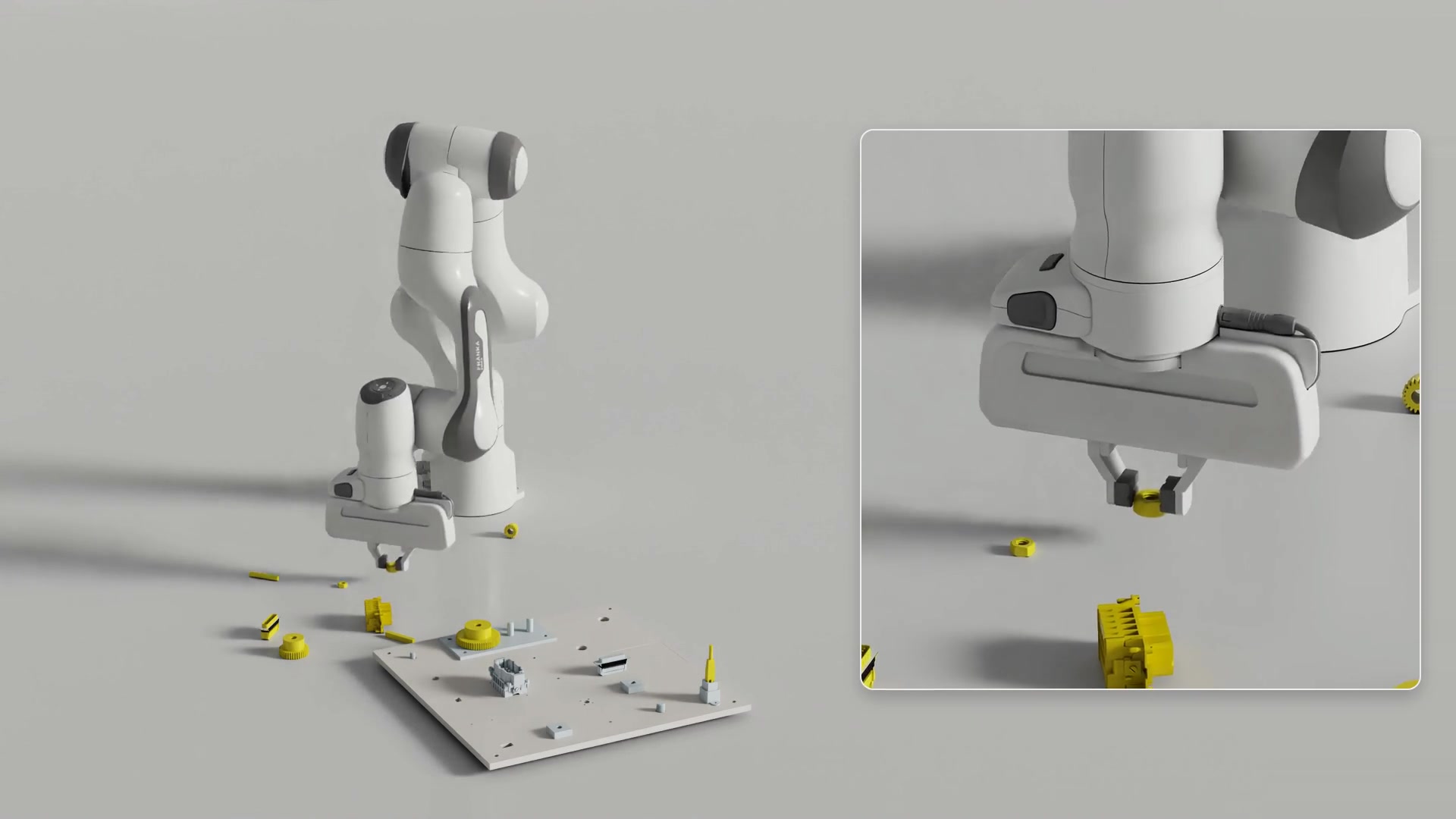
AlphaNIST
Learning dexterity and coordination for robotic assembly in simulation, with binary task rewards and no prescribed manipulation stages.
alpha-nist.github.io
99 points · by jasonjmcghee · 1mo ago · 38 comments
We can answer questions! But also, I want to highlight that the "AlphaNIST" name is an homage to the very well known work from David Silver's research group @ Deepmind circa 2016->2018. This was when we were coming up very early in our research careers and their work obviously had a big impact on us!
It has taken longer to make some of those ideas work for areas as challenging as robotics where there are physical constraints to deal with (and admittedly in this paper, we do not show the transfer to real hardware quite yet). But, we have some glimmer of evidence it is looking possible here (in another recent paper) that we cranked on for the last 6 months and will be featured at CoRL: https://x.com/octi_zhang/status/2108583315544682914
We are also all mega-lurkers here so we were honored to be featured on the front page!
If you're creating a Burger called McSomething or a device called iWhatever it does not feel like "paying homage" to Apple/McDonalds, it feels more like copying and trying to capture some audience from this bigger player.
Ensuring the assets are "CAD-level accurate" has a huge impact on making this work in practice. So much so, that our collaborators Yash Narang [1] and Iretiayo Akinola [2] have spent a number of years on just this - we are standing on the shoulders of giants!
Additionally, understanding the hardware well (including things like motor and controller dynamics) is non-negotiable. We learned the hard way that there is, in fact, no free lunch. You really have to get the deep understanding of physics and engineering right.
[1] https://scholar.google.com/citations?user=M3NuG7AAAAAJ&hl=en [2] https://scholar.google.com/citations?user=e1zesfMAAAAJ&hl=en
It is not an Alphabet/Deepmind paper, and it also has nothing to do with the "NIST" OCR dataset.
Was there really not a more appropriate name than "AlphaNIST"?
Situation Soon: there are 15 trillion standards tailored to every possible situation.
Alpha historically had meant "Google DeepMind" not RL
(This whole thing is awesome. I think they will need to get the number of rollouts needed down before it translates well to real robots — running hundreds of thousands of rollouts on small parts with a real rollout will be a real logistical mess when cleaning up parts on the floor and dealing with everything that the robots physically break while learning.)
This means no need to do the rollouts on real robots first! Please check out https://sgs-rl.github.io for some transfer examples (albeit a simpler setting then the multi-part NIST board we examine in AlphaNIST).
You are giving me some inspiration, though, that it might be good to try to explain the related techniques in a lower-dimensional setting to help teach the concept more effectively! brb
In case somebody got the same question as me: the robot "sees" point clouds as input, so basically the full simulation state except for velocities (correct me if I'm wrong). As put in the limitations section, it "[does] not establish robustness to perception error, latency, or contact-model mismatch".
Alphanist - Some app/lib/code that does something
HN guidelines are to use the title of the blog post and not editorialize.