28 points · by mmarvramm · 1mo ago · 77 comments
For instance, if I wrote a web front end that only allowed certain HTML tags and certain CSS properties and no Javascript, I could avoid certain classes of errors entirely.
Or for instance, in C, if you disallow dynamic memory allocation you also avoid entire classes of errors.
These are checks I think I can configure with linters and would give me more confidence that AI generated code did not have certain errors.
There probably are problems like that but you could come up with a set of imports that are "safe" for the AI.
> Simple: automated software verification
> .... With the same clever tools, skills, and harnesses we use as AI engineers to push code at breakneck speed, we can build elaborate testing and verification automations.
So, in short, AI is going to verify it?
Not picking on ads, I'm sure the tools mentioned are useful, but exactly how effective they are? How many bugs it has discovered/reduced (compare to tests + human verification)? And how much time it saved? Without these info, the article is not that useful.
If you don't review the review, my assumption is that it will add a lot of code bulk, which won't break anything now but that bulk could soon fill up context windows and/or require far more tokens in future when you want to maintain it. You'll most likely end up with a project that human's can't maintain.
Code bulk and future maintainability really feel like unsolved problems, and we have no idea what tools or costs will be this time next year.
Just wanted to add a nuance about the AI-powered code reviews. They definitely help with the speedup, but they still kick the can down the road, and we still don't really know the long-term impact of 100% AI-generated code reviewed only by AI.
Will be happy to answer any questions about the data or the methodology behind the report.
That was never true for software development in other domains I worked in i.e. Fortune 500 enterprise tools, compiler/design tools, networking, and semiconductor.
If the future is agentic, human review will be core bottleneck that needs to be streamlined.
"Let's break prod and fix it later" is a terrible attitude. It didn't start with LLMs but boy LLMs seem to be making it widespread. Would it kill developers to find problems before deployment?
Two signals I use: do I ever push back and find places where the draft version was incorrect, incomplete, or otherwise not up to par and do I feel comfortable if something goes wrong with in production and I have to debug it at any hour of day or week.
You mean load-bearing
Think embezzlement. Think someone with a political agenda who changes the homepage on the way out the door.
Having a single point of control is asking for trouble.
Of course, since AI will be doing the writing and maintaining, there's really no reason for that any more. Let the AI do it all and wait for management to realize they're paying senior salaries to people that are little more than entering prompts, a job that really only requires someone to be able to read and write English.
if there are many of them (e.g. unit tests), who generates those guardrails and who verifies their correctness?
if they are a few, then how can they cover vast product capability surface?
In my own works, I've been using a home grown harness called DevArch for about 10 months.
Visit https://genai.cornelson.net/ if you want a detailed rundown of my experiences.
Guard-rails are totally ineffective
If you're just knee-jerk anti-AI, then you probably need to sit down because some of us are taking serious evidence-based paths with GenAI.
If you have real data on guardrail ineffectiveness, that would be excellent material to share.
https://martinfowler.com/articles/harness-engineering.html
https://milvus.io/blog/harness-engineering-ai-agents.md
I personally follow Domain-Driven Design principles and old enough to have designed software through the old Anderson Consulting Method/1 practices.
Some of the results of my practices are documented at https://genai.cornelson.net
Speed replaces pragmatism by allowing design flaws to be refactored N times where in the past we’d design around tech debt.
DDD leads to modularity and smaller bounded contexts has a significantly lower risk of being incorrect and significantly higher ability to refactor quickly.
And no you still have to understand how to construct software. We’re just skipping the coding skills and pushing everyone to be architects.
If you give up on trying to reduce the number of permutations you need to test, you're gonna also (even if not intentionally) give up on testing them.
We knew this, of course. But everything old is new again.
The industry is surprisingly slow to adapt and I'm writing two capabilities I'd like standardised in the industry.
I'd like standardisation of Agentic tests (I know, it sounds terrible) but these are tests that are broader and capture fuzzy intent of the system. Unit tests, e2e tests are focused and hard to maintain. An Agentic test (or a behaviour test) is where the agent understands the underlying behaviour intent and creates scenarios on the fly and executes them.
For example, I'd imagine that Claude Code goes through multiple Agentic tests where Claude itself tries to use the software using desktop control. This would capture a much broader range of bugs and its much easier to maintain because you only need the test to have a description of the intent and not all the hardcore plumbing required in e2e tests and unit tests (like mocks ughh).
I'd like a framework where I could simply have something like SCENARIOS.md and the framework runs the scenarios by spinning up the common environment required for the test. The industry is severely lacking in this kind of capability.
The next thing missing is Agentic deployment verification.
So image that you are deploying your service and you'd need to verify multiple metrics are in shape before you promote it to all servers. Traditionally this was done either by manual checks by the developer (tiresome and prone to errors) or just having alerts on a few key metrics (not extensive).
Concretely, I'd like the agent complete access to all my metrics and logs and have it make the judgement to either promote it or not promote it or notify the developer.
You'd argue this is not required, but in my experience, having this capability gives me a lot of sanity. There are greybeards who love to gatekeep their responsibilities and would argue something like "just have good unit tests!!11!!" but that's silly.
Why these are not becoming standard or even required practices is beyond me. I'm guessing that there's a cohort of developers whose mindset is risk aversion and they are not great at intuiting what an LLM is good at and what they are bad at. Unfortunately, a lot of arguments are just silly like "but hallucination", "but just have deterministic tests", "don't overcomplicate things".
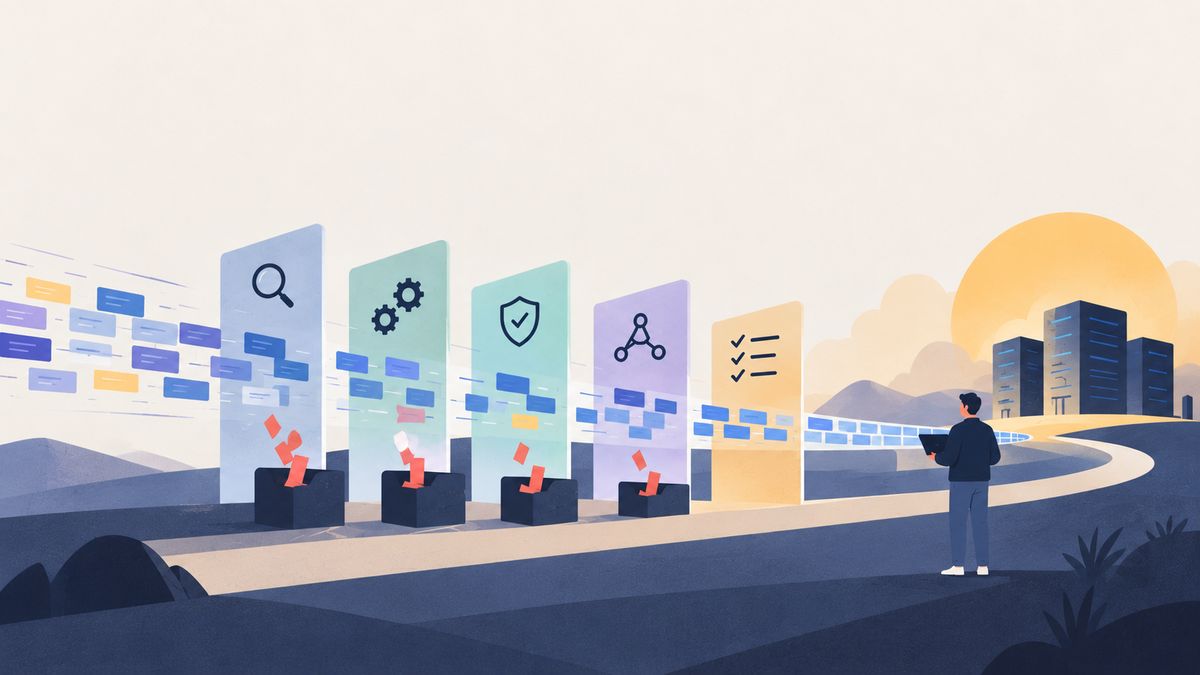
For instance:
>Traditionally this was done either by manual checks by the developer (tiresome and prone to errors) or just having alerts on a few key metrics (not extensive).
Ignores the places where it's always been important enough to have automated checks on many things.
At some point the agent rewrites Component X, or X+Y, and now many or all of your tests that hit it directly are invalid and need to be rewritten. That introduces bugs, you're changing the tests and code at the same time, so you don't know if the new ones cover the same stuff as the old one.
I won't be "fully committed to agents" re: test-writing until they reach the point where they demonstrate that they're taking contract and component boundary stability into account in placing their tests. Currently I still need to intervene.
And the tests I point it at doing instead of the ones it does by default are currently catching more would-be or latent bugs than ever before, because we're changing stuff so much faster.
Agents won't make you better, quality-wise, unless you were in a lower-percentile of code-writing ability. But they'll make you a lot faster at raw change count. How good or bad that is depends on (a) the situation the product is in and the tolerance for issues/regressions, (b) how much existing judgment and best practices you can wrangle into position on top of those changes to make the path of least resistance for the agent be smoother.
Good tests are so easy to write with these models, and so easy to fix as the code changes it they are too closely tied to the implementation.
It sounds like you haven't actually tried to do what your proposing then.
> tries to use the software using desktop control
This is not a solved problem yet. I've tried a number of solutions and none of them were actually good enough for what you're proposing. Don't get me wrong, I'm not saying its an unsolvable problem. Only that it isn't sufficiently solved yet.
- writes the code
- reviews the code
- designs it
- productizes it
- advertises it
- consumes it
around the world,
AI 'round the world
around the world
(while (true))
If I generate a piece of code with LLM, and verify it to be correct; can you trust the LLM output, with the same prompt, in a new session based on my verification of my code, with the same certainty that you’d trust LLVM output for the same source code in a similar environment, ran independently? If no, why?