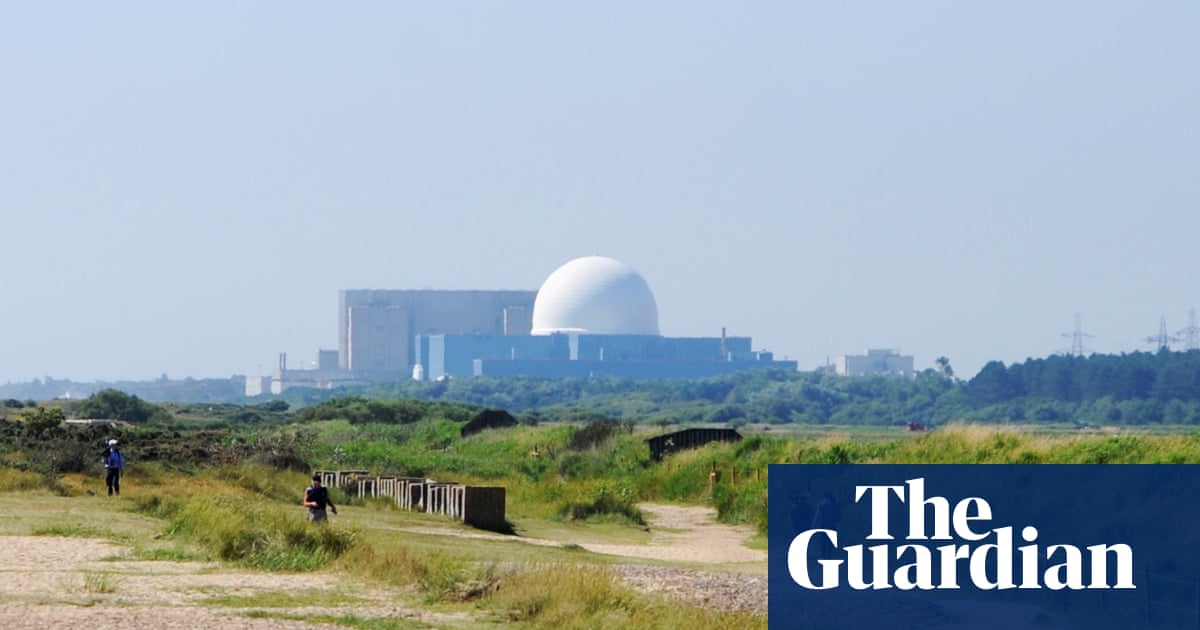
Green party drops longstanding opposition to nuclear power
Party in England and Wales ditches commitment to phase out nuclear in major shift in its energy policy
the Guardian
247 points · by mpweiher · 4w ago · 337 comments
I was curious and did the reading. The technology still doesn't exist as far as I can tell. Even according to the Commonwealth Fusion Systems who says they will build in Virginia.
The International Atomic Energy Association says:
> there are still some technological issues to address before a commercial power plant can operate. A prototype of a fusion reactor (DEMO) is expected to be built by 2040. [1]
Please note the date. This is the reactor being built. CFS has come a long way since inception. DEMO is a joke. https://www.youtube.com/watch?v=KkpqA8yG9T4
But fusion power plants needs to breed and separare tritium, prevent excessive tritium losses in the first wall. The plasma-facing materials in tokamak are subject to very harsh conditions, mutch harder conditions then reactor walls in a fission power plant.
Nuclear power plants will be run by private companies that will weasel out on maintenance to save a penny. Yes, they will weasel out, this time will not be different to other industries.
Nuclear power plant cost overruns by more than 3x.
Nuclear energy being already more expensive than solar.
No private insurer wants to insure a nuclear power plant because the potential payout is gargantuan. So it is the country the one that has to insure it.
Nuclear waste maybe will get reprocessed one of these decades if we really get very lucky, but it is expensive and gets in the way of the profits. So we create a shell company to deal with it, and if it happens something, we bankrupt the shell company and the country has to pay it, again. We get to keep the profits, of course.
What if an accident happens? Well, the country is insuring it, so they have to pay for it. We don't have to be that careful anymore, we don't have to pay for it!
But there are 32 layers of protection, nothing bad will ever happen! We are going to a world with more active wars. Your 32 layers of protection will be blown apart by a well placed hypersonic missile. I hope this never ever happens, but my gut feeling tells me otherwise.
Nuclear would be great if it, and the world, would be run by responsible adults, not by profit-maximizing locusts and warmongering oligarchs.
Just like commercial aviation companies then, right?
> Nuclear power plant cost overruns by more than 3x.
On average or what?
> Nuclear energy being already more expensive than solar.
What's "solar"? A solar panel? Sure. Solar+8h worth of batteries? Maybe. Solar+enough batteries to guarantee a stable grid? Hmm. Solar+batteries+the externalities of burning fossil fuels to compensate?
> Nuclear waste ...
Let me stop you right there. Head on over to https://app.electricitymaps.com/map/fifteen_minutes and look at how much coal&gas waste (no, not just CO2) we are dumping into the atmosphere at this very moment.
Now go ahead and tell me again that we need to badly find a solution to the huge problem of inert, solid, compact nuclear waste that's just sitting there.
> What if an accident happens?
Idk, what if an accident happens with anything else that's already 99.999% safe, like aviation? Odd question to ask about the objectively safest power source we have.
> Your 32 layers of protection will be blown apart by a well placed hypersonic missile. I hope this never ever happens, but my gut feeling tells me otherwise.
Right. You're getting attacked by hypersonic missiles and your priority is your nuclear power plant safety.
Empirically, somehow Ukraine is not a nuclear wasteland despite their nuclear power plants being very much under threat of attack by not so sane people.
Do you think the concrete to build an NPP doesn't require a crazy amount of fossil fuel? Do you think the storage will continue to be as expensive? Do you think the storage will continue to be as expensive by the time the NPP is actually completed?
I can have solar now, with batteries next year, and great batteries in 3 years. Or badass nuclear in 7 to 10 years with an average cost overrun of 102% (https://www.bu.edu/igs/2025/05/19/investment-risk-for-energy...), just in time for solar and batteries to be so good that nuclear will be irrelevant.
BTW, Ukraine is not a nuclear wasteland because Putin doesn't think it is worth making it a wasteland, because Russia actually attacked the Chernobyl sarcophagus (https://en.wikipedia.org/wiki/Chernobyl_Nuclear_Power_Plant_...), thus showing everyone that Putin is not scared by the nuclear fallout taboo. That genie is out of the bottle now, the madmen have shown that they are not mad enough right now.
I am as pro nuclear (actually pro anything not fossil fuel), but this was actually the best counter argument I came across:
And what's nuts is they can walk away with those profits, buy another nuclear company, and repeat the same process until the same inevitable outcome happens.
We need reform. At a minimum we need make it impossible to have things like LLCs in charge of companies where failure result in huge negative externalities. The owners need to be at risk at going bankrupt. Without that risk, they'll just keep destroying everything so long as it makes an extra buck.
The biggest reason the world is seeing more active was is that we are dependent on a few unstable countries for our energy needs. Solar and wind power can produce very cheap energy when the weather is optimal, but suboptimal weather can equally produce extremely expensive prices to the point where social and economical stability start to break down. We are giving money to warmongering oligarchs because of the fear of what happens if prices goes up to high, which would not happen if energy and heating infrastructure was secure and geopolitical independent.
Unless you accidentally left out "fossil", as in "burning fossil fuel", then we at least are unlikely to agree.
I certainly intend to continue to gather tree waste and burn it - and I cannot see a problem if forest weight is maintained through replenishment and replacement.
Under the current aircraft protection rules, the containment building has to survive impact of a fully loaded large civilian airplane moving at speed of sound.
For example testing of samples of containment building was done using acceleration of F-4 Phantom mounted on rocket sledge towards the wall. The wall survived the impact without problems.
Your sensor reporting system will be forced to report whatever is needed - regardless of the reality of the situation - as soon as the right manager demands more uptime to an engineer, or otherwise they get fired because leadership demands more profit.
Of course like in the well known capitalist regime of the USSR that precipitated the big nuclear problem. If only we had the government instead of the evil capitalists to run things then we could be safe from those profit maximizing parasites.
"Science progresses one funeral at a time".
It's hard to convince people to change a stance they made a part of their political and personal identity.
For example Greenpeace had it roots in the oposition to nuclear weapon testing at the end of 1960s.
The large portion of the environmentalist left are degrowthers who literally want people to just live with less, which means "less energy" is actually good. It will never be a politically viable position, but again, we're talking about a party that until recently has never come close to wielding power.
If you accept both of these then like Vaclav Smil, you'll conclude that you need to use less fossil fuels and nothing else will replace them. And if you care about fairness globally then 1st world nations need to really use less.
It all makes perfect sense if you believe all the lies told about renewables.
Most of the people mocking it helped spread those lies, which makes attacking the people who believe them a bit rude.
Literally the leftist dense cities have been the ones pushing back hardest against high rises, sustainable transportation alternatives, and in large part, electrification through overly restrictive environmental laws designed in the 70s.
That’s over now. Climate change is here, and you still can’t convert a house to a duplex in LA without jumping through a thousand hoops.
That I think it's an idiotic position is beside the point. Things and prosperity generally are not the problem, and can grow pretty much indefinitely for the foreseeable future if it's done in a reasonable and sustainable way.
Living without AC in a warm summer is one example. It feels like a first world inconvenience to the Green types, that we should all learn to accept. Good luck with democratically convincing everyone else - you'd need authoritarian for a true success in keeping everyone "living with less."
Part of it was a Soviet psyop to get Western citizens to oppose West's nuclear weapons. Encourage people to oppose nuclear in general, both nuclear power and nuclear weapons.
Sure, you and I can talk about newer plant designs that fail safely, or about how coal plants emit more radiation by far. But if we had the ability to rapidly convince large swathes of the populace of provable scientific facts, then clean power is only one of the many many problems we would be able to solve.
Sellafield's current expected bill is £127B over the next 100 years. Hanford is looking at a cost between $364B and $589.4B.
The imagined economics sold to the public never delivered followed by accidents like Windscale, TMI and Chernobyl.
With climate change the nuclear industry saw the possibility of finally having actual product market fit. So another round of subsidies were created in the 2000s and 2010s. At the same time renewables were seen as the upstart, and storage barely crossed any minds.
The outcome being ruinously expensive plants as seen in Vogtle, Virgil C. Summer, Olkiluoto, Flamanville 3, Hinkley Point c and so on.
What we're seeing now is a token investment to subsidize the necessary industry for military research and reactors. But no one expects it to deliver electricity at a relevant price, or point in time, compared to renewables and storage.
But not anywhere near the nuclear frenzy seen online.
Also, Hanford has nothing to do with civilian NPPs and the processes used there would never be done as part of power generation.
Finally, the cost of NPPs is almost always about the lawsuits. Look at how much Korea and China payed for their NPPs. It was less than 20% of what we pay, they were online in less than 5 years and they are producing 2.8GW for each country for the last decade.
PS The UK has never deployed a standardized design for a NPP. All of their NPPs are different types of experimental designs. Just buy a AP1400 and be done with it for far cheaper.
They were deeply entwined, and still are. The AEC established in 1946 was responsible for both nuclear weaposn and peaceful nuclear technology.
There's been a bunch of civilian dual purpose reactors ran at hanford.
Yes. Much of the waste is from the weapons program. But saying that the site has nothing to do with civilian nuclear plants is just you making stuff up.
It is sad when the premier example touted is South Korea. The country where 68 people received prison sentences totaling 253 years and 9 months from the corruption scandal involving falsified safety certificates, fraudulent components and bribery.
China is also especially funny. Despite the nuke bros perfect environment of stable regulations, cheap workforce, state financing, authoritarian rule and so on nuclear remains insignificant. Sitting at 4% of the grid mix and shrinking. While renewables and storage are absolutely exploding in scale.
The leader of Germany that phased out nuclear and made Germany fully reliant on Russia then took a job... at Gazprom. The VP from the Greens responsible took a very high paying job lobbying for foreign Gas firms, too.
It has to be one of the most successful foreign influencing campaigns in history.
https://en.wikipedia.org/wiki/Gerhard_Schr%C3%B6der#Business... https://en.wikipedia.org/wiki/Joschka_Fischer#Business_activ...
The chances of a Soviet leadership-induced meltdown like at a German nuclear reactor that is properly designed and maintained is laughable.
It is, however, extremely hard to film the slow killing of people by browncoal. It's easy to film a nuclear reactor incident.
A slightly racist belief in the Japanese as superior at following the rules meant a big shock when the Germans realised that even the Japanese could not be trusted with nuclear power.
The waste will burden hundreds of generations for millenia and the reason? Our current consumption
Such greed and disregard for following generations
Climate change is a minor problem in comparison
That said solar panels and batteries are so bloody good now, why even bother building nuclear reactors in much of the world? And geothermal looks promising too, with the new fracking tech they're using. But who knows.
Nuclear waste is great for several reasons:
- the first one is quantity: very small in comparison with how much energy it produced (a nuclear reaction generates one million times more energy than a chemical reaction so less resource usage across the whole lifecycle);
- the second one is that most of it (over 90%) can be recycled and used with gen 4 reactors;
- the third one is that it stays local, i.e. unlike CO2 it doesn't go into the atmosphere (and then the ocean), and since CO2 is inert, from a human time scale how long CO2 can stay in the atmosphere is, I would argue, comparable to nuclear waste decay.
You cannot predict t that any place on Earth will be stable, or stay local, over hundredsof millenia
Wishful thinking so you can make future generations pay for your consumption
Yes there is, bury it. Its what we do with lots of other waste. Of course, you have to be a bit more careful than you would be with a standard landfill. But the engineering is well understood. It is usually just the fact that nobody wants it buried near them that causes political issues.
>The waste will burden hundreds of generations for millenia
Pumping more carbon into the atmosphere is also a huge burden for future generations.
>Climate change is a minor problem in comparison
What do you base that on?
We have no way to communicate the danger of the waste to people 55,000 years in the future
That greed, yours and mine, could create that dangerous pile of rubbish, that will be deadly to people who will never know of our existence
What astounding recklessness and hostility to the future
For current consumption
Unbelievable
>Climate change is a minor problem in comparison
No one knows what the best and worst case scenarios for deaths during to climate change as they effects might include AMOC shutdown, sea level rise, forced mass migrations of people, wars, shortages of food, etc. In all credible scenarios the deaths and suffering in even the best case scenarios will be much, much, higher than any deaths due to radiation exposure from nuclear waste.
Nuclear: hundreds
Don't let perfection be the enemy of improvement.
> I've said this before and I'll say it as many times as is needed.
> The problem with the waste (and nuclear and radioactivity in general) is the messaging coming from those who do understand it. That is what solidifies misconceptions and fear, just as much as what anti-nuclear activists fearmongering may contribute.
> The average person believes that the mere existence of nuclear waste is an existential threat. That it's like a monster trying to break free from its container, and if it does, or if someone lets it out, it will wreak absolute devastation on the biosphere of potentially the entire Earth.
> You cannot appease or dispel such fears by insisting about how seriously waste is being handled and how we've gotten much better at it and that we've reduced the chances of accidents and contamination by this and that.
> Those arguments do not matter when the belief is that the threat is world-ending. People do not believe that the chances of accidents are zero - nor should they be expected to.
> What you need to tell people is that their inherent belief is wrong. Like it's absolutely, completely wrong on so many levels that it isn't even in the same ballpark as ludicrous. I know, I know, they will probably not believe you, at least it will take a lot of time for them to start believing you. But you have to say it nevertheless. Stop reinforcing their fears by always talking about how safe you've made the process, that will never work. Never.
This talks about nuclear waste but I think it applies even more to nuclear accidents. At least it applied to how I saw nuclear power before I actually decided to learn about it (after watching the Chernobyl series lol !)
Thanks to the inherent safety of nuclear? Or that the wind was, by chance, blowing to the sea when the worst happened?
https://www.ianfairlie.org/wp-content/uploads/2013/03/fukush...
https://www.sciencemediacentre.co.nz/wp-content/upload/2011/...
And who cares about the 150 000 displaced people and the still existing exclusion zone?
Oh, yeah, because the Fukushima nuclear accident is still ongoing. The plant is still too dangerous to access and dismantle. Cooling water is still pumped into the reactors to keep them from melting down. That water is still contaminated by a mixture of radioelements and being released to the ocean after partial treatment. And this will go on for several decades still.
Both Scotland and Northern Ireland have their own Green Parties. There is no single UK Green Party.
https://storelectric.com/dunkelflaute-energy-storage/
https://assets.publishing.service.gov.uk/media/677bc80399c93...
Nuclear is a great peacetime technology, Europe is no longer in peacetime.
Besides maybe solar, there is always the potential for harm during war times. Heck, even with solar, cutting off electricity supply to a major urban area can tragically carry a death toll that goes beyond even the few severe power plant disasters we as a species have ever encountered.
Fission is not an outlier here and designing any power plant for resilience is a necessary step, whether in war or peacetimes, whether in a tectonically stable or seismically active area.
The main difference in nuking a fission plant over any other area would be creating longer-term fallout.
If the attacker is at all rational, unlikely to be desired because it makes the area hard to inaccessible for troops on either side.
If the attacker is horrificaly irrational and just wants to cause pure, long term, irreparable harm, unfortunately salted nukes would be a feasible option, independent of having a fission plant anywhere near the drop zone...
Nuclear disarmament, international cooperation and reliable defence alliances can (hopefully) be used to protect against this, along with resilient fission designs within reason. Not having a fission plant by itself unfortunately and targically wouldn't prevent an utterly irrational attacker willing to cause as much long term damage as possible.
Very aware of that harsh fact, living in a country that has a section in our constitution making nuclear power illegal (yes, very stupid) and is not part of any defensive alliance (while expecting the countries around us to defend us anyways), if someone wanted to "salt the earth" around Salzburg, Vienna or Graz, they could do it, even if we have no plants.
Regarding drones, most reactors are built relatively hardened. For example, they're protected against a 747 flying into it at full speed. So even a drone attack would take an advanced enemy, and they might as well drop a bomb on you.
If we come to that state of things, then almost anything we do isn't safe.
The best time to build up nuclear power was 4 decades ago - when the supply of fossil fuel was obviously fraught, and things like solar and wind power were nonviable.
Whether it makes any sense to push for nuclear power now is unclear. Nuclear was quite expensive even back then - but decades of NIMBYism, "environmental" activism and overregulation have damaged the industrial capability and eroded supply chains to the point that getting a buildout going at scale, on a sane budget and a sensible timetable would be an uphill battle. At the same time, renewables aren't anywhere near as opposed, the economic outlook for solar, wind and grid storage is better than it ever was, and the situation is likely to improve even further.
Look over at France, frequently touted as a "successful" buildout. But reactors got more expensive the more they built, not cheaper, and they never met their initial goals for number of builds.
And look at the one place with modern-day "successful" builds: China. They like to tout the reactors as great successes, and they are on time and on budget, or at least as on budget as we can tell in an economic system like that. But they missed their 2020 and 2025 five year plan goals for deployment, and will miss their 2030 goal too. Meanwhile, they deploy 20x-30x as much wind and solar each year, each tech. That's after adjusting for capacity factor! So the best nuclear builders in the world are only building enough of it to be low single digits of their energy mix.
Nuclear was always oversold as a technology, always underdelivered, and has not seen a positive learning curve that a normal technology would. It was doomed from the start, IMHO.
And "quite expensive" vastly understates it - high temperature gas-cooled reactors are in theory more efficient in operation at the expense of increased construction cost. In reality, construction costs far, far outweigh the raw cost of fuel (reprocessing is a different matter!) so we landed ourselves with all the extra expense for very little benefit (probably actually a negative benefit since the much-vaunted ability to refuel whilst at full power turned out not to work in practice).
So they were late, hideously expensive, completely failed to be sold to other countries, and now have an availability factor no higher than that of offshore wind.
We knew that they would be unlikely to live up to their promise as early as 1964 and yet still went ahead despite several opportunities to change course. The nuclear industry never learns.
Are they really?
https://en.wikipedia.org/wiki/Opinion_polling_for_the_next_U...
Possibly, but I vote for them and here in Bristol, they control the council and we have a Green Member of Parliament.
They've been around for decades, but they're grabbing more attention and headlines (especially the whole "Zionism is racism" declaration).
There are aspects of many political parties I agree with, but to me, being against Nuclear Power is the largest short sighted items this and a couple of other parties are/were against.
If many countries took the same road as France, the world would be in a much better place. Imagine the energy advances that could have happened if nuclear was supported for the past 50 years.
We’re already in a situation where we have more power than we need during certain hours of the day in some states/countries, and that’s not even counting the massive, accelerating buildout that will happen between now and the years before new nuclear is built… even it was started today.
Also France is around 7c (euro) per kwh from nuclear generation. If the whole west was all in on nuclear for last 50 years it would have resulted in lower per kwh costs.
Nuclear doesn't need to be the only source of electricity generation. In fact, it can be the base on top of which a serious country expands electricity generation with renewable energy.
I will also remind you that there is not a single industrialised economy anywhere on earth that has successfully supplied new electricity growth with only renewable energy. Not one.
And that you can’t scale nuclear to provide all the power as the peaks are only needed rarely.
Which means that when other sources are cheaper (renewables), those must be banned to ensure nuclear gets paid more?
Nuclear fans across the internet seems to have adopted this talking point recently and none of them have noticed it doesn't make any sense.
What are you even claiming here?
Nuclear loses on pure accounting and time to build.
So for the same rate of investment you can decarbonize 2-3 times faster. And that doesn't figure the long lead times for nuclear vs solar, wind and batteries.
If only. There's people and parties (not in the UK) who would rather see the rest of the country suffer than admit they were wrong, so they feel compelled to die on that hill and take everyone with them, because defending their principle is more important.
“People act reasonably when left no other choice”
It stuck with me.
Meanwhile renewables and storage are reshaping our global energy system due to being the cheapest globally scalable energy source in human history.
We also need to keep in mind nuclear supply chains. After 21 sanction packages the EU still haven't sanctioned Russia's nuclear industry.
We're simply too deeply entangled across the entire supply chain: nuclear fuel, enrichment, reprocessing, technological partnerships, reactor maintenance, new construction and more.
Unlike fossil fuel power plants, NPPs don't depend on a steady supply of a high volume of costly consumables just to keep running. Reactor fuel loads last months to years, naturally buffering any price shocks or supply chain issues. And you can maintain an "energy security" stockpile of nuclear fuel that would add you even more years of runaway.
To have your nuclear power disrupted, you have to face an adversary that's both capable and willing to hit targets on your soil, and on top of that, is willing to target NPP infrastructure specifically.
A random rogue state lobbing mid-range drones over a strait wouldn't cut it. Neither would a war halfway around the world.
In the UK, Sellafield was a nightmare. Lots of less serious slip ups and malfunctions punctuated by a few critical incidents, between 1954 and 2003. You might understand why yesterday's Green Party might think it an issue worth pursuing.
Definitely risks in the supply chain there, but probably less than Russia?
Or the panic when the next drones appear near a power plant
What do you mean?
E.g the ex chancellor is now paid handsomely https://www.nytimes.com/2022/04/23/world/europe/schroder-ger...
I believe more recently there was an expose about some other politicians at that time having links to Russia, although don’t have them to hand right now.
How about some useful policies like removing planning constraints for grid expansion and solar farms and compulsory wind farms on golf courses owned by foreign billionaires
Even back then, those economic comparisons were idealized for nuclear. Build it run it count up to the dollars and there you go. Except you need to secure it, you need to handle waste, and roughly the same cost over runs are bedeviling decommissioning as they were construction.
On top of all that, why is nuclear still uninsurable in the private market?
The cost of Nuclear has raised in the same way every other civil industrial project has risen.
A pipeline in Canada was supposed to be $8B it cost $30, subways and tunnels go 3-5x over budget because the actors can extract that wealth.
Think of the builders like Nvidia - they are not incented to build something for 'cost plus' - they want to make sure they suck all of the surpluses out they can. Why build for $10B when you can build for $35B?
Contractors are incented to price all the way to the point where it's 'not viable'.
Thats why with oligarchic vendors, you will never, ever have cheap energy. Never. Because the supply chain will take all the surplus. That's why we have competition. Groceries are not like that.
Insurance - this is a debilitating issues stopping nuclear because there's no way to know what the outcome would be. We don't know how the courts would rule on damages if there was a problem.
This is something that has to be socialized, at least on some level.
Farmers and property owners have to 'live with' the fact there are 300f monstrous windmills obstructing their view for the public good. It's minor but very real. In a more extreme case, we have to contend with the fact there are certain cases in which people may have to 'vacate their properties' in some cases. How do we compensate? It's hard to say, but that has to be worked out and made clear otherwise nothing will get built.
Regulations around storage are another problem - governments have not pushed hard enough for material solutions, kicking the can down the road because just leaving the problem sit in pools beside reactors was 'good enough'. Were we to have invested this for decades we would be much further along.
US, Canada and France etc. have pretty good records, though the US situation is too 'open' it could be tightened, and there's no reason we couldn't have already 35%-50% base nuclear energy all over North America.
Ontario does is quite well.
This should have happened decades ago.
There are literally 0 confirmed deaths to due exposure at Fukishima. Zero.
Literally installing solar panels is more dangerous. Most of the are will be recoverable in a few decades.
The wars in Russia, Iran and frankly the entire Iraqi conflicts, and Yemen as well - are all 'Oil Wars'. Without high Oil prices and global dependency - none of that would exist.
If we had followed through with buidling out nuclear from the 1980s - and did it safely, we might have 1 more Fukishima, and also learned from it (there are htings about Fukishima that should have never happened) - and most of the West would have 50-65% base load from Nuclear.
We may very well have had all electric cars 20 years sooner and Oil would be used for jet fuel and a few other things. Maybe not even that, as we can synthesize fuel with electricity already.
Renewables are a long way off from covering the base load.
They are only now crossing the threshold into 'key supply factors'.
Renewables have been displacing traditional baseload generation for years. What grids actually need is reliable dispatchable capacity, peaking power and firming.
People keep bringing up winter cold spells and claiming we need "baseload" to handle them, apparently without realizing that nuclear never solved those demand peaks either.
Historically that's been the job of dispatchable generation.
Baseload is the minimum level of demand.
For existing nuclear, stealing it from the other grid users is cheaper than building clean power today.
Or.... the full-system economics of renewables may not actually be as good as advocates claim.
> Last year, Adrian Ramsay, then a Green co-leader, criticised government support for Sizewell C. “The money being spent on this nuclear gamble would be far better spent on insulating and retrofitting millions of homes, bringing down energy bills and keeping people warmer and more comfortable,” he said.
Classic negawatt approach, to use Amory Lovins' term.
Seems, though, like most people would rather build impressive infrastructure than improve what's already there. Grid expansion and new energy production development have far more cachet than paying a bunch of people with white vans to go around fixing up houses.
Brit here: we need renewables and storage and nuclear.
> compulsory wind farms on golf courses owned by foreign billionaires
We need this x100.
It's not.
And do you actually believe they are comparable?
German nuclear plants were producing for less than 2 cents/ kWh. Firm, day + night, summer + winter, profitable.
Intermittent renewables cost multiples of that and require massive subsidies on top and are allowed to place the burden of their intermittency on the firm producers on top of that.
That said, it seems neither pragmatism nor ideological coherence is really necessary to hold power these days.
You got one guy on here claiming a fusion reactor will be built in Virginia (lol). Yet another claiming that the reason that everyone hates nuclear power is because of the byproduct of nuclear waste and that it's worse than climate change (rofl). Like what kind of drugs are you people on?
Figure out how much solar overcapacity and batteries you can get, within a year or two, for the price of a nuclear reactor deployable 10-20 years from now.
As Joe Kaeser (Chairman, Siemens Energy) observed "There isn't a single nuclear power plant in this world that makes economic sense.“
Or as Steven P. Nesbit (former Chair of the ANS) said <<The “Nuclear Renaissance” foundered when advanced light water reactors turned out to be much more expensive than their marketing claimed, while alternatives—primarily natural gas—plummeted in price. We tend to point to impediments to nuclear technology, such as overly restrictive licensing requirements and adverse public opinion, but these matter only to the extent of their impact on the bottom line. Again, it comes down to the money.>>
For now this is only a desire, not a fact.
The neutron radiation around a fusion reactor is far more intense than in any fission reactor, because in fusion reactors most of the produced energy is carried by neutrons.
Any material exposed to neutron radiation will become radioactive. Of course the designers of fusion reactors will attempt to choose only materials that are converted into radioactive isotopes with a short halflife, but until someone demonstrates a working fusion reactor we will not know whether this is possible or the production of some amount of long-life radioactive waste must be accepted.
In my opinion, during the next few decades there are far less chances for fusion reactors to be used as a significant energy source on Earth than for some improved kinds of fission reactors.
In any case neither fission reactors nor fusion reactors are strictly necessary on Earth, but nuclear reactors are the only way to achieve interplanetary travel through the Solar System in decent times, so I believe that the future of nuclear reactors is for spaceships, not for terrestrial use.
Assuming all the physics are completely solved tomorrow;
Private capital can easily get better returns, not to mention sooner returns, doing pretty much anything else.
Public capital requires a very long-term govt spend spanning multiple governments. China could do it, but hard to see a western govt doing it. Plus it would add a decade to the schedule and costs would spiral upwards.
All of which is a huge bet against improvements in grid-level storage.
0. https://atomicinsights.com/wp-content/uploads/LNT-and-NAS-En...
1. https://en.wikipedia.org/wiki/Campaign_for_Nuclear_Disarmame...