185 points · by giuliomagnifico · 2w ago · 284 comments
https://gml.noaa.gov/ccgg/trends/global.html
The Iran blip is clearly seen, but it's just that - a blip. Levels continue to steadily rise.
Electric Cars are the future, and that is speaking as someone who still prefers to drive a petrol / gasoline car. It will be a long 10-20 year replacement cycle. And China is rapidly reducing its CO2 emissions. To the point I won't be surprised if in the future they could advertise to the west about their product being cleanly produced.
Solar and Batteries are advancing fast. To the point it isn't even about being green, it makes zero economic sense not to use it. We aren't that far away from it.
It is going to be a bit of a bumpy road. But we are advancing in the right direction.
It's entirely consistent with precise and good faith emissions measurements for CO2 to be still increasing.
[1] Modulo the seasonal variation, absorption in the ocean, emission from other sources like permafrost thawing, yada yada.
Its also entirely possible things go back to "normal", like happened after the ME oil shocks of the 70s.
From 2022 -> 2025 the CO2 mole fraction (ppm) rose 10pts. from ~416 to ~426.
It seems we'll have the ppm rise 10pts. in 6 years, which is 40% faster than 40 years ago, which seems like an insane increase to me; almost like things are getting MUCH worse not better.
edit: I looked up the answer to my question. NOAA reported 25 ppm increase 2015 to 2025, from 400 parts per million (ppm) to over 425 ppm. (A 25% increase from 1980s)
NOAA has nice charts of ppm growth rate by year and decade https://gml.noaa.gov/ccgg/trends/gr.html
"With emissions from land-use change (such as deforestation) projected to increase slightly this year, total CO2 emissions are projected to be 43.3 billion tonnes in 2026 – up from 42.8 billion tonnes last year."
Total annual CO2 emissions are projected to increase by ~half a billion tonnes as a result of land use changes.
https://www.reuters.com/sustainability/climate-energy/chinas...
There is no excuse for every government in the world to not be covering every bit of rooftop or scrap land with solar. China is losing money on panels at the moment they have such production capacity. Its free money for anyone country who wants to do it.
Because of this issue, starting next year I will be paying my power company money for surplus solar energy that I give back. Unfortunately, batteries are expensive and impractical to install in our houses.
So now, it's not that popular to buy solar panels unless you can also immediately finance the batteries.
And they get away with it because people are so willing to believe ridiculous lies like this. Their newspapers have told them "this is a problem" nearly daily for years. Any problem can immediately be blamed on renewables with no need to wait for expert input. A triumph of propaganda.
This wouldn't be for everyone but there are other options to chemical batteries depending on whats easy for you to do.
I'd like a hot water tank like that, but I don't really have the attic space to place it near my boiler. I have a gas powered CV unit, so I already have on demand hot water. Ideally I'd replace it for a hybrid boiler that would work of electricity until demand exceeds electric capability. But it's still well within its lifespan.
Not necessarily that brand specifically but something similar?
Yes, I mentioned that in my comment. They are quite an investment, and they're impractical to place in many houses. So it's not always an option. I personally have the space. But there's some ongoing projects that make it impossible for me to currently install them.
Thank Mark Rutte and his short sightedness.
Kept pushing for renewables and more electrical dependency. And then oops, sorry, the infrastructure can't handle it.
I honestly have no clue how I can configure my inverter, there is zero option to configure on my end. So I'd probably have to get the installer here to set that up. The panels were already on my house.
Unluckily, your noble and exceptional on a global but even on a national scale efforts are not pulling that CO2 chart down.
Concentrated interests can defeat popular movements. It fits the facts very neatly.
[1] As of the wishful thinking that huge capacity solar panels bring joy, one aspect of the several directly related is this: https://www.nature.com/articles/s41560-026-02144-0. An other one of the further ones: https://www.cleanenergywire.org/news/german-government-appro.... So big dreams and delegating responsibility are not enough for the people.
For a huge number of people it ruined their lives. Which is why it’s sensitive to this day. Like the financial bailouts there was a sense that some people benefited while others got ruined.
Bad example to invoke for “beneficial change.” If that’s the answer then it can’t be done in a democracy.
* Total reorganization of society was carried out in a matter of weeks.
* Oil is worth negative dollars if society isn't forced to consume.
* Generous payments were made to those who couldn't work, with no one humming and hawing about how it'll be paid for.
If the governments of the world were serious about climate change they would focus on it with that same iron will...
Prices are also around 100 times higher than what prices are during optimal sunny summer days (right now it sits at around €0.6 per kw/h).
is it intentional hyperbole and you mean something else, or are you making exactly this kind of claim?
because there are many many caveats to add here (even if we go with plan that specifically governments should be doing it)
For start: land with legitimate environmental protection, land where connecting power would be ruinously expensive, area likely to be destroyed by floods and landslides or scheduled to be overbuilt and so on...
https://www.google.com/maps/place/Pakistan/@30.1940381,71.49...
You can look at random cities in somewhere like Pakistan and see their rooves are covered in solar from a boom that has occurred in only the past 2-3 years. In comparison I live in a far wealthier country and people hesitate.
In such situation own supply of power is much more valuable.
And I bet that it was not government run build-out, unless you count failing to have consistently working power grid.
Bio energy crops are a terrible idea and solar would be better where possible.
If we continue to do nothing effective, the economy will be paralyzed by 100%.
Of course, that's one of the dumbest ways to get to carbon neutral. Solar and wind + batteries cost less than internal combustion engines, yet they're somehow "too expensive" and would cripple the economy.
That's much less than the Iran war is costing us.
These days, panels are cheap enough that dropping them straight on the ground makes sense. Empty fields are cheap.
I flew in and out of Sydney last week, and the city has a significant number of rooftops covered with solar cells.
So many are finding it doable, even if you are correct that it is "extremely inefficient".
Watching the last decade of American politics has led me to absolutely despise the culture of learned helplessness and attitude of "everything is someone else's fault."
You're absolutely right about the first part. Radical change is much more straightforward. At the individual level there are absolutely things that can be done that are pretty easy Consuming less and recycling more is a huge one. But if the attitude is, "we can't or won't do it individually. We need someone to make us behave," then that's a losing culture. The last American election reassured me that indeed, even if the elite class wants something, no amount of money will override the will of the people. The people just don't want this badly enough.
Because they realized they're minority compared to boomers so they can't outvote them anyway, so then what's the point of going to vote just to see yourself lose.
That's the issue with democracy. The bigger group wins.
Well, we need to be organized around a plan, such as electrifying power generation and transport. Since government already heavily manages those things, it's not a matter of individual behavior, apart from the behavior of voting, and generally expressing approval of policies.
I do think you should stop with the guilt-tripping of individuals, and I do think that they're powerless - without organization - and that attacking consumers is wrong-headed. To complain about consuming says that the problem is that we have industry and nice things, but that's incorrect. It's a hard sell, firstly because people like nice things and think they're entitled to them, and secondly because they're right about that. The problem is that we have emissions, not that we have consumer goods.
This is every culture. We address it structurally or not at all.
> The last American election reassured me that indeed, even if the elite class wants something, no amount of money will override the will of the people.
:|
The United States was a couple feet from an actual coup dude.
Would that not have been different? I certainly haven't heard of a suspected coup by disgruntled democrats and/or minorities.
I suspect the coup you allude to would have amounted to a coup of the people in power to stay in power. Not a popular, armed uprising. So I don't see how it's relevant to the point you are trying to make.
The point is that the radical change that was "so easy" during COVID was 1) forced by an emergency, and 2) triggered a stream of emergencies that we're still dealing with today across the entire world.
If GP meant "radical change is easy so long as you can accept a stream of emergencies with uncertain outcomes for an indefinite amount of time into the future," then sure... radical change is easy!
The pandemic was easy for me to live through because I'm just like that; and it was easy for the disease to evolve in a wet market*…
… but that whole "flatten the curve" thing was because it came within a hair's breadth of overwhelming national healthcare systems and this was obviously a risk to be mitigated before the event.
* this happened in wet markets many times, not just COVID; and this will happen again if steps aren't taken to mitigate that, no matter what you may think about lab leaks which do also happen sometimes because humans are fallible and do make mistakes on occasion.
In any event, over here in the UK there's a real wind-power push (with the surrounding water being so shallow that off-shore wind-farms are very possible), but even in these extended latitudes, solar power is viable and the government currently make them VAT-free for installs, with no planning requirements because they fall under 'permitted development'. Renewable energy was at ~56% Q2 2026.
The UK government set up 'Great British Energy' with £8.3B of funding for coinvestment with private firms in various clean energy generation. I think the UK is definitely doing its part.
How does this square with the oft-repeated line that the Second Amendment is useless when the government has tanks, bombs, and aircraft carriers? January 6th was a bunch of unarmed boomers. If you really think the government was >this< close to being overthrown by them, then you might as well pack it up. The US wouldn't stand a chance if a couple thousand armed Russian or Chinese nationals decided to show up to the Capitol.
At that point it would require the top generals to stage a coup of their own. Which they probably would have. But I'm glad we didn't find out.
The military is extremely strong and would easily show off foreign invaders. But the Constitution didn't foresee an elected but corrupt executive overthrowing the government. That is a blind spot they reasonably didn't anticipate.
"Radical changes for the better" ??? During COVID, it was the suspension of law and constitution, an authoritarian regime that forced people to change their behavior, and it completely trashed the economy in a way that we are still recovering from today, let alone the debt it generated. People like you are totally nuts for even suggesting anything like this.
US energy use is ~2x higher per person though than Europe or China, giving much more room for reductions.
So you'd expect emission changes in China to require the most "effort" (difficult to cut emissions while energy demand/use grows), followed by Europe (where energy use is already down to current chinese levels and demand/use is decreasing), while making progress in the US is by far the easiest since you very high baseline makes it much easier to cut/reduce.
This tracks with political reality I feel.
Energy use: https://ourworldindata.org/grapher/energy-mix?tab=line&count...
CO2/capita (basically the same): https://ourworldindata.org/grapher/consumption-co2-per-capit...
For specific countries like Switzerland this makes a big difference (times 3!), but for the US and even China this matters surprisingly little.
Here's the unadjusted numbers: https://ourworldindata.org/grapher/co-emissions-per-capita?c...
And yet we end up basically neck-and-neck with the EU that is almost religious about all things green.
So that to me is surprising and brings into question how much government policy matters vs relative global market costs.
But its important to keep in mind that only the relative change stayed similar. US is worse than EU/China by a factor of 2 (in emissions/capita); under a "good" government, I'd hope for that factor to actually decrease instead of just staying the same.
Trump2 already effected climate-negative outcomes; among other things, DOGE cut/cancelled some big projects for "green concrete" which is a significant emission source.
But policy decisions like this can take a long time until they are visible in emission curves. You could argue that only in the last years we've started reaping the investments from German (and to a lesser degree Japanese) government investments into solar power back in the early 2000's, and the whole solar boom might have only come half a decade later without those (so calling it a triumph of market forces over policy might be highly reductive).
It's like saying "I beat Tom Brady / Kobe / Ronaldo / etc. in their training commitment, because I increased traininig time by 1000% since starting to go running after only sitting on a sofa all day, but they essentially stayed at the same level. Losers."
Points out US headline CO2 emissions down from energy generation using several proxies (looks like no real territorial measurements). That on paper, US less coal more nat gas = less CO2 (spreadsheet true), but in reality US natgas leaks / fugitive methane emissions like magnitude worse than coal.
Broadly also reinforces that US... the worlds largest fossil producer/exporter in last 10 years... somehow should not be penalized for any of the extraction which gets shifted to consumers. Meanwhile PRC.... the worlds largest renewable producer/exporter, somehow should be penalized for making goods that averts emissions, while averted emission credits to consumers. Because world of difference between extracting raw inputs vs raw energy, processing, then packaging inside a carboard box vs a metal barrel.
This basically accounting outcome of fossil lobby fighting over geopolitical / territorial accounting standards (scope 1-4 emissions) 20 years ago which shapes science and reporting downstream. Alternative framing of Gt of emissions per year.
Current account standards
US: 5Gt, PRC: 13Gt
Adjust for fossil trade
US+2: 7Gt, PRC-3: 10Gt
Adjust for renewable displacement
US+0: 7Gt, PRC-15: -5Gt (net negative)
EVERY YEAR, PRC produces ~500GW of solar, whose 30 year operational life will displace 40 billion barrels of oil equivalent, i.e. 100m+ barrels per day, more than annual global oil consumption. Philosophically, and in practice, every year PRC is printing enough solar to avert an entire years of oil from being used in future, which functionally makes PRC emission negative in terms of emission + avoiding emission. But under current standards they're just polluting with solar overcapacity.
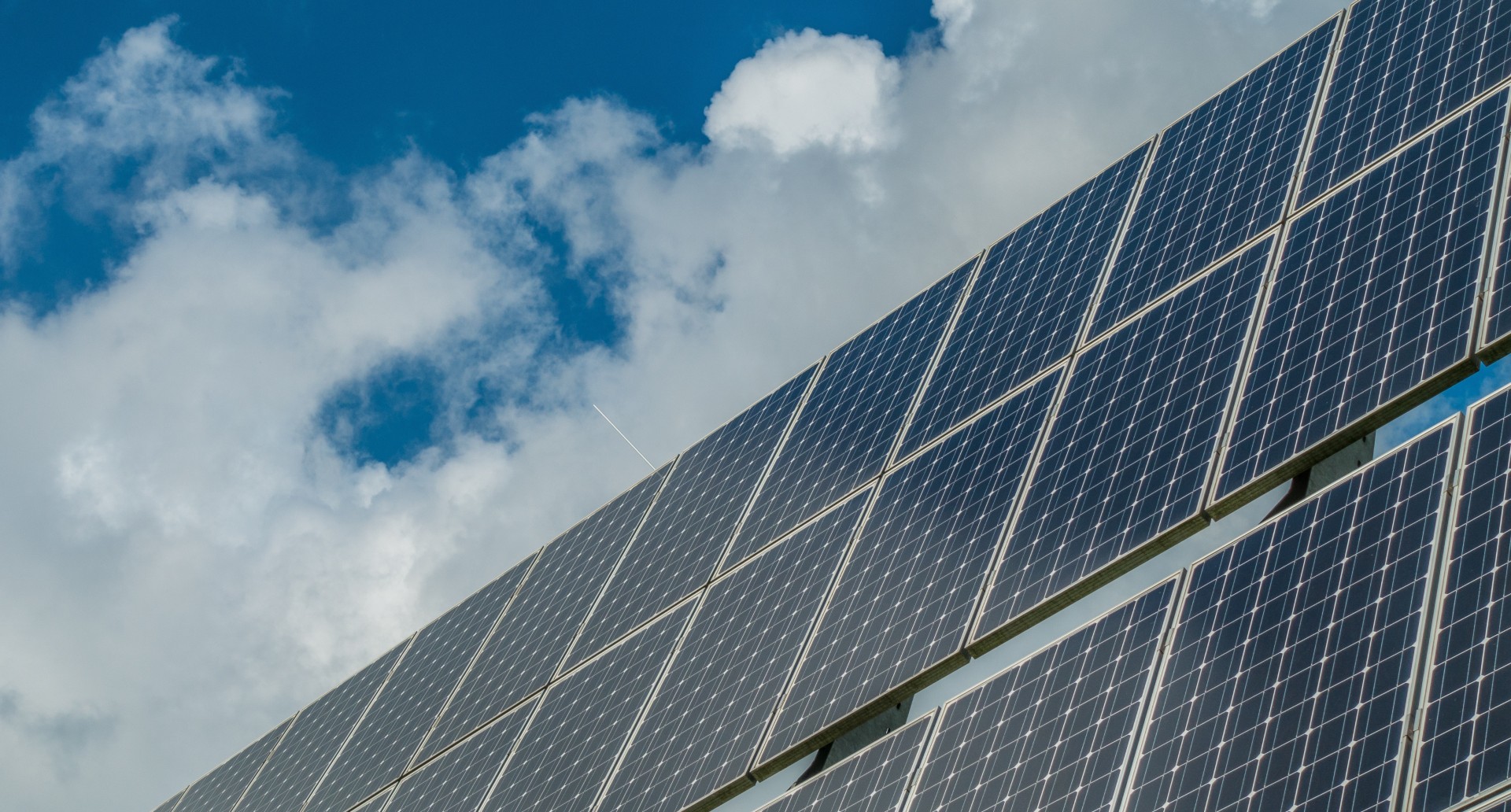
Just to add: "30 year operational life" doesn't mean the panels will break after 30 years. All signs point to solar panels producing power indefinitely, with efficiency lowering to ~70-80%.
That sounds interesting. But is it true? What and where is the evidence?
Then its simple napkin math, 550gw solar, 30 year life span, 17% capacity factor = 820 Twh/yr in primary energy equivalent (substitution method 1 unit of solar = 3 unit of oil @ 35% work efficiency). Or about 4 million barrel per day worth, over 30 years... 44 billion barrels over life time, about 1.2 years of total global oil consumption. Translate that to emissions averted... 44 barrel billion oil is ~15Gt of emissions, the equivalent carbon biomass sink to absorb that much emissions is 500,000 sqkm of Amazon, i.e 7% of Amazon rain forest.
Frame it in flow instead of stock terms, PRC solar generates 4mbd of oil equivalent per day, 1.4b per year, 0.6Gt co2, which would take equivalent of 1,200,000 sqkm (25%) of Amazon at annual absorption rate.
This all basic downstream math if you accept approximate consensus on PRC solar production. If nothing changes, PRC on trend to do this every year. PRC has solar capacity to do 2x this. Again, just solar, not other renewables. Unless numbers off by magnitudes, there isn't any interpretation where PRC renewable is not single handily the greatest emission AVERTING force - it does not reduce emissions but it prevents more emissions than world capable of reducing. Global energy demand is only going to increase, west tightening belts to drop fossil from 100% to 80% is rounding error vs PRC preventing fossil from 100% to 200%.
If you don't trust those (which is somewhat fair these days, given how easy it's become to generate fake imagery), you can always go there and see them for yourself. Or, since they're visible from space, launch a satellite to take your own photos.
For example, there's been a massive drop in overall poverty in China over the past two or three decades [1]. Two decades ago they had tens of millions of people that didn't even have access to electricity [2], and half a billion people without access to clean cooking fuels [3]. They've had a 3.4x increase in car ownership [4] in the same period that the US had a 1.2x increase [5], a significant and growing share of which are electric [6] compared to the small and not growing share in the US.
On the energy generation side, China has built 5x as much low-carbon generation the US has over the past decade [7] despite the latter's economy being 50% bigger, and their CO2 per kWh is dropping faster [8] (especially over the past two years...).
It looks to me that the bulk of the US's emission reduction has come from switching from coal to gas, which is happening purely due to their relative costs. I guess it is a real reduction in emissions, but it's not decarbonizing. What happens when they run out of coal plants to convert? I feel like the US has just got lucky with timing and the cost of coal vs gas, whereas China has got unlucky with the timing of their standard of living improvements.
The top level "x% change in emissions" figure is too simple to capture any of this detail. I think it's mostly a coincidence that the figure is about the same for the three groups at the moment -- at some point China will finish raising its standard of living to western levels everywhere and, if nothing else changes, their emissions will start heading downwards faster then everyone else's. People will probably be surprised but the indications are that it's already happening, it's just being hidden for now.
[1] https://ourworldindata.org/explorers/poverty-explorer?countr... [2] https://ourworldindata.org/grapher/share-of-the-population-w... [3] https://ourworldindata.org/grapher/access-to-clean-fuels-and... [4] https://www.statista.com/statistics/285306/number-of-car-own... [5] https://www.statista.com/statistics/183505/number-of-vehicle... [6] https://ourworldindata.org/grapher/electric-car-sales-share?... [7] https://ourworldindata.org/grapher/electricity-mix?tab=line&... [8] https://ourworldindata.org/grapher/electricity-mix?tab=line&...
(As for the EU, I didn't really look at many of their stats. My general feel is that they've spent a reasonable amount of effort, but a lot of it has been on efficiency improvements -- which are welcome, and they benefit everybody which means that some of their effort unfairly shows up under other people's figures, but which might actually have been counter-productive [9] without the associated actual decarbonization of electricity generation.)
Is anyone working on a "solid state" or "caloric" (I'm not sure which terms is the best to use) heat pump and do you have any insight on when these will come to market?
I want to replace the gas boiler in my apartment wiht a heat pump, but it will most likely have to be wall mounted and produce too much noise, which makes is infeasible. I've been reading about how future heat pumps will use "magnetocaloric, electrocaloric, elastocaloric, and barocaloric" effects to shrink the size, weight and noise of a heat pump.
Most of the noise of a heat pump comes from the fan. The entire proposition of a heat pump is that you use the heat in the atmosphere -- which still exists, even on a cold day. But that means moving a lot of air past the radiator.
You can replace the compressor with a variety of mechanisms, but even if they were silent (like a Peltier device), the heat exchanger is still going to be noisier than a gas flame.
But heat pumps needn't be noisy. Ground source / water source heat pumps are extremely efficient and extremely quiet. For new developments like block of flats (US "condos"?) those "are the ones".
Tech Ingredients used a borehole they dug for $300. The trick is they used soil amendments to increase thermal conductivity, allowing use of a small low-cost borehole.
seems india is the only one still increase in major eco? conside the air polluion recently. https://www.cnbctv18.com/india/environment/99-of-world-100-m...
99 of world's 100 most polluted cities are in India
do they even have a plan?
As for that 99/100 stat, it’s seasonal. If you average that across the year the number in India is 66/100. Not anything to celebrate but not nearly as bad.
We will be cornerded into geo-engineering, enough said.
It says the report "finds that clean energy growth is not yet fast enough for a durable decline in global fossil CO2 emissions" and quotes the report's lead as “A decline in fossil CO2 emissions is encouraging, but a reduction driven partly by geopolitical shocks is not a sustainable climate solution.”
The most optimistic note was “If further acceleration of clean technology deployment can be supported through time, a sustained peak and decline in global CO2 emissions could be a few years away.”
Oh, but it is. The two most recent major conflicts resulted in fossil fuel related infrastructure to be destroyed - particularly Qatar had a huge chunk of its natural gas infrastructure irrecoverably damaged.
It's going to take close to two years to rebuild it, but that can only really start after the hostilities cease.
On a different front datacentre buildout created a huge backlog for natural gas turbines, making them for the first time everunattractive for peak shaving compared to batteries.
I predict we'll spend 10x what it would cost to de-carbonize the US economy over there just to protect historical CO2 emission growth curves.
Unfortunately the opposite might happen in the next years. It seems this year China is starting to export less solar panels: https://www.bloomberg.com/news/articles/2026-07-18/china-sol... . Despite the low prices, some countries are investing less in solar panels and wind turbines for many different reasons. Other technologies might come but are slower to develop.
Sure, we can always move faster but hydro and wind limit how much solar we actually need. Batteries have cycle limits so even if wind is unreliable producing power at 2AM just to increase battery lifetimes makes sense.
I think we shouldn't mix (1) negative events in the world which impact CO2 emissions (covid, Ukraine war, Iran war etc.), (2) with "normal" events such as population decline in polluting countries, (3) with an actual coordinated and effective action against global warming.
(1) and (2) can have a large impact on CO2 emissions. (3) is more difficult to notice.
Although it's not popular to say so, the entire system is acting here and it can't readily be decoupled. Even when it comes to flying - the rich wouldn't do so much flying if there weren't poor people working for nothing in resorts and gig work in tourism.
That's not to say I think poor people are to blame. But it does mean that increasing the number of poor and their resulting desperation gives the rich something to feed off of.
All that builds a momentum that actually makes me somewhat optimistic that we have at least reached peak emissions.
I realize anything other than doom wallowing is verboten on the Internet but it is a massive achievement, especially since global economic growth continues which means we are actually switching (renewables, nuclear, EVs) and decoupling (less energy per $ gdp).
Now for the other side of the curve!
Fossil fuels increased in price in 2026.
Same with burning tankers in Iran...
Burning a refinery likely reduces emissions, because the fuel this refinery produced would be burned anyway, and the destroyed refinery will cease producing fossil fuels. So it wouldn't be a surprise if all the refineries destroyed this year in Russia and in the Middle East contributed to a reduction in CO2 emissions.
Pushing up prices on new plastic does make recycling more economic but most of those products still get burned. If you're lucky on average they make it round the loop once, maybe your mountain dew bottle makes a plastic trash bag and then we burn the bag.
I don't see a plausible scenario in which there's a reduction in demand for artificial intelligence in the near future.
As a general rule old tech is far more power hungry (per unit of work) than new tech. Sure my old Atari computer used very few watts compared to my modern 50 core server (I'm not sure what GPU), but the modern server can do a lot more per watt.
> developing less new stuff, and just slowed down the economy for a simpler life.
To each their own - I would find that world boring. I enjoy camping for a weekend, but I'm very glad to get back to modern civilization and there are plenty more luxuries that I want in development.
[1] https://p.kagi.com/proxy/jaJn771.jpg?c=LeUEJczBkA3eiHIb6Q3EK... It doesn't quite come across in the picture but this adapter is gigantic.
My point entirely is that people shouldn't have everything that they want if the creation of that thing is unsustainable.
And the economy shouldn't slow down because it's still not big enough to give everyone a good life. We need lots of growth, and we need to distribute it better so profits go to improving normal peoples lives instead of making billionaires even richer.