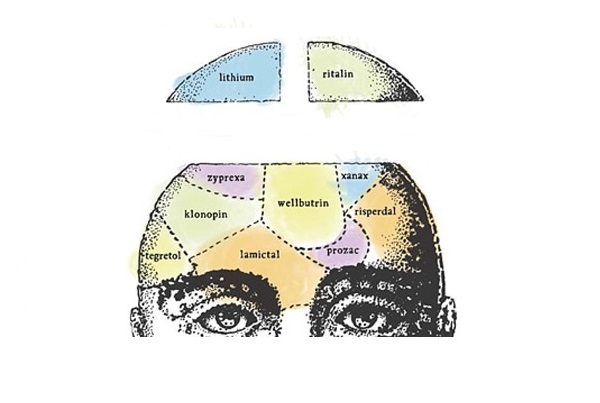
Why Anti-Authoritarians Are Diagnosed as Mentally Ill
In Bruce Levine's career he as spoken with hundreds of people diagnosed with ODD & ADHD. An astonishing number of these people are also anti-authoritarians.
Mad In America
225 points · by yesbabyyes · 13y ago · 204 comments
We adopted my brother when he was 15 months old, and in his first year of life we suspect he was frequently neglected, leading to attachment issues. Basically, when an infant's needs are not met, they get distressed, and the more often this occurs, the more those neurological pathways become ingrained in their brains. Which means that people with a traumatic early childhood are much more sensitive to stimulus, feel threatened easily, and very quickly move into "survival mode". In survival mode, we will all lie, cheat or steal because our survival is at stake. Kids like my brother spent a disproportionate amount of their time in this state.
They also learn at that young age that their needs are not going to be met, and so they come to distrust authority and other people, focusing on looking out for themselves (since no one else is going to). They also tend to fail to internalize social norms and rules like being honest and the "golden rule". These sorts of tendencies can be considered anti-authoritarian, but it is a reactionary anti-authoritarianism, not a healthy, well-reasoned skepticism of prevailing authorities. The latter is healthy, the former is not.
So while it may be the case that anti-authoritarian individuals frequently are diagnosed a mentally ill, it is probably much more common that some kinds of mentally ill individuals happen to be anti-authoritarian. I.e. causation moves from certain types of mental illness to anti-authoritarianism. Basically, I'd like to say this is an interesting article, but please don't walk away thinking that the entire system is just a ploy by The Man to keep the Lisbeth Salanders of this world marginalized. It is much more complicated and difficult than that.
On a personal note, it can be very painful to love someone with issues like ODD. It requires loads of love, patience and restraint. It can also be very rewarding.
This message is more like to anyone with attachment issues, I've just read your brother is 13 years old so mehh, don't know.. Safe bet that he is not mature enough, haven't read anything about what are the hazards when adolescents take it.
By its very nature, the practice (such as Vipassana) involves not becoming attached to rising stimulus, on a moment-to-moment basis. I can tell you from personal experience, someone who is habituated to be sensitive like your brother, will have a difficult time with this. Further, there's nothing you can do to make your brother do this practice.
The thing about well-guided mushroom and Ayahuasca experiences is such that you learn what it is like to not be sensitive to arising stimuli, and as such, seek out practices like this. (Though there are other things going on too). If you are serious about looking into using psychedelics for therapy (possibly when your brother is older), it may be something to do together rather than throwing your brother out into the void.
However, there is also a bit of an effect where someone you care about is not particularly thoughtful, so when they do go out of their way to be kind or help you out, it feels especially good and shows that they really do care about you. If that makes sense..
I can't say I personally get it, but I respect you and your family for their empathy and compassion.
I think thats a hard judgement to make, but its a tragedy that any kids who simply disagree with authority figures they don't see as valid are medicated and diagnosed with ODD.
I ask because I think I had this. When I was a young prodigy I had the mentality of a performing seal.
It's true that some people have difficulty controlling themselves, and they do need help. But the lack of symmetry says a lot about how diseases are identified; it is about institutional convenience.
  > Sure, sure. But would be ever prescribe prescription
  > drugs for this?
  > Everything you're describing is characterized as a
  > personality trait, whereas the OP (who I hardly fully
  > agree with) is claiming that anti-authoritarian
  > sentiments are labeled a disease.
Cancer is when your cells replicate too quickly and out of control. What's the opposite? When your cells don't replicate enough. Radiation sickness is what that looks like.
Dehydration is a serious problem, but so is over-hydration.
Insufficient oxygen will kill you, as will too much.
Bacterial infection can be a serious problem, but eliminating all bacteria from the body will also kill it.
Overactive immune systems are just as bad as underperforming ones. And on and on.
In fairness, any abnormality defined by evasion of confrontation and dramatic episodes will inevitably attract less attention than the reverse, irrespective of institutional environnment.
  At what point do we recognize a disorder in a child
  who is unnaturally compliant and obedient?
  No answer so far.
Is it?
I'd chalk it up to the fact that a unnaturally compliant child doesn't tend to cause the parents to seek out treatment, whereas a child who's kicking holes in walls and attacking their siblings does.
The point of the article is that an awful lot of mental disorder diagnoses are being given to children who calmly reject certain authorities, or who demand that the legitimacy of an authority be demonstrated before they will submit to it. Psychiatrists are medicating people who question authority out of existence.
Conditions where a person causea problems for himself or his surroundings are then labeled as mental health problems. Naturally, the opposite conditions may be benign. The person may be overly obedient, or overly trusting (opposite of paranoia), irrationally peaceful (opposite of depression) and so on, and this may indeed be caused by the same mechanism that causes the opposite condition, but as it does not cause problems, it is not considered a disease.
Typically one of the important parts of diagnosis is "does it cause a problem for the patient?"
> it is about institutional convenience.
Misdiagnosis is a serious problem. But your comment is weird. Giving someone a diagnosis is not convenient. That person is now able to get medical treatment, maybe disability benefits, maybe time off work, etc. Once you diagnose someone you have a duty to try to provide treatment. It's far more convenient to say that people do not have a mental health problem and release them.
But if you give it a name people will start to recognize it and they will be harder to control!
Nice idea though, in theory.
http://learninfreedom.org/Nobel_hates_school.html
and while it is indisputable that Einstein blew off some of his school homework, it is not at all clear that he would meet any of the DSM-IV or new DSM-5 diagnostic criteria for any of the conditions claimed for him.
More generally, there is a better call for improvement of psychological diagnosis
http://www.nimh.nih.gov/about/director/2013/transforming-dia...
already up on the website of the National Institute of Mental Health in the United States, the subject of much news reporting and commentary in the last week. So I won't take this opinion piece by lone blogger as the last word on what needs to be done to improve psychological diagnosis.
I'd much rather hear anonymised examples of alleged misdiagnosis (I'm sure they do exist) but the author is surprisingly reticent on that front. He even observes that his patients previously diagnosed with various psychoses had "fully recovered" whilst retaining their anti-authoritarian streak: implicitly acknowledging they probably did have a problem and that losing an anti-authoritarian streak wasn't a prerequisite to recovery.
I'm pretty receptive to arguments that certain disorders are overdiagnosed but the article has surprisingly little to say about that.
No new Einsteins, Maxwells, and Plancks?
http://en.wikipedia.org/wiki/List_of_Nobel_laureates_in_Phys...
And without mentors, his gift to the world then might have been squandered.
First - It was written by a lone PHd over a year before the NIMH blog post (which was written by a lone MD).
Second - I don't think this author was presenting his article as "the last word".
Lastly - The speculation on Einstein is grounded in comments by one of Einstein's biographers. I wouldn't call that groundless.
Chaotic aligned people are being diagnosed as mentally ill by Lawful aligned people.
Unfortunately, it's frequently Lawful-{Neutral|Evil} judging Chaotic-Good, which is a travesty.
> I know that degrees and credentials are primarily badges of compliance. Those with extended schooling have lived for many years in a world where one routinely conforms to the demands of authorities.
Yes! Wow. Just read the article - not a single idea I'd disagree with, except maybe the conclusion :
> Americans desperately need anti-authoritarians to question, challenge, and resist new illegitimate authorities and regain confidence in their own common sense
I don't know if anyone desperately needs anything.
However, the abc test to test how legitimate is the authority and how a diagnosis would be best explained by something this simple thing is something I'll keep.
But as a child that wants to explore and innovate (or for that matter just understand the rules I'm following), it often feels impossible to live in a society that has a rigid set of expectations.
One common refrain from childhood: "If only he would apply himself..." well, of course, I actually applied myself with a focus that would blister the brains of the people who said this sort of thing. But I didn't apply myself to what they wanted.
And that was from the people who even recognized that I had intelligence worthy of any respect. Many had no idea that I was more than troublemaker (a ditch-digger some would say). I suppose it is of relevance that I grew up in a very blue collar environment, and in those environments the expected measure of success is a stable job with routine and predictable pay increases; questioning and understanding is not the path to that, acceptance of the "that's the way it's done" is.
These issues led to a malaise and kind of depression that resulted in me dropping out of school and joining the Marine Corps (yeah, great idea for an "anti-authoritarian", but part of me still believed i was the one with the problem and needed fixing).
The path "back to the world" was a difficult one, and who's to say if that path is even done -- where could I have been. My decisions were poor back then, but hell, I was a teenager and living in a world that didn't support me. Ironically, as I've gained positions of authority over people who themselves are submissive to authority, I think they have a greater respect for me, than they do people who are not innovators or independent thinkers.
I still fight the battle constantly, the white collar corporate world is nearly as unimaginative as the blue collar world -- it's not even about resisting authority, in fact, a good 'authority' is as good as delegating -- someone trusted to do stuff.
I'd like to think that I'm the latter overall, so, frankly, I didn't fit in, and I didn't do terribly well, but its mostly a non-story (with regards to anti-authoritarianism - in other ways I have plenty of stories). I was average, I mostly tolerated the authority because the threat of not doing so was a little more than I could bear, and I got the hell out as soon as I could. Then I was lucky enough to be a smart guy during the original dot-com bubble and found my way back into the company of people I was more comfortable with.
"At the 2-year assessment there were no significant differences in severity of psychosis between schizophrenic patients (SZ) on antipsychotic medications and SZ not on any medications. However, starting at the 4.5-year follow-ups and continuing over the next 15 years, the SZ who were not on antipsychotic medications were significantly less psychotic than those on antipsychotics.”
I would imagine that anyone who wants to deal through them is going to necessarily have more troubles.
Neuroleptics make schizophrenia patients more biologically vulnerable to psychosis. Standard antipsychotics block 70-90% of D2 receptors in the brain. To compensate, postsynaptic neurons increase the density of their D2 receptors by 30% or more. The brain is then supersensitive to dopamine. This leads to dyskinetic and psychotic symptoms.
Seriously: I fully support background checks -- extending what we already have, to cover all sales. I also think that if motor vehicles require registration, insurance, and license to operate, then firearms sure as heck should, too.
Even so, if I'm being intellectually honest, I also have a twinge of doubt when it comes to "mental health" grounds, and I have some concern about a Minority Report pre-cog sort of exercise.
This will probably just get me down-votes from both sides of the debate, but, there you have it.
I see the main problem as this: Many people want to keep firearms to keep the power of the government in check, and the government wants to write the rules on who can keep arms. This causes a friction. Either the people give up the right to bear arms and trust the government fully, or the government should not be allowed to make rules on who can keep arms. Anything short of that will continue to cause the friction.
I'm of the opinion that the founders of the United States did not envision a government that people should fully trust, and that mistrust in the government's actions and motives by the populace would actually be healthy for the government. I'm further of the opinion that the founders did not envision a medical profession that could, with a diagnosis and the stroke of a pen, be able to essentially enforce such government full trust, by removing a person's constitutional right to own a firearm, and that without a crime having been committed, and the person not having been convicted of such a crime in a court of law.
If you ask me, that's exactly what the movie Minority Report foretold: "We think you are going to commit a crime, and therefore we will pre-emptively curtail your freedom."
Is this the America the Founding Fathers envisioned when they signed the Declaration of Independence in 1776?
Really?
Are you sure its not just a case of guns being ingrained in American culture and make the owners feel all macho and strong, and that any old excuse is good enough to argue that they should be allowed to keep huge pointless arsenals of weaponry?
I mean, from what I can tell, such people are generally on the right of politics, and at the same time they argue that they need guns to protect against a threat from within, they believe Obama is a non American, communist, Muslim. Well, er, wouldn't that be a great threat from with in to the US? Where were these citizen protectors of American freedom when Obama the commie Muslim took office? Shouldn't they have been using their arsenals to protect America? Or do such people actually know they are taking nonsense?
On top of that, when in the last, say, 100 years has the US government posed a threat to American citizens, such that they citizens needed to break out the weapon to protect them selves?
Frankly I think its more to do with male machismo, culture and being stuck in the 17th century. They have always had guns, and what ever logic you argue with, they simply don't want to change. If you managed to convince then that the government isn't out to get them, they'd just find another excuse.
It reminds me of fox hunting in the UK, or bull fighting in Spain. All these things defy reason, logic and decency, but we all want to hang on to them, simply because they have always been there. Heh, its kinda like saying you can have music any more.
I'm sorry, people may claim they want guns for the reason you cite, but I honestly don't believe them at all.
Most of them came with a healthy distrust of government, and wrote in all of the checks and balances because they didn't trust governments, and the checks helped allay their concerns.
I agree on the revocation of constitutional rights by, they probably didn't want a system which would let a single diagnosis revoke a right. But, based on their goals in designing our current government, multiple, corroborating reports would probably be accepted by them.
Of course, the gun control crowd would probably want any psychiatric disorder to be grounds for preventing someone from buying a gun, if only as a way to ban large numbers of people from firearm ownership.
Also, it isn't just communist countries it's authoritarian regimes generally. Hyperbolic comparisons and innuendos don't help the conversation, they just push potential participants away.
As to the idea of mass disarmament of "sensible liberty-definding anti-authoritorian citizens", I doubt that any organization within the government has the manpower to assemble an army of shrinks to diagnose the whole population. And then another literal army to quell the ensuing rebellion - considering that much of the current armed forces would be deserting. They may make it more difficult to purchase a firearm, but the existing ones aren't going anywhere for a while. Especially since Congress can barely cooperate enough to agree that the sky is blue.
What? On top of everything else the mentally ill get to own guns? That is honestly shocking to me.
Think hard about this, and ask yourself what you would have done in 1774: sided with the Revolutionaries, or sided with the Royalists.
No, those founding fathers were not anti-authorianists to the degree that people would call a pathology. The continental congress did not descend into a bunch of bickering every time someone asked someone else to do something. They were mostly, from all reports, pretty well-adjusted and got along with each other civilly even with major disagreements on how to do things.
The Revolutionaries were really just opportunists. They could have received the representation they wanted in parliament, however they saw the chance to start their own government, a new one, built by them, however they wanted. I'm not saying it was a bad thing that they decided to focus their efforts on starting a new government instead of working with their current one, but they didn't have to.
The Declaration of Independence was written to discredit parliament and the king (who, at this time, didn't have power anymore, it was already with the House of Commons), and to drum up support with other powers who didn't really like England (specifically France). They could have worked out a deal with the House of Commons giving them a representative spot, but their declaration explicitly decided against it.
Take a history class. You might get some context to the events you cite.
And a lot of slaves and native americans sided with the Royalists and decent portion gained freedom after the war in GB (though many were returned to their masters after the fact), so I think whose side one would take is more complicated than being mere anti-authoritarians.
This crashcourse video points out some of these things: [https://www.youtube.com/watch?v=3EiSymRrKI4]
Despite it all, I would say that an oppressive government could use "medical condition" to confiscate weapons, but whether the populous is armed or not has little to do with the oppressive nature upon the governed in any country.
http://static.ddmcdn.com/gif/swat-team-10a.jpg
http://inmenlo.com/wp-content/uploads/2010/10/SWAT-team-comp...
It could happen to any of us lawful gun owners with criteria this broad.
Do they think that the queen is a lizard and the government is putting chemicals in contrails? I really don't care if they have a gun. Lizard and chemtrail people are clearly loony, but they seem perfectly harmless.
Instead are they a psychopath fascinated with violence? In that case yeah, I am not comfortable with them having a gun... but if we know who they are then why the hell are they not institutionalized already, rendering the issue moot?
The author's personal experience was being diagnosed with "issues with authority" because he didn't kiss up to his crazy boss. I don't see any conflict between not kissing up to his boss and owning firearms, so sure, let him go deer hunting on vacation if he's got no other, real, issues.
And I don't really agree with it either, but Einstein has often been co-opted by Asperger's support groups as one of their own.
From my admittedly limited reading on autism, Asperger's, and other behavioral diagnoses, they are not mental illnesses but rather alternate "wirings" of the brain. People on this spectrum can (to varying degrees) learn to deal with the "neuro-typical" world around them, but they can't change their brains. And these are not one-dimensional conditions: people on the spectrum have any number of different wiring, from social handicaps to language problems, hypersensitivity to touch or noise, face recogniition, etc.
I suspect that anti-authoritarianism is one of these dimensions. It can exist on it's own in an otherwise "neuro-typical" person, but it often gets added to other deficiencies on the Autism-Asperger's spectrum.
I am not saying that blind adherence to authority is "typical," but I think there is often a recognition of parental and social authority that is mostly normal which is what the anti-authoritarian lacks.
https://en.wikipedia.org/wiki/Italian_Fascist_Party
Inability != Refusal
In a species (alongside a whole host of other species) that depended on rape for survival, how is an inability to rape not a mental illness? [1] In a species that depended on rigidly defined gender roles of women child rearing and men being hunters, how is aberrant behavior not a mental illness?
I think what's happening is you're falling prey to appeal to nature fallacy. Consider here also the results of the loners, the outliers, the dropouts -- a lot of them go on to contribute greater value to society than the ones following the pack/tribe behavior.
[1]: Researchers Thornhill and Palmer say rape is an evolved reproductive strategy and not a crime of violence. See their piece 'A Natural History of Rape: The Biological Bases of Sexual Coercion' for more.
Also, appeal to nature fallacy is not applicable because I'm not making a "good" versus "bad" conclusion. I'm thinking of "mental illness" in terms of whether it's an evolutionary mal-adaptation, not in moral terms.
And while it is true that loners, outliers, and dropouts often contribute great value to society, it is also true that they also often do great harm to society (the bell curve is a bitch). Moreover, the bulk of collective social value is produced by people following the pack/tribe. What happens to the total productivity of society if everyone acts like the loners, outliers, and dropouts?
Appeal to nature: an argument or rhetorical tactic in which it is proposed that "a thing is good because it is 'natural', or bad because it is 'unnatural'" -- the word 'natural' here has no notion of morality
Moralistic fallacy: a fallacy of assuming that what is desirable is found or inherent in nature. It presumes that what ought to be—something deemed preferable—corresponds with what is or what naturally occurs. What should be moral is assumed a priori to also be naturally occurring.
Though, you may also be confusing appeal to nature fallacy with the naturalistic fallacy (I made that mistake myself, and corrected it in an edit 3-4 minutes of my having posted the above comment).
Anyway though, getting back to the topic at hand: is it really a worthwhile exercise identifying these non-severe mental disorders as a real problem? The latest revision of DSM identifies a good few many hundred disorders, the average individual has 5-20 mental disorders as they would be identified by the DSM. At this point an individual with no disorders at all whatsoever is the strange individual ('in a world where everyone is special, no-one is').
This is stated as fact, but is the most contentious statement you could possibly make. In fact, I would argue that nearly every 'hero' character from both real history and mythology/fiction (which speaks to our cultural 'beliefs' sometimes better than our actions which are as guided by fear as belief) are quite the antithesis. Our heroes are heroes because it takes something more to innovate than it does to join.
You also use the hyperbolic phrase 'loners, outliers, and dropouts', well if we're playing the word game, I say that what happens to the total productivity of society if everyone acts like an 'innovator, an inventor, an individual' is that we have a lot less waste, and we have people who move things forward rather than fill seats.
The thing that kills me about the path-followers isn't that they don't offer value, because they do, especially the smart ones. But most of the path followers aren't happy just following the path, they angrily defend the path as the 'one and only true way'. The rest of us are just 'doing something wrong'
Can't it be both, by modern standards?
The worst part is how much time and care is needed to fully recover from the rejection feeling and depression that can ensue.
Are you working at a better place now?
Touches on the same idea of those who are anti authoritarian being sidelined without reason, and enabling and exacerbating the recent global financial crisis.
right.
If therapists had to take care of all the problems caused by society, there'd be no end.
On top of it, ODD is for kids, not for grown adults.
Back to school in England... "Engaged", "curious", "incisive questions". Partially down to cultural differences in terms of views on mental health (I'm merely "eccentric" these days), and partially down to me doing a year long master class in the states as to how to lie my arse off and pretend to accept authority while rejecting it.
I remember my first days at the office in the US. I was like - am I in a mental institution with a band of cranky autistic adults now?
And for them I was waaay too crazy. Asked too many questions, talked too much, walked too much, "rocked the boat" too much.
Finally, they got really offended when I told them that I really came to believe they must be medicated or have some stuff added to water / food. ;-) And I loved that too.
I had a friend from LA visiting Poland. He used "dude this is intense" about 10 times an hour. He claimed people drive crazy here, say crazy stories, generally are crazy, and he was like - is that all for real?
Cultural differences can be huge factor in determining if someone mentally fit or not.
You see for you it's already "something wrong with you" department. In Eastern Europe cynicism is just much more common.
The point is that American will feel as if everybody around them has ADHD when in Poland. And a Pole may (I did!) feel that people suffer from serious autism when visiting the USA ( office setting in particular). US office vs. Polish office is like autism vs. adhd to me at least and I have the right to express that opinion. I'm not saying everybody in the US is autistic and that everybody in Poland has ADHD. I'm saying people are closer to these psychological traits: in Poland ADHD, in the US autism.
Also Americans (and I'm one too!) are well known for over medicating their kids for trivial reasons. I think there are cultural reasons for that too.
More than 80% of students passed. We were all officialy crazy now, lol.
Now, try pulling it off with pneumonia or flu.
That's the problem with psychology or psychiatry. They can pretend all day long they are real sciences, but I'm sorry as long as a band of kids can pull off stuff like this it's not science. It's a complete and total joke.
Parent who have no time for their kids medicating them, so they can rest after work. Teachers who can't handle the class, so any kid who isn't complete vegetable must have ADHD, ODD, or whatever. Joke, joke, joke, joke.
A friend of mine spent two weeks in a hospital psych ward (in Sydney), and requested his records after he was discharged. It was surprising how much detail the doctors noted in the records, and how often they (correctly) picked up on avoidance and lying (yet they didn't give this impression in person). Based on this experience, it's possible the psychs your class visited gave you the diagnosis you wanted, but privately noted something very different you weren't aware of.
There has been a lot of progress in objective diagnostic tools recently - e.g there's a clinic in Sydney that diagnoses ADHD using EEGs, and selects medication based on response to the med (also measured using an EEG). And I read a paper last year that described a machine learning model trained on MRI images that could diagnose some of the organic psych diseases (bipolar, schizophrenia, depression etc.) with very high accuracy (70s/80s from memory), and distinguish between the diseases in borderline cases.
Psychiatry won't rely on symptoms alone forever, and don't think psychiatrists aren't already aware of the problems. But every psychiatrist who looked after my friend used whatever tools they had at the time to try and help. It's far from perfect, but they did their best and they really did help. And I'm really glad they did because he's finally a genuinely happy person.
That sounds like very interesting homework, and the results were certainly informative. Such experiments are not without risk though. IIRC there was a researcher that conducted a similar experiment -- got some volunteers with no history of mental illness go into some psychiatric institutions and fake some symptoms. The majority of them were able to get admitted with just that. The problem was getting them out afterwards. Apparently some institutions were reactant to discharge the "patients" even after they have been informed of the experiment. (I can't recall the name of the researcher unfortunately, but this experiment is described in Jon Ronson's "The Psychopath Test"). Once you're labeled as "crazy", proving that you're not can be difficult, even if your behavior does not differ from that of "normal" people.
> That's the problem with psychology or psychiatry [...] It's a complete and total joke.
Please don't group psychology and psychiatry together. The former is a legitimate field of study (whether psychology technically qualifies as a "science" is debatable), the latter, is, as you say, largely a joke (at least, in the US). Please also note that the appalling state of psychiatry today should not be taken to mean that all mental disorders are bull -- there definitely are very serious mental disorders, and people do need to seek help if they are suffering from them.
EDIT: Found the book.
The researcher was talking about is David Rosenham:
http://en.wikipedia.org/wiki/Rosenhan_experiment
Also, I was wrong when I said that the hospitals were told about the experiment -- it was a condition of the experiment that the patients needed to get out "on their own", though they didn't exhibit any of the symptoms after the initial interview, and were acting completely "normal" during their stay.
Hare's commentary on the book is very enlightening: http://www.psychopathysociety.org/images/hare%20commentary%2...
"This depiction of events ... and my reported reactions to them ... are complete fabrications. The same can be said of many of his other reports of our conversations. I can’t help but wonder if some of Ronson’s accounts of his experiences with others in his book are equally fictionalized."
I'm not claiming that it does. I only mentioned it because that's where I first read about the Rosenhan experiment. That experiment is not fictionalized (see the Wikipedia link), regardless of whether or not the rest of the book is.
EDIT: Thanks for the link to Hare's commentary; I haven't read that before.
How did you prevent this from becoming a black mark on your medical history though?
I was 17. Went there with a friend. He was pretending to be depressed. As far as I remember she asked him to go for more evaluation at a hospital. Remember laughing on our way back that he was way too good at it.
Other types of homework we had from this teacher - he taught us History - were also interesting. For example we had to go to Aushwitz Museum and not going was automatic not passing to another class. He claimed "unless you see it you won't understand it". So we had all to go. Whether we liked it or not. Another day there was an anniversary of this event: http://en.wikipedia.org/wiki/Pacification_of_Wujek We had to go and pay respects at the actual site. It was quite moving.
The teacher was ww2 veteran, hardcore anti-communist. How they allowed him to teach history in communistic poland is a mystery to me. He was great. You asked any one of us what our top 3 favorite subjects were and I'm pretty sure most of us would say History.
He did the thing with psychiatrist/psychologist because he was placed by them in mental institution in early 1950s. Many anti-communists were killed or jailed in Poland in 1945-1953. But also many were diagnosed with schizofrenia and forcefully medicated and hospitalized for years. I think that was some type of twisted revenge he was taking on them.
http://en.wikipedia.org/wiki/Political_abuse_of_psychiatry_i...
ADHD --> adderall/vyvanse anxiety --> ativan/xanax/etc insomnia --> sleeping pills