100 points · by _0nac · 13y ago · 87 comments
http://en.wikipedia.org/wiki/North_American_video_game_crash...
The overwhelming dominance of this kind of app in the app store has killed a lot of my enthusiasm for mobile, unfortunately. There are a lot of very interesting things you could do with a pocket computer that's always online and equipped with a bunch of sensors but nobody cares because if you're not playing these kinds of slimy games with the rest of the top 20 you might as well not exist in the store.
For instance, tribes:ascend. I wanted to get into it but forums were full of people saying each time they released a paid upgrade the balance went FUBAR.
What annoys me the most is there's no way to do it "the old way" and pay a bigger sum of money once and get the full game without having to upgrade for every single new weapon. That's where you realize that the microtransaction model is a scam, because if you want to buy all the upgrades at once it would cost you several hundreds of dollars.
I wish they'd go back to the older model of freeware demo + one time buy full game. I remember buying Doom that way.
I think it's hard for a lot of kinds of games to fall back to the traditional model when they're competing against other similar games that are free to play on the surface, but pay to win underneath. Free to play gets people hooked. There's a reason why game developers are doing this, unfortunately, because it works :(
As a stingy bastard I just have to resign myself to finding games that don't give you overwhelming bonuses for fistfuls of cash, and just suck it up for the beginning.
As an aside to your tribes example:
Tribes:Ascend is probably not a good example of this, but for a slightly unique reason. It's not really pay2win, it's still sinklotsofotime2win. Only because it has such a bullshit high difficulty curve that you need to play an inordinate amount of time into the game to be able to do anything, regardless of whether or not you're paying money. By the time you figure out how to move, shoot, and play a single useful role (which is a colossally difficult task), you'll have gotten enough in-game xp to build up enough that buying gold is pointless.
If you were looking forward to Tribes:Ascend, go for it. Don't let people complaining on forums turn you away - people will always complain on the forums, no matter what the game is. Tribes is one of the few games I've played where it's fun to just run circles around the map:
Most people would like to play for free. This model enables you to attract more users, which means a larger pool of potential customers. For example, would you pay $20 for my game (see link at the end), or would you rather play for free and then pay $1-$2 a month for some stuff that advances your gameplay?
BTW, in case you're interested the game should be out in a month. See gos.bigosaur.com/cards.html for more info.
* if a game isn't fun (to me), I shouldn't have to pay for it
* if a game is fun, I should pay for it
* generally, "better" games deserve more money (non-linear)
* ... but I'm skeptical that $500 is ever the right price (e.g. for every LoL champ)
* "time spent playing" is a half-assed proxy for "better"...
* ... but not if you rig your game mechanics around this proxy metric
* pay-to-win games are "bad" (personal subjective perspective)
* if I don't have to pay for a game, I probably won't (sorry!)
* if I'm paying per-month for the game, I feel artificial pressure to play it...
* ... and if I stop playing, I'll cancel
* ... so I can't casually pick it up 3 months later
* ... and I think maybe most people have a limited monthly-subscription budget
* games that have free options have better word-of-mouth marketing
And a few observations derived from these: * gotta have a demo
* the demo needs to demonstrate the actual gameplay
* getting demo-length right is really hard
* if you have the infrastructure to charge $2/month, you've got options
With all that in mind, here's what I would do (hopefully will do, one day): * lots of gameplay should be free
* where it makes sense, put roadblocks that players will hit after a while
* .... and then some more after some more while
* charge say $5 to get past each roadblock
* have say 5 total roadblocks
* to assuage cheapskates (5-years-ago me!), give alternatives to paying real money
* maybe crazy grinding?
* even better would be if you could find a way to give players credit-towards-roadblocks if they are helpful to the game community, or to game development
Be up-front about all of this: "Early parts of the game are free! To feed my family I'll be charging progressively for access to the later parts of the game, but I'll never charge a given player more than $25" (or some other promise you are willing to keep)---------
By the way, $20 is a lot for an indie game, especially up-front. The humblebundle this week includes ELEVEN games, including several great ones, and the "average price" (unlocks all 11 games) is around $6. So no, I will not pay $20 for your game, are you crazy? Instead I'll go buy the humblebundle for $10, give half of that to charity so I feel like a social justice crusader, throw away 54% of the games in the bundle, and STILL have dozens of hours of gameplay, and $10 in my pocket for the next humblebundle.
Yes, I'm a cheapskate. But this is the reality of the market at work. I'm not saying your game isn't "worth" $20. I bet your game is more fun than a movie-plus-snacks, and people pay $20 for that, right? But your game will be compared to games selling for $10 or less.
Man, I just realized I sound like I'm trying to talk you out of a career in game-dev, and that's not what I want (as a gamer).
---------
One more thought:
You said "(not necessarily more powerful, but rather more diverse)". Yeah, listen, when you play my Rock Paper Scissors online game, you get Rock for free, and pay for Paper and Scissors. They're not necessarily more powerful, just more diverse.
So you could let players pay to get the special items/upgrades instantly, but still let hardcore players get them without paying through some sort of grinding. So long as you don't have to exchange too much time to be maximally powerful without paying for the privilege, players don't seem to mind in practice. (You will get people loudly bitching about things no matter what you do -- this is the internet.) So: you make it so that players only have a few of the upgrades active at a time, then you can introduce new items in a regular stream without unbalancing things.
1. Well, in KoL you can only buy them from other players with regular currency. Unless your game plans to have a full fledged economy, I guess you'd want to sell them directly.
I believe Team Fortress 2 does something similar, selling hats and such.
I came back to it after ~a year and it seems like you can buy lots of items, but they're not really required. The economy is completely messed up on all servers, but that was the case when I started already.
I'd be happier if there was an option for a monthly subscription that was somewhat equivalent to the microtransaction route. I'd feel more comfortable with that route than with the micro option, which as you mention, feels like a scam.
Also, if you think these games are all that's available, you're missing out. There are plenty of great games for free and purchase. Some of my personal favorites: Fieldrunners 1 & 2, the Angry Birds games, 10000000, Doom, Wolf3D, the Doom and Wolf3D RPG games, and my personal favorites, I Dig It and I Dig It: Expeditions.
Sound familiar?
In practice that means ads, subscriptions or IAP.
Fundamentally people like playing games more than using "tech demo" apps.
"Yet I still can’t help but cringe as I run into all the ways the game is intentionally crippled to get you to pay up, and the way its Pavlovian triggers to come back for more operate on fear."
So, sir, you like war games. You observe that this game makes you cringe, and is designed entirely to make you pay up through the experience of fear. Despite this you are willing to pay $4.99 "largely as a token of appreciation to the game’s makers".
Game companies that make games that don't intend to extort money out of you are laying people off left and right, and here you are "appreciating" developers that make you cringe. This makes me feel mad and sad.
If you are willing to pay $4.99 for a game that makes you cringe, might you be willing to pay $5.99 or even $39.99 for a game designed to make you experience joy?
The classic Master of Orion I&II are available for $5.99 from GoG. If you demand a modern experience, the latest XCOM is a bargain at $39.99 on Steam. The original XCOM is $4.99, also on Steam.
And for what it's worth, I paid for Master of Orion back in the day when it was still shiny and new, and was quite happy to fork out $15 for the full version of Minecraft, the most "joyful" game I've seen in a long time.
What I don't understand is how they get people to keep playing once they realize they don't need skill to win, but rather a valid credit card number.
Certainly it must feel like using cheatcodes? The victories must feel empty and you'd get bored pretty quickly, at least I think I would.
It's all about how it's presented. Gems aren't presented as win buttons but rather as boosts to a particular aspect. When you add boosts together you're basically buying things outright but there's no button for "$65 max level barracks" (haven't played, won't be). This is important because it's more like "I have all these pieces except..." and you have this resource you started with and have received more of via normal gameplay that happens to solve the problem. I'm sure the amounts start low and slowly increase.
As for the hollow/bored, it's a competitive multiplayer game. Being the biggest dog in the neighborhood is always fun and once that's over it becomes you against the guy in the next neighborhood over who's also spending so it becomes not about spending money to win but rather spending money to compete.
This is a classic pay to win set of mechanics. It works when your audience either doesn't know how things work like the author or doesn't care (enthusiasts of the korean mmos that pioneered the model). I got pay2win burned–enjoyed the game, didn't recognize pay2win, basically did the same analysis as the article author, was sad–when companies in the US were initially exploring the space. I now check how the company is making money off the game before playing any F2P and convert microtransactions to dollars as part of the spending process.
I played for free for a long time until I ended up with so many resources to manage that I couldn't do it well anymore. I had to pony up the $6/mn to get the advanced features.
The problem with these small transactions is people don't see how much it's costing them. If they priced the game at $20 no one would buy it, but they'll be willing to spend $100 if it's spread out of 100 $1 purchases.
Sometimes people seem to get motivated not so much by winning but by extracting vengeance on people who pissed them off.
Even games without an explicit pay2win mechanic often end up that way due to black markets that pop up outside of the game for trading accounts etc.
We're still primates who engage in petty status games. And, dammit, we're the best at it.
The player population is broken up in the same way casino visitors are, with the whales providing the most income.
Everyone else though is content.
It's not unbearably bad for everyone, they just accept that they can have less fun. Since their target market is casuals, most people don't know there is an alternative.
Further since this model is more profitable, the casuals likely will never know there an option.
If LoL doesn't make money for Riot, the developers don't get to eat. So yeah, I'm not surprised they went with a F2P model with a little bit of pay-to-win in there, and their variation on it (rotating characters and you pay to keep the ones you liked) is a novel and fair approach to it.
http://allthingsd.com/20110204/chinas-tencent-buys-riot-game...
Of course not, they are free to employ whichever model they want. I think his reply was more directed at the statement: "I think League of Legends or maybe Team Fortress 2 are about as good as it gets..."
LoL is somewhere in the middle of the spectrum of "purely cosmetic" and "pay to win" while Dota 2 is on the "purely cosmetic" end. So in the category of Dota-like games, Dota 2 is perhaps as good at it gets, in terms of its free-to-play model.
My guess is that Riot simply didn't bother changing the model they went for in the first place for LoL, but I think Dota 2 has proved to be a great business model for Valve.
I'll be fair, I haven't seen any numbers from Valve, but if you pay any attention to the selling and trading of TF2 and Dota 2 items on Steam and many other places, you'd notice that people are outright making a living out of the whole Steam ecosystem.
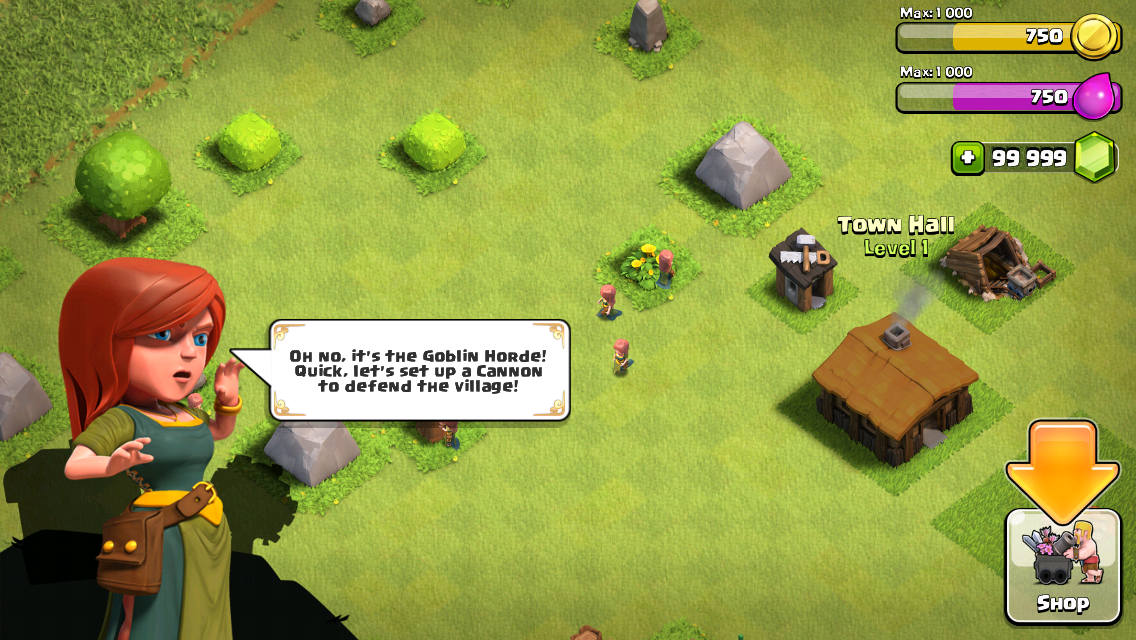
Clash of Clans on iOS is doing well..
supercell is making 1 mil a day off of microtransactions?
former_zyngite: So much more than 1m a day from what I understand. Yes.
Clash of Clans is doing well. That's the understatement
of the year.
http://www.reddit.com/r/IAmA/comments/1fpbv1/i_was_one_of_th...>> Jorge Yao, the game’s undisputed champion, figures he has spent north of $2500 in real money
>> on buying gems, and according to back-of-the-envelope calculations, the cost of fully fitting out your virtual
>> village is on the order of $5000 when you include walls. It’s little wonder the top clans leaderboard is full of
>> players like “>< Royal ><” from Kuwaiti clan “Q8 FORCE” and clan UAE’s “khalifa” (presumably from Bahrain’s
>> ruling House of Khalifa).
So just make game interesting for this Kuwaiti guys and you are bathing in gold.
Link: http://www.businessinsider.com/the-secret-dealer-for-farmvil...
We got to be pretty good as a team, but were never consistently as good as the masters of AOE DM, Team Sudden Death ( http://web.archive.org/web/20000816002743/http://www.laseref... ). In a 2-on-2 or 3-on-3 against them, they would almost always beat us.
One of the rumours that we heard at the time was that some of the children of one of the emirs in the UAE were crazy about Age of Empires, particularly DM mode. We heard a story that they had flown one or more SD members to the UAE for a week or so to teach them how to be master DM players. We heard that SD got very well paid for this tutorial.
While I agree that the general formula laid out in the blog post, there are a lot of more subtle game mechanics that I feel help to balance the game (though I am no where near the top-tier of the gameplay yet). I can see at the high levels where the money generation vs cost of things would become a problem, but at least where I'm at, it's fun to play. If I get to the point where I hit a wall where Gems are required to really make progress, I'll just quit.
I have been playing this game for roughly over a month, and put $10 into gems in the beginning. My roommate started a little over a month before me, and refuses to put money into the game.
The amount of time to invest into buildings/resources/farming scales up with how progressed your town is, and gems are present to alleviate this strain. The implication that gems are necessary to win are unfound.
The game follows a simple town building principle, use currencies (gold / elixir) to build/upgrade buildings, however you can only upgrade them to the limit your town hall level will allow. The way to gain currency is attack other towns (to steal their resources), or use gems. Even if you use gems to upgrade your things, you are simply progressing further in the game, at the risk of opening yourself up to more powerful enemies. When you attack weaker enemies, there are diminishing returns (look up the loot multiplier). So while gems allow you to progress, you must also adapt and attack higher level towns. These higher level towns can be achieved without any monetary investment in the game. Gems just allow you to reach that stage sooner.
I bought gems in the beginning, because the game uses a builder mechanic to limit how many buildings you can build/upgrade at one time. When you start out, you have 2 for free. You can have a maximum of 5, however these are bought with gems and the cost increases each time you buy one. With $10, I soon had 4 builders. With this, I was able to progress much faster than my roommate. I am catching up to his level quickly, almost at where he was in two months time with one month invested.
Additionally, gems can be attained for free by clearing brush, however it will be a nominal amount versus buying them outright. But to say gems are required to win this game is not true, but it does save you time versus waiting around a week for a building upgrade to finish. The main thing most people need to realize is this game isn't about spending money, but investing more time into it. The game is a continual uphill grind where the true currency is how much time you devote to it, but I'm still having fun with it for now.
Good fucking riddance.
Also, a lot of people get a single Builder early on for 500 gems ($4.99), and when you've done that once, the barrier to doing it again is lowered.
http://www.forbes.com/sites/karstenstrauss/2013/04/17/is-thi...
http://www.insidemobileapps.com/2013/01/10/supercell-generat...
That's a strange claim. In fact, I would claim that, if you've ever played Starcraft, Age of Empires, or pretty much any other real-time strategy game, you would be aware that they have very little in common with Clash of Clans.
Depends. If they were aiming to earn $182 million a year, then it's clearly pretty awesome. If they were aiming to build a great game, then perhaps not as much.
On a somewhat related note, I tried playing Clash of Clans for a month and once the time to complete a building took too unbearingly long, i just became disinterested in the game and opened it less often.
Feels like there some variation of the law of diminishing returns, or at least a system suggested by the post that weeds out the patient and stimulates instant gratification.
Glad I didn't get addicted :)
They have the volume, but are they making a profit?
I feel like I am addicted to increasing my karma points sometimes. I submit so many things and so few of them get up there on the main page. The one thing that made it to the main page got me addicted to trying, but sadly the ones subsequent to them haven't had the same effect.
And imagine - instead of flame wars, we could deploy little hacker-warrior-bots!
Where it gets particularly annoying is in games with difficulty curves I can only assume were designed to require more resources than the player is allotted naturally, thus forcing him to buy gems and trade them for upgrades. It's not literal payment-gating of advancement, but it is de facto payment-gating of advancement.
If you want cheats or you want to skip content, you can pay. If you want advanced expansion packs, you can pay. But you don't have to.
The concept of a "free" game has been completely destroyed by garbage like this.
IMHO, you should not support games that use this model. It's often called "Pay to Win".
I will only play games that use the Guild Wars 2 or Path of Exile model; all paid items are cosmetic/fun/convenience only and don't really assist in one player being more powerful than another player.
Pay to Win model games are never going to be fun long term because the game will be won/dominated by the people willing to sink the most money into it, rather than the player who invests the most time/thought/skill/etc.
What is wrong with that? Some people have more money to invest than time, and others the opposite. Find a game that suits you.
Whether something is a game or not isn't defined by how much money you need to spend to play it (or to win it).
Plenty of games and hobbies require purchases to play, and plenty give better chances of winning if you spend more.