49 points · by chwitta9000 · 13y ago · 82 comments
In a magical world where I could change all city cabs into Ubers, I can't imagine there would be too many complaints.
The situation reminds me of local food merchants in my parents' hometown in India. They fucking hate Walmart, and they've got every city official in their pockets to make sure Walmart (or any large grocery store) ever lays a brick there. They hate the fact that Walmart will have lower, standardized prices; better, consistently fresh produce; well-trained, honest workers. They hate that Walmart might kill their business. What they don't realize is if they just went and worked for Walmart, their life might be better than it is while running their own shitty little tomato stand. Where they have to work their ass off all summer so their wives can buy a winter jacket. Where one little tomato pest can kill their entire crop, and in turn, their kid's chance of going to school that year. Where another tomato farmer can undercut their prices and move their cart next door whenever they want.
It's a bummer that some people will always be resistant to change.
That system doesn't work if cabs are forced to compete at a disadvantage with other services that don't operate under the same constraints.
That said, do you think that these granted monopolies have turned out to be a flawed model, that Uber is proof that innovation has been stifled, and now it's just entrenched money holding back progress?
Poor and elderly people, for a start. Spend a bit of time by the entrance to a major hospital and observe how the other half uses taxis as a lifeline; you might just change your tune.
It may come as a surprise to many people here, but taxis aren't just there to transport privileged rich folks to and from parties. They're an integral part of any well functioning city's transportation system, and handing the keys over in the name of disruption is naive at best and outright dangerous to some of society's most vulnerable populations at worst.
Disclaimer: as a card carrying member of the privileged elite, I've used Uber in the past and will probably do so in the future. I'm merely trying to point out that the taxi industry doesn't exist in a vacuum.
* Uber will wipe-out taxi business while being more expensive * Uber will always be more expensive than taxis
Neither is true so conclusion cannot be true either.
If Uber is more expensive than taxis and there's demand for a cheaper alternative, there will still be demand for taxis. Maybe less than today, but as long as demand is there, the taxis will be there.
But this point is moot, because Uber (or someone else) has a chance to be cheaper. UberX is already cheaper than Uber and they just announced up to 25% fare reductions on UberX in SF, to compete with Lyft and SideCar, which, I believe, are already cheaper than taxis.
What is in the interest of everybody (rich, poor, young, elderly) is more competition. Uber is competing with taxis, hopefully forcing them to improve their service. Lyft and SideCar are competing mostly on price.
The only losers from this competition are existing taxi companies, and that's exactly how it's supposed to work: people benefit when new entrants provide better service or the same service at a cheaper price.
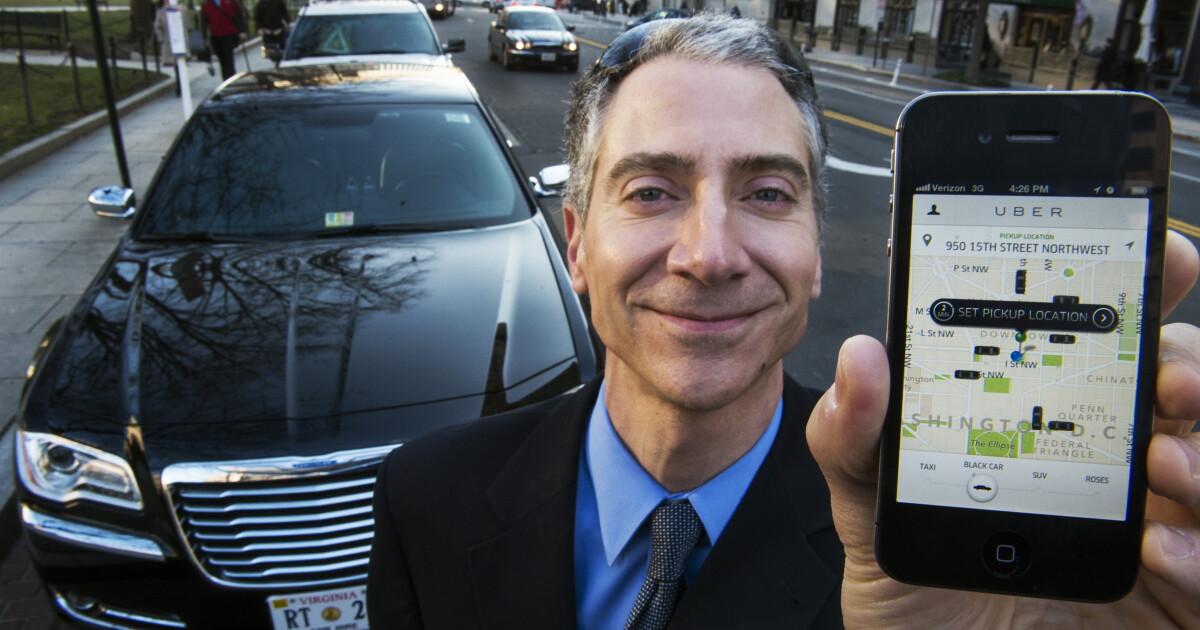
Perhaps it's a bit ideal, but Uber has already successfully penetrated a new customer stratification with Uber Cab...what's to stop it from doing so again -- whether it be via a more cost-effective Uber Cab, an "Uber Rickshaw" service (mostly kidding), or even a government subsidy (an amount to be added to municipal welfare budget, yet still far smaller than the inefficiency cost of a municipal taxi system) to service poorer customers at an affordable price?
Currently the problem is that they are forbidden from operating at all. The reason are usually violations of stupid laws (e.g. Uber collects payments via an app but the law of a given city says you can't do that) or because new laws (that didn't exist yesterday) are introduced to specifically kill Uber business model.
Uber, as a business, is already subject to many laws and regulations, just like any other business. It also complies with town car service laws specific to transportation companies.
The battle today is about nullifying stupid laws that serve no other purpose than to protect taxi companies from competition from Uber.
Finally, saying "the new way is better today, but who know if it's going to be better tomorrow", without even hinting at what possible problem can be, is fear mongering, not an argument.
They are small business owners and you are asking them to trade in their autonomy for someone else's profits. Sounds like a decision they are capable of making on their own.
These tomato stands might be shitty, but they keep the vast majority of the wealth of the community IN the community, instead of siphoning it out like a major multi-national would do.
The difference is that I don't hate Microsoft, I want to be the next Microsoft (to some degree). And eventually, if the opportunity cost (Microsoft salary) continues to outweigh the living I make from a business of my own, then I have two choices: continue to struggle or be better. Either way, bitching at Microsoft or trying to bring them down to my level solves nothing.
All of them? So Walmart will employ just as many people while paying them more and simultaneously offering lower prices?
The other element of the situation is that people use litigation and politics to protect existing bargains. Cabs are regulated, for various reasons. Cities use them as an extension of their public transit infrastructure, and impose restrictions like requiring them to service the whole city, instead of just the profitable neighborhoods. In return, the cab companies are given a monopoly.
So if the cities allow Uber to skim off all the premium business, without requiring Uber to serve the sketchy/marginal neighborhoods, then that's the city going back on its side of the bargain. The cabs can't "win on merit" when they're playing with one hand tied behind their back.
The fair thing to do is either enforce the existing monopoly and keep out Uber, or alternatively to get rid of the monopoly and the regulations too.
Incidentally, the "on-demand" nature of taxicabs versus the "call-ahead" nature of car services is not a distinction made in every city or state. Arlington's "taxi cab" definition pretty clearly captures car services as well.
It's another thing to actually stop them.
A "requirement" that taxis service a neighborhood is a sop. Call up and ask for a cab from someplace they don't want to service and they'll say "be there in 30-45 minutes," aka "go away."
Further reading: http://blog.priceonomics.com/post/47636506327/the-tyranny-of...
Of course I wouldn't be fined for that, but where is the line drawn? Do I have to know a person very well before I can accept their money for a ride? A friend of a friend? Will I be asked to answer a series of questions about the person if I am pulled over?
Here--> https://www.change.org/petitions/city-of-los-angeles-repeal-...
The root of all of these is government. Your going to have to push for less regulation to get into many markets. To get there means one or more strategies. Changing who is government, for that you will need to convince people there is a benefit in doing that. Second to that would be reducing the size of government, put limits on what it can do. Third, you could try and get the people making the laws on your side, but your up against numbers.
So whether its taxi rides, rooms for rent, cars to sell, hair dressers, or even where you kid can go to school, its all about regulation and protection of those regulated.
Don't get mad at those who work in regulated fields, find a way to reduce that regulation to give them choices, you choices, and customers of all a choice.