75 points · by lampe3 · 13y ago · 112 comments
What I recommend to get started is go to a consignment/thrift store such as Goodwill and liberally buying cheap clothes that fit decently well. For shirts this mainly just means ensuring the shoulder crease lines up with the "angle" at the end of your shoulder. Take them all to an alterations store and have the nice lady fit everything for you. This will be the most expensive part of this whole endeavor. As a result you'll get a better feel for the types of clothes that work best for you as well as how clothes are supposed to fit, all for relatively little upfront investment.
Also get nice shoes. Reddit's malefashionadvice is notorious for advocating Clarks Desert Boots. There's a reason for this; they're fantastic. I own a pair, wear them all the time. Whatever you do, don't wear sneakers around unless you're a personal trainer. You're probably not in high school anymore, and nice shoes will instantly help you present yourself more professionally.
I hate wearing "fitted" clothes and shoes...god how I hate shoes...I have spent the last several years of my professional career wearing flip flops or sandals around the office.
I have never worn pants suit, in the winter I opt for a hoodie, tshirt and jeans - and generally substitute the jeans for a skirt in the summer.
As a result, I am biased towards people who wear suits (especially with ties!) - The question in the back of my mind is "what are they trying to hide?". (It should be noted that these observations are from corporate land where I no longer reside.)
I have met people who believed that simply because they were in a suit they should be listened to...even when it was clear they had no knowledge about the situation at hand - this tends to apply to project managers and the like.
When I met somebody in t-shirt and jeans I tended to get along with them, they tended to be knowledgeable and could stand their ground.
I have since moved out of corporate land, and into an environment where tshirt and jeans is the norm - and these people "get shit done" - their career development and self esteem comes from the fact that they are the best at what they do...not because "I look good this morning"
You shouldn't get respect from the clothes you wear...you should demand respect from the skills you have.
Also, for example, the other day I organized a "Restore the Fourth" rally for my home town. As the organizer, I felt it necessary to look nice and presentable because people generally respect nicer-dressed people, and I knew I would be interviewed for the evening news. If I had worn sneakers, gym shorts, an ironic t shirt, and a neck beard, things would not have run nearly as smoothly as they did.
An article like this shooting to the top of HN is a consequence of the rise in status of programmers. Probably nothing can be done about it, but an article on how to conform is the antithesis of hacker culture.
I prefer wearing gym shorts to slacks. If that preference qualifies as "wanting to look like a disheveled slob," then a large fraction of the population wants to look like a disheveled slob.
More generally, I prefer not to worry about things like brands of clothing.
It's fine that others do. I'd agree you didn't say anything controversial or offensive. But, fashion isn't for everyone.
Not calling people names, whether or not it's due to their clothing choices, is going to earn you more respect than the clothes you personally like to wear.
Because a t-shirt with cola and burger residue is what characterises a hacker and an independent spirit, right?
I don't see how taking the time to have, say, a nice desk, or car is OK, but nice clothes are somehow beneath us.
Preferring a t-shirt doesn't mean you don't care about food stains on your clothes.
I wear high quality t-shirts, jeans and sneakers that look, fit and feel great (to me). They aren't fancy, but niceness seems pretty subjective. My wardrobe is nice to me, maybe not to anyone else.
Personally I gauge the niceness of my desk and car by their utility and enjoyability, same with my clothes. There are certain utilitarian requirements for each, it's pretty much about personal opinion after that.
Please don't make sarcastic personal comments on HN.
If you are in a profession that requires a "uniform" then I may have some empathy for your ideas. Otherwise, I am mentally unable to grasp the need for this thinly-veiled, vapid, conformist outlook regarding external appearances.
You are correct. Is there a point though?
Why not maintain the hacker ideals of innovation and disruption while hacking others' perceptions of you to make yourself seem more trustworthy and respectable?
Precisely. And this cuts both ways. Hope you can see that.
You will surely wind up with someone of the sort as your boss. That's just the way the world works.
Sure, hence HN, YC and the audience here that is actively striving towards being their own boss. Actively changing the way the world works as part of their striving for freedom from such bosses!
I absolutely agree that fit is crucial for clothes. However, everyone has a different context and you really don't want to look woefully out of place. Sometimes that means wearing (nice) trainers.
Managers dress better because they have a softer skill set that depends more on perception than hard results. Zuckerberg is a hacker, with a hacker's mindset. That's why he doesn't dress up.
Well, if you want to be a manager.
Since I like neither dishonesty nor subservience and find ties incredibly uncomfortable, I intentionally don't wear any such thing. It is astonishing how much we read into clothes though. I was regularly mistaken for a bouncer while standing outside a club wearing plain black clothes (despite drink in my hand).
You associate it correctly in all cases. As somebody who's come to appreciate suits as a powerful tool, it's worth learning the game. Wear a suit to a car buying negotiation and save a few thousand dollars on your next car, or wear the "livery" of your company and find yourself promoted faster than if you don't. It's stupid, but most people are stupid.
(I've learned how to wear a suit without a tie, try and project a comfortable, casual, glamorous [bm]illionaire look, they almost never wear ties with their suits [1][2][3]
1 - http://cdni.condenast.co.uk/320x480/s_v/scowell_GL_15dec09_P...
2 - http://thenextweb.com/files/2010/11/branson2.jpg
3 - http://edition.cnn.com/video/business/2010/09/27/sesay.niger...
Also, black at night is fine but most people should avoid black during the day. It compliments very few complexions.
Suit advice:
I'm 30. Most the people I work with and talk to about clothing are in my age range, say, 25-35. Not "young" still, but we don't feel old and certainly don't want to put on a suit and see our fathers in the mirror.
If you relate to that, and want something more contemporary, I'd suggest taking a look at Theory. They are on sale right now 50% off and are a value at that price. I don't love them as much for the full price. They are sold as separates and you can pick one up now for $375 or so.
These jackets are partially canvassed (not bad, not great), have spandex or lycra in the blend that gives them a TINY bit of stretch, and the single vent and width of the lapels is modern enough to look good on a young man, and classic enough to still look OK in 5 years.
http://www.theory.com/mens-suiting/mens-suiting,default,sc.h...
That said, most people who wear suits, to address that area, don't really wear well fitting (bespoke) suits. Ill fitting suits are worse than down dressing or dressing like a slob --it says you're being rote and don't really pay attention to detail. I see this symptomatically in salespeople, and others you mention, yes indeed, it looks horrible.
A well fitting suit and matching clothes do enhance people's aesthetic look and that bleeds into their professional appearance, rightly or wrongly, in my opinion.
By the way, if your stay-at-home clothes fit well and they match in color, pattern and mood, they don't have to be special or expensive. They need to match you in some way, however. It can't be a mishmash of incoherence. It becomes a visual cacophony and can be hard to get past.
It's like looking at the person preparing your food and seeing them sweaty, clearing their throats, wheezing and uncomfortable, yet, they're washing their hands and at no point sneezed or coughed and never touched their face before finishing the preparation, but it still seems gross.
The same rules don't apply when your body is basically an amorphous blob.
It's simply a matter of design and convention - clothes are designed to fit some body types, and conventional clothing styles are predicated on "degrees of freedom" of possible design that can only comfortably suit some body types without looking like a tent or a gorilla suit.
Actually "male" formal styles have more give in their degrees of freedom than informal styles for either gender, or formal styles for women, because fat men have often been suit wearers.
Still, IMO, designers ought to see "fat people of any sex" as a challenge to their ingenuity. I'd really like to see what people would come up with if effort was applied, rather than merely shifting the proportions of something designed for thin people.
Plus, going a size larger doesn't hide my belly as much as I think it does.
As noted by another poster: I'm better off working on the belly than finding the right length shirts and debating tucked in vs out!
Ignore this claptrap. Find good rules that fit your body within the following guidelines:
1 - shoulder fit is important, nothing says you don't know how to dress yourself like bad shoulder fit. This works for T-shirts to tuxedos
2 - sleeve length is important
3 - find comfortable pants you look decent in, don't hide anything, just fit in them well. What you wear up top is far more important than what you wear on the bottom
I'd say the statement in the article is more accurate. Fit rather than thin. And if you are not fit I'm thinking it would be better to work on that before the fashion.
Also, some people are overweight due to, e.g., medical issues and the consumption of medication needed to deal with said medical issues.
Would leangains.com help them too?
While I study biochemistry in school, I will not pretend to be able to give medical advice, so I can't answer your question with regards to medication. However, for those overweight folks who just haven't been tending to their diet and exercise as much as they'd like, leangains and a good strength-training program is a fantastic way to shed fat and become more "fit." Although, if you're really interested in getting involved, I personally believe http://rippedbody.jp to be a better resource for the information on leangains (although leangains.com is the original source), simply because it's better organized and more straightforward.
A friend of mine has Hypothyroidism and he attributes gaining nearly 100 lbs to that because his doctor told him that might be the effect of it beeing not treated for so long.
I find that pretty silly. It may add some water weight and another 10 lbs due to that and skew the balance between lean body mass and fat. But the body has to follow the laws of physics and adding 100 lbs of mass in fat requires massive amounts of calories above your daily expenditure for extended periods of time.
http://www.reddit.com/r/malefashionadvice sidebar has more useful info.
So I suppose I should quit pants altogether, or only wear pants with elastics, since I can't find pants long enough for my legs that don't fall off anywhere. I have only one pair that fits me without a belt, and I had to buy it in Spain (I'm from Argentina); apparently teenagers are taller there so a they had my size.
I know these articles can't work for everyone, but it really bothers me how hard it is to find clothes for some body types.
There are lots of body types that clothes don't fit off-the-rack!
Or, you know, you could always have the longer ones adjusted at a tailer.
Or you could order made-to-measure pants if you are such an outlier.
Pleats come in and out of fashion, whereas fit is something that is pretty well-understood across time. Bitch, please.
If you wear your pants anywhere near your hips, you will look like a clown if you have pleats. Likewise, pants which were made to be worn near the hips are clown-pants if they have pleats.
If your pants, however, have a high rise, and you are man enough to wear them at your natural waist, then pleats will make it possible to sit _and_ stand in your pants and not look like a total fool.
Just because people are not required to wear formal clothing everyday does not mean they don't want to look sharp when they do-
That's around 32 oC? Yeah, what about it? People working in "serious" businesses, like banks, etc do it all the time. Not only in 90+. Even in 105+.
And even I, that dress casually (t-shirt, jeans), have never had a problem with jeans and leather shoes even in 105+.
You really think that shorts, that get you direct skin exposure to the sun are ...better than long pants?
Even people in African deserts and such (were it's more like 110+) are wholly clothed (covered).
Knowing when to throw on a decently tailored suit, a nice shirt and a pair of well matched shoes (even if your screaming inside to kick them off after a half hour) has gotten me contracts, procurements, jobs, raises and let me get away with figurative murder quite a few times. It says "I'm part of this club, I'm playing this game, let's not let a few hundred thousand dollars come between us."
I hate suits and think they're a symbolic harness the modern world uses to remind workers they're one step away from either a hanging or working as a beast of labor, but using them as a tool to extract money from people is a perfectly valid tactic. In other words, I hate not making money more than I hate wearing a suit.
The problem? I'm personally built like a square, and when I was younger and in better shape it was even worse. Very little on this page is relevant for me. Years of kickboxing built up thick thighs and calves and makes slim cut pants look ridiculous, likewise a 17.5" neck means I might find a single Oxford at any given store regardless of style. Wide feet and high arches mean fine shoes feel like Chinese foot binding. Round or narrow tipped shoes look absolutely absurd on my frame, square toed shoes look far better and much more consistent.
Here's my hacks that end up looking decent if I need to: Go west coast, no tie. Leave the top button undone. No shirts with button-down collars, those are meant for ties. Slip on wide square toed dress shoes with good grippy soles. Sleeve length and shoulder fit here are dead on (you wouldn't believe how many people aren't aware of how shoulders should fit). Never button your blazer or suit jacket -- keep at least one hand in your pocket for the cool "I'm a guy in a suit" look, everybody will be doing it anyway. A barrel chest and years of not kickboxing have given me a healthy man-gut no blazer fit will ever work with. Just make sure the shoulder and sleeve length is right and you'll be fine. I take the jacket off at the start of meetings anyway. If negotiations of lots of paperwork start, roll your sleeves up, it'll cool you off and make you look serious while working on this "hard stuff". Regular cut pants, no low cut, shirts don't like staying tucked in well. Being built like a square means coats below the waste are an absolute no-no. P-coats work well if you absolutely need a coat. Avoid pleats at all costs. Flat-toed shoes, round or pointy toes look absurd on my square body shape. Tuck your shirt in properly, and starch the collar. Nothing says "retail worker forced to wear this" more than shirts that aren't tucked in right or messed up collars.
To paraphrase the Romans, worship these gods in public for approval, abandon them in private for a comfortable life.
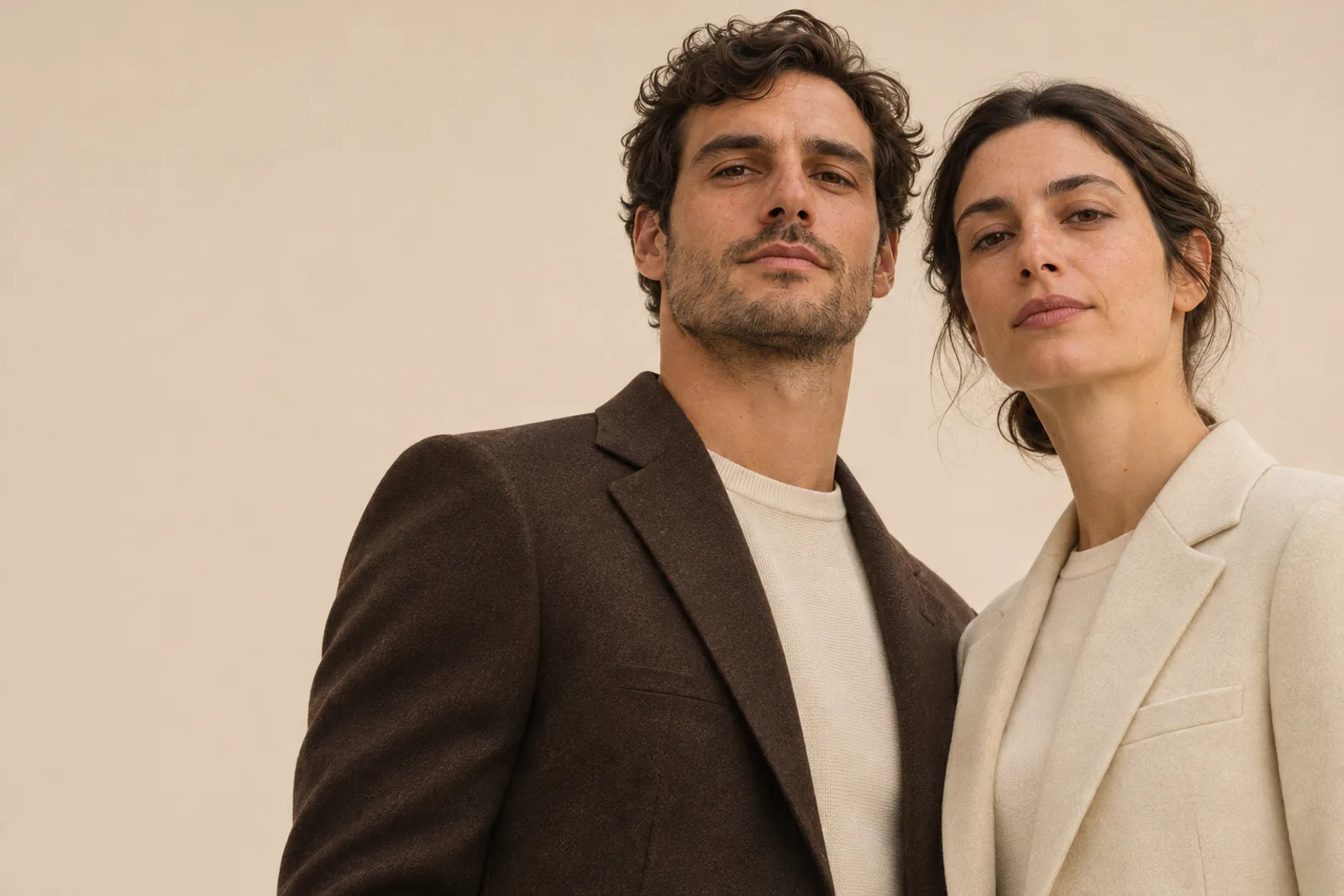
I feel like until somebody tells you that you "must" dress some way, then anything else is just opinion that you may or may not agree with. There is so much anger directed towards the top post on this thread because he shares his opinions on mens haberdashery.
My bottom line is that when I wear a suit that fits me like a glove, when I have a crisp, clean collar stand up against the back of my neck, when I slip on a nice pair of shoes -- carefully crafted and made with great materials, the kind that will last you easily 20 years -- when I do all that, I always just feel so good about how I look and how I feel.
Sometimes a tie isn't comfortable. So sometimes I endure the discomfort for a specific reason, other times I just don't wear a tie. But I never bristle with the anger at 'conformity' so I thought I'd ask you.