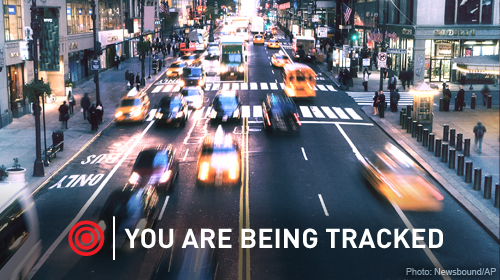
Police Documents on License Plate Scanners Reveal Mass Tracking | ACLU
American Civil Liberties Union
279 points · by stfu · 13y ago · 95 comments
Without strong policies and laws, this data is ripe for abuse -- domestic abuse victims and stalking where someone eats, visits, and sleeps, or tracking regular routes of hazmat or cash trucks, etc.
https://tonywebster.com/2012/12/minneapolis-police-license-p...
Doing so reduces some fringe harassment risks, but actually makes the power inversion worse since then only a privileged minority has access to the data.
In practice the stalking/harassment stuff isn't actually happening with any great frequency: The mentally ill people who would do this are generally not competent enough to go on a big data data mining exercise. Complaining about that just creates an excuse to remove access to the public to data they're paying to create while leaving access to it to authorities and commercial interests who might use it against them.
I use my cellphone in public, but it's obvious that the government shouldn't be able to automatically log when and where I placed a call. I use my credit card in public, but the government shouldn't be able to automatically log every penny going into or out of my bank account. I use my car in public too, and I don't think the government should track everywhere I drive.
I don't think there's an acceptable amount of harassment that's tolerable. If the technology enables it to happen, it's worth challenging.
There are three issues for me with ALPR: (1) limiting the scope of persons who have access to the data, (2) ensuring that law enforcement agencies have strong (ab)use and access policies with checks and balances, and (3) ensuring that logs of where innocent individuals drive is never stored.
I think it's easier to progressively win a fight rather than going guns-blazing to a large issue that people don't understand. By first building the notion that 'yeah, this technology is actually somewhat scary' it's much easier to win a fight arguing that the police shouldn't be storing and accessing the data either.
In my situation in Minnesota, the public finding out about the police releasing 2.1 million license plate tracking points to the public was enough pressure to get the state to make the data non-public and to have police departments voluntarily create more restrictive policies. It was also enough to get a fabulous bill passed through the state House that prohibited police from storing any data on non-hit (non-wanted) vehicles. Unfortunately, it didn't get to the Senate floor in time before the session ended, but I was shocked at the number of legislators who spoke out against ALPR data storage. They weren't necessarily anti-ALPR (and honestly I'm not vehemently anti-ALPR either), but the prospect of storage is wildly unpopular among non-police communities.
There's another issue all together, which is privately owned and operated ALPR systems -- typically used by vehicle repossessors but it was also uncovered this week that a defense contractor had also been on the receiving end of Minneapolis Police ALPR data, which is somewhat unnerving.
When I was in college, I was called to the police station and accused of breaking a glass door in the dorms. I knew NOTHING about this. I told the police I knew nothing about the event, but they continued to press me. They asked me details about where I was that night (many weeks prior), and I had difficulty remembering where I had been. To make matters worse, I originally thought the day in question was another day, so I ended up giving information about my location that was incorrect. If the police decided they didn't like me, they could have easily pressed charges for lying, even though I thought I was telling the truth. Luckily, they eventually believed me and I was let go.
How is this related to license plate readers? Well, the only reason they suspected I was the person who broke the door was because my ID card had been swiped at around the same time the door was broken. Simply because I was present near the time and location of a crime committed weeks prior, I was accused of a crime and nearly accidentally perjured myself. (Don't worry; I know now to never talk to the police!)
If we start tracking everyone's movements, this sort of thing will happen more and more often. You will EVENTUALLY have driven by a place where a crime was committed. You may be called to account for your being nearby, even weeks or months later. When the police ask you why you were there, will you remember? Will your answers satisfy them? Will your general unease at being questioned make you appear suspicious? Will you fumble, and say things that contradict yourself, making you appear even more suspicious?
Of course, invoking my right to a lawyer may have prolonged my experience. Whether the increased risk of being in trouble by talking was greater than the increased time to resolve the incident if I requested a lawyer would have been a tough call to make.
Telling the police to direct further inquiries to an attorney doesn't actually necessitate retaining one until they make additional inquiries.
One way to view this is upping the ante. You've made clear that you know your rights, and that they're not going to be able to use you as an easy source.
Of course, if they call your bluff, it's helpful to be able to produce said attorney.
Have you ever had the misfortune of watching reality TV? You do realise the power of selective editing. Sufficiently motivated camera operators can 'destroy evidence' with no paper trail.
So no, I really don't think more surveillance would necessarily give a better result.
Who would be so crooked as to do such a thing? Faculty to get insurance claim/avoid insurance claim, overloaded cop who just wants to get to 'done' or a promotion.
"XML is like violence - if it doesn’t solve your problems, you are not using enough of it."
You wouldn't have been guilty of perjury, maybe obstruction of justice. But I think your overall point is good, they will use data against you even though you were innocent and answering questions with good intentions.
It should be no surprise that this is happening. Give anyone unlimited surveillance power and it will always be abused.
I live in a western EU country and have a friend in law enforcement. Last year, he brought me to see our city's traffic surveillance 'control room'. Almost every street corner and traffic junction here has a pole-mounted police camera transmitting video data back to servers accessible from this room and elsewhere.
To summarize the demo: He was able to type a vehicle registration plate into this system, and instantly see every journey the car has taken plotted on a map, as well as the thousands of raw video clips of this vehicle that were used to generate the map.
The fear of this sort of thing depends on being suspicious and wary of the police, and people aren't. My wife thinks I'm crazy when I rant about cops, but as a practical matter she has no reason to be skeptical (as a young white woman). As long as most voters are either white, old, or female (groups cops tend to avoid harassing) you won't see the necessary skepticism to oppose this sort of thing.
Heck, over the last 20 years people happily handed the police enormous amounts of power via drug laws. The white suburban moms in my school in the 1990's shrieking about "just say no!" had no reason to be skeptical.
Storing a weeks worth of traffic camera data and allowing to be misused should result in a demotion, a small fine, and a personal civil liability towards people who've been affected by the misuse. Signing off on storing years worth of ALPR/surveillance-camera records and having _that_ misused or exposed should be a career ending and company destroying event.
Collect that sort of data if you think it's of sufficient "value" - but make sure everyone is aware of the risks and the magnitude of the penalties of being "careless" with other people's personally identifying data.
I'm sure the authorities' line of defense will go something like "oh but you're not in the database by default!" Then you'll be added as soon as you cross a border, apply for a passport, or get a parking ticket. Time to buy stock of facemask producers...
https://news.ycombinator.com/item?id=6049276
Though Bloomberg and the NYPD hardly have any trouble pushing these things through for the last decade, I imagine one impetus behind ramping these programs way up would be incidents such as the would be Times Square van bomber from a couple years ago. In that case however, the perpetrator had actually stolen license plates from another vehicle (which they learned after finding a VIN that wasn't scratched and the registration didn't match).
http://en.m.wikipedia.org/wiki/2010_Times_Square_car_bombing...
The charge seems to have been based on not the reporting itself, but a theory that he was conspiring with people committing crimes, like a lookout at a robbery. I wonder if it'd be on more solid ground if it were a website that just always updated with police movements, rather than only in connection with a specific event.
It's an interesting idea. Thanks to smartphones, the people have more cameras than their governments. The governments however have more targets.
Given a decent proportion of people using the app, you could probably map out the location of most of the active government vehicles in a city. With the time-series data, you could add some analytics and probably predict where the cars were going to be at specific times and days. You could even gameify it, so catching a police car at a donut shop would win the user a little badge.
Inexpensive but ubiquitous and "always on" cameras, with a little bit of OpenCV smarts built in (or perhaps with a RaspberryPi-grade computer hanging off them) could probably manage a pretty good implementation of this.
If you could somehow roll this out as part of some innocuous looking project (off the cuff idea - approach a taxicab company, tell them you want to put camera's on each cab - so you feed each driver back information about nearby traffic density/speeds and approximate counts of people standing on sidewalks correlated with the number of other cabs around. Slip in ALPR without mentioning it, and a whitelist of marked and unmarked police car licence plates. Sell access to the real-time police location data to high-speed courier services, boy-racers, and drug cartels.)
Monetizing it might harm adoption by volunteers though, so that is important to consider. Gamification is a great idea though.
The laws apply to us, not them.
The issue is that of technology being an enabler. Always being able to watch you (with some cost), and being able to watch everybody effortelsy and automatically, with instant retrieval is a game changer.
    CALIFORNIA CONSTITUTION
    ARTICLE 1  DECLARATION OF RIGHTS

    SECTION 1.  All people are by nature free and independent and have inalienable
    rights.  Among these are enjoying and defending life and liberty, acquiring,
    possessing, and protecting property, and pursuing and obtaining safety,
    happiness, and *privacy.*
If you're in a crowd, by definition, you're not expected to have privacy, however you are allowed anonymity by virtue of being in a crowd. If you're in a cafe, you're naturally not afforded privacy, however you are still anonymous unless spotted by someone who recognizes you. If you lean over to tell something to this person, that conversation (despite being in public) is still private.
Your public information still afforded you anonymity in a sea of data however since we now know it can conveniently be assembled into a dossier, it's being used to destroy your anonymity which, believe it or not, used to be taken for granted.
That's not true at all. Anonymity is the state of personally identifiable information being unknown. That's exactly what your license plate is, and it's displayed on the back (and front sometimes) of your car. You have never been anonymous while driving.
http://waxy.org/2013/06/these_arent_the_prisms_youre_looking...
On page 349 (pdf pagination): "LPR technology uses specialized cameras and computers to quickly capture large numbers of license plate photographs and compares them to the hot list (NCIC, ALERT/REJIS, KDOR, PRISM)."
http://www.shodanhq.com/search?q=atz+executive
And this is how the web interface for such a system looks like:
http://money.cnn.com/gallery/technology/security/2013/05/01/...
http://www.shodanhq.com/search?q=title%3A%22PIPS+Technology%...
I live in a western EU country and have a friend in law enforcement. Last year, he brought me to see our city's traffic surveillance 'control room'. Almost every street corner and traffic junction here has a pole-mounted police camera transmitting video data back to servers accessible from this room and elsewhere.
To summarize the demo: He was able to type a vehicle registration plate into this system, and instantly see every journey the car has taken plotted on a map, as well as the thousands of raw video clips of this vehicle that were used to generate the map.
You need a constitutional amendment specifically for privacy and data retention. The 4th amendment does not do what you think it does.
Meanwhile, the argument is not lost in countries like the UK, but very much alive in terms of people invoking EU law via the charter of fundamental rights.
If you operate certain brands of cameras, you get access to the database: http://nvls-lpr.com/nvls/
Remember some of the biggest issues? Exploitation (wars, colonialism, imperialism, no labour laws), racism (slavery, Jim Crow laws), overeaching government (McCarthyism, Hoover, bureaucracy, protestors shot at, , surveillance, etc), rampant private interests (banana republics, RIAA, patent law, militias shooting strikers, corporate espionage, buying legislation), religious nuttery, etc?
Those things are not solved by technology. If you're lucky, you might find some technology that can nullify one of those issues.
But in general technology is an enabler. It can help those perpatrating those things to do them 1000 times more efficiently and far scarier. Science too, is neutral. Nazi germany was choke full or good scientists -- and they are behind all messed up inventions anyway too, not just the good ones.
This, among other things, is such as case, of technology being an enabler for bad things. To really effect change you must change how people think about things -- and then, the laws.
And when someone brings up the "pseudo-anonymity of the crowd", can you accompany that with a legal precedent for such a claim? Who actually came up with the "I'm acting privately in public" thing in the first place?
Progressive Snapshot: We look at your driving habits to see if you could be saving more. You can track your projected savings online. "We look, you track"
oh hey, at least they have olark :)