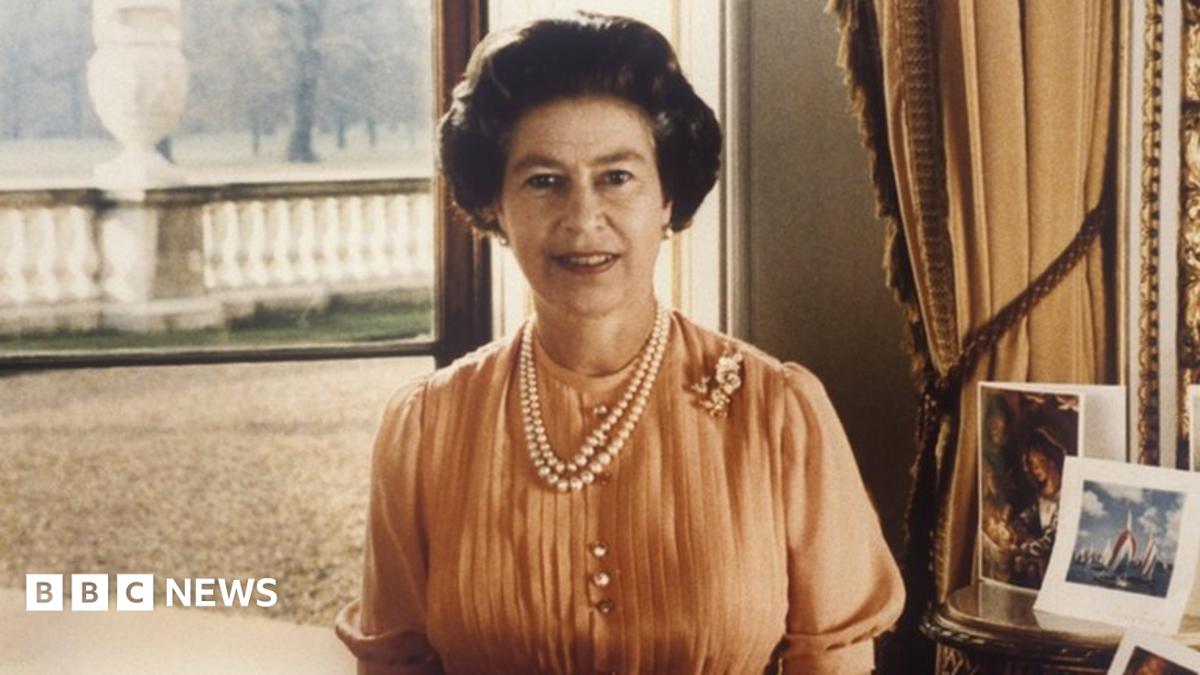
'WWIII Queen's speech' script revealed
The Queen was expected to urge Britons to pray and remain united and resolute in the event of the "madness" of nuclear war, papers from 1983 show.
BBC News
63 points · by joelg236 · 13y ago · 76 comments
I think it's in Generation X that one character describes "waiting for the flash". The idea that the sudden destruction of everything was an ever present background thought. In the book Coupland defines the term "Mental Ground Zero" for where you imagined you'd be when it happened. For me it was always on a train traveling between two cities that no longer exist.
e.g. http://en.wikipedia.org/wiki/Square_Leg
For those interested in UK government cold war planning I can strongly recommend Peter Hennessy's book "The Secret State: Preparing for the Worst 1945-2010":
http://www.amazon.co.uk/The-Secret-State-Whitehall-Cold/dp/0...
One particularly chilling part describes how early UK estimates thought that it would only take a small number of H-bombs to destroy the UK as a functioning society, resulting in the following:
"Hennessy tells the story of a jokey 1961 encounter between Khrushchev and the British Ambassador, Frank Roberts. The Soviet leader asked how many H-bombs Roberts thought would be needed to wipe out the UK. ‘Six’, he replied. Khrushchev chided him for his pessimism. He said that ‘optimists’ estimated it would take nine — but reassured him with a twinkle that the Soviet General Staff… had earmarked several scores of bombs for use against the UK so that the Soviet Union had a higher opinion of the UK’s resistance capacity than the UK itself."
[Militaries have lots of weird plans for strange events that could probably never happen].
NB The UK had plans to attack US bases here to get our hands on nuclear weapons if there was any sign that the US didn't want to get directly involved in a war - no idea why anyone would find it surprising that such plans were considered!
Which is the 'buffer zone' doctrine taken to extremes:
http://www.bbc.co.uk/schools/gcsebitesize/history/mwh/ir2/so...
> Twenty million Russians died during the Second World War, so Stalin said he wanted a buffer zone of friendly states around Russia to make sure that Russia could never be invaded again.
And, of course, pre-Soviet Russia had been invaded multiple times, often by people who did a lot of damage before they realized they'd forgotten to pack for winter. It's part of having large land borders.
For anyone with a morbid curiosity over nuclear war, THREADS is worth a watch too. I didn't learn about it until very recently but supposedly it was on prime time British TV in 1984 and scared the bejeezus out of everyone in its rendition of what might happen to the UK in the case of nuclear war. It's also on YouTube! http://www.youtube.com/watch?v=_MCbTvoNrAg
I think it shook up the teachers more than us, but I guess that's to be expected. We were too young to really have felt the paranoia of the times.
I watched it again a couple of years ago. It's amazing to think about how close we actually came to nuclear war not so long ago and now we're in a position where people can campaign for self disarmament of nuclear weapons.
A real attack in the UK might have been far worse than the one shown in Threads!
(Then I went to university in London. Enough said.)
It's interesting how much of the art and music of the 1980s was influenced by this existential terror of sudden annihilation, and how little resonance songs like "The Final Countdown" (by Europe) or "Dancing with Tears in my Eyes" (Ultravox) and similar have for folks aged under 30.
The film itself is terribly bleak, I'm glad to have not consciously lived through always worrying of nuclear war.
I tell people this, and the younger ones never believe me, but I genuinely believed that I would never live to be an adult.
[1] https://en.wikipedia.org/wiki/The_Day_After [2] https://en.wikipedia.org/wiki/Testament_(film)
I don't expect to live past my twenties. It isn't hard to believe that somebody on one side of a two sided prelude to a nuclear war could be nervous about their survival prospects.
I used to get sudden moments of fear that the 'flash' could happen at that particular moment when it struck. I can vividly remember these happening when I was a teenager.
Looking back it was a terrible thing to grow up with, a constant fear of immediate death without warning.
Somehow while the danger is still present the immediacy of the fear has waned as I have gotten older. Although now I worry about my children it's more of a vague worry about their future than a immediate pressing fear of a the 'flash'.
I wasn't afraid of dying; I was afraid of surviving.
"In a full nuclear exchange, in the paroxysm of global death, the equivalent of a million Hiroshimas would be dropped all over the world. And, in such an exchange not everyone would be killed by the blast and the fire storm and the immediate radiation. There would be other agonies. The loss of loved ones; the legions of the burned and blinded and mutilated; disease; plague; long-lived radiation poisoning the soil and the water; the threat of stillbirths and malformed children; and, the hopeless sense of a civilization destroyed for nothing. The knowledge that we could have prevented it and did nothing."
http://www.cooperativeindividualism.org/sagan-carl_who-speak...
I found the idea of being someone left around with "the hopeless sense of a civilization destroyed for nothing" particularly appalling.
But the Cold War was real. Real life has a quality that's hard to appreciate unless you've lived through it.
A "dot with math" is unlikely to also have the ability to make a machine that can move.
Everyone is worried about unfriendly AI - all you have to do is put that unfriendly AI in a computer without the ability to affect the physical world. (Also no network.)
Give it only a screen, and a video camera. It can be as unfriendly as it likes.
Please read [0], [1], and [2] (good story with very relevant ending), and let's talk about it again:
[0] - http://yudkowsky.net/singularity/power
[Edit: Strong general recommendation for that book, by the way. If it were not in a low-status genre, parts of it would be taught in high schools.]
That's what happens, anyhow. Read the book, Max Brooks does it a lot better than I just did from a three year old memory. There is also a very brief meditation by the character being interviewed by the frame narrator to the effect that the monarch is the custodian of the soul of Britain in a way that the Yanks just can't understand. Literary criticism: I would have struck that sentence because the book shows that powerfully and it is weaker for then saying the moral explicitly.
I went through a vehement anti-monarchy phase when I was younger, since then I'm starting to appreciate the idea of a head of state who isn't a career politician that campaigned or even bought their way into office.
This, after all, is how wars get started.
Edit: the dire circumstances being, of course, WW3 - the subject of the Queens' speech.
Having said that, I prefer having the Royals to an elected non-ceremonial Head of State. Having the Head of State separate from the head of the executive branch of government seems like a good idea to me.
If we were all loaners things would be much worse. You might not have war, but you would have lots of individual killing, and very little progress.
Your best option is not to fight it, but rather to use it: Get people in various countries to consider themself all part of one group. (One of the reasons I think the Olympics is a huge impediment to world peace. I almost never think of MY country as better than YOUR country - except during the Olympics.)
Bit of a selection bias there. Those of us who don't care just tend not to talk about it.
"The speech, devised by Whitehall officials at one of the most fraught Cold War periods..."
Seems like you would probably get on just fine with a fabricated character played by an actress, who is charismatic enough. Say, "Big Sister"
To be a bit more on-topic, that this speech was even considered necessary gives me a bit of hope. We see it as a bit antiquated, fears of a time that is now largely behind us, when our rulers were willing to sacrifice most of us in their global power game.
No, not really, see
http://www.informationisbeautiful.net/2009/how-i-learnt-to-s...
You can watch it for free on youtube.[3]
[1] - https://en.wikipedia.org/wiki/Threads