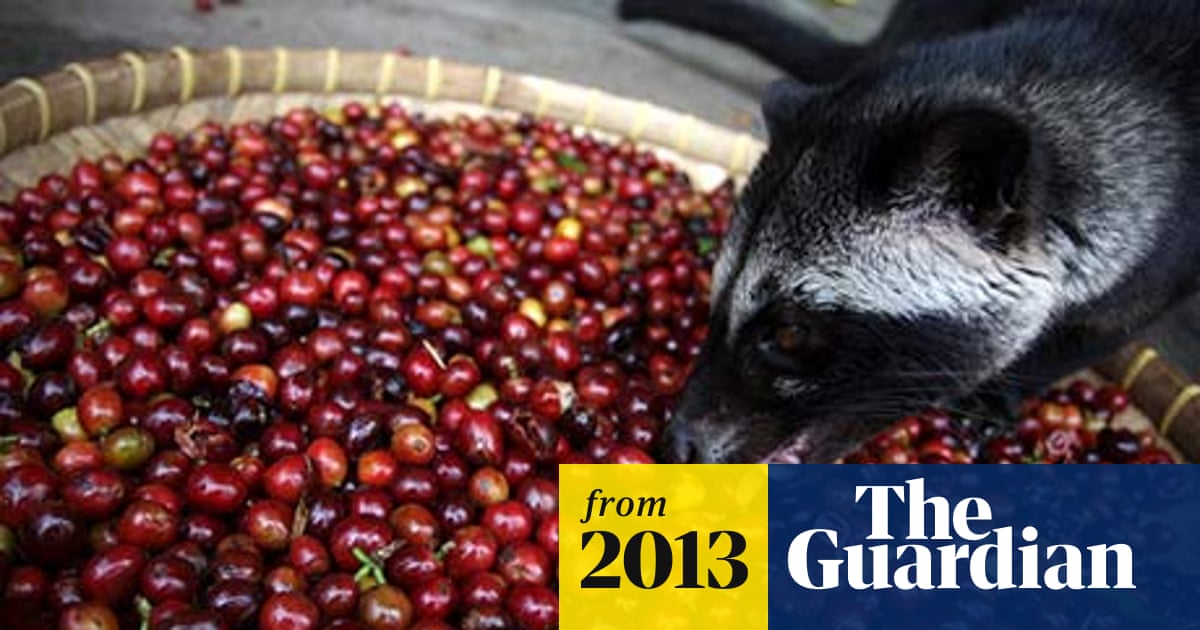
Civet coffee: why it
Tony Wild: When I introduced civet coffee to the UK it was a quirky novelty. Now it
the Guardian
575 points · by ValentineC · 13y ago · 194 comments
I bought the civet coffee off ThinkGeek for a coffee snob friend of mine years ago. She said it tasted watery and bland, but thanked me for the thoughtful novelty anyway. Now I realize I not only gave her crappy coffee, it was crappy coffee created through abusing animals for a stupid gimmick. I feel like an asshole.
Consider this: if civet coffee had not ever become popular, then your purchase would have been fine - if anything, you could feel good about yourself since you just injected a tiny bit of cash into a poor area of the world.
Not to get all philosophical over a story on poo coffee, but this is one of the downsides to free markets. They hide information on the conditions of production unless compelled to by regulation or consumer demand, neither of which typically happen without an awareness campaign (such as this exposé). All you see is marketing and a price.
When a free market realizes consumers demand transparency, transparency becomes an option in the market. Not the only option, but one of the many.
How would that transparency work in a market that is absolutely controlled by regulation and government? Fine, until that government itself ceased to be transparent.
ASIDE: There are no absolutely controlled markets or absolutely free markets and never will be. Capitalism will always seep out around the edges and regulation will always be necessary.
This is such a meaningless mantra. The election process--which is supposed to "fix" the free market--also hides information, except there are many fewer opportunities for correction. A vote happens once every N years, whereas market corrections are (relatively) continuous.
Also, in what context are we dealing with a free market here and how is it relevant?
Information availability is a key part of the definition of a free market.
[1] http://www.statisticbrain.com/animal-testing-statistics/ [2] http://www.stolenpets.com/about.htm
It's safe to assume all animal products are unethical.
We are invasive species. What we should aim is low impact farming. To extract the most food with the least possible amount of suffering caused and resources expended.
I think this is roughly what you meant, right? There are lots of exceptions to the totally blanket assertion, although I think the underlying sentiment (as carefully caveatted above) is basically correct.
edit: The point I am trying to make is that not all of our food comes from unethical industrial factory farms. There are a lot of farmers who use ethical and sustainable methods. It is not too difficult to do research and find out how your food is produced.
I truly loved the stuff, but I can't imagine getting it again. Due to the insane prices, it's likely to be heavily cut with regular beans. Worse, the limited number of beans that are real are likely to come from abused animals, which, no way. Locking them in cages and force feeding them beans not of their own choosing has clearly ruined both the creatures and the product.
Fucking humans.
One large cup of that and I needed an even bigger spatula, just to scrape myself off the ceiling.
I suppose if you must try it, Animal Coffee[2] claims that they do not farm civets. They also offer a stick of the "raw" coffee encased in Lucite[3], which I find a better novelty than mediocre coffee.
[1] http://www.edible-shop.com [2] http://animalcoffee.com [3] http://animalcoffee.com/proddetail.php?prod=Souvpw
Don't be so hard on yourself.
Given that many animals have a superior sense of smell to humans, this hypothesis seems reasonable - civets could smell out the best coffee, and given the choice, who wouldn't want to eat the best?
If this is the case, then the whole mass-production/feeding-civits-in-cages is absolutely pointless, because it does away with the civets' selection process. Which might explain why some people describe their purchase as watery and bland.
This is true.
The other part of the explanation is that many people just don't appreciate the coffee that is anything different than what they are used too. Just watch someone from the US in Europe drinking an espresso, or the other way around. People have different opinions based on their personal habits, and saying it is "watered down" should mean nothing without context and references.
There was a marketing campaign earlier this year in Taiwan around the animal-cruelty-free process.
http://www.scae.com/scae-gold-cup-programme/how-the-gold-cup...
Kopi Luwak is - outside of novelty purposes - a ridiculous status symbol for rich idiots, like using ground-up, ineffective rhino horn to treat erectile disfunction.
That aside, modern experimental coffee processing techniques, varietal classifications, and terroir's effect on taste and quality is far more interesting and productive with regards to pushing the envelope for specialty coffee.
-Kurt Vonnegut to his brother Bernie, excerpted from Timequake
(Which is to say, I agree with your point, and just wanted an excuse to quote the most entertaining paraphrasing ever of 'to each his own')
I think it's cool to try to roast your own once or twice, but roasters cost a ton and cowboy coffee (roasting in an open pot over heat) produces a ton of smoke & chaff. Mostly it made me appreciate the skill involved in roasting :)
The big thing is to mind the temperature of the water (and use good water), making sure you're using freshly ground whole bean coffee, the amount of grinds vs water, and the quality/freshness of the coffee beans. There's a ton of good advice online, I hope you find something that works well for you (and that my humble advice is useful)!
Basically, it doesn't seem like this is a technical challenge. It's a social challenge.
The rest is just a branding a pricing exercise (along with roasting, which is also a well understood process). The whole trading process is not unlike trading Brent barrels and selling them through different oil companies and stations. Ask Nestlé.
Anyway, the coffee isn't anything great. Yet invariably many of the tourists around me were raving about it, I'm sure not in small part due to the focus on it and the high price it demands. It reminds me a lot of the phenomenon of shark fin soup in Asia -- the soup is mediocre at best, but because of its high price people (in my view) pretend to think it tastes incredible.
Markets that suddenly emerge often have strange consequences. The demand for quinoa and acai berries, for example, have had serious economic and environment effects in South America.
There's not too much that's unique about this case, other than product. Poor conditions for animals and exploitation appear to be the norm.
Like many other food-as-status-symbols. It's not about how good it is, but how rare and difficult to procure.
See for example red spinels vs rubies. These aren't food but they show the same dynamic at work. The most famous "rubies" in the world are actually red spinels, but because they aren't marketed heavily they are seen as second class gems.
A lot of people who probably are happily eating chicken getting incensed by another culture doing something the same to a slightly different creature.
http://www.ccs.neu.edu/home/shivers/martinez.html
his general page:
http://www.ccs.neu.edu/home/shivers/
I don't think it's changed much in about 15 years
It's the coffee equivalent of Kobe Beef (which, if you've purchased in the United States, probably wasn't actually from the Tajima breed of Hyogo wagyu cattle in the Hyogo Prefecture)
"Certified Organic"
I've bought one cup of it for U$5,00 and it's stupid. The coffee tastes wierd and seeing that animal in that cage was enought to make me leave the place with a felling that I was doing something really wrong paying for that coffee.
I try hard to never buy this or any other kind of super cool variants of cheap things. Especially if they are from a 3rd world country because ( I am from one ) I know that there is nothing in those countries with power enought to stop any wrong doing. In those places governement and agencies just don't care about animal safety, public health and so on.
I don't know which I find more disgustingly appalling -- that people are choosing to, paying very much to drink "pooped-bean coffee" -- or that the animals which play a crucial part of this process are so cruelly treated. But at least the latter can be compartmentalized with the inhumane conditions of our other food animals.
" I was the one who started it all ... I first read a description of kopi luwak buried in a short paragraph in a 1981 copy of National Geographic Magazine."
So... he didn't exactly start it. He just popularized it to the affluent western audience.
Certified civete coffee anyone?
"LoJack for luxury handbags" that would adapt radio tags for monitoring wild animals to the task. (Sans Civets.)
"Drip" coffee:
Buy good coffee (stumptown, PT's, tonx, among others) whole bean. Try to finish the beans within ~3-4 weeks of the roast date.
Grind it with a cheap $12-$15 whirly grinder from target. Make sure to use the ground coffee within ~15 minutes.
Put it in an aeropress or a french press, follow brewing directions. Usually 2-4 minutes for a french press, less for an aeropress.
If using an aeropress, add hot water to your coffee.
Huzzah! You are on your way to delicious coffee.
Adjust amount of coffee, brew time, and water temperature until you get it just right. Each bean & roast is different, and they will often adjust slightly seasonally. If the coffee is sour or weak, grind finer, use more coffee, or a longer brew time. If it is bitter or acidic, grind courser, use less coffee, or a shorter brew time.
Espresso:
Same as above, but use an aeropress & don't add water. It can be a challenge to get an amazing shot out of an aeropress, I will admit.
When you are hooked:
Spend money on a good espresso machine & grinder, go nuts.
I have not prepared Civet coffee, it may very well be /easier/ to attain that slightly sweet brew with Civet coffee. But given the downsides it is certainly not worth doing so. Buy two bags of coffee, plan on practicing on the first bag, you'll have a system down pat in no time.
The result will be somewhat bitter and acidic, varying according to the beans you use (assuming the brewing procedure is fixed). It's not like bitterness and acidity are generally considered bad attributes for coffee anyway. It's just that people like different degrees of it.