145 points · by sethbannon · 13y ago · 38 comments
"The National Security Agency is responsible for providing foreign Signals Intelligence (SIGINT) to our nation's policy-makers and military forces. SIGINT plays a vital role in our national security by providing America's leaders with critical information they need to defend our country, save lives, and advance U.S. goals and alliances globally."
Now, it's not an accident that "policy-makers" comes first in that sentence. The truth is that the vast majority of productized intelligence is used solely to inform policy-makers in a capacity that will never lead to any form of military or clandestine intervention. Yes, operational uses certainly do exist, but they are not the norm.
Unfortunately, you won't find a government spokesman or politician coming out and admitting that in most cases, because it's a complicated and nuanced position. Instead of having that conversation (and risking both ignorant and informed criticism) they take the cynical approach of framing it as something that's hard to argue with. For many decades it was defending against the communists, and since 2001 it's been protection against terrorism.
So, articles like this one are the unavoidable result of avoiding a difficult conversation. That's why the public at large (and even many supposed experts) have entirely the wrong idea about why nations collect foreign intelligence.
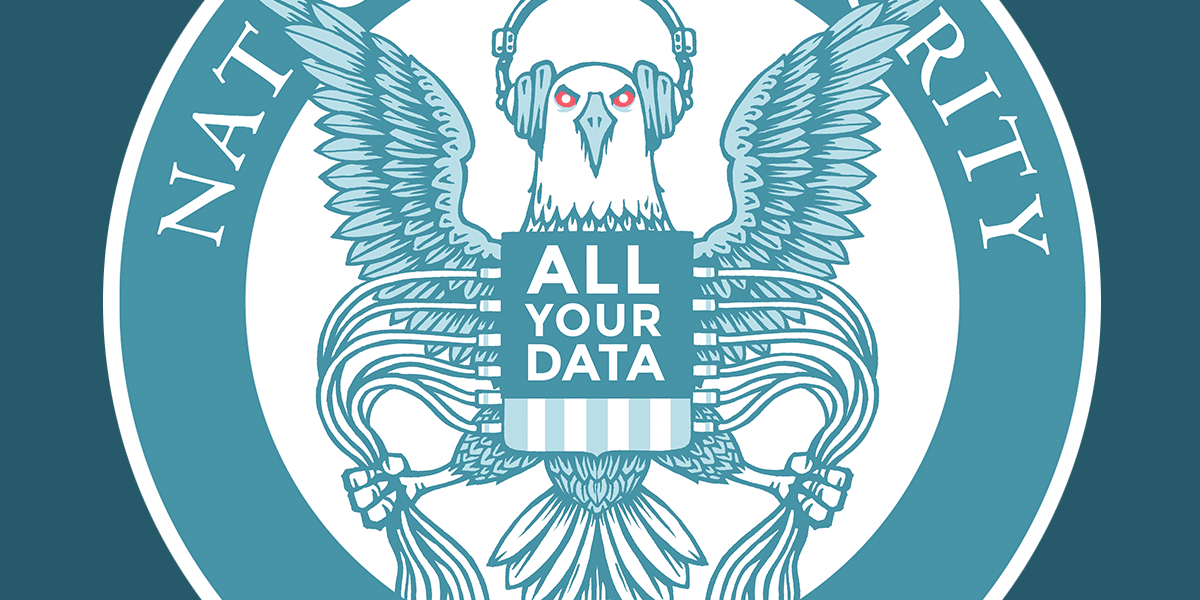
IMO these overstatements of threat are far less benign than that. I believe they know that the true scope and scale of their secret surveillance activities can only be justified using extreme scare tactics, such as the threat of terrorism. I believe this is true even if the American public was in full understanding of whatever nuanced policy benefits actually resulted for the citizenry as a whole.
That is, the problem may well be that the benefits do not accrue to the general populace, but to a much narrower set of vested interests. So, if Americans knew fully and exactly who benefited and to what degree, they may find that said benefits for the general populace do not justify the NSA's "attack" on the general populace.
So, this is not about avoiding a nuanced conversation. It's that the the measures themselves have been turned against the U.S. citizenry such that the benefits of the resulting policy decisions do not outweigh the affront to privacy and Constitutional rights. If these affronts cannot be justified even while they are turning their powers against the very people who are supposed to be the beneficiaries, then we must naturally ask the question "then whose interests are really being served here?"
That is the real conversation that they wish to avoid.
Further evidence of the dissonance is revealed when you consider the NSA SIGINT mission statement you provided. It's a very generic statement that wouldn't cause concern given what we knew and expected of the NSA's actual activities (i.e. prior to the Snowden leaks). It's only when you realize the fuller scale of NSA activity and its targeting of the broader U.S. population that this statement seems woefully inadequate to justify the attendant activities.
I've not even seen evidence that NSA is actually targeting the greater American population though. The issue is that NSA has expanded the scope of what they look at, and made it easier for their analysts to get away with assuming someone is not an "USPER". That obviously carries a greater risk of lumping Americans into that net where they wouldn't have before, but no one (not even Snowden, AFAICS) has been able to demonstrate the NSA is actually trying to deliberately target Americans with any of this.
So, we can call it the "dissolution of presumed protections" instead of targeting, but for this discussion, I don't believe that it matters. That is, by any name, to the extent that Americans feel that the NSA has transgressed against its own citizens, the NSA's justification has been terrorism.
EDIT: To be clear, I believe there is considerable compelling evidence that Americans are routinely targeted through various programs. I just don't think it's necessary to have that debate in the context of this discussion.
If you have the right idea, then why not share it here? It'd be a valuable comment, and I'd like to hear your point of view.
Thank you for writing that wonderful book!
Also, thanks for your reply. I didn't really have a focused question; I'm just interested in learning more about the government and its machinations. It's quite interesting to know that gathering intel about strategic areas for investment falls within their purview.
Or maybe when we notice an entire generation does not have any representative leaders in national US politics. Only old farts, whose predilections were exercized pre-Intenet, remain. Hmmm.....
That's the problem with Secret Evidence, obtained by illegal means. How can we be sure that the Secret Evidence wasn't used to start a parallel construction?
In other words, Spy Agency does Spying, news at 11.
But the main point of the article is that the Obama administration justifies surveillance by saying it's critical to preventing terrorism, but that surveillance is being used for many many purposes beyond just counterterrorism, making it a poor case.
Being useful for one major thing doesn't mean that a tool is not also useful for other things. You can in fact point out as many other minor things as you wish, but that doesn't invalidate (by itself) the usefulness for the major task. So I don't see EFF's point here.
In fact that was the point I was about to make before screening the comments: "Of course NSA's powers extend beyond simple counterterrorism, who is claiming otherwise? Did they not read even a synopsis of the relevant law?"
Funny how the government keeps bringing up terrorism when people ask why the NSA is violating our privacy rights. Why is the government not pointing to all those other important American interests the NSA is protecting?
There are a lot of people on HN who think that the sole purpose of the NSA is terrorism. Most of these people can't be bothered to visit the front page of nsa.gov.
Let's not forget that this article was prompted by the NSA's universal, "because, terrorism" answer to virtually every "uncomfortable" question about its secret activities aimed at Americans.