124 points · by iand · 12y ago · 67 comments
or...
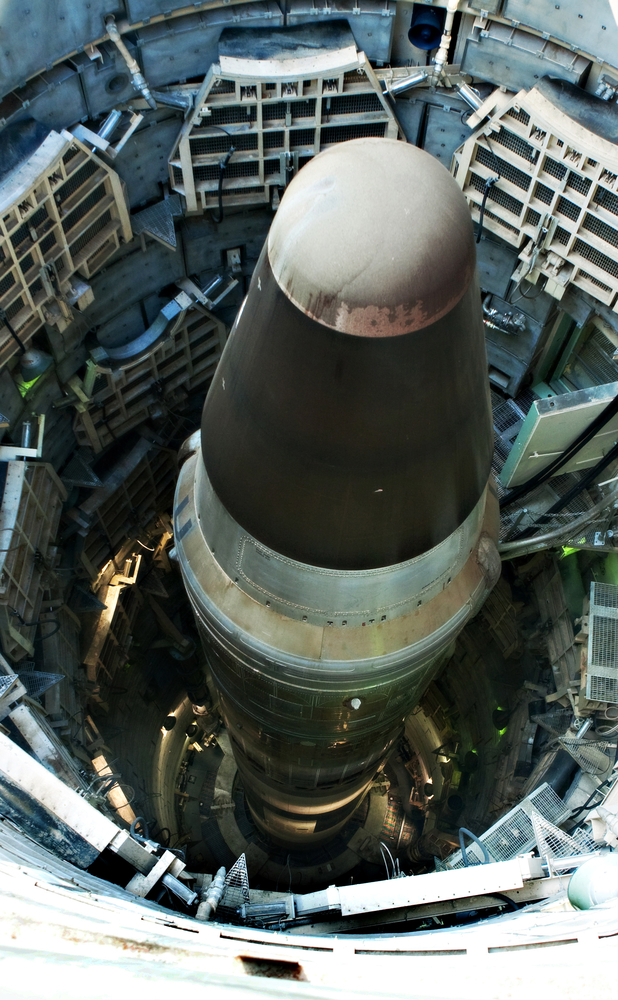
You lock yourself out of your own nukes during a crisis because you have a big fancy launch-code-management system and it falls apart because key people are confused and/or dead.
In related news, handguns with fingerprint sensors and other electronic locks will protect you in case a criminal breaks in and steals your gun from you - and yet they're not very popular among gun owners.
http://en.wikipedia.org/wiki/Duck_and_Cover
The short versions is this: in most of the area where a nuclear blast can kill you, there are simple things you can do to reduce its effects and survive. A building will protect from much of the blast wave, and even a blanket can greatly reduce the amount of skin burning. Nukes are not unstoppable bringers of universal instadeath.
Reality is better than fiction.
The only thing preventing me from not blowing out my fucking brains is living is slightly cooler than not existing.
Especially if it was known. The idea behind the nuclear deterrent is that a response can and will be launched immediately, after a threat is detected. That is key. If someone out there knows that something prevents US from launching quickly they now have an advantage so to speak. So it is absolutely imperative for others to know that launch response will be total and prompt.
So making the system safe and secure from unauthorized launches has to be balanced by not making it harder to launch if needed (and of course letting the adversary know about this). Thinking of this, they could have actually had secure codes set BUT broadcast to the world that somehow a mistake was made and all codes are 0000000.
/obligatory
It's how I imagine the commanders get the code.
1) Being the party/person who started another world war; 2) Being nuked without ability to retaliate (in case the executive branch is wiped out)
Most incredibly stupid decisions were made rationally, under extreme perception of the reality.
http://en.wikipedia.org/wiki/Dead_Hand_(nuclear_war)
Its purpose was to actually two fold -- ensure the ability to launch a retaliatory attack after a "surgical" nuclear strike and (and this follows from the first) ensure that hot headed generals or future leadership wouldn't be too quick to press the trigger on the very first warning (which might be a false alarm, and these have happened in the past).
That is a pretty nice system come to think about it.
So on first ever threat the #1 thing to do is enable this system. Then decide what to do, knowing, it would be possible to retaliate.
Note, what is interesting, they didn't broadcast to the world that they had it. Which is interesting. From a game-theoretic point of view, shouldn't they have broadcasted its existence as that would have discouraged a first strike?
Though, you are right about the danger of the perception of reality. (that why it's good, some time, to go back to the first principles)
2. A locking system in place does not make much of a difference if there is no war, and much of the deterrent factor would probably still be there. If there is a nuclear attack, well, even if you are able to respond things will look quite grim, so it doesn't really make such a great difference (and it has to be seen how easy it is for your opponent to block retaliation).
http://www.bbc.co.uk/pressoffice/pressreleases/stories/2007/...
For most of the Cold War, the RAF's nuclear bombs were armed by turning a bicycle lock key.
"The Royal Navy argued that its officers could be trusted and: 'It would be invidious to suggest... that senior Service officers may, in difficult circumstances, act in defiance of their clear orders.'"
I suspect not. I think someone would have noticed the mess.
"Dr. Blair . . . decided to outline it for the public in this 1977 article where he described how just four people acting in tandem could easily activate a nuclear launch in the silos he had worked in. Further, amongst other things, the PAL system McNamara had touted was barely in operation and thus launches could be authorised by anyone without Presidential authority . . . It is, perhaps, not coincidence that the PAL systems were all activated and the codes changed the same year this article was published."
Is this for real? Its like putting a lock on your car steering wheel, while all wheels and radio has been stolen overnight.
This was utterly irresponsible, and from the sounds of it in direct violation of presidential orders. Isn't disobeying orders in the military quite a big thing?
Curtis Lemay, head of the Strategic Air Command, made his own plans for a pre-emptive strike on the Soviet Union. Lemay also clashed with Kennedy during the Cuban missile crisis.
And Truman had to recall Macarthur when the latter refused to obey presidential directives.
The whole point behind MAD is to show that you refuse to play the game of "I have the bigger army" and to literally level the playing field by making the game lose-lose.
Then (as sister comment says) neither side was playing the game right in the cold war.
I object to the way the game is set up in international relations - If we actually had a system to enforce international law it would be much much harder to justify having unilateral armies at all! My views on this are somewhat unconventional, though, so don't worry if I sound crazy; I may well be.
Nope, according to the article it was listed in the instructions handed out to the soldiers who manned the silos. If there had been post-it notes back then, they probably would have stuck one right on the console with the code.
Interesting story, crazy popup ads (mobile device).
They changed them to 12345678 didn't they?