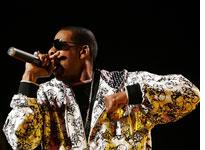
The shady one-man corporation that's destroying hip-hop.
Last week, a mysterious company, Bridgeport Music Inc., sued hip-hop mogul Jay-Z, accusing him of breaking the law when he recorded his 2003 single...
Slate Magazine
51 points · by pje · 12y ago · 56 comments
If that is what happened, couldn't Clinton sue Boladian and Bridgeport for signature forgery? Otherwise, what would stop someone from faking Boladian's signature on an agreement to transfer ownership to another entity?
But also this article was written in 2006. It is now 2014, and hiphop has not been killed. In fact, this particular issue became a big nothing.
Record company's are really just banks now. They finance the artists, and perform marketing. And once the music is for sale, they take a portion of the profits. And to do so, they have some rights over the work, just like a bank has over a property under a mortgage.
Ideally, you wouldn't need outside financing to take your music to market. But if you do, you need to get the best deal. And if you are a nobody, that deal isn't going to include much for you. So bootstrap with small investors first and short term deals.
Banks, errr... record company's need a big portion of the profits, because half of their investments will fail. Well, half is probably generous. But if the rate of return for being a record company was so great, there would be more people doing it. Actually that happened, and there are lots more record company's now than ever, because you no longer need to be big to fight for shelf space in HMV, as HMV is almost bankrupt.
While I completely agree with your sentiment, I also think it's important to point out that some truly incredible sample-heavy albums have been made "today" (read: post- Golden Age of Hip Hop):
  - Since I Left You by The Avalanches [0] (said to contain over 3500 samples)
  - Endtroducing... by DJ Shadow [1]
  - Songs of a Dead Dreamer [3], Person Pitch [2], the entire discography of Girl Talk [4], the entire discography of The Books [5], most hip-hop mixtapes posted online...
After Biz Markie was sued, sampling changed completely: http://en.wikipedia.org/wiki/Grand_Upright_Music,_Ltd._v._Wa....
It's a shame...
The point is that sample-based music can (and should) still be an original work.
This "sample troll" (nothing to do with patents, btw) is unethically stifling creativity in the music industry. That's bad for everyone.
No it shouldn't. Or at least it should still require consent of the original sample owners (and any compensation that would entail).
If it were so easy to make samples and they were so disposable that anyone could come up with them, then there would be no need to sample older work and no one would do it. But in actual fact it's difficult to create catchy samples, and they are therefore valuable, and their owners deserve to have rights over them.
If it were so easy to make samples and
they were so disposable that anyone
could come up with them, then there
would be no need to sample older work
and no one would do it.
Imagine I write "I shot the sheriff" or "That is not dead which can eternal lie" or "x considered harmful" or "I've got 99 problems" or "We few, we happy few" or "Beam me up, Scotty" or "Light of my life, fire of my loins" or "Of the people, by the people, for the people" or "Less space than a nomad".
I'm not just stealing a sequences of words I think sounds good. I'm referencing other works - partly to evoke their meaning, partly so when you recognize the reference it communicates that I am like you, that we have shared background, that we've read the same books, heard the same songs, visited the same websites.
Is taking a few notes from a song really so different to taking a few words from a book, speech or essay?
This is why a search engine company can produce a thumbnail of a page without running afoul of copyright law. (See Kelly v. Arriba Soft Corporation )
It's also how commercial parody can (though not necessarily) be done without a license from the original author. (See Campbell v. Acuff-Rose Music, Inc.)
It's also why a judge recently decided that Google's book scanning system, which does not have copyright permission from the owners, is sufficiently transformative without reducing the primary market that it is legal under fair use. (See http://www.wired.com/threatlevel/2013/11/google-books/ , which has a link to the judgement.)
As you say, it is not legal to copy just the sample. But sample-based music can more transformative than a simple copy, and the combination of factors may make it fair use.
Unfortunately, there's no laws covering these details and the courts haven't worked out the details. The highest decision, from the 6th Court, says that de minimis doesn't apply even for a 3 note sample, but fair use might. (See Bridgeport Music, Inc. v. Dimension Films .) Many people are against this interpretation, including perhaps other courts. Other districts have not decided on this sort of case, so it's still ambiguous.
Not everything which is valuable has government-granted monopoly rights. The US does not accept "sweat-of-the-brow" as a basis for copyright, which is why databases cannot be copyright, even if the database itself is valuable. So your argument "it's difficult .. therefore valuable ... and their owners deserve to have rights over them" is, currently, un-Constitutional. (See Feist Publications, Inc., v. Rural Telephone Service Co., for the decision which decided that the Constitutional definition of copyright is based on originality, not difficulty.)
Samples are still valuable and whoever their rightful owners are, they deserve to be in control of their use.
The article suggests that Jay Z raps over a break from a Madonna song and is then surprised when the bill comes? The reality is that if Madonna released a track with chunks of a Jay Z record in the background, he'd be the first at the door wanting to be paid in full.
The fact that record companies want to be paid when their products are sampled is not remotely new, it has been understood and established since the 1980s. For anyone, even in the dim and distant dark ages of 2006, to be surprised by that state of affairs is baffling.
The sample was obtained without consent.
(The lyrics were also stolen from Ingrid Chavez, also without consent. She sued and won.)
In a lot of cases not using samples often just means taking a sample which you have already roughly arranged into a song and spending a lot of time and money recreating it with live musicians.
>attempting to create something worthwhile from it
You say that as though the sample itself is not worthwhile or valuable. There are plenty of modern songs for which the only reason they are popular or sound good is that they sample older tunes. And it's simply not easy to create a good-sounding, catchy sample. So whoever owns it deserves to get paid, and it's no one's fault but the original artist if he or she sold off the rights to it for a pittance.
So, what? Maybe if sampling was completely illegal, they'd have to start over by renting a clarinet and playing scales. That's a bad thing?
http://www.theonion.com/articles/new-rap-song-samples-billie...
That said, it facilitates the expression of certain attitudes and moods that you tend not to hear in other music. Listen it classical to feel serene. Listen to rap music to feel like a badass.
Also: Rap is not poetry. It borrows elements from poetry, but it also borrows elements from public speaking, sports, preaching, and good old-fashioned conversation. Amongst other stuff. It's a different thing. It's its own thing! Rap!
Why am I having to explain this to people on Hacker News?
legitimate
Yeah, lemme just go check with the Poetry Oversight Council. I got a cousin who's on it, and he's a true scotsman, so I think I'm gonna win this one. While I'm at it I'll ask them what art is, 'cause I heard some people were curious about that.