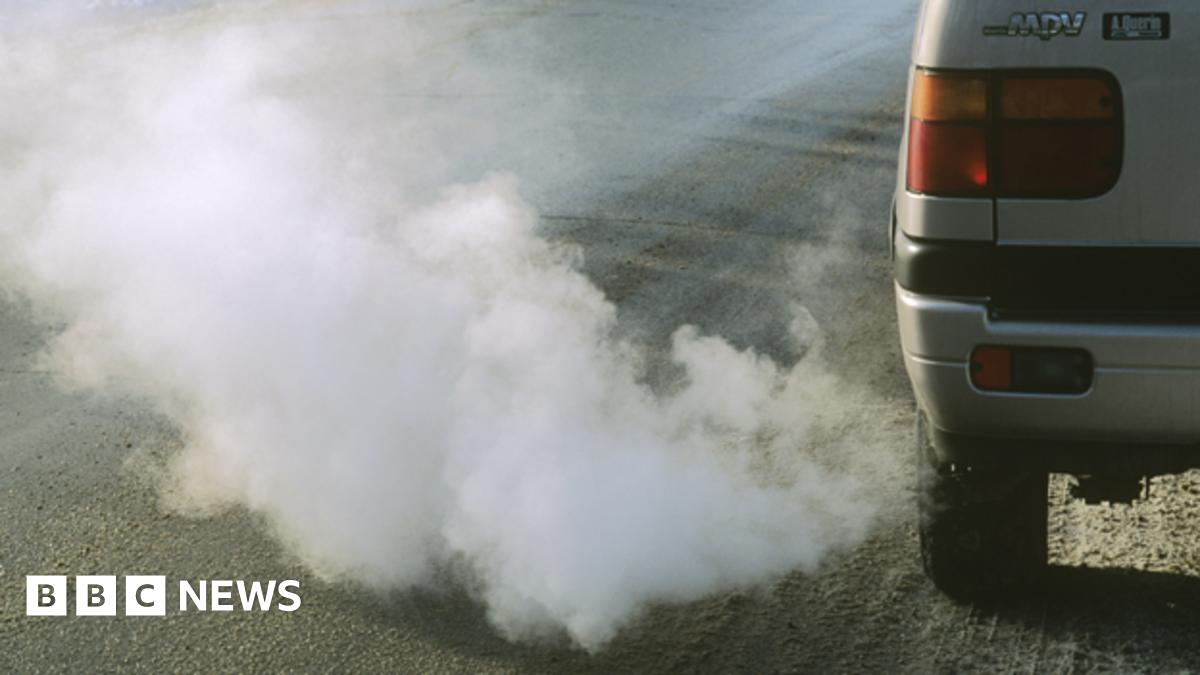
Did removing lead from petrol spark a decline in crime?
Many Western nations have experienced significant declines in crime in recent decades, but could the removal of lead from petrol explain that?
BBC News
213 points · by austinz · 12y ago · 270 comments
The places that reduced lead pollution first, saw the drop in crime first, the places that reduced it later saw the drop later. The eras that initially had high levels of lead had a larger drop in crime than areas that always had a low level.
And it's not just the USA either. The pattern holds pretty accurately for various nations around the world, like in Europe. Those who banned leaded fuel first, saw the drop in crime first, those who banned later, saw the drop later.
And these nations had massively differing crime policies. Some nations increased prison sentences to try and deter crime, and crime went down. Some nations put a huge effort into reforming criminals, and crime went down. And some nations cut prison sentence, and crime went down.
Here's a link (2 minutes of googling..) showing the difference. http://www.victimsofcrime.org/library/crime-information-and-...
* Greater anonymity in cities * Higher population density * Juxtaposition of poverty and wealth
As an example poverty is most prevalent in rural areas according to this study: https://www.google.dk/url?sa=t&rct=j&q=&esrc=s&source=web&cd...
Be careful of citing "obvious", it can be deceiving.
Note that I'm not arguing that lead in gasoline proves a definite link between crime in rural vs. urban areas, just noting that there is the same correlation as stated in the article. I merely thought it was interesting, and that it might be the same effect at work due to the dilution of lead in rural areas because there are fewer cars.
The fact remains that the concentration of lead in the living environment is the most strongly correlated measurable datum to crime rate than any other single factor.
If you compare factors directly relating to motives, methods, and opportunities (the crime triangle) in different cities, the correlations are still weaker than whether the population was exposed to lead pollution as children.
This is not the first article on this topic that has been published. None of them, as far as I am aware, have proven causation rather than correlation--probably because proving it would take 20+ years and be grossly unethical.
But nevertheless, it would be interesting to see what happens if one city decided to completely eradicate lead contamination from within its limits, and compare it against cities of similar character that chose not to do so over the next 30 years.
[1]: http://www.ncbi.nlm.nih.gov/pubmed/22752852
Edit: switched low with high.
I think the conclusion is obvious: Removing lead from petrol lead to legalized abortion. Or was it vice versa?
But seriously, I think we need statistical analysis showing the correlation between legalized abortion and unleaded gasoline. Perhaps it would actually show that places that legalized abortion first actually WERE correlated with places that unleaded gasoline first.
It would be silly to assume causation there, even if the correlation were just as strong. Which would be a useful reminder about correlation and causation. Just because you have a correlation where causation is _plausible_ still doesn't mean causation.
The statistics show a 20-year lag between the banning of leaded gasoline and reduction in crime rates. So even if "unwilling to ban leaded gas" and "high crime 20 years later" could be correlated, it seems less likely that the same things that cause "willing to ban leaded gas" are also the cause of "lower crime 20 years later".
So lead from leaded gas drips into the barrel representing the local ecology, and the lead contaminant drips out of the biosphere at a rate that obviously must depend on local climate. Presumably lead contaminant flows into the oceans or gets buried in the ground at a rate dependent on local weather.
Yet the stats show a nearly perfect and consistent shift 20 years after the addition of lead to the environment stops. That's just biologically weird, like a part of brain development doesn't depend on local lead levels, but on the first derivative of lead levels or something.
It COULD make sense if lead only causes problems when inhaled. Not consumed in food, not drinking water, purely and exclusively inhaled. Even then, local dust storms and the like should totally mess with the supposed global 20 year effect latency.
Take say 50 specific individuals ... actually look at where they lived each year of their lives, and estimate as accurately as possible their lead exposure. If they move cross country, "follow" them and estimate the change in lead exposure accordingly.
Once you have an assessment of the lifetime lead exposure of the 50 people, see if it predicts their levels of criminal behavior or aggression.
(Example: suppose 0.1% of people become murders in their lives, and lead is 100% responsible for every murder, and you had 2 groups of 50 people who had either tons of lead or no lead exposure at all; what will the result be? Likely, no murderers in your total group of 100 at all and certainly no difference between the two groups - despite extremely generous assumptions!)
I wonder if the lead could leave the body, and if the effects it had are somewhat reversed over time, for those that lived in environments with much traffic.
Do you have any idea about this?
So it is not lead itself, (or the presence of it in your organism) that makes you more likely to commit crimes, but having your brain development impaired by it while an infant that does.
I don't have time to search for the article, but it came up with the last discussion on this topic here.
I understand what you meant, it's an intuitive conclusion, one that doesn't seem like magic. But, something making sense usually does not correlate with or serve as evidence of it being true.
It's true that statistics is required to be sure if something is true, but it's a priori far more likely that a rise in violent crime is caused by a substance known to damage people's brains than by, say, the gravitational influence of Pluto. And we rightly demand careful confirmation when someone finds a particle traveling at a velocity greater than c than when it is found to be traveling at a velocity less than c.
EDIT: And more to the point, I hope you don't find the hypothesis that violence in the 70s caused leaded gasoline in the 50s as that leaded gasoline in the 50s caused violence in the 70s, and that you would agree that one of those two hypothesis needs more evidence before we accept it. Granted, it could easily be some more complicated net of causality, but just between those two.
Thank you.
The politicians who tackled crime (or didn't, or did whatever) 20 years ago haven't been in power most of the time since then, generally.
I've read about this theory before; it's impressive and (to me, at least) pretty persuasive.
Except: "So in 1923 three of America’s largest corporations, General Motors, Du Pont, and Standard Oil of New Jersey, formed a joint enterprise called the Ethyl Gasoline Corporation (later shortened to simply Ethyl Corporation) with a view to making as much tetraethyl lead as the world was willing to buy, and that proved to be a very great deal. They called their additive “ethyl” because it sounded friendlier and less toxic than “lead” and introduced it for public consumption (in more ways than most people realized) on February 1, 1923.
Almost at once production workers began to exhibit the staggered gait and confused faculties that mark the recently poisoned. Also almost at once, the Ethyl Corporation embarked on a policy of calm but unyielding denial that would serve it well for decades. As Sharon Bertsch McGrayne notes in her absorbing history of industrial chemistry, Prometheans in the Lab , when employees at one plant developed irreversible delusions, a spokesman blandly informed reporters: “These men probably went insane because they worked too hard.” Altogether at least fifteen workers died in the early days of production of leaded gasoline, and untold numbers of others became ill, often violently so; the exact numbers are unknown because the company nearly always managed to hush up news of embarrassing leakages, spills, and poisonings. At times, however, suppressing the news became impossible, most notably in 1924 when in a matter of days five production workers died and thirty-five more were turned into permanent staggering wrecks at a single ill-ventilated facility. ..."
http://en.wikipedia.org/wiki/Thomas_Midgley,_Jr.
This story is also a very strong argument toward both regulation of markets due to externalities (lead in gasoline and paint were defended vigorously by their respective industries for decades), and of the argument that there are some products and services which, despite being profitable to those dealing in them directly, impose a net negative cost to society as a whole.
Such activities are often difficult to recognize strictly because of the nature of externalities: they're diffuse, affecting many individuals, often incrementally in a small way, often indirectly and, in the case of environmental lead, with impacts lagging cause by decades.
This is also a very powerful case of negative impacts accruing largely due to socioeconomic circumstances not ascribable to the conscious and voluntary decisions of those directly affected: neither the infants and children exposed to lead, nor the victims of the criminal acts they transacted on a probabilistically greater scale, had entered into any sort of voluntary or legally recognized agreement with the manufacturers of leaded gas and paint. Punches a bit of a hole in that whole libertarian argument which promptly ... sinks like a lead balloon.
http://www.motherjones.com/kevin-drum/2013/01/lead-and-crime...
One quote:
> There are now multiple rigorous studies using different methodologies that demonstrate this correlation at the city level, the state level, the national level, and in different countries at different times.
http://www.washingtonian.com/articles/health/why-is-lead-sti...
For his efforts, Needleman endured years of attacks denigrating the quality of his research and his integrity as a scientist. In 1982 the industry-funded International Lead Zinc Research Organization (ILZRO) went to the Environmental Protection Agency to accuse Needleman of scientific misconduct. The EPA convened a committee of experts, which concluded that Needleman’s study had not proved a connection between lead exposure and a child’s mental development. Needleman countered that the committee report contained serious mistakes. The EPA agreed, reversed the committee’s findings, and lauded Needleman’s “pioneering study,” saying it confirmed a “significant association” between lead exposure and childhood intelligence.
The ILZRO hired the public-relations firm Hill & Knowlton to publicize the original committee’s criticisms of Needleman.
Two scientists led the next attack on Needleman. One was Sandra Scarr, a developmental psychologist at the University of Virginia who had been a member of the EPA committee that disputed Needleman’s study. The second was Claire Ernhart, a developmental psychologist at Case Western Reserve University in Cleveland, who called Needleman’s study “slipshod.” Beginning in 1983, Ernhart, who had conducted lead research, received about $50,000 a year from ILZRO for research support but denies being beholden to the lead industry or speaking on its behalf. Scarr claims not to have received money from ILZRO other than expert witness fees and likewise denied industry influence....
In all, the attacks on Needleman’s work and integrity and his defense against them dragged on for 15 years.
Intentional disinformation is a major theme of this (59 minute) lecture by Philip Mirowski, an economic historian (he focuses largely on global warming but the principles and rationale apply broadly to other cases of economically incentivized disinformation): http://www.youtube.com/watch?v=I7ewn29w-9I
Among other things, it references the work of Naomi Oreskes and Erik M. Conway, Merchants of doubt: how a handful of scientists obscured the truth on issues from tobacco smoke to global warming, and Robert N. Proctor's Golden Holocaust: Origins of the Cigarette Catastrophe and the Case for Abolition.
I discuss these at more length here:
http://www.reddit.com/r/deep_ecology/comments/1yum2c/life_an...
http://en.wikipedia.org/wiki/Flynn_effect
Say what you will about environment, but the lead explanation seems to match historical data in all the ways we'd expect it to. Find something that lead does, and we find a trend showing its decline since we started eliminating lead.
Also, using Lead Acetate[1] as an artificial sweetener probably didn't help matters.
[1] https://en.wikipedia.org/wiki/Lead%28II%29_acetate#Sweetener
although this argues that lead in plumbing was NOT a major source of poisoning.
Would they have risen faster without lead?
The study found nearly 50 percent of both boys and girls reported traumatic brain injuries that resulted in a loss of consciousness, amnesia or both. And they said 55 percent of those injuries were caused by assaults.
An estimated 60 percent of adult prisoners have a brain injury, according to a study of prisoners in South Carolina.
http://www.npr.org/templates/story/story.php?storyId=3045728...
The US justice system has become extreme in the pursuit of punishment vs treatment and rehabilitation.
There's nothing unexpected here. Youths mostly go to jail for violence. The more fights you get into, the more likely you are to be injured. I'd imagine that there's a far larger percentage of number of jailed youths with knife scars than those in school. That doesn't mean knife scars cause people to end up in prison.
I'm no neurologist, but i suspect that a brain injury might change your personality more than a scar from a knife fight, possibly making you more likely to engage in criminal behaviour.
1) A prison is far more easily sold to the population that hospitalization or cures ("what, you mean we're paying for those criminals welfare?!").
2) Imprisonment is "business as usual" -- so less friction and investment needed to move things there (they already are like that).
3) Lots of prisons also exploit inmates' labor.
4) Prison keeps the annoying (to those people) black minorities at bay.
PBS also had a great series the Poisoner's Handbook about different poisonous elements and the one about lead was more in-depth about leaded gasoline. Charles Norris was an amazing person! http://www.pbs.org/wgbh/americanexperience/features/introduc...
Whenever I see stories like this, I wonder what sort of impact it has had.
Oh, you must mean this ( http://www.theesa.com/policy/scotus_chart.gif ) rise in violence.
http://en.wikipedia.org/wiki/List_of_school_shootings_in_the...
http://freakonomics.com/2005/05/15/abortion-and-crime-who-sh...
The crime rate rose and dropped pretty neatly along with the proportion of young men in society. The median age is much higher now than it was 30 years ago. Crime, especially violent crime, is a young man's game.
Perhaps they are right and roe vs wade was one of the factors in raising the median age, but it seems that people today want smaller families, and have more control over this than a generation ago. You can't assume that if a woman has an abortion, a miscarriage and two kids over her lifetime, she would have had four children if it hadn't been for the abortion and the miscarriage.
Aside from whether it's prudent - irrespective of current evidence - to permanently store a compound containing 50% of a neurotoxin an inch or two from your brain, the release of almost 3,000 kilograms (6,613 lbs.) of mercury (data for 2005 alone) into the atmosphere from crematoria is cause for worry. Wikipedia notes that 'Good empirical data on the magnitude of mercury emissions from crematoria, however, are lacking'. No one is interested I guess.
The EPA states:
>Flush your pipes before drinking, and only use cold water for consumption. The more time water has been sitting in your home's pipes, the more lead it may contain. Anytime the water in a particular faucet has not been used for six hours or longer, "flush" your cold-water pipes by running the water until it becomes as cold as it will get. This could take as little as five to thirty seconds if there has been recent heavy water use such as showering or toilet flushing. Otherwise, it could take two minutes or longer. Your water utility will inform you if longer flushing times are needed to respond to local conditions.
>Use only water from the cold-water tap for drinking, cooking, and especially for making baby formula. Hot water is likely to contain higher levels of lead. The two actions recommended above are very important to the health of your family. They will probably be effective in reducing lead levels because most of the lead in household water usually comes from the plumbing in your house, not from the local water supply.
http://skeptics.stackexchange.com/questions/8615/is-there-an...
Also people should be aware: the government somehow allows pipes and fittings to be sold as "lead free" when in reality they contain up to a few percent of lead.
Airplanes are still allowed to used leaded petrol!! [1]
And the immigration movement to Europe increased the crime. [2]
[1] http://de.wikipedia.org/wiki/Motorenbenzin#Verbleites_Benzin
http://slatestarcodex.com/2014/02/18/proposed-biological-exp...
http://en.wikipedia.org/wiki/Buckeye_CableSystem
I don't doubt that the reduction of lead in our environment has reduced the amount of mental illness. But I also think changes to truancy laws in the US in the 70s helped, advancements in psychotherapies, and drugs for the treatment of mental illness helped. Identification of treatments for ADD and ADHD helped.
Changes in the economy helped, we had more women in the workforce which meant we had more ability for families to survive father's unemployment.
Wider adoption of TV meant people became more aware of crime, and criminals were easier to catch.
So yes, lead removal was probably a contributor, but I think it was bigger than that.
I.e. to what extent "we should remove lead from petrol as that is obviously bad" is actually a handy indicator of more considered minds running the shop, those minds also being more predisposed to the kind of other "obviously good" decisions which could also have brought about an eventual reduction in crime.
There seem to be ever more folks ready to overreact with pitchforks and cudgels calling for the draw and quarter anyone over misinterpreting the color of a bikeshed.
It's too bad folks choose to disagree, point out something as an excuse to be uncivil and with the cowardice of anonymity.
Of my friends in the 80s / 90s, I've had around 20 of them die over the course of 20 years. Of those who've died, I can say the great majority were in the 'violence prone' category. They generally seemed to have lower ability to gauge risks and sought out risky behavior, frequently.
Before video games, bored young males ran around the neighborhood making mayhem. Today they sit in front of an xbox. I personally think the people who would be out committing violent crimes are still in society they just have a way doing it virtually.
http://www.theguardian.com/science/2013/nov/03/fritz-haber-f...
http://www.motherjones.com/environment/2013/01/lead-crime-li...
There are children that lived in the country and later move to the city. How early their exposure began would be the variable being tested.
You could treat all cases of lead poisoning you find and still be able to measure the impact of leaded gas on development.
Of course, I think the jury has been in on lead gas and paint for decades. But I guess for a poor country, an economic case must be made.
If you're truly concerned about lead in the environment you'd be best served going after old structures with leaded paint -- not Avgas.
Do I understand correctly that leaded paint is harmless until scratched or otherwise dispersed?
http://www.aopa.org/News-and-Video/All-News/2013/December/3/...
http://www.networkworld.com/community/blog/faa-wants-all-air...
They knew lead was a poison.
Even the Romans knew lead was a poison so it wasn't like asbestos where suddenly a realisation was made.
Yet everyone pretended it did not matter. Everyone did what everyone else did. Nobody thought to avoid driving past schools because they weren't sure about the ethics of covering kids in a cloud of lead (with NO2, CO, O3, PAH's and maybe some invisible micro particles thrown into the mix).
Air pollution from cars kills 50,000 a year in the UK [0]. Apparently closer to 200,000 a year in the US.
But it's even worse than that. 1.24 million each year are killed directly by motorists.[1] There are more young people killed directly by motorists than malaria or aids.
And yet many people are happy to continue driving around.
It's not like this is unavoidable. Electric cars are here, we could move the pollution out of cities. We could design our cities to be safer for walking and cycling. We could invest in public transport and pass on the cost of some of the externalities of cars to motorists.
[0] http://www.theguardian.com/environment/2010/mar/22/air-pollu... [1] http://www.who.int/mediacentre/factsheets/fs358/en/
So just to be clear... you're complaining that the US has five times the population of the UK but four times the deaths from air pollution?
Your overall point is right, though, that mid-20th-century motorist pretty much behaved like an oblivious jerk for decades.
You're saying that had something to do with fear of lead poisoning?
AV gas is being replaced step by step but since leaded gas has its advantages, the replacement process takes time – and there is no really convincing alternative. Anyway, the amount of lead is probably no significant factor in air pollution, there is simply not enough general aviator flying for that.
It's true that if you average the consumption of avgas over the service of the planet you get a pretty small number, but that's no consolation to the family at the end of the airfield who actually gets all of that stuff deposited in their back yard.
I've been active in general aviation for years, and I've never met one these pro-lead strawmen you write about. Since you seem to have all the answers, can you put forward a rational solution to the problem (that isn't "Just throw away all the airplanes")?
-- signed: Joyriding Dipshit
(jealousy is an ugly, ugly thing...)
http://m.bbc.co.uk/news/magazine-19116438
I think that alternatives cause other problems by stripping the gun barrel and etc.
On a gentle tangent I sometimes wonder how many rounds of ammunition were fired during Iraq and Afghanistan wars. And how much brass and lead there is for local populations to recover and sell. And whether that's worth the risk of handling unfored ammunition or finding cluster bomblets or similar.
Recall that hollow-point ammunition is banned for use by national armies. A lot of their munitions are designed to tumble in soft tissue or to shatter on impact. Some rounds are intended to send a rivulet of liquified metal through armor.
Under such conditions, I am sure that a lot of the fired rounds ended up as dust, to either be inhaled immediately or to become a soil contaminant later. Turning every battle site into a Superfund-style cleanup is unlikely according to the local economics.
I use lead-free pellets in a pellet rifle, which we keep on hand to shoot at animals that want to eat our chickens. It seems like a lot more pellets are lead-free now than just a few years ago. I don't like the idea of lead pellets laying around on my property. Most lead-free pellets also claim to be "high velocity' so it seems unlikely they are wearing the rifle barrel more than lead pellets.
If there was causation (due to the neurological effects of long-term lead exposure during childhood years), then you would observe delayed correlation (at a 20 year scale), not simultaneous correlation.
   "There is a substantial causal relationship," she says.
   "I can see it in the state-to-state variations. States
   that experienced particularly early or particularly sharp
   declines in lead experienced particularly early or
   particularly sharp declines in violent crime 20 years later."
The other group of people we find this in is those suffering from childhood lead exposure, and we know that the regions of the brain most affected are those which occur from lead exposure.
While not going so far as to imply everyone with this pattern becomes a criminal, it certainly increases the statistical likelihood that they are, and studies on people with extreme issues - i.e. psychopaths - tend to show that's its a pattern of life experiences which determine whether you learn to function in society, or go another path. Notable is the neuroscientist who was studying psychopaths and discovered he has the same sort of brain structure as one - but, is a scientist, married and has children.
Since we can't really control an individuals life experiences through policy, but they roughly sort out statistically based on socioeconomic status, it seems pretty clear that exposure to brain development inhibiting neurotoxins is going to give you a higher then expected fraction of criminally-inclined young adults.
I mean, who would have thought that teenage delinquency would be reduced by distributing computer games, giving them something to do rather than wander the streets being bored?
And if lead really is responsible for 90% of the crime, as stated in the article by the chief propagandist, then before leaded fuel was around, crime should have been negligible - and it clearly wasn't.
Edit: perhaps the lead-in-your-fuel people should debate against the concealed-carry people, since both of them claim absolute ownership of the decline in US crime from the mid-90s onwards.
As for youth distractions: The internet did not have significant saturation until the 00s. http://en.wikipedia.org/wiki/Internet_in_the_United_States seems to indicate that in 2000, only 2.5% of Internet users had broadband.
Video games exploded in popularity in the 1980s while crime was still rising - not to mention this was a time when arcades were far more prolific, so you could make the argument that entertainment was more accessible to youths with families that couldn't afford video game systems in 1980 than 1990 onward.
As for CC, it should be clear I'm not fond of their arguments :)
Looking at crime stats by age and gender of arrest [1] You see an across-the-board decline for men and women. You're telling me a 60 year old woman was too busy playing Doom on a 486 to commit a violent crime?
[1] http://www.fbi.gov/about-us/cjis/ucr/additional-ucr-publicat...
And yet, the r^2s when you plug in your data for lead exposure are really high. Odd how that works.
Okay; now did that public view also change per-state, and per-country, tracking the date ranges that lead was removed?
The crime rates track when lead was added/removed regionally, not just generally.
And is it so hard to think that the more progressive regions might do several things earlier than the less progressive regions? I'm not saying this is the actual mechanism at play, just that it's a plausible mechanism that is causal for both trends - something that's always overlooked in thees articles.
Anyway, I spent an hour looking at crime graphs for Australia this afternoon, and I can't see a common pattern at all. Australia banned leaded fuel in 1986 and it was completely phased out by 2000. But the crime graphs are all over the place. Homicide is stable-but-downward. Assualts are rising. Robbery has been both up and down. If lead is the 'silver bullet' against violent crime 20 years later, why the increase in assaults? I just don't see the preliminary patterns required for this "causation" to work.
My bet is that the decline (or at least shift to less dramatic "technological/financial" crimes) is a cultural phenomena, influenced heavily by cheap and easy credit and media (especially so-called "social media"). It is just not cool or fashionable to be a dumb looter or a "primitive" gangster anymore.
Nowadays one has to be "a clever guy" - a cheater instead of a criminal, an internet tycoon, overcharging credit cards of idiots who had ordered a colon cleanser form a stupid website, instead of simple armed robber of a drugstore on the corner.
This works even for Russia, which, putting aside some African extremes, is the most criminalized society in the world. Even for them it is more fashionable to run a porn studio to sell pictures in the net than robbing trucks or brutally killing each other for a used BMW car.
Nowadays one has to be "clever" to steal from the government, to gamble the corrupted [banking] system , cheat on idiots in internet, and even with their own credits and mortgages.
The shift from stupid brutality to technological/financial/social "cleverness" (as they think of it) is what others call "decline in crime".)
Lead Usage:
   |\
   | \
   |  \
----- | /
| /
|/
-----
Second, there's substantially more detail in here than you have stated. For example, the correlation between the decrease in violent crime and the use of lead is reproduced in areas with differing crime policy, and shows a similar kind of decline in areas which stopped using lead earlier or later than others.
Third, "it just kinda-sort-of fits" is all you will ever get in anything outside of pure mathematics. The real world is pretty noisy, and exact correlation is never going to happen.
"Any headline which ends in a question mark can be answered by the word no."
If the law is always true, then the answer to that headline is "Yes", even though the law dictates that the answer must be "No." This is paradoxical. However if the law is not always true, then the answer to the headline is "No". This invokes no paradox.
I also downvote anyone who mentions betteridge if they don't make any other point. Comments like those are toxic and pointless. They add nothing to any discussion. We know that headlines are usually stupid and misleading and link baity. Ignore headlines. Read the article and talk about that instead.
Join the club. I have lost 54 points so far in this single thread. The radical environmentalists seem to be upset with me. I actually don't care though, because whenever I see politically-motivated opinions masquerading as (junk) science, and otherwise intelligent people lending credence to it, I am going to say it.
The article's main thrust is not remotely provable, but is easily disprovable. That is all I have said. There you go, now downvote me. Let's make it an even -55 points.
Perfect example of why this type of analysis is ridiculous:
http://www.slate.com/articles/health_and_science/science/201...
... Which is why, I suspect, the commenter you replied to won't believe it either. Sigh.
https://news.ycombinator.com/item?id=7619054
Your "contribution" of repeating the phrase doesn't educate anybody, doesn't address the actual content of the article. It doesn't make your opinion invalid but it also doesn't contribute anything meaningful to the understanding of the article. It was also said several times before you deigned to enter the conversation and "educate" us about correlation.
Does that make my opinion invalid?
  I realize that my comment flies in the face of
  the opinion of radical environmentalists.
Of course, with a die, we can weigh it, find its center of gravity, cut it poem, etc. that makes it easier to 'prove' what's the cause of our extraordinary luck.
Bu suppose we find that the die contains some mechanism that allows one to change its center of gravity. Then, we cannot be sure that all those '3 sixes in a row' throws were caused by a change in the center of gravity.
Here, the case is more difficult, because we cannot cut open the object of study.
Multiple correlations over different data sets, in the presence of an extremely plausible mechanism - we know for a fact what lead exposure does to developing brains - is as close as we ever really get to proving a causative link in this world.
Okay, accepting that as a working assumption for the argument: What does? It's not things happening together that implies it, it's not things not happening together that implies it - negative and positive correlation respectively - so what is it?
The only other explanation I can think of is an understanding of the underlying mechanism, but what's that understanding based on? It can't be understandings of underlying mechanisms all the way down - you have to acquire the data from observation at some point.
But, social psychologists to the contrary, we will never know, because this kind of study can never ascend to the level of science. All we can be sure of is a rise in ... not crime, but contentless articles whose titles end in a question mark.
    > The positivists have a simple solution: the world must be divided into that
    > which we can say clearly and the rest, which we had better pass over in
    > silence. But can any one conceive of a more pointless philosophy, seeing
    > that what we can say clearly amounts to next to nothing? If we
    > omitted all that is unclear we would probably be left with completely
    > uninteresting and trivial tautologies.
I'm not rejecting pop psychology. I'm saying it's not science. Science requires something fundamental, it can be expressed in one word, and I invite the readers of this post to say what it is. As soon as the word leaves their mouths, they will realize why social psychology cannot be science.
When the physicists at the LHC observed what they thought might be the Higgs Boson, they refused to announce a discovery until the had a five sigma result. Five sigma is approximately equal to 2.8 * 10^-7 (explanation: http://blogs.scientificamerican.com/observations/2012/07/17/...), and it expresses the probability that, if there is no Higgs particle, a random observation might create the observation that has been made.
Five sigma. That's science. Opinion articles whose titles end in question marks are not science. And I should not have to explain this to educated readers.
> I particularly love that you used the word "ascend"; I shan't be the first to compare positivism to scientism
Scientism is an irrational confidence in science as an answer to all the world's problems. Social psychology is an irrational confidence in the power of articles that observe correlations without either proposing or testing theories about those correlations to accurately represent some aspect of reality.
Controlled studies in which you vary only one input to a system at a time, and observe the effect, are obviously a stronger tool than mere observational studies. But that doesn't make observational studies not science.
It's perfectly possible to determine which of these effects are more or less likely to be responsible; the different hypotheses that you make would make easily testable predictions, which can be tested independently because different jurisdictions have made these changes at different times. Lead was banned in different countries at vastly different times (https://en.wikipedia.org/wiki/Tetraethyllead). Likewise, three-strikes laws have been introduced at different times in different places, and many places have never introduced such laws (https://en.wikipedia.org/wiki/Three-strikes_law). Easy availability of birth control and abortion may be a little harder to quantify precisely, but that can be done too.
Since some countries have only banned leaded fuel in the past 10 years, within another 10 or 15 we should be able to say with considerably more certainty whether this has a causal relationship. If the crime data for countries which banned it later follow the same pattern, that's a very strong indication that the theory is correct.
I would find it hard to believe that the three strikes laws would have the same effect, as the reduction in crime has been happening fairly consistently nation-wide, while three strikes laws have been implemented at vastly different times in different states, or not at all. Lead levels are much more consistent nationwide, as those have mostly been national laws (with the exception of California banning leaded gasoline a few years earlier).
Anyhow, I strongly disagree that you can say that this isn't science. It's imperfect science; anything as complex as the social phenomenon of global crime levels is going to have a lot of complex, interacting factors and no one of them is going to be completely explanatory, and you are never going to be able to do significant studies with controlled inputs. But there are scientific tools for dealing with these somewhat more ambiguous situations, and we can and should apply them as the policy implications are quite substantial.
Because the uncontrolled nature of the observations means evidence cannot be reliably collected in a way that separates one cause from any number of unintended causes and side effects. The only way to get around these obstacles would be to feed one group of people doses of lead and compare them to another in a controlled setting, or isolate two groups of people, give one group the right to birth control and abortions, deny the other group those rights, and keep them from finding out about each other. Things that cannot be done for ethical reasons, and things that prevent social psychology from rising to the level of science.
This is why social psychology cannot be a science, and it explains why the field has the terrible reputation it has and deserves.
Link: http://chronicle.com/article/As-Dutch-Research-Scandal/12974...
Quote: "Even before the Stapel case broke, a flurry of articles had begun appearing this fall that pointed to supposed systemic flaws in the way psychologists handle data. But one methodological expert, Eric-Jan Wagenmakers, of the University of Amsterdam, added a sociological twist to the statistical debate: Psychology, he argued in a recent blog post and an interview, has become addicted to surprising, counterintuitive findings that catch the news media's eye, and that trend is warping the field."
> Anyhow, I strongly disagree that you can say that this isn't science.
Yes, I understand, but you haven't the slightest idea what makes science science. If you did, you would recognize this sort of article for what it is.
Social psychology deserves its reputation, science operates at a higher level, this is Science 101, and you have no idea what you're talking about. Not a clue.
There is a one-word summary of what science requires, that word is known to every qualified scientist, and you do not know what it is. How do I know this? You defended social psychology for over four hundred words without even mentioning it.
  The only way to get around these obstacles would be to
  feed one group of people doses of lead and compare them to
  another in a controlled setting, or isolate two groups of
  people, give one group the right to birth control and
  abortions, deny the other group those rights, and keep
  them from finding out about each other. Things that cannot
  be done for ethical reasons, and things that prevent
  social psychology from rising to the level of science.
The exact same is true of this topic. As I pointed out in my comment above, in portions that you conveniently ignored, there are strong predictions that this research makes, which can be tested. The original paper on this topic was written in 1999, and there is already 15 years worth of additional data since then; the next 10 to 15 years will provide even more data, which could falsify or could be consistent with this hypothesis.
  This is why social psychology cannot be a science, and it
  explains why the field has the terrible reputation it has
  and deserves.
And while I share your skepticism about social psychology, the mere presence of corrupting influences such as the ones you mention, the desire for snappy, headline-ready results, does not mean that an entire field is devoid of value or not science. There are other fields, such as pharmacology, which likewise have troubling corrupting influences, and yet can also be real science that produce real value.
Anyhow, we've diverged pretty far from the original topic, as the original topic is not even within the field of social psychology.
  you haven't the slightest idea what makes science science.

  you have no idea what you're talking about. Not a clue

  you do not know what it is. How do I know this? You
  defended social psychology for over four hundred words
  without even mentioning it.
I do not mention social psychology because this research is not social psychology.
This research is founded on well known, rigorous research on the effects of lead poisoning.[1] This is not some surprising, out-of-left-field result which came out of the blue from some small study on a handful of college undergrads, which is the problem with many psychological and social psychology findings; this is based on building on many years of research and meta-analysis of epidemiological research. The original paper on this topic[2] was written in 1999, follow up papers from other authors have been published in 2007[3].
There have been further studies confirming this effect; this 2008 paper in PLOS Medicine[4] measured prenatal blood lead levels in pregnant mothers, childhood lead levels, and later correlated that with arrest rates. They too found a strong correlation. Other studies on the same cohort have shown a strong correlation between blood lead levels and reduced brain mass[5].
Here's a paper that compares several of the hypotheses that you have brought up[6]. Now, I take this paper with a large grain of salt, because it clearly comes from a biased source, the Heartland Institute, which is clearly biased towards libertarian findings; and the point of the paper is to argue against drug prohibition, or excessive enforcement of it (I am sympathetic to that viewpoint, but view their research on the topic with a heavy dose of skepticism). However, they compared several of the proposed determinants of violent crime rates, such as incarceration rates, access to legal abortion, environmental lead, and so on, and the only one of them (outside of the one that they're obviously promoting, drug prohibition) which held up with a consistent correlation was environmental lead.
[1]: https://en.wikipedia.org/wiki/Lead_poisoning
[2]: http://www.ricknevin.com/uploads/Nevin_2000_Env_Res_Author_M...
[3]: http://www.nber.org/papers/w13097.pdf?new_window=1
[4]: http://www.plosmedicine.org/article/info%3Adoi%2F10.1371%2Fj...
[5]: http://www.plosmedicine.org/article/info%3Adoi%2F10.1371%2Fj...
[6]: http://news.heartland.org/sites/default/files/c11845.pdf
Uh, no, statistical controls are a real tool of real science. While laboratory conditions are in some ways (ethics aside) ideal, they aren't a prerequisite for real science.
If we couldn't scientifically deal with this scenario, we'd hardly do any science. The world is noisy, measures are inaccurate, life is not perfect, but we learn to deal with it. Not all science can be math theory. When it touches the real world, you have to deal with imperfection.
I suspect most people would find that a somewhat extreme position.
Also, fraud is an issue in all fields of Science, so that seems somewhat an unfair issue to introduce.
However, this post is needlessly rude.